大法 露風 Soto Zen Priest | CAPT USPHS (ret)| Nursing Professor & Disaster Researcher | Focused on Health Equity | Believe in the Power of Science | Rescuer of Cats
Joined July 2012
- Tweets 29,787
- Following 17,409
- Followers 19,435
- Likes 41,528
1,663 Photos and videos



Pinned Tweet

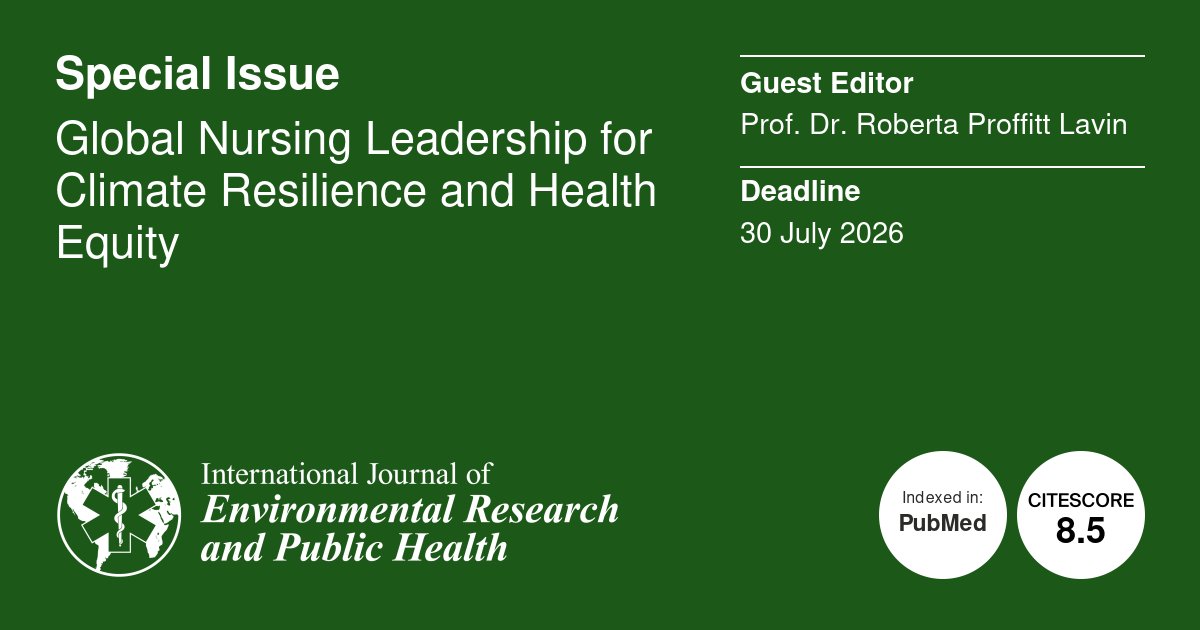
My newest project is being the guest editor for a special edition of the International Journal of Environmental Research and Public Health on Global Nursing Leadership for Climate Resilience and Health Equity. I hope many of my nursing and other friends who are interested in climate resilience and health equity will consider contributing. mdpi.com/journal/ijerph/spec…
2
2
7
544
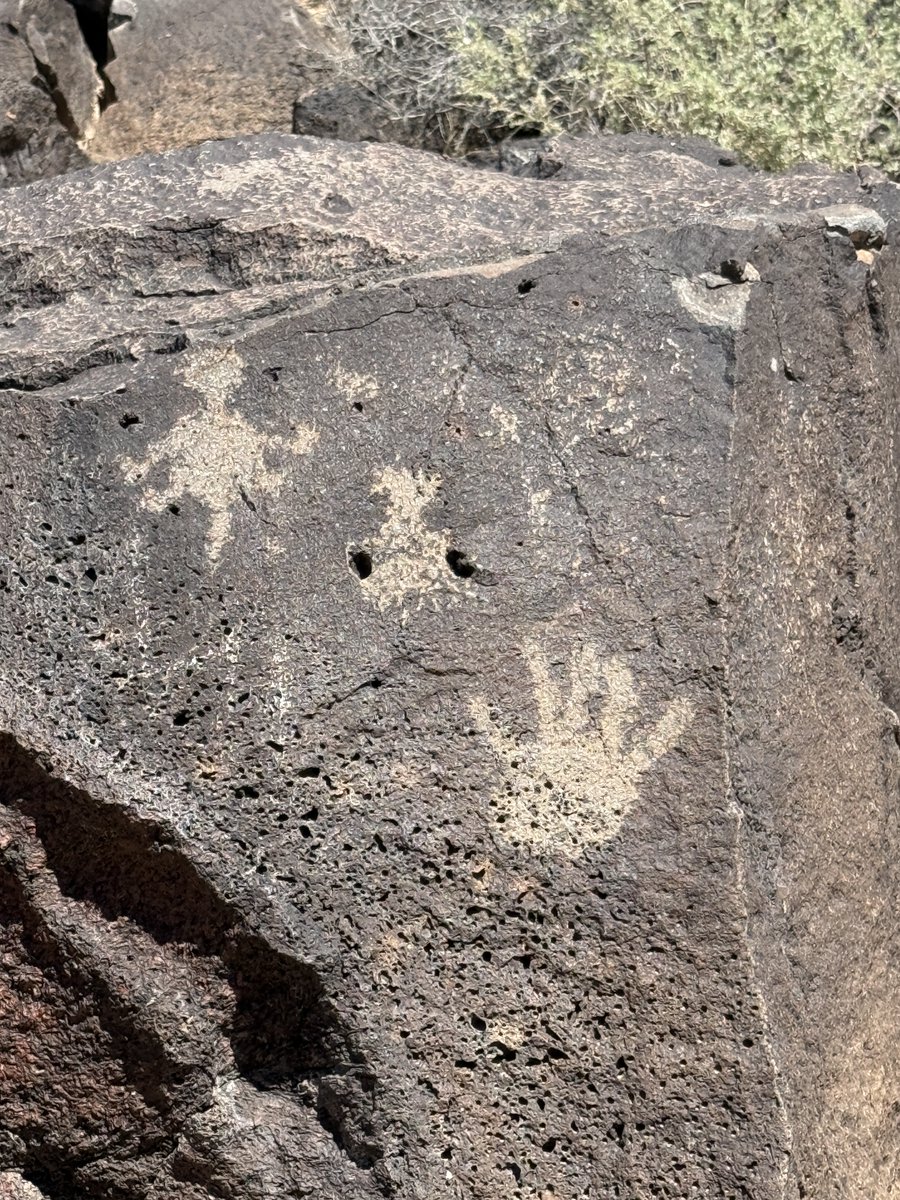
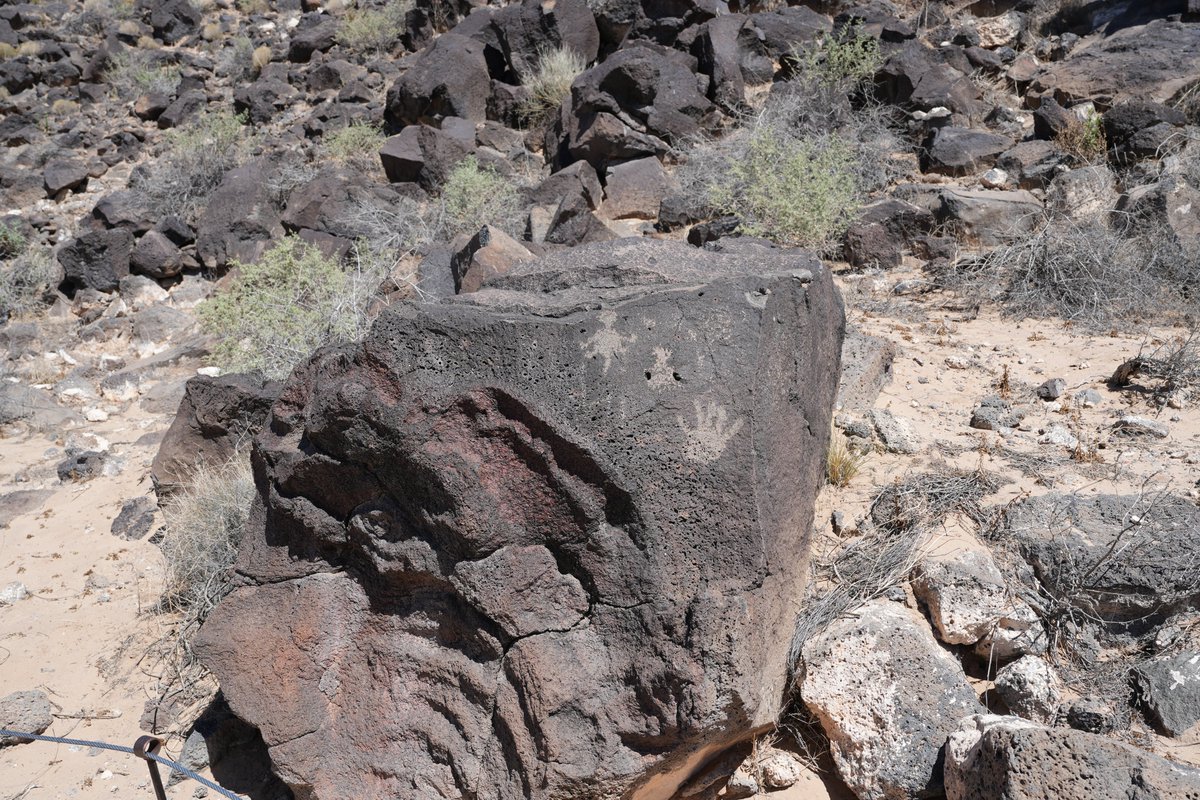
A hand on black rock,
Heat radiates; the land speaks
In it, not on it.
ALT A hand on black rock
17
Rev and Professor Roberta Lavin (Daihō Rofū) retweeted

Jun 12
For Jesus, sin is often a failure to bother to love. As I mentioned in the podcast with Hasan Minhaj, this insight is from the moral theologian James Keenan, SJ.
13
76
377
14,511
This morning, I had the privilege of spending time at Petroglyph National Monument with a research colleague and his students from Southwest Indian Polytechnic Institute.
I arrived about 30 minutes early, which gave me time to sit quietly with the land before we began to walk. In that stillness, I tried not just to observe this place, but to feel it, to be with it, and in some sense, to be it. In the Buddhist sense, all things co-originate: we are not separate from the land; the land is us, and we are the land. Sitting there in the morning silence, I felt that deeply. The rocks, the wind, the heat, the long memory of the desert, none of it felt apart from me. For a little while, I was quiet enough to sense what it means to belong not above the land, but within it.
As we walked through the desert, the park rangers explained the geology of the area and the petroglyphs carved into the dark volcanic rock. But what made the morning so powerful was being with Indigenous students and community members whose knowledge carried far more than information. They brought memory, relationship, continuity, and care. They spoke not only of the petroglyphs, but of the people who likely made them, and in doing so made the landscape feel even more alive, less like a site to be studied and more like a presence to be encountered with humility.
Being with these young people, so thoughtful, so dedicated to the environment, to their cultural history, and to asking important questions, left me feeling full of reverence, grounded, and grateful. Inspired is too small a word. What I felt was closer to awe. A full heart. A deep awareness that some places ask something of us: not just that we look, but that we listen; not just that we learn, but that we remember our place in the web of things.
We walked for two hours in the desert heat, and honestly, I would have walked for two more if there had been time, and if it hadn’t already been 90 degrees, with no shade and black rock absorbing every bit of the sun.
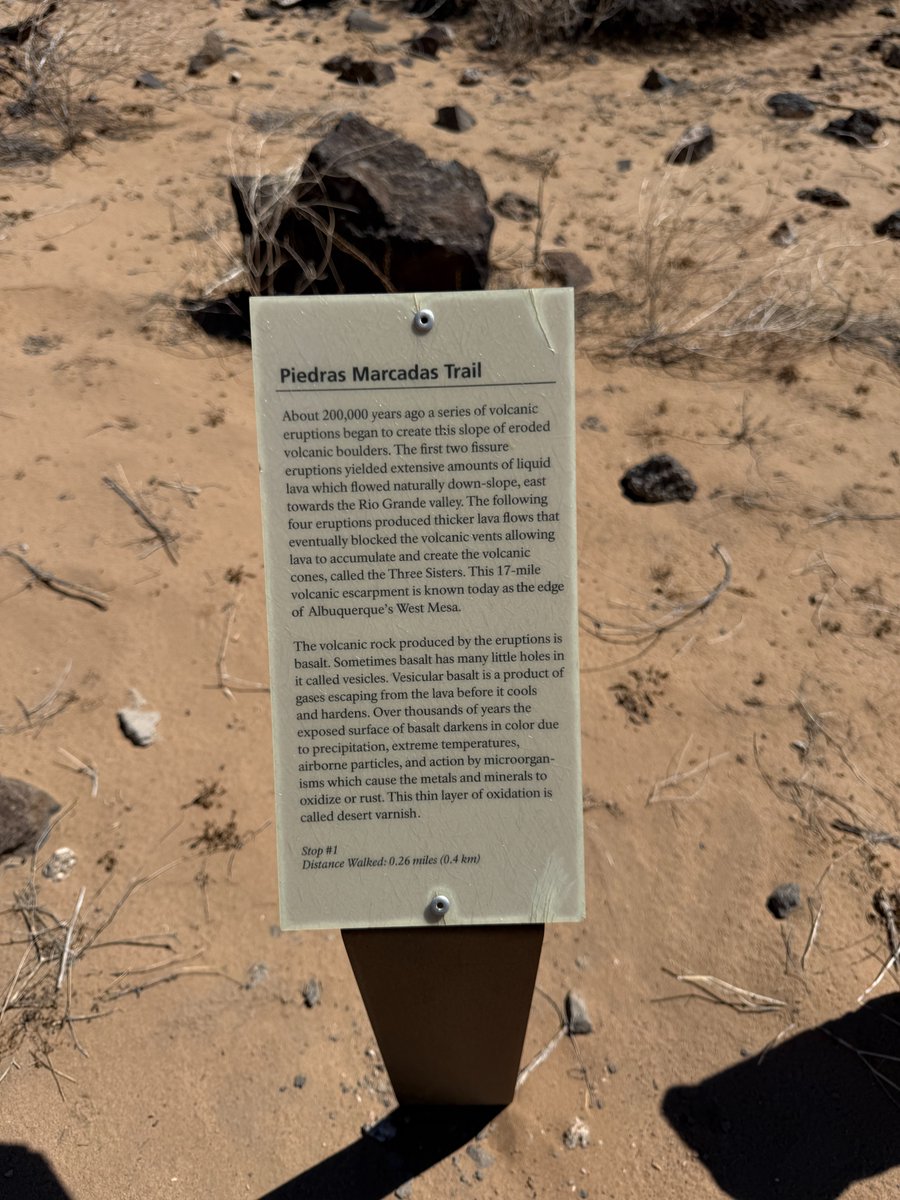
One person asked a question that has stayed with me: why is it called Piedras Marcadas Trail? Why, if these petroglyphs were made 500–700 years ago by local Pueblo people, does the trail bear a Spanish name rather than a Native one? Piedras marcadas means marked stones, which describes the place, but it also reflects one chapter of history laid over a much older one. The name itself is a reminder of whose language was recorded, whose presence was formalized, and whose names for these places were too often displaced, ignored, or erased. It was such a good question. And I think we all know the answer.
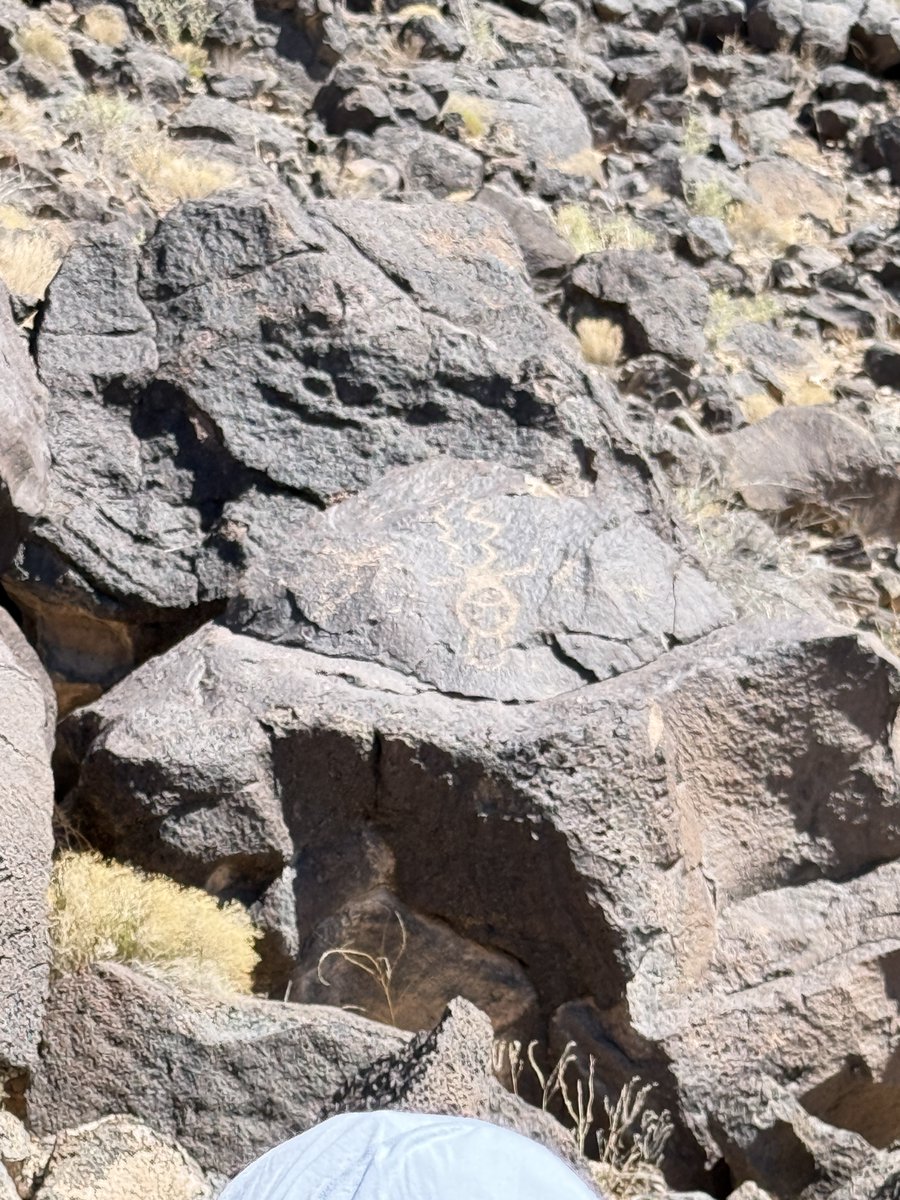
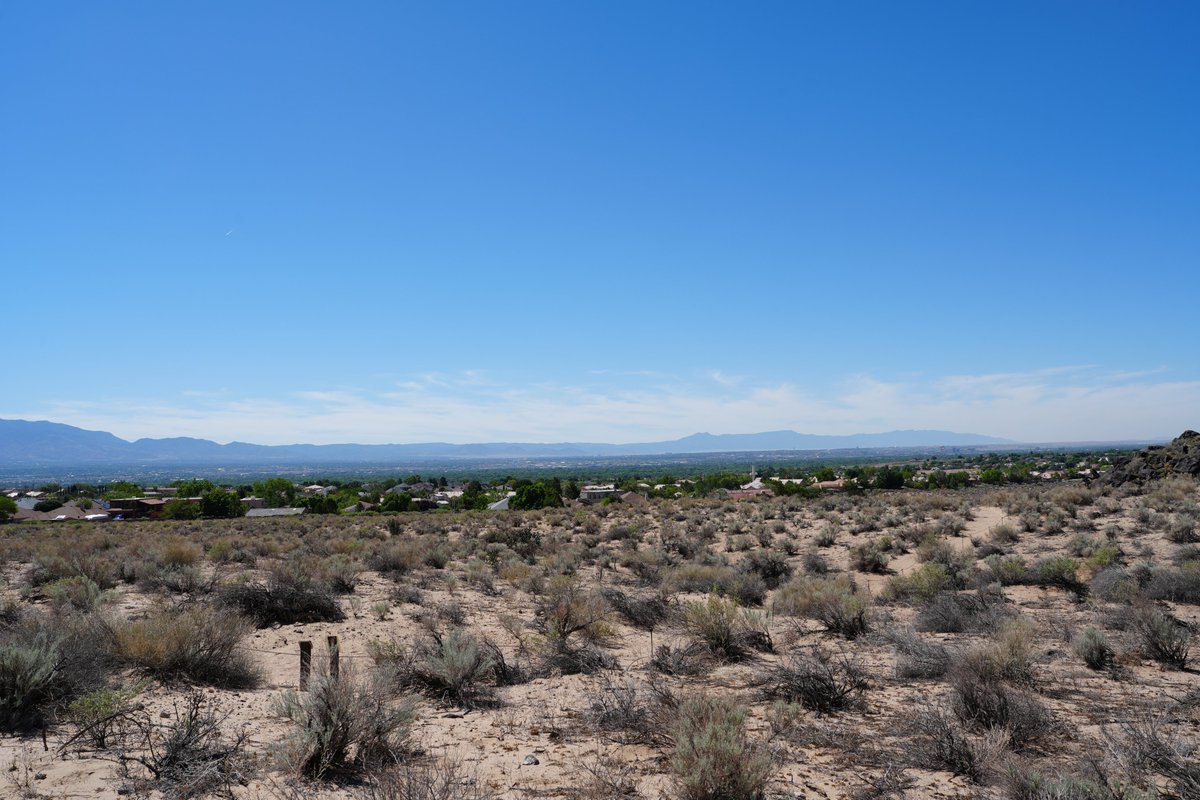
In these photos, you can see some of what we were lucky enough to witness today: the petroglyphs, the valley below, the Rio Grande, and the three volcanoes.
Days like this remind me how blessed I am to do this work and to spend time with people who carry knowledge with such generosity, seriousness, and heart.
2
2
115
I spent Thursday in Mountain View, Albuquerque on a tour led by community members, researchers, and activists — not a presentation, a walk/driving. We stopped, we sat with the land, we listened.
Each time we do that, we learn. But it also takes time to just see and to ask, why do we let this be? It takes time to be culturally humble and truly hear without trying to interpret.
Mountain View is home to about 6,000 people, seven miles south of downtown, a predominantly Chicano community that lives alongside the state's largest sewage treatment plant, chemical manufacturing, asphalt and concrete plants, auto salvage lots, bulk-fuel terminals, two Superfund sites and more than 40 other EPA-regulated industrial sites. The neighborhood has been giving versions of this tour for years — refuge partners called it a "Toxic Tour" back in 2015 to show visitors the unvarnished reality.
One stop stuck with me: a crosswalk with a button to push, but no paint on the street at all. The new sidewalk and bike path were built on the opposite side of 2nd Street from Mountain View Elementary School, where families actually asked for it. I watched bikers speed by and the trail and huge truck clearly exceed the speed limit going past the school. The bikers were happy with the smooth path, but I tried to picture a six-year-old trying to cross there to get to school. I can't.
We sat in the parking lot of the only small corner store in that stretch of the neighborhood, then went by the South Valley Superfund site where EPA has been working for decades to clean volatile compounds from the aquifer, and the three brownfield lots the community is still tracking. We saw the place where the city stages concrete, and what the guides called "the gas station for gas stations", those bulk fuel terminals lined up along the tracks.
And then we ended at the beautiful Valle de Oro National Wildlife Refuge/ Regugio Nacional de Vida Silvestre Valle de Oro, Homeland of the Tiwa People. It feels like a different world, but it's not separate. Valle de Oro was built in partnership with Mountain View to create green space in an area that had been zoned for more industry. This contrast is the point. Beauty right next to burden. A refuge made possible because neighbors knocked on doors for years, while at the same time, a child still doesn't have a safe painted crosswalk to get to school.
I'm still sitting with it. Grateful to our tour guides, the researchers, the Mountain View Neighborhood Association folks who keep telling the truth about this place, not for shock value, but so we stop normalizing it. Listening is the easy part. The harder part is asking why we let it be, and then staying long enough to help change it. Harder still is listening to the story and not superimposing my own interpretation.
If you've never taken this walk, go. Bring water, bring questions, and leave time to just stand still.
#MountainViewABQ #ValledeOro #EnvironmentalJustice #SouthValley
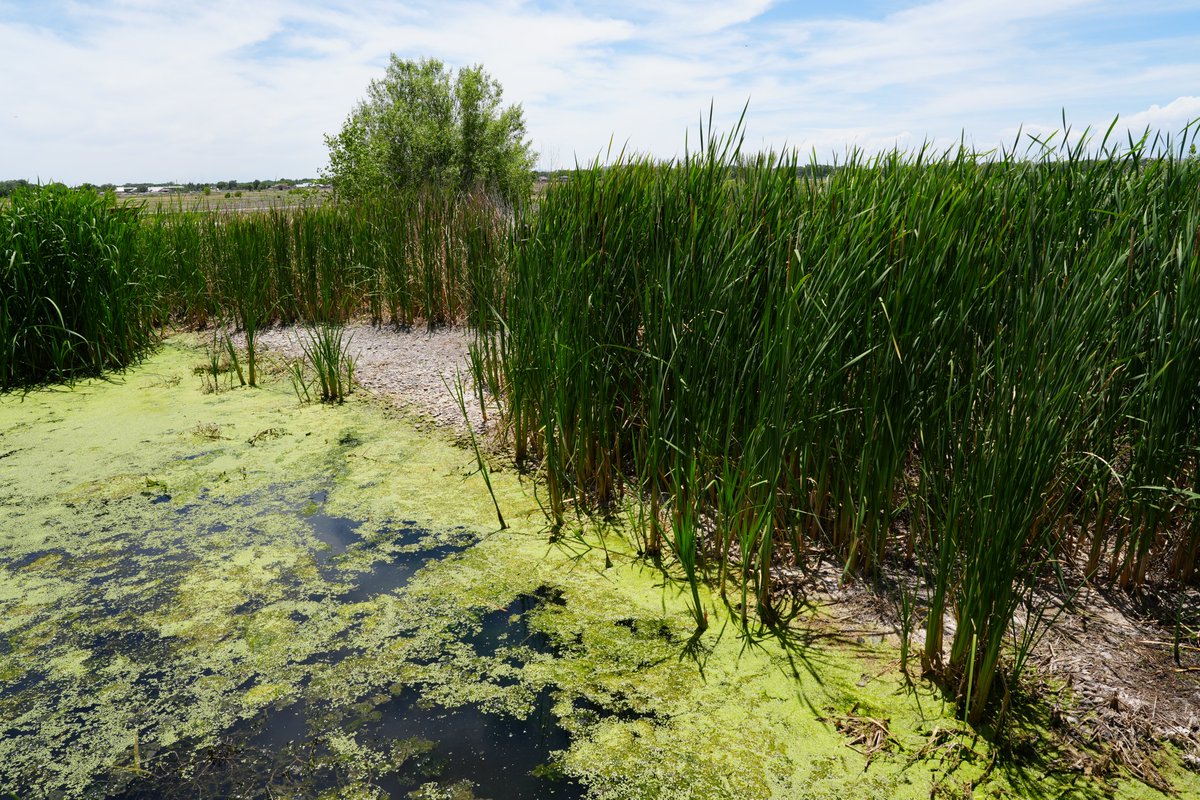
ALT Image of water being used to create a habitat
82
I had a beautiful time at Upaya Zen Center this weekend.
This weekend, I spent time in that field. I was out in the garden digging holes to plant squash, working manure and mulch into the earth. And as I worked, something happened; my mind simply fell away. There were no distracting thoughts, no lists of things to do, no stories about the past. There were only my hands and the earth. In those moments, it was so easy to be one with the earth. There was no me digging in the soil; there was just the digging.
When I think about that, I’m reminded of Dōgen’s teaching that when you find your place where you are, practice occurs, actualizing the fundamental point. In the garden, finding my place was simple. The fundamental point was the squash, the manure, and the shovel. But as I sat later, I found myself thinking, if only it were so easy in zazen. Why is it that we can find that seamless oneness while digging in the dirt, yet when we sit on the cushion, the mind often feels like a wild, uncultivated thicket? Perhaps it’s because, as Wendy Johnson says, “out of this stillness, the real nature of your garden soil is exposed.”
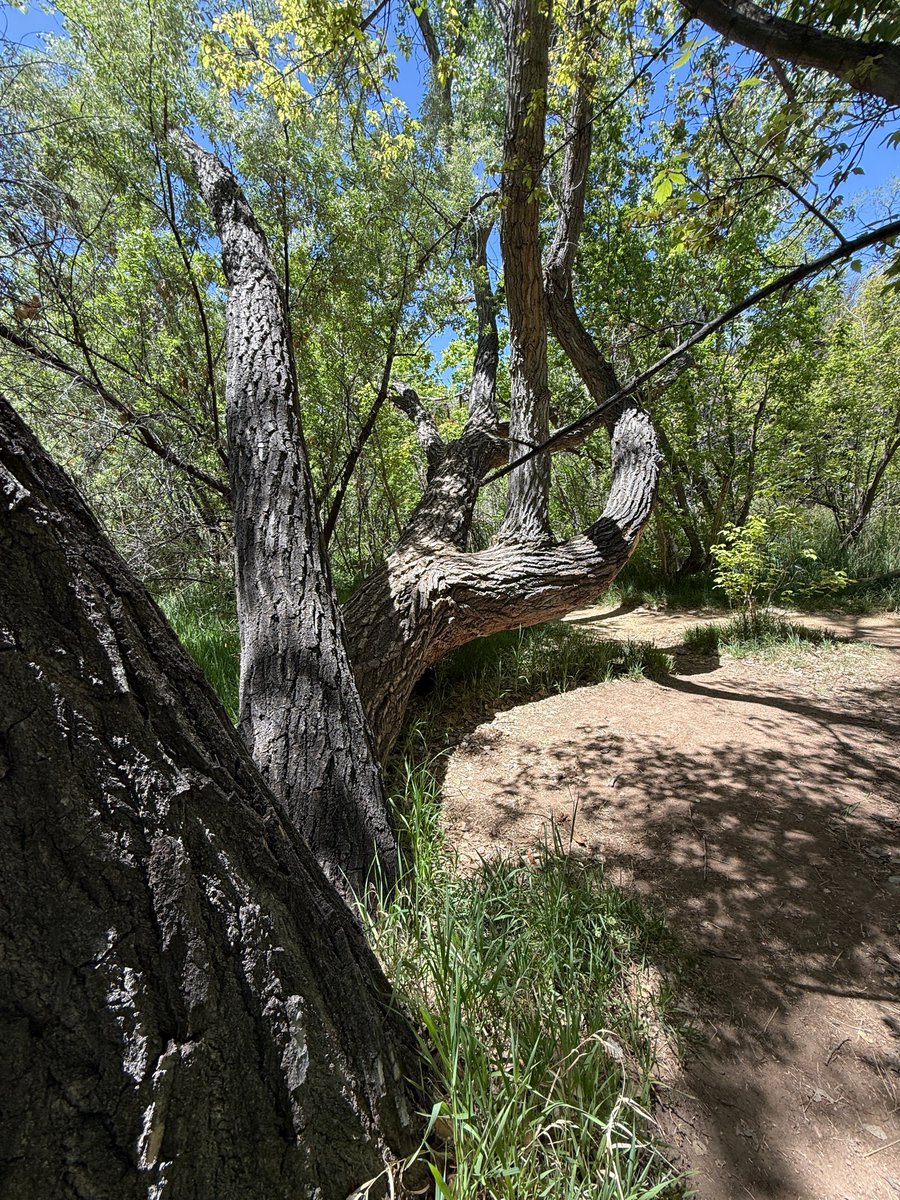
And I found a great tree to sit in and read Gardening at the Dragon's Gate.
1
2
42
Rev and Professor Roberta Lavin (Daihō Rofū) retweeted

Apr 11
With deep concern about the deconstruction of the Forest Service and turning the wilds into a commodity, I was reminded early this morning of this from Eihei Dogen: “Mountains and waters right now are the actualization of the ancient Buddha way.”
8
53
828
Rev and Professor Roberta Lavin (Daihō Rofū) retweeted
Apr 9
just one more betrayal
Apr 9

The Trump administration has announced it plans to dismantle the US Forest Service.
All 10 regional offices are set to close in addition to over 50 research labs.

1
3
23
703
Rev and Professor Roberta Lavin (Daihō Rofū) retweeted
Apr 9
a travesty.....

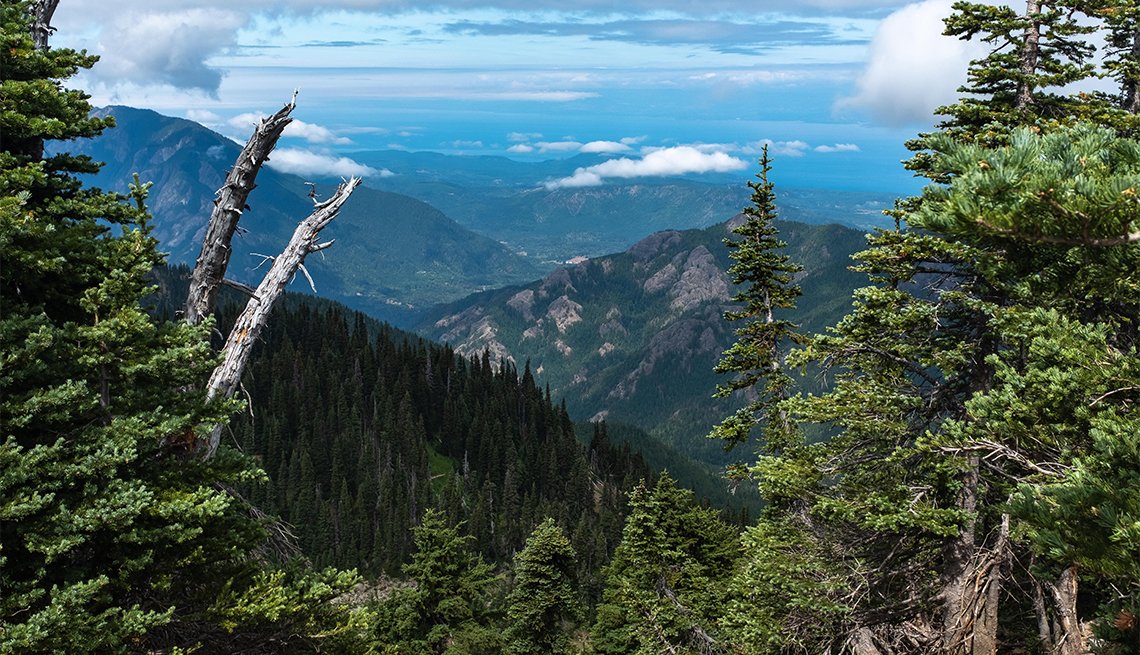
Breaking: Trump orders the dismantling of the US Forest Service.
All regional offices are being shut down and the research program destroyed.

2
1
17
651
The Sin of War, The Cost of Silence curseofanurse.com/2026/04/09… via @robertalavin
31
A consistent ethical stance, therefore, requires more than opposing violence in the abstract. It calls for clear discernment, moral courage, and a refusal to legitimize threats against entire populations. In both Catholic and Buddhist frameworks, the measure is the same: actions and words must align with the preservation of life, the reduction of suffering, and the recognition of our shared humanity.
The Sin of War, The Cost of Silence curseofanurse.com/2026/04/09… via @robertalavin
2
36
Rev and Professor Roberta Lavin (Daihō Rofū) retweeted
Apr 7
Dr Red Bison, PhD @redbison.bsky ♀📷
A civilization that will drill Chaco Canyon, put up a wall on the Rio Grand in Big Bend NP, mine the Sky Islands of southern Arizona, bomb hospitals, universities, and elementary schools in Iran, and do "double tap" strikes that kill
3
7
12
529
Rev and Professor Roberta Lavin (Daihō Rofū) retweeted
Apr 7
An opinion: this country is an uncivilization. Perhaps others share this view.
3
2
17
572
Rev and Professor Roberta Lavin (Daihō Rofū) retweeted

Apr 7
Trump's escalation from we're going to decimate them to we're going to destroy their country to we're going to wipe out their civilization seems to be classic escalatory behavior of an insane psychopath, no?
435
1,645
8,255
115,824
Bearing Witness to the Anthropocene: A Contemplative Interbeing Framework for Planetary Health and Nursing Ethics mdpi.com/3829720 #mdpichallenges via @MDPIOpenAccess
1
43
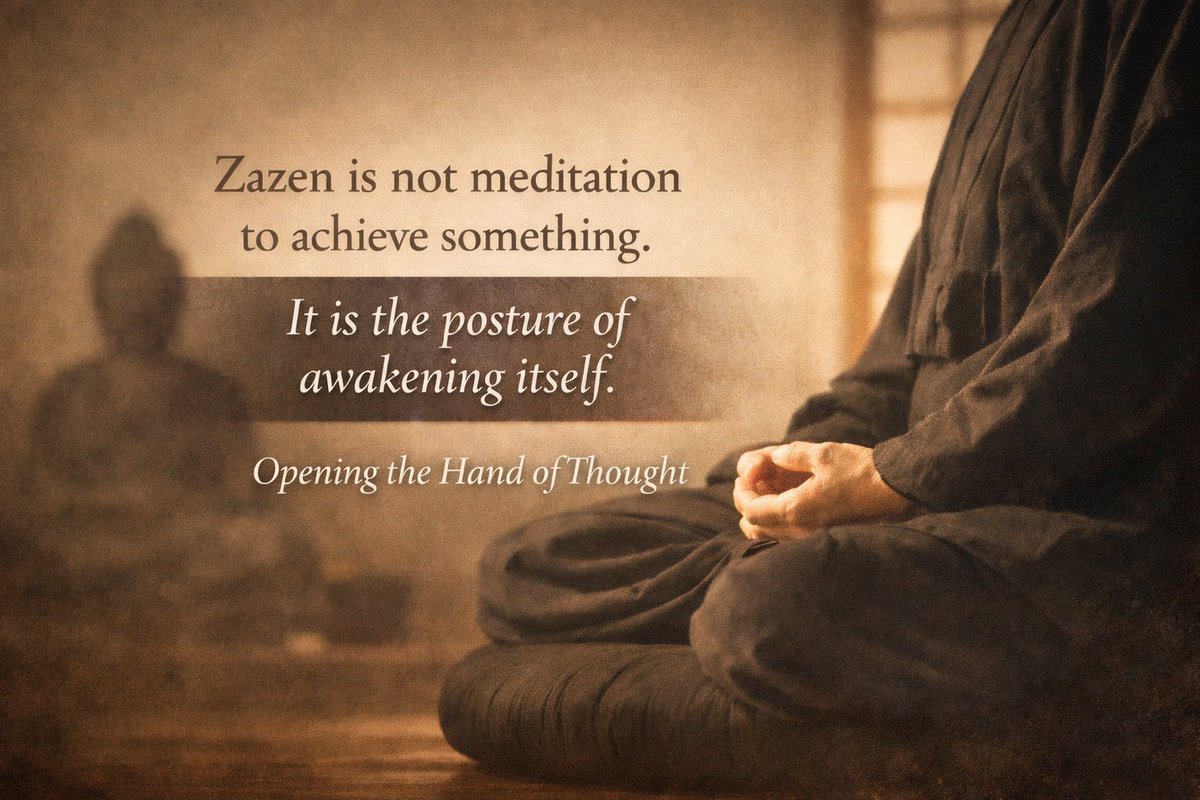
We began our practice today by entering our individual meditation spaces and performing the three bows. First, we bowed to the Buddha, not as a deity, but as a reminder of our own innate potential for awakening. Second, we bowed to our seat representing the Dharma, the teachings that support us and the physical ground that holds us. Finally, we bowed to the Sangha, the community of practitioners who walk this path alongside us.
These bows are not mere formalities. They are the act of planting ourselves. When we bow to our seat, we are saying, "I am here. I am willing to occupy this space, exactly as it is, and exactly as I am." This is the first step in becoming rooted.
youtube.com/live/kG53whcHSlE
66
Rev and Professor Roberta Lavin (Daihō Rofū) retweeted
Mar 21
God help us. This is disgraceful language coming from a Christian, or anyone with a soul. It was just as wrong to celebrate the death of Charlie Kirk as it is to celebrate that of Robert Mueller. May they rest in peace. And may we never forget that Jesus's message is about mercy.

3,593
4,220
24,641
1,081,072
Rev and Professor Roberta Lavin (Daihō Rofū) retweeted
Mar 18
Together we rise.
lionsroar.com/like-fire-we-r…
3
11
502
Rev and Professor Roberta Lavin (Daihō Rofū) retweeted
Mar 13
Roshi Joan speaks to nonviolence, war, and waking up vimeo.com/1173089170/3f943db…
3
17
721
Morning Dharma Talk: A Little Buttercup Breaks Through youtu.be/2k9aCBRMbnU?si=DEyg… via @YouTube
1
41