
Founder and CTO @AlphaSophiaHQ • 🏥 Building a data intelligence startup in the healthcare space👨🏼💻
Joined May 2009
- Tweets 525
- Following 412
- Followers 1,096
- Likes 236
13 Photos and videos





Robin Rump retweeted

Apr 8
Most people post on Instagram at the WRONG time.
That’s why their posts get:
low reach
low engagement
zero growth
Here’s the actual best time to post in 2026 (based on data strategy) 👇
2
2
5
31
Robin Rump retweeted
Mar 20
Most creators don’t fail because of bad content.
They fail because no one stops scrolling.
If your first 2 seconds don’t hook attention, your content dies.
Here are 20 Instagram hooks that actually work in 2026. 👇
3
1
4
33
Robin Rump retweeted

4 Jun 2025
"A taste of freedom can make you unemployable."
@naval
180
984
9,283
415,032
Robin Rump retweeted

5 May 2025
Avoiding things doesn’t erase them.
It turns them into debt.
That skipped convo, workout, or project?
It’s still waiting - with interest.
Be honest with yourself.
The bill always comes due.
159
537
3,334
121,954
Robin Rump retweeted

30 Apr 2025
Lift weights and get jacked.
Sleep well and stabilize your mood.
Eat well and feel energized.
181
318
5,307
235,730

30 Apr 2025
Overraising and its Hidden Costs 🧵
Let's be honest — startup culture today has a massive obsession with fundraising. Founders are celebrated for closing huge investment rounds as if raising money alone guaranteed success. Let's be fucking clear: Most startups raise way more money than they actually need, only to pay a heavy price down the line. Excessive capital can trap founders, employees, and even friends-and-family investors in a vicious cycle of unrealistic expectations, brutal liquidation preferences, and diluted control. Overraising isn't the achievement many believe it is — it's often just kicking the can down the road, setting everyone involved up for painful realities later.
Alright, before you think I'm totally anti-VC, let's set something straight: some businesses simply can't survive or scale without substantial funding upfront. If you're trying to launch the next big hardware product, something seriously groundbreaking in biotech, or a business with powerful network effects — think Facebook, Uber, or Airbnb — you genuinely need a pile of cash early on. These types of startups are capital-intensive beasts: they require massive upfront investments for things like manufacturing, infrastructure, rapid scaling, or research. Without significant early capital, they risk being swallowed by competitors or never getting off the ground at all. In these scenarios, raising a ton of money isn't just strategic, it's a necessity. But let's be real — your startup most likely doesn't fall into this category.
Most startups fall into the trap of raising way more money than they genuinely need, believing more cash equals guaranteed success. But here's the harsh truth: excess funding often leads to reckless spending, bloated teams, and unsustainable growth expectations. Founders get pressured to hit unrealistic milestones to satisfy impatient investors, sacrificing their initial vision in the process. Worse yet, aggressive liquidation preferences mean founders and early employees often get screwed over if things don't go perfectly. Friends and family, who jumped in early, hoping to support a dream, are left holding the bag, their investments diluted into irrelevance. In short, the glamour of raising huge rounds quickly fades when reality hits — and everyone involved pays dearly. A decade of your life, 10 millions in value created, only for a founder to walk away with the downpayment to a condo. Fucking kills me man.
On the flip side, bootstrapping — or small seed rounds — might seem slow and unglamorous, but they offer a hell of a lot more freedom and sustainability. These companies are forced to be smarter and scrappier, carefully allocating their limited resources to what genuinely matters. Founders retain control, aren't beholden to impatient investors, and can keep their business aligned with their original vision. Sure, growth might be slower, but it's steady, profitable, and sustainable. Employees, founders, and early supporters all benefit from the increased stability and genuine alignment of incentives. Ultimately, this type of entrepreneurship is about building real fucking value — without a lot of the bullshit.
Most startups would be better off with a balanced, strategic mixed funding approach. Rather than rushing into massive rounds, founders should bootstrap initially, validate their ideas, build genuine value, and only later consider selectively raising capital — small, targeted rounds that accelerate proven growth without sacrificing control or integrity. This strategy combines the best of both worlds, offering founders flexibility, sustainability, and strategic growth. It protects employees, early investors, and founders alike from aggressive terms and unsustainable expectations, keeping everyone aligned for long-term success.
The bottom line? Overraising is an epidemic, fueled by vanity metrics and the misguided belief that bigger rounds equal bigger success. In reality, raising more money than needed usually leads to disaster—loss of founder freedom, employee disillusionment, and burned early investors. Fuck this shit. True entrepreneurial success isn't measured by how much you've raised but by how well you've created genuine, sustainable value for everyone involved.
1
2
150
Robin Rump retweeted

22 Apr 2025
The easiest way to lose in life is to try to avoid looking bad.
246
978
8,209
252,299

Uh oh
2 Apr 2025

🇺🇸 POOR SLEEP SHRINKS BRAIN AND RAISES ALZHEIMER'S RISK
New research shows that spending less time in slow wave and REM sleep is tied to brain shrinkage in regions affected early in Alzheimer’s.
Over 270 adults were tracked for 13 to 17 years.
Less deep sleep meant smaller volumes in the inferior parietal cortex—a region vital for memory.
Gawon Cho, public health researcher:
"Reduced neuroactivity during sleep may contribute to brain atrophy, thereby potentially increasing the risk of Alzheimer’s disease."
Even after adjusting for health and lifestyle factors, sleep remained a powerful predictor.
The study suggests improving sleep quality might help delay or reduce Alzheimer’s risk.
Source: Neuroscience News


4,850
6,606
52,055
22,283,984
Robin Rump retweeted

1 Apr 2025
“The only judge who has complete context on our lives, dies with us.
A reminder of the heavy weight we place on things that matter little.” — @AlexHormozi
47
57
711
32,109
9 Feb 2025
Is there any webpage that tracks S&P returns in inflation adjusted dollar figures?
1
5
125
Robin Rump retweeted

9 Feb 2025
The infrastructure projects happening in western hemisphere are child's play compared to what is happening in Southeast Asia.
We are being left behind.
25
11
196
20,176
Robin Rump retweeted

9 Feb 2025
We're going to look back at paying for LLM tokens the same way we look back on paying for phone minutes
121
108
2,293
103,127
9 Feb 2025
Finally upgraded from @astrodotbuild v3 to v5 and spent some time enabling caching on our GitHub pipeline. Build time literally went from 15 mins to around 2 mins when assets don’t change. 🤨
2
99
8 Feb 2025
Deepseek’s story—about that $6 million figure—is a bit murky. But here’s the takeaway: having too much cash can lead to complacency, while tough restrictions can push you to achieve incredible things.
You can achieve mid-level 6-digit ARR business with a team of 4 or less.
85
10 Sep 2024
Respect to @pierre_burgy and the Strapi team!
It's a great sign, when you cry for help on X.com, and the CEO of a Series B startup takes the time to send you information and creates a custom Loom video!
Makes me feel good about choosing Strapi 😊
6 Sep 2024

We are really trying to love Strapi, but it's so hard.
Basic bootstrapping using the strapi CLI to create a new plugin results in code that does not work. Little support. @pierre_burgy
Seriously considering cancelling the project and switching to another headless CMS for our website.
2
11
2,201
6 Sep 2024
We are really trying to love Strapi, but it's so hard.
Basic bootstrapping using the strapi CLI to create a new plugin results in code that does not work. Little support. @pierre_burgy
Seriously considering cancelling the project and switching to another headless CMS for our website.
3
8
2,936
6 May 2024
.@edgedatabase Is there a plan to build an API for the CLI? We run quite a few automated tests with node’s “execSync” feature to run CLI commands to create, migrate and destroy instances.
It works, but feels quite hacky.
4
6
2,035

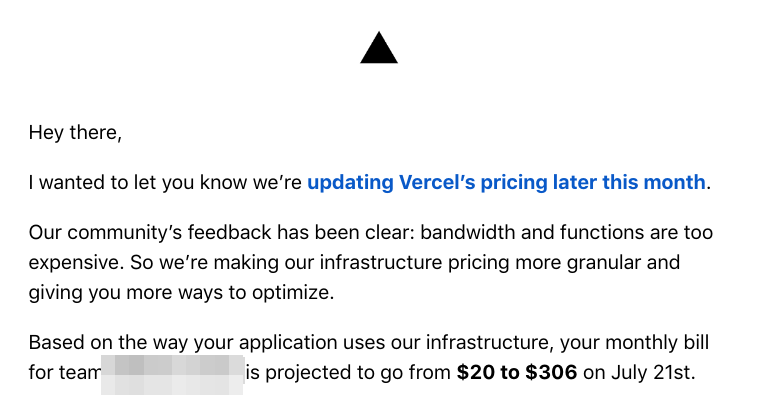
Anything that runs on Vercel could run on a $5/mo VPS cheaper and better

163
138
3,135
901,278
Robin Rump retweeted

22 Feb 2024
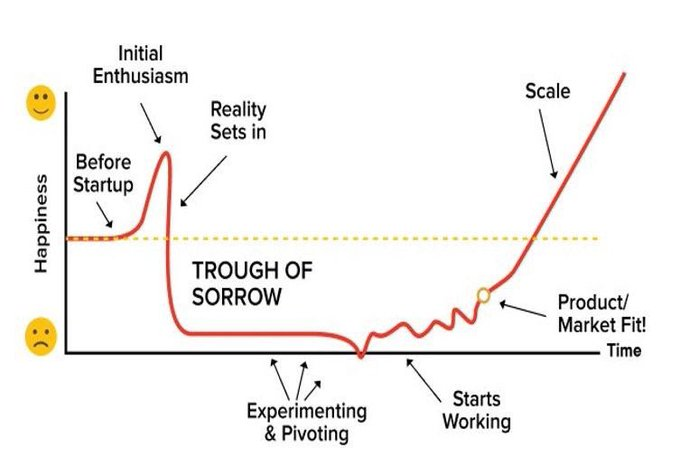
Average journey of a startup founder.
58
74
733
75,346
22 Feb 2024
One thing I learned this week: People love maps. 🗺️
Doesn’t really matter what’s on it, any semi important data visualized on the earth set will drive engagement on social media 😀
2
13
955