
@chris_j_paxton, @micoolcho & @DJiafei geeking out weekly with authors of robotics AI papers. On YouTube / X / Spotify / Substack
Joined February 2025
- Tweets 303
- Following 3
- Followers 5,611
- Likes 17
277 Photos and videos






Pinned Tweet

Jun 1
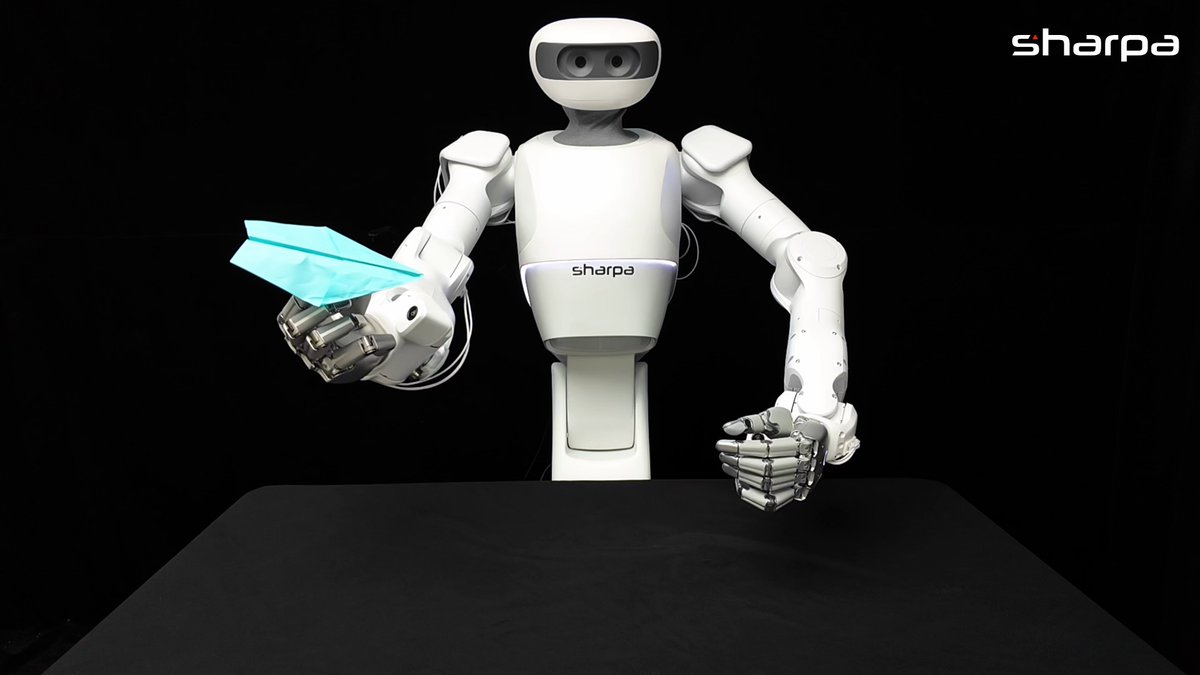
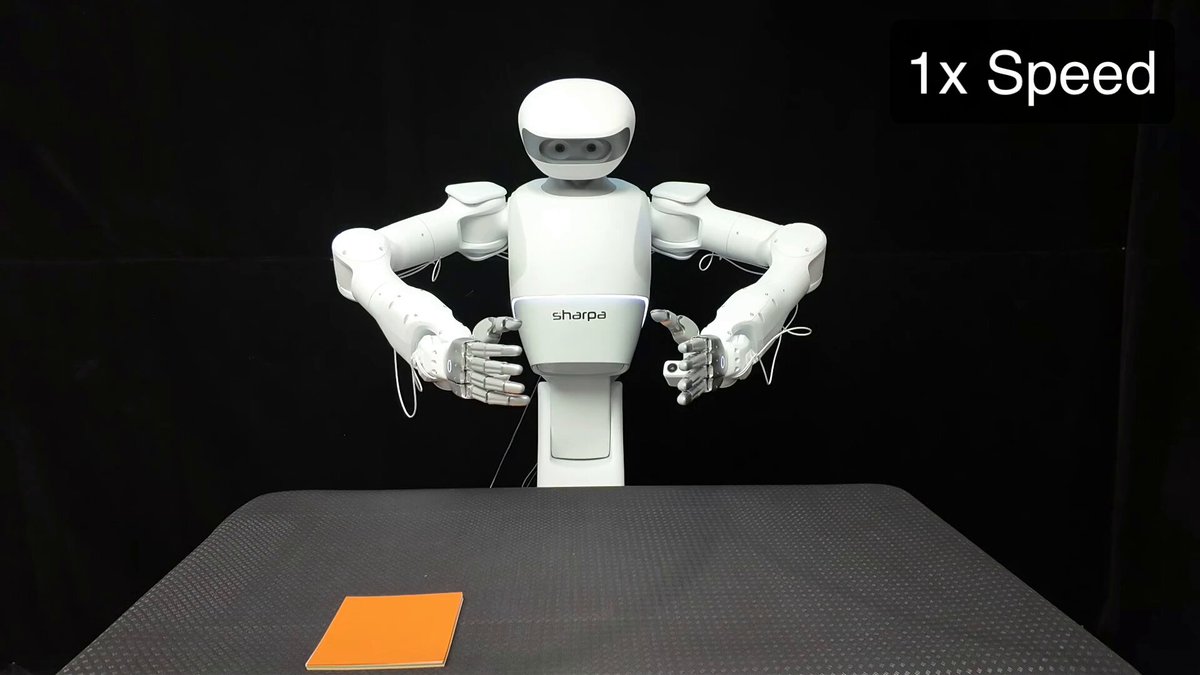
3 of us @micoolcho @chris_j_paxton @DJiafei are super excited to help organize the Robotic Origami Competition at IROS (Sept 2026), along with @BitRobotNetwork @SharpaRobotics @LightwheelAI @hq_fang @sanatem @Noriaki_Hirose @gao_young
Calling for teams!
3
12
60
34,326
Jun 12
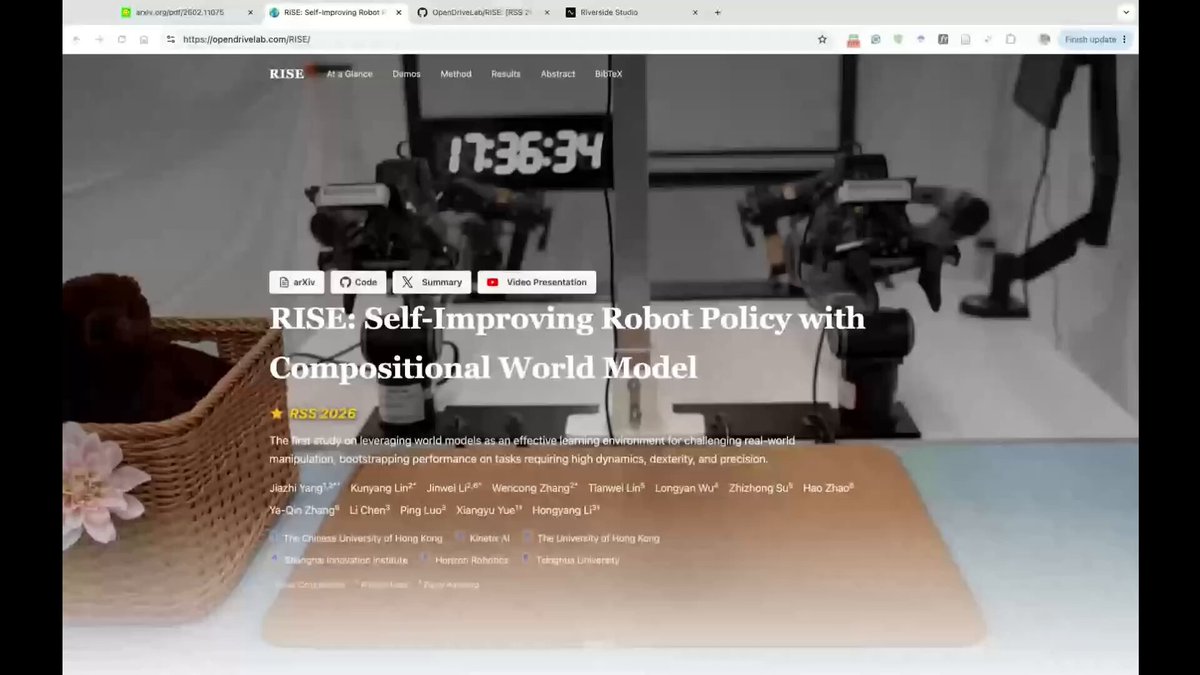
Robot policies must be both reliable and highly capable to be useful; the best way to achieve this level of performance is with reinforcement learning. However, for reinforcement learning you are usually stuck between two difficult options: reinforcement in the real world is often risky and expensive, while reinforcement learning in a traditional simulator takes a lot of engineering work and has a persistent sim-to-real gap. What if instead you could train your robot purely in a world model?
RISE by @jiazhi_yang2024 et al. uses a compositional world model to predict the future and evaluate progress. This allows for a self-improving pipeline, which learns a world model from real data and then learns how the robot should perform different tasks. This pipeline results in a data-driven way to improve policy performance from real data but without real-world reinforcement learning.
Watch Episode #86 of RoboPapers, with @chris_j_paxton and @DJiafei, to learn more!
2
18
74
36,690
Jun 10
Can humanoids assemble IKEA furniture?
Calling for competing teams at IROS 2026!
Co-organized by @UnitreeRobotics @BitRobotNetwork @LightwheelAI etc
Jun 10

We’re excited to partner with BitRobot Network, Lightwheel AI, Singapore Institute of Technology and contributors like Jie Tan (Deepmind), Steve Xie (Lightwheel), Michael Cho (FrodoBots), etc.
Looking forward to push the boundary of humanoid loco-manipulation in this Humanoid IKEA Assembly Challenge!
3
3
17
3,301
Jun 9
Full episode dropping soon!
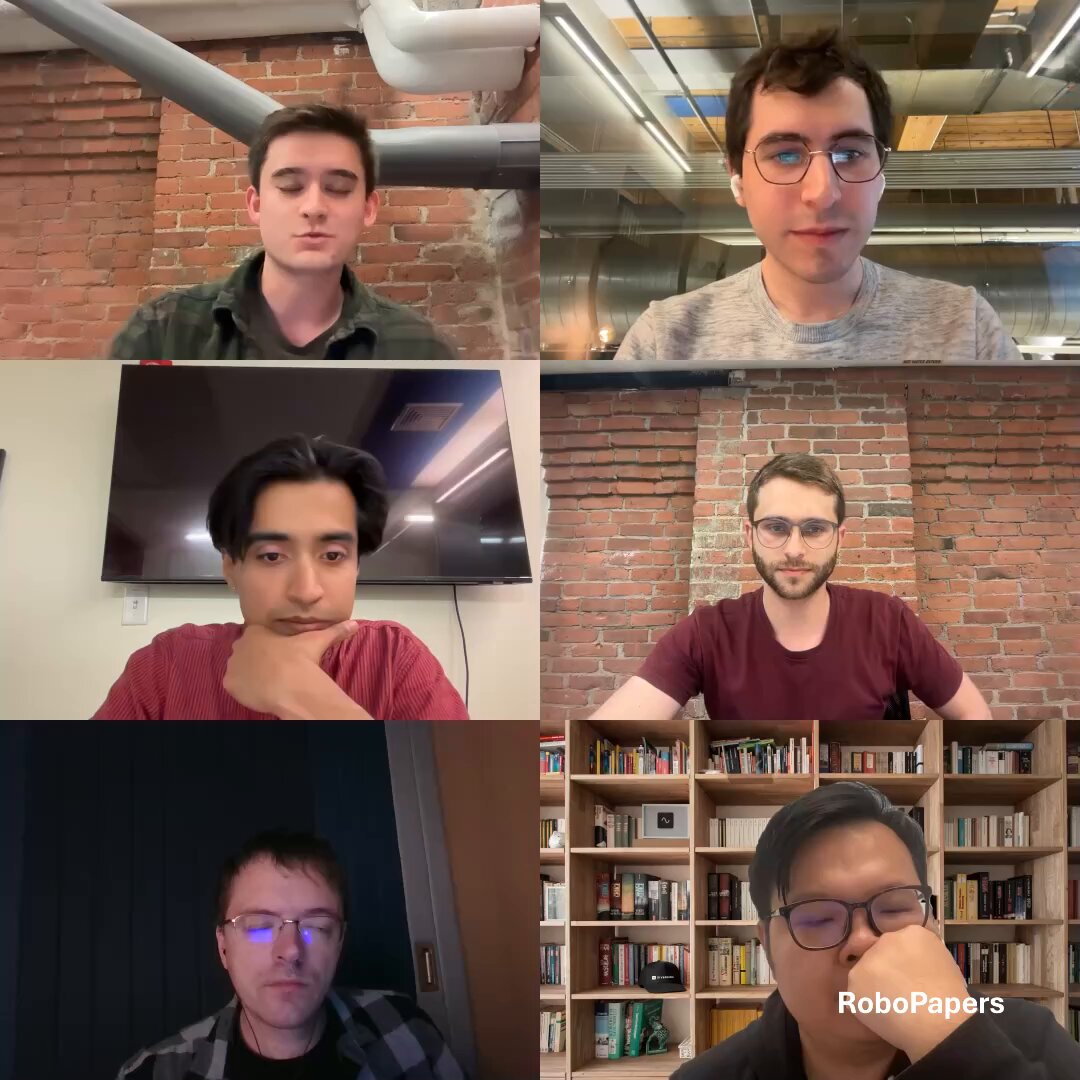
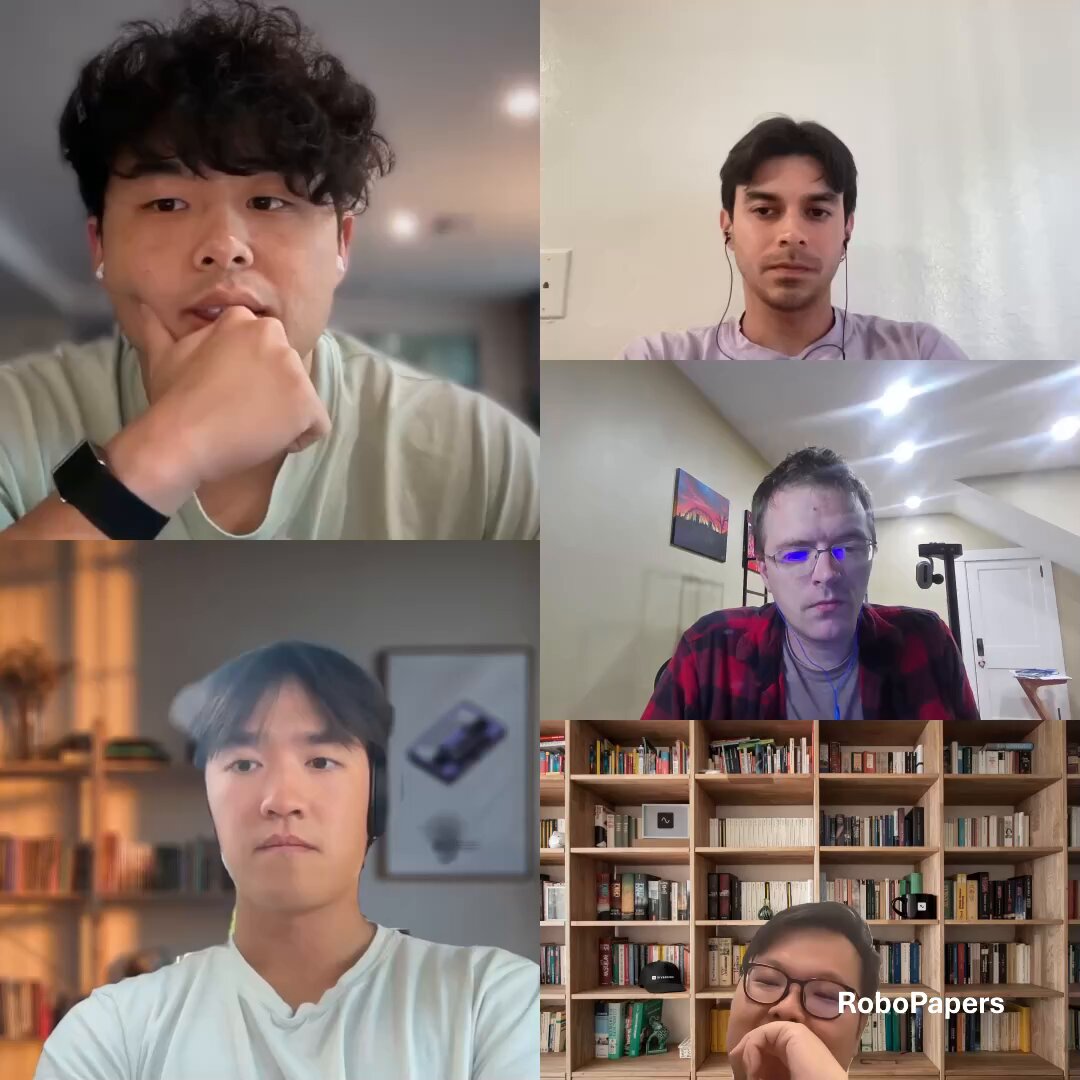
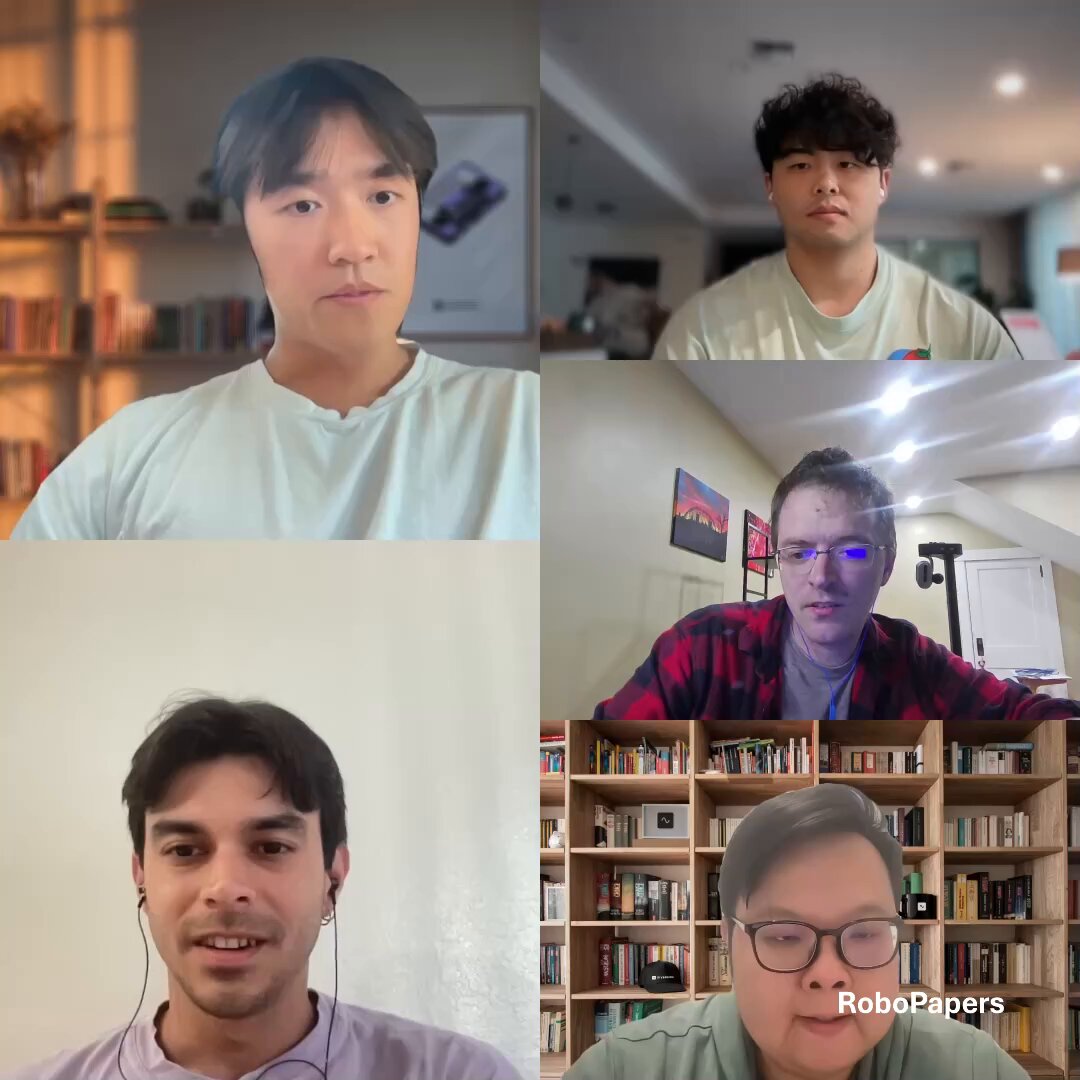
Geeking out with @jiazhi_yang2024 on RISE: Self-Improving Robot Policy with Compositional World Model opendrivelab.com/rise/
Co-hosted by @chris_j_paxton @DJiafei
3
13
1,705
Jun 8
Full episode dropping soon!
Geeking out with @jiazhi_yang2024 on RISE: Self-Improving Robot Policy with Compositional World Model opendrivelab.com/rise/
Co-hosted by @chris_j_paxton @DJiafei
3
9
50
13,628
Jun 4
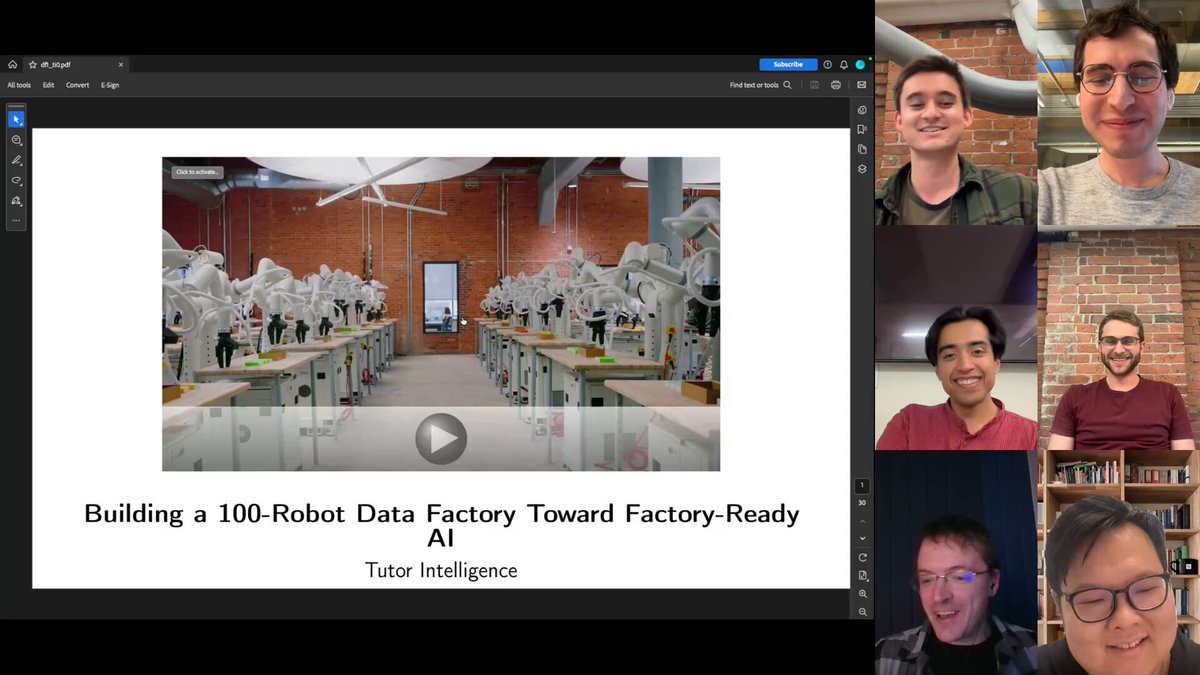
Collecting robot data at scale is key to deploying working manipulation policies, and the team from Tutor Intelligence @tutorintel is here to tell us about how to accomplish it. Their new announcement: a massive, 100-robot “data factory,” with a behind-the-scenes look at how to build a teleoperation platform and how to make robots and policies that are useful for their customers.
Tutor Intelligence is a full-stack robotics company: they build robot arms, they sell robot arms, they write the software and they train neural networks. @joshgruenstein, @JesseMMichel, @shirazkn, and
Joe McCalmon, and Joe McCalmon join us to tell us more about how they scale both teleop data and human interventions from their teleoperators in order to train the policies they need.
Watch Episode #85 of RoboPapers, with @chris_j_paxton and @DJiafei, to learn more!
5
7
46
35,644
Jun 2
Full episode dropping soon!
Geeking out with @joshgruenstein @JesseMMichel @shirazkn Joe McCalmon on @tutorintel
Co-hosted by @chris_j_paxton @DJiafei
4
6
1,320
Jun 2
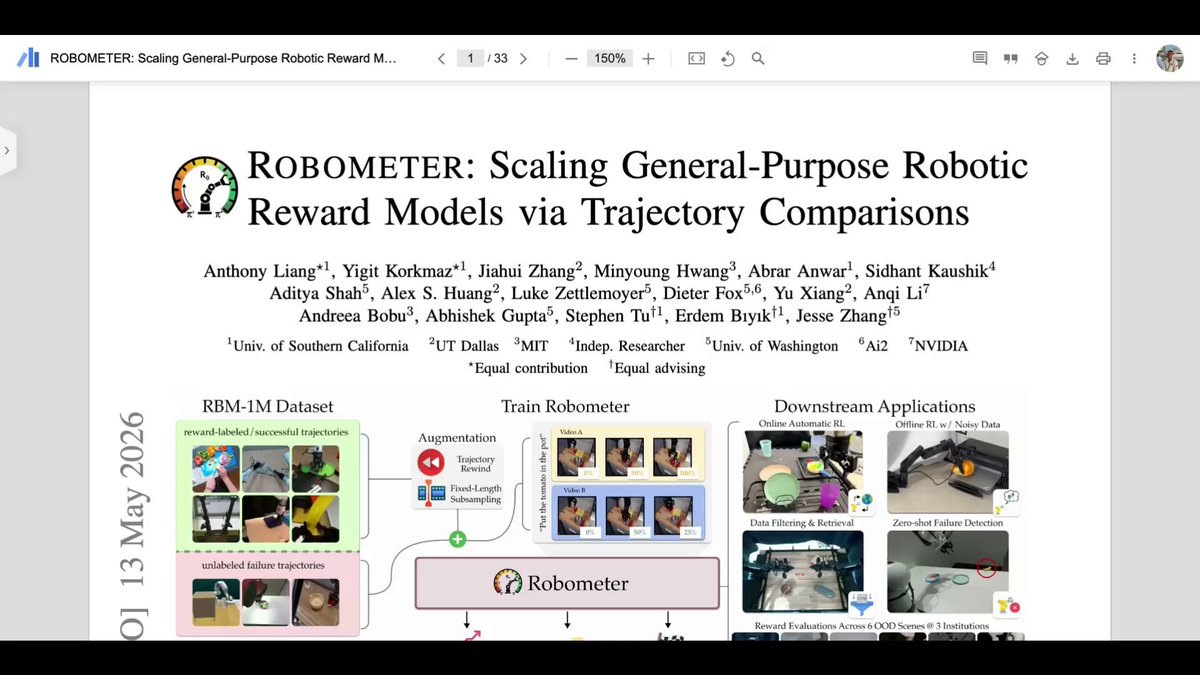
Learning robust, general-purpose reward functions for robotics unlocks many potential applications, like on-robot reinforcement learning or dataset validation. However, there’s a question of how to actually train such reward functions. Training success/failure prediction leads to ambiguous signals partway through a demonstration — it’s hard to measure progress — making the method unsuitable for reinforcement learning, among other things. Predicting progress, on the other hand, does not give a good way of using failure data.
So why not do both? Robometer combines both progress and preference supervision, resulting in a stable, scalable, and highly general reward learning approach. @aliangdw @yigitkkorkmaz
and @Jesse_Y_Zhang join us to tell us more.
Watch Episode #84 of RoboPapers, with Chris Paxton and Jiafei Duan today!
5
36
14,201
Jun 1
3 of us @micoolcho @chris_j_paxton @DJiafei are super excited to help organize the Robotic Origami Competition at IROS (Sept 2026), along with @BitRobotNetwork @SharpaRobotics @LightwheelAI @hq_fang @sanatem @Noriaki_Hirose @gao_young
Calling for teams!
3
12
60
34,326
Jun 1
Interested to learn more?
Register for our info sessions here: robotic-origami-challenge.gi…
1
3
485
Jun 1
Can't wait to push the boundary of dexterous manipulation with our collaborators: Nippon Origami Association @BitRobotNetwork @LightwheelAI @SharpaRobotics @sanatem @hq_fang @Noriaki_Hirose @gao_young
2
482
Jun 1
Full episode dropping soon!
Geeking out with @joshgruenstein @JesseMMichel @shirazkn Joe McCalmon on @tutorintel
Co-hosted by @chris_j_paxton @DJiafei
6
10
1,727
May 29
Spatial understanding is important to moving around in complex environments and is a huge part of the challenge of generalizing to new scenes. Most world models, however, largely ignore this spatial dimension, focusing on 2D images.
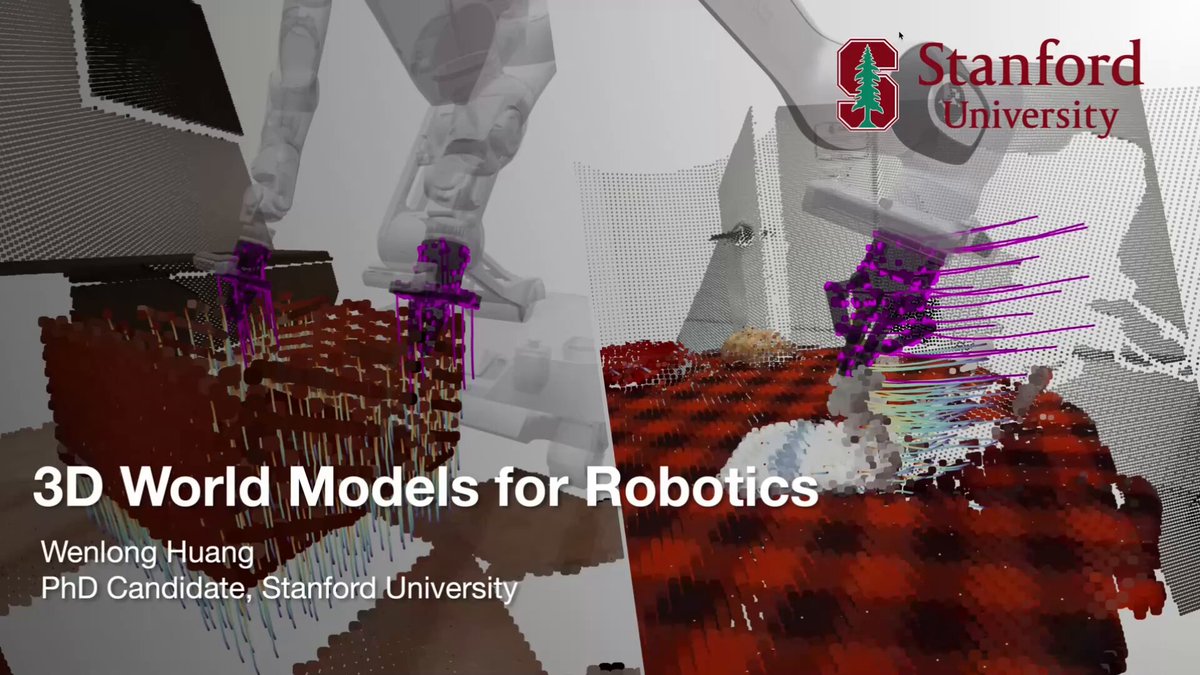
Not PointWorld, though. PointWorld is a 3D world model trained from real and simulated data which can perform a wide variety of manipulation tasks on a real robot, including grasping or handling articulated objects, all without any additional fine tuning. @wenlong_huang joins us to tell us more about what makes this work and how it’s different from other world models.
Watch Episode #83 of RoboPapers, with @chris_j_paxton and @DJiafei, to learn more!
22
68
16,289
May 28
Full episode dropping soon!
Geeking out with @aliangdw @yigitkkorkmaz @JiahuiZhang__32 on Robometer: Scaling General-Purpose Robotic Reward Models via Trajectory Comparisons robometer.github.io/
Co-hosted by @chris_j_paxton @DJiafei
6
24
2,346
May 27
Full episode dropping soon!
Geeking out with @aliangdw @yigitkkorkmaz @JiahuiZhang__32 on Robometer: Scaling General-Purpose Robotic Reward Models via Trajectory Comparisons robometer.github.io/
Co-hosted by @chris_j_paxton @DJiafei
1
8
37
3,130