
Climate Scientist and #IPCC Lead Author. I put the ocean in a /shell/ and throw that shell back into the ocean. Occasionally that rains back as monsoon stories
Joined June 2008
- Tweets 3,445
- Following 644
- Followers 8,246
- Likes 15,903
851 Photos and videos


Pinned Tweet

May 3
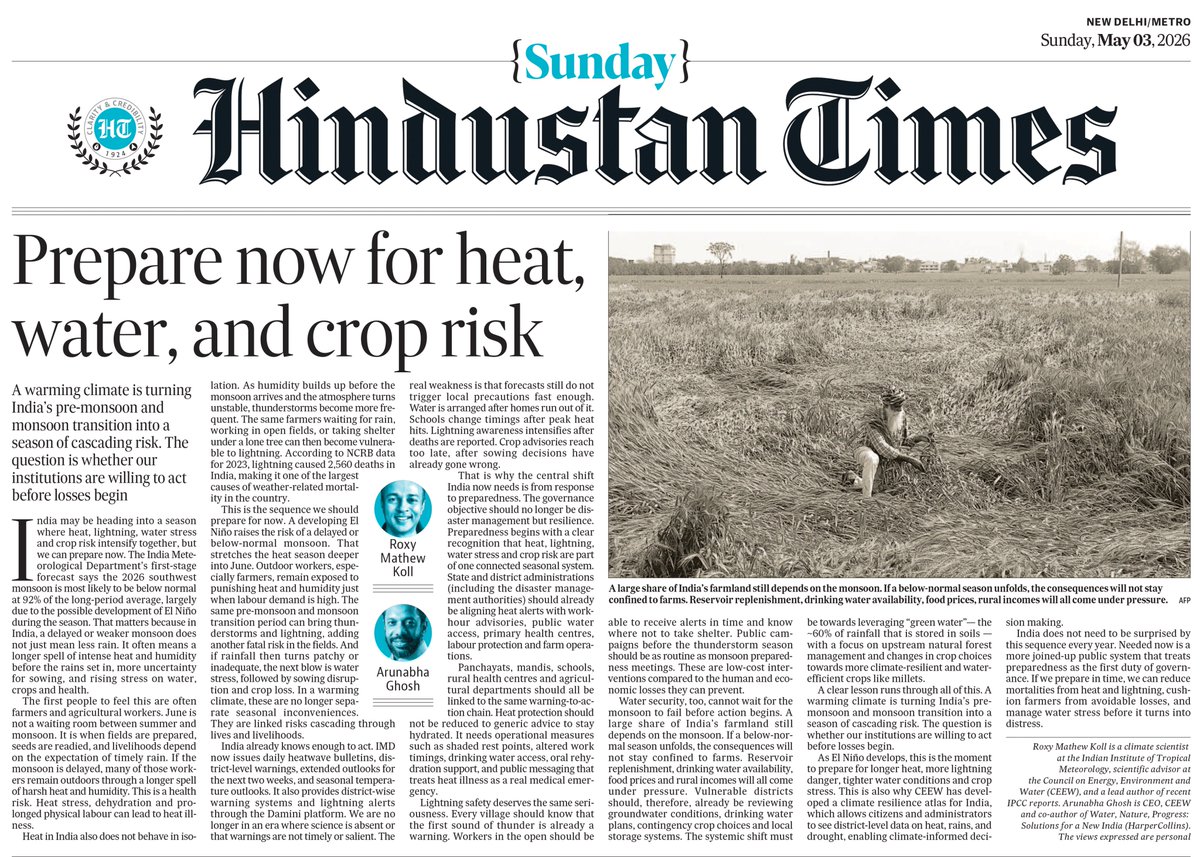
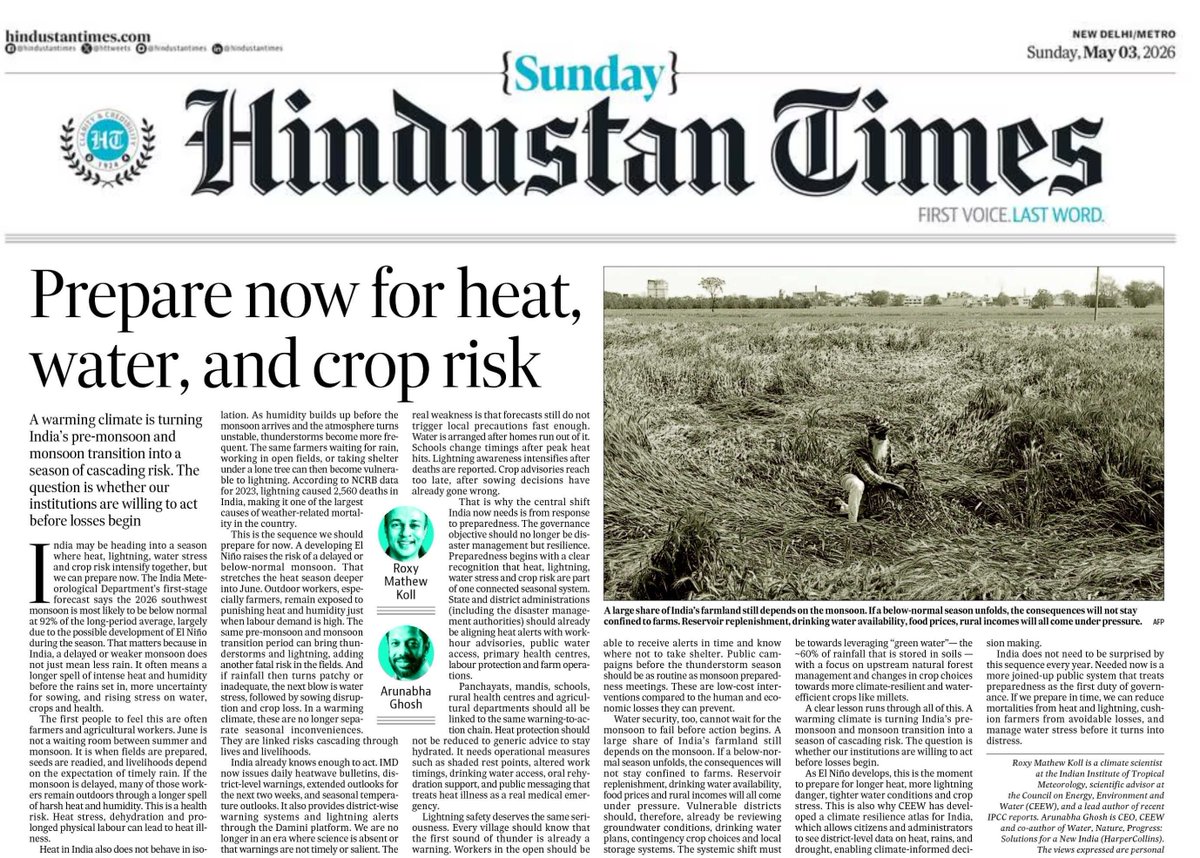
Prepare now for heat, water, and crop risk.
As heat intensifies and monsoon turns uncertain, preparedness must begin before distress appears in our fields, reservoirs, and homes.
Arunabha Ghosh @GhoshArunabha and I write @htTweets on why India must act before damage begins.
2
5
22
874
Roxy Koll ⛈ retweeted

May 25
काल रात्रीही मुंबईत तापमान 30 अंश होतं. हे आता नेहमीचं होऊ लागलंय. उन्हाळ्यात दिवस-रात्र भट्टीत किंवा कुकरमध्ये शिजून निघतोय असंच वाटतं. उष्णता ही फक्त दिवसाची समस्या राहिलेली नाही, रात्रीही ती घातक ठरू लागली आहे.
@RockSea
bbc.com/marathi/articles/cvg…
1
4
393
May 4
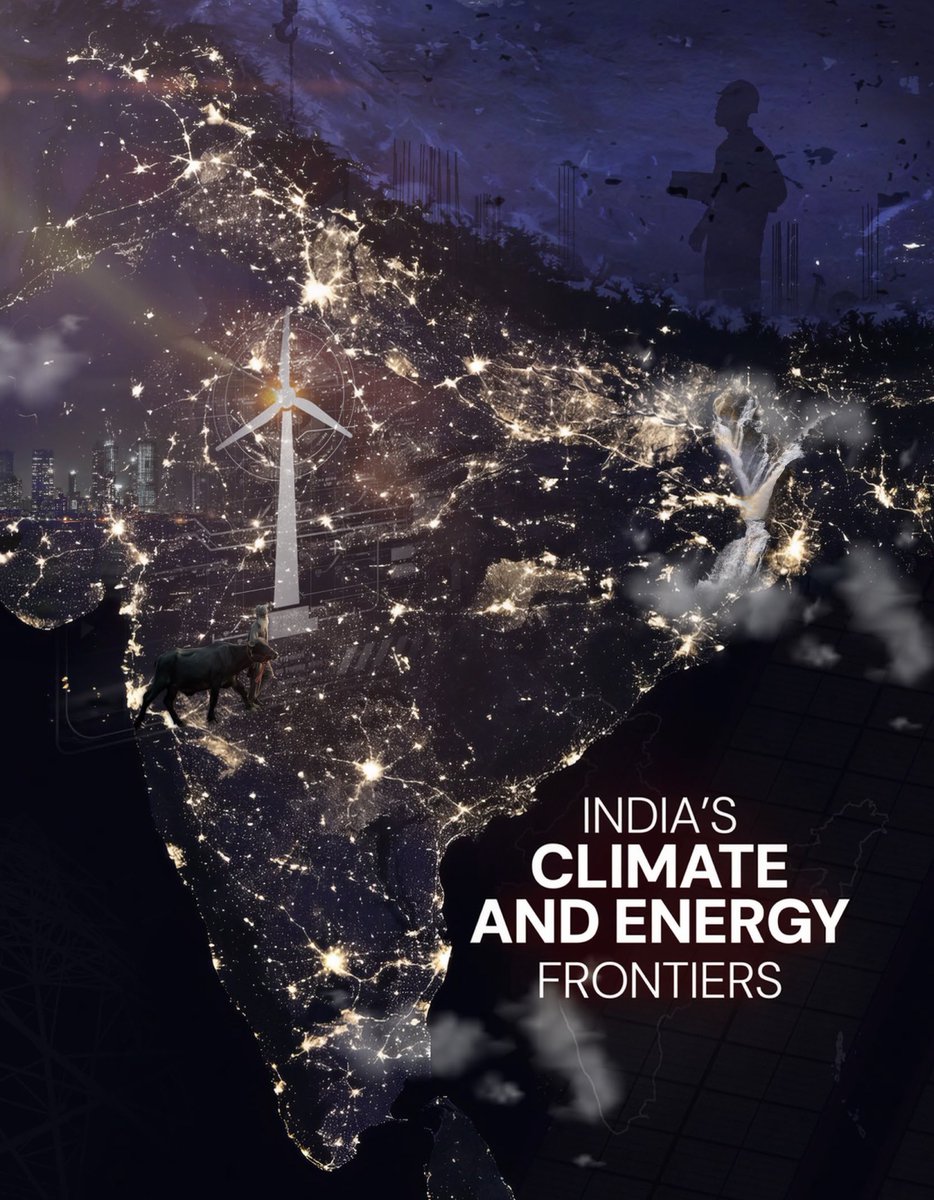
India’s future depends on how we care for energy, water, cities, forests, finance, and people.
Glad to share India’s Climate and Energy Frontiers, a new @SchmidtSciences report shaped through wide consultations with experts across India and beyond.
Read: drive.google.com/file/d/1J1T…
1
7
21
652
May 4
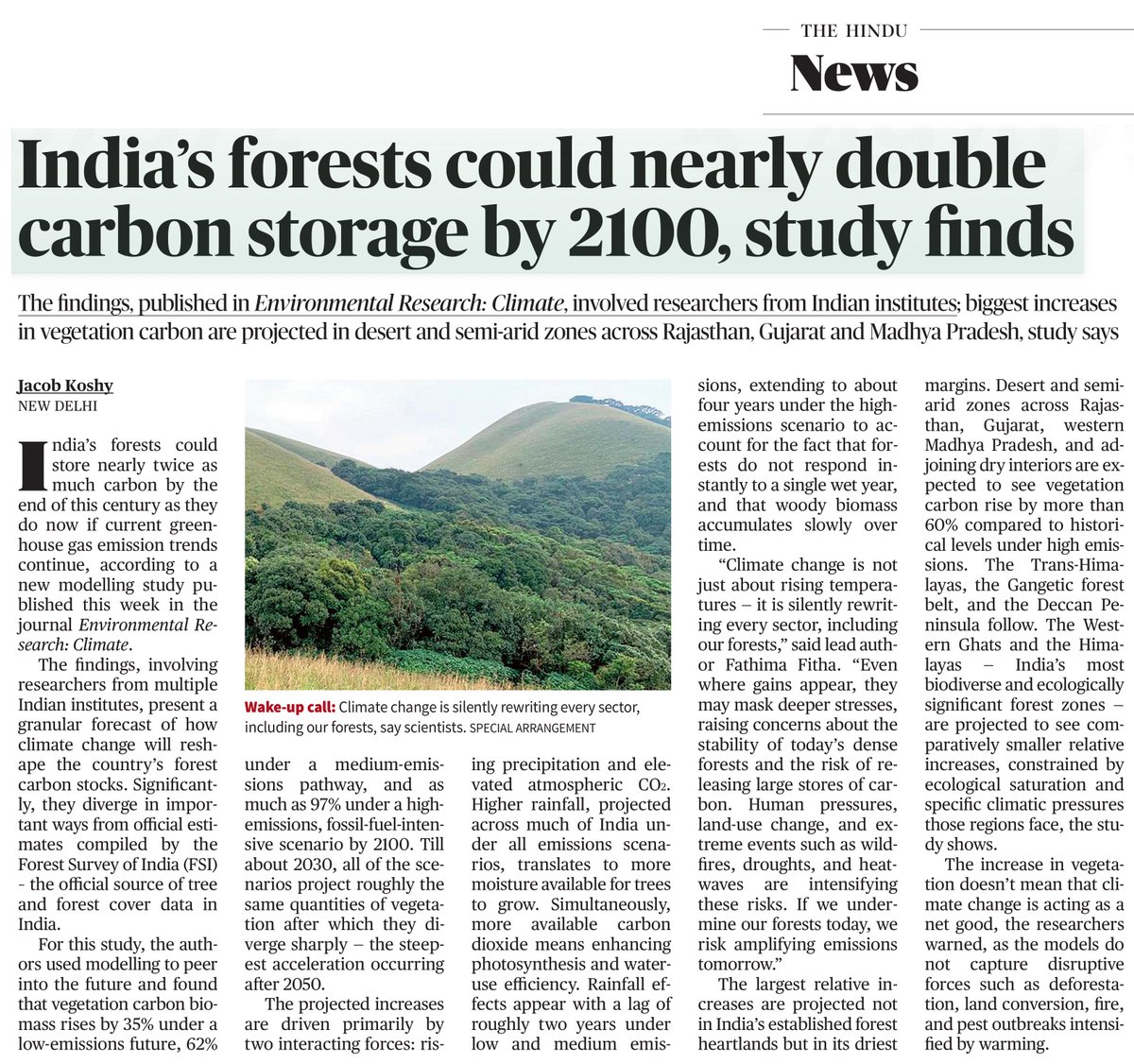
Climate change is reshaping carbon storage across India’s forests.
Our new study shows that the carbon stored in forest vegetation is projected to increase overall through this century, but unevenly across regions.
Read: doi.org/10.1088/2752-5295/ae…
2
3
28
1,296
May 4
The largest gains are projected over the Desert and Semi-Arid regions, followed by the Trans-Himalaya, Indo-Gangetic Plain, and Deccan Peninsula, while the Western Ghats, Northeast, and Himalayan regions show comparatively smaller increases.
1
2
232
May 4
Few years ago, Fitha and Mareena came to work with me at IITM for their Master’s thesis, with limited resources but a lot of sincerity and determination. They stayed with the problem and followed it up even after their internship. That effort has now grown into a published paper.
2
2
141
May 3
Prepare now for heat, water, and crop risk.
As heat intensifies and monsoon turns uncertain, preparedness must begin before distress appears in our fields, reservoirs, and homes.
Arunabha Ghosh @GhoshArunabha and I write @htTweets on why India must act before damage begins.
2
5
22
874
May 3
In a warming climate, heat, lightning, water stress, and crop risk do not arrive separately. They cascade into one another, and that is why preparedness cannot wait.
Read the full op-ed here (PDF):
climate.rocksea.org/images/c…
3
148
Roxy Koll ⛈ retweeted

May 3
India may be heading into a season where heat, lightning, water stress and crop risk intensify together.
@RockSea Roxy Mathew Koll and I argue that India must shift from reacting to these risks to preparing for them as one connected system. A weaker or delayed monsoon extends heat and humidity, increases exposure for farmers and outdoor workers, raises the risk of thunderstorms and lightning, and, could also lead to water stress, sowing disruptions, and crop losses. In a warming climate, these are cascading interconnected risks.
In today's @htTweets, we outline what this preparedness looks like in practice 👇
6
46
112
7,639
Roxy Koll ⛈ retweeted

May 2
#Opinion | A warming climate is turning India’s pre-monsoon and monsoon transition into a season of cascading risk. The question is: are our institutions willing to act
Read more about it: hindustantimes.com/opinion/p…
@RockSea & @GhoshArunabha ✍🏻
4
6
944
Apr 24
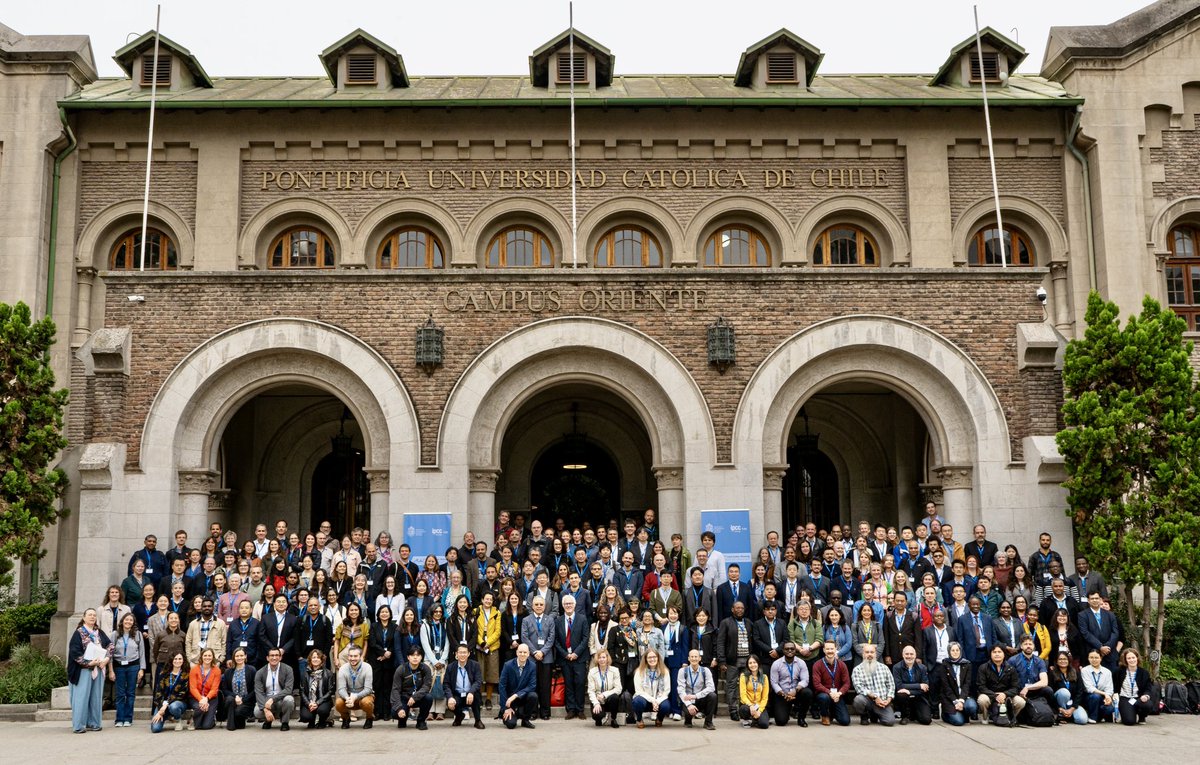
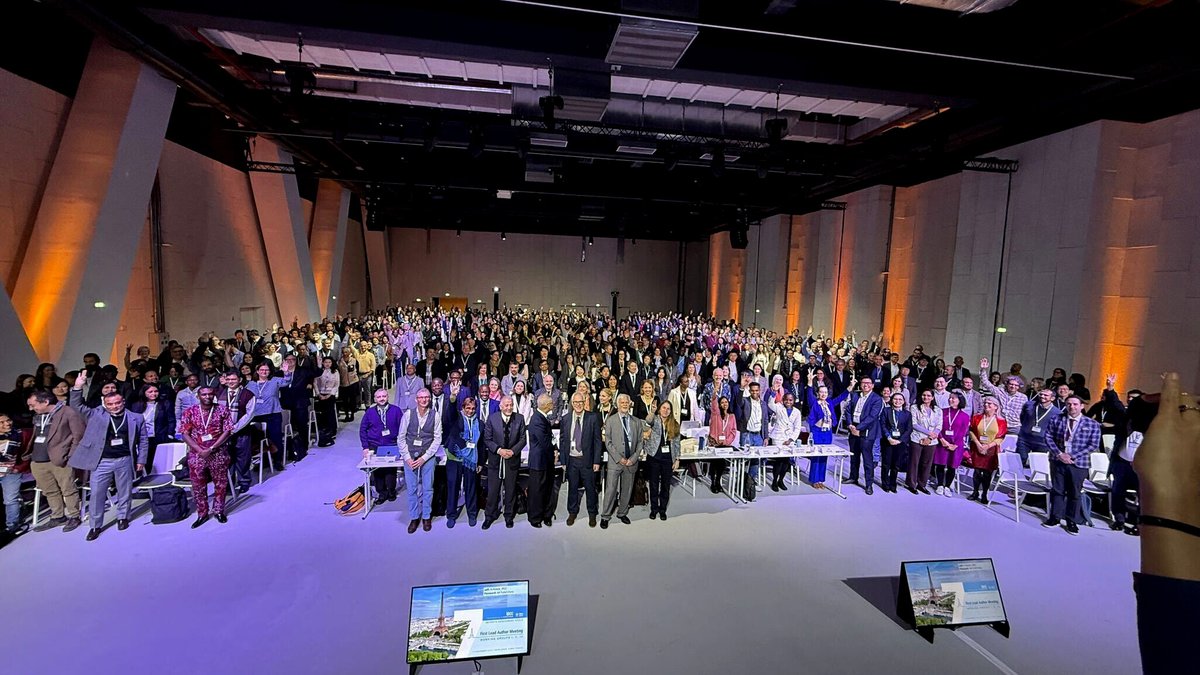
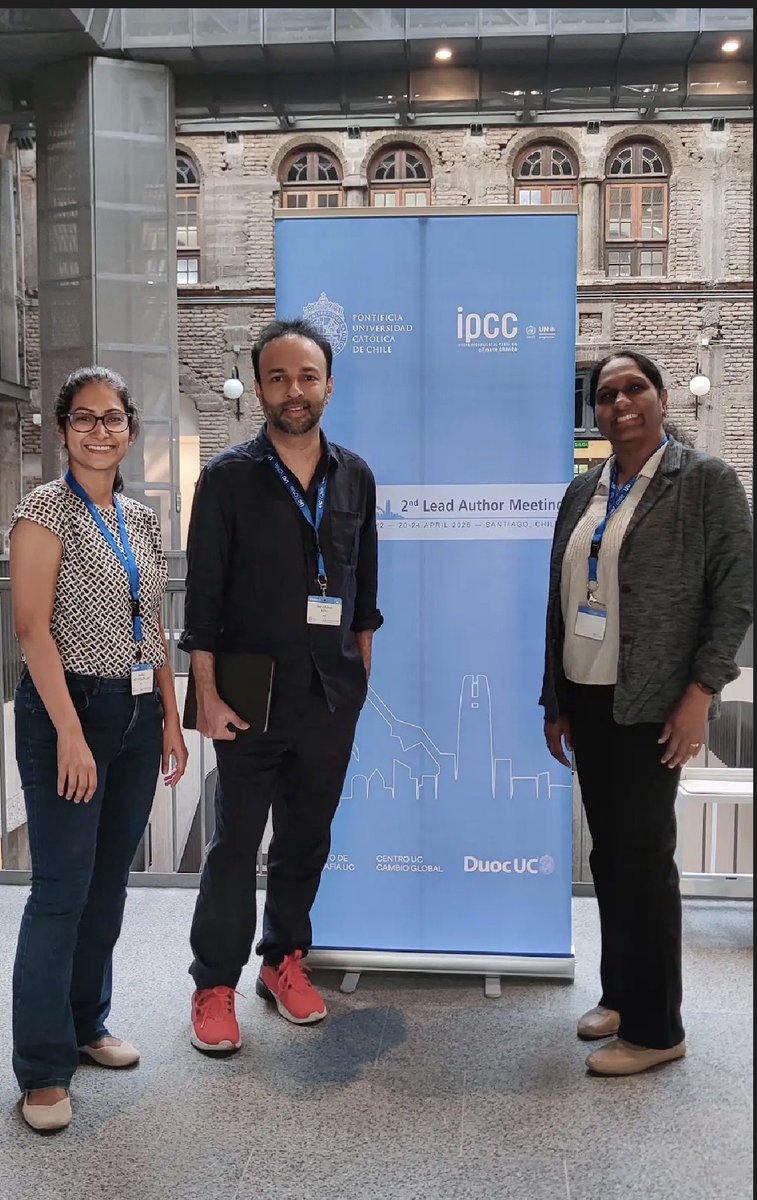
At the Second Lead Author Meeting of the IPCC Seventh Assessment Report, working on the physical science of past, present, and future climate change. Santiago, Chile.
Read the full press release here: 🔗 ipcc.ch/2026/04/23/ipcc-lam2…
1
1
4
192
Apr 24
This second Lead Author Meeting builds on initial discussions held in Paris in December 2025 and marks a significant step toward a robust scientific assessment of our climate.
The First Order Draft will be open for expert review from 10 August to 2 October 2026.
1
143
Roxy Koll ⛈ retweeted

Apr 23
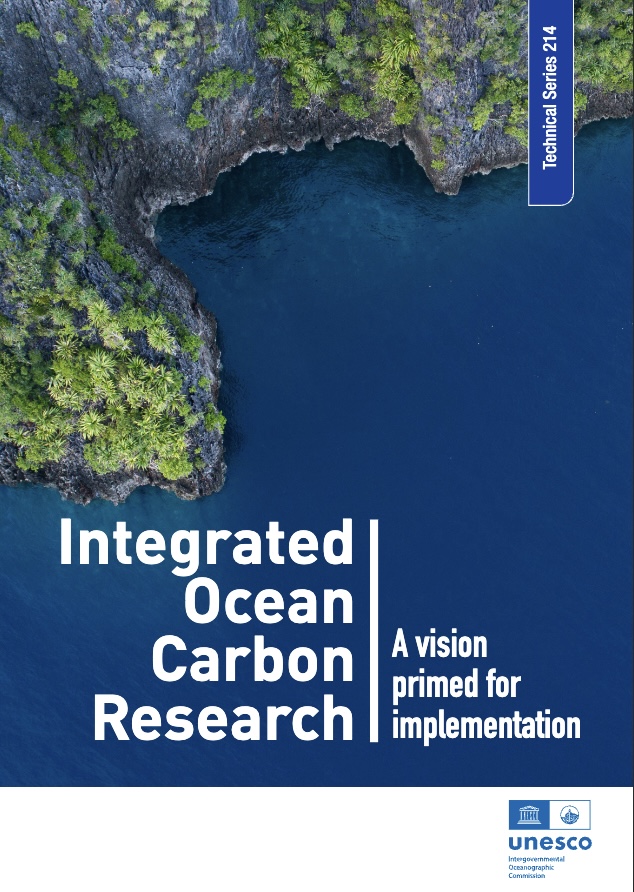
The Intergovernmental Oceanographic Commission has published the Report: Integrated Ocean Carbon Research (IOC-R): a vision primed for implementation.
This is a global community effort with 72 authors and 13 reviewers from 23 countries.
unesdoc.unesco.org/ark:/4822…
6
10
452

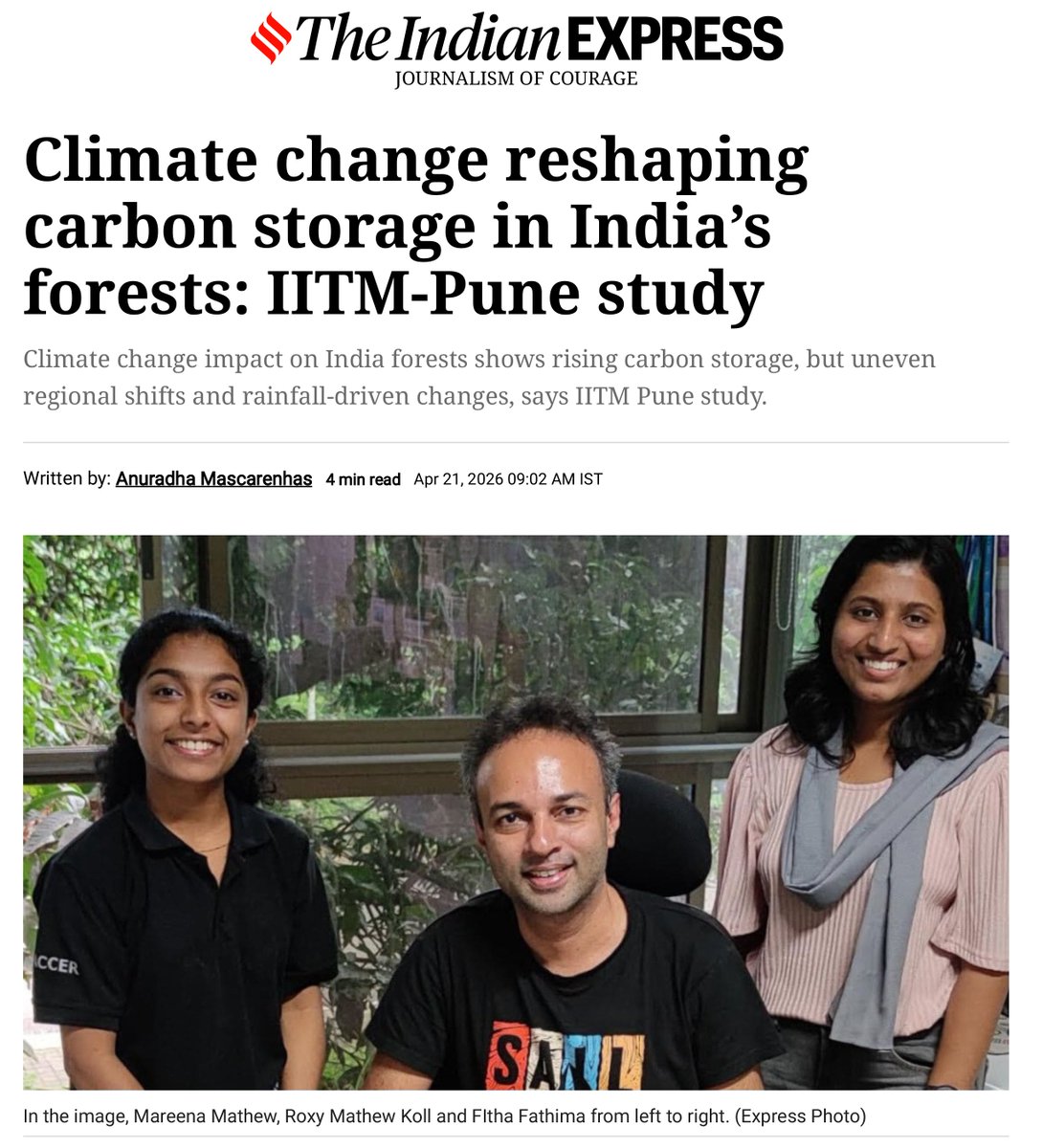
IITM in News:
Climate change reshaping carbon storage in India’s forests
Climate change impact on India forests shows rising carbon storage, but uneven regional shifts and rainfall-driven changes, says IITM Pune study.
Indian Express, 21.4.2026 @RockSea indianexpress.com/article/ci…
2
7
255
Roxy Koll ⛈ retweeted

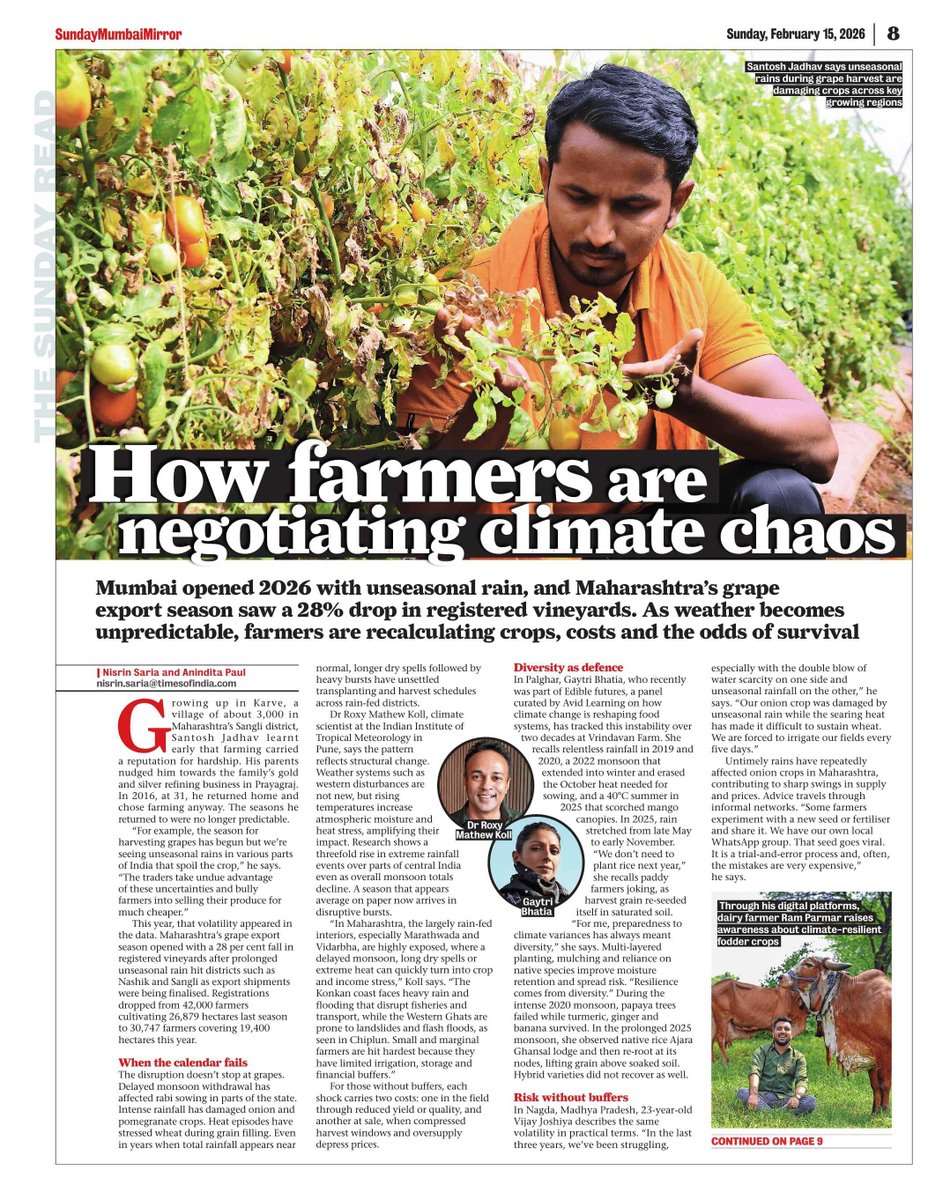
Climate models suggest a ‘strong’ El Niño this year. Chirag Dhara & @RockSea wrote in 2023 that the forecast of its impact on Indian monsoon have led the @IPCC_CH to assess India as the most vulnerable nation in Asia concerning impacts on crop production
theindiaforum.in/climate-cha…
2
6
424
Roxy Koll ⛈ retweeted

Mar 24
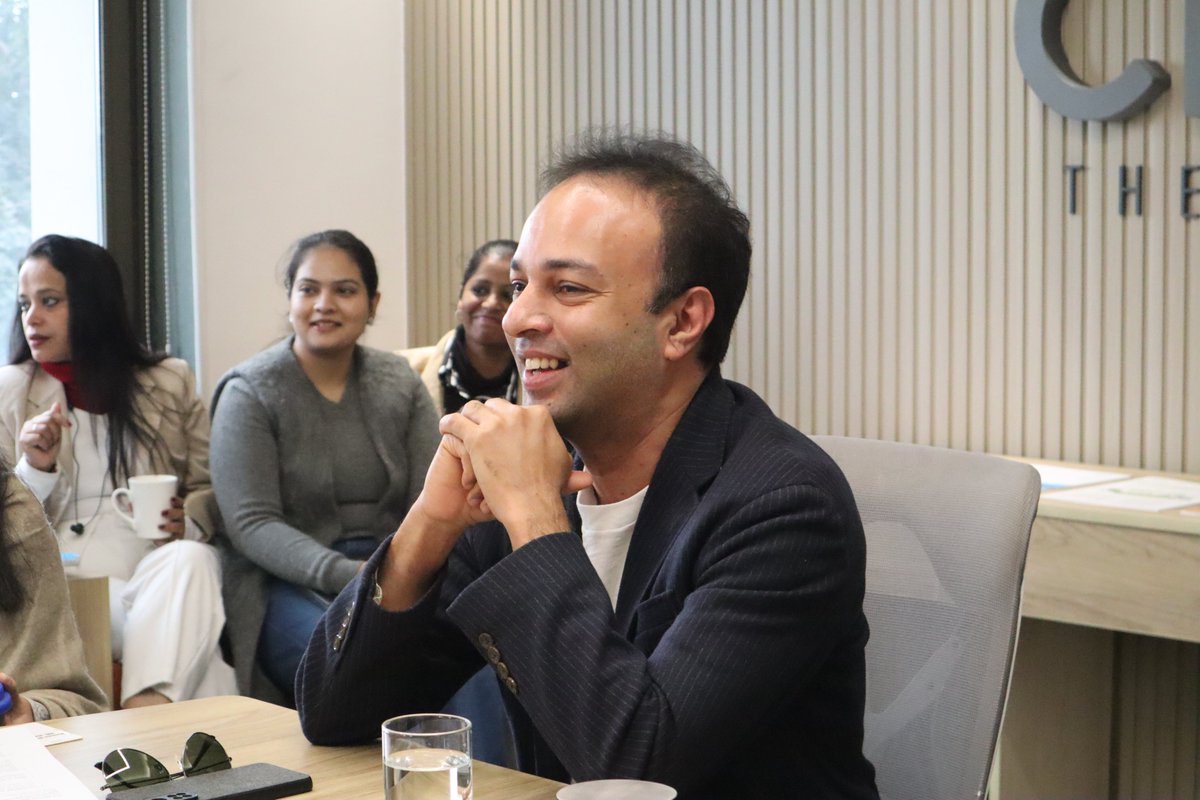
We are delighted to welcome Dr Roxy Mathew Koll as a Non-Resident Fellow at CEEW!
A leading Indian climate scientist at @iitmpune Dr Roxy is widely recognised for his pioneering work on the Indian Ocean, monsoon dynamics, and extreme weather events. He was involved in writing the IPCC Special Report on the Ocean and Cryosphere in a Changing Climate and the Sixth Assessment Report.
Dr Koll completed his Ph.D. in Ocean and Atmospheric Dynamics from Hokkaido University, Japan in 2007 and also worked as a Research Scientist at the Euro-Mediterranean Center on Climate Change in Bologna, Italy.
Koll's research has influenced national climate policies and disaster management strategies, especially in the Indian Ocean region. He actively communicates climate science through various media outlets, aiming to bridge the gap between science and society, and the Science Journalists Association of India has referred to him as a 'rockstar scientist'.
As a Non-Resident Fellow at The Council, he will collaborate closely with our teams on key research priorities, bringing sharp scientific expertise to strengthen our work at the intersection of climate science and policy.
1
3
15
826
Mar 24
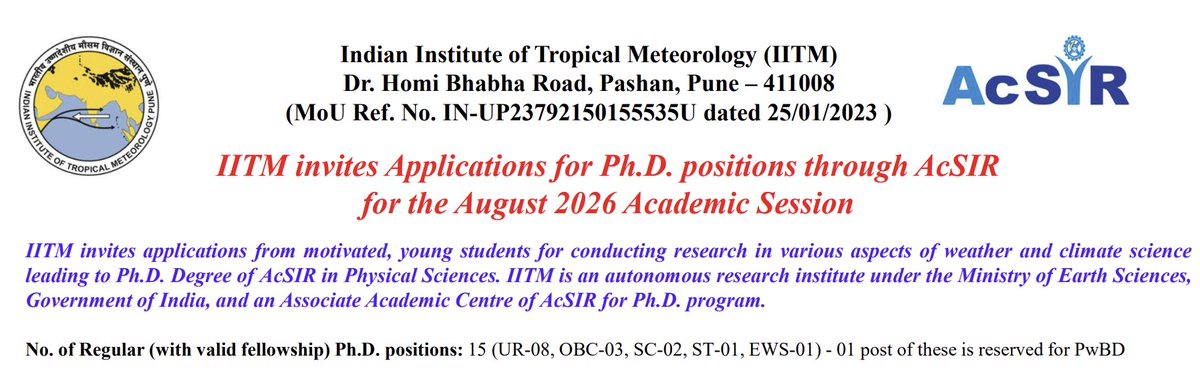
IITM invites applications for Ph.D. positions in weather and climate science for the August 2026 Academic Session.
Check the details and apply: tropmet.res.in/464-news_deta…
4
12
696
Mar 16
At CLIVAR we are looking for Experts in the following areas to join the CLIVAR Scientific Steering Group (SSG)
1. AI/Machine Learning with Climate Application
2. Data Assimilation and Reanalysis
3. Paleoclimate
Mar 12

📢 Call for Experts: AI, Machine Learning, Data Assimilation and paleoclimate for the CLIVAR Scientific Steering Group (SSG)
The SSG appointments starting in January 2027 and 2028.
Deadline for submissions: April 12, 2026.
Check more details here: clivar.org/news/call-experts…

1
7
565
Roxy Koll ⛈ retweeted

Feb 27
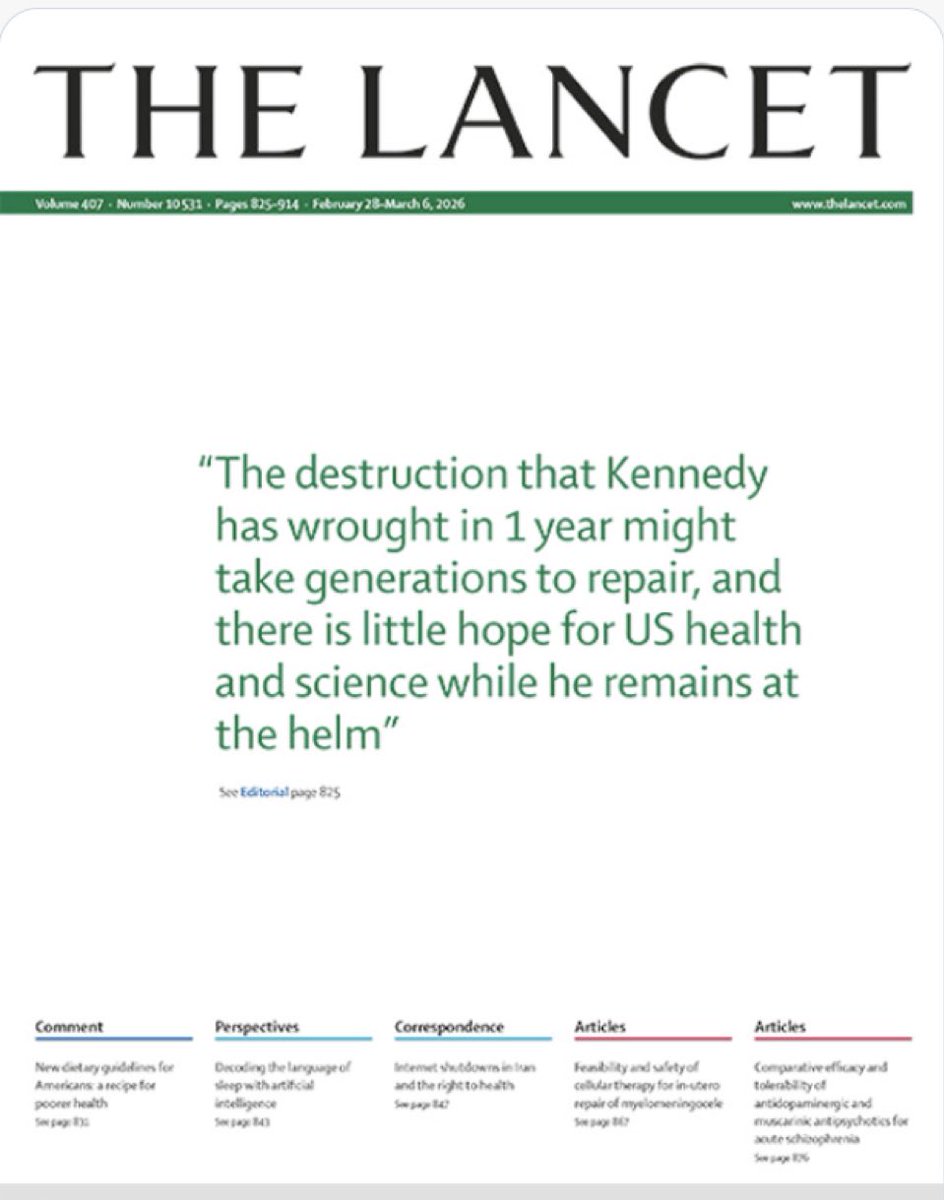
The cover of the Lancet. It says it all.
605
9,438
29,570
822,637
Feb 27
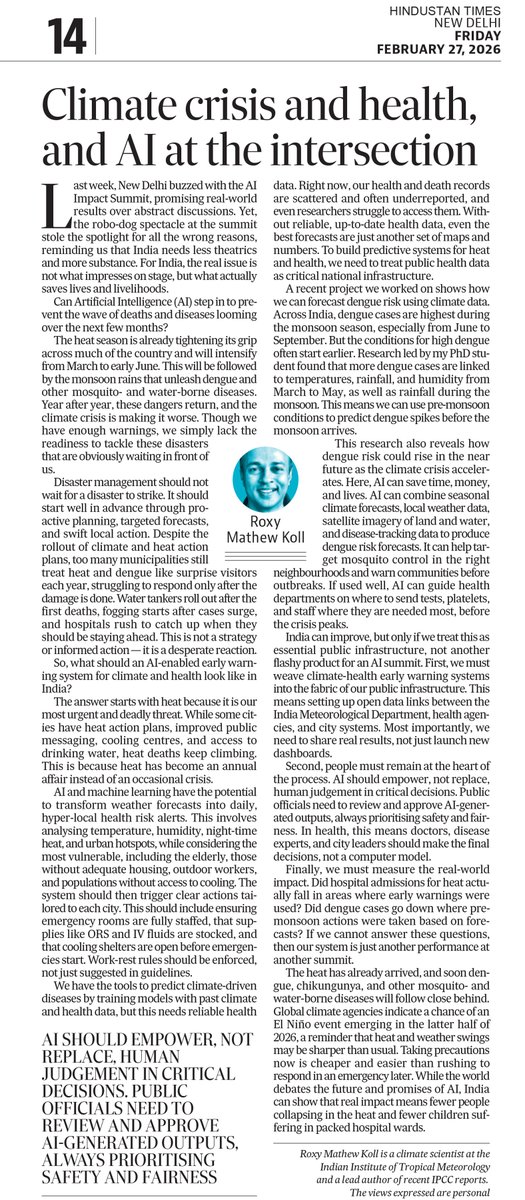
Can AI protect health and save lives?
My Op-Ed in Hindustan Times explains how AI-powered climate-health early warning systems can help us act before heatwaves and disease outbreaks strike, not after.
Read: climate.rocksea.org/images/c…
1
2
9
292