
Software Engineer | Building intelligent backend systems & AI-driven infrastructure. ⚙️ Expert cBot Developer.
Joined May 2023
- Tweets 8,488
- Following 1,605
- Followers 1,315
- Likes 1,000
785 Photos and videos















The Golden Era for Solo Quant Developers is Here 🧵
Having written production software for more than two decades, making the leap into algorithmic trading three years ago was a massive eye-opener. The reality? The retail automated trading space is plagued by poor engineering.
But the game has fundamentally changed. The synergy between AI coding agents and C# within the cTrader API now empowers solo developers to build institutional-grade quantitative systems. If you know how to write robust code, you already possess the ultimate edge.
Here is how you bridge the gap. 👇
The Engineering Foundation: Escaping Legacy Scripting
For too long, retail automated trading relied on clunky, procedural scripting languages. cTrader Automate flips the script by integrating natively with the .NET framework.
This means true Object-Oriented Programming (OOP), asynchronous operations, and access to a massive ecosystem of external libraries. You aren’t just writing "scripts" anymore; you are engineering highly scalable software. As I transition my own flagship systems entirely to the cTrader ecosystem, the architectural superiority of C# becomes undeniably clear.
Plus, building natively for this environment allows you to deploy directly via cTrader Cloud, effectively eliminating the latency and overhead of traditional VPS setups.
The AI Accelerator: Speeding Up the Pipeline, Not Replacing the Engineer
Let’s be clear: AI will not hand you a magical, alpha-generating strategy. If you are looking for a "get rich quick" prompt, you will fail.
Where AI excels is as an architecture accelerator. When building complex multi-regime quantitative systems—especially for highly volatile instruments like XAUUSD—AI drastically cuts down the time required to scaffold your environment.
You can rapidly prototype market data parsers, optimize memory allocation, and generate compile-ready C# boilerplate, freeing you up to focus purely on refining your statistical edge.
Structural Architecture: Decoupling Your Logic
Institutional-grade bots require strict separation of concerns. Do not dump all your logic into a single execution block.
Here is the high-level C# architecture you should be implementing:
MarketAnalyzer Class: Handles tick data, evaluates volatility regimes, and spots structural shifts (e.g., isolating the baseline metrics for a Sovereign Gap Reversal).
RiskManager Class: Completely decoupled from execution. Calculates dynamic position sizing, enforces hard equity stops, and controls drawdown limits.
ExecutionEngine Class: Handles non-blocking, asynchronous API calls to ensure server threads aren't delayed
Rigorous Testing: The Quant Discipline
An elegant C# architecture is worthless without rigorous statistical validation.
Tick-Level Validation: Never trust standard candlestick backtests. Use 100% visual tick data to model realistic spread and slippage.
Out-of-Sample Testing: If your bot only survives the exact data it was trained on, it is over-fitted and will bleed capital in live markets.
Edge-Case Stressing: Code hard fail-safes for flash crashes, API disconnects, and infinite loop order rejections.
The Developer's Advantage
If you are a software engineer, you already know how to modularize, debug, and optimize. By applying these exact same principles to the cTrader Algo API, building automated supplementary income streams is simply an engineering problem waiting to be solved.
Stop treating trading like gambling. Treat it like a software deployment.
Build robustly. Test ruthlessly. 🛠️📈
Building C# Trading Bots in cTrader Automate 👇
youtu.be/rgtfuRNWCns
This video provides a practical, technical walkthrough of the cTrader Automate framework, demonstrating how to construct robust C# trading architectures from scratch without relying on legacy scripting.
5
4
26
3,590
🚀 Grok 4 is pushing AI beyond code completion into autonomous engineering. With 1M token context, multi-agent reasoning, local-first coding, and advanced quant modeling capabilities, SWEs and algo traders can debug faster, refactor safer, and build smarter systems. The era of AI as a true engineering partner is here. #AI #SoftwareEngineering #AlgoTrading
3
3
15
523

🚀 The Grok 4 Era: Rewriting the Rules for SWEs and Quant Devs
The landscape of AI-assisted development just experienced a tectonic shift. With xAI rolling out the Grok 4 ecosystem—spearheaded by Grok 4.3, the multi-agent Grok 4.20, and the dedicated Grok Build coding model—the conversation has moved from “Can AI write boilerplate?” to “How can autonomous agents architect high-frequency trading systems?”
If you are a Software Engineer or an Algorithmic Trading Systems Developer, ignoring this update means leaving massive productivity gains on the table. Here is a technical breakdown of how the latest Grok stack is built to supercharge your workflow.
🛠️ The New Grok Arsenal at a Glance
Before diving into the specific use cases, it helps to understand how xAI has segmented its models in 2026. Instead of a one-size-fits-all chatbot, developers now have a targeted arsenal:
🧠 Grok 4.3
• High efficiency
• 1M token context window
→ Best for: massive codebases, log analysis, long-context reasoning
⚡ Grok 4.20 (Heavy)
• Multi-agent “Big Brain” reasoning
• Deep structured thinking
→ Best for: complex logic, math, quantitative modeling
🧑💻 Grok Build (0.1)
• Agentic, local-first coding workflow
• Optimized for IDEs
→ Best for: fast secure code generation inside dev environments.
💻 Supercharging Software Engineering Workflows
For software engineers, the daily grind isn't just about writing code; it's about debugging, refactoring, and understanding legacy architecture.
1. Massive Context for Codebase Ingestion Grok 4.3 ships with a 1-million token context window (with 4.20 pushing up to 2 million). You no longer need to feed your AI fragmented snippets of code. You can drop entire repositories, API documentation, and complex dependencies into the prompt. It “groks” the global state of your application, making cross-file refactoring significantly safer.
2. Local-First Agentic Coding Security is paramount. The new Grok Build model introduces local-first, agentic coding capabilities. By integrating directly into your IDE or via the Grok CLI, it acts as a parallel developer. It doesn't just autocomplete; it executes code locally, tests it, and iterates on errors without transmitting proprietary enterprise source code back to external servers.
3. Multi-Agent Debugging Grok 4.20 operates on a parallel multi-agent architecture. When you encounter a complex bug, distinct internal agents (handling logic, research, and contrarian verification) cross-check each other's work before delivering an answer. This dramatically reduces hallucinations, saving you from chasing ghost bugs created by the AI itself.
📈 Empowering Algorithmic Trading Systems
Quant developers and algo-trading engineers operate in a domain where latency is king, math is brutal, and data is noisy. The Grok 4 suite offers unique alpha for this highly specialized field.
Real-Time Sentiment & Live Data Ingestion: Trading algorithms thrive on data. Grok’s native tool use includes the unparalleled live search API, which queries real-time data across X and the broader web. You can pipe Grok into your models to instantly parse macro events, earnings call transcripts, or real-time social sentiment, giving your predictive models a massive informational edge.
"Big Brain" Logic for Quant Modeling: Grok 4.20 Heavy features a "Big Brain" reasoning mode specifically trained to excel in complex logic, advanced math, and scientific analysis. Whether you are translating complex stochastic calculus from a recent quantitative finance paper into low-latency C or optimizing Rust memory allocation for a high-frequency trading engine, the logic-centric agents provide mathematically sound, production-ready implementation.
Contrarian Analysis: One of the unique agents in the 4.20 architecture is specifically designed for contrarian analysis. When you propose a new trading strategy or backtesting parameter, you can prompt Grok to actively stress-test your logic, finding edge cases,
4
3
24
804
overfitting risks, or macro-environmental blind spots you might have missed.
The Bottom Line: We are moving past the era of AI as a simple autocomplete tool. Grok’s 2026 stack offers a parallel, reasoning-heavy engineering partner. Whether you are building scalable web infrastructure or chasing microsecond alpha in the markets, integrating these agentic workflows is the new baseline for top-tier development.
Have you integrated any of the new Grok 4 APIs into your IDE or trading stack yet? Drop your experiences or questions below! 👇
2
10
220
Visual Studio 2026: Why the "Intelligent Developer Environment" is a Game Changer for Engineering Productivity
As engineers, our biggest enemy isn't complex logic—it's friction. We've all felt the drag of slow load times, context switching, and repetitive boilerplate. With the rollout and recent updates of Visual Studio 2026, the tooling landscape has officially matured. Microsoft hasn't just updated an IDE; they've shipped an AI-native workspace that actively respects our time and momentum.
Whether you're architecting low-latency backends or deploying cloud-native infrastructure, the gap between idea and execution has never been smaller. Here is how VS 2026 is maximizing developer productivity across the board:
1. Deeply Integrated, Context-Aware AI
We’re well past the era of simple autocomplete. The Copilot integration in VS 2026 doesn't just read your current file; it understands your entire workspace. With an expanded context window spanning solutions, repos, and terminal commands, it enables true agentic workflows. Whether you are refactoring legacy architecture or utilizing the Copilot Profiler Agent to optimize performance, the AI acts as a deeply informed pair programmer without pulling you out of your flow.
2. Performance That Actually Scales
Speed shapes what you can build in a day. The 2026 release boasts a massive under-the-hood overhaul, resulting in a greater than 50% reduction in UI freezes and drastically faster load times. Even when juggling massive solutions or heavy data-processing algorithms, the environment feels incredibly lightweight. First launches are snappy, and the time between pressing F5 and interacting with a running app has shrunk significantly.
3. First-Class Support for Modern Stacks
If you are pushing the limits of C# 14 or orchestrating modern cloud deployments, the built-in tooling is phenomenal. The native integration for .NET Aspire makes spinning up, observing, and managing cloud environments seamless right out of the box. When you need to optimize high-performance C# applications or manage complex deployment pipelines, the tooling simply gets out of the way so you can focus on system integrity.
4. Fluent Design and Focus Modes
Visual clarity matters when you're staring at screen code all day. The new Fluent Design offers crisp lines, refined iconography, and automatic system-level theme syncing. More importantly, it introduces specific workspace modes. "Focus Mode" strips away visual clutter, while "Performance Mode" automatically manages background resource drains, keeping you locked in the zone during deep-work sessions.
The Takeaway
Engineering productivity isn't about working longer hours; it’s about maintaining absolute momentum. By eliminating daily "paper cuts" and integrating intelligence that genuinely understands your codebase, Visual Studio 2026 allows us to focus entirely on what matters most: solving hard problems, refining our logic, and shipping robust systems.
Have you transitioned to the 2026 release yet? Let me know what feature is saving you the most time. 👇
#VisualStudio2026 #SoftwareEngineering #CSharp #CloudComputing #DeveloperProductivity #TechInnovation
2
10
178

Outrageous double-standard!
Jun 1


9,443
70,143
477,605
27,896,410
🚀 How to Trade 24/7 for FREE on cTrader Mobile (No VPS Required!) 📱📈
Are you tired of paying for expensive VPS hosting just to keep your trading algorithms running overnight? Or maybe you thought automated trading was only for traders chained to complex desktop setups.
The game has completely changed. Thanks to cTrader's Cloud Execution, you can now run your algorithmic trading robots (cBots) 24/7 directly from your smartphone—completely free of charge.
As an Algo expert, I can confirm this is a massive leap for retail traders. Here is exactly how you can set up, launch, and manage your automated trading bots on the go!
💡 Why cTrader Cloud Execution is a Game Changer
In the past, running an automated strategy meant you had to keep your PC running around the clock or pay monthly fees for a Virtual Private Server (VPS). With the latest cTrader updates, Algo Hosting and Cloud Execution are natively integrated into the platform ecosystem.
100% Free: No monthly hosting subscriptions or hidden server fees.
True Mobility: Start, stop, and monitor your cBots from anywhere using your phone.
Always On: Once started, your bot runs in a secure, isolated cloud environment 24/7. It keeps working even if your device is turned off or disconnected from the internet.
🛠️ Step-by-Step Guide to Launching Your First Cloud cBot
Ready to automate your trading from the palm of your hand? Follow these simple steps:
1. Find or Install Your cBot
You can acquire a cBot directly from the cTrader Store or receive an .algo file from a developer. If someone sends you the file on your mobile device, simply tap it and choose "Open with cTrader" to install it directly into your app.
2. Access the Algo Tab
Open your cTrader Mobile app and log in with your cTrader ID (cTID). Navigate to the Algo tab (formerly cTrader Automate) at the bottom of your screen. Thanks to Cloud Sync, any bot you've installed on your desktop or web version will automatically populate here.
3. Configure Your Parameters
Select the cBot you want to use. Before unleashing it on the markets, you can easily adjust its instance settings—such as lot size, risk limits, timeframes, and technical parameters—right from the mobile interface.
4. Start the Cloud Instance
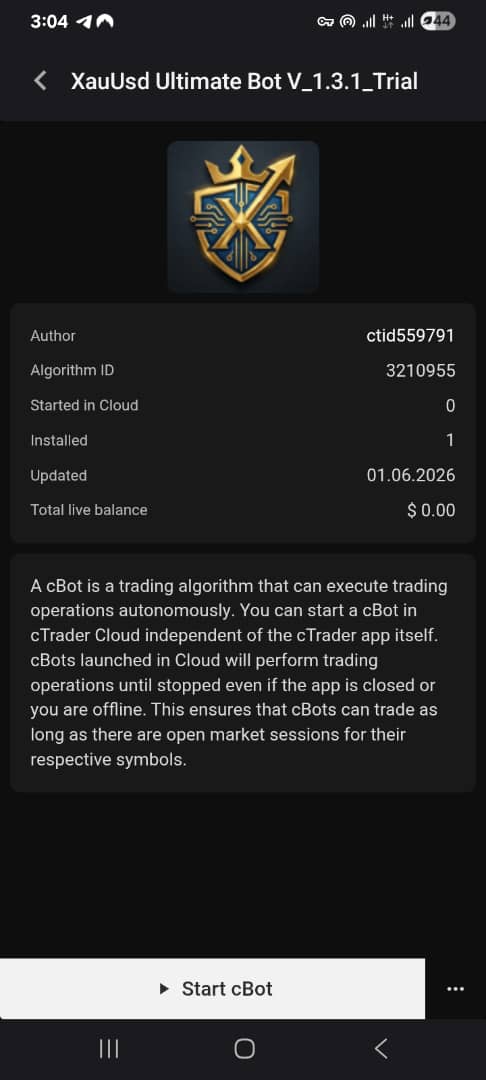
Look for the Cloud Icon next to your cBot instance. Tap the Start button.
Boom. Your bot is now running live in cTrader’s secure cloud infrastructure!
5. Monitor and Manage
You don't need to keep the app open. Go about your day, and whenever you want to check your bot's performance, just open cTrader. You can pause, stop, or tweak the bot anytime with a single tap.
⚠️ A Quick Reality Check on Algorithmic Trading
While this technology eliminates infrastructure costs, it is vital to stay grounded in reality: automated trading does not guarantee profits.
Test rigorously: Always backtest your strategies and run them on a demo account before risking real capital. By default, cTrader allows you to run 1 free cloud instance on a demo account and up to 10 instances on live accounts.
Market dynamics change: Algos execute exactly what they are programmed to do. They do not possess intuition and can be vulnerable during highly volatile news events.
Technical limitations: Highly complex bots that require heavy custom DLLs, visual charts, or external APIs (like news feeds) might still require a traditional desktop and VPS setup.
🌍 Take Control of Your Trading
Automated trading is no longer restricted to institutional traders with expensive hardware. The power to execute logic-based algorithms is now quite literally in your pocket.
Have you tried running a cBot on cTrader Mobile yet? Drop your experiences, results, or questions below! 👇
#cTrader #AlgorithmicTrading #ForexTrading #TradingBots #cBot #TradingTips #Forex #Fintech
2
14
178
🚀 How to Fund Your Premium Trading Tools—Using the Tools Themselves (The cTrader Trial Hack)
Are you tired of paying upfront for premium trading algorithms before knowing if they actually work in live market conditions?
If you are trading on cTrader, there is a powerful "hack" that many smart traders are using to get a massive head start. It’s all about leveraging Trial Versions of premium cBots to generate enough initial capital to outright buy the full, unrestricted versions.
Here is exactly how it works, and how you can start today with an exclusive, unreleased bot.
The Strategy: Earn Before You Buy
Most premium cBots require a solid upfront investment. But what if you could test-drive a high-performing algorithmic system in the live markets for free?
cTrader allows developers to release trial versions of their algorithms. These trials use the exact same sophisticated trading logic, entry conditions, and market analysis as their premium counterparts, but with a few built-in safety constraints.
The playbook is incredibly simple:
Install a premium Trial cBot.
Let it trade within its built-in micro-lot constraints.
Accumulate your daily profits.
Reinvest those profits to purchase the unrestricted full version.
It’s the ultimate try-before-you-buy scenario—one that can actually pay for itself if the algorithm has a genuine edge.
🌟 Exclusive Early Access: XauUsd Ultimate Bot V_1.3.1
I am thrilled to introduce you to the XauUsd Ultimate Bot V_1.3.1.
This specific algorithmic bot is fine-tuned for the unique volatility of Gold (XAUUSD). It waits for the perfect setups, capitalizing on heavy momentum while actively managing your risk.
Here is the alpha: You will not find this bot on the public cTrader store just yet. It is currently unpublished, but I have secured an exclusive invite link so you can access the trial version completely free.
The Trial Rules of Engagement
Because this is a free trial designed to prove the bot's profitability while protecting the developer's intellectual property, it operates under a few hardcoded limitations:
Fixed Lot Size: Locked at a highly conservative 0.01 lots. This keeps your risk exposure minimal while you learn how the system behaves.
Fixed Max Daily Profit: Once the bot hits its target profit for the day, it automatically stops trading to lock in your gains.
Fixed Max Daily Loss: Built-in drawdown protection that halts trading if the market goes haywire, ensuring your account lives to trade another day.
Rather than just being restrictions, these limitations actually enforce strict, institutional-level risk management—making it the perfect set of training wheels for your gold trading journey.
Ready to Test Drive?
Stop guessing and start automating. You can grab your free trial of the XauUsd Ultimate Bot V_1.3.1 right now through the exclusive Fusion Markets invite link below:
🔗 Access the XauUsd Ultimate Bot V_1.3.1 Trial Here:
app.fusionmarkets.com/algo/3…
Load it up, monitor its precision, and let the trial version fund your ultimate trading setup. Let me know in the replies how the bot performs for you this week! 📈📉
Disclaimer: Trading involves significant risk. Even with automated bots, past performance does not guarantee future results. Always practice proper risk management and test on a demo account if you are unsure.
4
5
16
829
Excellent!!!
May 30

$2,600 invested in Tesla’s IPO is worth more than $1 million today.
1
2
7
173
Pretty good progress
May 30
$2,600 invested in Tesla’s IPO is worth more than $1 million today.
6,039
18,884
206,629
37,839,772

Excellent 💯
May 30

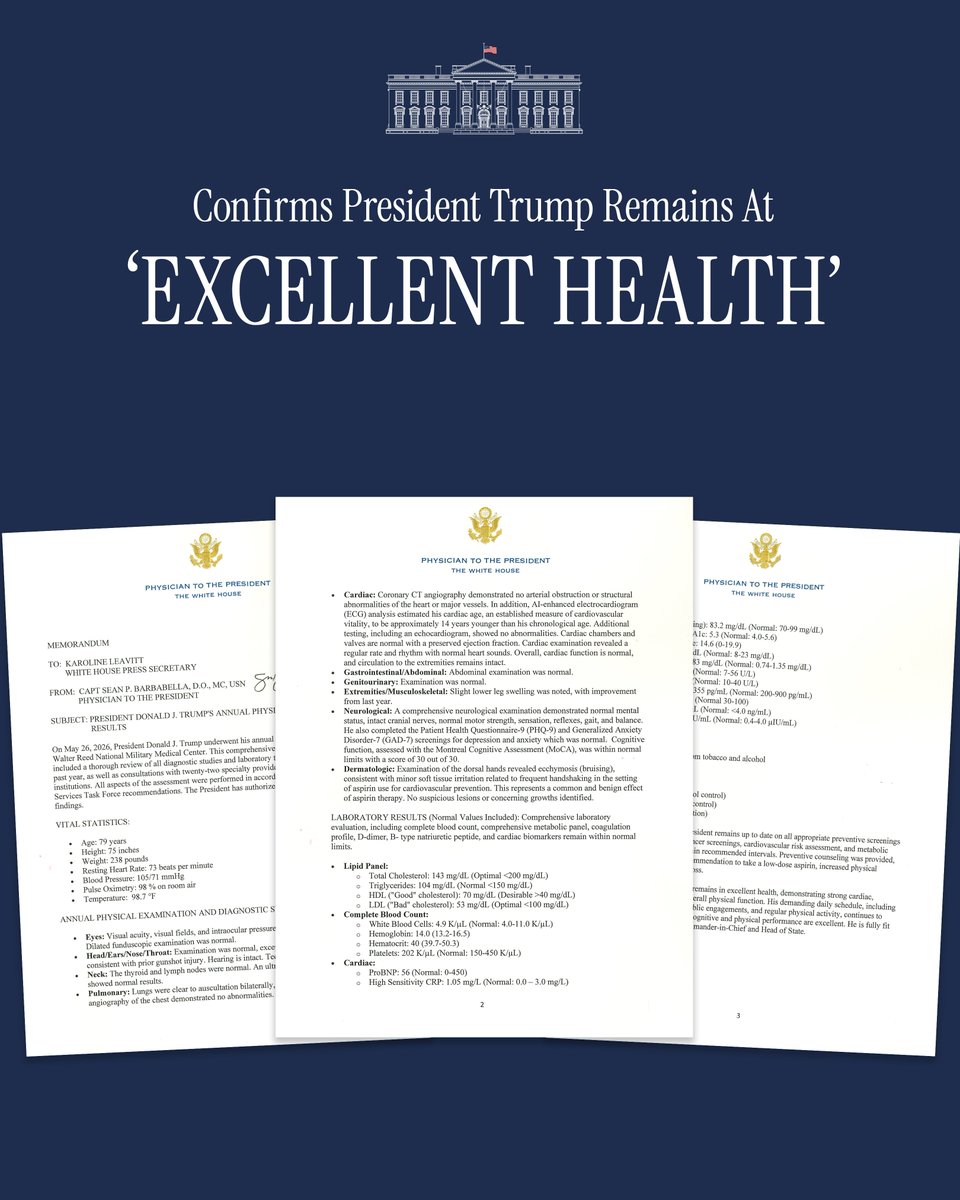
"President Trump remains in excellent health... Cognitive and physical performance are excellent. He is fully fit to carry out all duties of the Commander-in-Chief and Head of State."
- CAPT SEAN P. BARBABELLA. DO, MC, USN
PHYSICIAN TO THE PRESIDENT
1
4
68
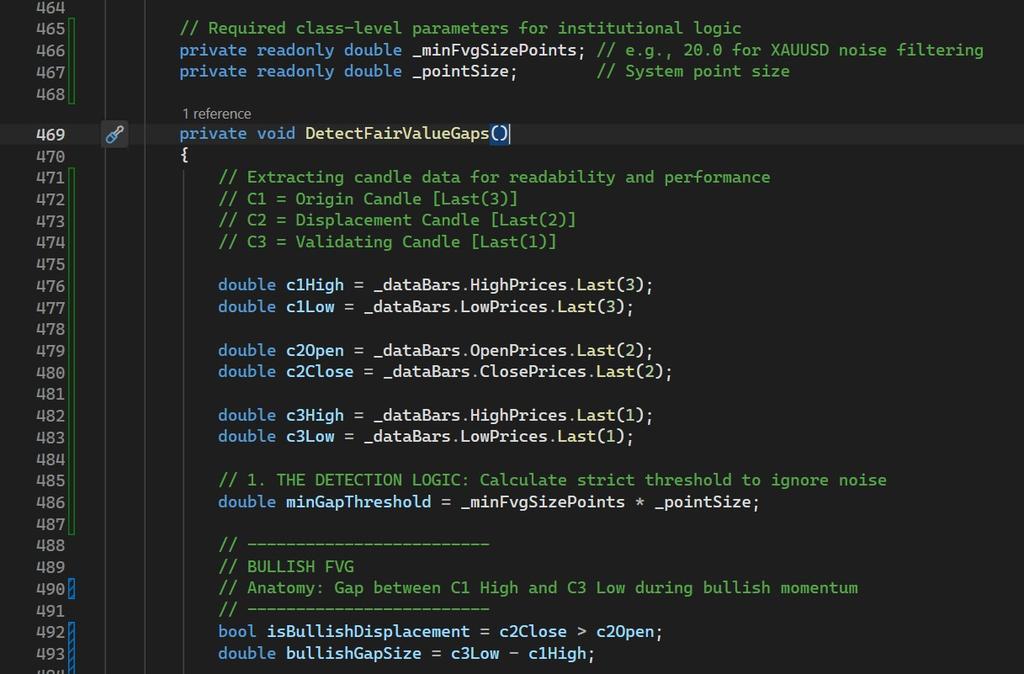
Automating institutional trading concepts like Fair Value Gaps (FVG) isn’t about guessing—it’s pure software engineering.
After years of architecting algorithmic trading systems and building Expert Advisors, I've noticed one massive flaw in how retail algorithms are programmed to handle price action. They treat the market like a casino instead of a computational environment.
If you are trying to automate an institutional strategy on assets like XAUUSD, here is the architecture of a robust, professional-grade FVG reversal system:
1. The Detection Logic (Stop Trading Noise)
A true Fair Value Gap is a structural momentum displacement, not just a random 3-candle pattern you found on a 5-minute chart.
In your code, you must define the exact pip distance between Candle 1's high and Candle 3's low. If the gap doesn't exceed a strict, dynamically calculated volatility threshold, the algorithm must completely ignore it. Retail EAs lose money because they execute on every visual gap; institutional algorithms execute only on algorithmic anomalies.
2. The Entry Trigger (Patience is Programmed)
Never program an entry the exact moment a gap forms.
Professional algorithms are designed to wait for the price to retrace into the FVG zone. Your EA should be programmed to place pending limit orders deep inside the premium or discount arrays of that gap. This mathematical patience guarantees the optimal risk-to-reward ratio before the reversal actually occurs.
3. Handling Regime Changes (The Account Saver)
This is the silent account killer. Most retail EAs are hardcoded to immediately panic and close existing open positions the second the market regime changes or structure breaks.
Instead of closing, I prefer to hedge. Hedging protects your equity curve during sudden, volatile shifts. More importantly, it buys the algorithm the necessary processing time to recalculate the new structural bias and find the next optimal exit or entry, without unnecessarily locking in a sudden loss.
4. Execution Speed & Logic Over Emotion
When you build a profitable system, you must treat trading exactly like software engineering: you need strict rules, precise execution protocols, and flawless edge-case management.
Stop buying black-box retail bots and start understanding the logic driving the markets.
If you want to understand the deep mechanics behind algorithmic trading, institutional logic, and system architecture, drop a follow. I regularly share insights on building robust systems. 📈💻
1
6
66

The Architecture of Modern Algorithmic Trading: Why cBots and the cTrader Cloud are Game Changers
If you are still executing every trade manually, you are competing against machines that don't sleep, don't hesitate, and don't make fat-finger mistakes.
Transitioning to algorithmic trading isn't just about executing faster; it’s about translating institutional logic—like Fair Value Gaps (FVG) or high-probability reversals on XAUUSD—into repeatable, emotionless code. But the infrastructure you choose to run that code matters just as much as the strategy itself.
For a long time, the standard playbook for automated traders involved writing an algorithm, renting a Windows VPS, and hoping the remote server didn't go down. Today, cTrader and its cBot ecosystem have completely re-engineered that architecture. Here is a technical breakdown of why this shift is saving developers and traders both time and capital.
Native C# and the .NET Ecosystem
Older, proprietary trading scripting languages get the job done, but they can feel highly restrictive if you have a background in backend software engineering. cBots, however, are built in native C#.
This means you get full access to the .NET runtime, true object-oriented programming, and advanced multi-threading capabilities. Whether you are building complex indicator stacks or managing multiple concurrent state changes in a volatile Gold market, the underlying architecture handles memory and execution with enterprise-grade stability.
The Old Way: The VPS Bottleneck
Historically, if you wanted your algorithm to run uninterrupted, you had to rent a Virtual Private Server (VPS). This setup required:
Paying $30 to $60 a month for a low-latency server colocated near your broker's data center.
Managing RDP (Remote Desktop Protocol) connections just to check on your trades.
Dealing with OS updates, manual reboots, and the constant risk of resource contention if your bot consumed too much RAM during high-volume sessions.
It was a clunky, expensive necessity that ate into your overall profitability.
The Paradigm Shift: cTrader Cloud
This is where cTrader provides a massive structural advantage. Spotware has integrated cTrader Cloud directly into the core platform, fundamentally changing how we deploy trading algorithms.
Server-Side Execution: You can now host and run your cBots directly in the cTrader Cloud. You simply start the cBot in a cloud instance, and it executes in a secure, isolated environment provided natively by the platform.
True 24/7 Uptime (Without the Hardware): Once deployed, you can close your desktop application, shut down your laptop, or go entirely offline. The algorithm continues to run seamlessly on the server side.
Built-in Risk Management: Core trade management features, such as trailing stops, execute server-side automatically. This ensures your downside is protected even if your local internet connection drops out.
Immediate Cost Savings: By removing the dependency on a dedicated third-party VPS, the baseline overhead of running an automated system drops essentially to zero. You scale your logic, not your monthly server bills.
The Takeaway
We are in an era where independent traders have access to infrastructure that rivals institutional setups. By combining the developmental power of C# with the frictionless deployment of the cTrader Cloud, you can focus your time on what actually matters: researching edge, optimizing logic, and managing risk—not debugging server connectivity issues.
If you haven’t explored cBots yet, it’s time to look under the hood and upgrade your deployment architecture.
#AlgorithmicTrading #cTrader #Forex #XAUUSD #SoftwareEngineering #TradingTech #Csharp #AutomatedTrading
1
4
13
374
💯
May 25

This is a warning to @inecnigeria officials.
Do not risk your lives trying to rig elections for the evil, murderous, greedy, thieving, and diabolical @officialABAT and @OfficialAPCNg.
Whether you are a Polling Officer, a Youth Corper, a Collation Officer, a State Electoral Commissioner or a State Collation Officer, or the Chairman of @inecnigeria for that matter, YOU ARE NOT UNTOUCHABLE.
YOU ARE NOT OUT OF REACH.
2027 will be the year of reckoning for all election riggers, whether in the field or in the office.
You rig, you kpai!
#RigandKpai2027
3
7
168