
Joined May 2026
- Tweets 40
- Following 68
- Followers 10
- Likes 105
6 Photos and videos
Pinned Tweet

May 28
Most families start college baseball recruiting backwards.
Camps. Showcases. Dozens of coach emails.
All before knowing which schools are realistic.
Before spending thousands trying to “get seen,” ask:
Which college programs are actually worth targeting?
3
63
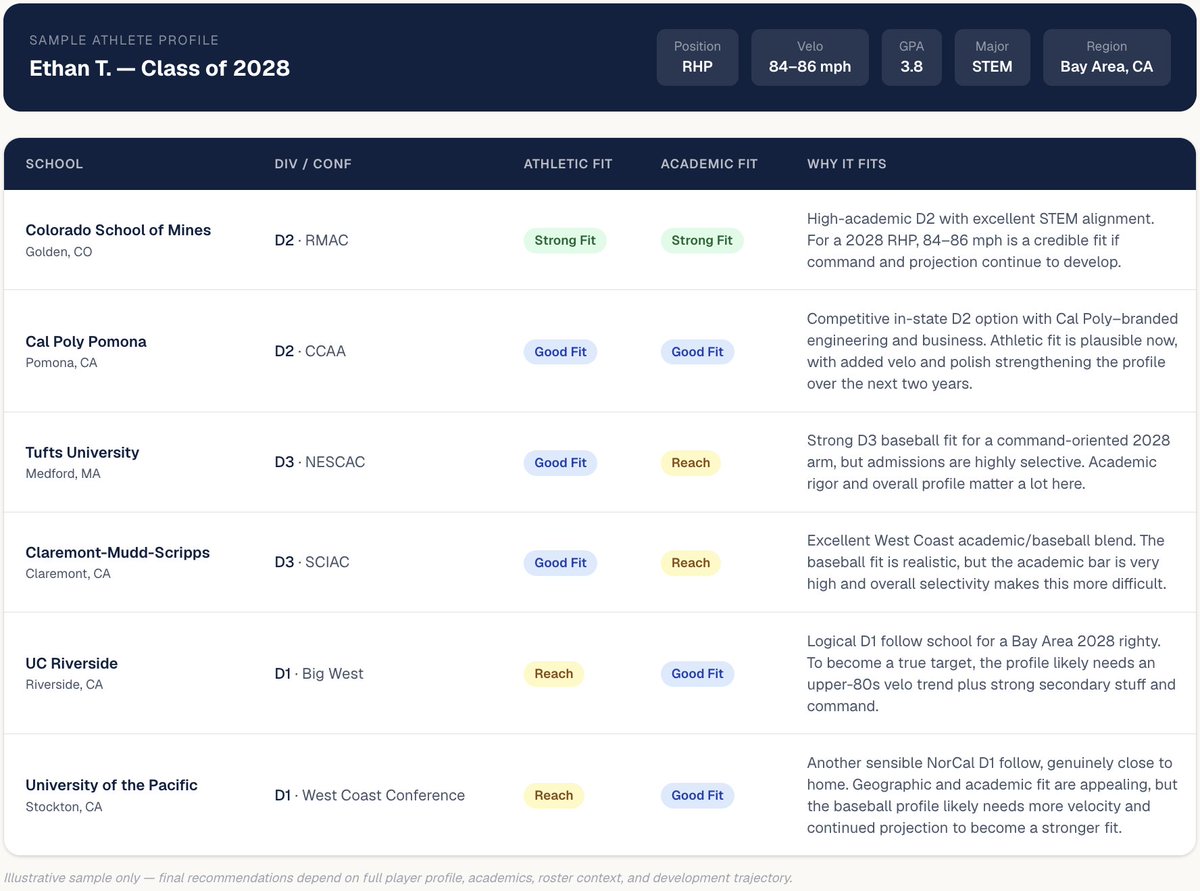
HS baseball families: before you pay for another camp or showcase, make sure the schools actually fit.
We’re opening 10 free RosterFit beta reports for 2027–2029 players.
Reply FIT and follow @RosterFitCo so we can DM you the details.
Repost for a family who needs this.
1
2
2
17
Each report looks at athletic fit, academic fit, roster context, geography, level, outreach strategy and any other context you provide.
Free for selected families in exchange for honest feedback after reviewing the report.
8
Jun 13
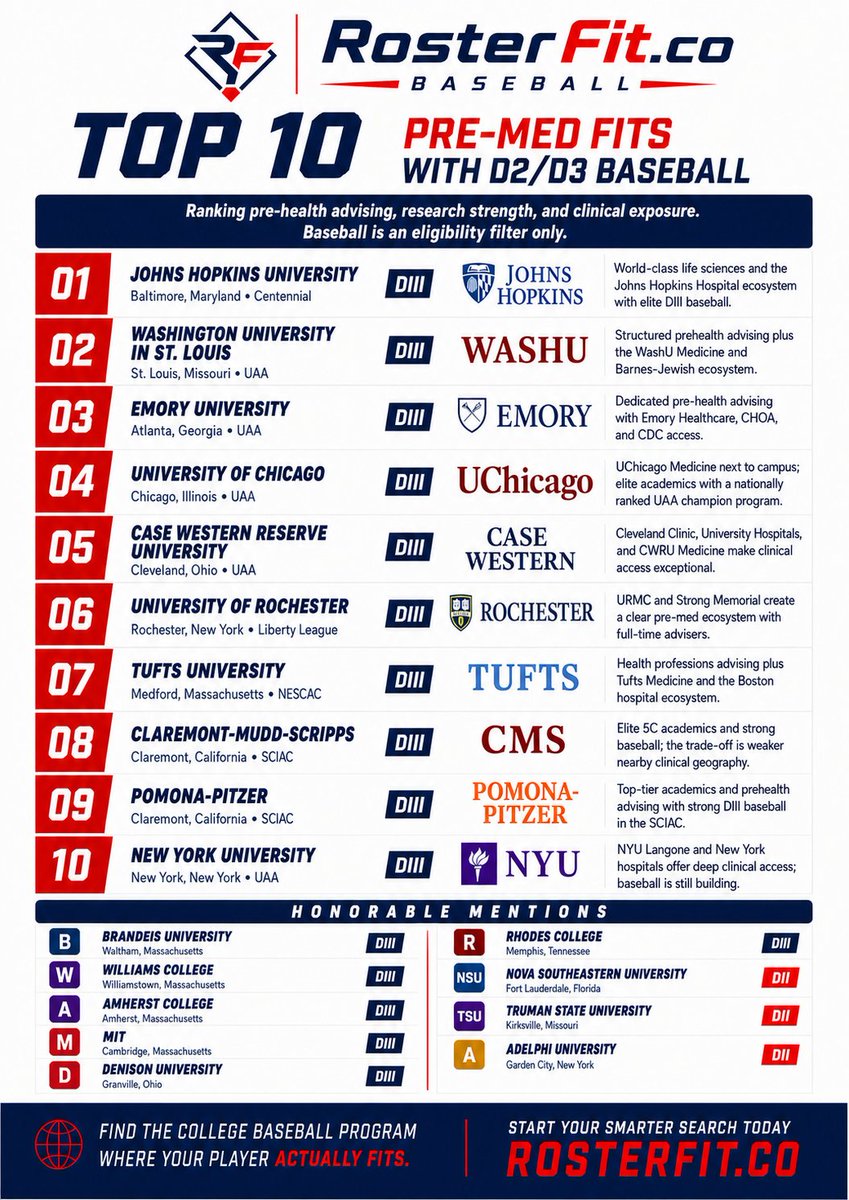
Top 10 pre-med fits with NCAA DII/DIII baseball.
This ranking prioritizes pre-health advising, research access, and clinical exposure first with baseball as the filter.
Full breakdown and methodology on our website.
Who would you add?
2
4
495
Jun 12
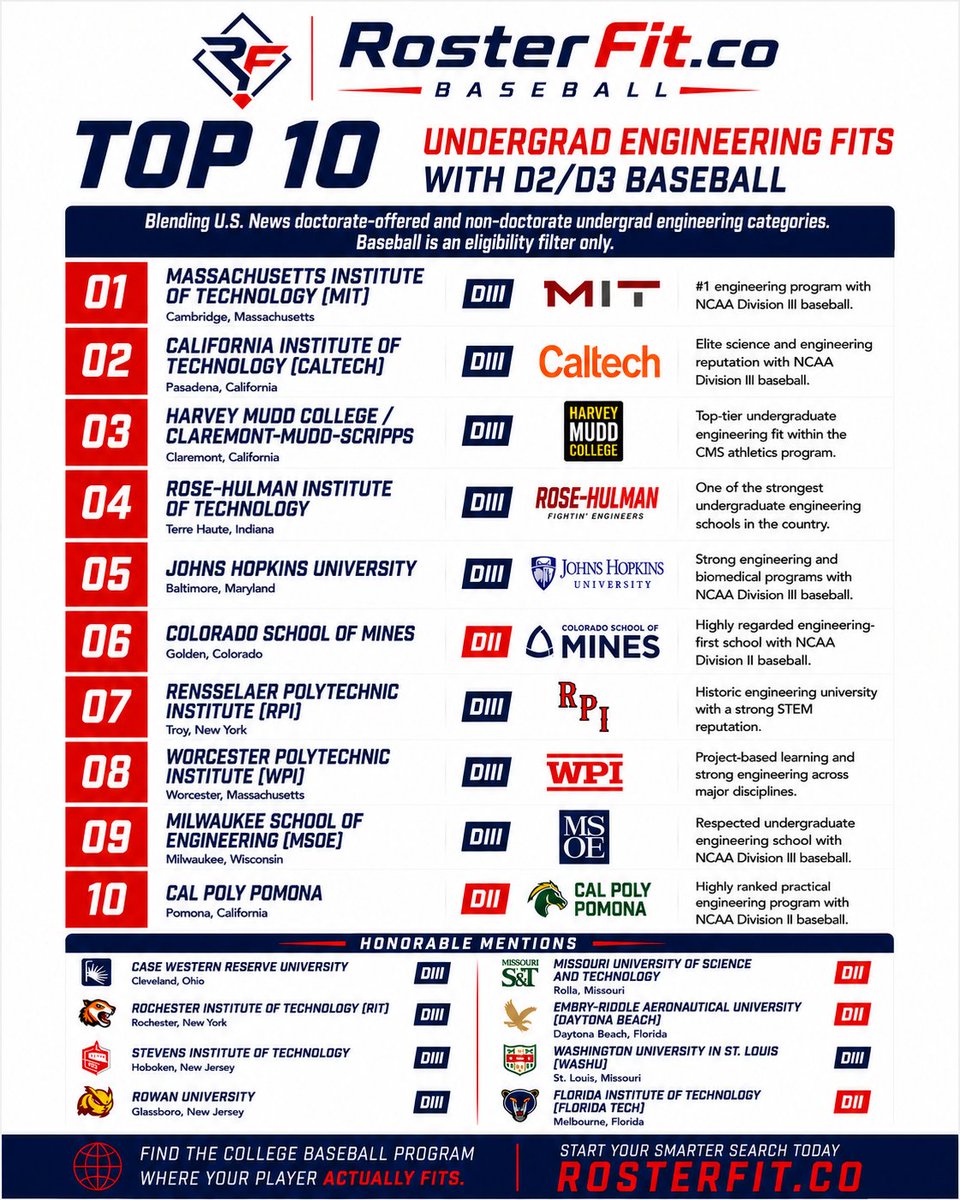
Top 10 undergrad engineering fits with NCAA DII/DIII baseball.
The ranking prioritizes engineering reputation first with baseball as the filter.
Full breakdown and methodology on our website.
Who would you add?
2
1
5
341
Jun 13
Honorable mentions: @JudgesBaseball @WilliamsColBB @AmherstBaseball @MIT_Baseball @DU_Baseball @RhodesBaseball @NSU_Baseball @TrumanBaseball @AdelphiBaseball
1
44
Jun 12
Honorable mentions include: @cwru_baseball @rit_baseball @BaseballStevens @RowanBaseball_ @Miners_BSB @ERAUBaseball @washubaseball @FloridaTechBB
57
Jun 8
Most baseball families don’t have an effort problem.
They have a targeting problem.
They email coaches, register for camps, and chase exposure before they know which colleges actually fit.
Before you email a college coach, check these 5 things:
6
2
41
Jun 8
Start with fit, then build a target list around programs where your player has a real reason to reach out.
That is what RosterFit helps families do.
Save this before your next coach email or send it to a baseball family who needs to see it.
23
Jun 8
5. Email quality
A good recruiting email should make the coach’s job easier.
It should quickly answer:
• Who is this player?
• Position/grad year
• Key metrics
• Academic info
• Why this program?
• Video
• Clear next step
The goal is to make the fit obvious.
23
Jun 8
4. Recruiting patterns
Before you email, look at the roster:
• Where are players from?
• Do they recruit your region?
• Are they portal heavy?
If a coach has never recruited a similar player, that does not mean impossible, but you need a clear reason why your player fits.
20
Jun 8
3. Academic fit
Baseball interest can help, but it doesn't erase admissions reality.
Before targeting a school, check GPA, test scores, intended major and whether the player would still want the school if baseball changed.
If the school cannot admit you, it is not a fit.
22
Jun 8
2. Roster need
A coach can like your player and still have no roster spot for him.
Before you email, look at:
• How many players are already at his position
• What year they are
• Whether transfers or commits are coming in
• Whether there will be room when he arrives
1
24
Jun 8
1. Athletic level
Don’t just ask: “Is this a good baseball program?”
Ask: “Do my player’s current metrics, size, position, grad year, stats, and likely role match the players this program actually recruits?”
A dream school is not automatically a target school.
1
26
Jun 2
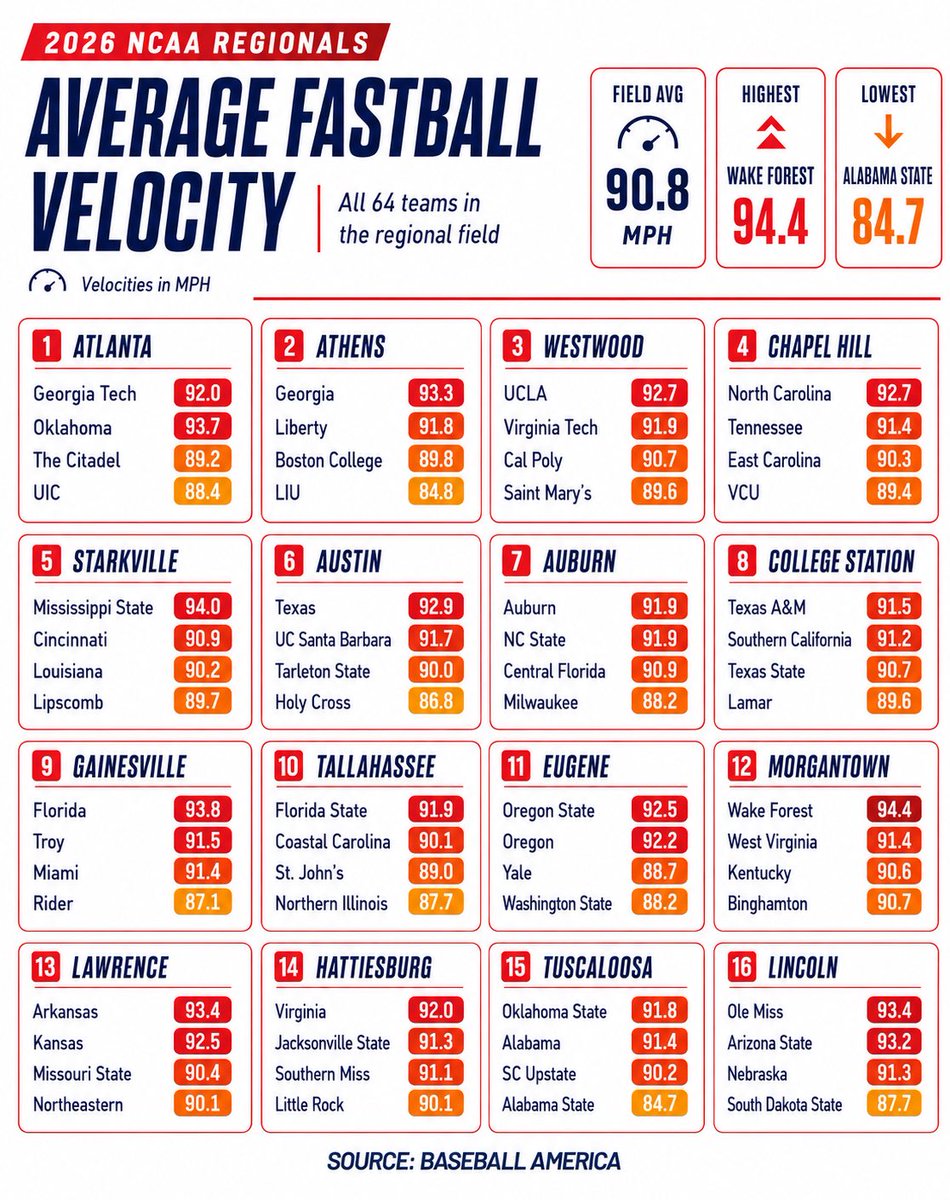
In this year’s NCAA regional field, average fastball velocities ranged from 84.7 mph to 94.4 mph.
That gap matters.
A pitcher sitting 82–84 and a pitcher sitting 90–92 might not be building the same target list, emailing the same schools, or spending money on the same camps.
1
23
Jun 2
Velocity is not everything. Command, pitch mix, projection, roster need, class year, academics, and fit all matter too.
But if you’re not using data like this to shape your recruiting strategy, you’re probably missing out.
Build the right list before you spend.
22
May 31
These questions are gold.
The best time to evaluate fit is before spending hundreds or thousands on camps.
Does the school fit academically? Would your athlete still want to go there without baseball?
The right target list makes every camp, email, and coach conversation more strategic.

As a former college coach, I try to advise my HS guys a little differently. We look at 3 main things:
1. Does the school have a major that you’re interested in?
2. Can you live in that area for 2-4 years?
3. Would you still want to go to this school without playing baseball?
44
May 31
Most baseball families don’t have an exposure problem.
They have a targeting problem.
The wrong schools. The wrong camps. The wrong level. The wrong timing.
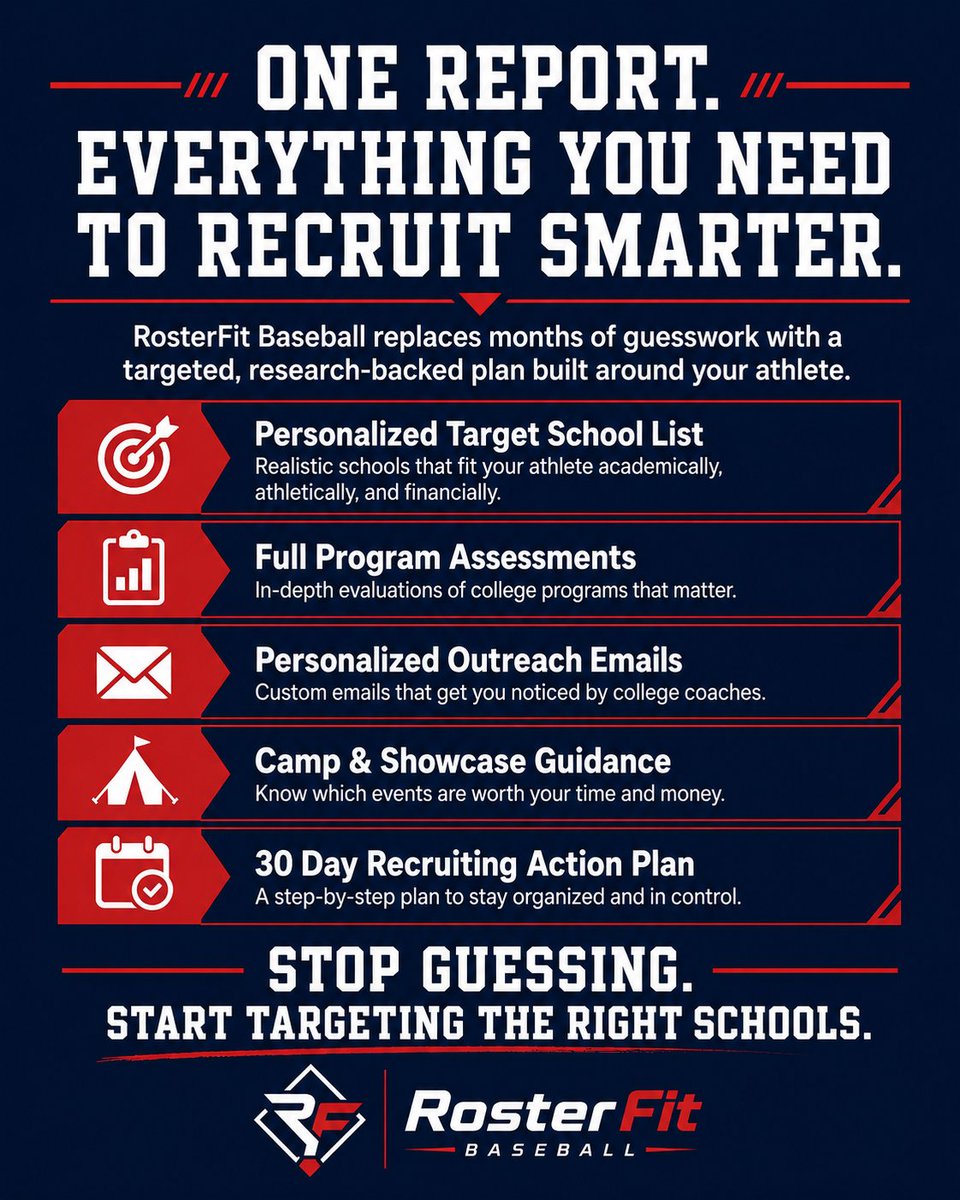
RosterFit helps families build a smarter college baseball target list and strategy before they waste thousands chasing the wrong programs.
1
30
May 31
Velocity isn’t everything, but pretending it doesn’t matter is bad recruiting strategy.
A pitcher sitting at 82–84 and a pitcher sitting 90–92 should not be building the same school list.
The best target lists account for velo, command, pitch mix, projection, roster need, class year, academics, and fit. This is exactly the kind of data we factor into RosterFit.
May 31

2026 Regional Avg FB Velo across all 64 Regional teams is 90.8 MPH.
🔥 Highest: Wake Forest — 94.4 MPH
📉 Lowest: Alabama State — 84.7 MPH
A few takeaways:
• 90 MPH is no longer elite at the college level — it's becoming the standard.
• Nearly every Regional features multiple staffs averaging 91-93 .
• Velocity isn't everything... but it's becoming increasingly difficult to survive without it.
If you want to play at a competitive D1 program… 90MPH is the benchmark.
Velo gets your foot in the door… secondary pitches and command get you innings‼️
38