
Life is about Unlearning
Joined October 2021
- Tweets 348,526
- Following 320
- Followers 761
- Likes 51,228
4,661 Photos and videos

Rotimi🏆COE retweeted

"Where will Peter Obi find money to sort of power problems?"
~ How much did you waste to build a house for VP that he barely used?
~ How much did you say was missing in NNPC?
~ How much did your President spend to buy a new boat, plane and Escaledeezy?
~ His solar inverter??
2
27
34
527
Rotimi🏆COE retweeted

🚨 THE DARK, OMNOUS LEGACIES OF BOLA TINUBU
Nigerian police officers are shocked out of their minds to discover the entire town of OWA ONIRE in Kwara State is completely deserted due to terrorist attacks. Completely deserted. No man, woman, children or even animals in site.
These are some of the great achievements of the current Nigerian regime - the realities they'll never be able to cover with the lies they're buying in DC with millions of dollars.
And when they're done making sacrifices to Lucifer by slaying and molesting terrified children and their parents, the terrorists get heroes welcome into VIP so called "rehabilitation" centres, which at best are just transitional centres.
This level of desertion can be seen in countless Nigerian towns from northeast to northwest to north central to even southwest nowadays. And all they're interested in. is covering the lies and telling the whole world "it's not happening!"
Very soon, the heartless blood suckers will realise there are things money cannot buy.
#JUDGEMENT 🔥
150
727
750
32,761
Rotimi🏆COE retweeted

Bruv, this your criticism sounds smart o, but g-darn it!
You're missing the context of @PeterObi's answer by a few light years like this.
Here's why:
1. Obi was not saying Nigeria's electricity problem is a secret.
Everybody knows the broad issues (even our resident microphone-licking imbeciiile): You know... available generation is far below installed capacity, gas supply is unreliable, equipment is old, transmission is weak, DisCos are financially broken, collections are poor, debts pile up, contracts are abused, maintenance culture is almost dead, etc, etc.
So when you say, "He should have said fix gas, fix DisCos, fix maintenance, diversify into solar, hydro and wind,"
My question is: is that really the deep plan you were waiting for??? Like for real???
Those are the obvious headings ns. They are DEFINITELY not the hard part. They are the textbook - talk is cheap 101 examples na 😫
The hard part is EXECUTION and EXECUTION is powered by POLITICAL WILL, DILLIGENCE & COMMITMENT as EXEMPLIFIED by WHERE YOU HANDLED PUBLIC OFFICE LAST!
In that interview, Obi said Nigeria can generate, transmit and distribute at least 10,000MW within four years.
Rufai pressed him for details, and Obi pointed to what countries like Egypt, India and Indonesia have done.
That is not evasion. Obi was making a feasibility argument: serious countries have added far more, so Nigeria should not treat 10,000MW like rocket science. It very clearly is not - if you have committed, non-wasteful, patriotic managers of resources in power.
The point was not "trust me, bro."
The point was: Nigeria's problem is not "quantum mechanics" or some esoteric physics equation. It is governance - basic governance.
To make existing infrastructure work properly, you need to enter government, and DILIGENTLY & COMMITEDLY follow up technocrats who will open the books, audit the plants, gas agreements, DisCo finances and contracts, then identify who is owed, who is failing, who is defaulting, and who must face consequences, etc, etc...
The problem is not "knowing what to do" - the problem is do you have the political will to resist corruption, cut waste and redirect resources, and the diligence and the commitment to execute all these very easy to reel off plans.
And this is why Obi kept returning to management, prudence and accountability.
Obi kept saying: I know how to manage public resources, cut waste, enforce discipline, and get results. Go and check my records.
So no, Obi did not need to turn a live interview into a fake engineering seminar. The real issue is not whether the problem can be described. The real issue is whether the person in charge has the discipline to diagnose it properly, manage the money, enforce contracts, punish failure, and deliver results.
That was the substance of Obi's answer.
This is supposed to be management 101 and basic o but it's OK.
It's Obi and all criticism is welcome.😎

This interview really disappointed me because the electricity issue in Nigeria is not a very complicated matter to hold it as a secret
First of all, Nigeria has the ability to produce 13,000MW of electricity but only produces 5,000 and sometimes 6,000 at the most.
It is like saying a factory has 100 machines installed, but only 35 are actually running.
Nigeria at the moment does not get 13, 000 MW because the plants are not all able to operate at full capacity.
So I was expecting that the first solution would be to effectively make those existing infrastructure run at full capacity as such, address the issues causing it to not run at full capacity
The problems that are presently not making it reach full capacity are; that for one it is gas powered, and there usually isn’t enough gas
I would expect a solution on how to maneuver that problem.
A solution like not over relying on one source of fuel, like diversifying into solar, hydro, wind, etc like foreign countries have done
So the problem is not even creating power plants as he mentioned, but fixing the fuel to power chain.
The second issue is more simpler as there are many old and poorly maintained equipment. The solution is to create a maintenance culture in Nigeria that has been lacking, so that one is a low hanging fruit.
But what I was expecting was the financial area which is one of the most tricky issues affecting the electricity market.
Distribution companies if they don’t collect sufficient revenue, or manage it properly, the gas suppliers won’t be able to supply gas, or would supply in limited amounts.
So a solution would be better financial management of these distribution companies and how they collect revenue.
He could have easily said, how I managed finance in Anambra, I would also ensure proper management of these distribution companies finances because if payment chain is fixed, the bulk of the issue is solved
I will ensure proper contracts exist and we would drag all contractors who don’t comply to court
He could then have said, it is after he has done all this that then we can build more plants and expand on transmission, distribution etc
12
78
121
6,297
Baba Iyabo is too far, cowardly Jona gave them a tough time when they started the yellow fever craze. Lapite’s personal interest is not affected, so e no go send una

See this timid, barely there approach to South African xenophobia happening right now from Aso Rock, I can't understand it, and I'm so ashamed. Could NEVER be Baba Iyabo.
2
78
Rotimi🏆COE retweeted

No reasonable person who is truly objective, needs an interview to convince her/him to vote PO over an incompetent incumbent whose deeds and failures are clear as day.

I listened to Peter Obi’s interview and I saw nothing wrong with it. What I saw was a man who does not want to keep explaining himself over and over again, and honestly, I understand why. Since 2023, Peter Obi has spoken extensively about electricity, security, governance, and the economy. His interviews, his speeches, and his manifesto are all in the public domain for anyone willing to look. So when people still ask how Peter Obi will fix electricity, I have to wonder whether they genuinely want answers or whether they are simply looking for a talking point.
Now let us talk about Tinubu. During the 2023 election, this man ran away from every single platform where he would have been held accountable. He did not attend the presidential debate. He avoided interviews. He ducked every opportunity where Nigerians could have questioned him directly on his promises of better electricity and improved security. His supporters said nothing. They asked nothing. They demanded nothing.
He is now in office and his first term is gradually coming to an end. Electricity and insecurity remains a major challenge, yet those same supporters who never demanded answers from him in 2023 are today asking Peter Obi, a man not in office, to explain himself. That tells you everything.
If Peter Obi’s every word still generates this much attention despite not being in power, then perhaps he is the bigger picture they simply cannot stop thinking about.
8
76
136
4,096
Rotimi🏆COE retweeted

Wow. I thought it was only bants.
These people are actually have pea-sized brains.
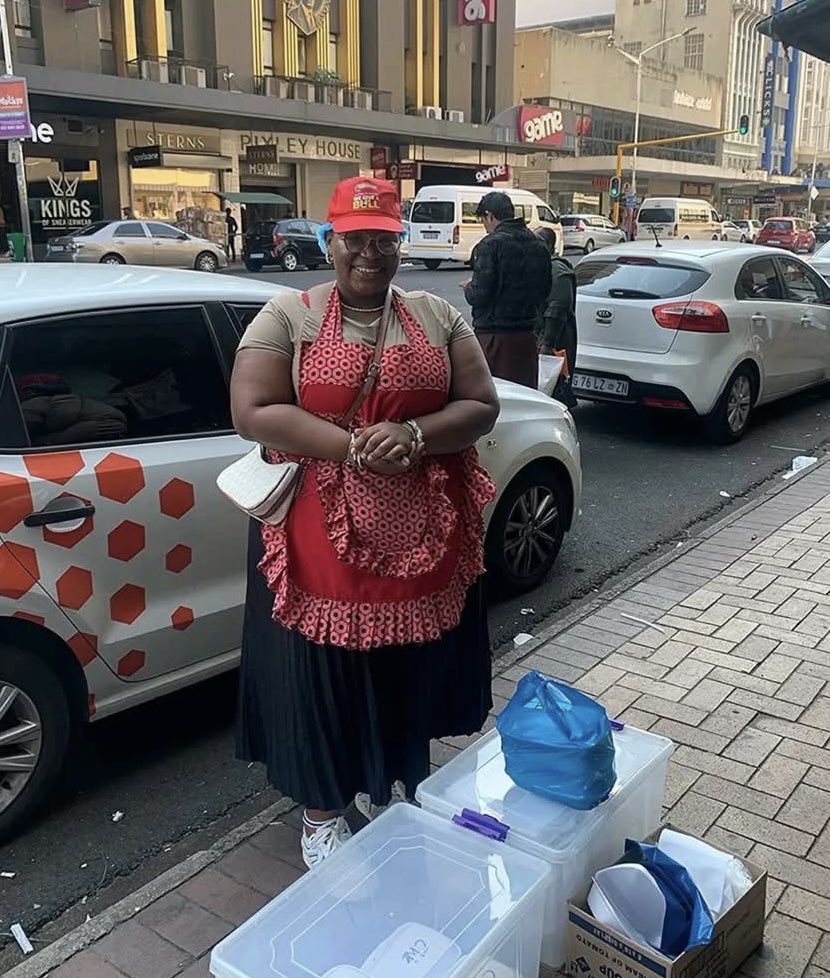
'Foreigners' had to leave for you to sell ewa agonyin?
Jun 17

Another South African who has opened her own business at West Street selling Food. This follows the removal of illegal Foreigners by March and March.
21
115
598
35,236
Rotimi🏆COE retweeted

Jun 17
So the "illegals" prevented her from selling? Or after looting their shops tou gave the items to her to also start her food business. That's thievery.
2
9
179
5,495
Rotimi🏆COE retweeted

🚨 Wayne Rooney on Declan Rice's set-pieces that inspired England's 4-2 victory:
🗣️ “For the whole of last season, people mocked Arsenal's set-pieces. They called them boring, said they were ruining football and claimed they could never win the biggest trophies playing that way.
Now look at England.
Declan Rice is delivering those same quality dead balls and they've played a huge part in a 4-2 win.
I've watched this World Cup closely and one thing stands out: Arsenal players have consistently produced dangerous set-pieces, with several leading directly to goals.
Maybe the issue was never the set-pieces.
Maybe people were simply frustrated because their own teams didn't have players capable of executing them at that level.
Football fans love effective set-pieces when they're winning games. They only complain when someone else is better at them.”

145
783
4,269
125,264

I'm sure Pastor Remi woke up this morning on the Royal softness of the opulent beds at ASO VILLA and held morning devotion.
But, since 33 days till this morning 39 children have been waking up in a bush in Oyo under rain, sandflies, ants, etc.
NOT ALL WOMEN WHO GIVE BIRTH ARE MOTHERS
19
315
449
6,109

Rotimi🏆COE retweeted

Nigeria earned a whopping $6.5 billion from Oil Windfall. When will @officialABAT account for the “Profit oil” accrued to Nigeria as a result of the US-Iran War?
Or should we continue to distract the public with Peter Obi?
7
74
144
1,415

Rotimi🏆COE retweeted

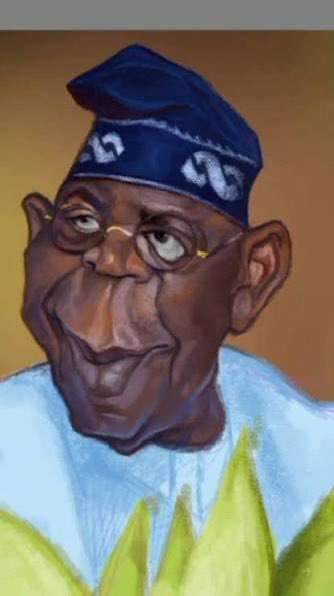
Journalist: Mr. President What is your vision of a prosperous society in relation to your tax reform, particularly regarding the quality of life of the people?
Bola Tinubu: Listen carefully! This my coat of many colours is original, not fake. That little Lild nearly emptied McDonald’s and was still busy targeting Doncaster like it belongs to him. This election they want to win
8
12
15
418
Rotimi🏆COE retweeted

Exactly, We have to win today!
@thenanaaba

Good morning, Czechia 🇨🇿
You know what to do!
355
1,942
11,626
404,711
Rotimi🏆COE retweeted

They say I be refugee for Lagos😭😭😭
Refugeeee🤣🤣🤣🤣🤣
South Africa na Child’s play compared to Nigeria.
33
15
81
3,438
Rotimi🏆COE retweeted

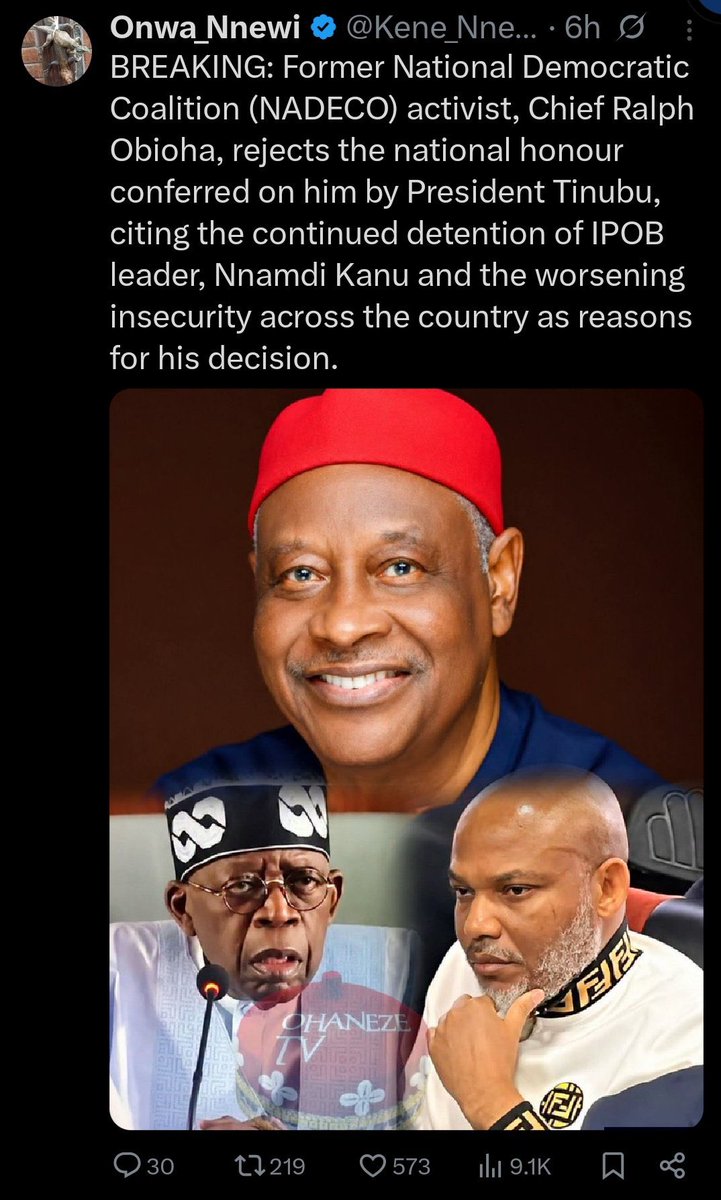
Tinubu think say na everybody e go fit buy 😂✌️‼️🔥
6
16
45
895
Rotimi🏆COE retweeted

Governance is not difficult but you won't believe me because you are used to being governed by thieves.
Now we are asking you to vote a man of honest character without a single case from EFCC/ICPC, it's feeling alien to your body...
Could it be that it's because you are an unrepentant thief yourself?
5
67
102
1,306
Rotimi🏆COE retweeted
This is a rather stupid reply. I am comparing someone who has, between 2022 and now, given countless interviews to a daft man who barely gives any and when he manages to, he recruits people to answer for him. If you dont get out of my mentions with your stupid talk.

This is a rather ridiculous straw man argument lmaooo. Your candidate’s entire selling point is that he’s better than Gbakanbi, but he can’t even do better than him in a scripted interview.
2
90
156
9,801
Rotimi🏆COE retweeted

But wait o. Why are you criticizing Obi? Is Obi your president?
Why is he being criticized?
On what basis is he being criticized? For all we know, he is a private citizen like everyone of us out here so on what basis is he being "criticized"?
Lecture me. Both fencist and pesticides alike 🙏

The danger of where we have found ourselves as a nation is that everybody now thinks all decisions are Obi vs Tinubu.
Once you criticize Obi, they stylishly bring Tinubu up.
Man idgaf about the two. I just want the best for my country. And when I say the best, I mean the best, and that would mean demanding even more from the better of the two.
I cannot rest until i get the best out of the better
7
50
151
7,826