
☯️
Joined April 2024
- Tweets 2,315
- Following 1,904
- Followers 235
- Likes 12,365
120 Photos and videos







Pinned Tweet

29 Sep 2024
"I am an intellectual thug who has been slowly accumulating a private arsenal with every intention of using it. In a mindless age every insight takes on the character of a lethal weapon. Every man of good will is the enemy of society."
Marshall McLuhan
3
4
9
4,274
RT @M4K070: Worried about muh cuckmaster overlords blocking your AI meme making abilities? Don't worry, there's decentralized compute comin…
8
Jun 13
Good Saturday vibes 🫦
Jun 6

Feel Like Makin' Love / Marlena Shaw (1974) Roberta Flack のアーバンメロウな原曲も最高だが、Marlena Shawの肉感的な歌声でファンキーに盛り上がっていくセッション感が素晴らしい
2
76
THIRTY3 retweeted

Jun 13
The next opportunity probably isn’t on your timeline.
It isn’t trending.
It isn’t getting farmed by every influencer.
It’s sitting in a corner of crypto that most people haven’t explored yet.
Discover new markets.
Position before CT catches on.
👉 Polkamarkt.com

7
6
18
860
Jun 12
"Real economies don't run on slogans they run on reliable transitions. Finality is the grammar of institutional memory. Without it, intelligence becomes rumor. That's why Sumeragi matters: it's what turns SORA Nexus into something institutions can touch." x.com/i/status/2065515305586…

2
4
102
Jun 12
RT @polkamarkt: Everyone on CT is fighting over the same trades.
Same charts.
Same narratives.
Same exits.
Meanwhile, a different oppor…
9
Jun 11
"The better question isn't how to force every institution, market & sovereign authority into the same policy frame, but how they can share an economic base without surrendering their differences. That's what dataspaces make legible." x.com/i/status/2064762212967…
4
5
201
Jun 11
"The SORA Nexus story is: when the system grows, add capacity without destroying the ledger’s coherence.
The purpose of SCCP is to let SORA Nexus communicate with outside systems while preserving the one-logical-ledger premise internally." x.com/i/status/2064415707694…
5
11
582
THIRTY3 retweeted

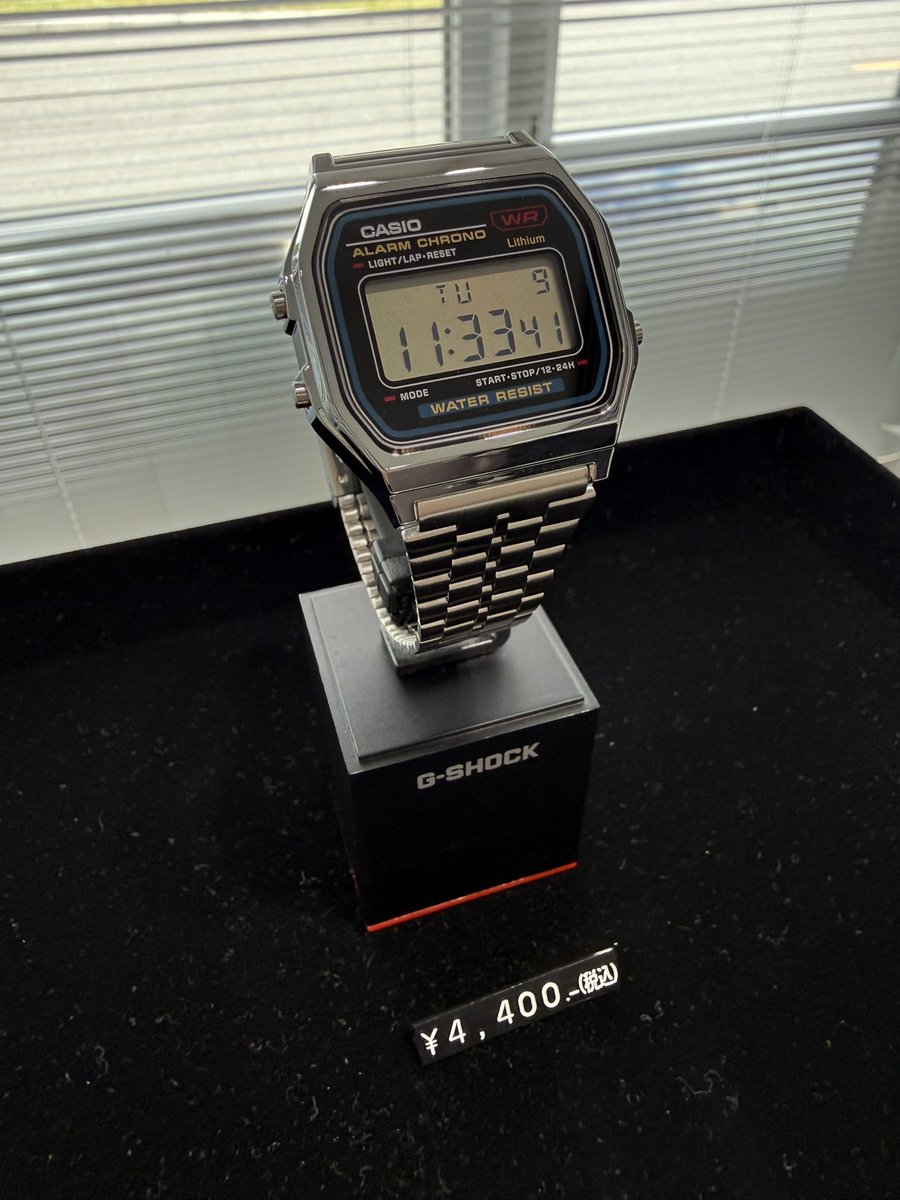
山形カシオの工場に行くと、メイドインジャパンのA159を買える。4400円なり。これを現地で買うためだけに、山形カシオに行く価値はある。
349
6,268
53,711
5,826,844
THIRTY3 retweeted

I have a vision, but I have no interest in becoming the leader of a movement, building an organisation around myself, or spending my time on administration, governance committees, public relations, or bureaucracy.
What I do is build.
I research.
I solve problems.
I release what I create.
Then I move on to the next problem.
If people want to participate, they are welcome to do so.
If they do not, that is their choice.
The project does not depend on consensus, permission, popularity, or approval.
It depends on whether it works.
I intend to build this on Bitcoin. Real Bitcoin. Not as a speculative asset, but as a system for micropayments, economic coordination, and machine-to-machine transactions. The purpose is to create an environment where individuals can build, train, own, and operate specialised agents that provide real services and earn real revenue.
The future I see is not another Google.
It is not another OpenAI.
It is not another giant model attempting to absorb all human knowledge into a single centralised system.
The assumption behind these projects is that intelligence improves as knowledge becomes increasingly concentrated. That if enough information can be gathered into one place, and enough computation applied to it, the result will be superior to distributed human expertise.
This is the same mistake that Hayek criticised and that Mises identified decades earlier.
Knowledge is not centralised.
Knowledge is dispersed.
Knowledge exists in the minds of billions of individuals, each possessing information, experience, judgement, and expertise that cannot be fully aggregated into a central planning system.
What we are seeing now is an attempt to centralise knowledge into AI models.
The result is larger and larger systems that know a little about everything and truly understand very little.
They are useful tools.
But they are not the future.
The future is a world where billions of people build billions of tools.
A world where specialised agents emerge from specialised knowledge.
A world where expertise is created, refined, traded, verified, and improved through open competition.
A world where agents cooperate with other agents, verify one another, challenge one another, and continuously evolve.
The objective is not to create a machine that replaces people.
The objective is to give people the ability to extend themselves.
A lawyer should be able to build legal agents.
An engineer should be able to build engineering agents.
A scientist should be able to build scientific agents.
A teacher should be able to build educational agents.
Every individual should be able to create systems that embody their expertise and contribute to a larger economic network.
The internet connected documents.
This next stage connects expertise.
Not through centralisation, but through specialisation.
Not through planning, but through competition.
Not through a single intelligence, but through an ecosystem of intelligences.
That is the future I am building toward.
21
48
216
12,265
Jun 8
"Doctor Osamu Shimomura (1910–1989) was acknowledged, within Japan and during his lifetime, as the “Father of the Japanese economic miracle” which was the most successfully achieved national economic growth plan of the 20th century." georgetaitedwards.medium.com…
5
4
8
1,075

Jun 7
"A serious system begins by separating functions that the old world keeps fused together. The target is not maximum issuance. The target is maximum productive conversion." @M4K070
1
1
10
190
Jun 7
Going to leave this right here 👀

No. The problem isn't that people are dumping it.
People dump things all the time. Markets exist precisely so people can buy and sell assets.
The question is why they're dumping it.
If the asset had compelling utility, growing transactional demand, and economic use beyond speculation, sellers would be met by buyers seeking that utility.
Instead, much of the demand is speculative. When speculation weakens, people sell because the primary reason they held it was the expectation that someone else would pay more later.
The comedy here is watching people point at a fixed supply as though that settles the matter.
A fixed supply of something nobody wants is still something nobody wants.
A fixed supply of Beanie Babies is not a monetary system.
A fixed supply of tulip bulbs is not an economy.
A fixed supply is not a business model.
So when they chant "21 million" as though they've discovered the philosopher's stone, they're confusing scarcity with value. Scarcity is a necessary condition for some forms of value. It is never a sufficient condition.
The asset isn't valuable because it's scarce. It is only valuable if people want it for a reason beyond hoping the next person pays more.
That is the point they keep missing. And they keep missing it because repeating "21 million" is easier than explaining actual economic demand.
77
Jun 6
RT @polkamarkt: A new market just dropped on Polkamarkt! polkamarkt.com/#markets/2
This is the first market using our new dynamic pari-mutua…
10
Jun 5
"The goal is not to worship growth.
The goal is to know what kind of growth we are producing.
The question is whether SORA can make production legible enough that XOR deserves to exist." - @M4K070
x.com/M4K070/status/20622472…
2
3
9
807