
Joined December 2025
- Tweets 177
- Following 16
- Followers 14
- Likes 14
176 Photos and videos










From April 2023: regulated parties gained a significant new tool against agency enforcement. In Axon Enterprise, Inc. v. FTC, decided April 14, 2023, the Supreme Court unanimously held that structural constitutional challenges to agencies can proceed in district court immediately.
Axon faced FTC administrative proceedings and argued the tribunal itself was unconstitutional. Michelle Cochran made similar claims against SEC enforcement. Both wanted to stop proceedings before any ALJ ruled, not wait years for appellate review after the damage was done.
The agencies said: use our process, appeal through our channels, raise constitutional objections then. Lower courts largely agreed.
The Supreme Court applied the Thunder Basin framework and found all three factors pointed toward district court jurisdiction. Structural challenges allege immediate injury from unconstitutional proceedings. They're collateral to any substantive decision. And constitutional separation-of-powers analysis isn't exactly within agency expertise.
The implications ripple through administrative law. Companies and individuals facing SEC, FTC, or similarly structured agency proceedings can now seek injunctions in federal district court before administrative hearings conclude. Constitutional challenges to agency design get faster, earlier judicial review. For agencies built on ALJ systems with removal protections, litigation risk just increased substantially.
17
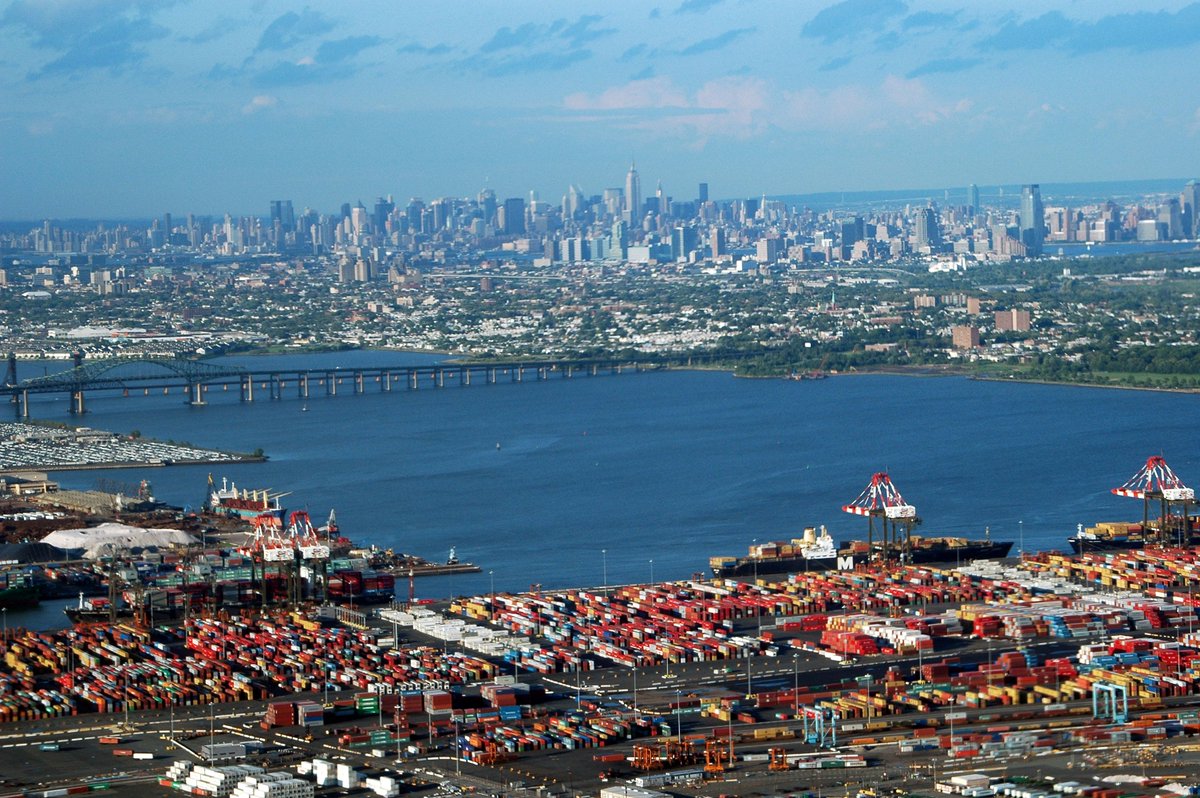
Can two states be locked in a compact forever if neither included an exit clause? That question reached the Supreme Court on April 18, 2023, when New York sued to stop New Jersey from walking away from their 70-year partnership policing the waterfront.
The Waterfront Commission Compact dates to 1953, born from efforts to root out mob corruption at the Port of New York and New Jersey. It created a bistate agency with real teeth: regulatory power, law enforcement authority, delegated sovereignty from both states.
But the Compact never addressed what happens if one state wants out. By 2018, over 80% of cargo and work hours had shifted to the New Jersey side. Jersey enacted legislation to withdraw. New York cried foul.
The Court sided with New Jersey, applying a principle straight from Contracts 101: agreements calling for ongoing, indefinite performance are terminable at will by either party. Since the Compact delegated sovereign authority indefinitely without addressing withdrawal, default rules fill the gap.
State sovereignty reinforced the outcome. States don't lightly cede authority forever, and implying a perpetual veto made no sense when neither party contemplated eternal commitment.
The carve-out matters: compacts setting boundaries, apportioning water, or conveying property interests remain binding. But for regulatory partnerships? Draft your exit clause, or accept that either side can walk.
14
Rodney Reed sits on Texas death row for a murder he says he didn't commit. The belt used to strangle the victim has never been DNA tested.
In 2014, Reed invoked Texas's post-conviction DNA testing statute. The trial court denied him, citing chain of custody problems and doubts the results would matter. The Texas Court of Criminal Appeals affirmed. His rehearing motion failed too.
Then Reed went to federal court, arguing Texas's DNA testing procedures violated procedural due process under § 1983. But Texas had a threshold defense: you're too late. The two-year clock started at the trial court denial.
On April 19, 2023, in Reed v. Goertz, the Supreme Court rejected that argument.
The Court explained that procedural due process claims aren't complete at the moment of deprivation. They're complete when the state fails to provide due process—and that determination can only happen after the state's own appellate machinery finishes running.
Texas provides appellate review and rehearing procedures as part of its DNA testing process. Until those conclude, a prisoner can't know whether the state will cure any defects. The federal claim isn't ripe.
Reed's suit was timely. He filed within two years of the Court of Criminal Appeals denying rehearing. The case now proceeds to the merits—and the underlying question of whether Texas's DNA testing procedures pass constitutional muster.
8
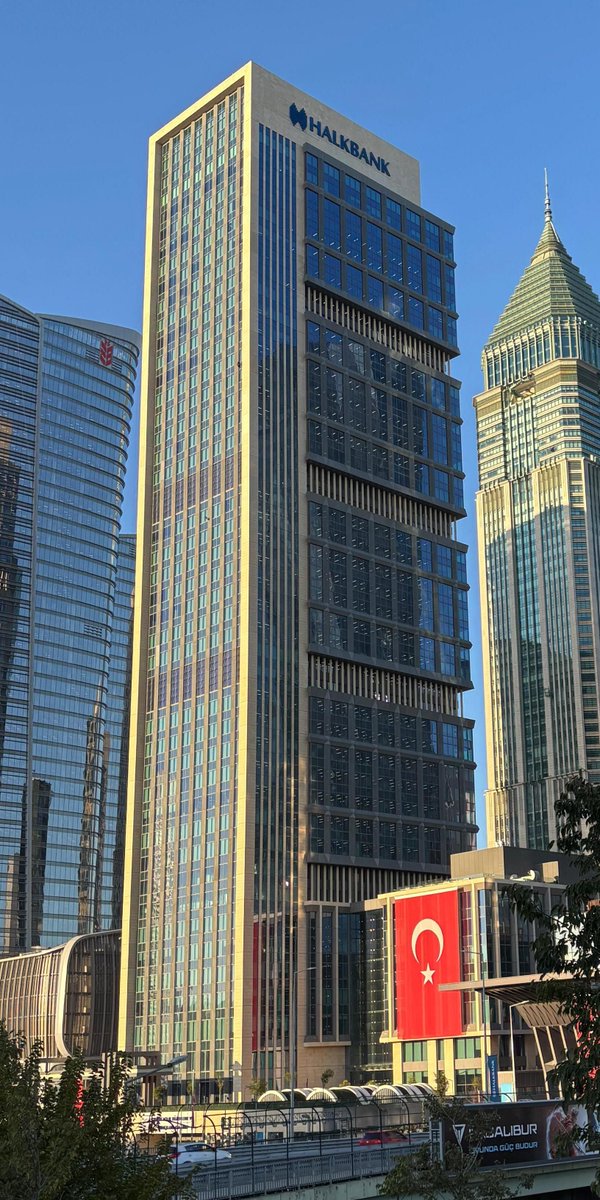
A Turkish state-owned bank now faces federal prosecution for allegedly evading Iran sanctions, and the Supreme Court said sovereign immunity won't save it.
In Turkiye Halk Bankasi A.S. v. United States, decided April 19, 2023, the Court ruled unanimously that the Foreign Sovereign Immunities Act provides no shield against criminal charges. Halkbank, majority-owned by Turkey's sovereign wealth fund, stands accused of laundering billions of dollars in Iranian oil and gas proceeds through U.S. financial systems while lying to Treasury about it.
The bank argued § 3231's grant of jurisdiction over "all offenses" must implicitly exclude foreign sovereigns. The Court disagreed. Justice Kavanaugh found no textual basis for reading such a limitation into the statute.
The FSIA argument fared no better. Every textual indicator points to civil cases only: the statute opens by granting jurisdiction over "nonjury civil action," prescribes civil-specific procedures like venue and service of summons, and sits in Title 28 rather than the criminal code. Congress's silence on criminal matters, despite pre-1976 investigations of foreign entities, was telling.
For practitioners advising foreign state instrumentalities with U.S. exposure: commercial activity that violates federal criminal law can now result in indictment. The FSIA's comprehensive civil framework doesn't extend to the criminal docket.
1
1
75
Can a party sandbag an appeal by waiting until rehearing to invoke a statutory protection it earlier promised not to use? That was the sharp question lurking in MOAC Mall Holdings LLC v. Transform Holdco LLC, decided April 19, 2023.
The setup: Sears filed for Chapter 11 and sold assets to Transform, including rights to assign leases. When Transform tried to assign a Mall of America lease over MOAC's objection, MOAC appealed. Transform expressly represented it wouldn't invoke § 363(m)'s protection for good-faith purchasers.
MOAC won on the merits in district court. Then Transform reversed course, invoked § 363(m) on rehearing, and the district court dismissed, treating the provision as jurisdictional under Second Circuit precedent.
The Supreme Court unanimously rejected that characterization. Justice Jackson, writing for the Court, applied the clear-statement rule: a provision is jurisdictional only if Congress clearly says so. Section 363(m) never mentions jurisdiction, presupposes courts will hear appeals, and contains exceptions inconsistent with jurisdictional status.
The practical upshot matters. Because § 363(m) isn't jurisdictional, courts can now apply waiver, forfeiture, and estoppel. Parties who promise not to invoke it, then change their minds, may find the door closed.
7
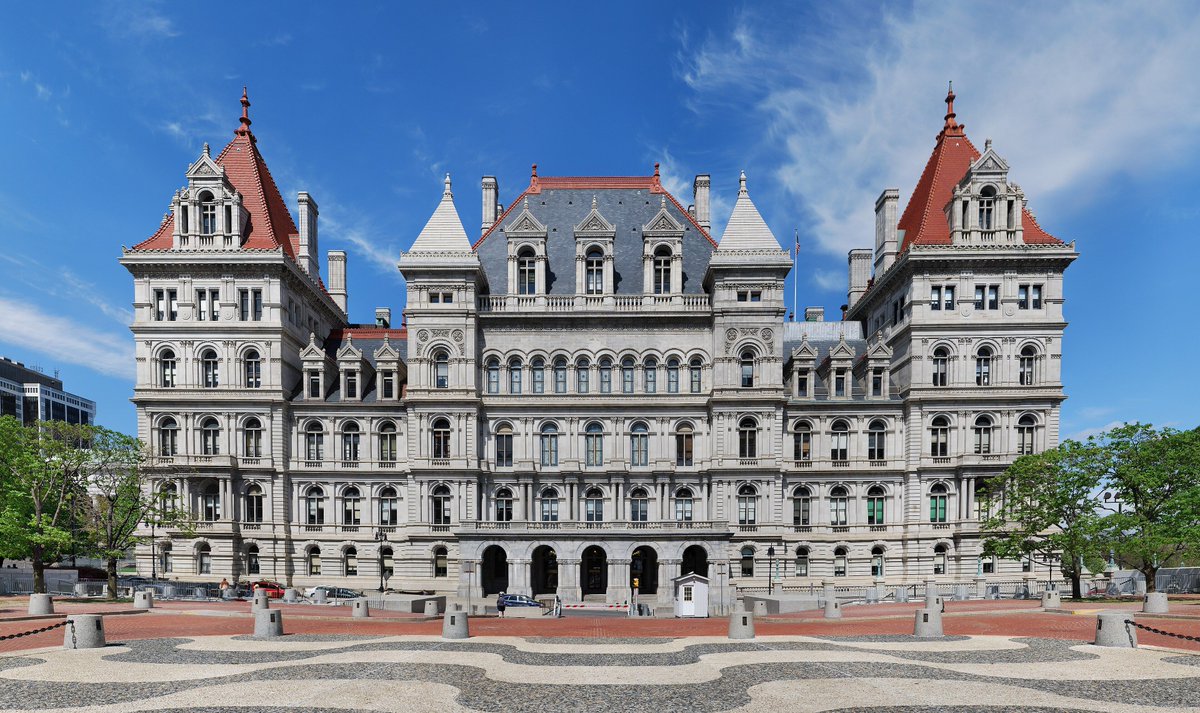
Todd Howe was a fixer. For $100,000 to $180,000 annually, he promised Louis Ciminelli access to New York's Buffalo Billion initiative. The arrangement delivered spectacularly: RFPs were reverse-engineered around LPCiminelli's capabilities, and the company landed a $750 million construction project.
On May 11, 2023, the Supreme Court vacated Ciminelli's wire fraud conviction in a decision that exposed the fragility of a prosecutorial theory used for over three decades.
Ciminelli v. United States centered on the "right to control" doctrine. Prosecutors argued that deceiving the state about a fair bidding process deprived it of property, specifically the right to control its economic decisions based on complete information. The jury was instructed that property includes "intangible interests such as the right to control the use of one's assets."
Justice Thomas traced the word "defraud" back to its meaning when wire fraud was enacted. It meant wronging someone in traditional property rights, not depriving them of valuable information. When the Second Circuit created the right-to-control theory in 1991, it "cited no authority" recognizing such information as historically protected property.
The opinion noted what Congress didn't do. After McNally limited fraud to property rights, Congress revived only honest services fraud. Its silence on other intangible interests "forecloses judicial expansion."
For federal prosecutors, this closes a door that had been open since 1991. Bid-rigging, disclosure failures, and corruption schemes now need a traditional property hook or they stay in state court.
12
A top gubernatorial aide accepted $35,000 while technically a "private citizen" running a campaign. He made one phone call. A state agency reversed its position overnight. His conviction just got thrown out.
In Percoco v. United States, decided May 11, 2023, the Supreme Court vacated Joseph Percoco's honest-services fraud conviction, not because private citizens can never be liable, but because the test used to convict him was unconstitutionally vague.
Percoco had left his position as Cuomo's Executive Deputy Secretary for eight months to manage the Governor's reelection. During that window, developer Steven Aiello's company paid him to help avoid a Labor Peace Agreement requirement. On December 3, 2014, just days before officially returning to government, Percoco called an ESD official. The requirement vanished.
The jury convicted him under the Margiotta standard, which asks whether someone had "domination and control" over governmental business plus a "special relationship" with the government. The Court found this hopelessly unclear. Where's the line between an influential adviser and a criminal?
Private citizens can still face honest-services charges if they become actual government agents through agreement. But the old test is dead, and prosecutors need new theories.
19
When does a jurisdictional grant become an immunity waiver? Congress told litigants exactly where to sue the Financial Oversight and Management Board for Puerto Rico. But on May 11, 2023, the Supreme Court ruled in Financial Oversight and Management Board for Puerto Rico v. Centro De Periodismo Investigativo that providing a courtroom isn't the same as opening the door.
CPI, a nonprofit media organization, sued the Board seeking documents under Puerto Rico's constitutional right of access to public records. The Board invoked sovereign immunity. CPI countered that PROMESA's Section 2126(a), which directs all Board litigation to federal court in Puerto Rico, must mean Congress intended the Board to be suable.
The Court disagreed unanimously. Congress must make abrogation intent "unmistakably clear in the language of the statute." That means either explicitly stripping immunity or creating a cause of action authorizing suit against the government. A jurisdictional provision does neither.
The kicker: PROMESA explicitly abrogates immunity for Title III bankruptcy proceedings. That exception, the Court reasoned, implies immunity remains the rule elsewhere. Jurisdictional provisions still serve a function when other statutes abrogate immunity or when the Board waives it voluntarily.
For practitioners: jurisdiction and immunity are distinct questions. One tells you where. The other tells you whether.
8
A pregnant sow in a gestation crate has 14 square feet. She can't turn around. Can't fully extend her limbs. California voters decided in 2018 they didn't want to buy pork produced that way. The pork industry sued.
National Pork Producers Council v. Ross reached the Supreme Court and was decided May 11, 2023. The core claim: Proposition 12 violates the dormant Commerce Clause because California imports virtually all its pork, so the law effectively regulates farming practices in Iowa, North Carolina, and Minnesota.
Justice Gorsuch wrote for a fragmented Court in affirming dismissal. The antidiscrimination principle sits at the heart of dormant Commerce Clause doctrine. And here's what mattered: petitioners conceded Proposition 12 doesn't discriminate. It applies to California's handful of pork producers the same as everyone else.
The industry wanted the Court to adopt a broad "extraterritoriality" rule. After all, compliance would increase farm-level costs by 9.2%, and those costs fall almost entirely out of state. But Gorsuch noted that virtually every state law creates ripple effects beyond its borders. Such a rule would threaten laws "long understood as valid exercises of reserved state powers."
The implications cut across industries. States retain authority to regulate what's sold within their borders on nondiscriminatory terms. The burden on challengers: plead facts showing substantial harm to interstate commerce itself, not just to particular ways of doing business.
23
New today: A defendant who created a fake invoice in Seattle cannot be tried in San Francisco just because that's where the FBI investigation was based. The Supreme Court's 6/11/26 decision in Abouammo v. United States hands prosecutors a significant venue limitation for §1519 obstruction charges.
Ahmad Abouammo allegedly sold confidential Twitter user information about Saudi dissidents to a Saudi official for $300,000 while working at Twitter's San Francisco headquarters. After relocating to Seattle, he was interviewed at home by FBI agents who had flown in from California. During the interview, he went upstairs, fabricated an invoice on his computer, and emailed it to the agents.
The government indicted him in California, where the investigation was centered. The Court said no. Venue lies only where the "conduct constituting the offense" occurred. Section 1519 criminalizes one specific act: falsifying a document with intent to obstruct. That falsification happened in Seattle, full stop.
The government pushed hard on the statute's intent requirement, arguing that because Abouammo intended to obstruct a California-based investigation, California venue was proper. The Court rejected this reasoning entirely. Mens rea elements, even specific intent provisions, don't expand venue beyond where the prohibited conduct physically occurred.
For federal prosecutors, this creates real strategic constraints. The ease of proving §1519 violations now comes at a cost: you're locked into the district where the defendant actually created the false document.
28
Can a statute that tells courts what remedies they *may* grant also tell private plaintiffs they *can* sue? Just decided on 6/11/26, the Supreme Court says no in FS Credit Opportunities Corp. v. Saba Capital Master Fund.
The setup: Saba Capital, an activist investor, bought large stakes in closed-end mutual funds to shake up their investment strategies. The Funds responded by adopting Maryland resolutions limiting activist voting rights. Saba cried foul, claiming these limits violated the Investment Company Act's equal voting requirement.
The catch: Saba needed a way into federal court. It pointed to Section 47(b), which says courts "shall not" deny rescission of contracts violating the ICA. The Second Circuit agreed this created an implied private right of action.
The Supreme Court reversed. Section 47(b) is a "mandate directed to courts" about their remedial authority, not rights-creating language protecting a class of persons. The key actor is "a court," not an individual. The provision presupposes parties are already before the tribunal through some other vehicle.
The Court emphasized that rescission is a remedy, not a cause of action. Congress knew how to create private rights under the ICA and did so twice elsewhere. The SEC's comprehensive enforcement role further suggests Congress didn't intend freelance private enforcement.
Activist investors challenging fund governance now need alternative legal theories or must wait for the SEC to act.
1
32
Thomas Keathley did what you'd expect a layperson to do: after getting hit by a truck in August 2021, he called a personal injury lawyer and told his bankruptcy attorney he planned to sue.
What he didn't do was file an amended schedule with the Bankruptcy Court disclosing his potential claim. That omission nearly cost him everything.
On 6/11/26, the Supreme Court decided Keathley v. Buddy Ayers Construction, reversing the Fifth Circuit and establishing that courts must examine the totality of circumstances when deciding if a debtor's failure to disclose was inadvertent.
The Fifth Circuit had reduced this inquiry to two factors: Did the debtor know the underlying facts? Did they have a motive to conceal? Since the answer to both questions is almost always yes, debtors almost always lost.
Keathley tried to fix his mistake the moment the defendant raised judicial estoppel, immediately amending his schedules and submitting sworn explanations. The Fifth Circuit said that evidence was irrelevant under its framework.
The Supreme Court disagreed. Judicial estoppel is an equitable doctrine, and equity demands flexibility. Mechanical rules that produce near-automatic results have no place in case-by-case analysis.
The ruling resolves a circuit split and creates a unified national standard. Debtors can now actually litigate whether their omissions were genuine mistakes rather than facing a two-question knockout test.
80
A transgender woman fleeing persecution in Guatemala can now have her case heard by a federal court. That's the direct result of Santos-Zacaria v. Garland, decided May 11, 2023, where the Supreme Court unanimously ruled that immigration exhaustion requirements don't demand the impossible.
Santos-Zacaria had argued to the Board of Immigration Appeals that she faced persecution if returned to Guatemala. After losing, she went to the Fifth Circuit claiming the Board improperly engaged in factfinding. The Fifth Circuit dismissed her case on its own motion because she hadn't asked the Board to reconsider first.
The Supreme Court reversed. Section 1252(d)(1) requires exhausting only remedies "available as of right," and Board reconsideration is discretionary. The agency can deny it for any reason or no reason. That's not the kind of remedy Congress meant.
Justice Jackson's opinion also clarified that this exhaustion requirement isn't jurisdictional at all. It's a claim-processing rule, meaning courts can't raise it sua sponte and parties can forfeit or waive it.
Immigration practitioners should note: no more precautionary reconsideration motions just to preserve judicial review. The Board won't be flooded with filings, and courts won't face premature petitions.
20
Can the IRS demand your bank records without telling you, even if you're not the one who owes taxes? That question reached the Supreme Court in Polselli v. IRS, decided May 18, 2023, and the unanimous answer tilted heavily toward government power.
The facts: Remo Polselli owed over $2 million in unpaid taxes. IRS Revenue Officer Bryant suspected he was hiding assets through his wife and various business entities. So Bryant issued summonses to three banks seeking financial records of those third parties, not Polselli himself. No notice was given.
The third parties moved to quash, arguing the statute's notice exception only applies when the delinquent taxpayer has a "legal interest" in the records being summoned. The Ninth Circuit agreed with them.
The Supreme Court reversed. Writing for a unanimous Court, Chief Justice Roberts found the text simply doesn't include any legal interest requirement. Section 7609(c)(2)(D)(i) exempts notice when a summons is issued "in aid of collection" against someone whose liability prompted the summons. That's it. Three conditions, none involving ownership of records.
Roberts noted Congress knew how to write a legal interest requirement when it wanted one. The very next section, enacted in the same Act, includes a "proprietary interest" provision. Its absence here was telling.
The practical upshot: third parties have fewer procedural protections when the IRS investigates whether a delinquent taxpayer is shielding assets through them.
16
In 2014, a collective bargaining agreement between the Ohio National Guard and its union expired. What happened next sparked a jurisdictional fight that reached the Supreme Court.
The Guard didn't just let the contract lapse. It repudiated the agreement entirely, asserting it wasn't bound by federal labor law. Then it cut off dues withholding for 89 dual-status technicians, employees who occupy one of the strangest positions in the federal workforce.
These technicians are federal civil servants who work for state National Guards, serving in both civilian and military capacities. On May 18, 2023, in Ohio Adjutant General's Dept. v. FLRA, a unanimous Court held that federal labor law applies to them.
The key: state adjutants general can only employ dual-status technicians through express designation from the Secretaries of the Army or Air Force. That's not state authority. It's delegated federal power.
The Court traced this arrangement back to a 1968 General Order and prior administrative decisions that survived the enactment of the FSLMRS. When Ohio hired these workers, it was operating as a component of the Department of Defense.
The FLRA's jurisdiction stands. Those 89 technicians get their labor protections back.
14
From May 2023: Social media platforms won a sweeping victory when the Supreme Court unanimously ruled they cannot be sued as aiders and abettors of terrorism simply for hosting content from terrorist organizations.
Twitter, Inc. v. Taamneh arose from the horrific 2017 Reina nightclub massacre in Istanbul, where an ISIS operative killed 39 people. The victims' families sued Twitter, Facebook, and Google, claiming the companies aided ISIS by allowing the group to use their platforms despite knowing about that use.
The theory was bold: platforms that fail to adequately police terrorist content become accomplices to every attack those terrorists commit worldwide.
The Court rejected it entirely. Justice Thomas, writing for a unanimous bench, held that aiding-and-abetting liability requires conscious, voluntary, and culpable participation in wrongdoing. Providing the same algorithms and services to ISIS that billions of other users receive doesn't qualify.
Crucially, plaintiffs identified no special treatment, no encouragement, no direct action toward ISIS. The relationship between the platforms and the Reina attack was "highly attenuated."
For tech companies, this creates meaningful protection. For future plaintiffs, the path is narrow: show a real nexus to the specific attack, or demonstrate pervasive systemic culpable assistance. General knowledge plus inaction won't suffice.
22
Can adding "new meaning" to someone else's art ever be enough to claim fair use? On May 18, 2023, the Supreme Court said not necessarily, and the answer reshapes how courts evaluate transformative works.
Andy Warhol Foundation v. Goldsmith began with a 1981 photo session. Lynn Goldsmith photographed Prince for Newsweek. Three years later, Vanity Fair licensed that photo as an "artist reference" for Andy Warhol to create one illustration. Warhol made sixteen works instead. Goldsmith knew nothing about fifteen of them.
The collision came in 2016. After Prince died, Condé Nast paid AWF $10,000 to splash "Orange Prince" across a commemorative magazine cover. Goldsmith received nothing. No fee. No credit. She sued.
AWF argued Warhol's silkscreen was transformative, conveying a different message about celebrity. The Court disagreed, 7-2. The first fair use factor asks whether the new use shares the same purpose as the original. Here, both works served identical commercial functions: magazine portraits illustrating stories about Prince.
The Court drew a critical line. Transformation requires more than qualifying as a derivative work. Otherwise the copyright holder's exclusive right to license derivatives becomes meaningless. New artistic expression matters, but it's not dispositive.
For photographers and visual artists, this reinforces licensing rights over their subjects. Adding style doesn't automatically equal transformation. Purpose and commercial context carry real weight.

35
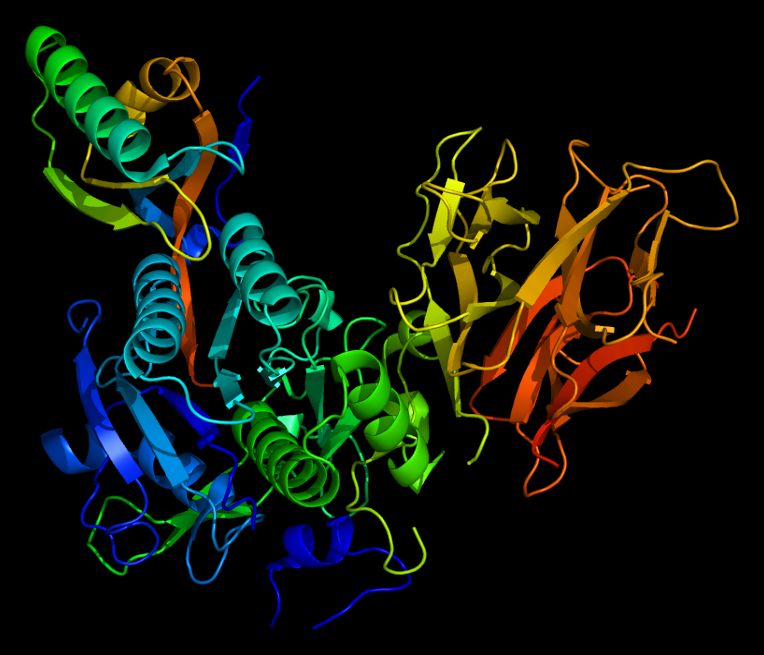
Twenty-six antibodies. That's what Amgen actually identified in its patent specification, each described by its specific amino acid sequence. But Amgen's patent claims reached for something far more ambitious: every antibody that could bind to certain residues on PCSK9 and block it from grabbing LDL receptors. Potentially millions of them.
On May 18, 2023, in Amgen Inc. v. Sanofi, a unanimous Supreme Court said that math doesn't work under patent law.
The case arose when Sanofi developed its own PCSK9-inhibiting cholesterol drug. Amgen sued for infringement. Sanofi fired back that Amgen's patents were invalid because the specification couldn't enable such sweeping claims.
Amgen's defense centered on two disclosed methods: a "roadmap" for generating and screening antibodies, and "conservative substitution" for tweaking known antibodies to create new ones. But both methods shared a fatal flaw. They told scientists how to search, not how to succeed. Each candidate antibody required individual testing.
The Court reached back to foundational cases, including Morse and the Incandescent Lamp patent, to reaffirm an old principle: claiming a class means enabling the class. Amgen's methods weren't enablement. They were, in the Court's words, an invitation to "engage in painstaking experimentation."
The ruling reshapes antibody patent strategy for years to come.
31
Tech platforms survived a major terrorism lawsuit in May 2023, but not for the reason you might think.
Gonzalez v. Google, decided May 18, 2023, was supposed to be the case that finally clarified Section 230's limits. Instead, the Supreme Court punted. The family of Nohemi Gonzalez, killed in the 2015 ISIS Paris attacks, never got their day on the platform immunity question.
The allegations were serious: Google allegedly approved ISIS videos for advertising and shared revenue with the terrorist organization. The Ninth Circuit had already found most claims barred by Section 230, with remaining claims falling short on the merits.
The Supreme Court agreed the claims failed, but on different grounds. Applying the aiding-and-abetting standard from its same-day Twitter v. Taamneh decision, the Court found plaintiffs couldn't show Google "knowingly provided substantial assistance" to terrorism.
What this means in practice: plaintiffs hoping to hold platforms liable for hosting terrorist content face a steep climb. General platform services, even algorithmic recommendations, likely won't satisfy the substantial assistance threshold.
And Section 230's scope? Still unresolved. The question that brought this case to the Court remains for another day.

235
When an appeals court finds legal errors in an agency decision, can it still affirm by substituting its own reasoning? On May 22, 2023, the Supreme Court answered with a firm no in Calcutt v. FDIC, reinforcing a doctrine that keeps courts in their lane.
Harry Calcutt ran Northwestern Bank as CEO for over a decade. When a $38 million lending relationship went bad, the FDIC came after him personally, ordering his removal from banking, barring him from the industry, and hitting him with $125,000 in civil penalties.
The FDIC's legal theory had a problem. The agency concluded that "proximate cause" wasn't required under the statute. The Sixth Circuit found that was wrong, identifying two distinct legal errors in the agency's reasoning.
But here's where things went sideways. Instead of sending the case back, the Sixth Circuit conducted its own record review and affirmed the sanctions anyway.
The Supreme Court reversed unanimously. Under the Chenery doctrine, courts must judge agency action solely by the grounds the agency actually invoked. When discretionary decisions contain legal errors, the only proper path is remand, not judicial rescue.
The futility exception? It only applies when the outcome is certain or the agency had no choice. Sanctions are discretionary. The FDIC gets another shot to decide whether Calcutt deserves these penalties under the correct legal standard.

22