
Teach: @CtrRelPol | Research: @myfaithcounts | Books: The Nones, Great Dechurching, Vanishing Church | Former Pastor: @AmericanBaptist | Graphs about Religion
Joined May 2008
- Tweets 9,953
- Following 178
- Followers 36,418
- Likes 4,360
Photos and videos
Pinned Tweet

30 Jul 2025
Some personal news.
Starting August 1, I will be joining the Danforth Center on Religion and Politics at WashU (@CtrRelPol) as a Professor of Practice.
I think it's a perfect step for my career as Senator Danforth envisioned the Center to be a place for public engagement around religion and politics.
That's where I see myself headed in the next stage of my career.
68
19
576
102,654
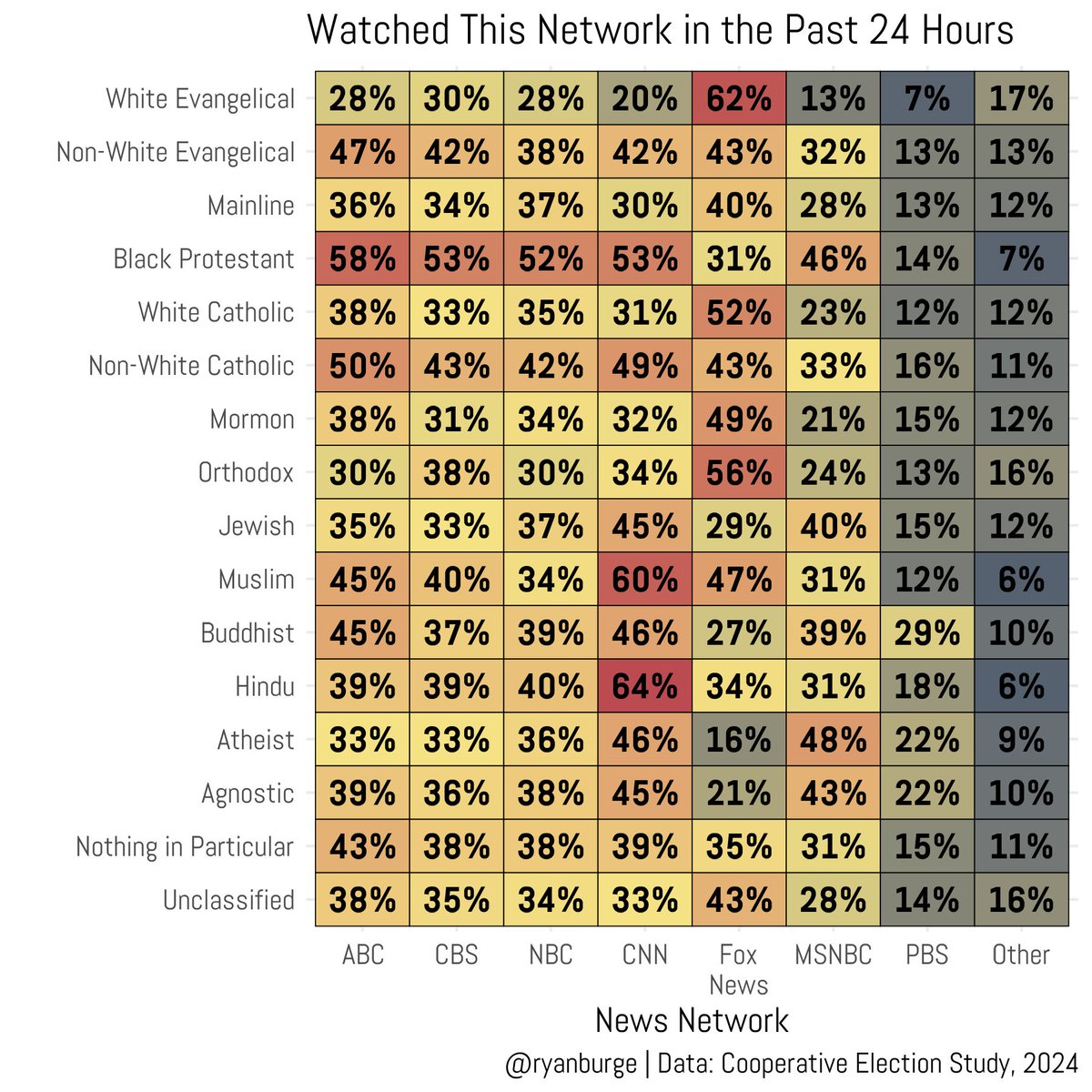
62% of white evangelicals report watching Fox News in the last 24 hours.
It's 16% of atheists.
Black Protestants, Muslims and Hindus really love CNN.
MSNBC is popular with atheists, agnostics,
and Black Protestants.
No one watches PBS.
19
22
151
10,243
The discussion of the religiosity of young adults is complicated.
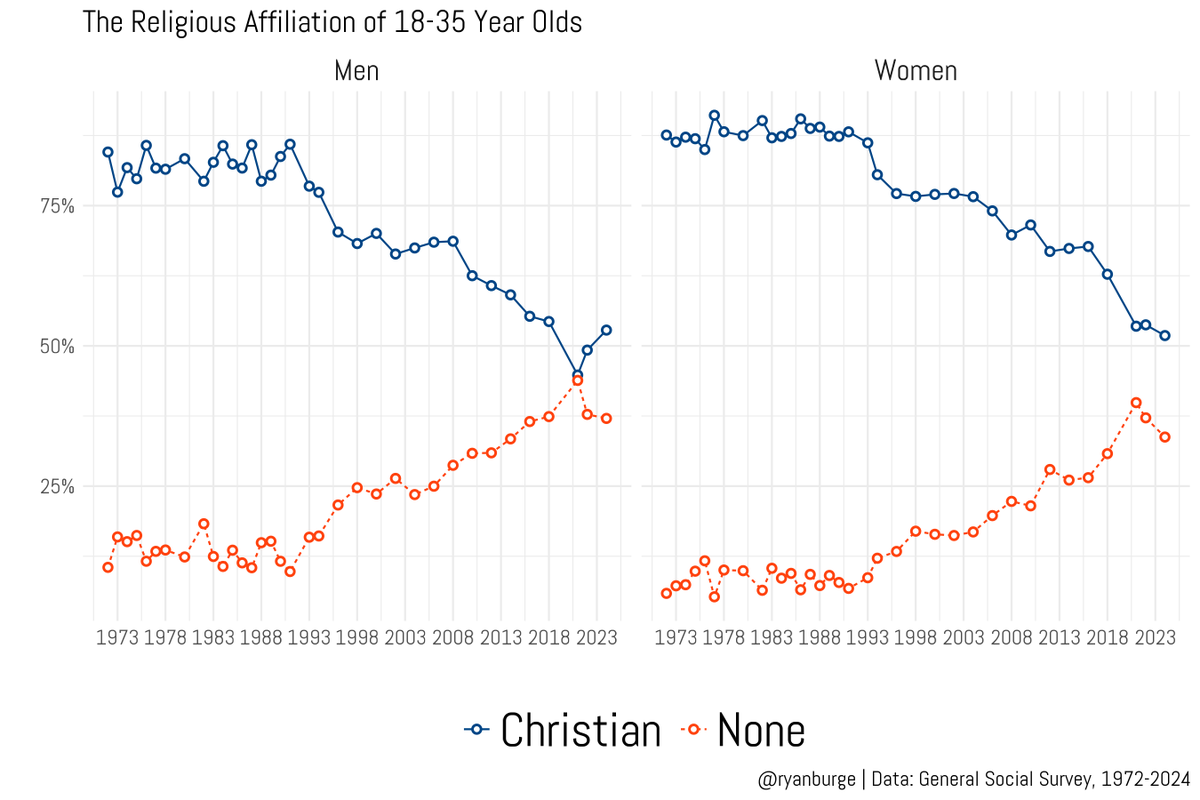
It's certainly the case that both young men and young women have become a lot less Christian over time.
But is it different with Gen Z?
Women: 52% Christian/34% None
Men: 53% Christian/37% None
2
7
74
4,987
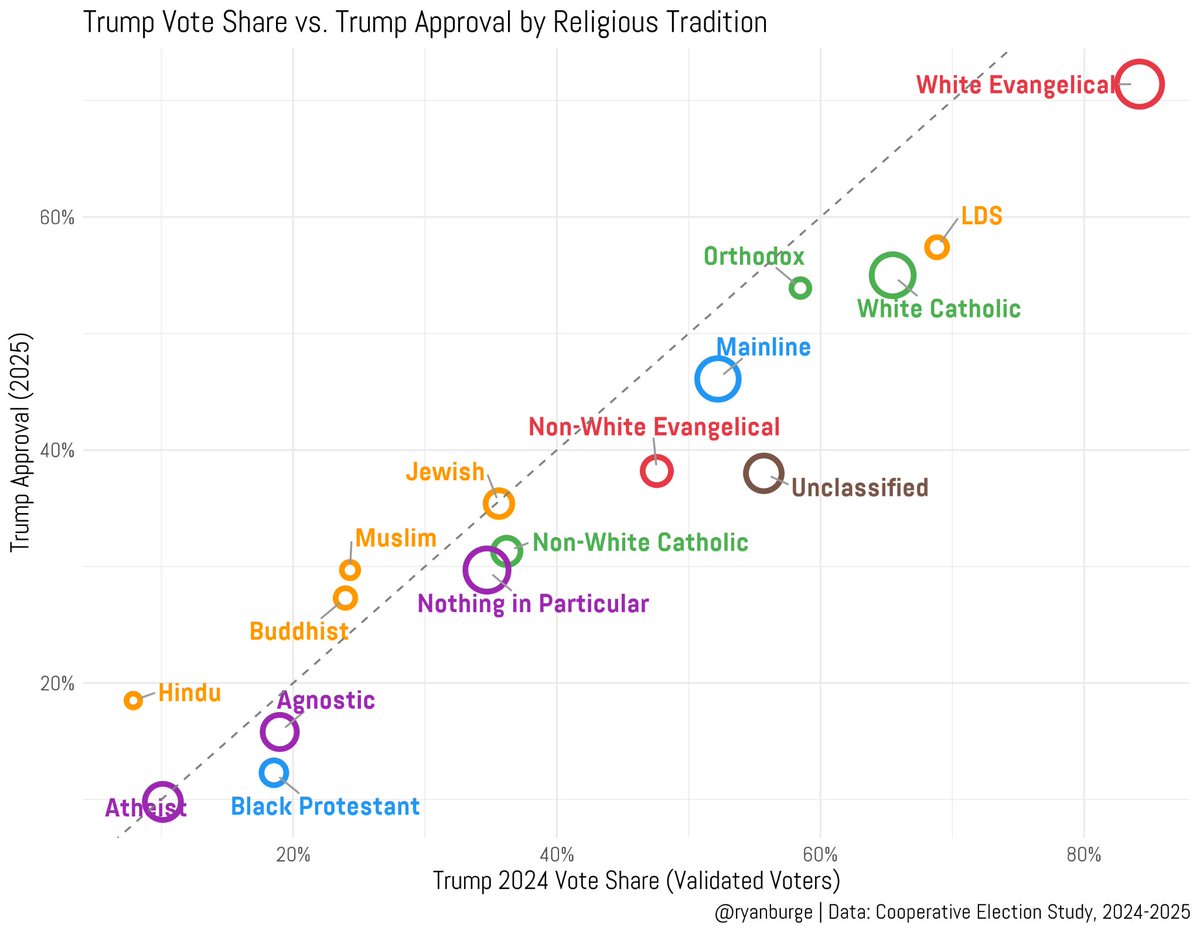
Had religious groups who voted for Donald Trump in 2024 soured on him a year later?
His vote share is on the x-axis.
Approval ratings on the y-axis.
84% of white evangelicals voted for him.
71% approved of him.
White catholics: 65% vs 55%
LDS: 69% vs 57%
7
9
44
4,292
I've got a full (free) post today that studies the, "I held my nose and voted for Trump" crowd.
There's comparisons here between Trump's approval in 2017 vs 2025.
Lotta interesting stuff.
graphsaboutreligion.com/p/fa…
1
4
1,199
Jun 14
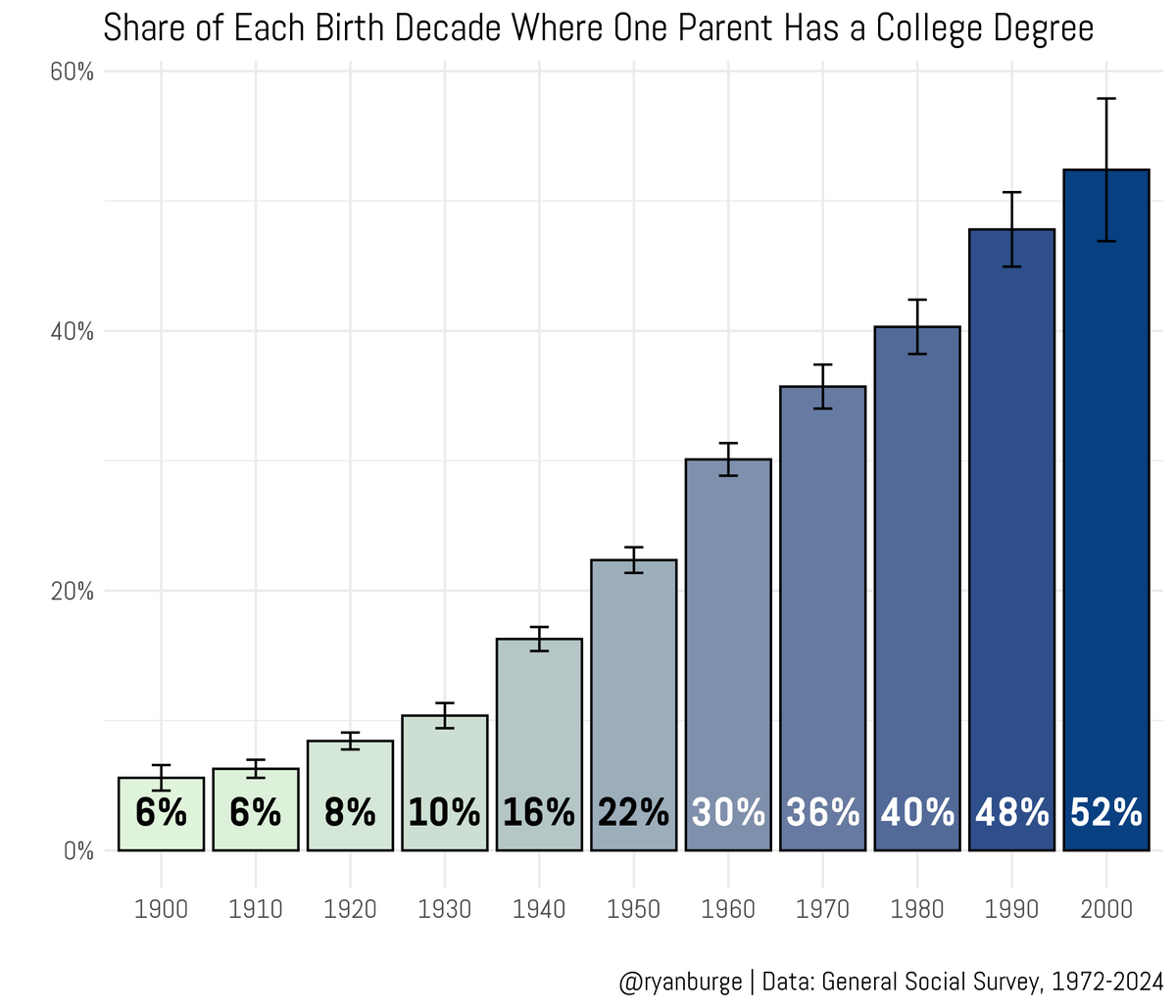
It's staggering to consider how widespread education has become in the US in the last century.
Among people born in the 1900s, 6% had a parent with a college degree.
For those born in the 1950s, it was 22%.
Among those born in 2000 or later, it's HALF.
10
11
97
9,384
Jun 14
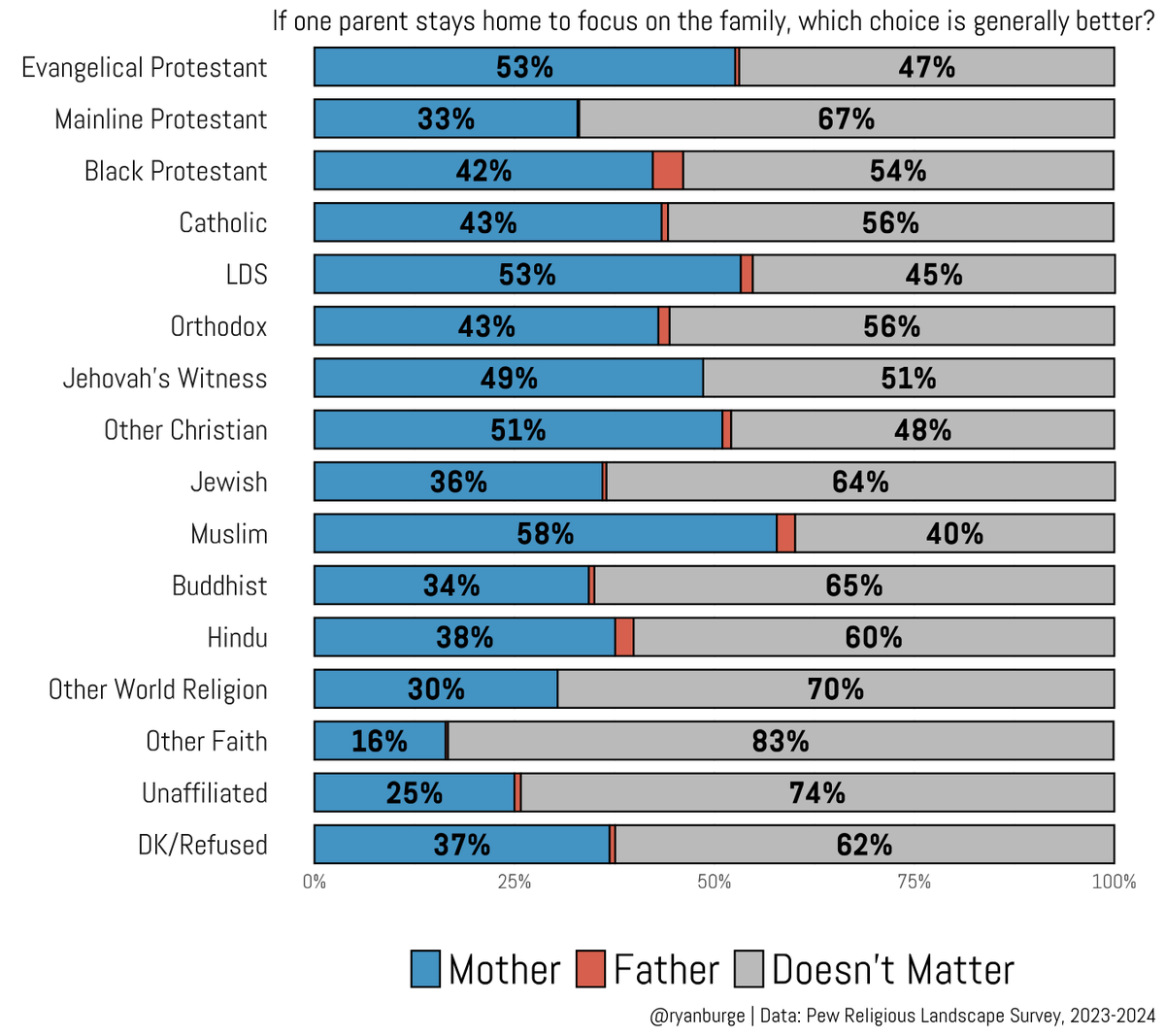
"If one parent stays home to focus on the family, which is a better option?"
Almost NO ONE says it's the father. It's <1%.
40% said mother.
59% said it didn't matter.
Here's that broken by religious tradition.
Muslims and evangelicals most likely to say "mother"
15
16
111
24,453
Jun 14
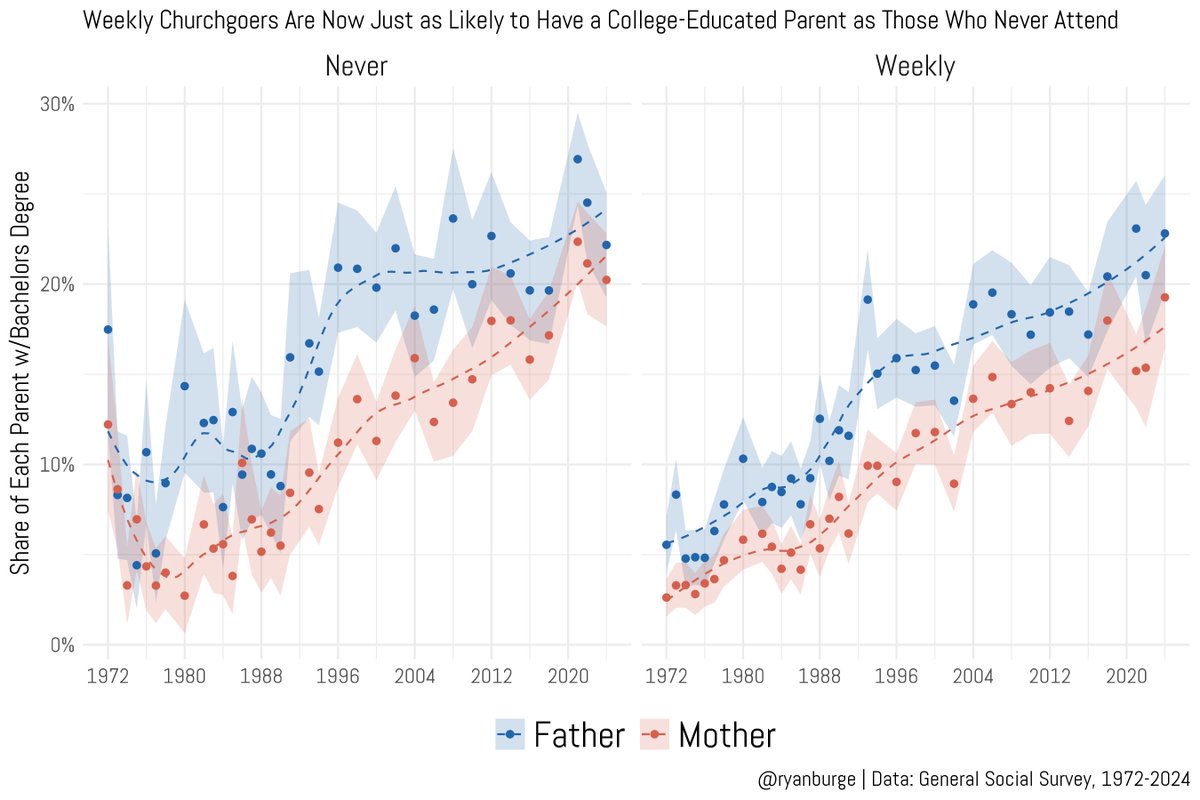
The stereotype is that educated families raise secular kids.
The GSS disagrees.
Never-attenders and weekly churchgoers are now equally likely to have a college-educated parent — a gap that was real and measurable as recently as 1980.
2
24
135
6,514
Jun 13
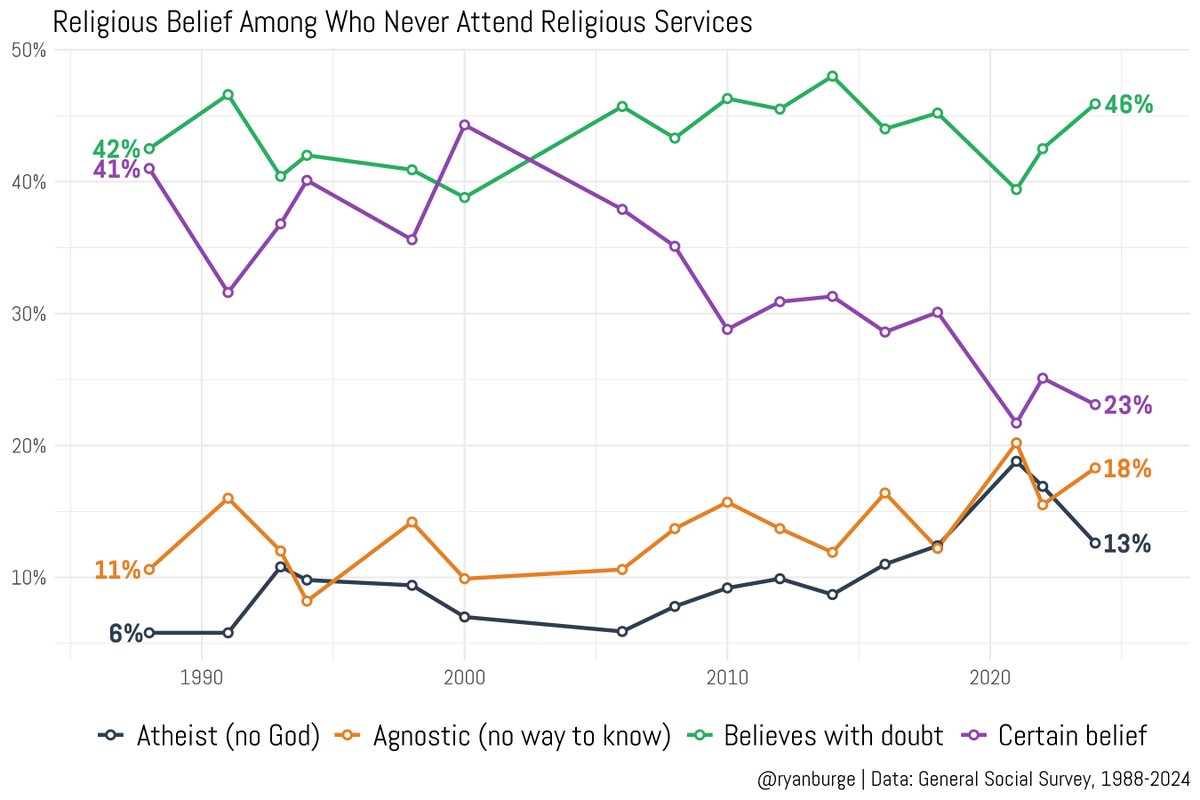
Even among people who never attend religious services, a significant majority still believe in God or a Higher Power (~70% in 2024).
It was ~80% in the 1970s.
23% of never attenders say that they have a certain belief in God.
18% are agnostic
13% are atheist.
3
10
65
3,965
Jun 13
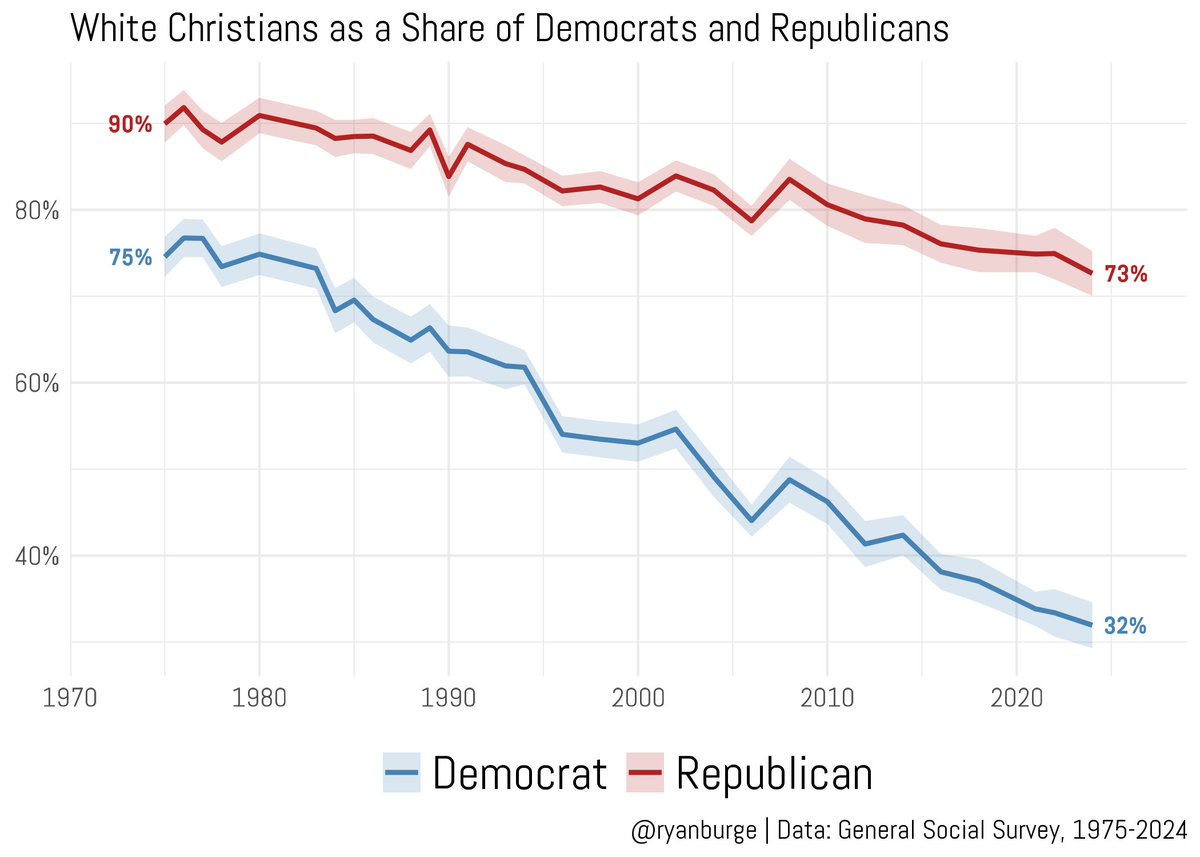
In 1975:
90% of the Republican party were white Christians.
75% of the Democrats were white Christians.
In 2024:
73% of Republicans were white Christians. Down 17 pts.
32% of Democrats were white Christians. Down 42 pts.
13
32
207
14,106
Jun 13
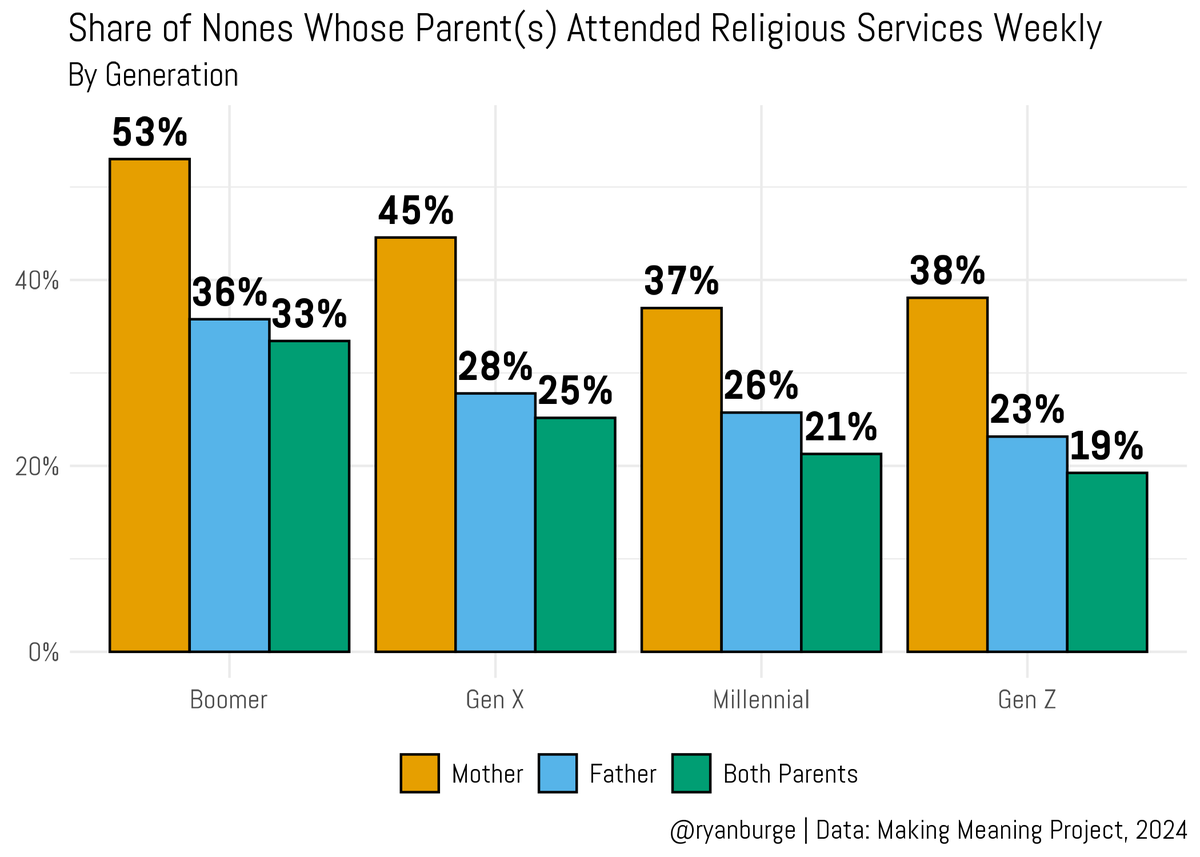
.@jonestony and I asked the "nones" how often their parents went to church when they were kids.
Mothers were much more likely to be weekly attenders compared to fathers (~15 point difference).
But the vast majority of nones didn't grow up in houses where both went often.
3
10
49
5,119
Jun 12
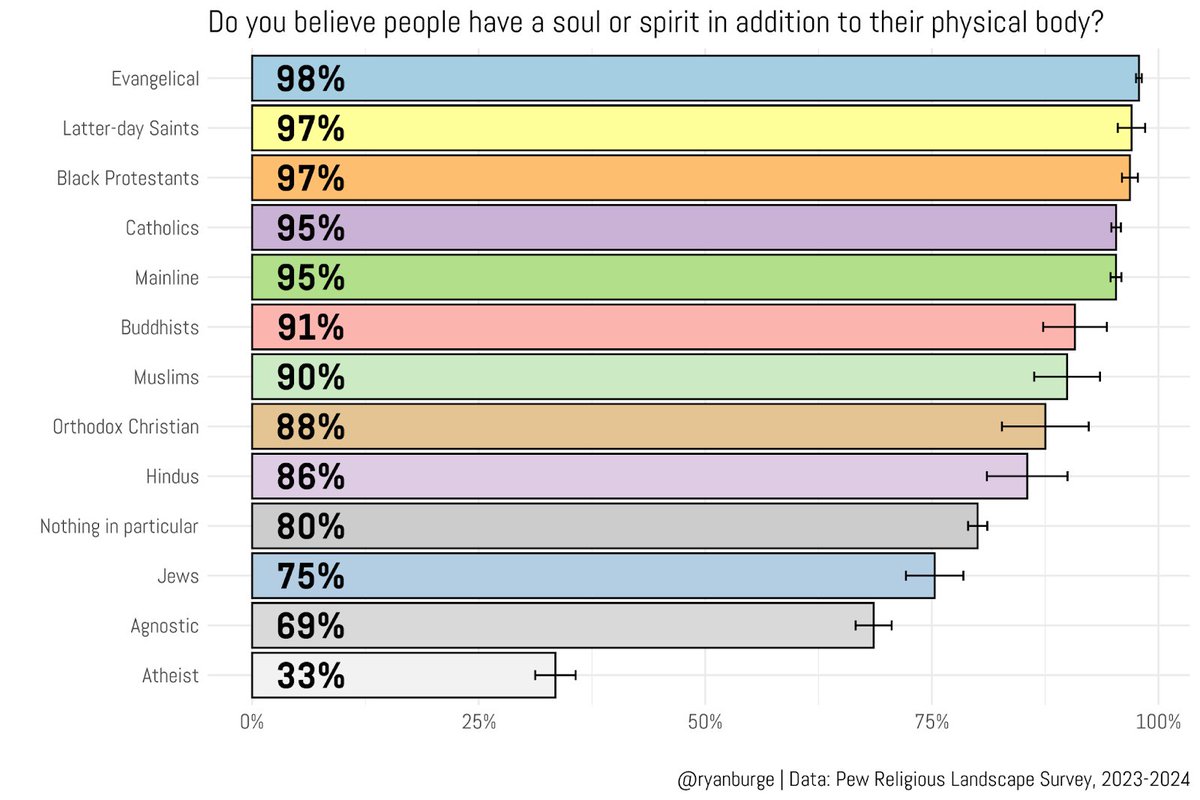
Over 90% of all Americans believe that people have a soul or spirit in addition to their physical bodies.
The groups that buck this trend
Jews: 75%
Agnostics: 69%
Atheists: 33%
13
24
183
59,398
Jun 12
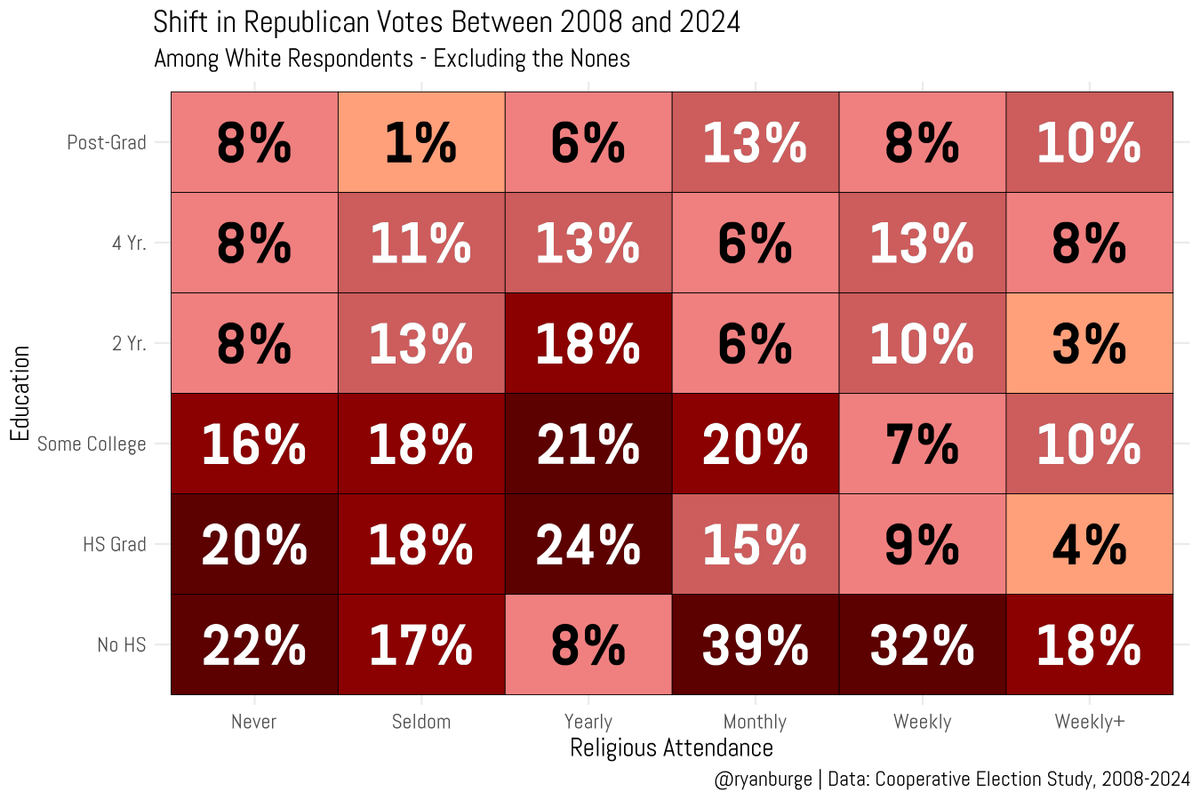
Among white voters from any faith tradition, Trump did better in 2024 compared to McCain in 2008.
There's not a single combination of educational attainment and church attendance where the Democrats have gained ground with white people who are not "nones."
3
5
42
2,885
Jun 11
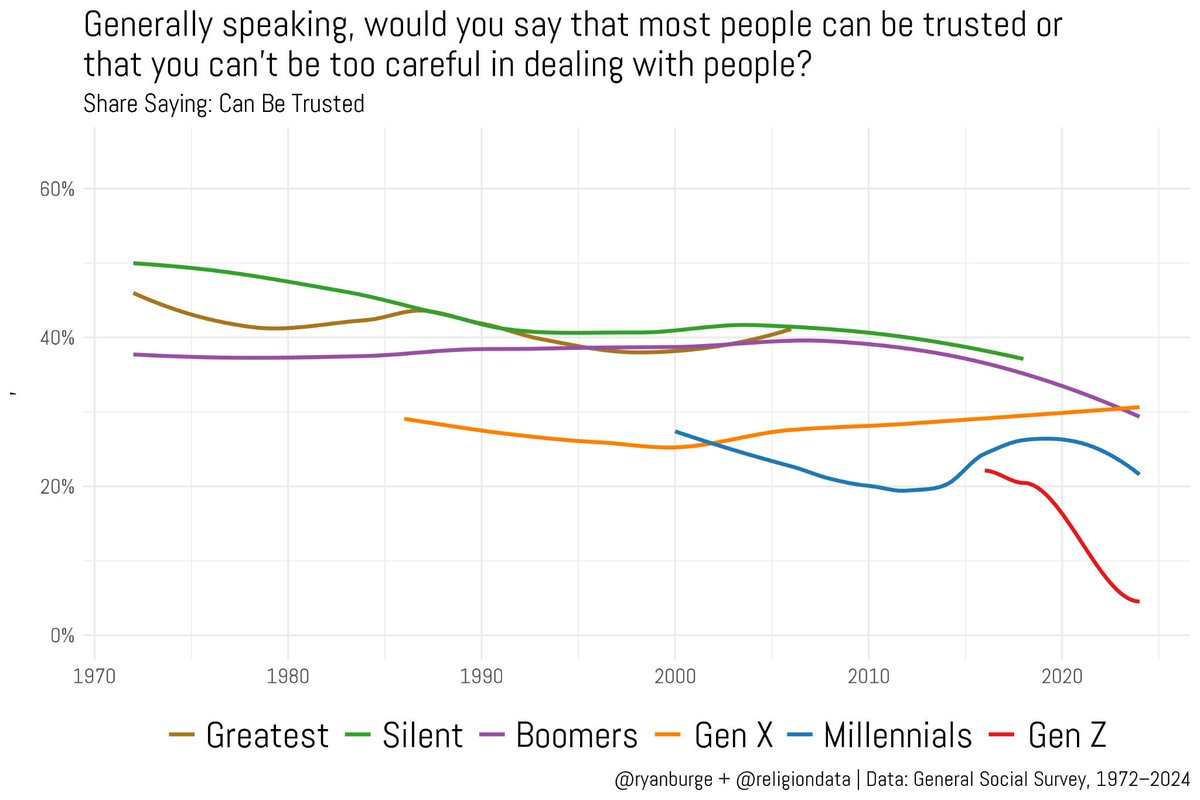
Does life experience make us less trusting?
Boomer trust was the same from 1972-2010. Then it noticeably dropped.
Gen X is at the same spot now as they were in 2000.
Millennials? Down ~5 points.
But look at Gen Z. The sample size is small, but the line is straight down.
7
13
57
5,881
Jun 11
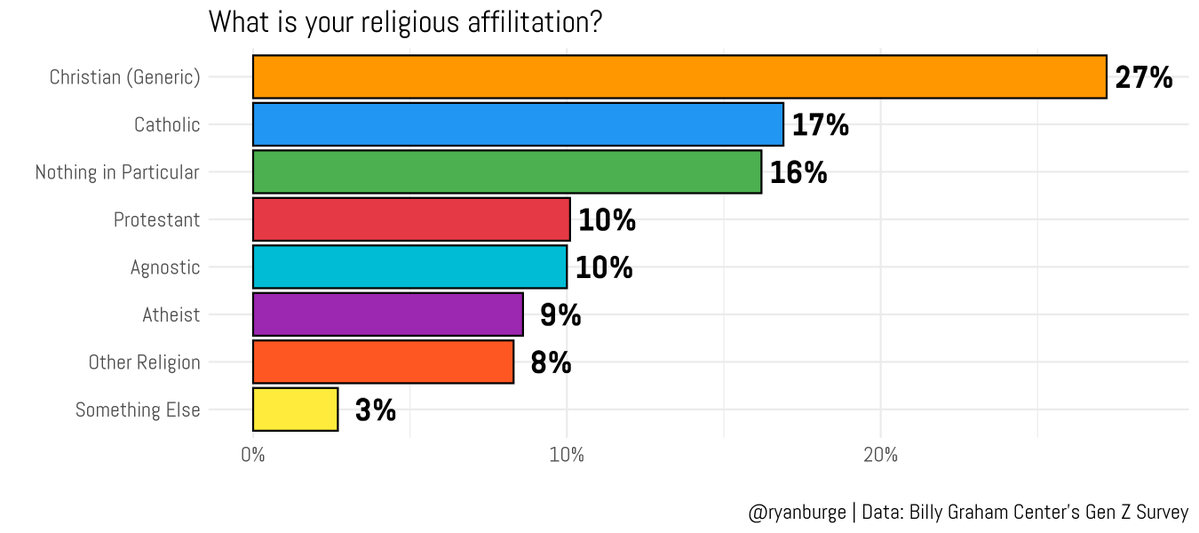
I've been working with the @WheatonBGC on a poll of Gen Z.
And our first article about the data is out in @CTmagazine this morning.
Guess what? Gen Z doesn't know what the word Protestant means.
They are nearly 3x more likely to ID as a generic Christian.
Article below.
17
17
111
12,028
Jun 11
There's a banger of a graph in this one about how Gen Z reports consistent religious attendance through each life stage.
Guess which type of Christian groups the best on this?
It's the Protestants. Not the "Christians"
christianitytoday.com/2026/0…
2
1
23
1,939
Jun 11
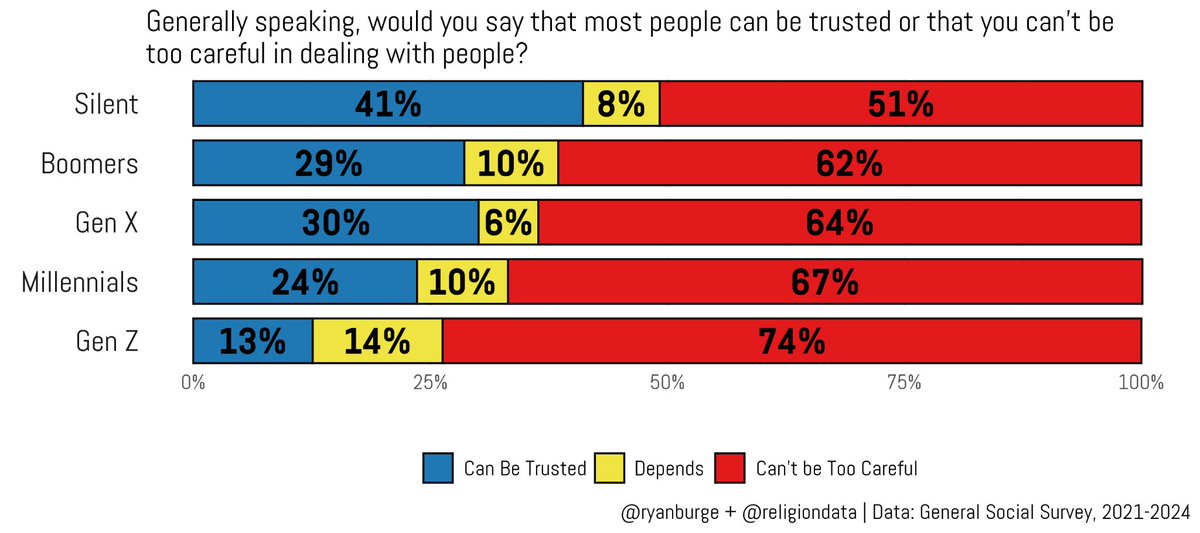
Generation Z has the lowest levels of interpersonal trust of any generation we've ever polled.
And although the data is time limited, the velocity of their decline in trust already far exceeds any previous generation.
106
221
1,297
449,150
Jun 11
I ruminate on that in today's free post.
Is it about education? Trust is always linked to educational attainment.
Is it about religion?
I mean, 88% of Gen Z who never go to church say that others can't be trusted....
graphsaboutreligion.com/p/ge…
10
8
60
14,483
Jun 10
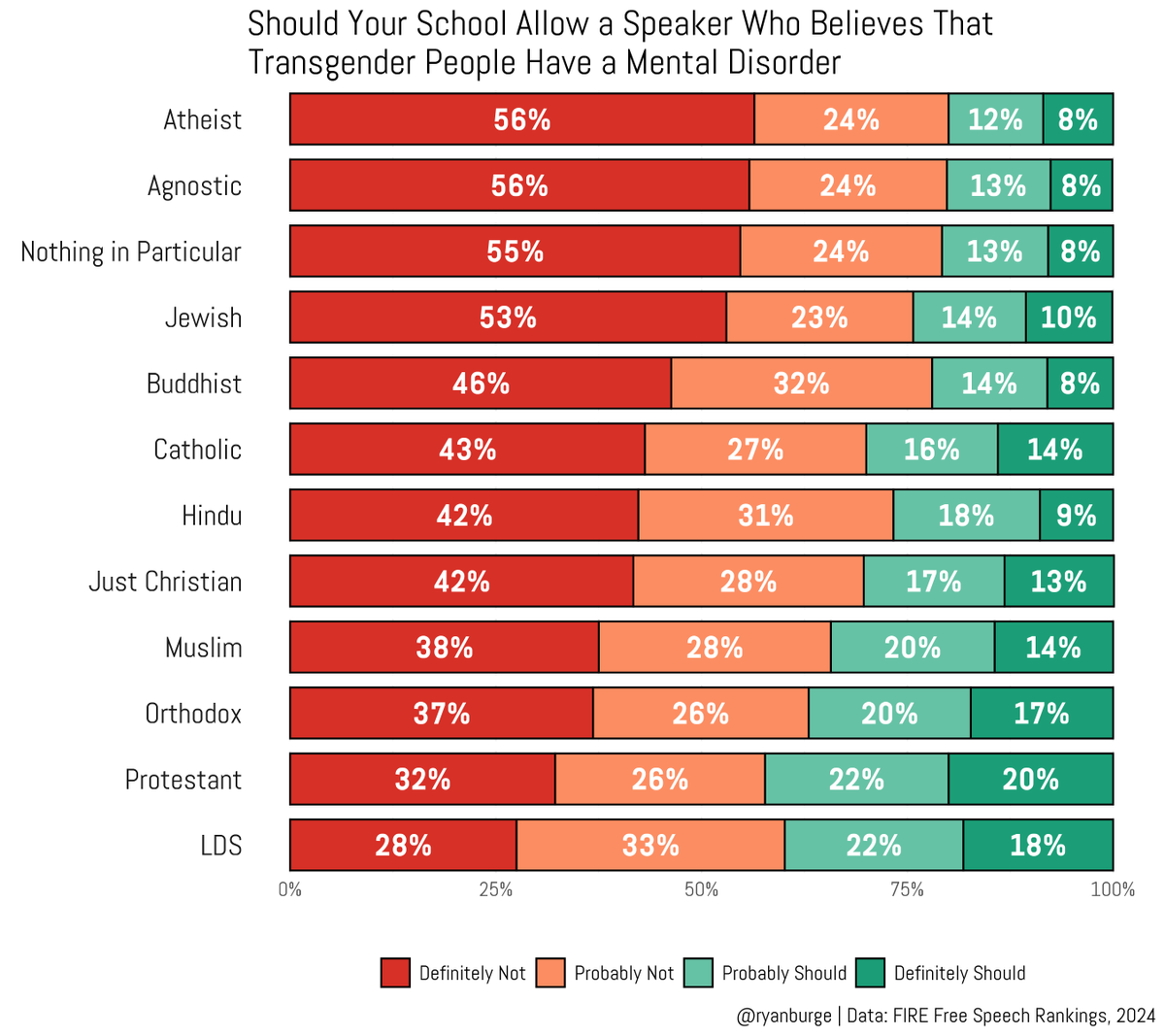
College students were asked:
"Should your school allow a speaker who believes that transgender people have a mental disorder."
The most likely to say "definitely not"?
The non-religious at 55%
The most permissive?
Latter-day Saints and Protestants
7
5
60
24,844
Jun 10
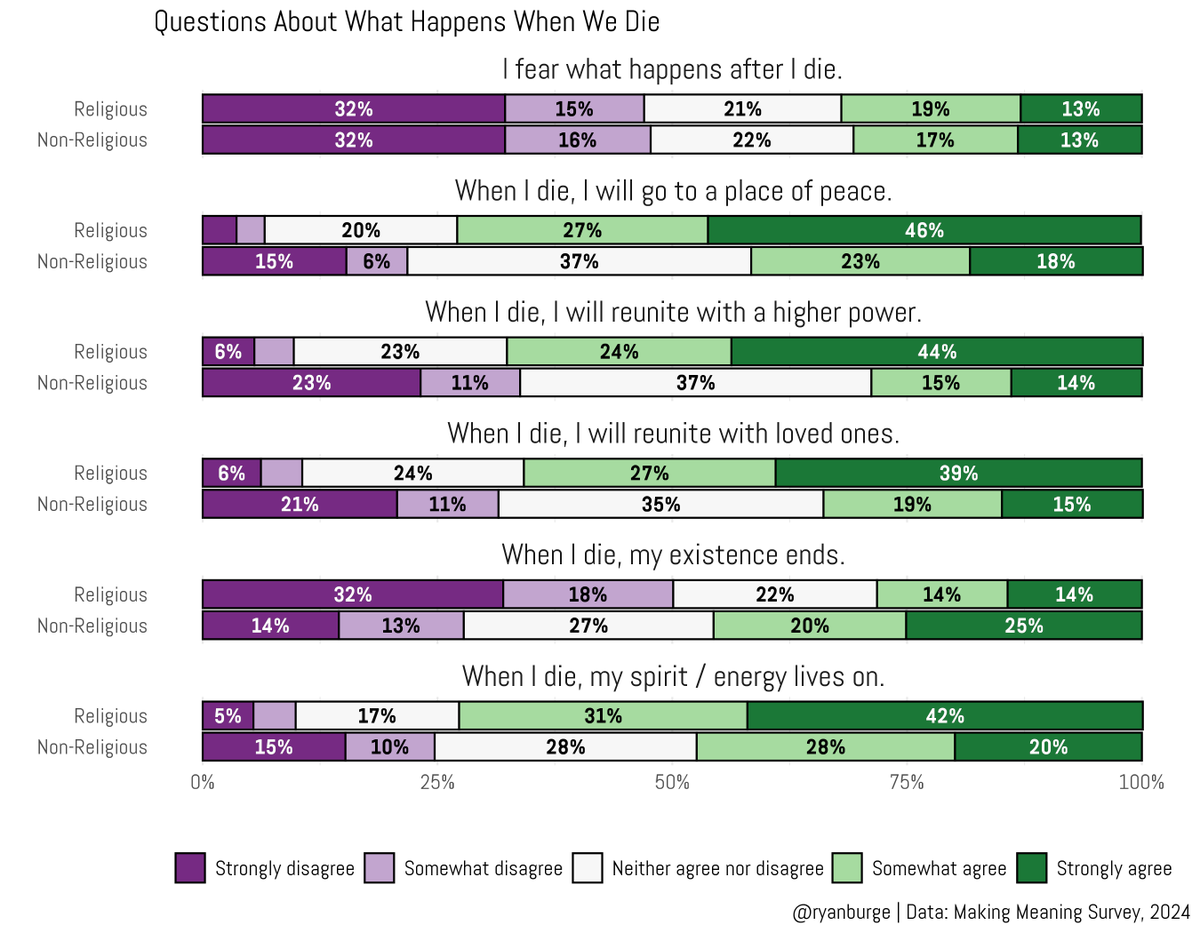
We asked people about happens when they die.
Of course, religious folks were more likely to say things like:
I will go to a place of peace
I will reunite with loved ones.
But on the statement, "I fear what happens after I die"
The responses were exactly the same.
8
16
81
9,403
Jun 10
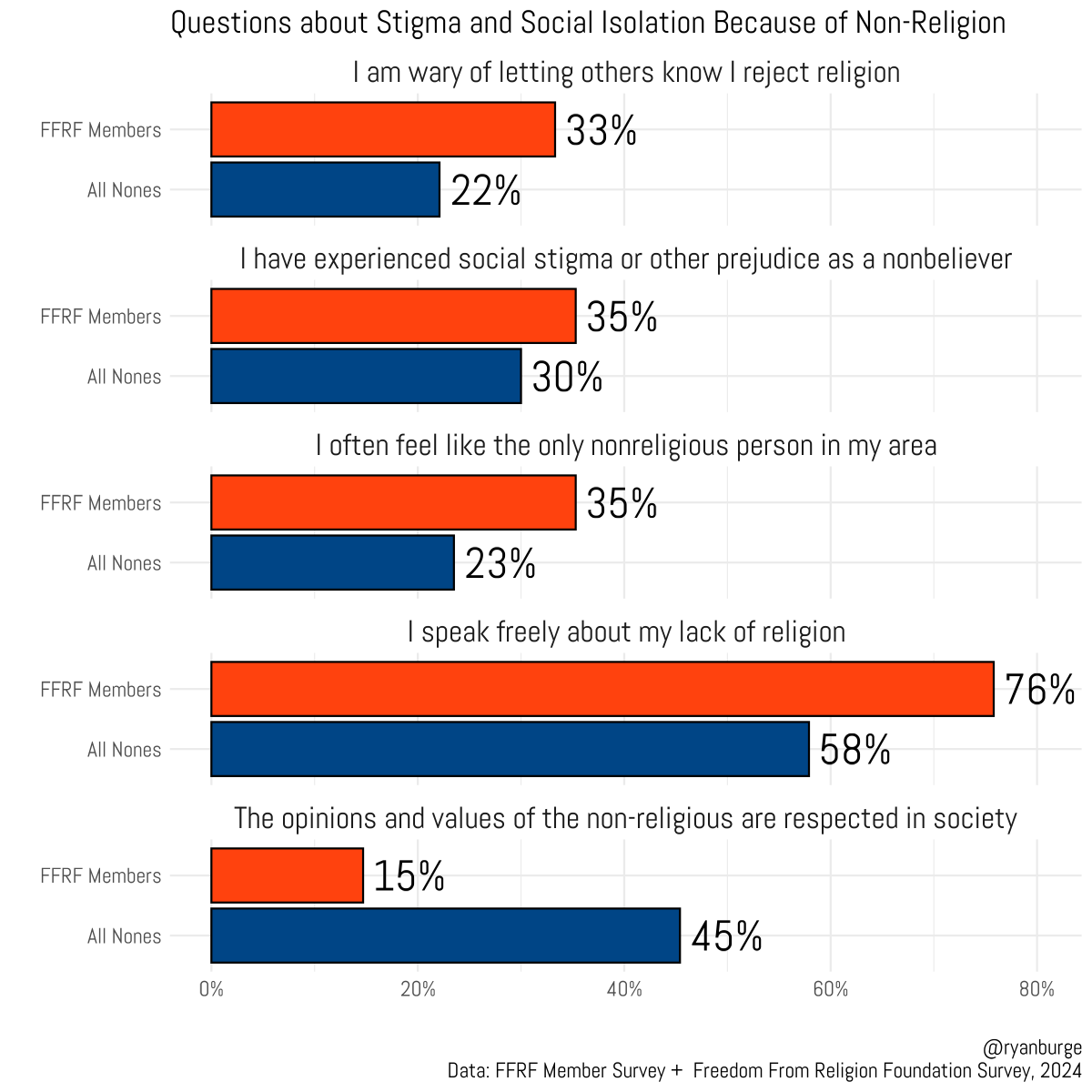
We did a survey of the membership of the Freedom from Religion Foundation.
Then we did a random sample survey of non-religious folks.
The FFRF folks are more likely to feel discriminated against because of their beliefs than the average none.
4
2
32
2,258