Physicist, machine learning @tenstorrent, poker player, aspiring philosopher of science. Formerly @Cerebras, @ATLASexperiment. (views are my own)
Joined November 2013
- Tweets 9,081
- Following 3,492
- Followers 1,954
- Likes 18,865
1,377 Photos and videos

Pinned Tweet

23 May 2021
Are Schlick's lectures at Stanford transcribed anywhere?
1
4
Ryan Reece retweeted

Jun 15
Reminds me of when downloading mp3 files was banned. Some grandma somewhere is gonna download a Qwen and catch federal charges, but this won't change most people's behavior.
4
5
139
3,947
Ryan Reece retweeted

Jun 11
Asked a question so dangerous they sent my ass to haiku
78
394
8,982
210,176
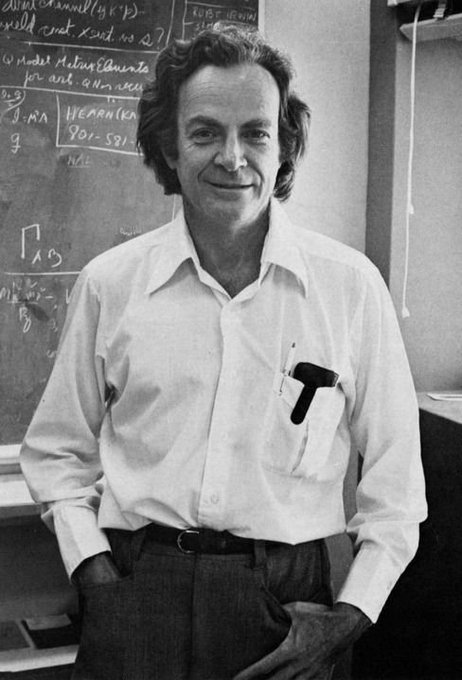
Anyone know the citation?

"You're unlikely to discover something new without a lot of practice on old stuff."
- Richard Feynman
1
1
138
Ryan Reece retweeted

A lot of things made to happen to make forget the incident of Epstein file.
1
3
65
168,075
Ryan Reece retweeted

Jun 4
The 2026 Gödel Prize is awarded to Ilias Diakonikolas, Gautam Kamath, Daniel Kane, Jerry Li, Ankur Moitra, and Alistair Stewart for Robust Estimators in High Dimensions without the Computational Intractability
Paper: doi.org/10.1137/17M1126680
Citation: sigact.org/prizes/gödel…
23
132
9,221
Ryan Reece retweeted

May 4
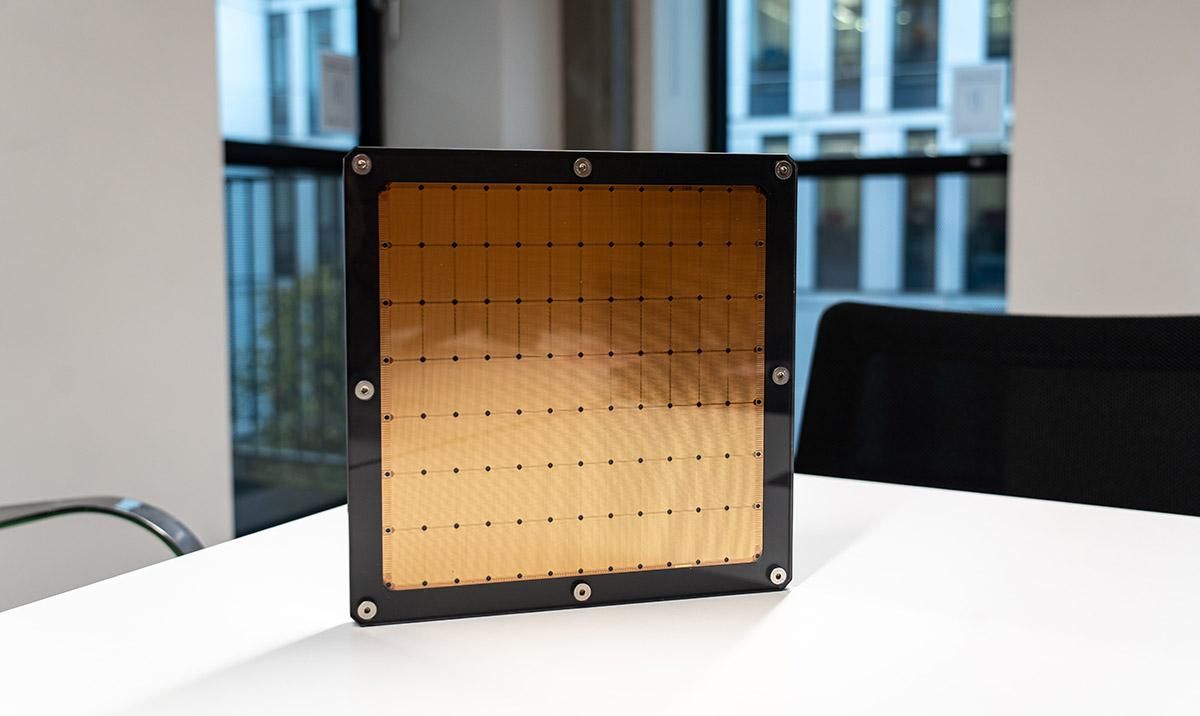
I am advertising for a fully funded 3.5 year PhD (with enhanced yearly stipend) exploring accelerating HPC algorithms on AI accelerators such as including @cerebras and @tenstorrent . @EPCCed is the UK national supercomputing centre, lots of exciting things going on!

Fully-funded EPCC PhD: investigate the potential of novel accelerators. Run in collaboration with AWE, who will provide real world mini-applications and algorithms of genuine scientific interest.
Applicants must be UK nationals.
Apply by 28 May 2026.
edin.ac/4979QJO
2
13
37
3,289
Ryan Reece retweeted

May 25
Why did Erdos have so many problems?
134
183
2,769
263,146
Ryan Reece retweeted

May 24
Nice paper from some colleagues, formal proving still alive and kicking!
arxiv.org/abs/2605.22763v1
1
9
32
6,410

Conducted 2 technical interviews today. Reminded me how serious of a task this is.
You get to decide potentially the next n number of years the person you are interviewing within the span of 30 minutes or so.
I have nothing but hate towards those who conduct interviews without a care asking dumb leetcode hard questions they themselves couldn’t solve if the shoe was on the other foot.
174
147
4,447
540,542
Ryan Reece retweeted

May 22
The new White House policy requiring green card applicants to apply from outside the US is a capricious attack on legal immigration. It will hurt families, leave us with fewer doctors, teachers and scientists, and hurt American competitiveness in AI.
2,757
1,609
12,113
1,397,161

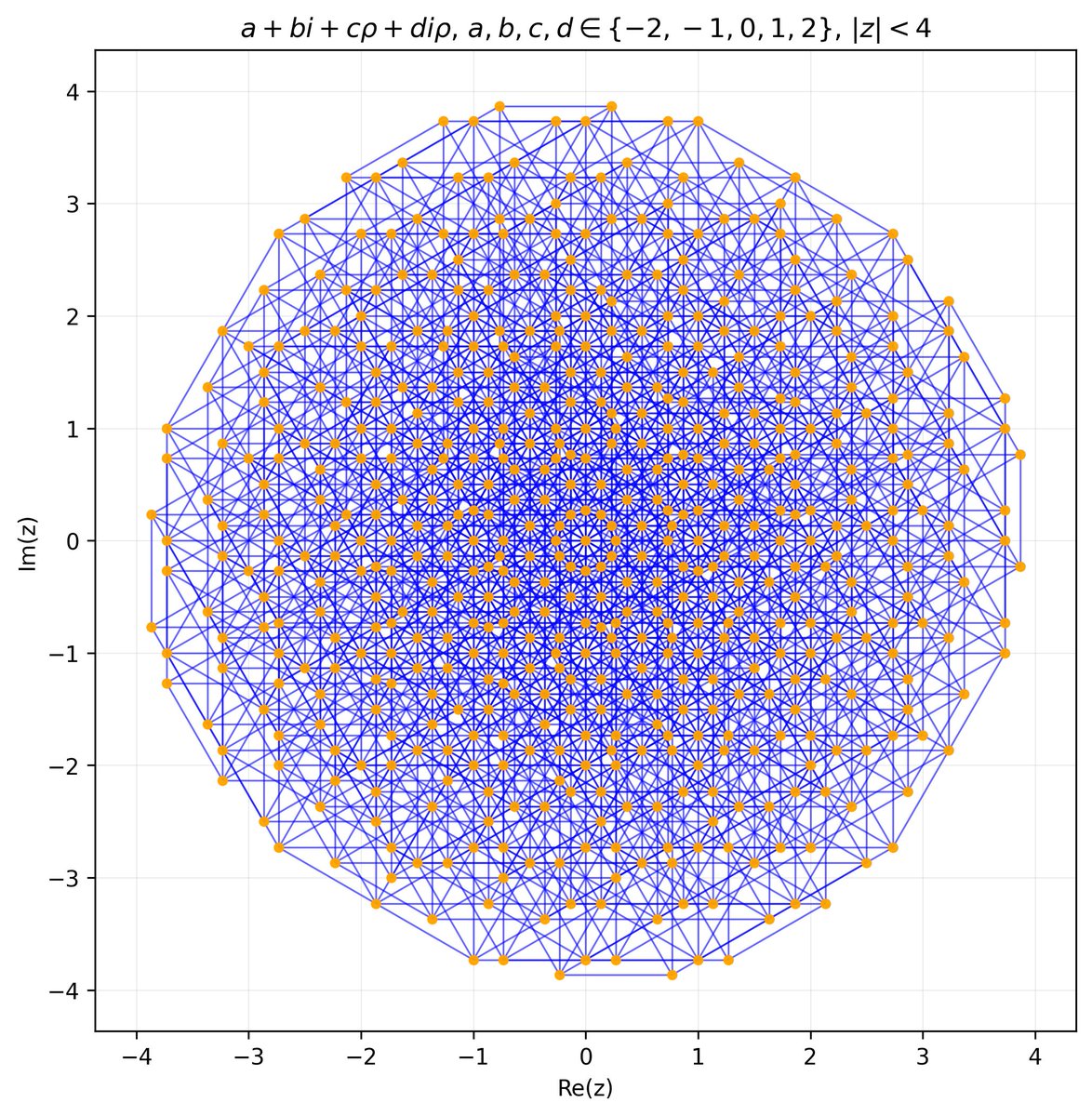
So, since three days ago, there's a new constant in mathematics, which one might call the “plane unit distance exponent”: the sup of all δ≥1 such that there exist unit distance graphs in the plane with n vertices and n^(1 δ) edges for arbitrarily large n.
7
3
50
10,067
Ryan Reece retweeted

When Nature reached out to use the graph I created (using GPT) to illustrate the new (dis)proof of the unit-distance problem, I reached out to Will Sawin to see if he had other suggestions. So here is a slight modification that bounds the complex norm of the points.
23
53
600
71,762
Ryan Reece retweeted
A @nature article now features the graph I posted yesterday here!
nature.com/articles/d41586-0…
6
10
99
6,265
Ryan Reece retweeted

May 22
I regret that comment, which was less polite than I aim to be on here. Let me try to write something a bit more substantial.
I don't think "discover all math that can possibly be discovered" is really coherent. Even if one conceptualizes mathematics as "answering well-posed open problems," historically resolutions to such have tended to raise more questions--I would argue that there are now more interesting open questions than there have been at any time in the past, despite (in fact because of!) the fact that there are more mathematicians than ever, resolving more problems than ever.
At any fixed capability level I think it is likely we will see lots of problems remain open, including many basic open problems we know about at present. It's much easier to pose an interesting question than to answer one; it seems to me that the difficulty of interesting questions we can generate is basically unbounded.
But also mathematics consists of much more than this--less verifiable tasks include things like "understand such-and-such an object," or "find a cool phenomenon," or "develop a theory," though such tasks are often benchmarked by their impact on problem-solving. I think AI will eventually (perhaps soon) be able to do these kinds of things but the idea that it will exhaust the supply of math, or that we won't want to develop human capital to understand some portion of what is discovered, seems to rely on an understanding of math and our motivations for working on it that is, at least, alien to me.
24
38
758
56,844

"As people began integrating AI into their day-to-day work, speed became fundamentally important. And we were just crushed with demand.
Is Cerebras inference faster for specific use cases? No, it's faster across the board. Big models, small models, U.S. models, Chinese models, trillion-parameter models, one-billion-parameter models...across the board."
@andrewdfeldman @saranormous and @eladgil dive in on @NoPriorsPod
youtube.com/watch?v=jeop9wfb…
7
11
96
12,581
Ryan Reece retweeted

If you are a mathematician, then you may want to make sure you are sitting down before reading further.
166
885
9,221
3,224,407
Ryan Reece retweeted

May 14
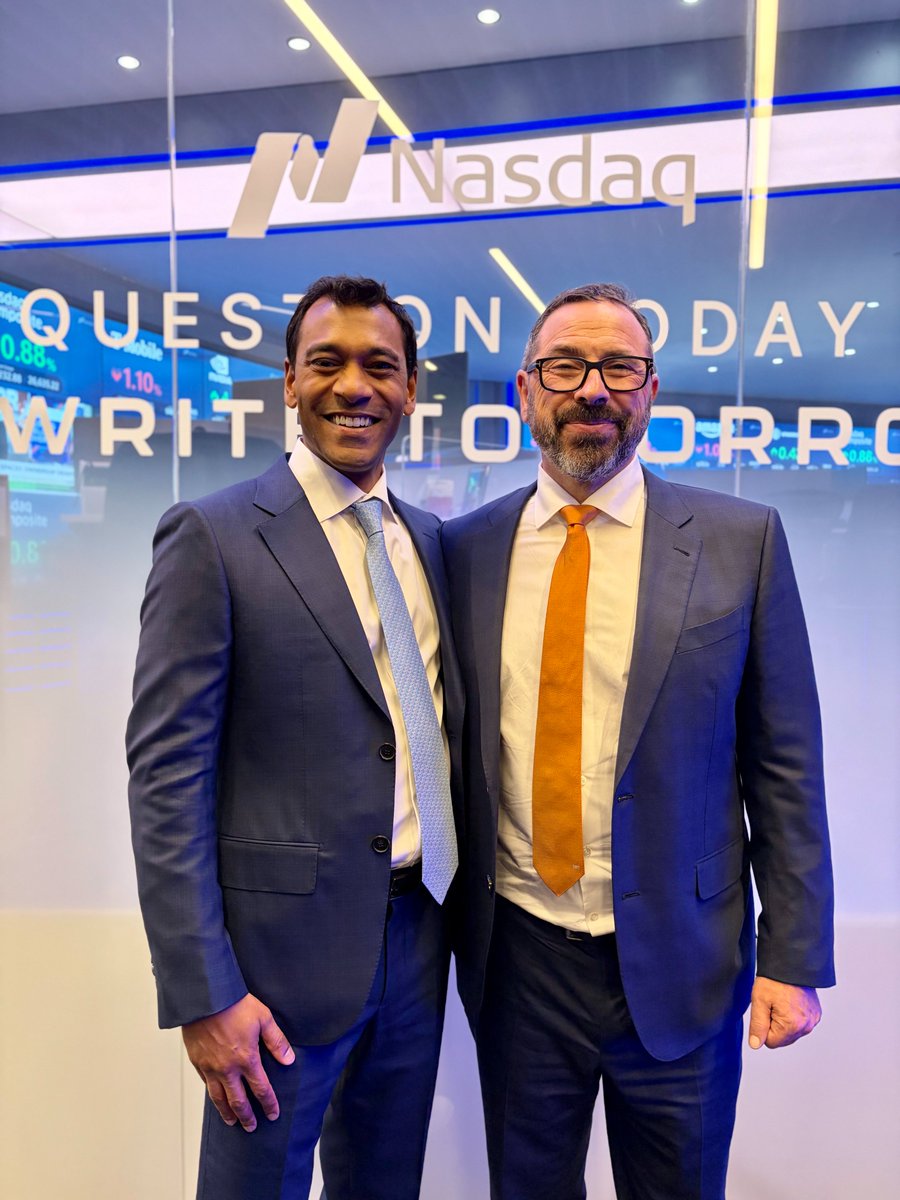
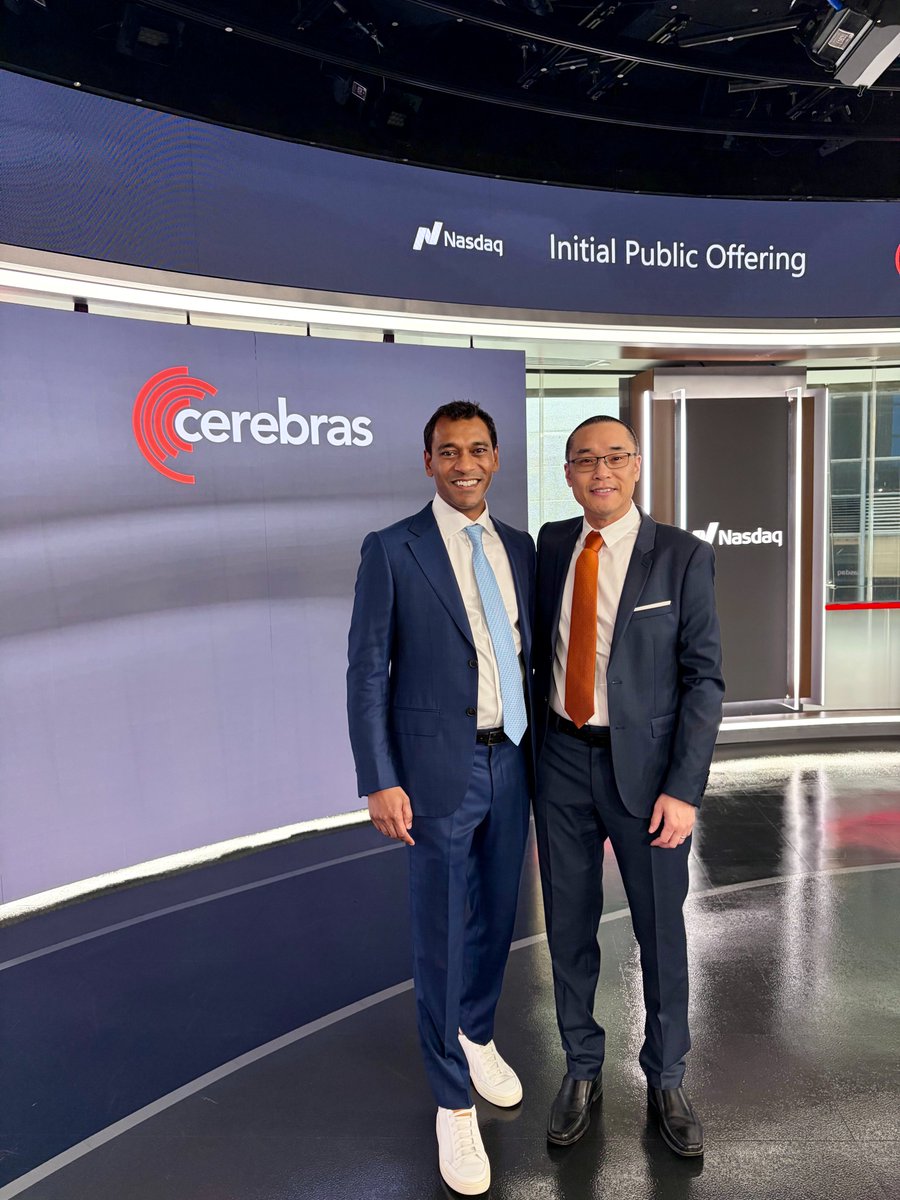
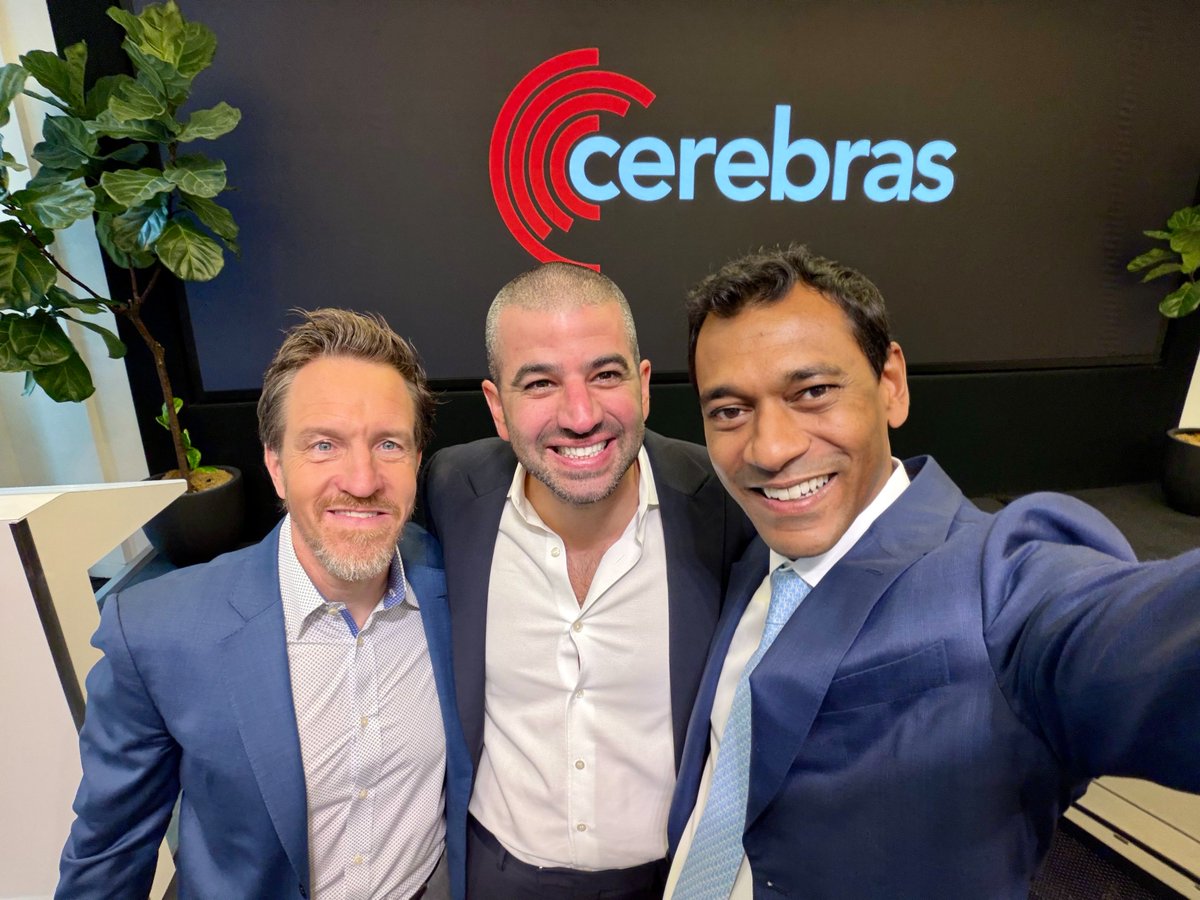
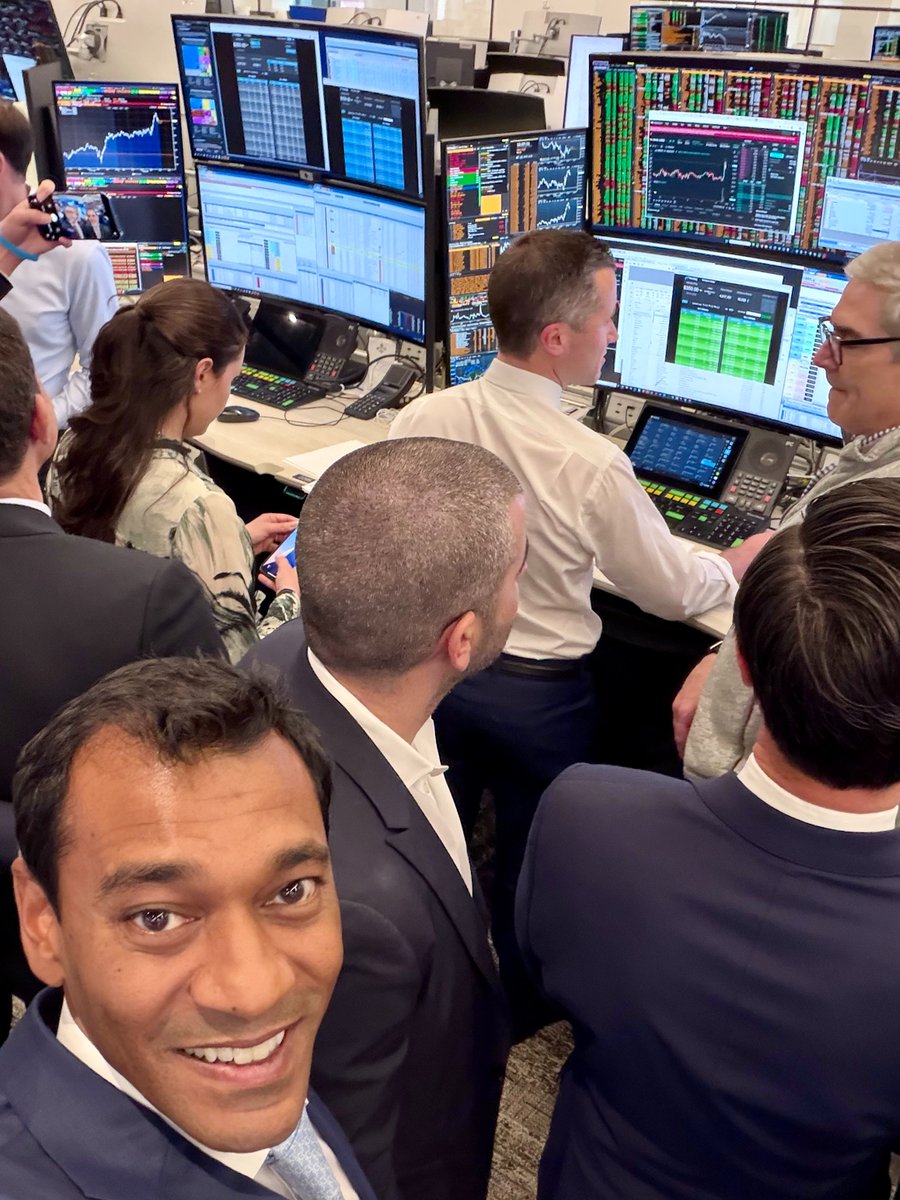
I’m so fucking proud of this team.
They took an extraordinarily difficult technical swing with wafer-scale and connected on the first try.
Then they spent years grinding through packaging, cooling, compilers, frameworks, early customers, and everything else required to turn a technical breakthrough into a real company — swinging and missing and learning and trying again.
Most importantly, they stayed clear-eyed about what they had (a technical marvel) and what they didn’t (enough advantage in training), saw the opportunity emerging in inference, and adapted.
That kind of persistence — not to be confused with stubbornness — is incredibly hard to describe, but absolutely essential in the unstable substrate of AI.
The requirements of AI today will not be the requirements of AI tomorrow. But this team will keep figuring it out.
And I’m here for it.
74
26
591
90,522
Ryan Reece retweeted

May 14
In 2015, we started @EclipseVentures to back the boldest engineers building at the intersection of bits and atoms.
In 2016, @andrewdfeldman gave us one of the clearest pitches on a long-term vision I have ever heard in my career.
"The GPU architecture is fundamentally limited for AI. We are going to build a wafer-scale chip to replace it. It will take a decade."
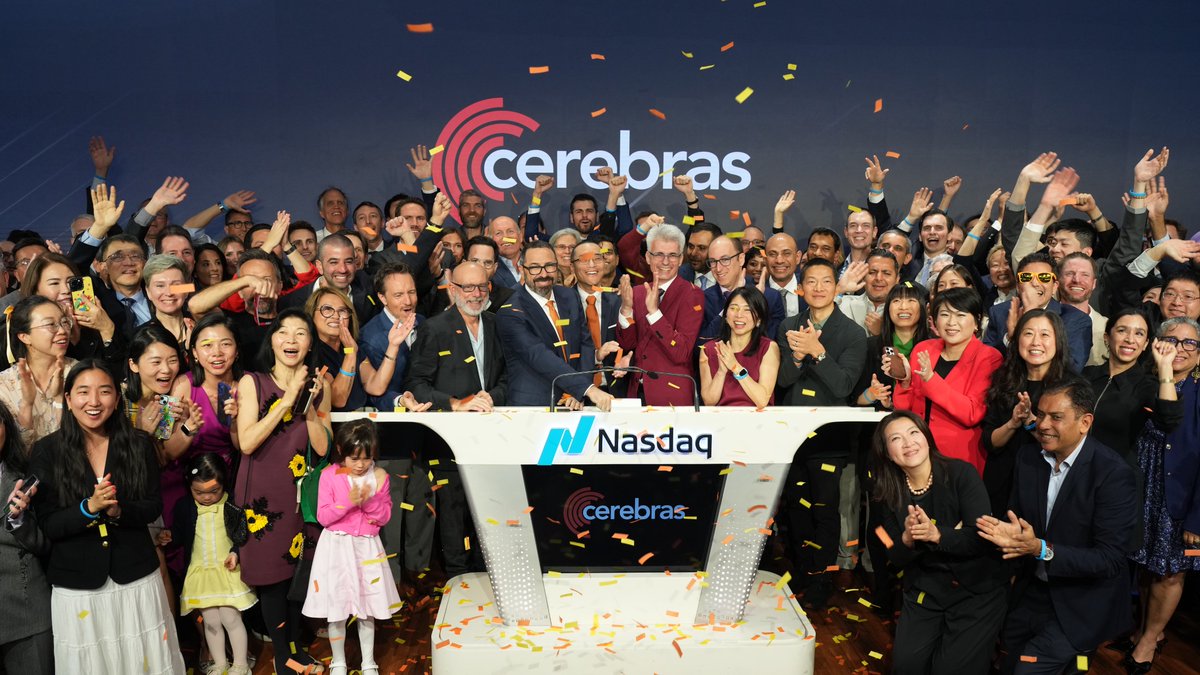
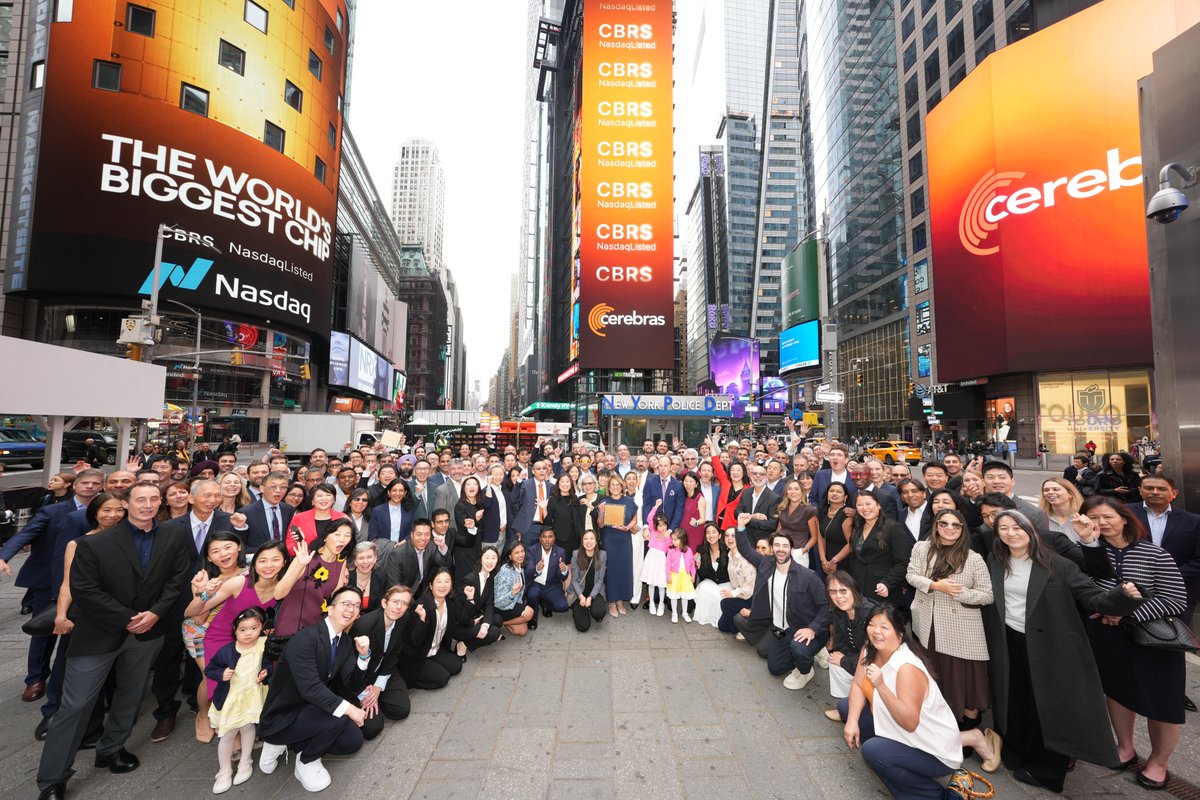
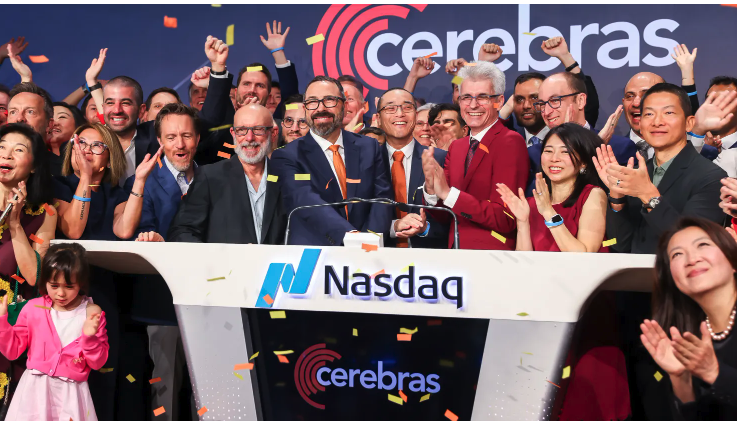
A decade later, here we are. IPO Day.
A few lessons I've learned from our decade as investors in Cerebras:
The most important company building happens at the earliest stages. The technical bet, the architectural choices, the key manufacturing partnerships, the first 50 people on the team — all locked in before product-market fit, before revenue, before the capital markets care. Taking the time to get these foundational elements right is what lets you move with velocity later.
Talent is a compounding asset. From day one, Cerebras was obsessed with hiring the very best people in the world. Watching Andrew and the team obsess over this was a real lesson. Seeing Pierre and Lior work with the founders to build that team taught me a lot about the role a board member should play early in a company's history. One of the most formative things I've witnessed in venture. They treated every hire like it mattered, because it did.
Reputations are forged in the hardest moments, not the best ones. The reason Andrew first pitched Eclipse tells you everything: his several decade relationship with Pierre Lamond. Pierre had been on his board at SeaMicro and stood with him through the toughest stretches of building that company. When Andrew started Cerebras, he was adamant Pierre would be involved. The reputation you build in hard moment is what people remember. This is what brings you the next deal, the next hire, the next round. This is how we try to operate at Eclipse: true partners to founders through the hardest stretches of the journey.
It doesn't matter how good your technology is if you don't land the deals. No one remembers the company with the best chip and no customers. The last 24 months at Cerebras have been a clinic in commercial execution. Andrew, the GTM team, and the board (Lior, @ericvishria, and @vassallo) have been on a tear. Thousands of hours on planes to all corners of the world. Late nights. Holidays away from families. Hard decisions made under real uncertainty. Never losing sight of the mission. I've never seen anything like it. Great companies need a differentiated mission and world-changing technical execution — but they also need a shit ton of grit and a refusal to quit. Cerebras has all of it.
Eclipse is proud to have been there from the seed with @andrewdfeldman and the team. Watching Lior and Pierre steward this company for the last 10 years has been a masterclass.
Congratulations to everyone involved on reaching this milestone!
6
8
124
10,930