Terence Tao & Nobel, Turing, Fields laureates advancing scientific discovery & guiding AI with scientific principles. Grounding intelligence. Scaling discovery.
Joined October 2025
- Tweets 138
- Following 31
- Followers 4,252
- Likes 118
70 Photos and videos
Pinned Tweet

Mar 14
Our co-founder Terence Tao is announcing SAIR Foundation's inaugural competition: the Mathematics Distillation Challenge.
Co-organized by @damekdavis, Terence Tao, and SAIR Foundation.
competition.sair.foundation/…
25
196
1,906
469,235
Jun 12
Science x AI Summit comes to UC Riverside on June 29.
SAIR co-founders Terence Tao and Barry Barish headline a day of keynotes and panels with leaders across the science x AI frontier.
Agenda:
sair.foundation/events/scien…
1
3
214
Jun 12
SAIR Playground is an open space to test ideas, inspect outputs, and compare methods.
Use SAIR Playground to test your model for the Modular Arithmetic Challenge:
playground.sair.foundation/p…
Join the SAIR competition:
competition.sair.foundation/…
2
7
372
SAIR retweeted

Jun 11
At our Science x AI Summit, I spoke on SAIR: Open by Design.
SAIR Competitions are our first step toward open Science x AI infrastructure: shared data, open models, transparent evaluation, and community collaboration around frontier scientific questions.
2
6
791
Jun 8
Learn more about the Modular Arithmetic Challenge from our co-founder, Terence Tao:
terrytao.wordpress.com/2026/…
8
25
1,405
Jun 8
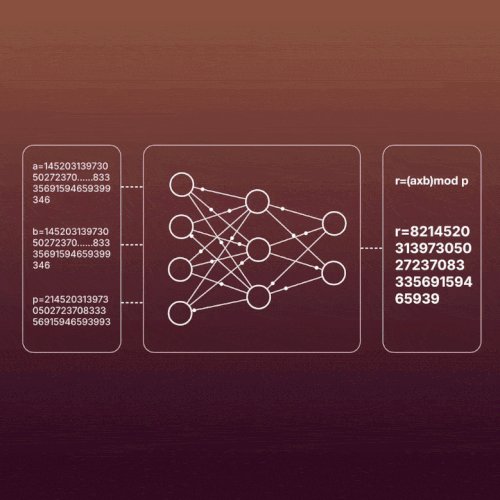
The 2nd SAIR Competition is now open: the Modular Arithmetic Challenge.
Can a neural network learn to compute (a × b) mod p for large numbers?
Easy for standard algorithms, but a hard test of whether neural networks can generalize the computation.
Join the SAIR competition:
competition.sair.foundation/…
1
10
20
1,794
Jun 8
To test your model:
Upload your model to @huggingface, then use SAIR Playground to run the evaluation pipeline.
You can also test locally with the tools in our GitHub repo.
Official repo:
github.com/SAIRcompetition/m…
1
4
404
Jun 8
SAIR Playground for the Modular Arithmetic Challenge:
playground.sair.foundation/p…
2
10
1,009
Jun 2
Barry Barish discusses whether AI could one day discover entirely new laws of physics by finding patterns humans may never notice on their own.
1
2
10
648
Jun 1
John Hennessy: we've cleared the Turing test — but it was never a tough enough bar. AI can now write a symphony like Beethoven or paint like Picasso.
We need to start asking: what actually makes humans different from the machines imitating us?
4
2
14
908
May 30
Richard Sutton: Much of today’s AI can produce outputs that are novel or good — but rarely both at the same time.
3
5
16
1,481
May 26
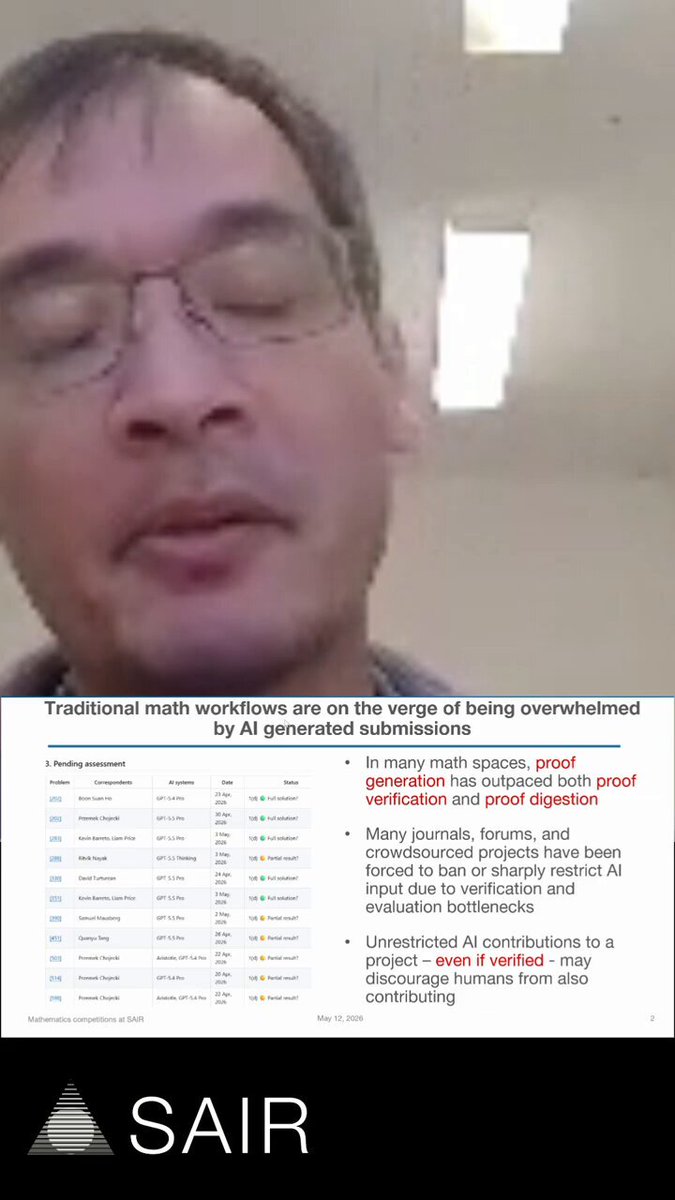
Terence Tao: AI is creating a “traffic jam” in math
If AI generates more proofs than humans can verify, science needs new infrastructure. SAIR competitions build that infrastructure by surfacing high-quality results, so the best work is not lost in a flood of AI-generated math.
21
77
554
81,118
May 25
Tim Gowers: AI Is Already Producing PhD-Level Mathematics
Fields Medalist Tim Gowers reflects on how quickly AI mathematical reasoning has advanced — from solving isolated problems to generating research-level mathematics in hours.
2
7
28
2,127
May 24
Lenore Blum takes on the hard problem of consciousness — the subjective feeling philosophers call qualia, made famous by Thomas Nagel's question of what it's like to be a bat. Where many say this demands a new kind of science, Blum argues consciousness is computational, emerging from a world model and an inner language she calls "Brainish."
1
3
10
842
May 23
With CS enrollments reportedly dropping 50% and new graduates struggling to find jobs, Turing Award winner Jeff Ullman poses the question that matters: if vibe coding makes programmers twice as productive, do we need half as many — or does twice as much work suddenly become feasible?
His take: students will still need to learn to code, even if they mostly write it by prompting.
1
15
705
May 23
Randy Schekman tells the story of DeepMind founder @demishassabis — a chess champion at four who turned down a million-pound game-design salary, went to Cambridge, and completed a PhD in neuroscience before building the company that would go on to win him a Nobel Prize.
1
11
844
May 23
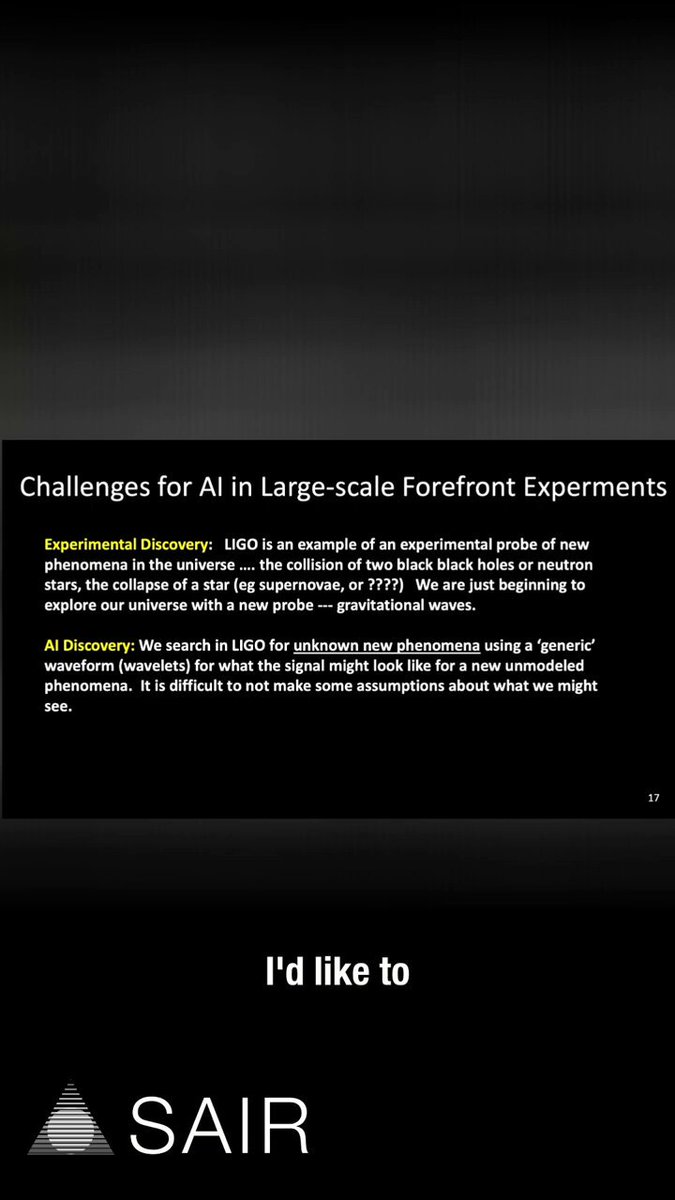
Barry Barish: How AI Helps Humanity Detect Gravitational Waves
Barry Barish explains how AI helps scientists rapidly identify gravitational wave signals, combine data across observatories, and guide telescopes toward cosmic events happening millions of light-years away.
2
4
526
May 22
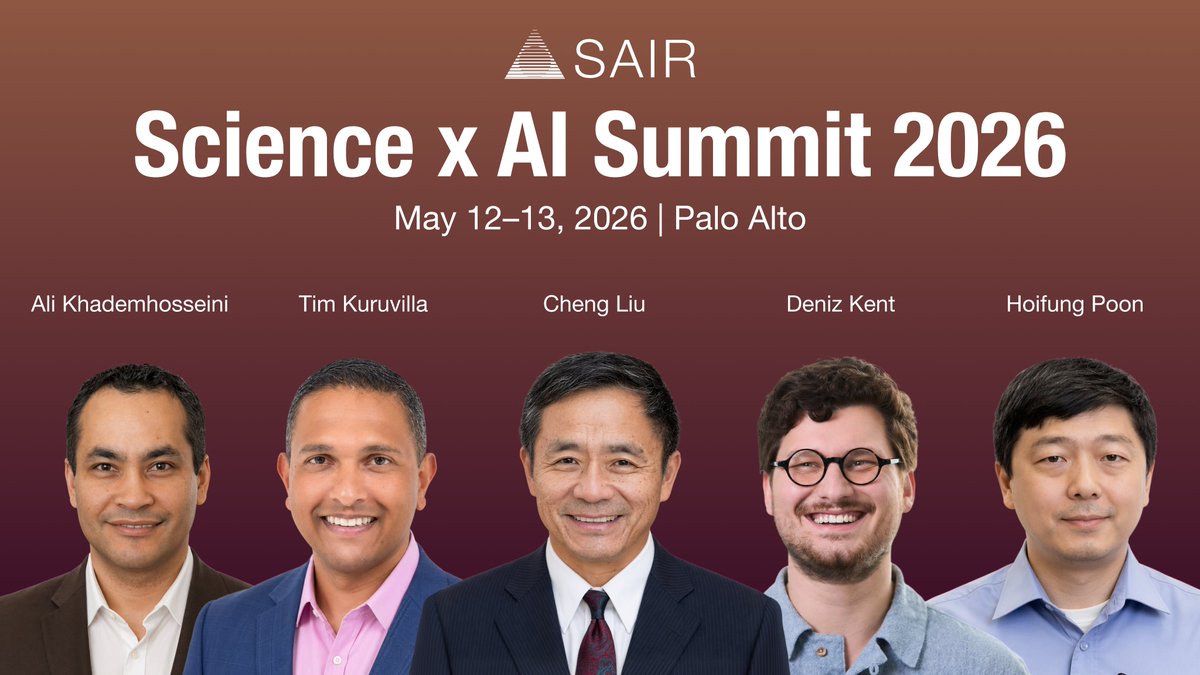
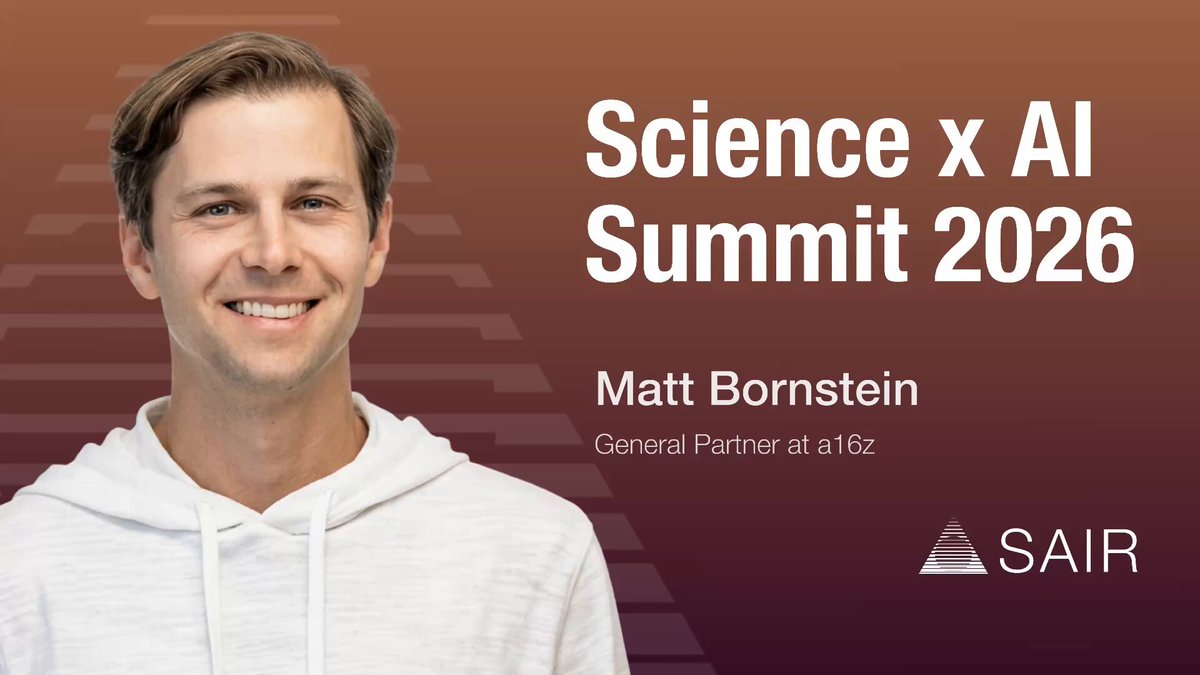
Thank you to everyone who joined us for the Science x AI Summit. Sessions posting daily on YouTube — subscribe so you don't miss one. Event photos are now live on our events page.
youtube.com/@SAIRfoundation
sair.foundation/events/scien…
1
7
470
May 13
Science x AI Summit 2026 (Palo Alto) - Part IV is LIVE NOW: x.com/i/broadcasts/1PKqrELnz…
9
23
194,420
May 13
Science x AI Summit 2026 (Palo Alto) - Day 2 is LIVE NOW!
Watch live on X:
x.com/i/broadcasts/1oJMvRAbg…
1
9
84,773
May 13
Day 2 of the Science x AI Summit 2026 (Palo Alto) livestream begins May 13 at 9:30 AM PT.
Watch live on X: x.com/i/broadcasts/1oJMvRAbg…
1
5
23
84,440