
SEO agency founder • Growing eCommerce brands with SEO AI SEO • Schedule consultation call for your brand 👉 tinyurl.com/5dz5c727
Joined August 2018
- Tweets 11,908
- Following 242
- Followers 60,120
- Likes 14,396
1,087 Photos and videos
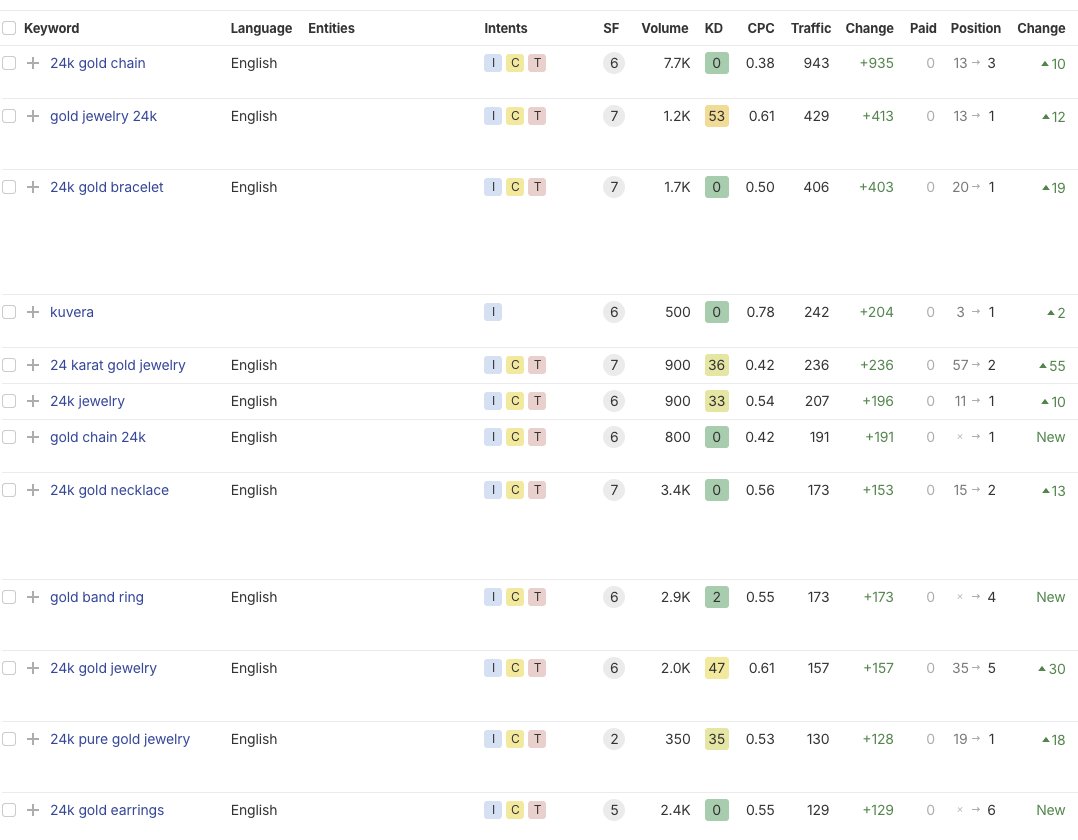
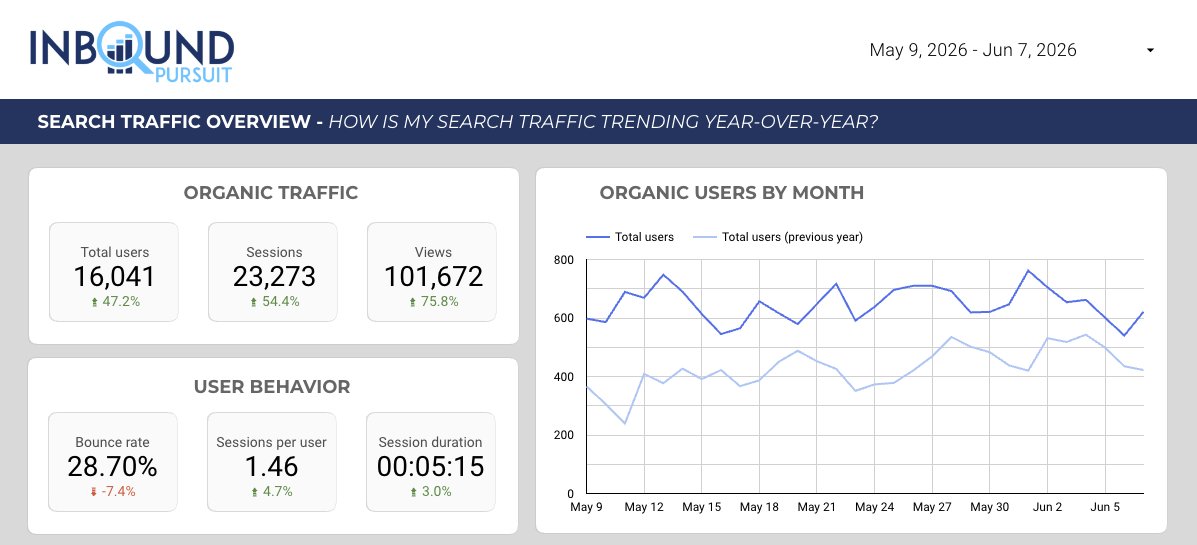
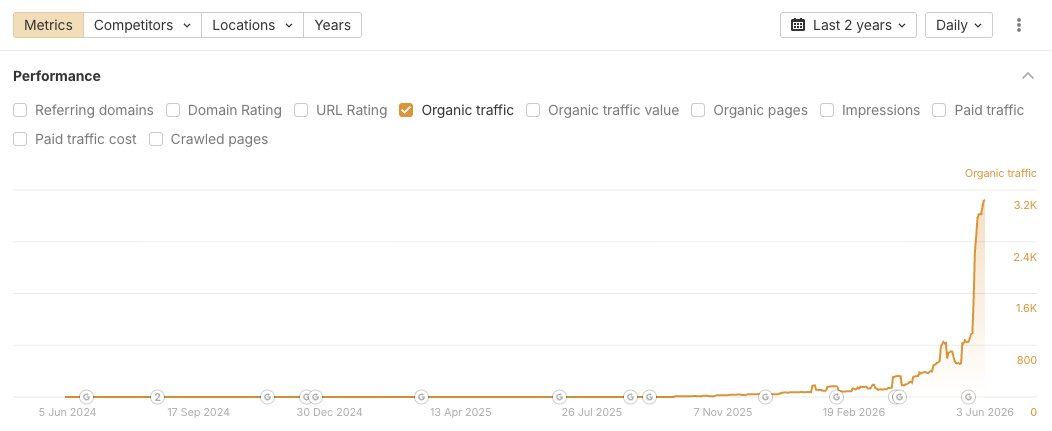
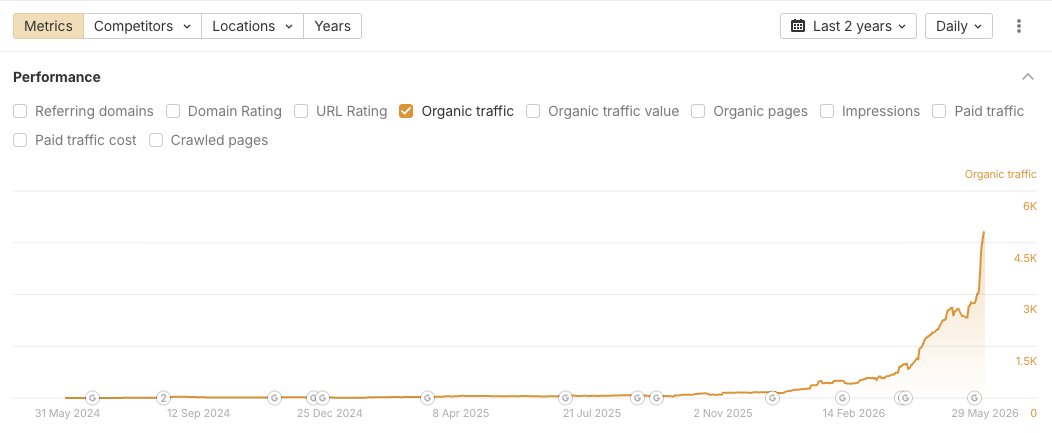

One of the most insane ecom SEO campaigns I ever ran didn't involve ranking any Product or Collection pages.
I tried to at first.
The brand was in the luggage space and they wanted to rank for keywords like "carry on luggage", "checked luggage", and "aluminum luggage."
But they were just too competitive.
So I tried a different approach:
I found all of the primary competing brands in the luggage space.
Away, Beis, Monos, Samsonite, etc.
And I started publishing articles targeting high search volume "vs" keywords between those brands and other brands:
- away vs beis luggage
- july vs away luggage
- travelpro vs samsonite
I fairly compared both brands within the article, listing out their pros and cons.
But then I introduced the brand I was working with as a 3rd option that was better than the other two brands.
After a bit of link building, the articles started ranking in the top-3 spots of Google and driving organic clicks.
And those clicks led to sales.
The first month it was a few hundred dollars.
The next, a few thousand.
And eventually, the articles were driving $20,000 a month in revenue.
It was absolutely insane to see, and taught me the power of ranking for competitor "vs" keywords.
This strategy is now a staple in most SEO campaigns I build out, and it still works extremely well.
Don't sleep on using your blog to target lower-funnel keywords.
5
26
2,223
I've been in talks to sign a major 9-figure beauty brand for SEO for a few months now.
Out of curiosity, I checked to see how their traffic looked after the last Google core update.
Absolute bloodbath.
Down almost 40%.
Most of which is blog content.
At first, I thought they were getting penalized for AI content.
But then I realized the true issue:
Most of the content that lost rankings was published years ago.
They were super outdated, and, by today's standards, just not very good.
If you're going to run a blog-heavy SEO strategy, the work isn't done once you hit publish.
You need to be updating the content every 6 months.
Otherwise, it'll eventually be overtaken by fresher content.
15
3
68
6,378
I'm 30 years old.
My SEO agency has done over $10 million in the last 5 years.
The biggest lesson I learned:
It's so important to actually give a fuck about the service you deliver.
I've been living and breathing SEO since I was 15 years old.
I got into it not because of the money (I barely made money off of until I was 23)...
But because I genuinely enjoyed the game of manipulating Google and driving traffic to sites.
This love I have for SEO directly translates into the results I'm able to drive for brands.
Despite being 7 years into the business and having a full team built out, I'm still deeply involved in every SEO campaign we run.
Not because I have to be.
But because I want to be.
I like being in the weeds and making sure every campaign is running as perfectly as it could.
And that's what differentiates me and my agency from your typical SEO agency that genuinely doesn't give a fuck if they drive an ROI or not and is there to collect a paycheck.
I would rather scale less and make less money, so I can stay involved in the day-to-day and ensure that a quality service is being delivered.
There's a common debate as to if you should turn your passion into your business.
There are pros and cons to both, but I err on the side of turning your passion into your business.
Because if you give a fuck about it...
You're far more likely to spend the thousands of hours required to turn it into a success.
5
1
20
1,503
One of the biggest SEO lessons I've learned is that you can almost guarantee SEO success just by copying the strategy of low-authority competitors that are ranking well.
Let's say your brand sells pillow covers.
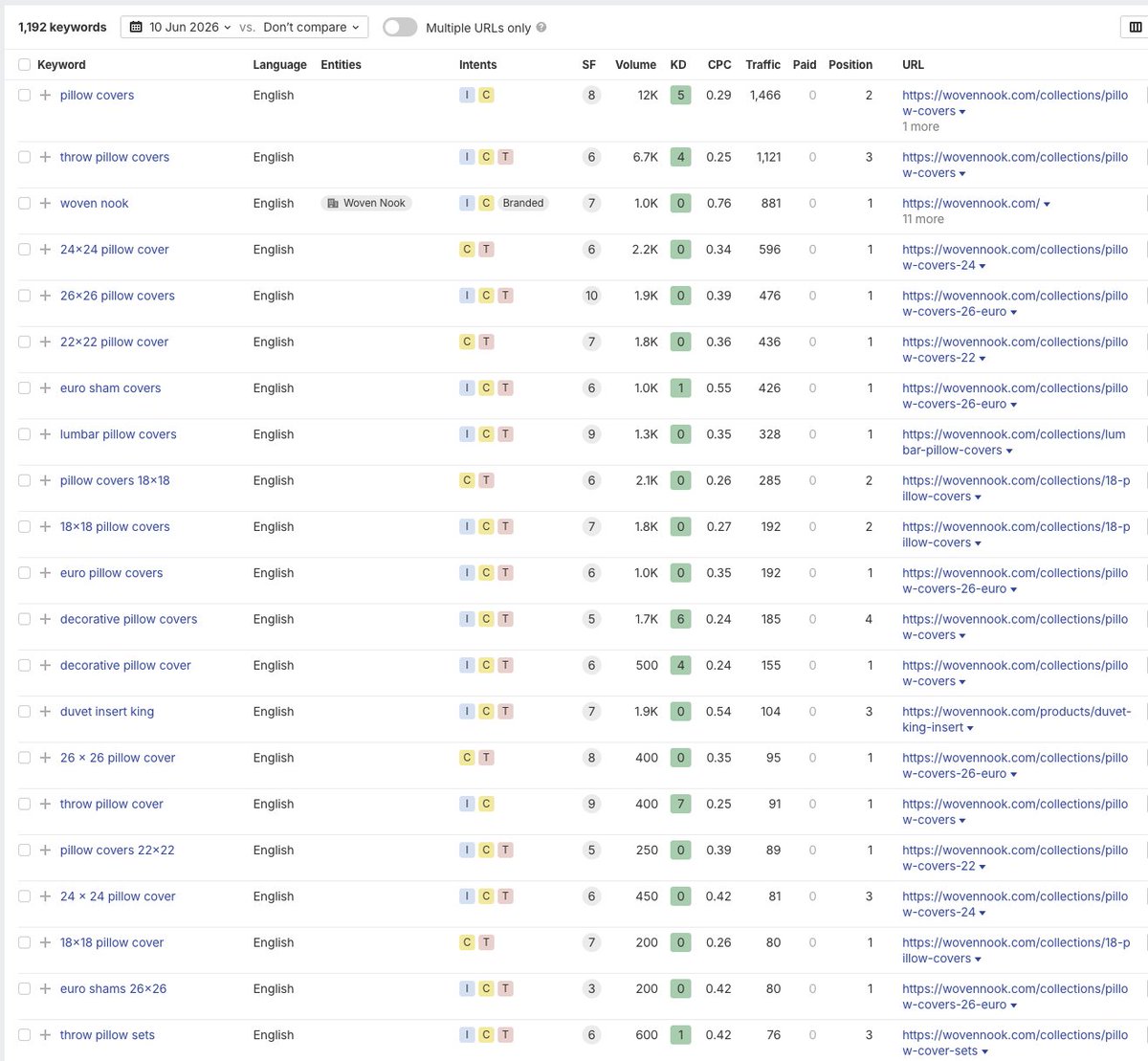
Take a look at the competitor Woven Nook:
34 domain rating.
(anything under 40 is low)
Ranks in the top-3 positions for 500 transactional keywords.
If they can rank for major keywords like "pillow covers" and "24x24 pillow covers" with a 34 domain rating...
You can too.
Take a look at their XML sitemap to see the architecture of their website:
wovennook .com/sitemap.xml.
Build out all of the Collection pages they have to model their keyword targeting.
Optimize the Collection pages for their target keyword.
Add those Collection pages to your main navigation menu in the same way that they did.
Skip blog content, as they haven't updated their blog in over four years.
Next reverse engineer their link building.
How many do-follow, DR 30 links are pointing to their homepage?
20.
Build more than that.
What about individual Collection pages?
Let's take a look at their main Pillow Covers page.
3.
Build that many. But slowly. One a month.
Run this strategy while concurrently dialing in paid ads, retention, CRO, etc, you will dominate the pillow case industry on Google in 6-12 months.
SEO is as simple as that.
16
23
193
12,821
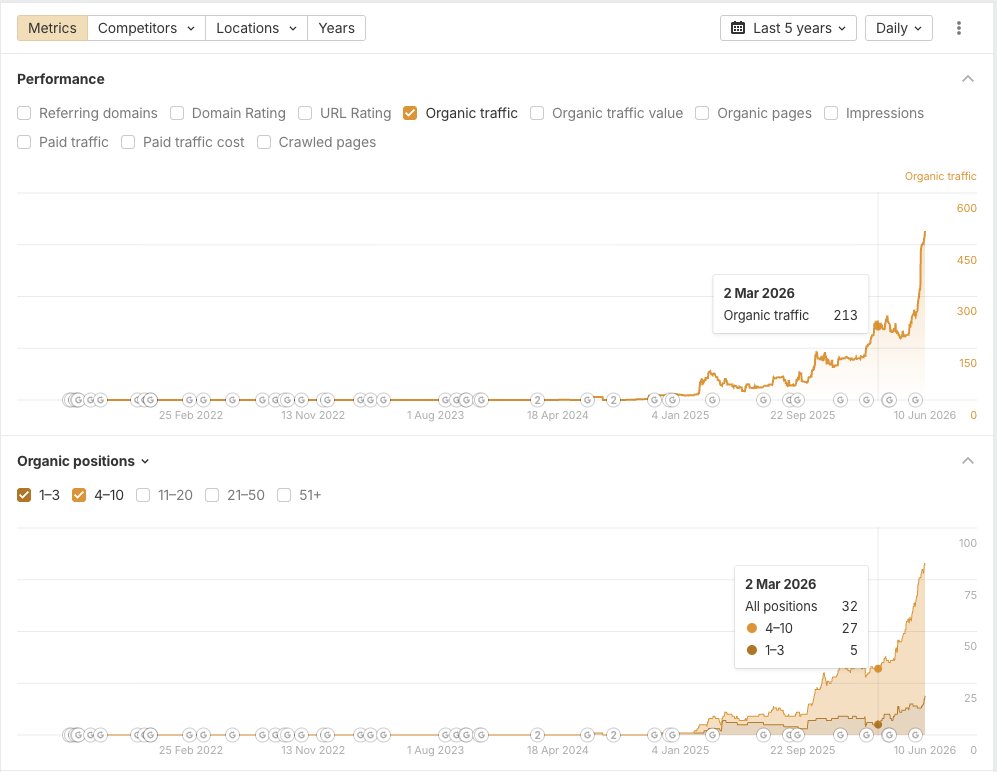
I ended up taking on this brand as a client 3 months ago to save them...
And they've seen more SEO progress in the last 3 months than they did in 12 months with the last SEO agency.
Keyword rankings and organic traffic are on a vertical trajectory.
The main needle mover?
Lots and lots of backlinks.
20 to the homepage each month.
As has always been the case, you're not going to rank well in Google unless you're constantly improving your domain authority.

Man, you really have to be careful who you hire to do your SEO.
Spoke to a brand owner last week.
He's been spending $10k/month on SEO for the last year.
And monthly organic traffic has only increased by 100 clicks/mo.
What an absolute scam.
To make matters worse, I've only counted 8 high-quality backlinks built in the last 6 months.
And the site only has 18 total blog posts.
What has he even been paying for?
SEO agencies and providers who deliver this kind of work really hurt the reputation of the industry as a whole.
With this level of SEO spend, this brand should be dominating its niche in Google.
Instead, it's basically invisible.
What a shame.
9
1
44
6,582
Here's how I'm going to 10x the SEO of a wallpaper brand that reached out for help:
1. I'll delete 90% of their blog content.
The majority of their blog content doesn't even rank in Google or drive traffic.
Waste of crawl budget.
2. I'll disavow all spam backlinks.
They've seen two large surges in spam backlinks over the last year.
In my experience, these links hurt keyword rankings and are worth worth removing.
3. I'll optimize all existing Collection pages.
But first, I'll prioritize the low-hanging fruit opportunities.
They have Collection pages ranking just off the 1st page for keywords like:
- black wallpaper (105k SV)
- bathroom wallpaper (19k SV)
- laundry room wallpaper (2.7k SV)
To optimize these pages, I'll add the target keyword to the page's:
- H1 tag
- Meta title
- Meta description
- URL slug
And then I'll add 400-500 words of keyword-optimized content below the list of products that include internal links to other relevant Collection pages.
4. I'll build out additional Collection pages
The brand has Collection pages for all of the color and room wallpaper keywords.
But there are so many other keyword opportunities worth building Collection pages for:
- boho wallpaper
- rainbow wallpaper
- baby wallpaper
- mountains wallpaper
I've mapped out 100 additional Collection pages to build out targeting keywords with a combined 250k SV.
5. I'll build backlinks.
70-80% will be built to the homepage.
20-30% will be built to the Collection pages.
I won't build more than one backlink to a Collection page at a time.
And I'll do a 50/50 split of branded/keyword-rich anchors.
This will keep the link building looking extremely safe, and avoid any algorithmic penalty later down the line.
In 6 months, I'll have this brand dominating Google's search results for "wallpaper" keywords.
I'll provide an update around then.
9
8
65
6,832
I outranked Macy's for the keyword "24k gold chain."
You'd be surprised how easy it is to outrank major brands that are household names.
The only good thing about their SEO is their high domain authority.
You can beat that with:
1. Better on-page SEO
Macy's has the keyword "24k gold chain" in their meta title and H1 tag.
I did the same, but I also added around 500 words of keyword-optimized content below the list of products.
2. Better internal linking
Macy's essentially has no internal links pointed to that page.
I have dozens of blog content and relevant product category pages internally linking to that page, and the page is in the site's main navigation menu.
3. Better page-level backlinks
Macy's has one backlink pointing to their page from a site with a DR less than 5.
I have several links pointed to the page with a DR over 30 and real organic traffic.
That's all it took to soar past them in the rankings.
Just because a site has a high domain authority, doesn't mean you can't outrank them.
There's more to SEO than just backlinks.
6
3
36
3,056
I'm going to destroy the ridiculous "SEO is dead" myth right here, right now:
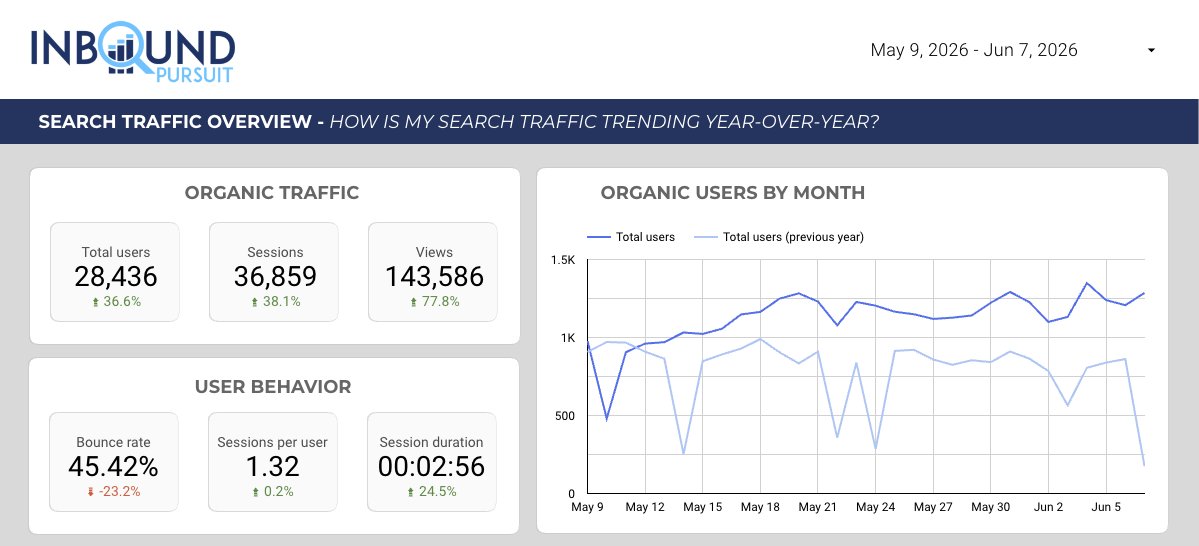
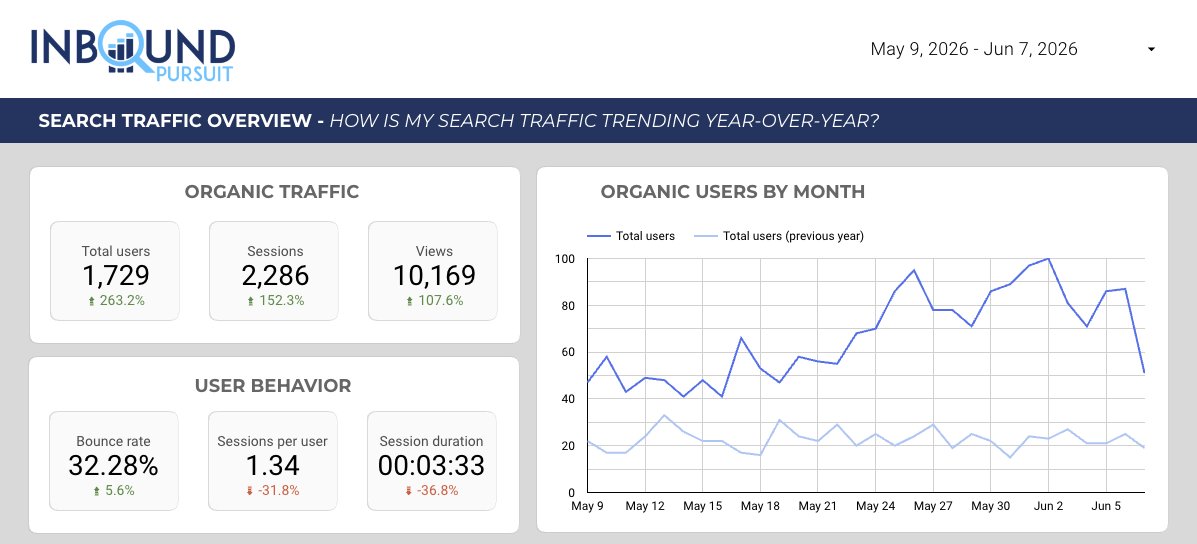
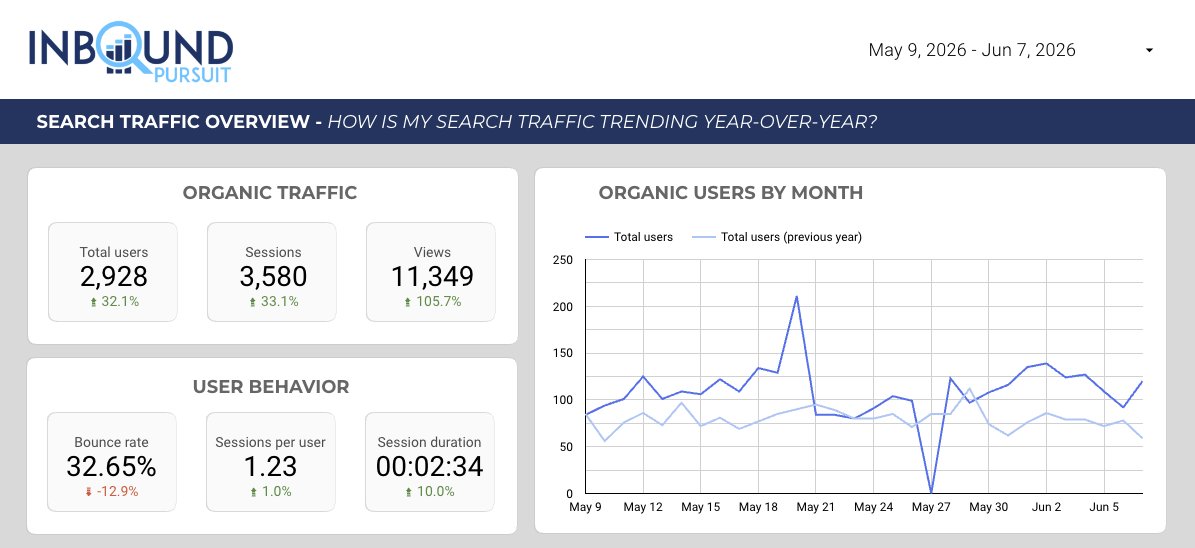
Here's the year-over-year organic traffic of four brands I've worked with for over a year.
All of them have seen at least a 30% increase in organic clicks.
"But everyone said clicks from Google are decreasing!"
Here's the truth:
Clicks to top-of-funnel, informational pages that AI can summarize are decreasing.
If your entire SEO strategy is based around driving traffic to those pages, year-over-year traffic is going to be down tremendously.
But clicks to product and product category pages have remained the same.
If you focus on driving traffic to those pages (as I did for the four brands listed), not only will you still see more and more clicks from Google, but you'll also see more and more sales.
So in a sense...
Informational content is dead.
But ranking transactional pages is working better than ever.
Which is what the true purpose of SEO is anyways.
7
1
33
11,759
I keep seeing ads from SEO agencies guaranteeing #1 rankings in 60 days or less.
This is a LIE.
There are no guarantees in SEO.
You're optimizing for an algorithm that no one 100% understands.
Anyone making guarantees doesn't actually know SEO.
Avoid them like the plague.
11
4
55
2,958
People always assume Google algorithm updates are going to destroy their SEO.
I often see the opposite.
An ecom brand I work with saw organic traffic 3x from the last update.
And it's because I always make sure my SEO work looks 100% natural:
I never use AI to create content. AI-generated content has gotten crushed by the last few Google updates.
I always keep the link profile balanced by building the majority of backlinks to a site's homepage, and being conservative about building links to Product Category pages.
And I avoid stuffing pages with too many keywords. Stick to one—maybe two—closely related keywords per page.
If you stick to those three rules, you'll be surprised how often algorithm updates end up helping you.
14
3
37
3,465
More evidence that the easiest and most reliable way to get your products cited in AI is by being mentioned in "Best X" listicles.
FYI something that's changed recently:
If you publish the "Best X" listicle on your site and rank yourself #1, AI Overviews and AI Mode have begun to ignore it.
So just publish those listicles on 3rd party sites.
And enjoy the AI mentions.
Jun 2

In the last 6 months at @Ahrefs, we analyzed over 1 billion data points across 14 studies. Here's what we learned about AI search optimization:
1) "Best X" blog listicles are the single most prominent content format cited by AI chatbots. They make up 43.8% of all page types cited by ChatGPT specifically.
2) 67% of ChatGPT's top 1,000 citations come from sources marketers can't influence: Wikipedia (29.7%), homepages (23.8%), app stores (6.6%). Only 32.3% are influenceable content like educational pages, reviews, news, and blog posts.
3) 28.3% of ChatGPT's most-cited pages have zero Google organic visibility. These pages get cited repeatedly by ChatGPT despite not ranking in Google at all. A completely separate discovery layer.
4) ChatGPT only cites about 50% of the URLs it retrieves. It fetches dozens of pages per query but uses half as background context without attribution. This means that being retrieved and being cited are very different things.
5) Adding schema markup had zero meaningful impact on AI citations. AI Overviews actually dipped −4.6%, while AI Mode ( 2.4%) and ChatGPT ( 2.2%) showed changes indistinguishable from zero.
6) YouTube mentions have the highest correlation (0.737) with AI brand visibility out of all the factors we studied (including all the conventional SEO metrics like backlinks, page count, DR, etc). This held true for both Google-owned and OpenAI products.
7) AI Overviews reduce clicks to the #1 result by 58%. That’s up from 34.5% just 10 months earlier. The trend is accelerating.
8) 99.9% of AI Overviews appear on informational intent queries. Transactional, navigational, and local searches are almost entirely AIO-free. Shopping triggers AIOs just 3.2% of the time.
9) For a given search query, Google’s AI Mode and AI Overviews reach the same conclusions 86% of the time — but cite almost entirely different sources (only 13.7% citation overlap).
10) AI Overviews change every 2.15 days on average, with 70% of content differing between consecutive observations. But semantic similarity stays at 0.95. The words, sources, and entities constantly shuffle, but the actual meaning barely moves.
11
3
85
16,377
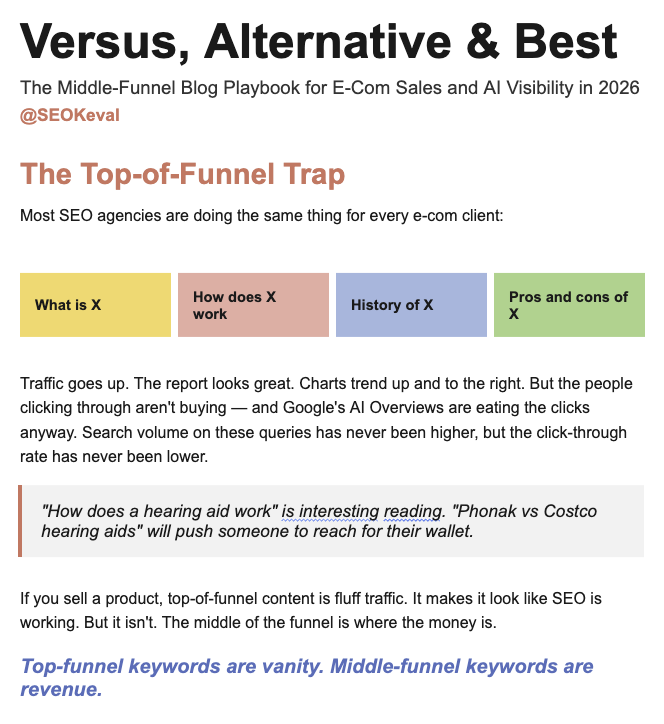
The funny thing about AI "killing" informational blog content is that it was never a viable SEO strategy to begin with.
It was a strategy that SEO agencies used to make it "look" like SEO was working.
They'd say:
"Wow! We ranked you for 'what is a standing desk' and your traffic is up 200%!"
Okay...
And how does that translate into revenue?
It doesn't.
But organic traffic is up, and the primary KPI for SEO is more organic traffic.
So it's a job well done.
That trick doesn't work anymore.
AI steals all of those clicks now, and that's actually a good thing.
SEO agencies can't trick their clients anymore.
They either need to improve organic revenue—as they should have been doing all along—or stop taking on clients altogether.
15
4
32
5,053
6 months of SEO for this ecom brand.
Insane organic traffic growth.
The playbook I used:
1. Fixed broken links errors
2. Deleted duplicate content
3. Built out additional Product Category pages targeting low-competition, transactional keywords
4. Added keyword-optimized content to those pages
5. Added those pages to the main navigation menu
6. Published 3 blog posts a month targeting competitor "vs" or "alternative" keywords that internally linked to the Product Category pages
7. Built 7 high-quality backlinks a month: 3 to the homepage, 2 to Product Category pages, 2 to blog content.
That's literally it.
They're now in the top-3 spots for half of their target keywords.
Organic traffic is up 200% year-over-year.
And they're appearing in AI models for the majority of relevant prompts.
Tell me again why SEO is dead?
11
5
42
3,931
Bad SEO Agency:
Let's build all of our backlinks to your Product Category pages.
That'll help them rank faster, and you'll see organic revenue increase in no time.
Good SEO Agency:
Building all of your backlinks to Product Category pages looks unnatural.
And it'll eventually get your site penalized by Google.
Let's build the majority of our backlinks to your homepage.
And build a few backlinks to Product Category pages ever now and then.
Most Product Category pages that rank well don't have that many links built to them anyways.
Less is more.
6
2
44
4,357
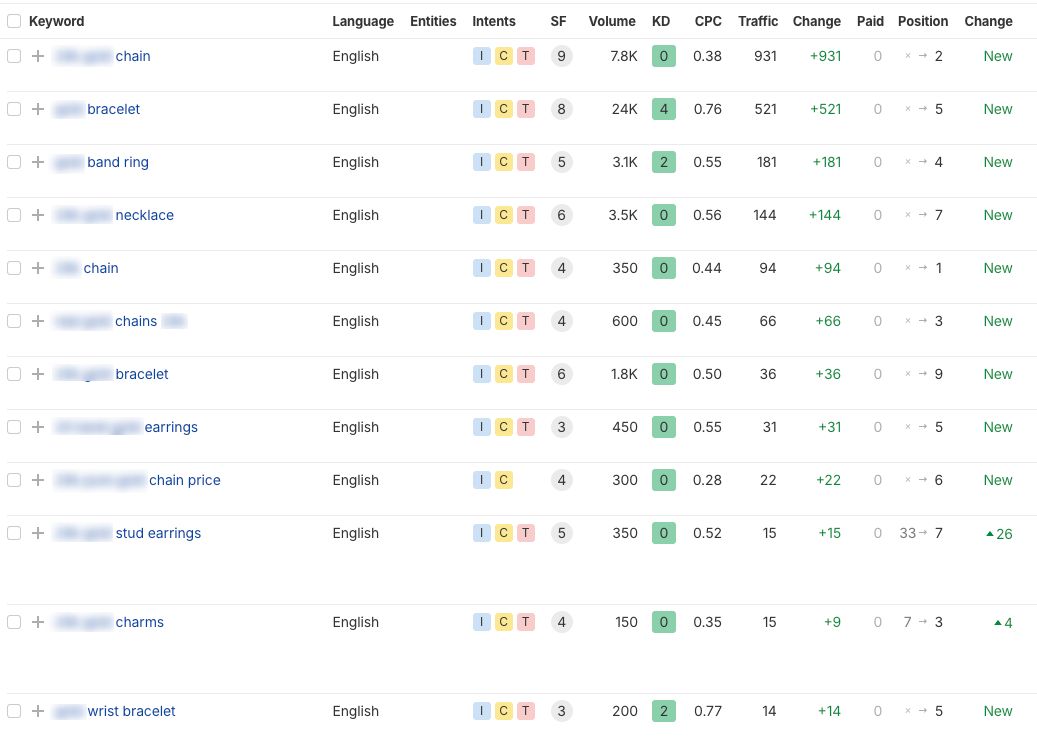
Blog content is pointless for 90% of ecom brands.
Had a jewelry brand reach out for SEO help late last year.
"How can we raise our organic revenue?" they asked.
What most SEO agencies would say:
Let's publish 10 blog posts a month!
What I said:
Let's publish more Product Category pages.
They already had some published, but they were super generic:
Bracelets, Chains, Rings, etc.
They were never going to rank for those terms.
But they could rank for more hyper-specific keywords like:
- silver chains
- mens gold chains
- gold bracelets for men
- silver bracelets
So I built out 10 additional Product Category pages targeting hyper-specific keywords like those.
Added keyword-optimized content below the product list on each page.
Added the pages to the main navigation menu.
Built a few backlinks to each page.
6 months later, all but 2 of those Product Category pages are on the 1st page for their target keyword.
And organic revenue has skyrocketed.
The ecom brands that succeed with SEO aren't the ones aggressively scaling blog content.
They're the ones scaling Product Category pages for relevant, high-intent, low-competition keywords.
4
2
44
3,325
Talked to an ecom brand owner whose organic traffic cut in half.
He wanted to fix that and get his brand appearing in AI.
I showed him how I could help.
And sent over pricing.
His response:
"Even at your highest-tier package, content creation is still pretty low. I'd expect you guys could launch much more content these days."
I told him mass amounts of blog content isn't what's going to improve revenue.
What improves revenue is optimizing Product Category pages for transactional keywords and building links to get them ranking.
Which is what we focus most of our efforts on.
I thought I explained it well.
But he proceeded to ghost me.
It's too bad too...
There wasn't much competition in his space.
And the transactional keywords we'd target have a combined search volume of over 20,000.
But he was less focused on the results we could deliver, and more focused on how many blog posts he'd get each month...
Even though a blog-focused SEO strategy hasn't worked well for most ecom brands in years.
Oh well.
I guess he knows best 🤣
8
2
18
2,269
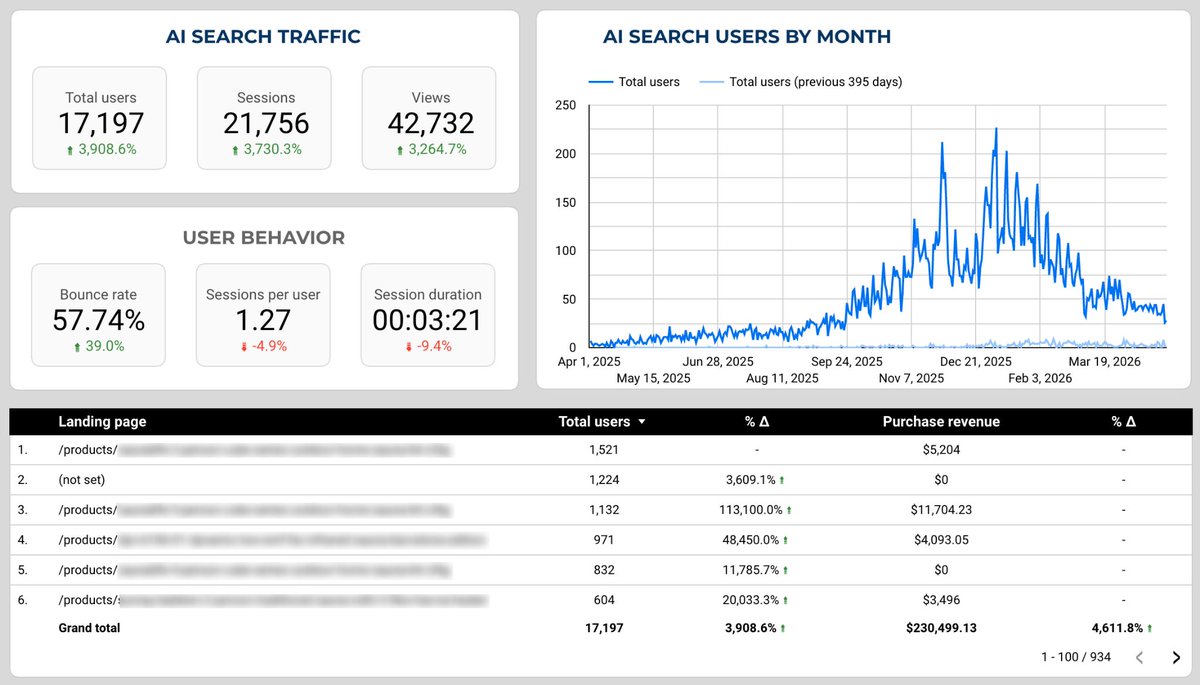
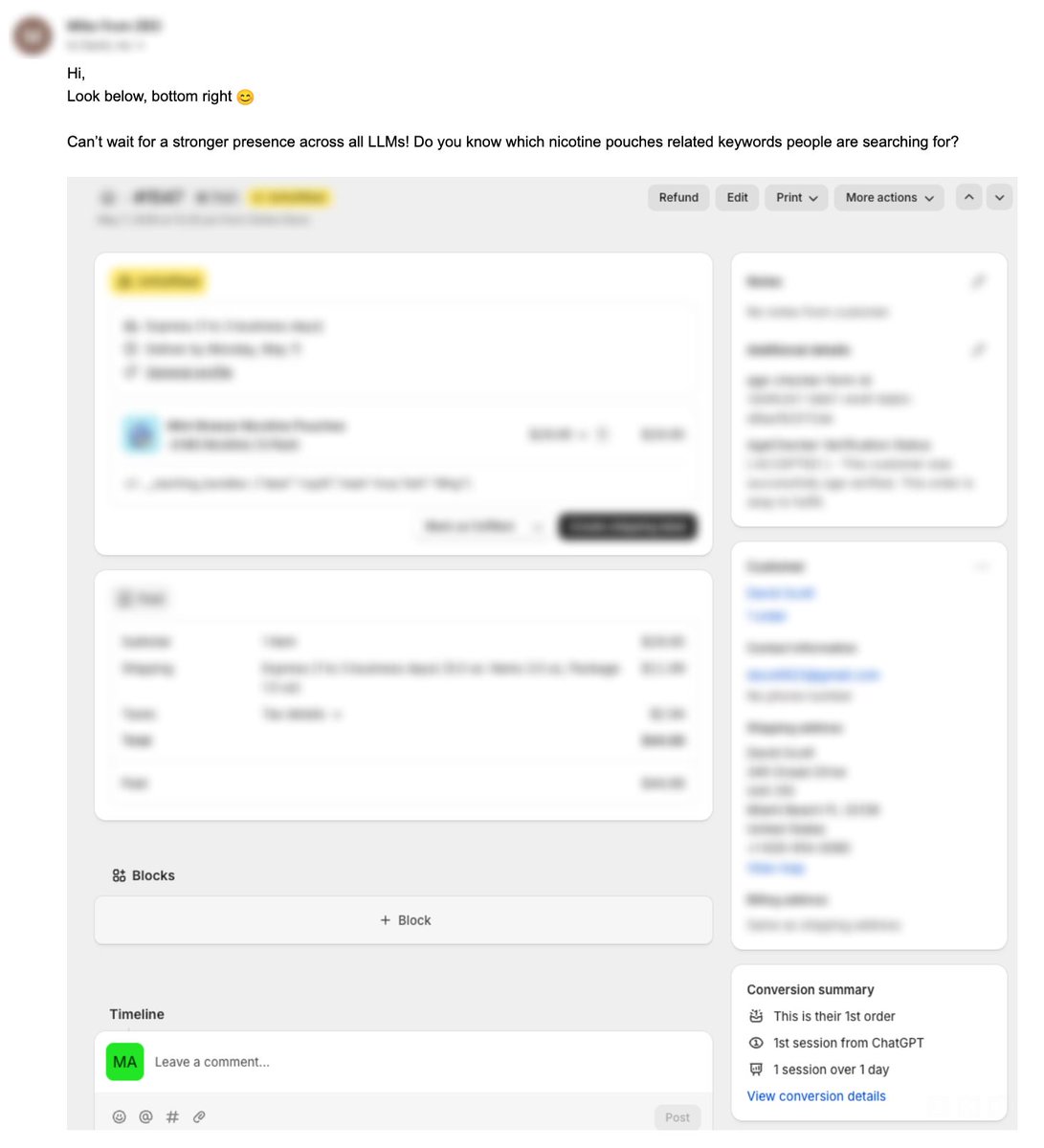
Ecom brand I work with did over $230k from AI models like ChatGPT and Claude in the last year.
What AI SEO/AEO strategy did I use to pull this off?
Listicles? Reddit comments?
Neither.
I've just been doing good ol' fashion SEO for them for nearly three years.
Don't get me wrong, listicles help.
Reddit comments help.
And you should do them.
But the reality is that there's a lot of overlap between SEO and AI SEO.
The strategies that get you ranked in Google also improve your visibility in AI models.
This is proof of that.
So don't think just because you aren't running AI SEO-specific strategies, you're not improving AI visibility.
Traditional SEO is just as important for improving visibility.
It builds the foundation for it.
And then AI SEO-specific strategies like listicles and Reddit comments add fuel to the fire.
5
20
2,110
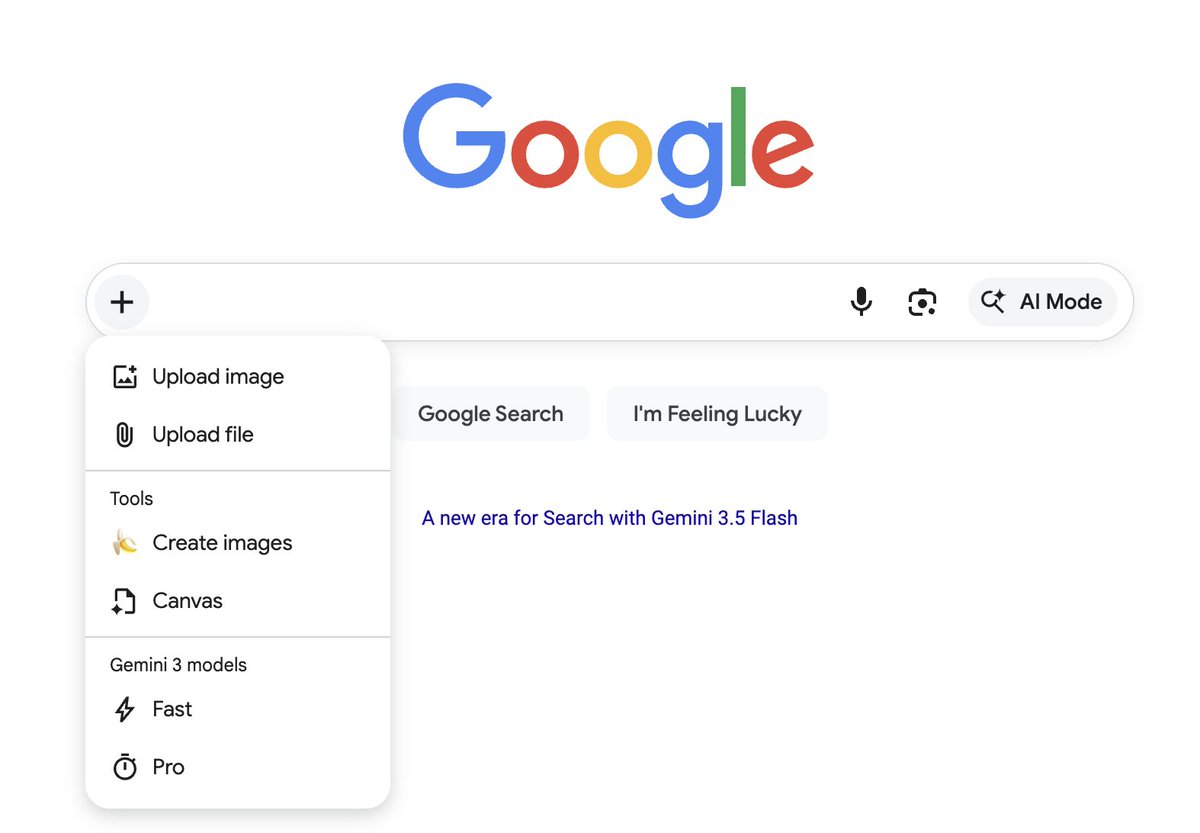
This is 100% false.
I can't believe TechCrunch allowed this article to be published.
Google Search is NOT switching to AI.
The blue links are still there.
There's just now a plus icon that allows you to switch the actual search bar to AI mode.
May 19

Google Search as you know it is over
"Instead of returning a simple list of links, Google Search will drop users into AI-powered interactive experiences at times."
techcrunch.com/2026/05/19/go…
10
4
63
18,320
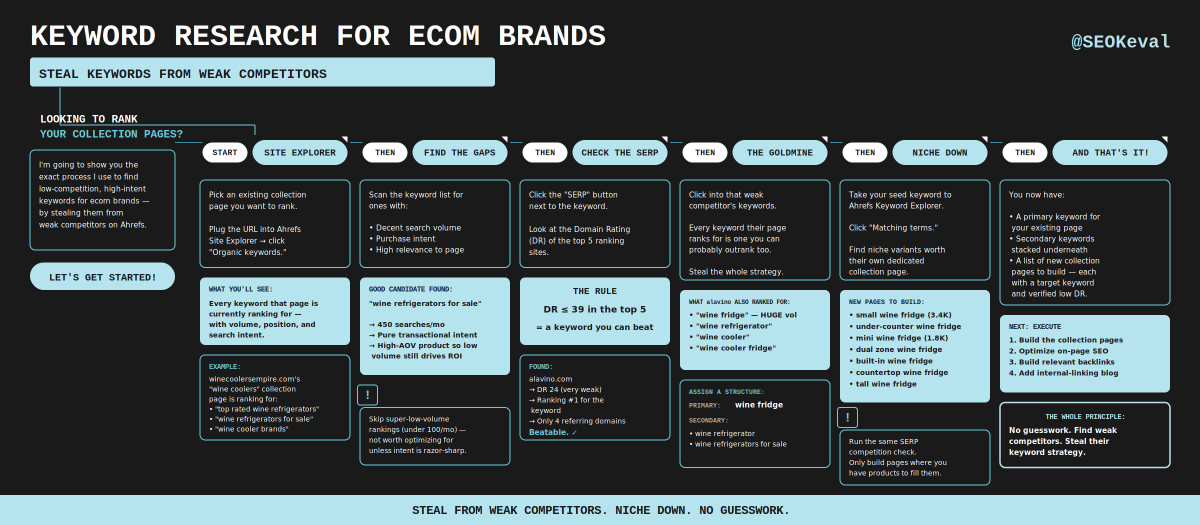
If you want to scale the SEO if your ecom brand, use this strategy to find low-competition, revenue-driving keywords to target:
(Bookmark this!)
This video literally breaks down the exact keyword research process I've used to scale SEO for hundreds of ecom brands.
(The most powerful strategy for driving more revenue from SEO is at the 5:28 mark)
4
5
46
7,425
Ecom founder I used to work with asked to resume SEO, as he had more keywords he wanted to rank for.
He also mentioned that since we last worked together, he'd been using AI for all of his blog content and product descriptions.
He wanted to know if that was hurting his SEO.
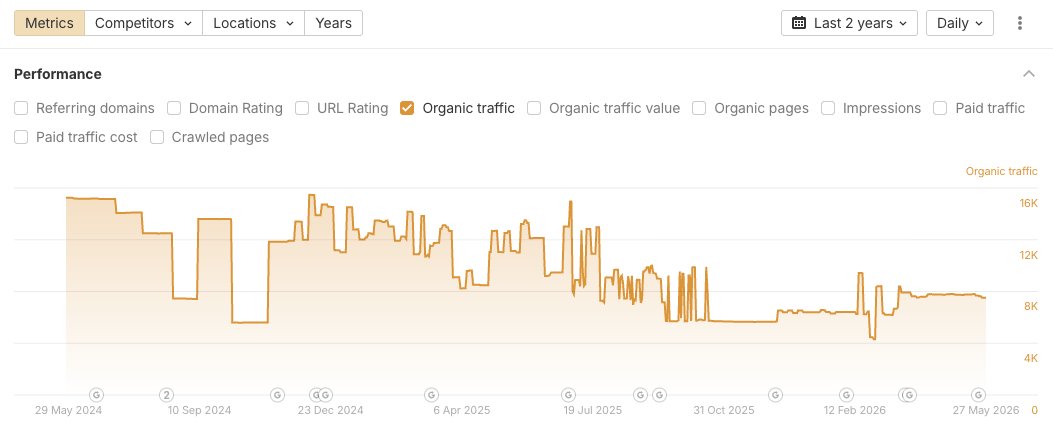
So, I plugged his site into Ahrefs.
And, well...
It's definitely hurting his SEO!
Keyword rankings are actively plummeting.
A word of caution:
Stop copying-and-pasting AI content onto blog posts, product descriptions, etc.
Google is cracking down on it.
At the very least, you need to modify the AI content a bit to make it sound more human.
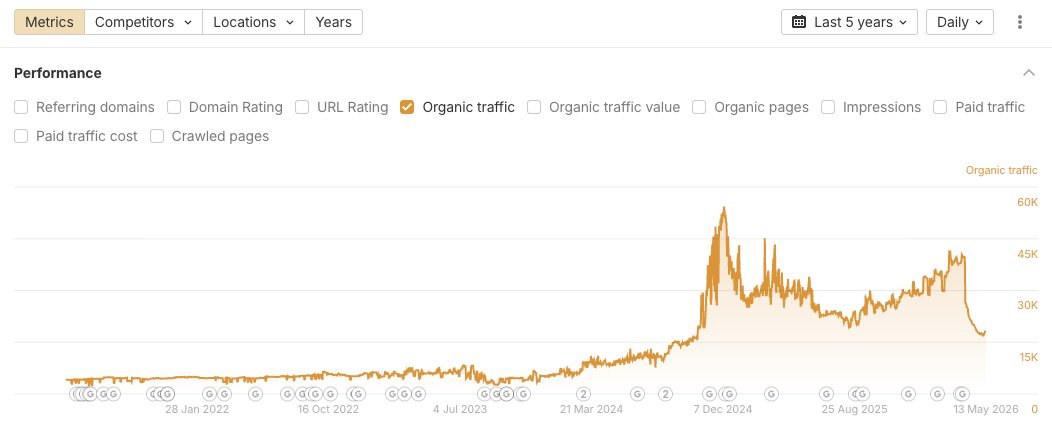
Otherwise, you'll have a traffic graph that increases, increases, and increases...
And then one day falls off a cliff.
10
1
29
3,634