
The SMaHT Network aims to transform our understanding of how somatic mosaicism in human cells influences biology & disease.
Joined May 2023
- Tweets 122
- Following 26
- Followers 137
- Likes 3
Photos and videos
What is the biggest gap in somatic variation research today?
In this Q&A, Alexej Abyzov, PhD, discusses the importance of studying somatic mutations at the single-cell level and how SMaHT is helping advance this area of research.
▶️ youtu.be/2S2d8lxy4sk
91
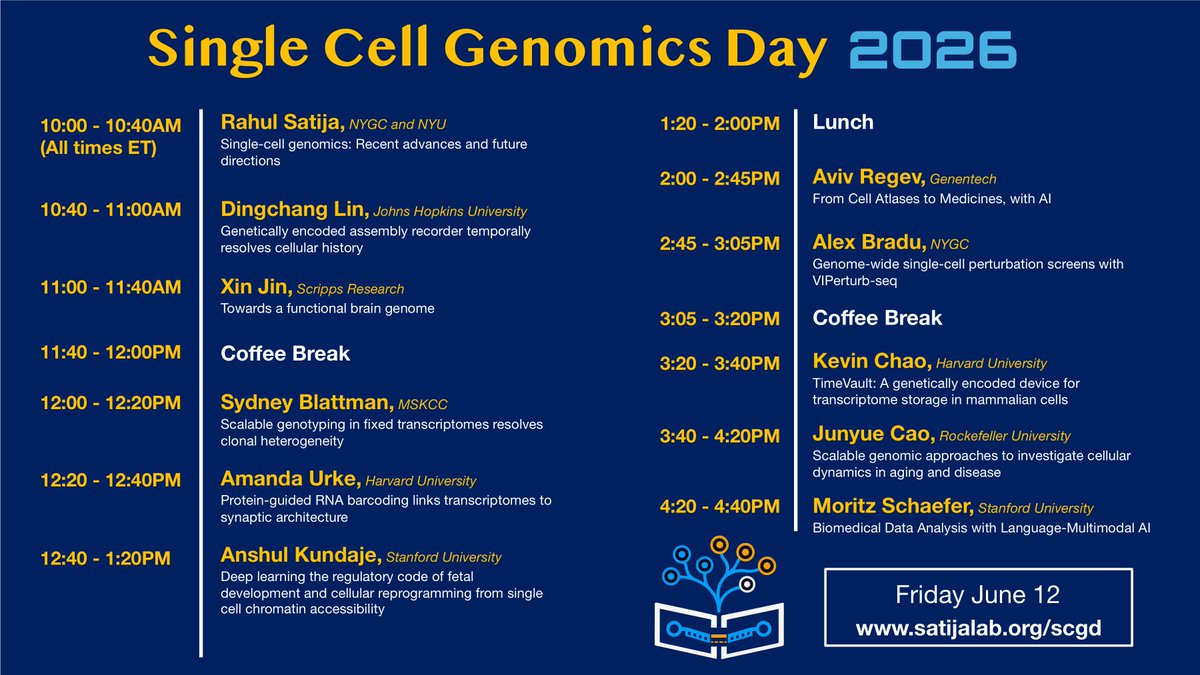
Join the 10th Annual Single Cell Genomics Day on June 12!
Explore the latest advances in single-cell and spatial genomics, featuring talks from leading researchers across the field.
Free livestream, no registration required: satijalab.org/scgd
77

May 28
Researchers studied nearly 500,000 genomes, revealing that mosaic chromosomal alterations accumulate in predictable patterns with age, offering new insight into clonal expansion and blood cancer risk.
Uncover the science behind it: nature.com/articles/s41588-0…
5
712
May 22
Analysis of nearly 12,000 normal tissue samples reveals ongoing mutagenic processes across healthy human tissues, offering new insight into baseline somatic mutation patterns and disease-associated mutagenesis.
Read more: pubmed.ncbi.nlm.nih.gov/4175…
68
May 19
The SMaHT Genome Assembly Analysis Focus Group is working to develop high-quality genomic assemblies to improve detection and interpretation of somatic variation.
Learn more about SMaHT focus and working groups: smaht.org/working-groups/
3
74
May 14
Blog spotlight: Researchers identified rare somatic mutations in brain and spinal cord tissue that may contribute to sporadic Amyotrophic lateral sclerosis and Frontotemporal dementia.
Read more: mgriblog.org/science-insight…
63
May 12
A recent preprint explores how donor-specific assemblies improve the detection of somatic structural variants.
Using a personalized assembly identified 1.8× more validated variants than standard references, especially in repeat-rich regions.
biorxiv.org/content/10.64898…
2
103
How can studying somatic variation improve human health?
Christopher Grochowski, PhD, shares how SMaHT research is uncovering genetic differences across tissues to better understand disease and advance personalized medicine.
Watch here: youtu.be/Rve7hZgR0Uk
68
Apr 30
Deep sequencing reveals rare, low-frequency somatic mutations in ALS/FTD genes may contribute to sporadic neurodegeneration.
Uncover the science behind it: biorxiv.org/content/10.1101/…
77
Apr 24
New research supported in part by SMaHT finds cancer-associated mutations in brain immune cells may contribute to Alzheimer’s disease, pointing to new directions for diagnostics and treatment.
Learn more in the Boston Children's Hospital press release: childrenshospital.org/newsro…
83
SMaHT Network retweeted

Apr 15
What are the biggest gaps in somatic mosaicism research?
What tools or data are missing?
Share your ideas with NIH and help guide future investments:
🔗 go.nih.gov/SMaHT-RFI
📅 Submit by May 30, 2026
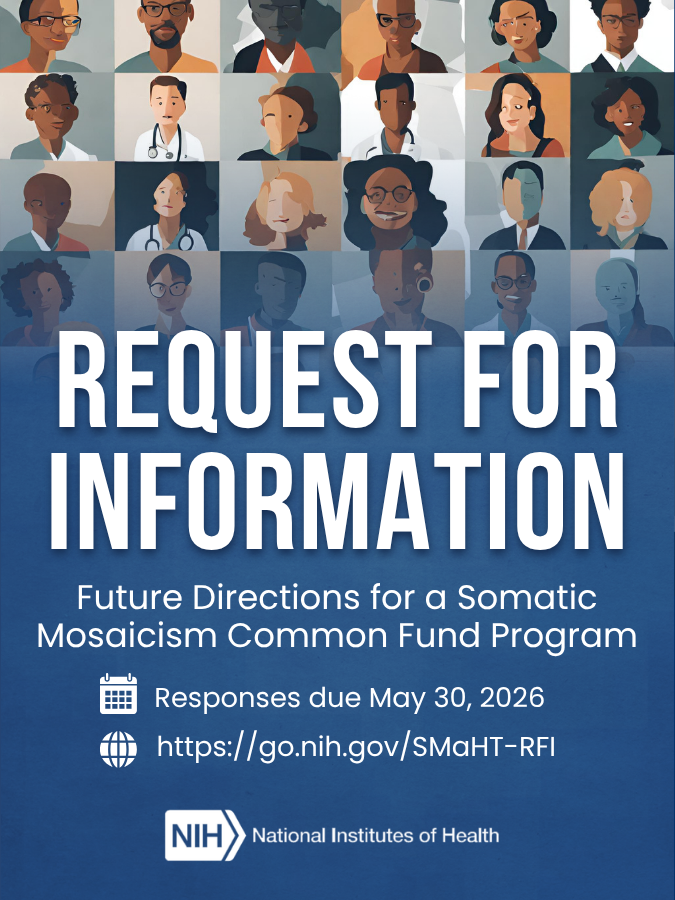
ALT Image of a mosaic of individuals blended into a blue background graphic. Text reads: Request for Information: Future Directions for a Somatic Mosaicism Common Fund Program. Responses due: May 30, 2026. https://go.nih.gov/SMaHT-RFI. NIH logo: National Institutes of Health.
4
9
1,633
Apr 22
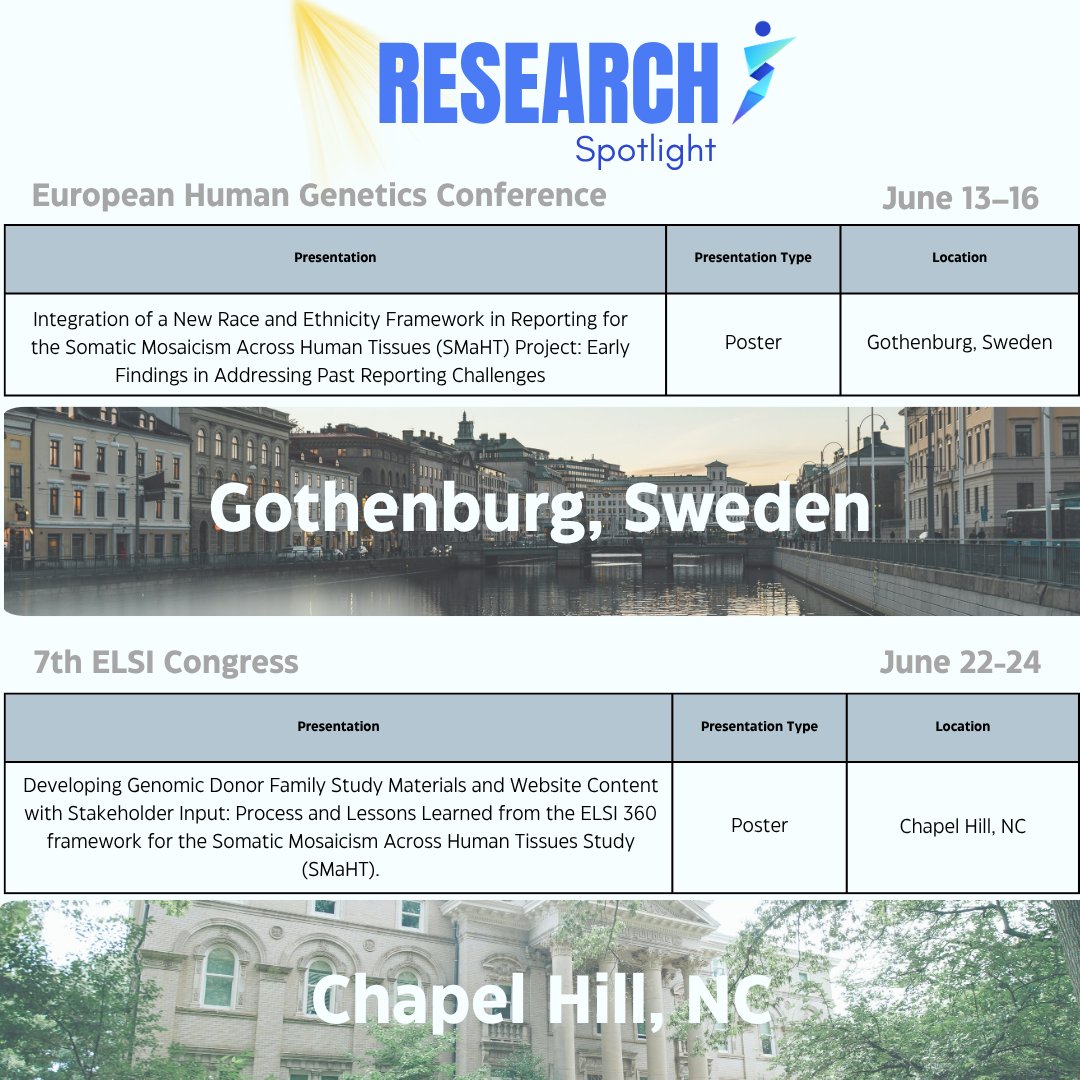
SMaHT researchers will be presenting upcoming posters at conferences across the U.S. & Europe, highlighting work across ELSI, TPC, and website teams.
Stay tuned for where to find us and learn more about these efforts!
1
95
Apr 17
The 2026 Human Cell Atlas General Meeting happens June 16 - 18 in Boston, MA.
Join the Human Cell Atlas community as it marks 10 years and looks ahead.
Virtual option available.
Register: events.humancellatlas.org/20…
76
Apr 14
Uncover how single-cell approaches reveal somatic mutation variation across cell types, exposures, and lineages, further advancing cell–type–aware mutation profiling.
Read the preprint: biorxiv.org/content/10.1101/…
86
Our SMaHT Associate Members play a key role in advancing the network, contributing to somatic variant catalogs, developing new sequencing tools, and shaping data resources that deepen our understanding of human biology.
Learn more: smaht.org/associate-members/
4
1,655
The NIH Common Fund is seeking community input to shape the future of somatic mosaicism research.
Share perspectives on priorities, technologies, and data needs.
Responses due by May 30: go.nih.gov/SMaHT-RFI

82
Why build a comprehensive catalog of somatic variants?
In this Q&A, Elizabeth Chun explains how creating a high-quality, searchable reference across tissues can advance our understanding of human health and disease.
▶️: youtu.be/6N1FHMqozHo
105
Mar 25
Looking for the SMaHT Network across social media?
Visit our Linktree to find all SMaHT platforms in one place and stay up to date on the latest research, tools, and consortium updates.
linktr.ee/smahtnetwork

67
Mar 20
New Preprint: TumorLens introduces a unified long-read framework that detects SNVs, indels, SVs, CNVs, LoH, and CpG methylation in a single assay, enabling more comprehensive tumor profiling and insights into mechanisms like immune escape.
Read more: medrxiv.org/content/10.64898…
3
15
706
Mar 18
Why is studying somatic variation so challenging?
In this Q&A, Carrie Cibulskis, BS, explains the “needle in a haystack” problem… finding rare mutations in a tiny fraction of cells while separating true variants from sequencing errors.
🎬 youtu.be/ozZo_G2MkJc
1
231