
80 SSL certificate types at some of the lowest prices online. DV, EV, wildcard, code signing. Install support included. Since 2014. ssldragon.com
Joined May 2016
- Tweets 292
- Following 202
- Followers 287
- Likes 8
82 Photos and videos




Jun 13
Session hijacking doesn't need your password. Just your session token.
Steal the token → bypass authentication → access everything.
How it works and how to stop it:
ssldragon.com/blog/what-is-s…
#CyberSecurity #WebSecurity
42
Jun 9
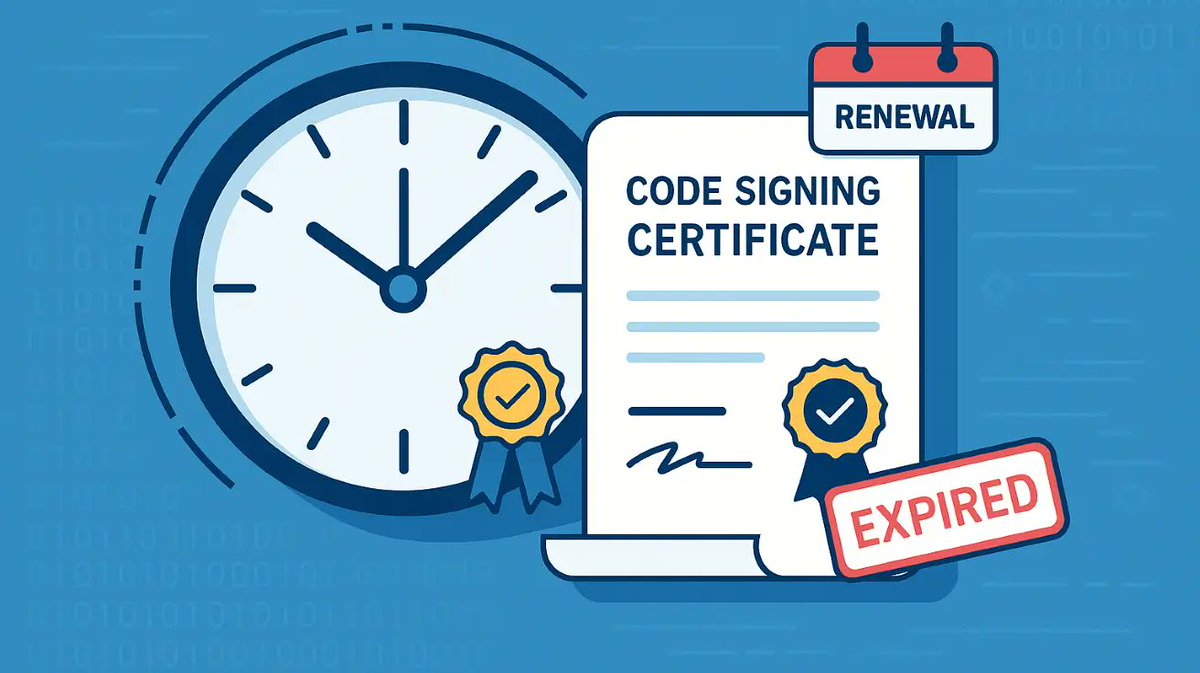
Expired ≠ the only threat. Compromised certs get added to Certificate Revocation Lists (CRLs) so browsers can block them in real time.
Learn how CRLs work — and why OCSP is often faster:ssldragon.com/blog/what-is-c…
#CyberSecurity #SSL
8
Jun 5
That's the update.
Run a scan on your domain. You might find a vulnerability you didn't know about, or a TLS version you thought was disabled.
Link in the reply below 👇
Jun 5

Other additions:
→ Cipher suite and TLS protocol analysis → OCSP, CRL, and revocation checks → DNS CAA record detection → Raw PEM viewer one-click cert download → Expiration reminders
Still free. Still no signup. Still 30 seconds.
1
19
Jun 5
5
Jun 5
Other additions:
→ Cipher suite and TLS protocol analysis → OCSP, CRL, and revocation checks → DNS CAA record detection → Raw PEM viewer one-click cert download → Expiration reminders
Still free. Still no signup. Still 30 seconds.
Jun 5
Multi-server scanning for sites behind a CDN or load balancer — each edge node tested individually.
Solves the "one node has a different config" problem.
Plus full browser compatibility results across Chrome, Firefox, Safari, and Android.
59
Jun 5
Multi-server scanning for sites behind a CDN or load balancer — each edge node tested individually.
Solves the "one node has a different config" problem.
Plus full browser compatibility results across Chrome, Firefox, Safari, and Android.
Jun 5
Vulnerability scanning.
The checker now tests for Heartbleed, BEAST, POODLE, ROBOT, and Ticketbleed.
These are TLS attacks that a valid certificate won't protect you from. Now you'll know if your server is exposed.
69
Jun 5
Vulnerability scanning.
The checker now tests for Heartbleed, BEAST, POODLE, ROBOT, and Ticketbleed.
These are TLS attacks that a valid certificate won't protect you from. Now you'll know if your server is exposed.
Jun 5
Every scan now returns a security grade from A to F.
It breaks the score down by certificate validity, trust chain, protocol support, cipher strength, and known vulnerabilities.
You see exactly which factors helped or hurt the grade.
36
Jun 5
Every scan now returns a security grade from A to F.
It breaks the score down by certificate validity, trust chain, protocol support, cipher strength, and known vulnerabilities.
You see exactly which factors helped or hurt the grade.
Jun 5
We just rolled out a major update to our SSL Checker.
A valid certificate isn't the same as a secure HTTPS setup. The tool now shows the difference.
Here's everything that's new 📷
20
Jun 5
We just rolled out a major update to our SSL Checker.
A valid certificate isn't the same as a secure HTTPS setup. The tool now shows the difference.
Here's everything that's new 📷
22
Jun 2
Port 80 = HTTP, no encryption.
Port 443 = HTTPS, secured with SSL/TLS.
Learn the key differences here:
ssldragon.com/blog/port-80-v…
9
May 19
Public key vs private key: what’s the difference?
A public key is shared openly and helps encrypt data or verify signatures. A private key stays secret and is used to decrypt data or create signatures.
Learn how both protect online security at this link:
ssldragon.com/blog/public-ke…
7
May 18
2-year certs made short outages annoying. Ultra-short lifetimes make them operationally risky.
Would your renewal pipeline recover cleanly from a CA-side interruption today?
Check the full story:
ssldragon.com/blog/lets-encr…
#PKI #TLS #ACME #SSLCertificates
May 18
The awkward timing?
The interruption landed days before Let’s Encrypt starts rolling out 45-day certificate profiles for early adopters.
The SSL industry is speedrunning renewals while hoping the automation never sneezes.
31
May 18
The awkward timing?
The interruption landed days before Let’s Encrypt starts rolling out 45-day certificate profiles for early adopters.
The SSL industry is speedrunning renewals while hoping the automation never sneezes.
May 18
Let’s Encrypt briefly stopped issuing certificates after an internal hierarchy error broke part of the renewal flow.
One missing “Server Authentication” marker was enough to jam the machine.
38
May 18
Let’s Encrypt briefly stopped issuing certificates after an internal hierarchy error broke part of the renewal flow.
One missing “Server Authentication” marker was enough to jam the machine.
20
May 5
Public key cryptography helps keep online banking, emails, shopping, and secure websites protected.
It uses two keys: a public key to encrypt data and a private key to decrypt it.
Learn how it works and why it matters for digital security at this link: ssldragon.com/blog/public-ke…
11
Mar 2
The real risk in modern TLS isn’t expired certificates, but blind spots between trust layers.
When no one owns the full certificate map, issues don’t fail — they drift.
Full editorial here:
👉 ssldragon.com/blog/multi-cer…
23
Mar 2
From what we see across modern client setups, this is where TLS troubleshooting starts to break down.
Each layer owns a different certificate, yet conversations still assume there’s only one trust decision in play.
Mar 2
TLS didn’t get more complex, but infrastructure did.
One service can now run on four different certificates at once, all enforcing trust at separate layers.
14
Mar 2
TLS didn’t get more complex, but infrastructure did.
One service can now run on four different certificates at once, all enforcing trust at separate layers.
22
Feb 23
SSL won’t magically boost your SEO — but it does build trust, protect users, and support better engagement.
Here’s how SSL really affects SEO 👇
zurl.co/NQQMf
#SEO #SSL #HTTPS
9
Feb 13
Now that SHA-1 is finally out of public PKI, the question is, what else is still hiding in yours?
Full analysis 👉
ssldragon.com/blog/sha-1-rem…
#PKI #TLS #SSLCertificates #WebEncryption
Feb 13
Browsers deprecated SHA-1 years ago. But deeper in the hierarchy, it kept lingering in older intermediates and revocation data.
Invisible to users, but still embedded in trust infrastructure.
15