
🇨🇦 Career Strategist | LinkedIn Top Voice | Sharing job tips, AI insights & startup news | Blogger | DM for Visibility Strategy
Joined November 2013
- Tweets 8,590
- Following 700
- Followers 1,268
- Likes 4,921
3,961 Photos and videos




Pinned Tweet

27 Dec 2023
Gratitude isn't just a pleasant feeling; it's increasingly seen as a powerful mind enhancer. When you embrace gratitude, it's like your brain gets an upgrade. You become more nimble in thinking, more adaptable to change, and generally more resourceful. Being grateful doesn't just make you happier—it makes you sharper, broadening your capabilities and opening doors to more opportunities and success. This isn't just a nice thought; it's a transformative mental practice.
#GratitudeBrainBoost #MindAgility #FlexibleThinking #AdaptiveMindset #GratitudeEqualsSmarts #CapacityBuilding #UnlockPotential #SuccessThroughGratitude #OpportunityGrowth #SharperMindset #GratefulLiving #EnhancedCognition #ThankfulThoughts #MindfulSuccess
2
1
16
11,937
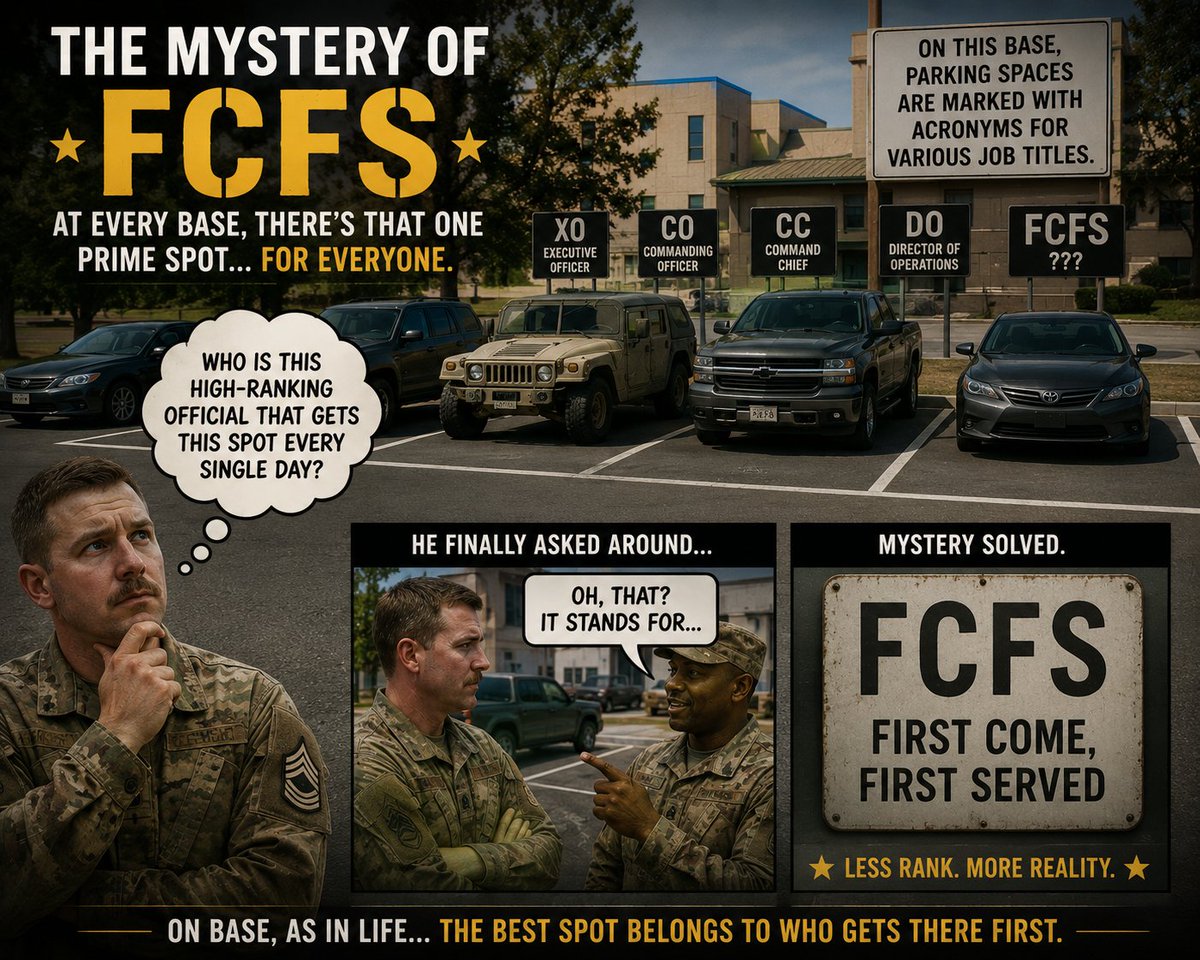
Tuesday Humor - Because of the constant movement on base, parking spaces were marked with acronyms for various job titles. A new staff sergeant was curious about the high-ranking official who parked a different vehicle every day in a prime spot marked "FCFS."
He finally asked around and learned the acronym stood for "First Come, First Served".
Not Grok Build
9
𝐈𝐦𝐚𝐠𝐢𝐧𝐞 𝐭𝐡𝐢𝐬.
A towering machine, five feet high. Custom-built. Inside: 200,000 crisp white cards.
Each card held a name, a number, an address—and the memory of a real conversation. David Rockefeller kept it for fifty years. He met nearly 100,000 people. World leaders. Artists. Business giants. Every single one went into that Rolodex.
Not because he collected contacts. Because he understood something powerful: 𝐘𝐨𝐮𝐫 𝐧𝐞𝐭𝐰𝐨𝐫𝐤 𝐢𝐬 𝐲𝐨𝐮𝐫 𝐟𝐮𝐭𝐮𝐫𝐞. One thoughtful connection today can open doors you never even knew existed tomorrow.
That same truth still works—maybe even more powerfully now.
𝐇𝐨𝐰 𝐭𝐨 𝐌𝐚𝐬𝐭𝐞𝐫 𝐭𝐡𝐞 𝐅𝐢𝐫𝐬𝐭 𝐅𝐢𝐯𝐞 𝐌𝐢𝐧𝐮𝐭𝐞𝐬 𝐚𝐧𝐝 𝐁𝐮𝐢𝐥𝐝 𝐏𝐨𝐰𝐞𝐫𝐟𝐮𝐥 𝐂𝐨𝐧𝐧𝐞𝐜𝐭𝐢𝐨𝐧𝐬 𝐓𝐡𝐚𝐭 𝐎𝐩𝐞𝐧 𝐃𝐨𝐨𝐫𝐬
You only get one chance to make a great first impression.
Those first five minutes? They decide everything.
In that short window, people decide if they trust you. If they like you. If they want to help you.
Get it right, and the ripple effect begins. Small actions today create big opportunities later. Doors swing open. Careers accelerate. Dreams get closer.
You can master this. Starting right now at @LinkedIn .
linkedin.com/posts/sajithkum…
15
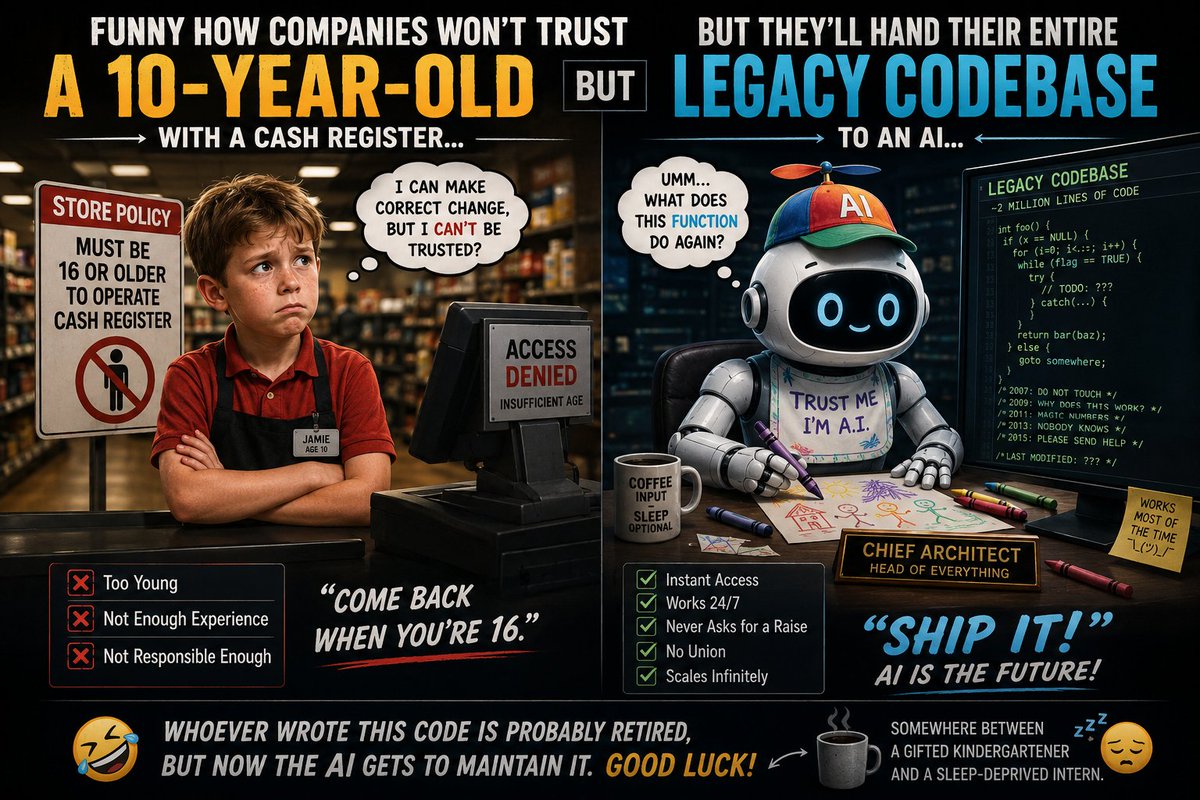
Funny how companies won't trust a 10-year-old with a cash register, but they'll hand their entire legacy codebase to an AI whose intellectual development is somewhere between a gifted kindergartener and a sleep-deprived intern.
11
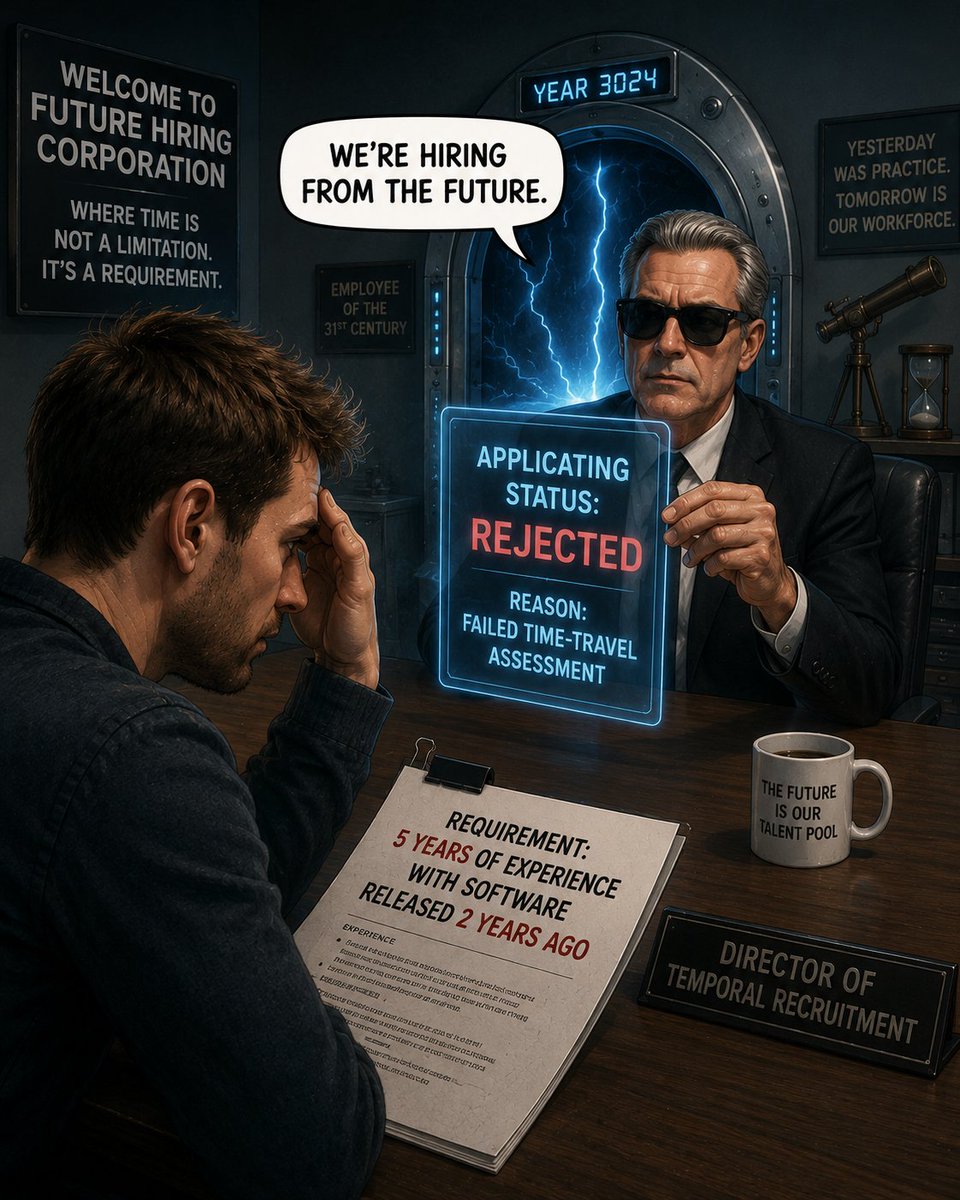
I applied for a job that required “5 years of experience with a software released 2 years ago.”
Apparently they're hiring from the future and I failed the time-travel assessment.
#MondayBlues
18
Market Context: Long Journeys, Low Trust
B2B buying cycles now average roughly 272 days from first touch to closed revenue, with about 81% of the journey happening before sales is formally engaged. Over the same period, LinkedIn has become the single strongest B2B paid channel by ROAS (around 121%) and now captures about 41% of B2B ad budgets in the benchmark data.
Yet, despite richer data and more sophisticated attribution tools, around 64% of B2B marketing leaders (@LinkedIn) say they do not trust their own measurement methods for decision-making.
Question: Is AI helping or making it more complex?
medium.com/p/5ab79616afab?po…
14
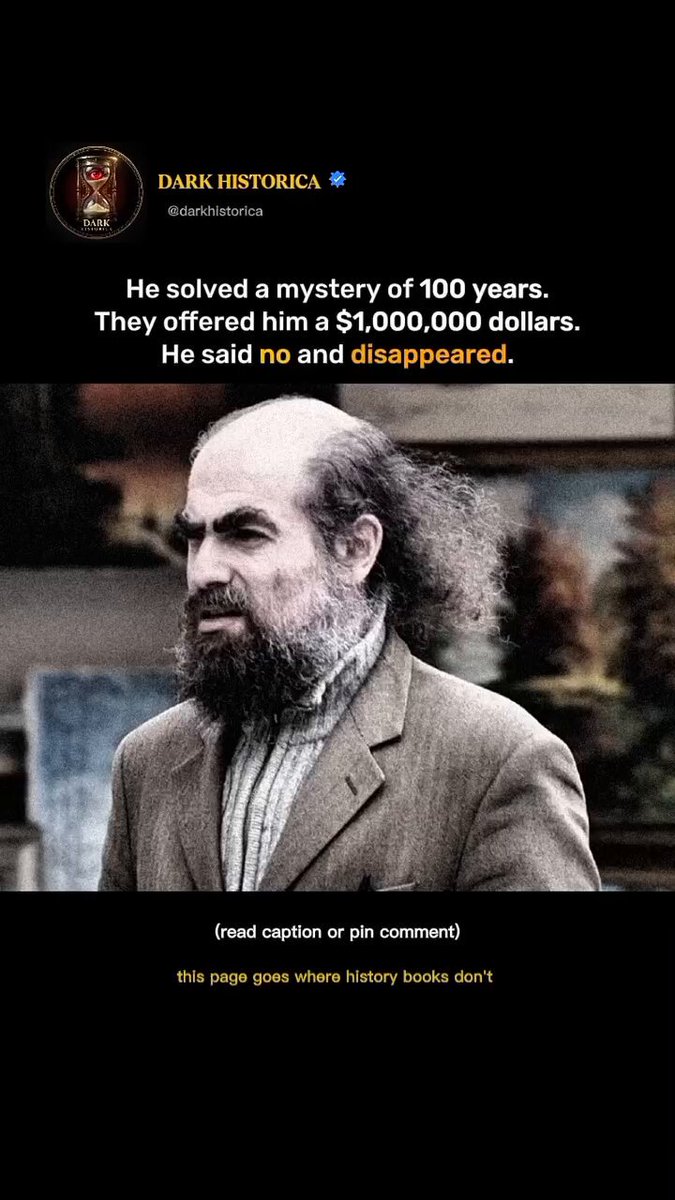
Grigori Yakovlevich Perelman (born June 13, 1966) is a brilliant Russian mathematician renowned for proving the Poincaré conjecture, one of the most famous problems in topology, and for his reclusive lifestyle and principled rejection of major awards.
Early Life and Education
Born in Leningrad (now Saint Petersburg), Soviet Union, to Jewish parents, Perelman showed exceptional mathematical talent from a young age. He excelled in math competitions, winning a gold medal at the International Mathematical Olympiad in 1982 with a perfect score. He earned his PhD from Leningrad State University and worked at the Steklov Institute of Mathematics in Saint Petersburg.
In the 1990s, he spent time in the United States (including at Berkeley and other institutions) as a visiting researcher, making contributions to geometric analysis, particularly Alexandrov spaces. He lived frugally, saved money, and returned to Russia, largely withdrawing from active academic collaboration.
The Poincaré Conjecture and His Proof
The **Poincaré conjecture**, proposed by Henri Poincaré in 1904, states that every simply connected, closed 3-manifold is topologically equivalent to a 3-sphere. It was a cornerstone of topology and one of the seven Millennium Prize Problems.
Building on Richard Hamilton’s work on **Ricci flow** (a process that smooths out the curvature of a manifold), Perelman developed groundbreaking techniques. In 2002–2003, he quietly posted three preprints on arXiv.org (without submitting them to peer-reviewed journals at the time):
- *The Entropy Formula for the Ricci Flow and Its Geometric Applications* (November 2002)
- Follow-up papers on Ricci flow with surgery.
These papers not only proved the Poincaré conjecture but also the more general **Thurston’s geometrization conjecture**. His work introduced innovative ideas about singularities in the flow and how 3-manifolds decompose into geometric pieces.
The mathematical community scrutinized and verified the proof over several years. It was widely accepted as correct, with *Science* naming it the Breakthrough of the Year in 2006.
Rejection of Fame and Fortune
In 2006, Perelman was awarded the **Fields Medal** (often called the Nobel Prize of mathematics), but he declined it, refusing to attend the International Congress of Mathematicians. He reportedly said he was not interested in fame and did not want to be "on display like an animal in a zoo."
In 2010, he became eligible for the **Clay Millennium Prize** of $1 million for solving the Poincaré conjecture. He turned it down as well, stating he had everything he needed and that the mathematical community’s recognition (or lack of perfect fairness in crediting collaborators like Hamilton) was sufficient—or insufficient—for him.
His decisions highlighted a deep commitment to mathematics for its own sake, rather than prizes or recognition. He has been quoted criticizing ethical standards in the mathematical community and preferring isolation.
Later Life
After his proof, Perelman largely left professional mathematics. He resigned from the Steklov Institute around 2005–2006 and has lived a reclusive life in Saint Petersburg, often with his mother. He avoids interviews, public appearances, and the spotlight, occasionally spotted in everyday settings like public transport.
As of recent reports, he remains out of the public eye, with no major new mathematical publications. His story continues to fascinate as an example of extraordinary genius paired with uncompromising integrity and detachment from conventional success.
Perelman’s work has had a profound influence on geometric analysis and topology, with techniques that continue to be studied and applied. He stands as a modern archetype of the pure mathematician who values truth over accolades.
24
16
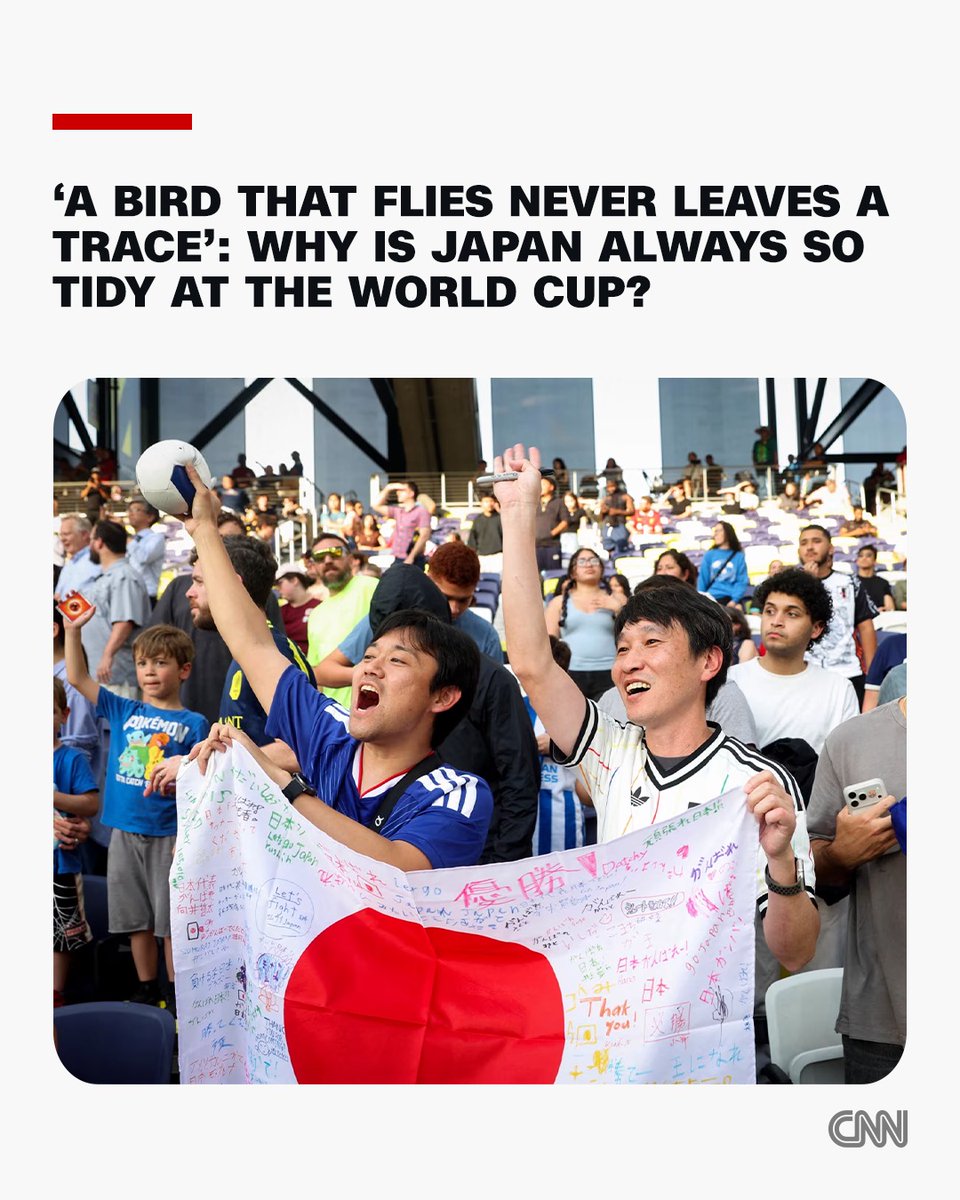
Japan teaches the world cleanliness at FIFA World Cup @FIFAWorldCup
"Picking up someone else's half-eaten food or half-finished drink is unpleasant, no question. But once you've had that experience, you are far less likely to become someone who litters in the first place." cnn.it/4uFdvXl
55
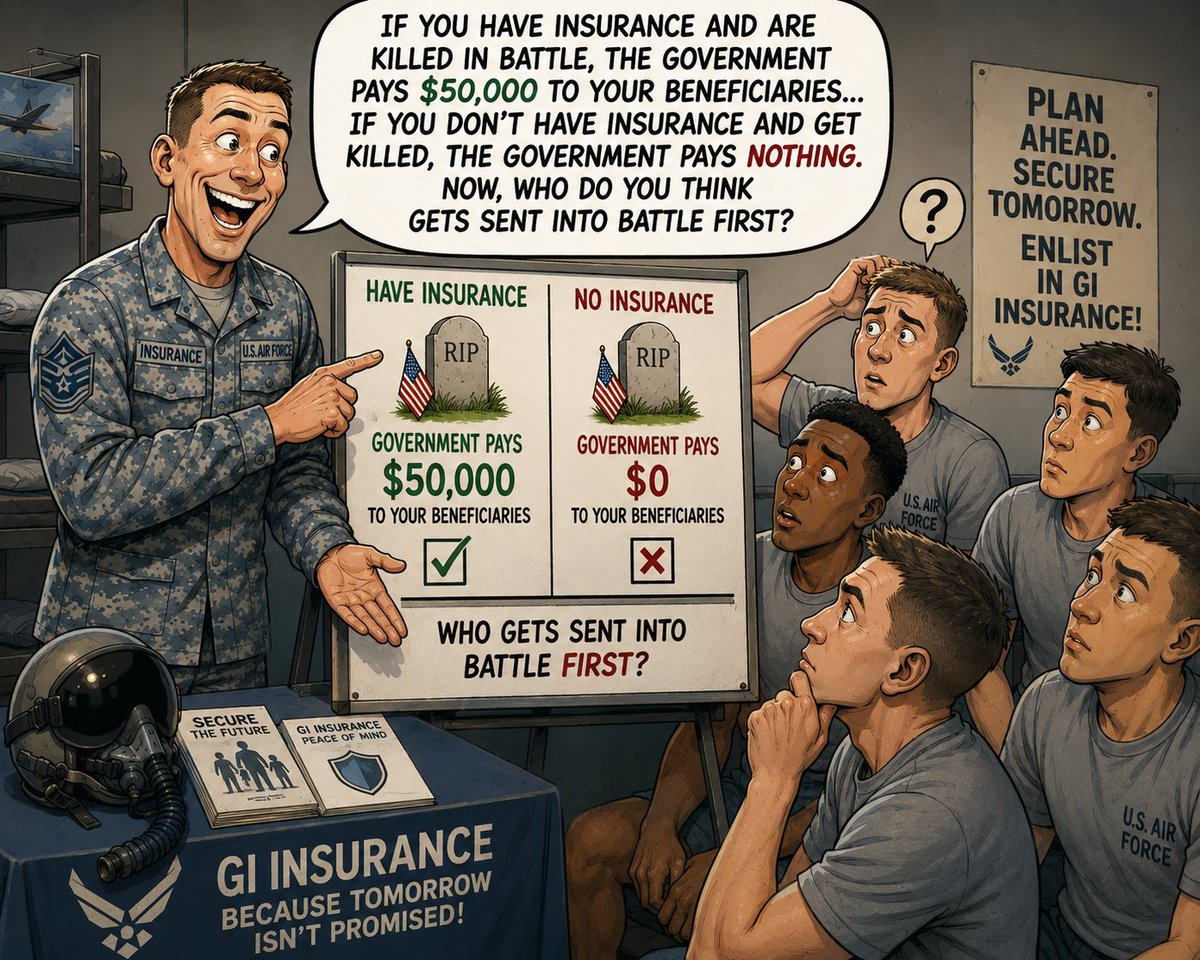
Selling Insurance: An airman convinced new recruits to sign up for GI insurance with this flawless logic: "If you have insurance and are killed in battle, the government pays $50,000 to your beneficiaries... If you don't have insurance and get killed, the government pays nothing. Now, who do you think gets sent into battle first?"
May God save us this Sunday!
@readersdigest
8
This #FifaWorldCup are you Argentina fan? @FIFAWorldCup
19
I evaluated 90 AI repos for my recruiting stack.
Skipped a 104K-star one. Installed a 109-star one.
Stars measure marketing. Fit measures value.
Every verdict reasoning, free: github.com/SajithKSwami/ai-s…
14
Nvidia CEO Jensen Huang calls AI a ‘lazy’ excuse for layoffs. Huang gave his advice to people who are worried about losing their jobs to artificial intelligence.
fastcompany.com/91548397/nvi…
1
21
Lessons from Nature!
A bean cracks open. Pushes a root down before anything shows above soil.
No leaves yet. No proof of life. Just roots, working in the dark.
This is week one in any new role.
You won't feel like you're "doing" much. No big wins. No visible output. Just absorbing — the systems, the people, the unwritten rules, the politics nobody puts in the onboarding deck.
It feels slow. It feels invisible. It feels, frankly, like nothing is happening.
Bamboo does the same thing. For up to five years, it builds an underground root network. Nothing above ground. People walk past it and see empty dirt.
Then, in weeks, it shoots up 90 feet.
The growth wasn't sudden. The roots were just finally ready to hold it.
Every new hire I coach hits this moment — usually around week 3 or 4 — where they panic because "nothing's happening yet."
Nothing's wrong. You're rooting.
The visible growth comes. But only after the invisible work is done first.
Root before you rise.
16
Adobe’s dual CEO-CFO vacuum at $ 150B scale forces a raw question:
Can AI actually lead?Define “leadership”: the irreducible human faculty of final accountability, contextual judgment under uncertainty, and moral risk-bearing. If AI executes tasks yet cannot bear legal or existential responsibility, the premise collapses—machines optimize what humans alone must own.
The contradiction is structural: a system demanding irreplaceable human liability now hunts humans to fill roles it claims to automate.
Truth: AI augments; it does not govern.
9
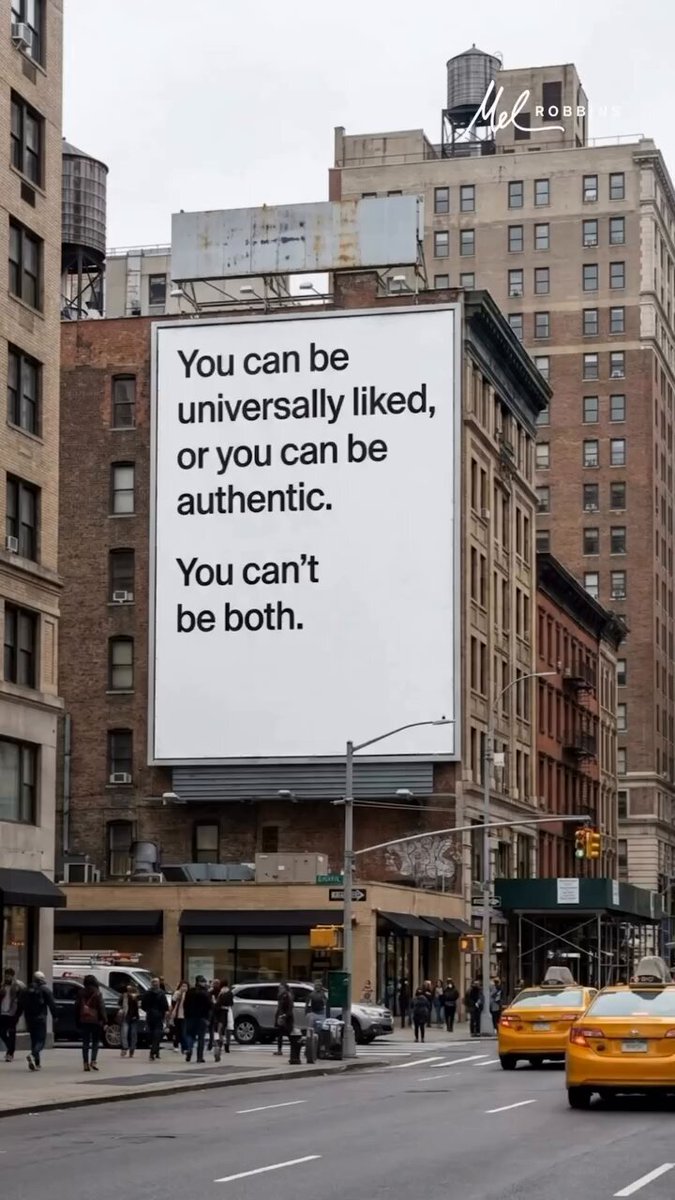
You have to decide what matters more to you.
2