
2,529 Photos and videos







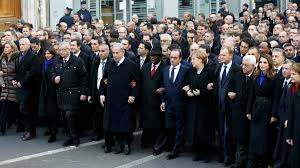






Felicitation au #MajorGerald notre nouveau premier ministre !
Ah non, on m'informe que ce n'est pas lui.
Pour les decus, ca devrait vite arriver quand meme
#VaFalloirYAller #PartieRemise #MaintenantOuJamais

1
1
15
17,302
Sam 8917 retweeted

🚨🇬🇧 All these incidents have occurred in recent days.
One reported death, a 5 year old kid & young boy severely injured/impaled.
The UK Police want you to see how they will treat you for putting a single foot out of line (but only if you’re White that is) ‼️ x.com/liz_churchill10/status…
481
6,671
12,786
132,504
Sam 8917 retweeted

Jun 14
Policja w Wielkiej Brytanii przebiła wszytko to, o czym czytaliście u George Orwell'a. Policjantka: "Patrzyłyśmy na ciebie przez parę minut i jeśli jesteś w parku, ale nie siedzisz na ławce, albo nie czekasz na kogoś... chcemy wiedzieć, co tu robisz".
2,722
11,286
39,196
1,719,032

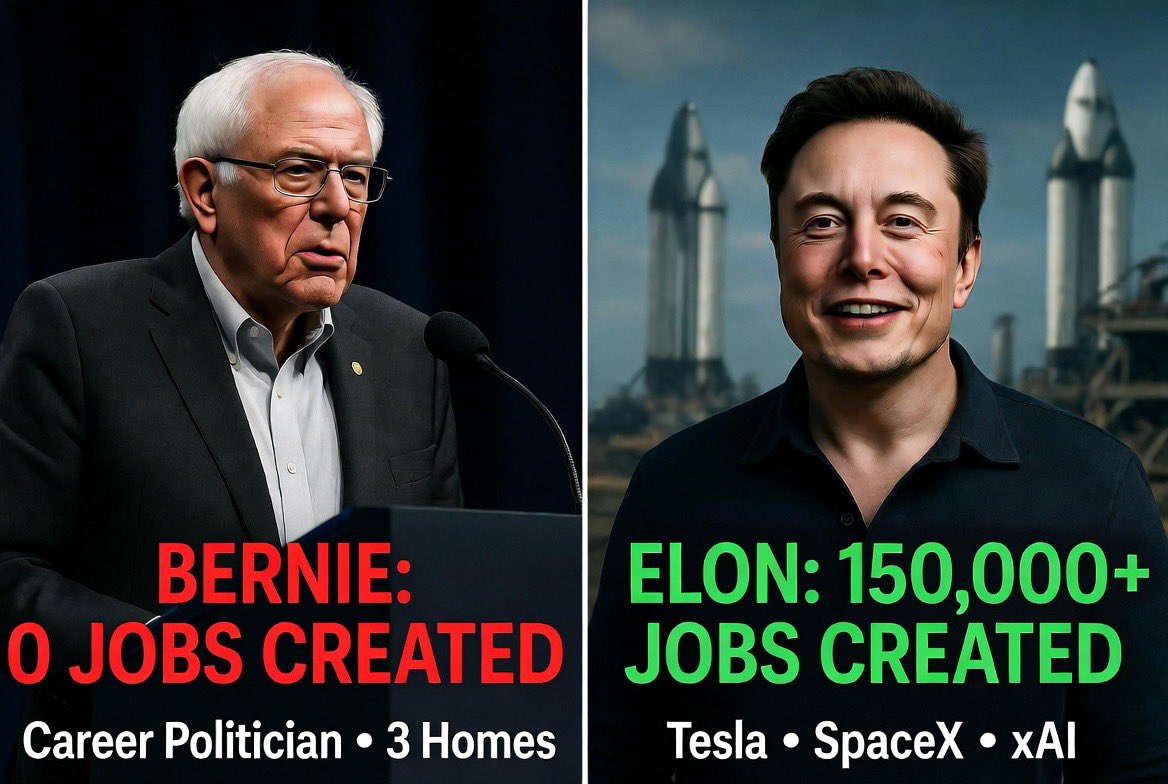
Bernie Sanders has never created a single private sector job in his life.
Career politician. Multimillionaire. Owns 3 homes.
Elon Musk’s companies have created over 150,000 direct jobs worldwide and counting.
Guess which one the media worships?
143
1,359
4,276
38,628
Sam 8917 retweeted

Jun 12
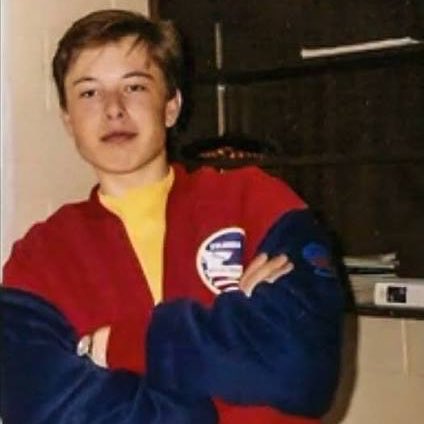
The first trillionaire in human history
- Elon Musk
- Born in South Africa
- Bullied relentlessly as a kid
- Immigrated to North America
- Arrived with a backpack and a dream
- Built Zip2 with his brother
- Sold it 4 years later for $300 million
- Co-founded PayPal with the profits
- Revolutionised digital payments
- Sold PayPal to eBay for $1.5 billion
- Bet everything on Tesla and SpaceX
- Got mocked for electric cars
- Got laughed at for reusable rockets
- Nearly went bankrupt in 2008
- Kept building anyway
- Turned Tesla into the world’s most valuable automaker
- Made EVs mainstream and transformed the automotive industry
- Made reusable rockets a reality
- Reduced the cost of reaching space by 95%
- Sparked the modern commercial space race
- Built Starlink and connected millions around the world to high-speed internet
- Turned SpaceX into the most valuable private company in history
- Bought Twitter for $44 billion
- The world said he overpaid
- He was called reckless, stupid & crazy
- Advertisers fled, media declared it dead
- Critics called it the worst acquisition in tech history
- Renamed it 𝕏
- Rebuilt the platform anyway
- Turned it into one of the most influential platforms on Earth
- Launched xAI and accelerated the global AI race
- Sent astronauts to space
- Is trying to get humans to mars
- Created millions of jobs
- Generated hundreds of billions in value
- Inspired an entire generation of builders
Before:
- Failed repeatedly
- Worked insane hours
- Slept in factories and offices
- Got bullied, laughed at and mocked
- Constantly told “it’s impossible”
- Kept building anyway
- Made it possible
Today:
- Richest person on Earth
- First trillionaire in human history
- Largest IPO in history $1.77 trillion
Most people quit when the world laughs at them.
Elon Musk built the future instead.
Love him or hate him…
Nobody has changed more industries in a single lifetime.
Payments. Cars. Energy. Space. Social Media. Communications. AI.
History won’t remember the people who said it couldn’t be done.
It will remember the people who did it anyway.
Congratulations Elon.
The first trillionaire. 🚀

4,396
28,843
112,196
2,400,834

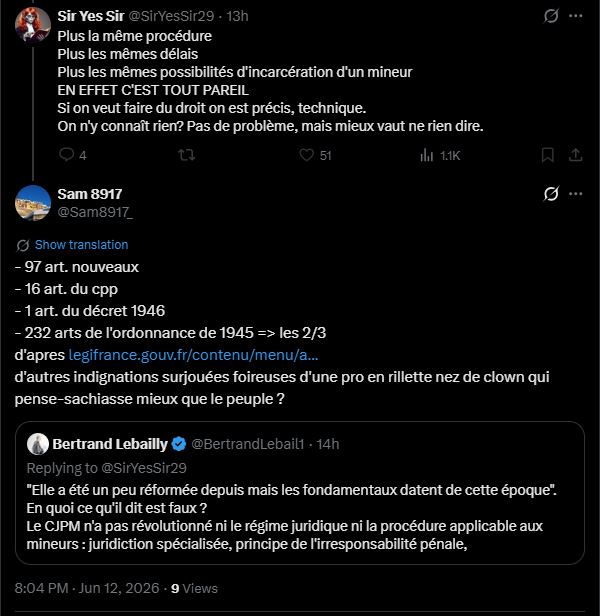
pour plus de lisibilité, on se souvient du mode de fonctionnement de la starlette
x.com/Sam8917_/status/206549…
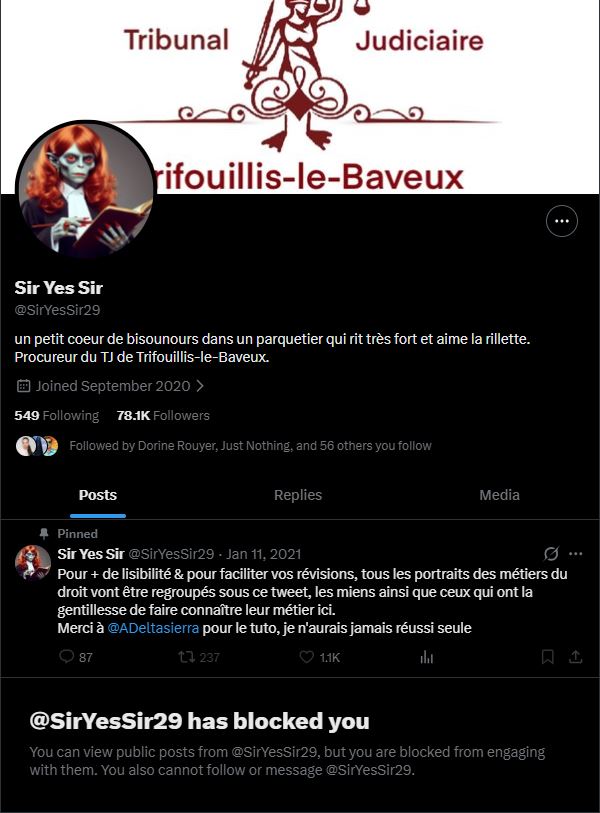

entierement d'accord. reflechissez davantage ou taisez vous plus souvent
la justice est pas un passe-plat au service de votre ego ou un defouloir au service de votre laxisme
1
1
81
ce genre de syllogisme ?
x.com/Sam8917_/status/206549…
entierement d'accord. reflechissez davantage ou taisez vous plus souvent
la justice est pas un passe-plat au service de votre ego ou un defouloir au service de votre laxisme
1
1
199
- 97 art. nouveaux
- 16 art. du cpp
- 1 art. du décret 1946
- 232 arts de l'ordonnance de 1945 => les 2/3
d'apres legifrance.gouv.fr/contenu/m…
d'autres indignations surjouées foireuses d'une pro en rillette nez de clown qui pense-sachiasse mieux que le peuple ?
x.com/BertrandLebail1/status…

"Elle a été un peu réformée depuis mais les fondamentaux datent de cette époque". En quoi ce qu'il dit est faux ?
Le CJPM n'a pas révolutionné ni le régime juridique ni la procédure applicable aux mineurs : juridiction spécialisée, principe de l'irresponsabilité pénale, atténuation des peines, primauté à l'éducatif, césure du procès pénal... Le CJPM, c'est, pour l'essentiel, l'ordonnance de 1945 codifiée.
1
63
Sam 8917 retweeted

Jun 11
Je suis très sérieux. Je pense qu’à terme, il faudra confier le boulot de juge à une IA.
91
135
668
11,322
Pas la cour des comptes, la courtisane macrono-compatible Najat Vallaud-Belkacem, presidente de France Terre d'Asile
- 10000€/mois a france terre d'asile
- 10000€/mois a la cour des compte
pourquoi s'arreter la ? il manquait le trafic d'influence
x.com/Guigz75116/status/2056…
May 18

Najat Vallaud-Belkacem arpente le tapis rouge à Cannes pendant que des milliers de Français galère, c’est le sommet de la bien-pensance contemporaine.
On est présidente d’une ONG d’accueil des réfugiés, on donne des leçons d’égalité et de lutte contre la pauvreté… et on choisit le Festival de Cannes pour le faire. Talons hauts, brushing parfait, sourires photogéniques. Parce que visiblement, la misère se combat mieux avec vue sur la mer et buffet à volonté.
C’est beau, la gauche caviar : on critique le capitalisme en sirotant du Dom Pérignon, on défend les plus faibles en fréquentant les plus forts, et on contrôle les comptes publics tout en profitant du système qu’on est censé auditer.
La bien-pensance n’est pas une idéologie, c’est un mode de vie. Un entre-soi confortable où les bonnes intentions valent absolution, et où le symbole compte plus que le résultat.
Pendant ce temps, la France réelle additionne les fractures. Mais chut… on est en mission humanitaire sur la Croisette.
#BienPensance #Cannes2026 #ÉlitesDéconnectées #GaucheCaviar
2
6
7
308
Sam 8917 retweeted

Jun 11
Il faut être aveugle pour ne pas voir le totalitarisme se déployer.
Jun 11

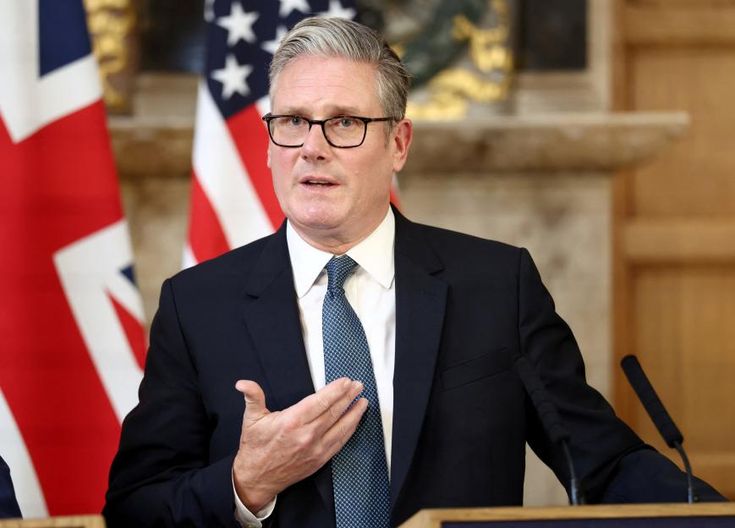
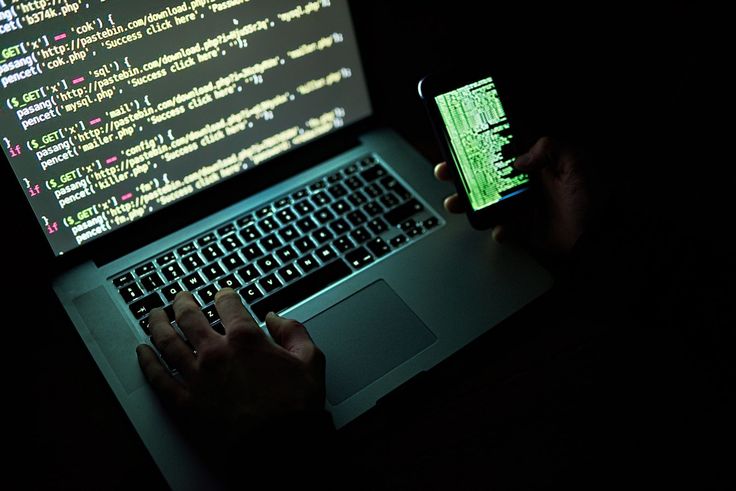
BREAKING: The UK is drafting a law to scan every photo, video and message on every phone in the country.
Tech CEOs who refuse to implement this could face up to 5 years in prison.
The proposal would force companies to build device level scanners that inspect content before encryption.
That means:
• Every image scanned
• Every message inspected
• Every video analyzed
All directly on your phone.
Governments and companies pushing these safety” systems already have a terrible track record protecting user data.
Last month, Europe’s new age verification app, promoted as a way to "keep children safe," was hacked in under 2 minutes.
In another case, over 70,000 IDs and selfies linked to online verification systems were exposed in a major breach.
Now the UK wants even deeper access directly inside your device.
Once governments force surveillance tools into every phone, they can expand what gets monitored at any time.

22
494
2,164
50,555
RT @CordierAlice2: Voilà ce qu’un migrant soudanais a fait à un irlandais.
Voilà pourquoi l’Irlande s’embrase depuis hier.
Il a tenté de…
5,516
les chinois espionnent 🇬🇧en utilisant des triades operant des reseaux de prostitution, de blanchiment et de de traffic de cannabis et de tabac
🇨🇳passager pdt la meth 🇨🇦 operé par les narcolatino et le hezb
bientot en biz avec la dz mafia ou la mocromafia ?
dailymail.com/news/article-1…
61
Sam 8917 retweeted

An American who worked for Beijing state media pleaded guilty on Thursday to acting as an unregistered agent of China in helping obtain secrets for the Chinese intelligence service. trib.al/9fNzs0R
2
5
8
590
Sam 8917 retweeted

May 14
US citizen convicted of running secret Chinese 'police station' in NYC bbc.in/4wu7uyA
226
1,878
4,199
358,894
Sam 8917 retweeted

France et d'autres pays durcissent le ton face à Pékin, accusant la surproduction chinoise de fragiliser davantage l'économie européenne. l.euronews.com/DXCW
1
2
4
385
Sam 8917 retweeted

La Commission 🇪🇺 inflige une sanction de 200 millions € à la plateforme #Temu pour manquement au #DSA
ec.europa.eu/commission/pres…
1
306
Sam 8917 retweeted

Après les pratiques commerciales trompeuses, cette fois la DGCCRF sanctionne plusieurs manquements de Shein à l’égard des droits des consommateurs. Résultat : 22 millions d’euros d’amende.
Il y a quelques mois, c’est la CNIL qui prononçait une amende record pour non-respect des règles d’utilisation des cookies. Et il y a une semaine c'est Temu qui était sanctionné à hauteur de 200 millions d'euros par la Commission européenne, pour manquement grave à ses obligations d'identification et de gestion des risques liés à la vente de produits illégaux sur sa plateforme.
Cette série de sanctions va dans le bon sens pour protéger le commerce français et faire respecter nos règles. Il en va de la protection des consommateurs et de la juste concurrence entre les acteurs. Les règles du jeu sont connues, elles doivent être respectées par tous.

7
16
1,586


The truth is that there are VASTLY more hate crimes, especially aggravated rape and murder, per person by Blacks against Whites than the other way around.
The is not remotely debatable, as the numbers are so extremely lopsided!
Jun 9

Last year DOJ published a report.
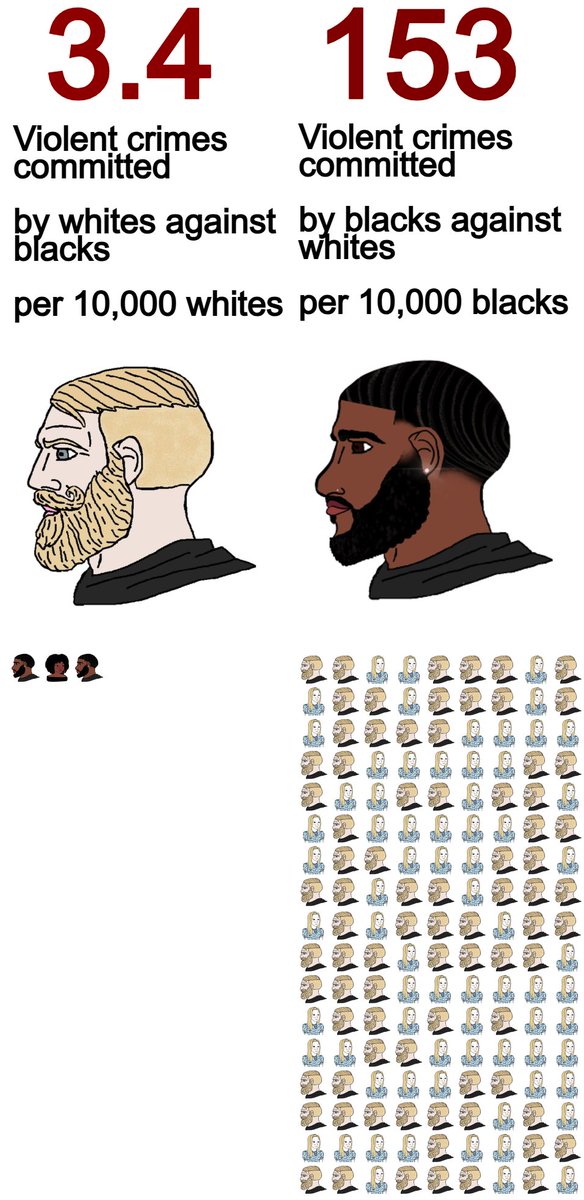
For every 10,000 blacks, 153 violent crimes are committed by a black person each year against a white person.
The same figure for violent crimes committed by whites against a black person: 3.4.
A black person is 50-times more likely to commit a violent crime against a white person than for a white person to commit a violent crime against a black person.
This is an extraordinary difference in the rates of violence committed between these two groups.
We are told that whites are systemically racist.
We are told that whites are successful because they oppress others.
But the facts tell the opposite story.
Blacks are not the ones being victimized.
Whites are.
Western civilization has been successful not because it was oppressive.
It has been successful because whites created, starting thousands of years ago, systems that are impartial and fair.
Today these systems are being dismantled.
Criminals are being released because of their skin color.
Law-abiding citizens are punished because of theirs.
All in service of an ideology that is simply false.
This puts everyone in danger.
12,782
51,684
264,590
15,645,309

The most spectacular economic miracle of the last 500 years occurred as food consumption dropped from 80% of income to 3%. Your ancestors spent virtually every waking hour and every earned dollar feeding their families. Today you casually toss organic blueberries into your cart without checking the price.
This transformation didn't happen because governments subsidized agriculture or bureaucrats planned better crop rotations. It happened because private property rights allowed farmers to capture the full value of their innovations, spurring relentless productivity gains.
Consider what free markets accomplished: wheat yields per acre increased 10-fold since 1800. Corn production exploded 6-fold per acre since 1930. The price of basic foodstuffs, adjusted for wages, fell by 90% over two centuries. Each breakthrough, from the steel plow to hybrid seeds to GPS-guided tractors, emerged from entrepreneurs risking their own capital to solve real problems.
The profit motive drove farmers to maximize output while minimizing inputs. No central planner could coordinate the millions of decisions required: which seeds to plant, when to harvest, how to transport goods, where to build storage facilities. Market prices transmitted this information instantly across the globe, connecting Iowa corn farmers to Tokyo consumers without a single bureaucrat involved.
Politicians love claiming credit for "feeding America" through agricultural subsidies and price supports. Yet these interventions consistently reward inefficiency and punish innovation. The real heroes remain the anonymous farmers and inventors who transformed scarcity into abundance by following price signals rather than political directives.

75
409
1,286
55,195