
HS Math & Science teacher | Math & Science education consultant | CogSci | Here to learn.
Joined April 2012
- Tweets 4,748
- Following 1,361
- Followers 586
- Likes 14,965
327 Photos and videos





Sam Altarac retweeted

Jun 11
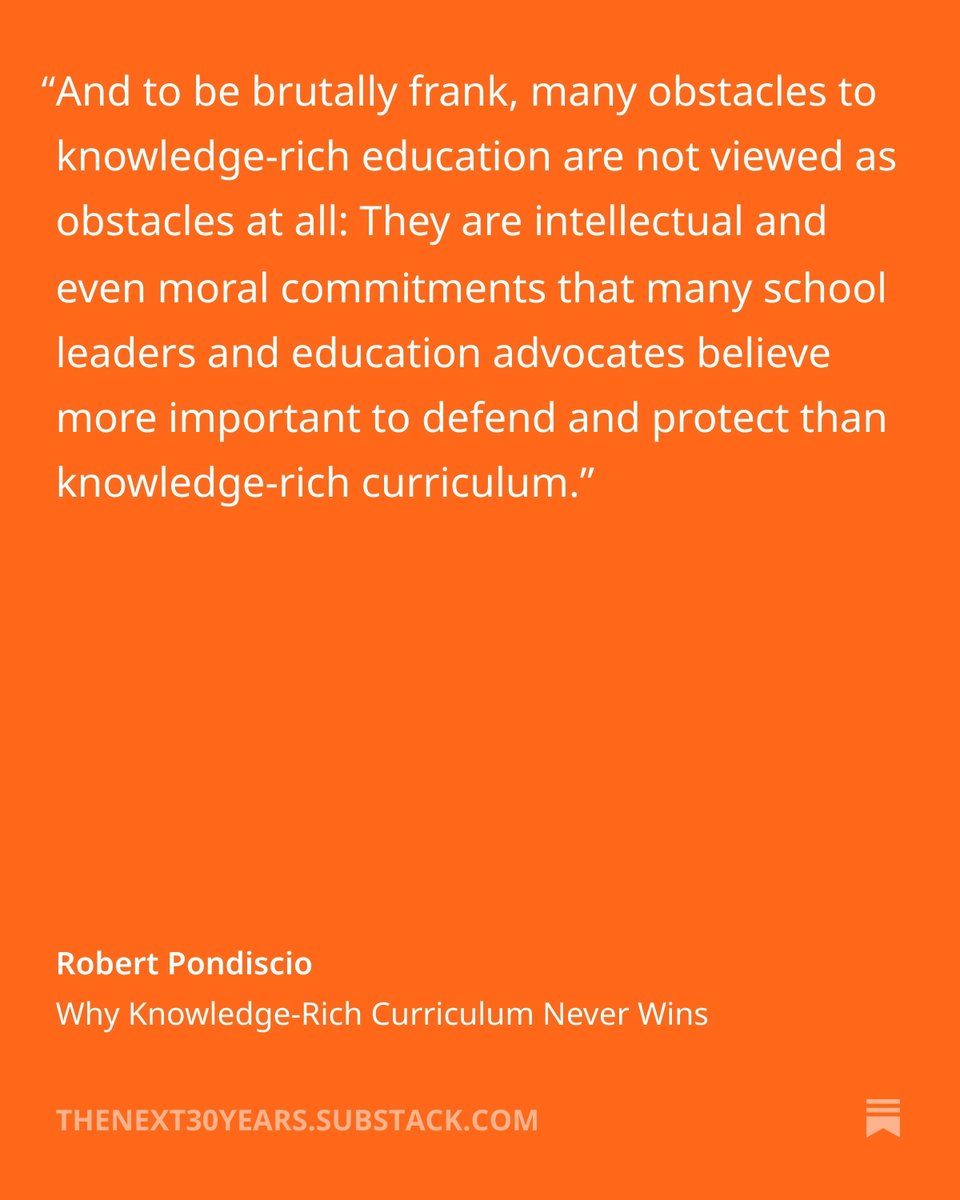
Advocates for knowledge-rich curriculum often speak as though the evidence is finally on their side, and it is. But evidence was never the obstacle. The obstacles are ideological, professional, structural, and political. Many are deeply embedded in the culture of education and in American society itself.
thenext30years.substack.com/…
6
25
69
17,124
Sam Altarac retweeted
Jun 8
Inquiry-based dentistry.

Jun 8

Education is the only profession I know of in which a large proportion of its workers ("child-centered" progressives) are opposed to doing the very thing they are supposed to do (actively passing on knowledge and skills). There are no dentists opposed to teeth, no electricians who refuse to work with wires, no professional athletes averse to exerting themselves, no musicians who hate melody (well, actually, we may have few of those). But there is a whole segment of the teaching profession that is fundamentally against the active process of didactive instruction.
3
9
41
6,521
Sam Altarac retweeted

Why Writing by Hand Beats Typing (in 6 Charts)
Amazing! @edutopia got it just about right!
edutopia.org/visual-essay/wh…
2
40
131
9,888
Sam Altarac retweeted

Jun 1
Are we being lied to about Math instruction?
237d54fc-9a88-4753-8e4a-7bb9…

5
7
33
5,342
Sam Altarac retweeted

May 21
Mike Schmoker, influential school improvement author of *Focus* and *Results Now 2.0*, argues schools don't need more initiatives—they need fewer priorities executed with clarity and consistency. He advocates for three fundamentals: coherent curriculum, strong lesson design, and authentic literacy across subjects. His work critiques "initiative clutter" that dilutes instructional quality, urging schools to simplify and focus on high-payoff practices.
educationrickshaw.com/2026/0…

1
7
29
1,303
Sam Altarac retweeted

May 21
This is thoughtful, useful and probably important. Well worth reading.
May 21

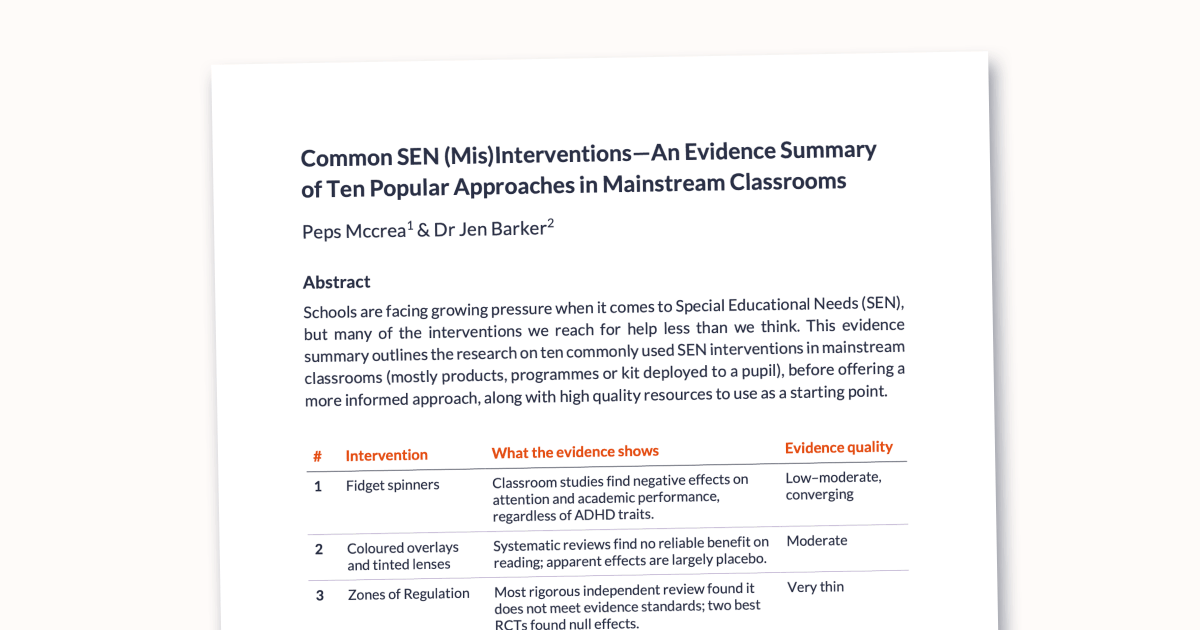
🚨New paper released today:
10 Common SEN Mis(Interventions)—An Evidence Summary
steplab.co/news/common-sen-m…
Supporting students with Special Educational Needs (SEN) is a vital and growing challenge for schools. But it’s not straightforward. Learning is complex, marketing claims are confident, and the evidence is often hard to access. As a result, we can sometimes end up adopting approaches which are less effective than we initially think.
For some, this may well be uncomfortable reading. As a profession, many of us have put time, effort and belief into these things, and lots will have seen students who looked like they were getting something from it. However, it’s essential that we temper our intuition with evidence, because ultimately: our most vulnerable students deserve it.
This new paper co-authored with @Barker_J is an attempt to raise the visibility of the best available evidence around several commonly used SEN interventions. For each, we provide an overview of what the research says, offer a more informed approach, and provide a suite of rigorous links to help you get started.
We hope it will serve as a useful resource and over time: push us to be even more 'evidence demanding' as a profession.
As ever, let me know what you think. If you have pushes or suggestions for how this paper could be better, hit reply and give it to me straight.
👊
2
26
126
49,507
Sam Altarac retweeted

May 20
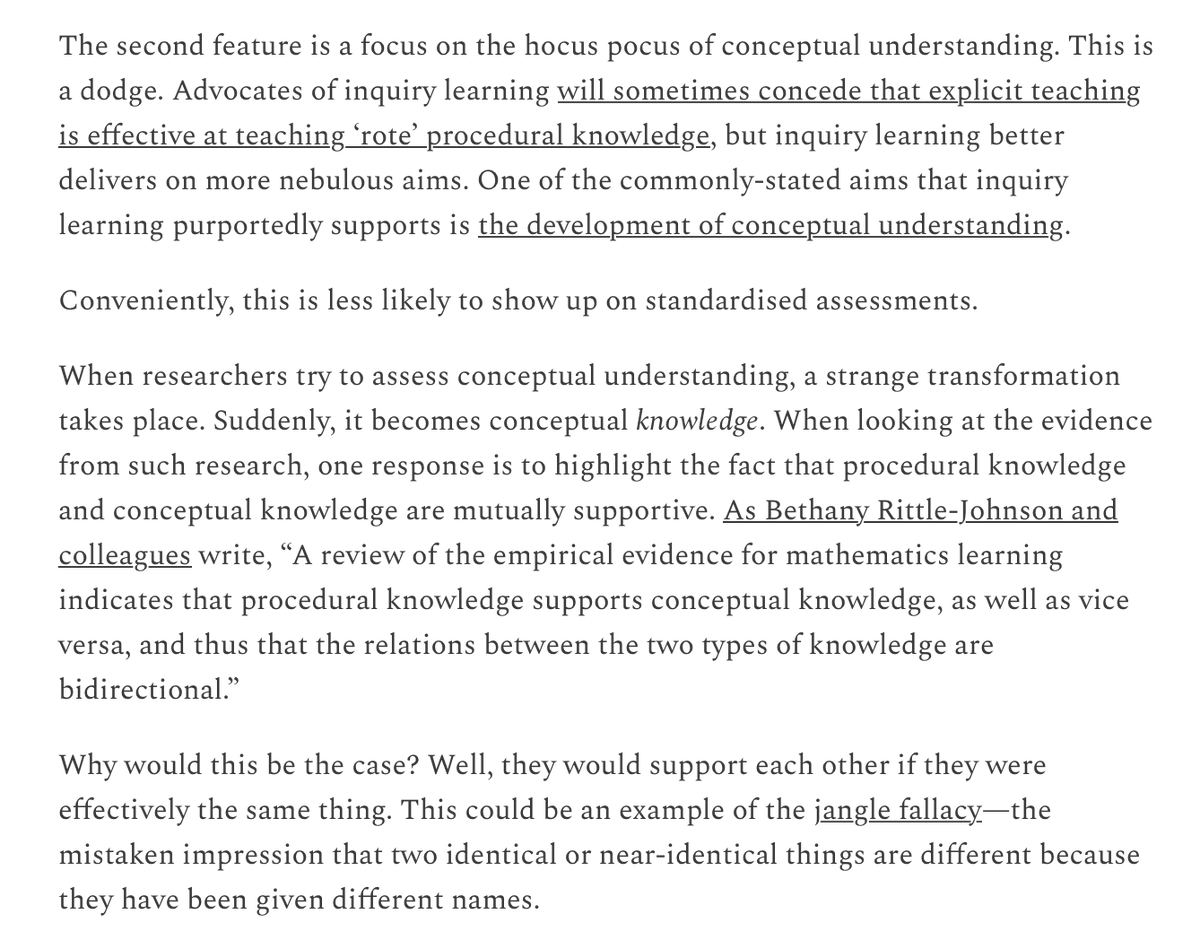
This is a must-read piece by @greg_ashman on "conceptual understanding"—the goal everyone claims but can't really define or measure. My definition: it's the thing students supposedly gain when taught using certain methods (e.g., inquiry, multiple strategies, productive struggle) that are otherwise ineffective. That's why arguments about it go nowhere.
The term is defined to be the outcome of a preferred teaching method so you're not debating evidence, you're debating something that's essentially defined to be the thing that everyone should want.
10
22
79
6,175
Sam Altarac retweeted
May 20
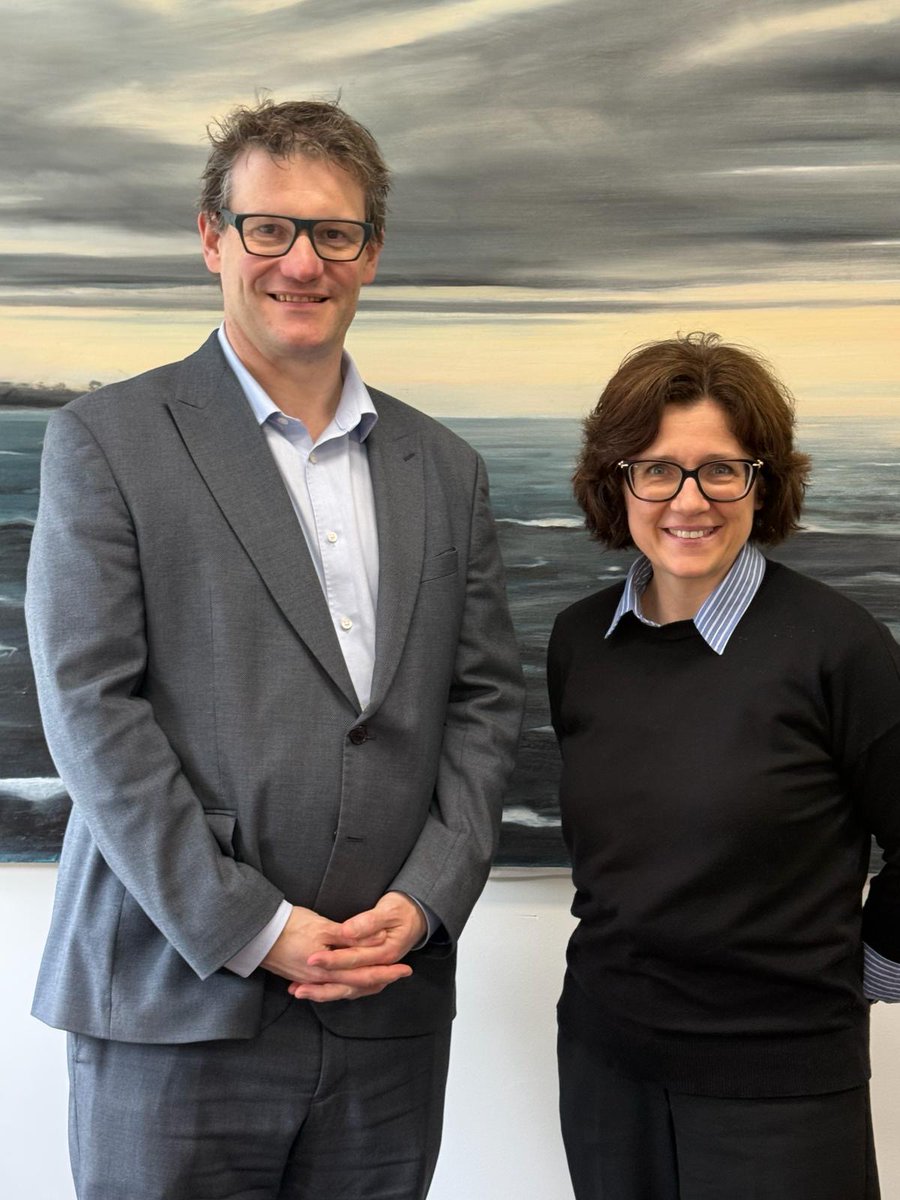
What a pleasure to finally meet Greg Ashman in person! I’ve been a longtime admirer of his work. It was an incredible experience to visit his amazing school in Ballarat to learn about the outstanding work they're doing. Thank you @greg_ashman!

2
3
88
1,941
Sam Altarac retweeted

4 Apr 2025
Absolutely. It's about inclusion. It's saying to every student, you belong. You are a full member of this learning community. And I need to hear from you so that my decisions reflect the needs of everyone in the group.
9
26
144
17,876
Sam Altarac retweeted
May 6
Ideology aside, mixed-ability classrooms don't work because they place an undue burden on teachers to "differentiate instruction." A lovely idea but almost impossible to do effectively. Someone's time gets wasted, goes unchallenged, or left further behind.

Another progressive education myth has been demolished - The evidence is now overwhelming: selecting children by academic ability works.
Nick Gibb
As a qualified teacher with years in the classroom, this has been obvious for decades. The EEF study confirms what we saw daily: setting by prior attainment works.
High-attainers make 2 months more progress, disadvantaged pupils are not harmed, and mixed-ability classes often pitch lessons to the bottom; limiting stretch for everyone. Time to move on from the old mixed-ability ideology.

21
30
181
9,501
Sam Altarac retweeted

I was supposed to be working on a presentation for explicit science instruction but got distracted and started working on about three posts about NGSS. Here is one of them! 🥼🔬👩🔬
Link below ⬇️

3
4
12
1,748
Sam Altarac retweeted

27 Aug 2023
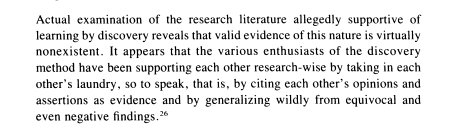
Ouch. Ausubel was utterly brutal on discovery learning.
13
63
162
33,006
Sam Altarac retweeted
Apr 23
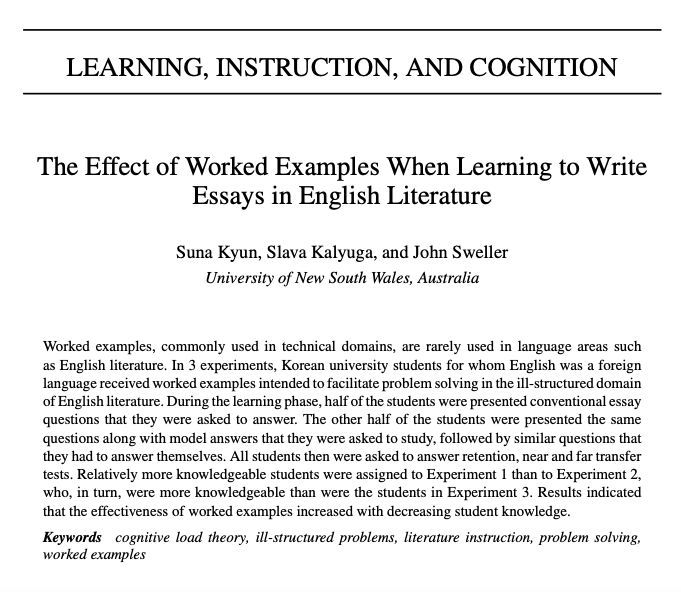
I was curious to see what this paper by Kyun, Kalyuga, and Sweller said about using worked examples to teach literary essay writing, and the biggest takeaway is simple: show complete model essays way more often during whole-class instruction. The research found that studying full examples actually reduces mental overload for struggling students—it's not "giving away the answer," it's teaching them what good writing looks like.
Display 2-3 complete model responses to the same prompt on the board and have the whole class annotate them together. Show multiple strong responses that take different positions on the same text, then discuss what makes each one work—specific evidence, clear reasoning, good organization—even though they reach different conclusions. This teaches students what quality looks like across different interpretations, not just one "right" answer.
Right after studying examples together, assign a really similar practice task with the same text. The research showed students did best when the practice closely matched what they just studied. So if you analyze symbolism examples in Chapter 3 as a class, have everyone immediately practice symbolism in Chapter 5—not characterization, not a different book. Transfer takes forever, so you need way more repetition with similar tasks before expecting kids to apply these skills elsewhere. tandfonline.com/doi/abs/10.1…

16
54
3,107
Sam Altarac retweeted

Apr 18
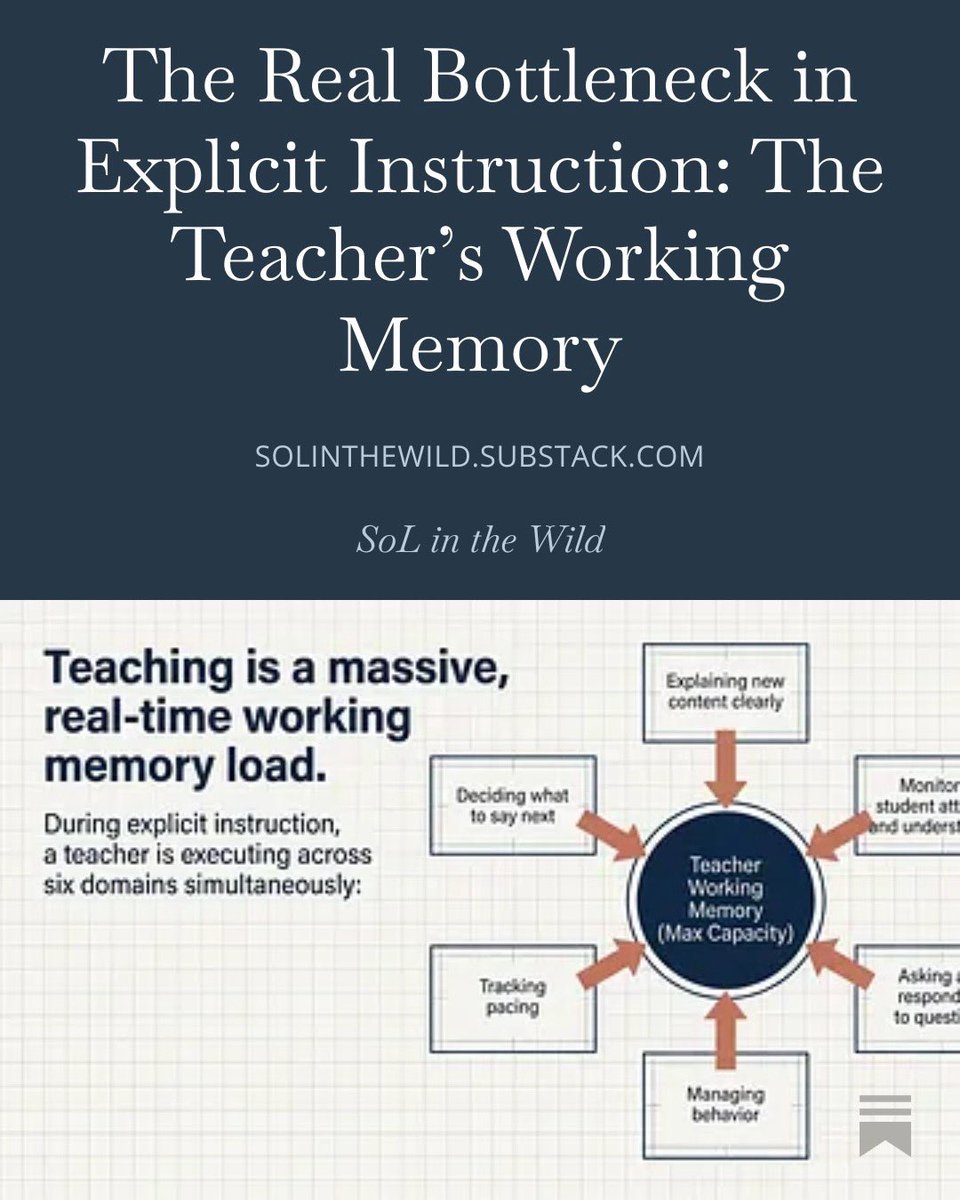
When things go a little sideways during my lessons, it’s usually not my students’ working memory getting overloaded. It’s mine.
Too many decisions. Too much to manage in the moment. It’s like a tidal wave you can feel building in your brain. But…
Offloading in advance, “proceduralizing” as much of a lesson as possible, and maintaining consistent routines has made a huge difference for my cognitive load—and by proxy has improved student outcomes.
Here’s how I optimize my own cognitive load. 📖🧠👇
6
41
171
21,602
Sam Altarac retweeted
Apr 13
Just wrong. Working out who the more effective teachers are is not just hard. It is in principle impossible, since every teacher builds on the foundations laid by her predecessors.
17
18
162
11,573
Sam Altarac retweeted
Apr 12
This study seems to point towards something which has bothered me for a long time: the idea that metacognition may be more of a byproduct of learning rather than a driver of it. link.springer.com/article/10…
10
34
216
14,357
Sam Altarac retweeted
Apr 5
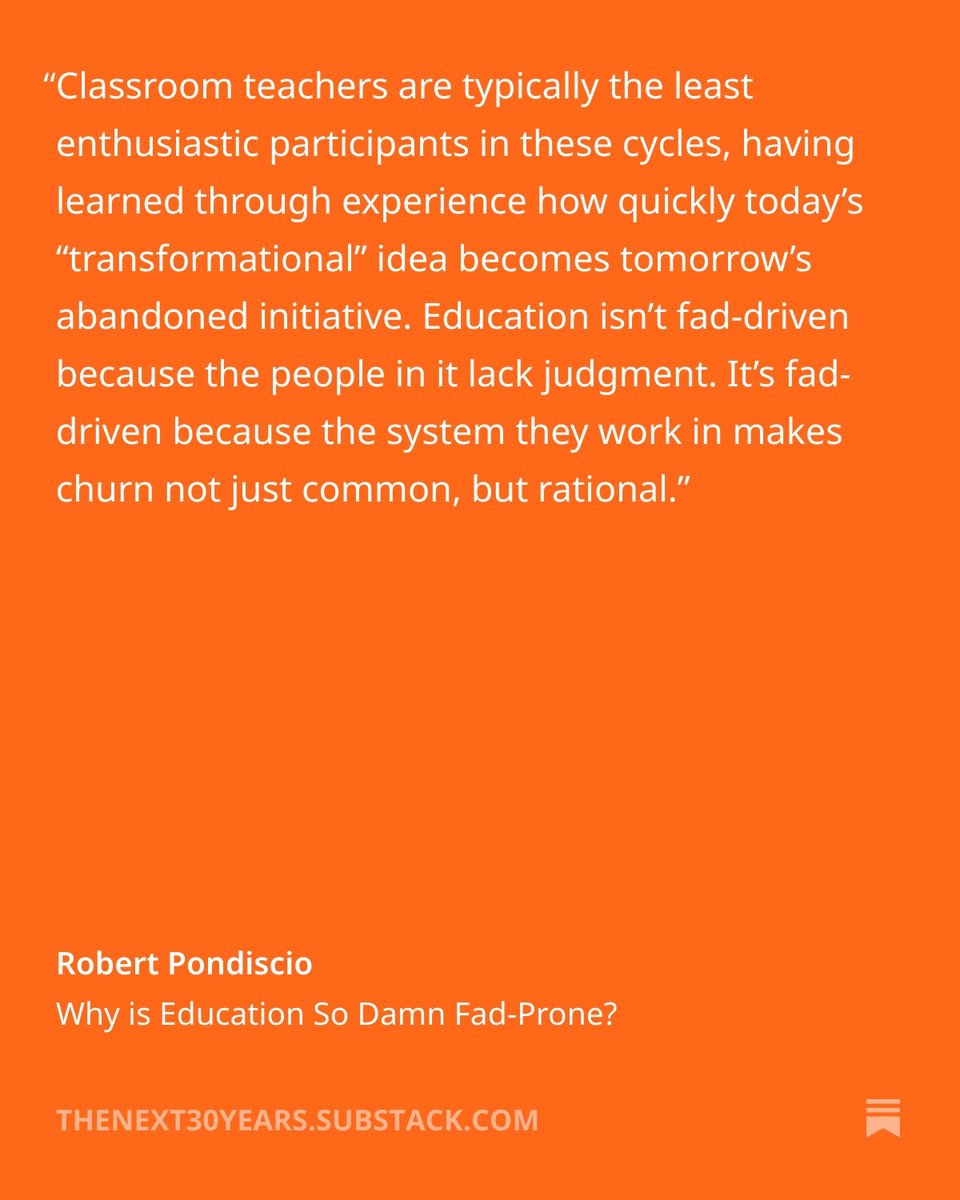
Why is education so damn fad-prone? My latest looks at our field's worst habit: its endless enthusiasm for shiny new things instead of sticking with what works.
thenext30years.substack.com/…
9
26
105
22,121
Sam Altarac retweeted
Apr 7
If you teach anyone at all, and you don't know about @helenrey's CogSci book summaries, you are missing out. It's a wonderful resource summarizing the most important books on cognitive science: bit.ly/3Q7dEnG
4
126
521
41,811
Sam Altarac retweeted
Apr 6
I used to think that cognitive load theory explains 90% of the problems we have in teaching and learning. I no longer think that.
It's 99%.
Apr 6

Reflecting on the multiple-strategy approach to teaching basic math operations: it creates confusion & cognitive overload, but it also comes with an opportunity cost. If so much time is spent on multiple strategies, when do students actually become fluent with any one of them?
8
28
202
13,407
Sam Altarac retweeted
Apr 4
We're actually at the high-water mark of admitting this. Just substitute "Hirsch was right" any time someone says "knowledge-rich curriculum" (its advocates tend not to acknowledge or are ignorant of their debt to Hirsch). But the hurdles to effective implementation remain high.

I wish the educational system would just admit that E.D. Hirsch was right and then structure the curriculum accordingly.

3
20
93
5,376