
Joined December 2017
- Tweets 3,047
- Following 563
- Followers 75
- Likes 4,365
183 Photos and videos






Pinned Tweet

9 Sep 2023
Do you like independent research? Are you a fan of existential short fiction? Do you wish to support queer creators AND get extra content in the process?
Then please consider supporting my patreon!
patreon.com/SamRandom13?utm_…
#WritingCommunity #independentresearch #transartist
3
3
192
1 Jun 2025
New premium blog up! Today I am sharing a sample from my lore book project for my homberew D&D setting, super exited to share this with everyone! #D&D #D&D5e #Homebrew #Patreon #Indiewriter
patreon.com/posts/umvelon-sa…
17
5 May 2025
ko-fi.com/s/1e6c2e2b22
Sending this again, could really need some help with paying the bills this month!
#essay #indiewriting #donation
1
20
1 May 2025
I have added a collection of essays for sale ok Kofi. Really struggling financially so this is a way for me to try and catch up with food and bills!ko-fi.com/s/1e6c2e2b22
#essay #writing #liminalspace #Fundraise
2
31
20 Apr 2025
I have been writing on so many things lately, hoping to show them off soon. As always will the high tier patrons get a fre copy of anything I publish!
patreon.com/SamRandom13?utm_…
9
23 Jan 2025
Just uploaded a new version of my text adventure to my kofi and my patreon!
More essays are on the way as well!
patreon.com/posts/120402...
Please consider becoming a patron if you want to support independent essay and fiction writing!
#indiewriter #transwriter #textadventure
19
Sam Random retweeted

29 Dec 2024
Y’all are amazing - $10,270 raised by78 donors so far! Just 78 people!! We can’t help but wonder what we could do if our 4,800 followers here each gave $20. We could hire 4 interns and a needed, full time staff person! We’re just over halfway to our goal. Please donate and share!
2
35
142
2,233

it is a Fractionating Collumn which aids in separation of mixtures where components have different boiling points, the fractionating column then helps in separating the components more effectively than simple distillation. When the Mixture is heated vapor rises up from the column, and the liquids with lower boiling points vaporize first, which then triggers condensation and re-vaporization.
As the vapor travels up the column, it cools and partially condenses due to the temperatures within the column. This condensation then flows back down, interacting with the rising vapor. This process is known as reflux, which increases the efficiency of separation by providing multiple opportunities for vapor-liquid equilibriums to occur. This results in further separation of the components... The more stages (or theoretical plates) a column has, the better its separation efficiency.
41
11
424
23,442
29 Dec 2024
Hi everyone! I am in a bit of a crisis! I am still on 75% of my sick leave due to my dr dragging his feet, am down to 40 dollars and could really need some help!
Subbing to my Kofi or donating to my gofund me would be a true lifesaver!
#urgenthelp #kofi #patreon
1
18
29 Dec 2024
5
44
Sam Random retweeted

17 Dec 2024
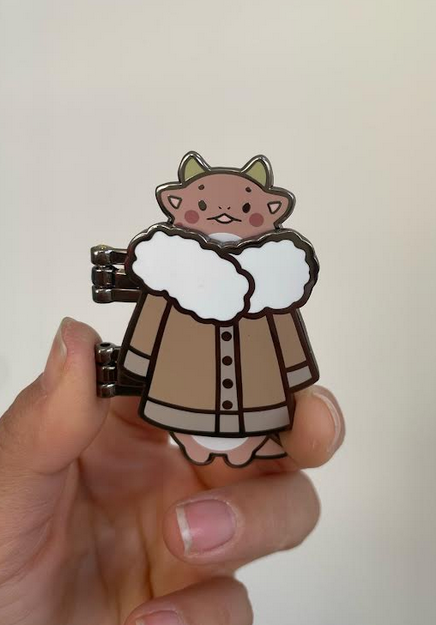
Got a very important manufacturer update to share today!
4
46
350
6,437
Sam Random retweeted

16 Dec 2024
Visibility checking. Are my moots catching this, or is my account/content just that cooked?
Figured it'd help to check, as I may have to decide how to make lemonade out of lemons with this account
4
2
15
513
5 Dec 2024
I started a gofundme to help me finish my first novel. So if you like the things I write, consider donating! gofund.me/5678281d
#indieauthor #transfem #queerwriter
1
1
2
85
14 Nov 2024
Ey I guess patreon gifting is a thing now, so wanna give somoene a terrible christmas gift? Now you can! patreon.com/SamRandom13/gift
2
1
132
Sam Random retweeted

22 Sep 2024
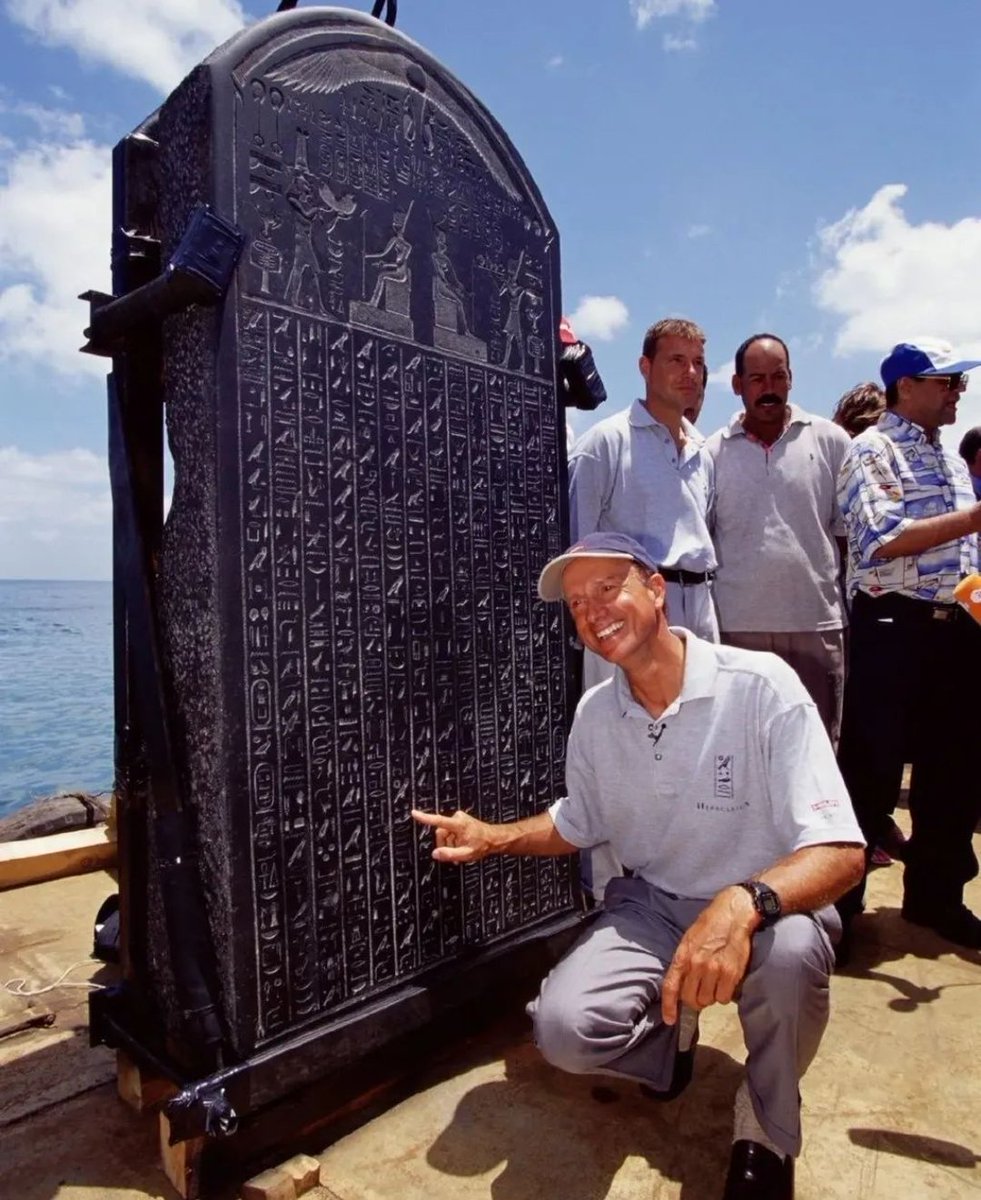
In ancient times, the city of Thonis-Heracleion, known in modern tiles as the lost kingdom of Cleopatra served as a gateway to Egypt. Today, this mysterious legendary city is submerged in Egypt’s Aboukir Bay, near Alexandria, Egypt.
Why the city sank remains a mystery, but it was swallowed by the Mediterranean Sea and has been buried in sand and mud for more than 1200 years... New amazing underwater discoveries allow archeologists to piece together clues and to create an image of what life was like in the ancient city. Known as Heracleion to the ancient Greeks and Thonis to the ancient Egyptians the city was rediscovered in 2000 by French underwater archaeologist Dr. Franck Goddio and a team from the European Institute for Underwater Acheology (IEASM) after a four-year geophysical survey. “Prior to its discovery in 2000 by the IEASM, no trace of Thonis-Heracleion had been found.
Its name was almost razed from the memory of mankind, only preserved in ancient classic texts and rare inscriptions found on land by archaeologists. Greek historian Herodotus (5th Century BC) tells us of a great temple that was built where the famous hero Herakles first set foot on to Egypt. He also reports of Helen’s visit to Heracleion with her lover Paris before the Trojan War. More than four centuries after Herodotus’ visit to Egypt, the geographer Strabo observed that the city of Heracleion, which possessed the temple of Herakles, is located straight to the east of Canopus at the mouth of the Canopic branch of the River Nile,” Dr. Frank Goddio writes on his website. As we have previously seen in our article Lost Kingdom Of Cleopatra – An Amazing Egyptian Underwater City scientists believe that the entire city was completely submerged, along with all the artifacts, statues, columns and other beauties of the palace of Cleopatra.
Several of the submerged artifacts remained largely intact. Amongst the discoveries were the foundations of the palace, shipwrecks, red granite columns, and statues of the goddess Isis and a sphinx. Among the massive limestone blocks toppled in the fourth century was a huge quartzite block with an engraving of a pharaoh. An inscription indicates it depicts Seti I, father of Ramses II. Divers also discovered a colossal stone head believed to be of Caesarion, son of Cleopatra and previous lover Julius Caesar, and two sphinxes, one of them probably representing Cleopatra’s father, Ptolemy XII. Researchers believe that the city was a central area used as a customs hub where trade coming from Greece and other places in the Mediterranean entered Egypt.
“The site has amazing preservation. We are now starting to look at some of the more interesting areas within it to try to understand life there,” said Dr. Damian Robinson, who is working on the site and is director of the Oxford Center for Maritime Archaeology at the University of Oxford.
“We are getting a rich picture of things like the trade that was going on there and the nature of the maritime economy in the Egyptian late period. There were things that were coming in from Greece and the Phoenicians.”
“It is a major city we are excavating,” Robinson said.
Everyone who finds underwater archeology a fascinating subject can now look forward to Dr. Giddo’s new documentary that will highlight the major discoveries that have been unearthed at Thonis-Heracleion during a 13-year excavation.
📷 : French Marine archaeologist Frank Goddio explains text on the stele of Heracleion on a barge in an Alexandria naval base June 7, 2001.
#archaeohistories
8
192
947
44,572
Sam Random retweeted

9 Sep 2024
Timeline showing the development of saddle technology in East Asia. The discovery of a 'true frame' saddle at Urd Ulaan Uneet (🇲🇳) suggests this technological advancement was key to the rise of Mongolian steppe cultures.
🔗 from 2023 🆓 buff.ly/3TeF6Q0
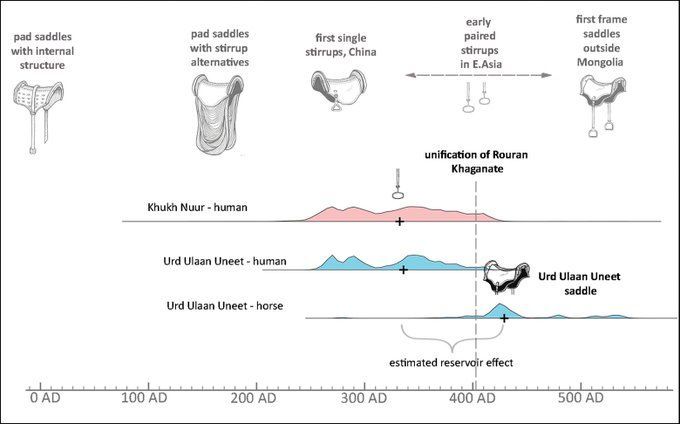
ALT Timeline from AD0 to after AD500, highlighting diagrams of different types of saddle in relation to when they were developed and calibrated radiocarbon date ranges (using the IntCal20 calibration curve) of archaeological saddles and stirrups.
7
16
1,386
Sam Random retweeted

9 Sep 2024
5
63
600
Sam Random retweeted
9 Sep 2024
📰 Roman fort discovered 7000 feet above sea level in the Swiss Alps!
#ArchaeologyNews via @PopMech
buff.ly/3XAQ4RC
2
4
20
1,347
Sam Random retweeted

9 Sep 2024
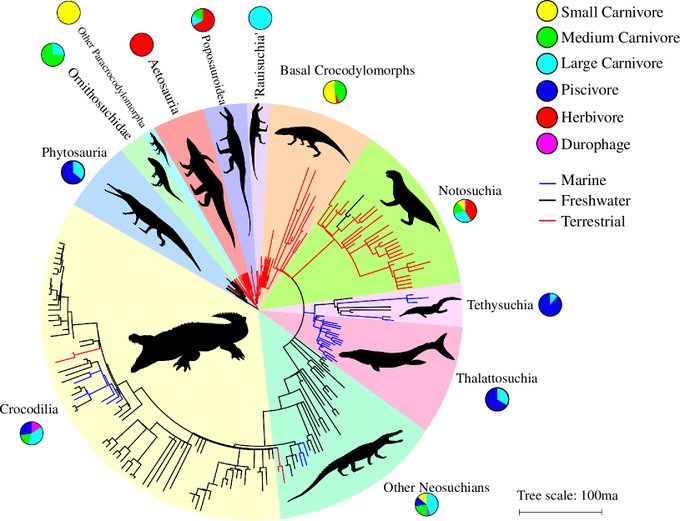
Widespread convergence towards functional optimization in the lower jaws of crocodile-line archosaurs ow.ly/FpCc50T7bCO #ProcB #Biomechanics #Evolution #Palaeontology
3
14
1,323

Sam Random retweeted

30 Aug 2024
the long awaited service eeveelutions 🩵

590
14,424
78,330
1,432,047