Evolutionary biologist — mate choice, sexual conflict, ornaments, social behavior — using theory, networks, natural history and (mostly) birds @IASToulouse
New paper out in @journal_evo ! 🥳
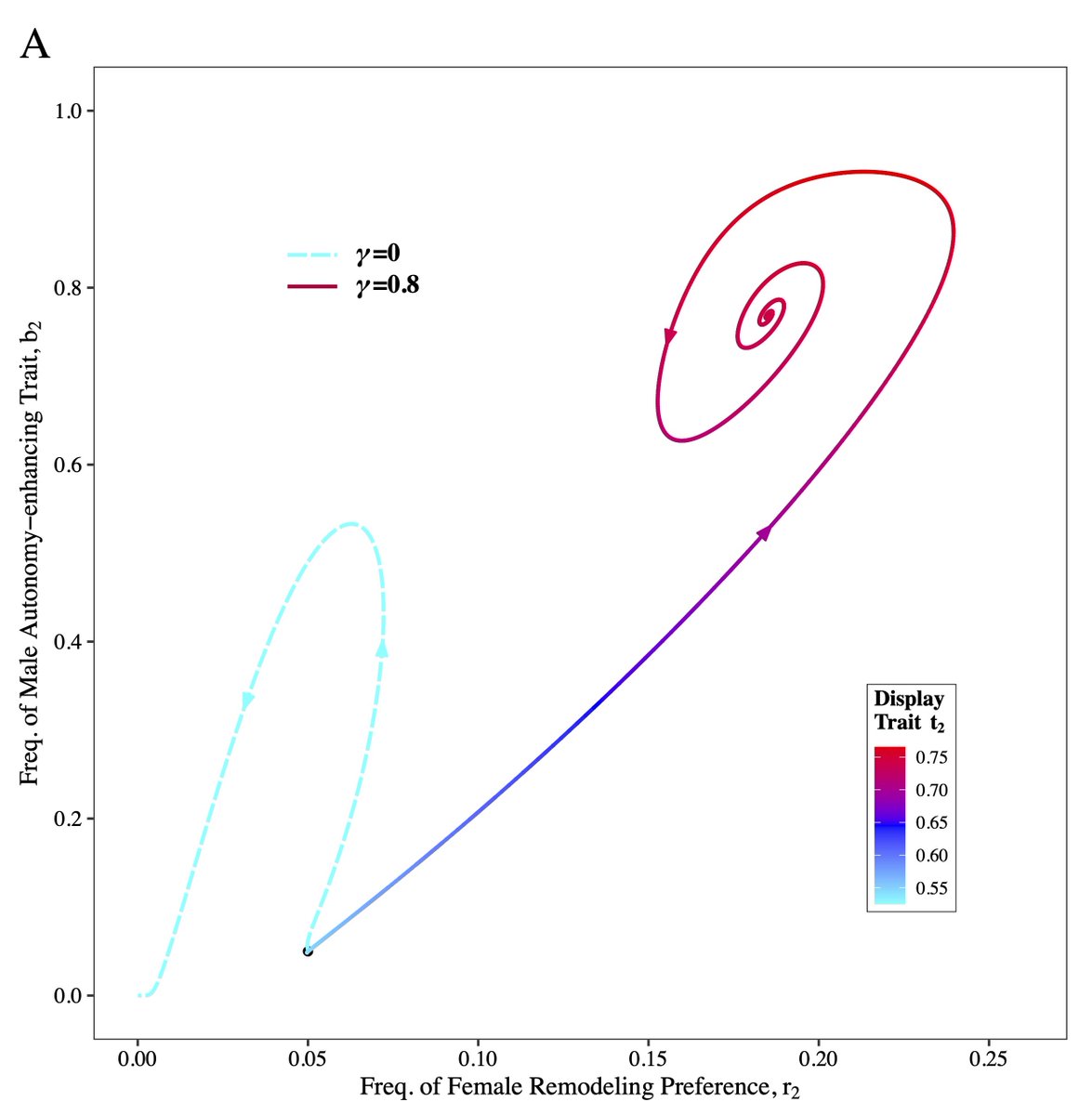
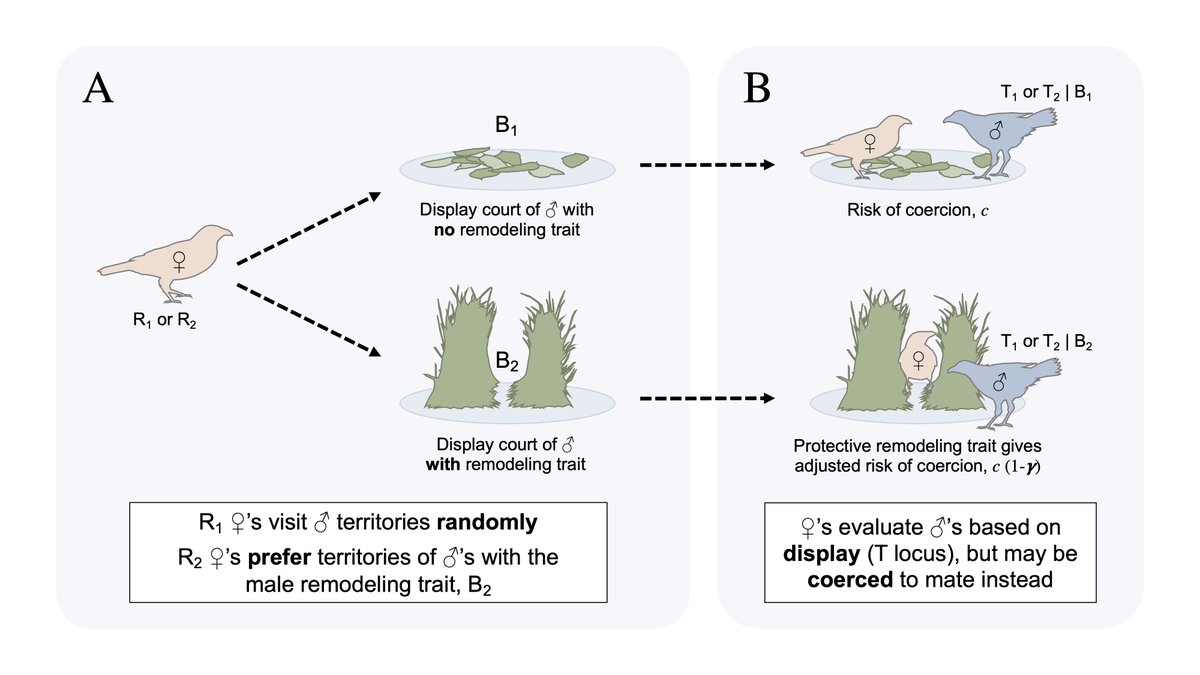
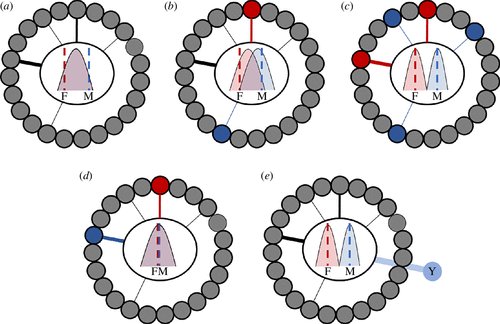
Inspired by bowerbirds, we explore a new theoretical evolutionary possibility for sexual conflict: females may “remodel” males’ capacity to sexually coerce to expand their own freedom of mate choice @yale_eeb@IASToulousedoi.org/10.1093/evolut/qpad0…
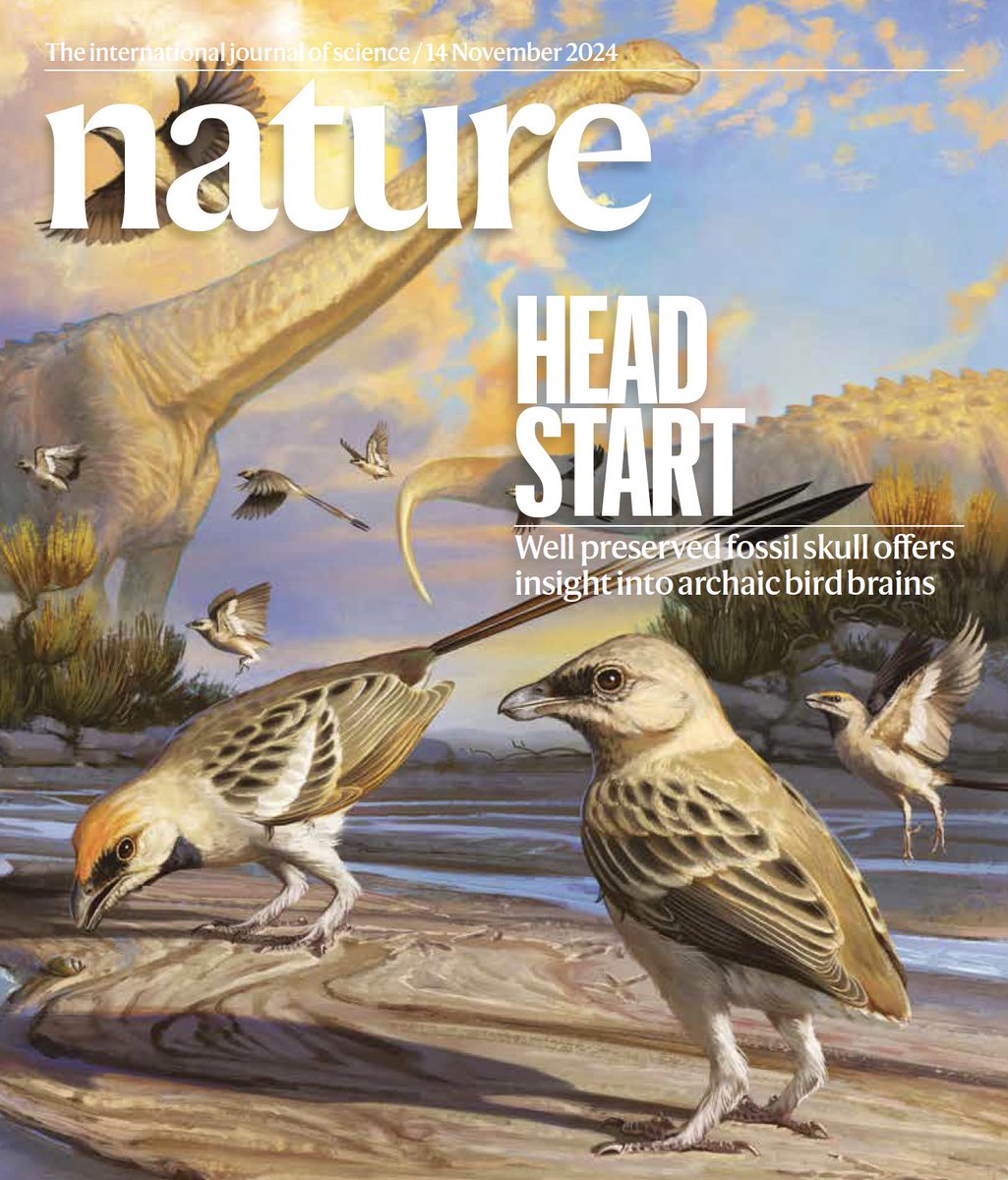
Huge congrats to @gnavalon—it’s brilliant to see our new 80-million-year-old bird on the cover of @nature! Navaornis hestiae provides the clearest insight yet into how and when the distinctive brains of modern birds evolved. Paper open access: nature.com/articles/s41586-0…
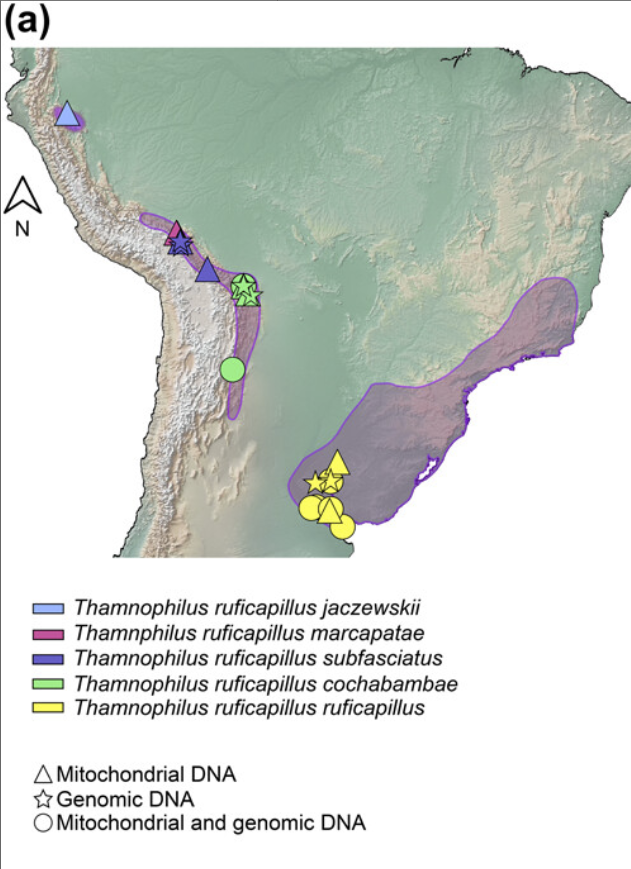
ALT Fig. 1a from the article: (a) Distribution map (shaded in violet) showing sampling localities, subspecies identity and the type of sequence data obtained for each sample. The distribution map is based on BirdLife International and NatureServe (2014).
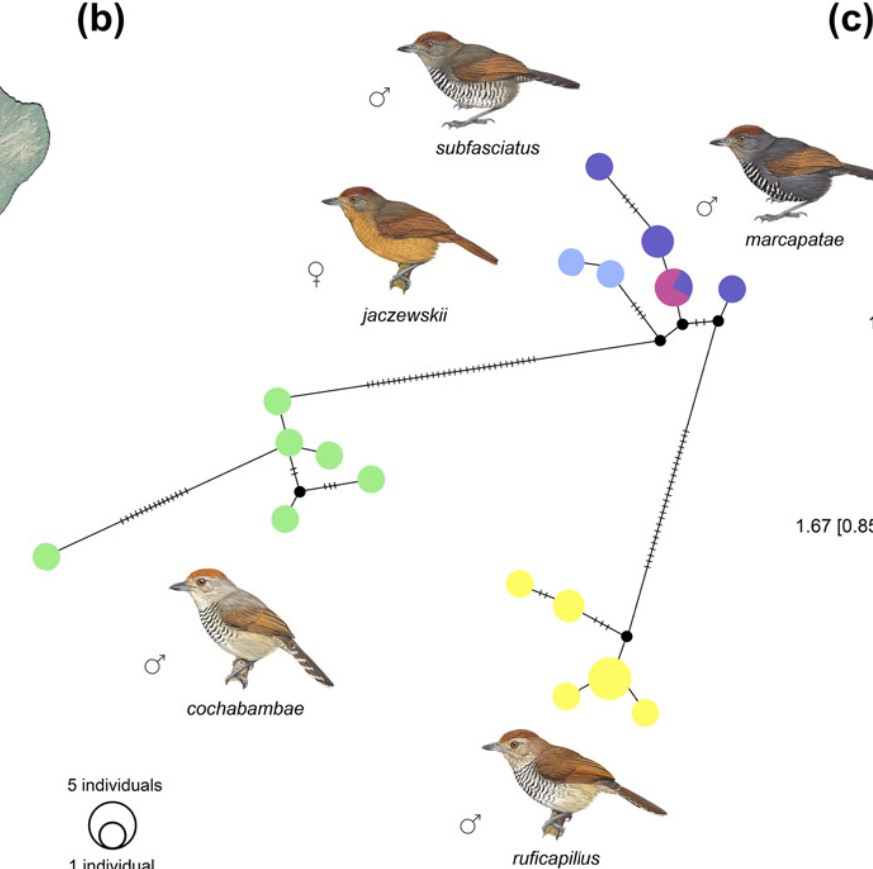
ALT Fig. 1b from the article: Median-joining haplotype network of concatenated mDNA (COI cyt b; 1,130 bp). Circles represent haplotypes and their size is proportional to haplotype frequency. The length of the branches connecting haplotypes is proportional to the number of nucleotide differences between them, which are indicated by the number of line marks on each branch.
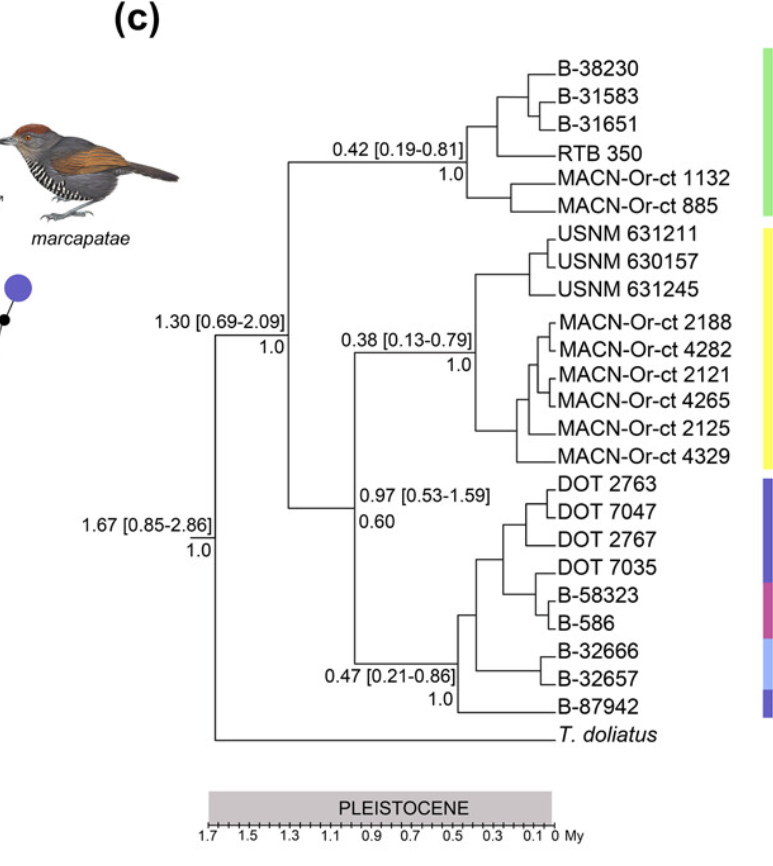
ALT Fig. 1c from the article: Bayesian phylogenetic tree with divergence times obtained from the analysis of the concatenated mitochondrial dataset (1130 bp). The numbers near the nodes indicate the mean divergence time estimates and the numbers between square brackets correspond to the 95% highest posterior density intervals of those estimates.
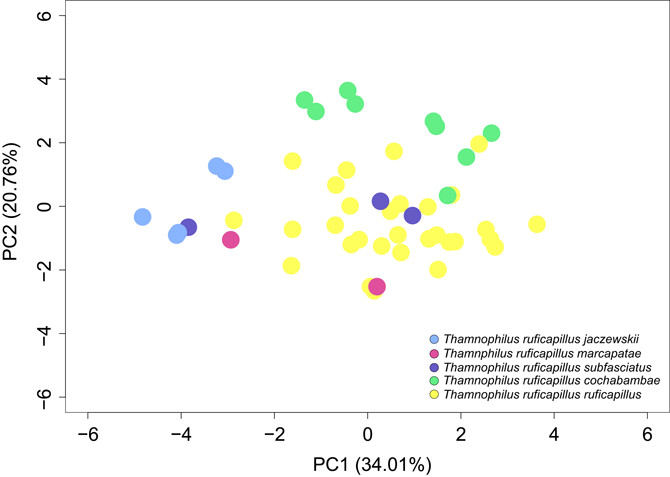
ALT Fig. 4 from the article: Analysis of the vocalizations of T. ruficapillus. Song differentiation among subspecies is shown based on a PCA performed with the song variables (mean duration of the note, mean duration of the interval between notes, fundamental frequency, bandwidth of the note and the number of notes in each song; the first four variables were measured for the first note).
JOB OPPORTUNITY! @mtholyoke Biology Dept is hiring an EVo-Devo tenure track faculty member!!! Our Dept is inclusive & supportive, and located in western mass, a top place to live in the USA. Please apply now and pass this on!! Careers mtholyoke.wd5.myworkdayjobs.…
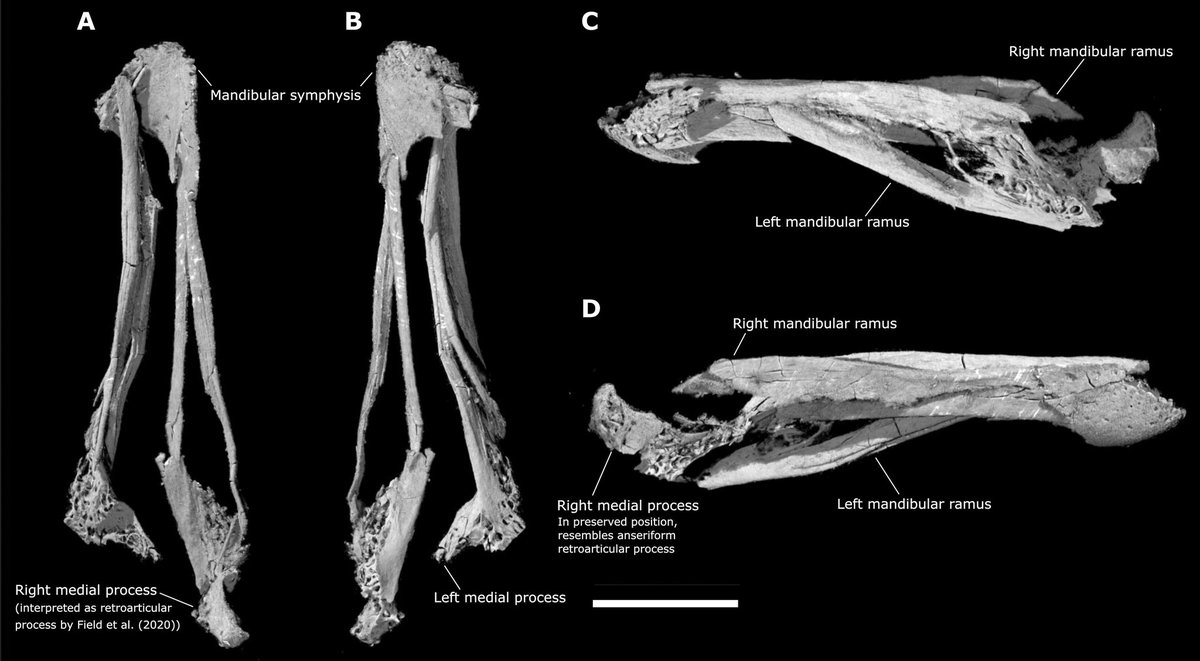
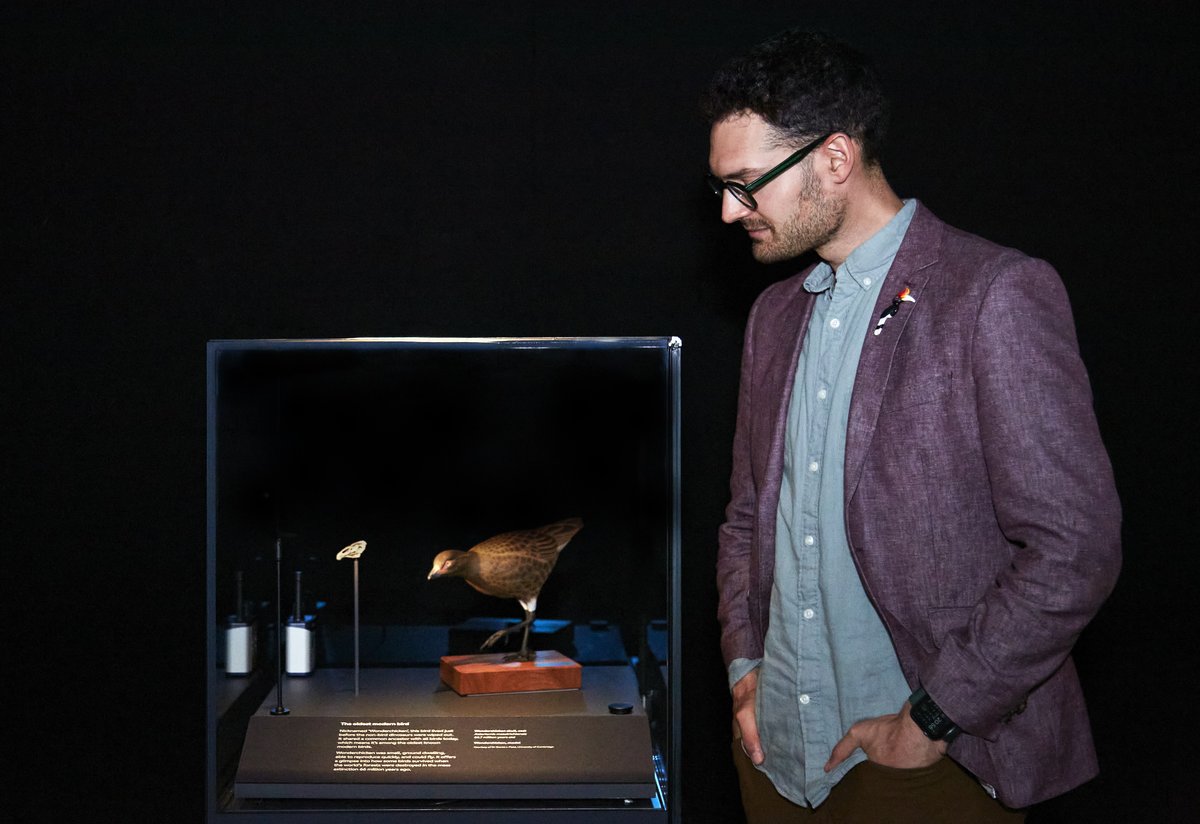
Ever wondered if the wonderchicken is really a chicken? Our reinterpretation of the lower jaw of Asteriornis shows that the holotype does not preserve a key galloanseran jaw feature. Nevertheless, our analyses still find it to be a member of Galloanserae!
sciencedirect.com/science/ar…
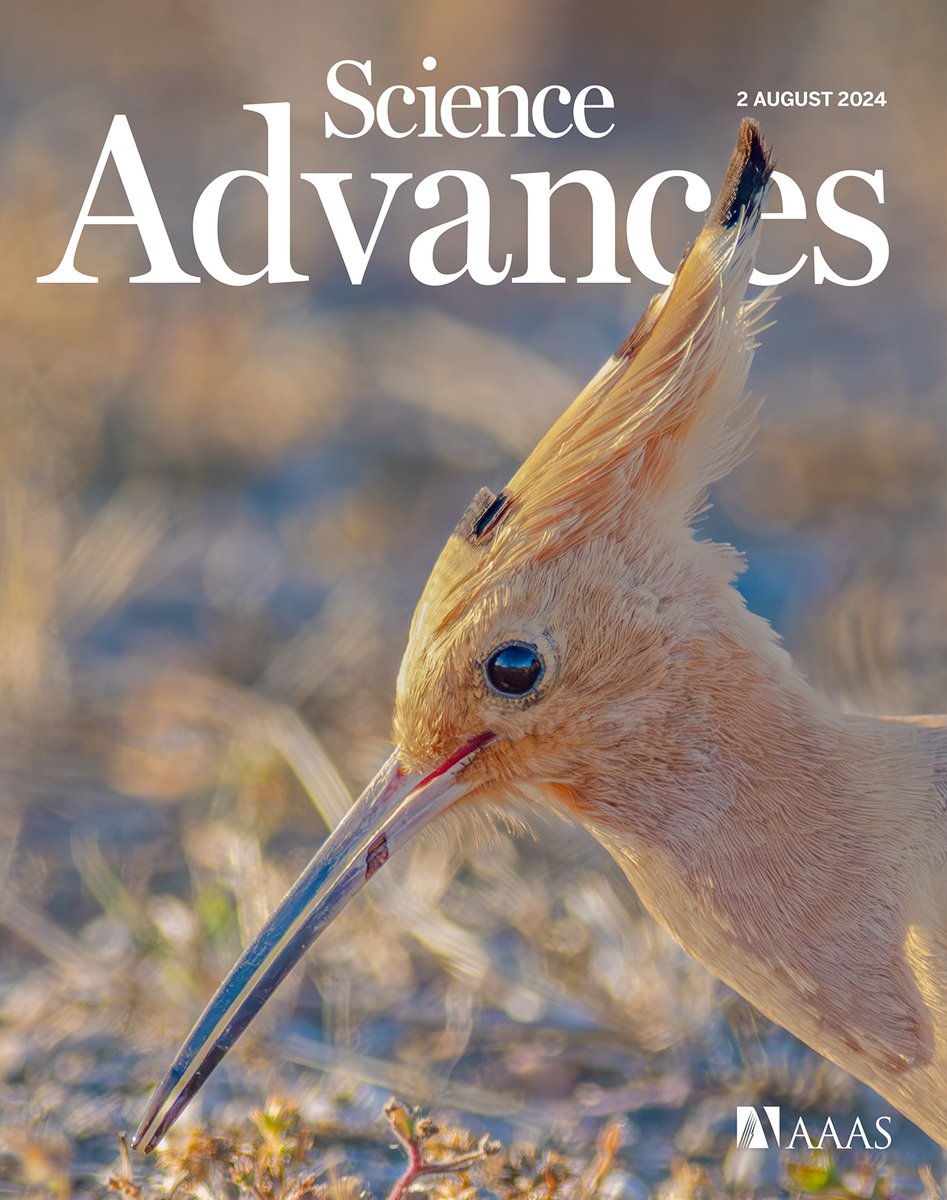
Back from a fantastic #Evol2024 meeting in Montreal, and I’m very pleased to officially talk about this project again, now published in @ScienceAdvances
New research proposes that groups of birds with early origins associated with the end-Cretaceous mass extinction experienced rapid evolutionary changes across their genomes and physiology.
Learn more in this week’s issue of Science Advances: scim.ag/7RP
Many grueling hours coding in R without access to the internet at the @StatCan_eng RDC have finally paid off!! Super wonderful interdisciplinary team and great leadership by @buxton_rachel
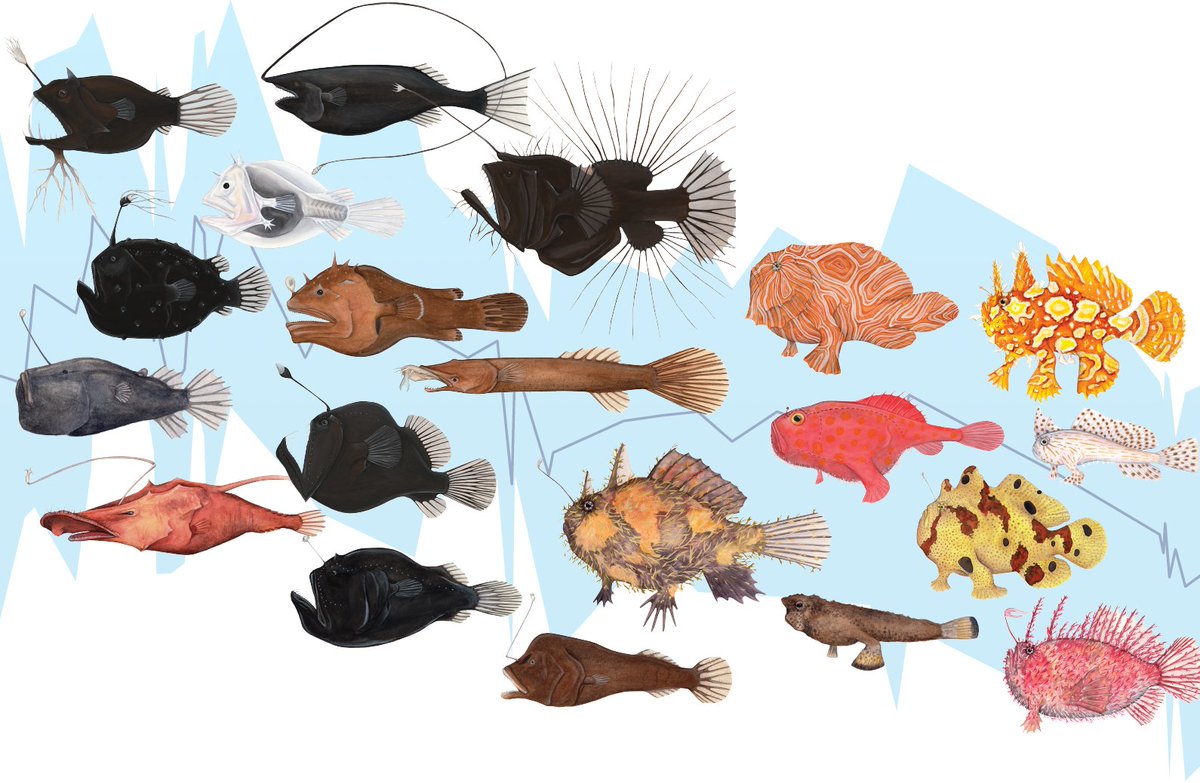
1/10 ⏰⏰ The final version of our #anglerfish#evolution paper is out @CurrentBiology ! In it, we demonstrate how this clade rapidly assembled a unique trait-sexual parasitism-and secondarily invaded the open ocean in a manner reminiscent of whales! doi.org/10.1016/j.cub.2024.0…
Our paper on the genomics of vocal rhythm in birds is out in @NatureComms! We assembled a tinkerbird reference genome and using 135 whole genomes in a hybrid zone, we found that rhythm speed and stability are associated with genes that affect human speech. nature.com/articles/s41467-0…
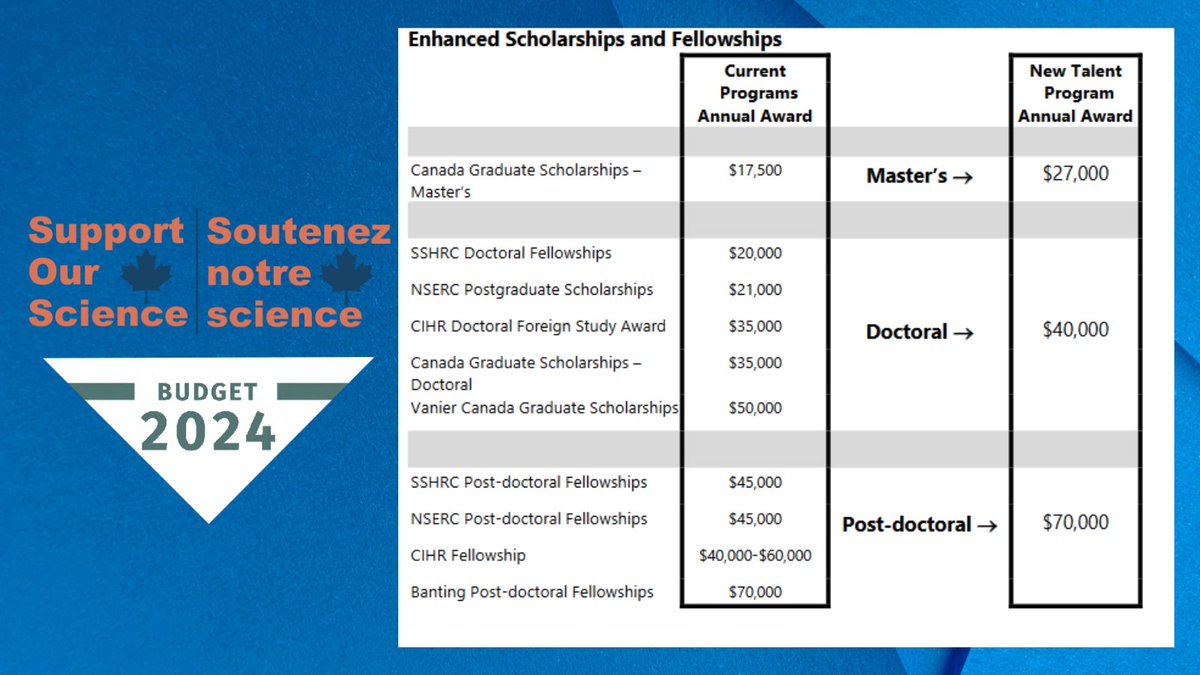
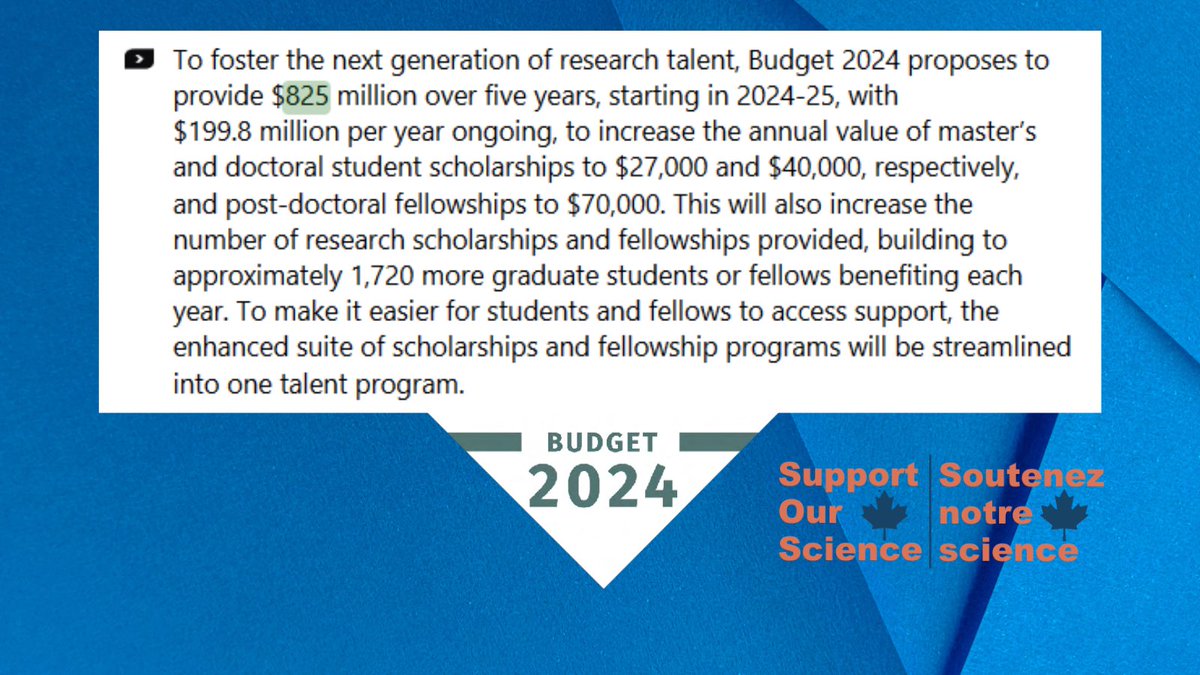
#Budget2024 💰 makes the largest investment in 20 years for grad students & postdocs! It will support financial needs, boost mental well-being, allow focus on research, & promote diversity by easing barriers for underrepresented groups. 🎉💪🏽#SOSBudget2024
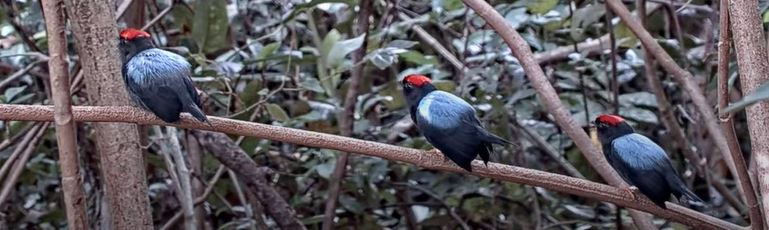
Watching the @ManakinCam from my office makes me feel like an overinvested coach stuck on the sidelines. "You in the middle, YWmF, get your team together! Sing in the trees, dance on the perch! It's called a DUET, guys! And on the left, did you JUST take a BATH?! Get serious!"
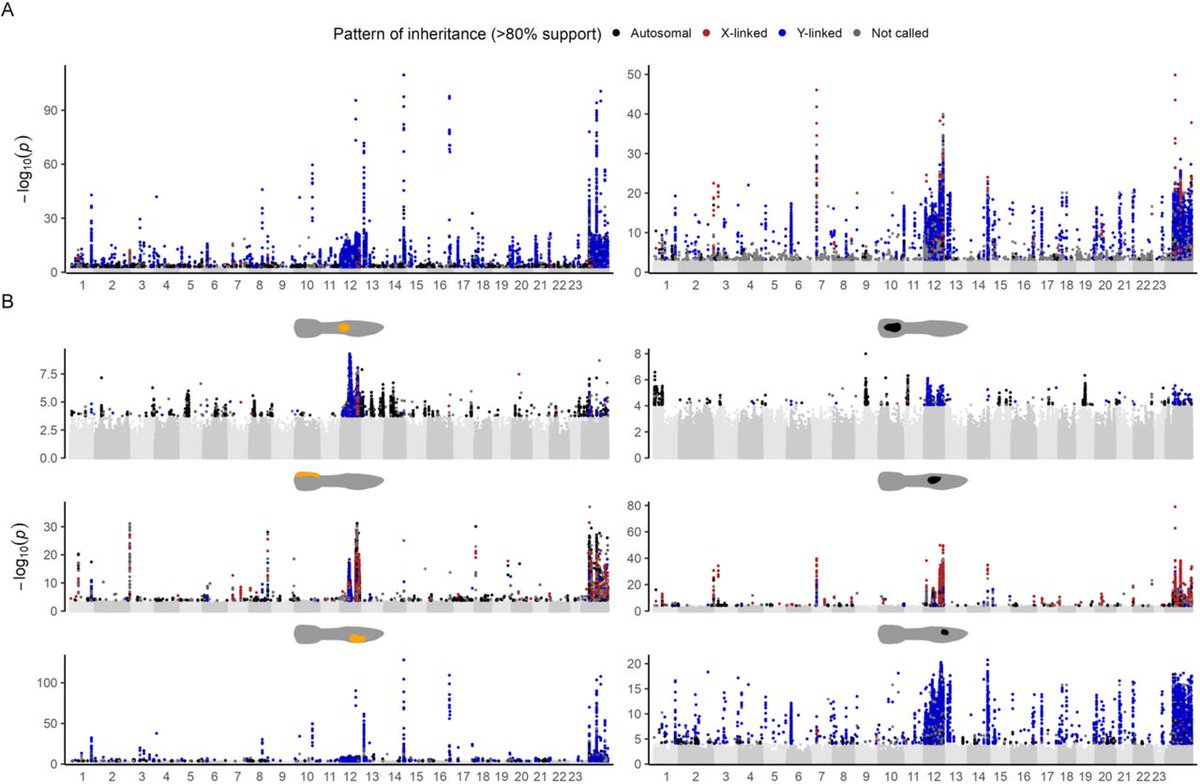
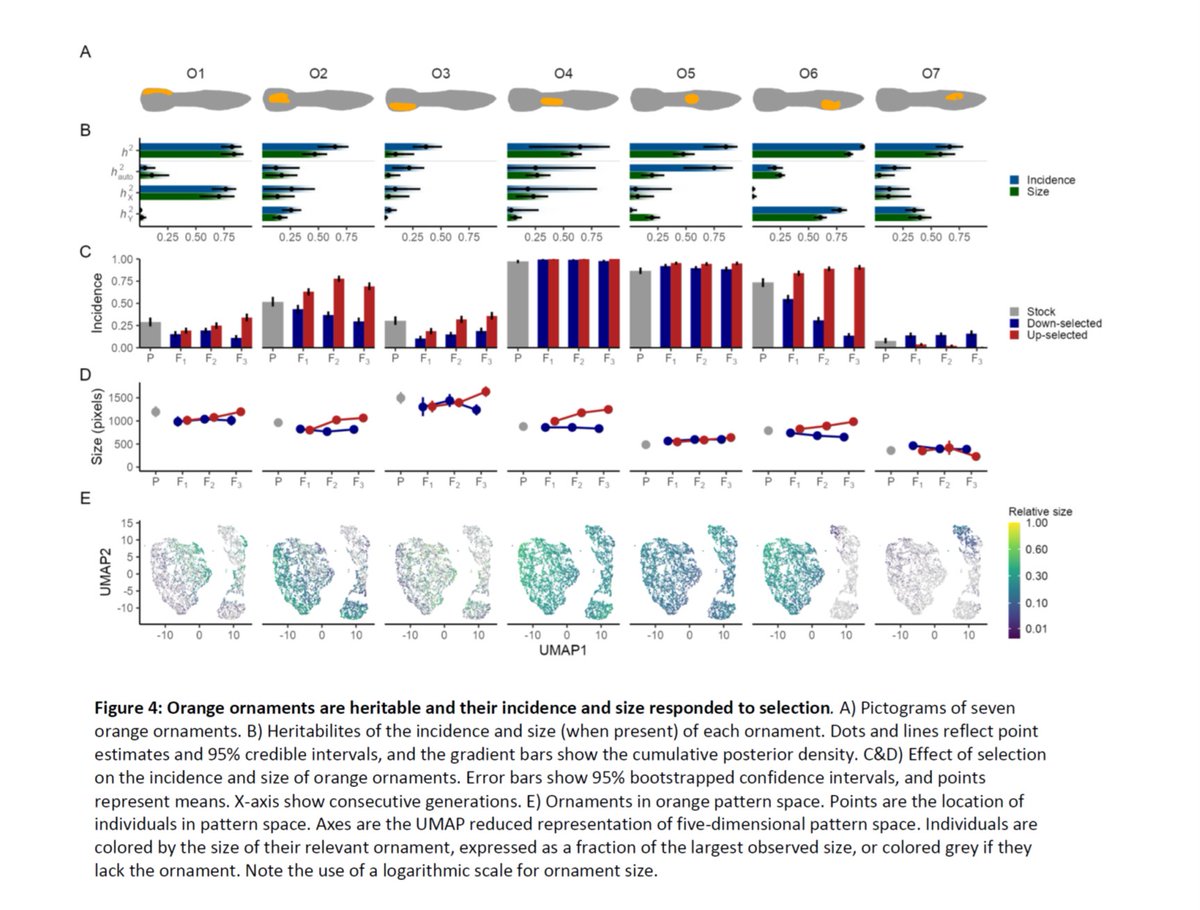
Updated and expanded version of @_Axeman_ 's analysis of the inheritance of male coloration in guppies is now up! biorxiv.org/content/10.1101/… Deep learning reveals the role of copy number variation in the genetic architecture of a highly polymorphic sexual trait
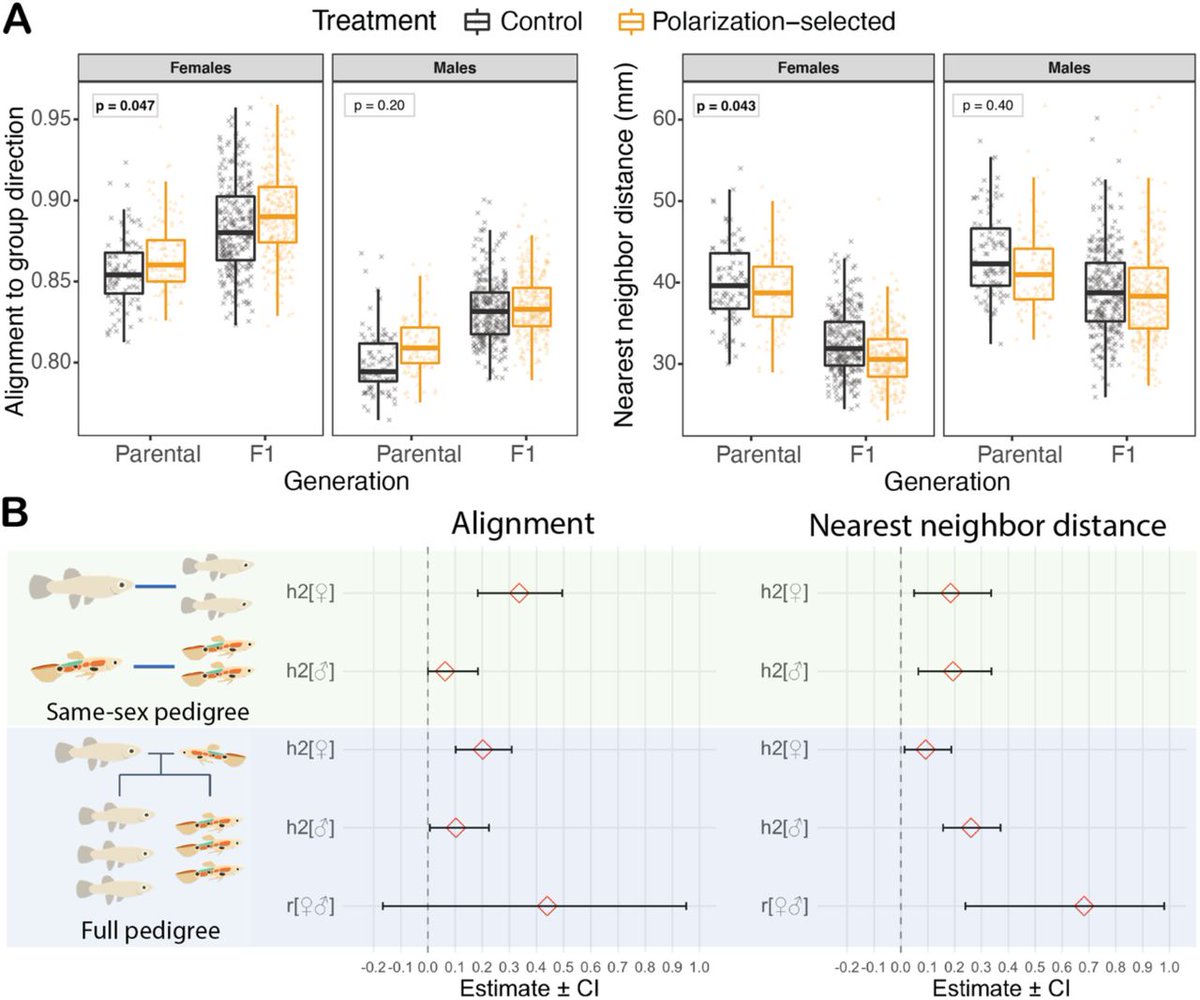
Just out @NatureEcoEvo - @CorralLopezA 's tour de force! Functional convergence of genomic and transcriptomic genetic architecture underlying sociability. Heritability, GWAS and neuro-transcriptomics of collective behaviour nature.com/articles/s41559-0… w Niclas Kolm & many others.
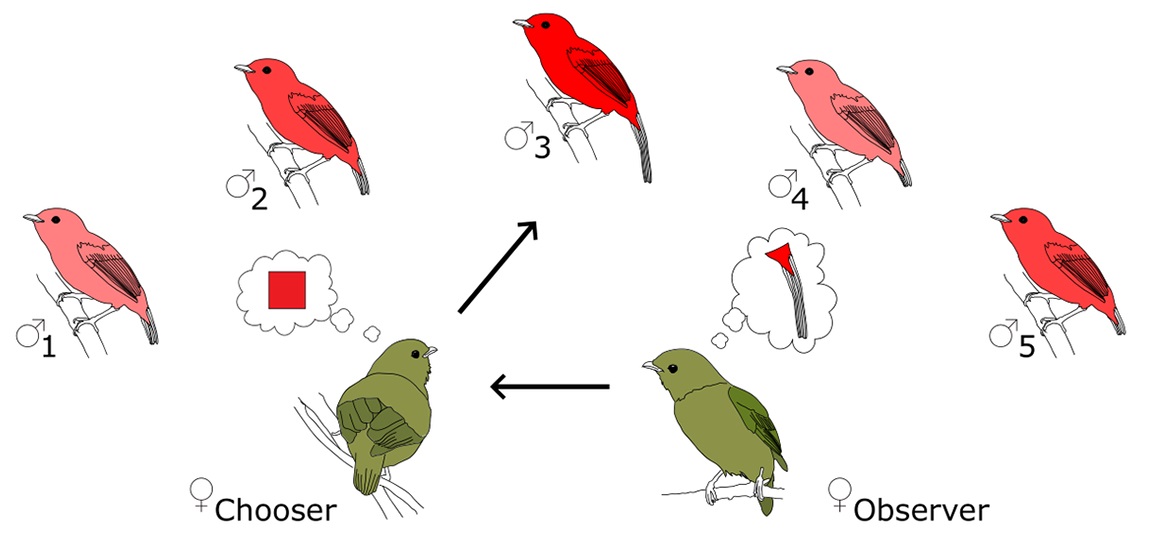
So happy to be a part of this work with @EmilyHDuVal@Eliz_Hobson and @clynfitzpatrick! We show that mistakes that females make when trying to infer what others find attractive can lead to the maintenance of variation in preferences and traits, among other cool patterns!
Deep learning reveals the role of copy number variation
in the genetic architecture of a highly polymorphic
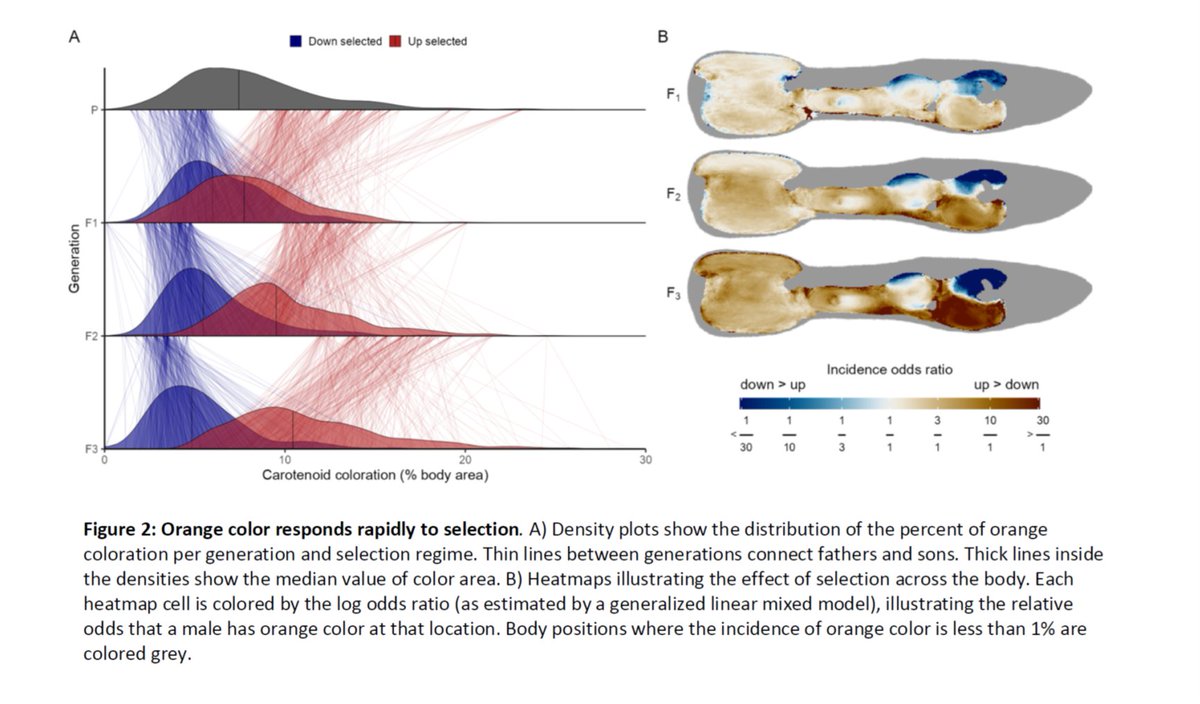
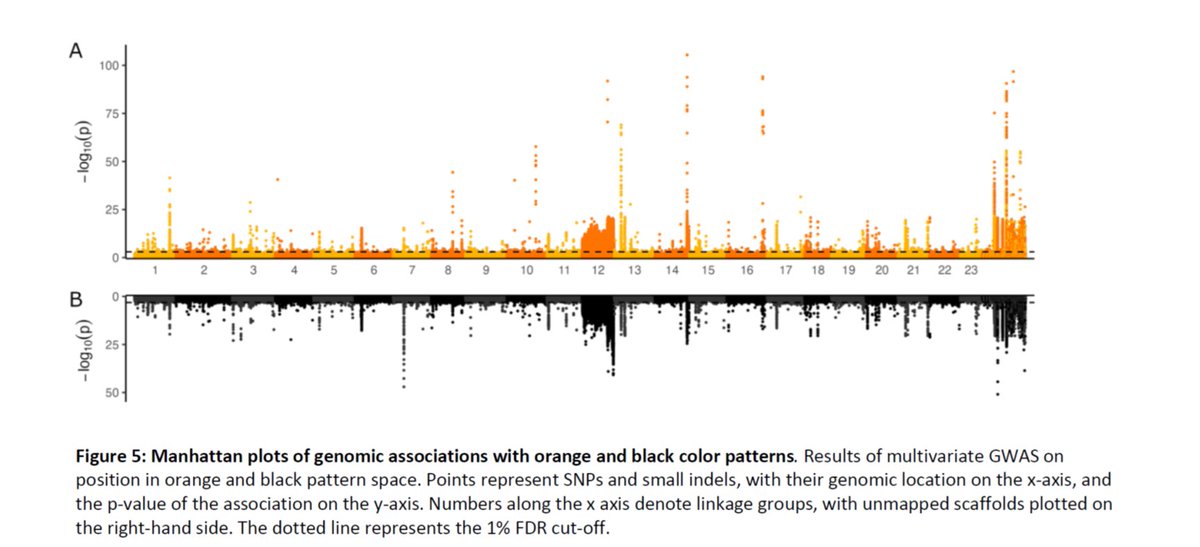
sexual trait. @_Axeman_ did it all - selection experiment, pedigrees, neural nets, GWAS - for the architecture of color and pattern in guppies biorxiv.org/content/10.1101/…
Corral-Lopez et al. use guppies as a model system for the evolution of collective motion, showing that guppies artificially selected for schooling remain highly coordinated across predation contexts and finding key changes in brain morphology
@CorralLopezAnature.com/articles/s41467-0…
🚨Out TODAY🚨 our #new experimental paper showing that #wild jackdaws ditch old #friends and make new ones if it helps them get rewards... but stick with #family through thick and thin.
Work led by #ECRs @Michael53566156 & @JoshJArbon
@CornishJackdaws
tinyurl.com/yxjare3d
I'm so excited!! The craziest experiment you've read about in a long while and crown jewel of my PhD is now published with @SpringerNature in @NatureEcoEvo!
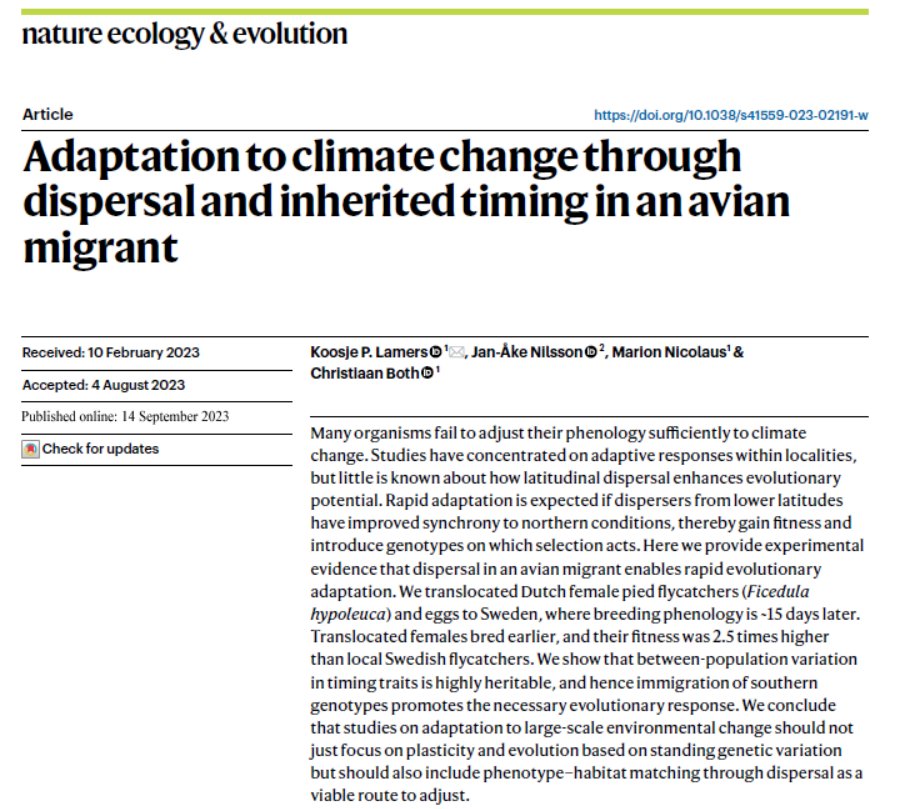
Can dispersal help birds adapt to climate change? Read our paper here: rdcu.be/dl9ZH or in the thread below[1/8]