Sandon, BC – once a booming silver city. Silversmith (1897) keeps us alive ⚡ Blocked by unfair rates & land pressure & high taxes. Save our historic site.
Joined February 2026
- Tweets 33
- Following 11
- Followers 32
- Likes 8
25 Photos and videos
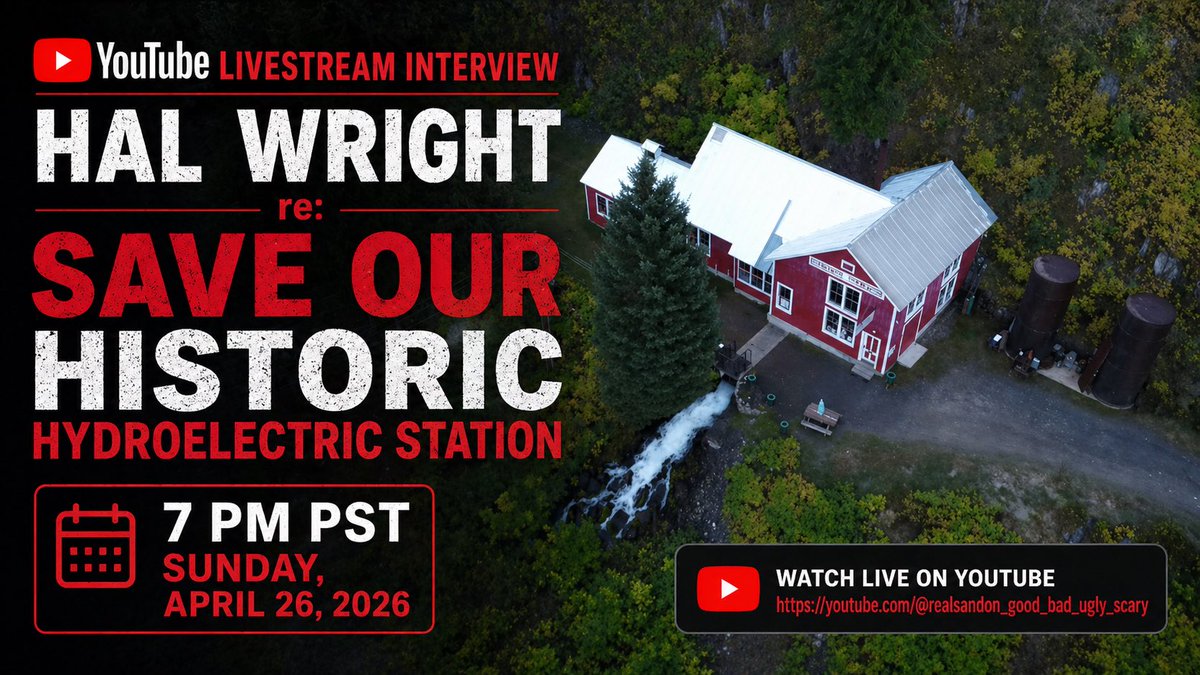




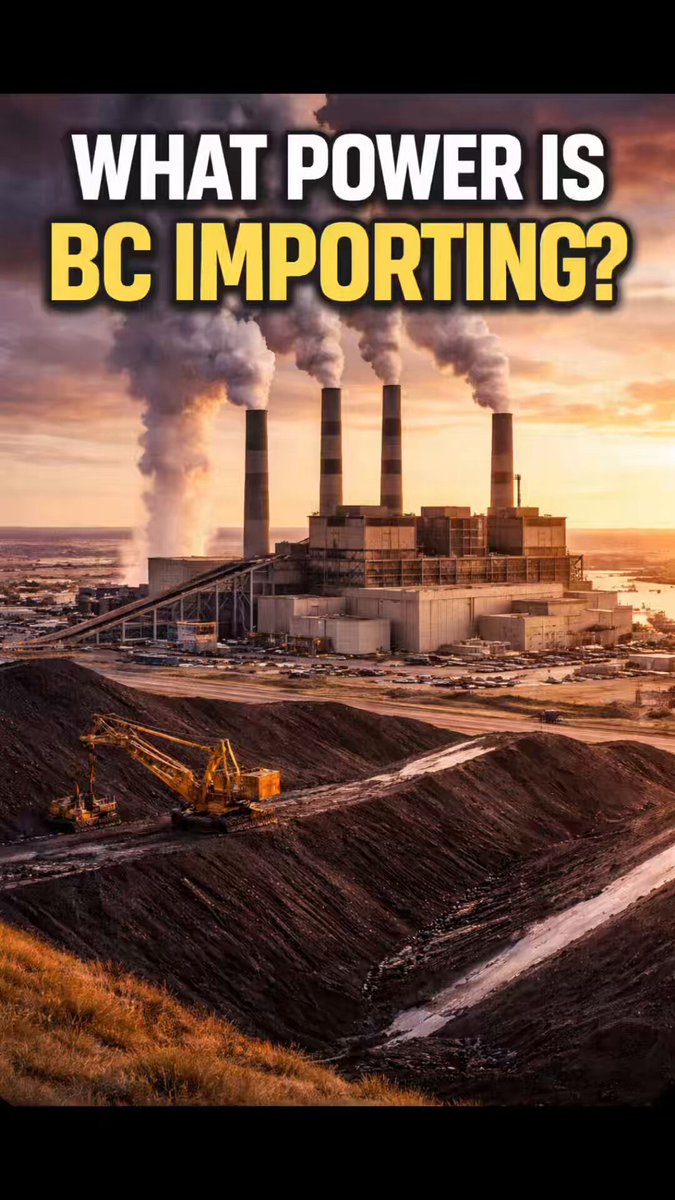


🚨 LIVE THIS SUNDAY – DON’T MISS THIS 🚨
Join us for a powerful YouTube Livestream Interview with Hal Wright as we dig deep into the story behind:
🔥 “Save Our Historic Hydroelectric Station”
🗓 Sunday, April 26, 2026
⏰ 7:00 PM PST
🎙 Hosted by Vida Turok, this is not just an interview — it’s a timeline of truth, starting in the 1990s and walking through everything that led us to where we are today.
This is your chance to hear:
• What really happened behind the scenes
• The challenges we’ve faced over decades
• What’s at stake right now
• Where this could be headed if nothing changes
👉 JOIN LIVE HERE:
youtube.com/@realsandon_good…
💬 WE WANT YOUR QUESTIONS
Drop your questions below 👇 or bring them to the livestream:
What do YOU want to ask Hal?
Some ideas to get you thinking:
• What changed from the 1990s to today?
• When did things start going wrong?
• What has been the biggest challenge keeping the plant alive?
• What would happen if the station shuts down?
• Why are small hydro producers being left behind?
• What needs to change right now?
⚡ This isn’t just about one facility —
it’s about history, fairness, and the future of energy in BC and the future of Sandon
📢 Set a reminder. Share this. Be there live.
#SaveOurHydro
#SaveHistoricSandon
#SandonBC
#BCPolitics
#EnergyCrisis
#SupportLocalHydro
#Livestream
#RealTalk
15
129 years of reliable power in BC…
Now we’re fighting for fair rates, fair land tenure, and fair taxes | while NEW wind & solar get 30-year contracts, higher pricing, and inflation protection.
Why are proven hydro producers being pushed to shut down?
#SaveOurHydro #BCHydro #EnergyPolicy
24
Daily Weather - Save Our Hydro Update
📆 March 19, 2026
⏰ 10:00 am
🌡️ 1C
☔️ raining
#sandonbc #saveourhydro #WeatherUpdate #raining
6
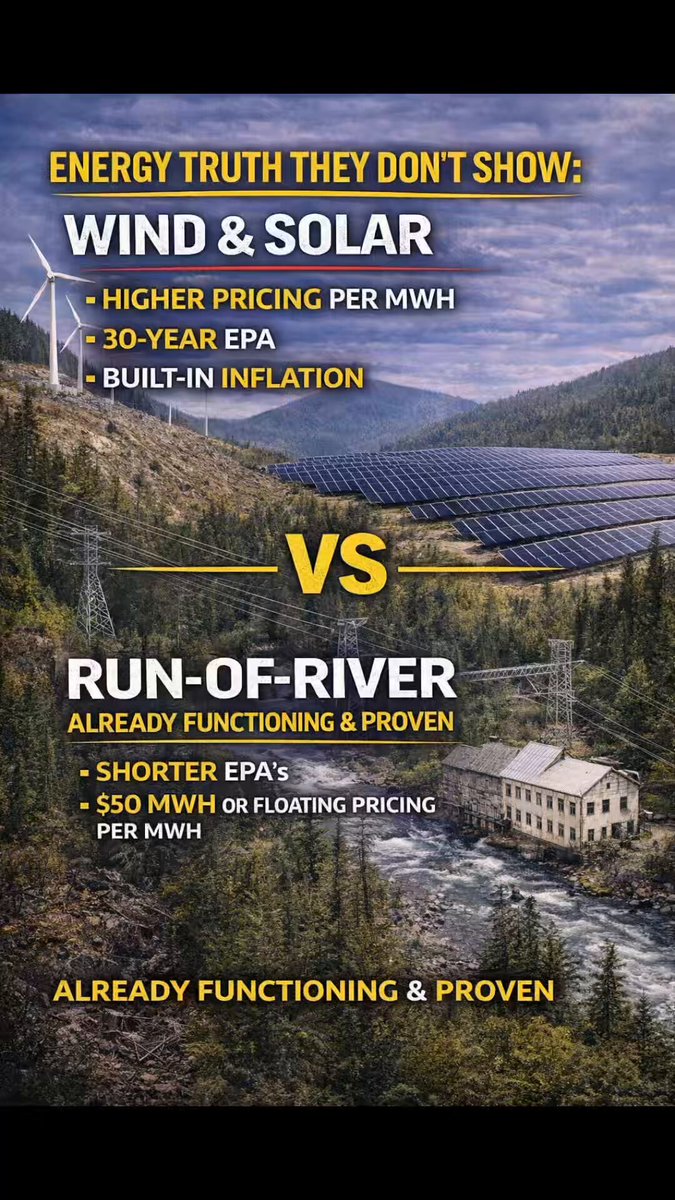
Energy truth they don’t show 👇
Post:
Wind & solar need vast land to compete.
Run-of-river hydro:
✔ Small footprint
✔ Reliable power
✔ Pays water taxes
Why are we discouraging what works?
#SandonBC #SaveOurHydro #EnergyPolicy
8
BC is pushing wind & solar | massive land use, intermittent power | exempt from environmental assessment.
Meanwhile, proven hydro is being treated unfairly.
Why?
Learn more: sandonbc.ca
#SandonBC #Hydro #EnergyTruth #BCPolitics #RenewableEnergy #Bill14
1
27
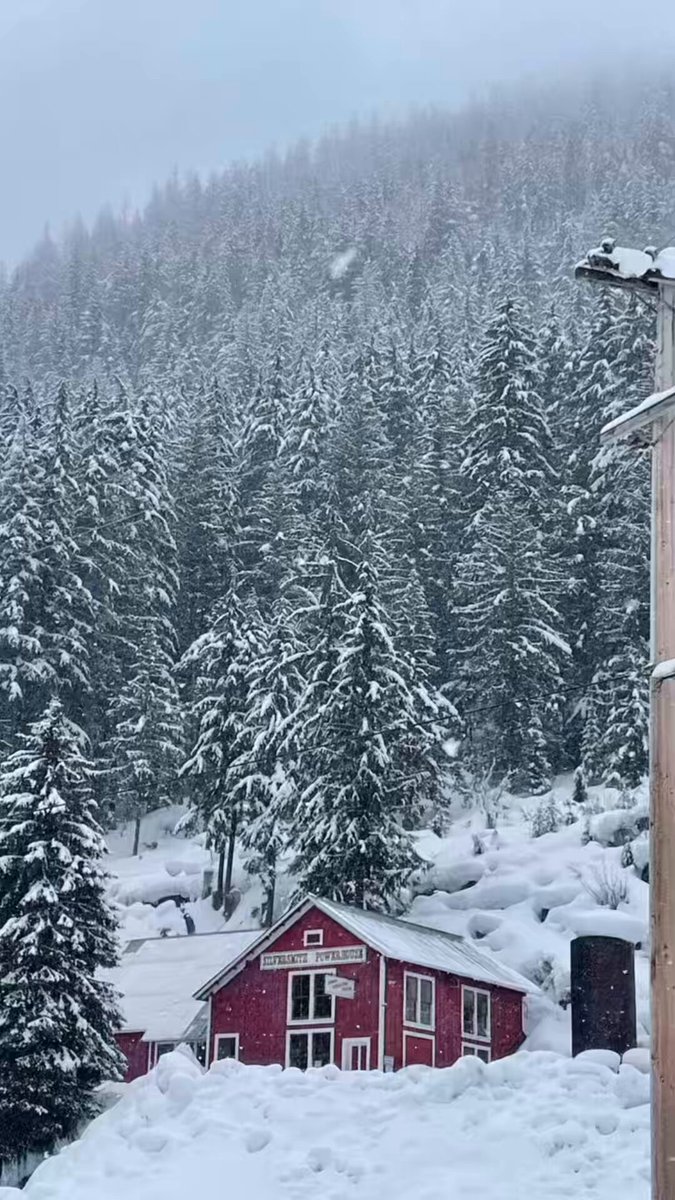
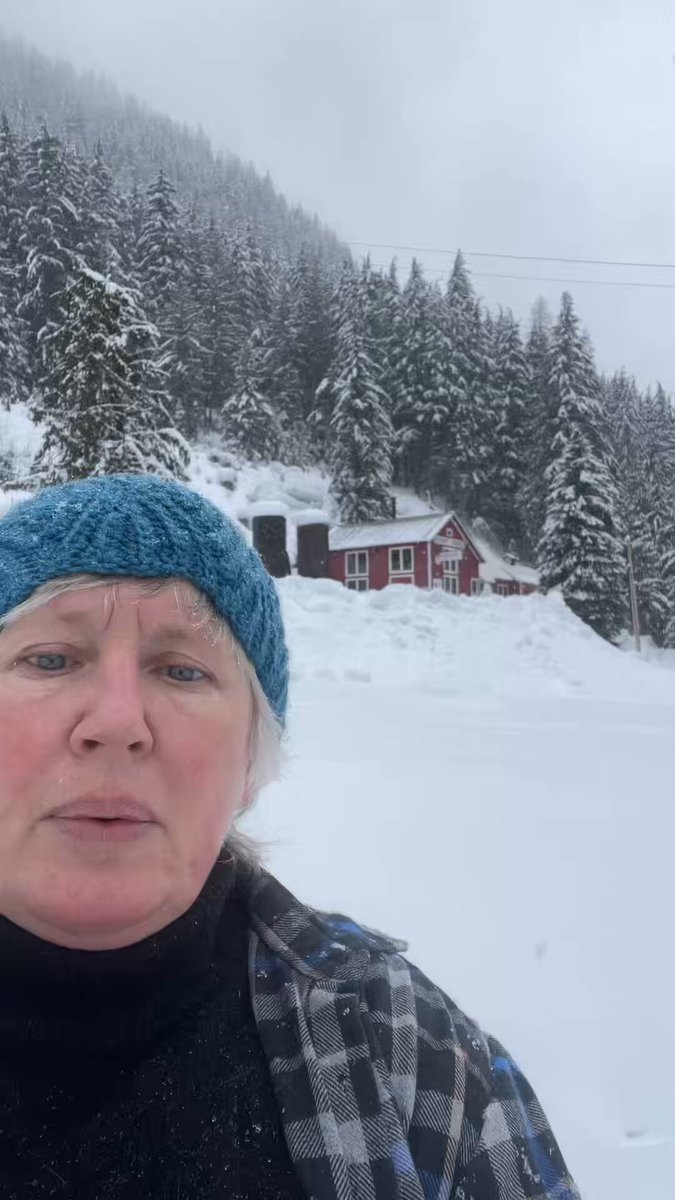
Daily Weather
📆 March 16, 2026
⏰ 10:00 am
🌡️ -3.5 C
❄️ 3 1/4 inches
sandonbc.ca
#sandonbc #snow #winter #saveourhistorichydro #savehistory
34
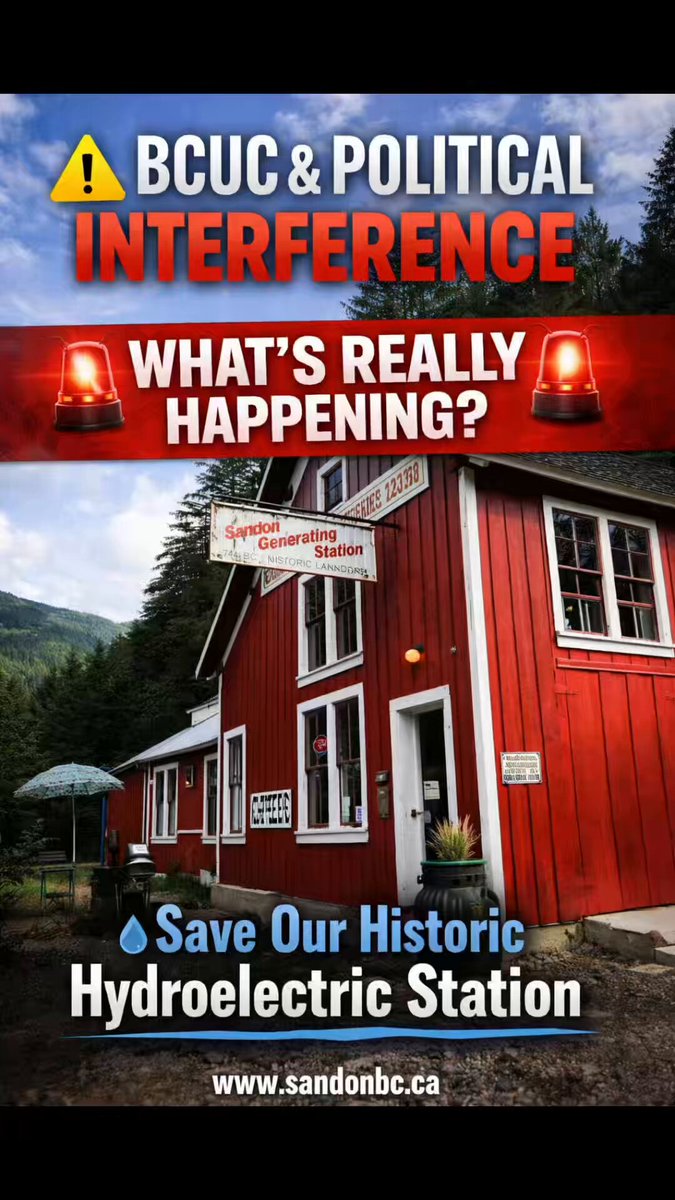
Is independent power being silenced?
Political directives are bypassing independent regulation in BC’s electricity system.
Our historic hydro station in Sandon has generated clean power since 1897.
Learn more:
sandonbc.ca
#SaveOurHistoricHydro #BCUC #BCPower #SandonBC
15
⚡ Before BC Hydro… Every Community Made Its Own Power
Hal Wright, manager of Silversmith Power & Light in Sandon, BC, shares a short history lesson about how electricity worked in British Columbia before the centralized grid.
Prior to World War II, most communities in BC generated their own local electricity. Systems varied widely — some used AC, some DC, and frequencies could differ from town to town. It wasn’t perfect, but it meant communities controlled their own power and the economic benefits stayed local.
After the war, the promise of a centralized grid brought standardization and expanded access to electricity across the province. In many ways that system worked well — but it also meant most communities lost their local generation, their utility jobs, and control over their energy future.
Today, the world is talking about microgrids and local generation again — systems where communities produce power locally but remain connected to the larger grid.
Interestingly, Sandon remains one of the few places in BC that can “island” — meaning our community can continue to generate electricity even if the main grid goes down.
This discussion isn’t about criticizing the incredible employees at BC Hydro. Hal works with their crews regularly and has tremendous respect for them.
This conversation is about policy, history, and what the future of electricity in BC should look like.
If you’re interested in electricity, community resilience, and the history of power in BC, this is a conversation worth hearing.
🎥 Watch the video here:
youtu.be/t_CkO0S6hwk?si=j8Ne…
Learn more about Sandon and our historic hydroelectric station:
👉 sandonbc.ca
💬 We would also love to hear your questions or suggestions for future topics.
#SandonBC
#LocalPower
#ElectricityHistory
#Microgrids
#SaveOurHistoricHydro
50
$890M Profit. $1.6M CEO Salary. And Our Historic Hydroelectric Station Is At Risk
Save Our Historic Hydroelectric Station sandonbc.ca
NOTE: Links to the websites in this video are in the description on our YouTube channel link below.
youtu.be/bJFoofEPsLw
1
33
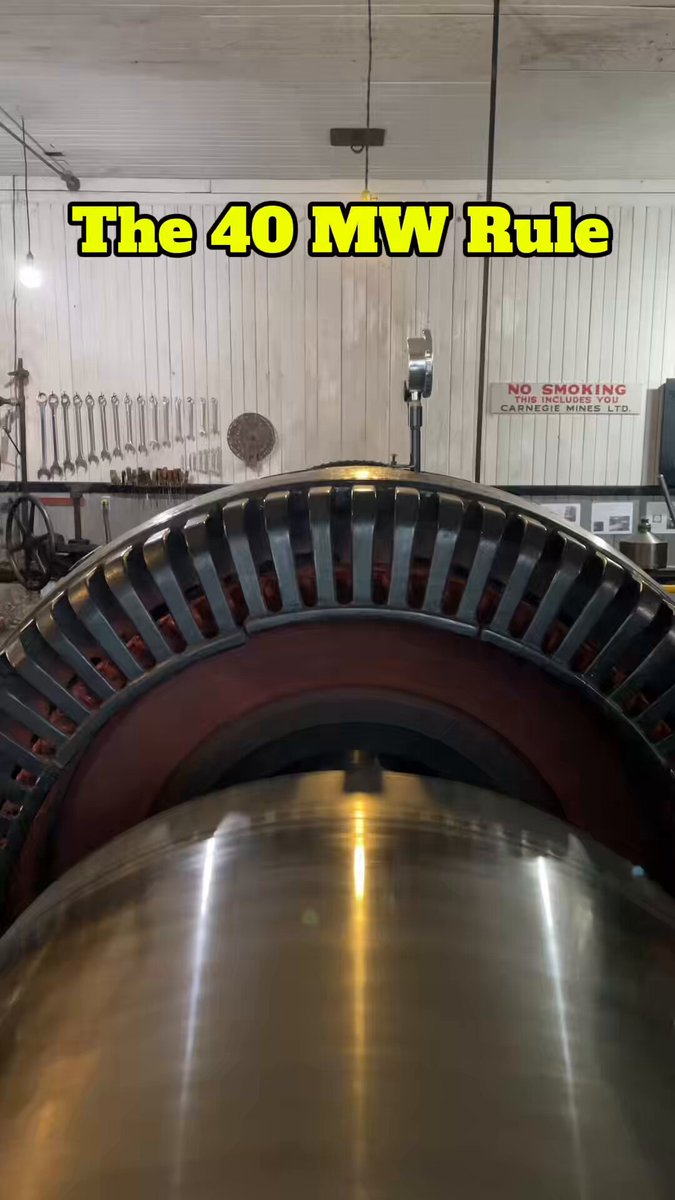
BC Hydro’s new power program requires 40 MW just to qualify.
Even Nelson Hydro wouldn’t meet that threshold.
Small & medium hydro projects across BC are locked out of the system.
Meanwhile massive wind projects move forward.
Small hydro built BC.
Learn more:
sandonbc.ca
#SaveOurHistoricHydro
1
1
52
Centralization vs Decentralization.
We are one of the last remaining local hydro utilities in BC.
129 years old.
Still operating.
Now at risk.
Help save it:
sandonbc.ca
#SaveOurHistoricHydroelectricStation #SandonBC
1
1
29
DO YOU THINK THIS IS FAIR?
Fiscal Year: April 1, 2024 – March 31, 2025
Silversmith Power & Light was paid an average of
4.02¢ per kWh by Powerex.
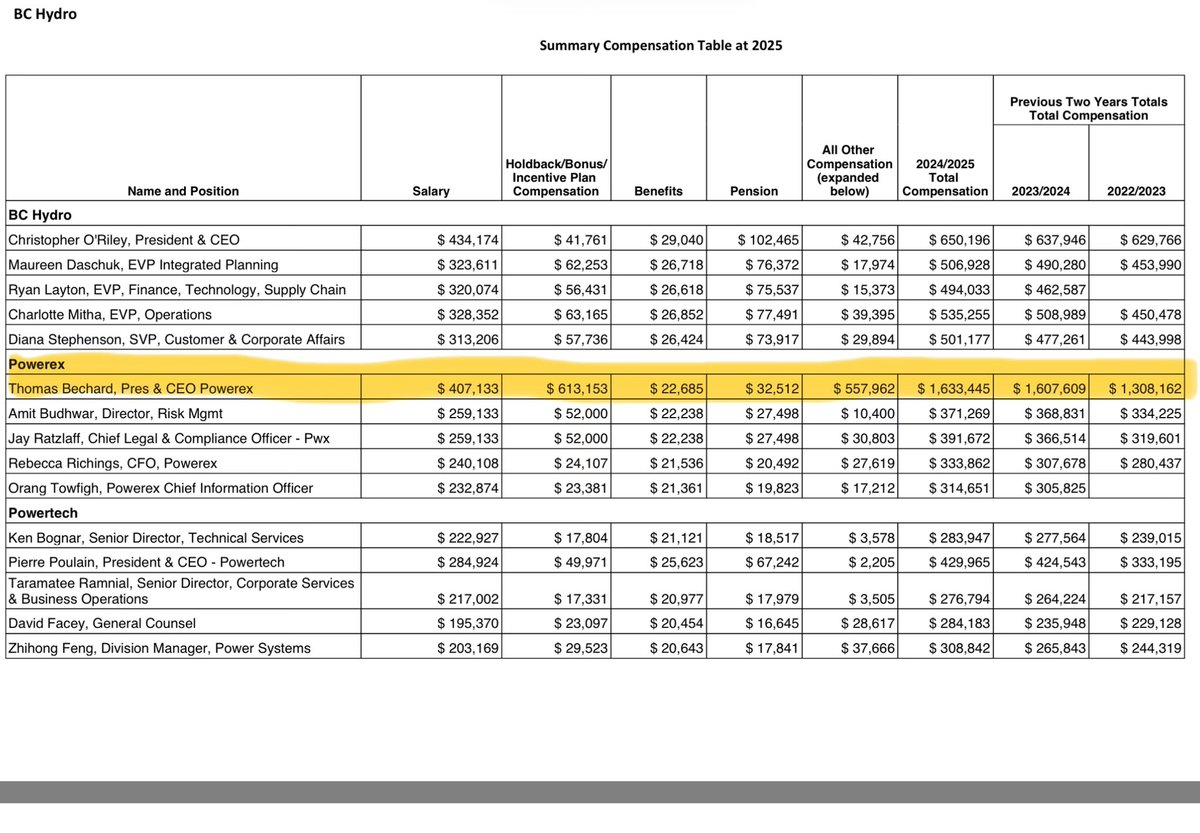
That same year, the Powerex CEO received:
$1,633,445.
At our current wholesale rate, it would take
NEARLY 58 YEARS
for SP&L to receive what one executive earns in one year.
Four cents for community power.
$1.6 million at the top.
Do you think this is fair?
Executive compensation disclosure (2024/2025):
🔗 publicsectorcompensation.gov…
#FairRates #SaveOurHistoricHydro #EnergyPolicy #BCPolitics
Help us Save Our Historic Hydroelectric Station
sandonbc.ca
29
Canada’s oldest continuously operating hydroelectric station has been running since 1897 ⚡
Go inside the mines, a 1908 steam locomotive, restored City Hall, and the powerhouse that still works today.
🎥 Watch here: youtu.be/tWoRX1VpY40?si=axna…
Let’s protect this living history for future generations.
#SandonBC #SaveOurHydro #CanadianHistory #IndustrialHeritage
sandonbc.ca
Save Our Historic Hydroelectric Station
1
3
53
129 years of continuous operation.
Now we have until Aug 15, 2026 to secure:
✔ Fair wholesale rates
✔ Fair BC Hydro contract
✔ Fair Crown land tenure
Watch & share:
youtu.be/xigM1IHObn0?si=yw57…
Help us save it.
Www.sandonbc.ca
Click Save Our Historic Hydroelectric Station
Write your MLA, your MP, the BC Premier
#SandonBC #SaveOurHydro #BCHydro #BCPolitics #Heritage
1
2
66
In late May 2025, Sandon’s 129-year-old hydroelectric station went completely silent.
For 4 days, we replaced the Pelton cups and then synchronized back into the BC grid at 60 hertz.
A once-in-a-generation moment. ⚡
Watch here: youtu.be/-f-3pU_5MQg?si=R_51…
Thanks to Vida’s, sister, for capturing this historic moment.
#SandonBC #Hydroelectric #Pelton #CleanEnergy #HistoricHydro #BCpoli
2
4
100
Most people think we’re “just another IPP.”
We’re not.
There’s a big difference between an Independent Power Producer and a regulated public utility — and that difference matters.
We’ve been operating since 1897.
We serve a defined service area.
We are legally obligated to provide power.
If we disappear, it’s not just a generator that’s lost.
It’s local control.
It’s energy sovereignty.
It’s history.
Watch. Learn the difference. Decide for yourself.
👉 sandonbc.ca
Save Our Historic Hydroelectric Station.
#SandonBC #PublicUtility #SaveOurHydro #BCPolitics
1
1
16
we are NOT an IPP, Independent Power Producer
we ARE a PUBLIC UTILITY
Stay tuned for Hal’s explanation.
#publicutility #Hydroelectric #sandonbc #cleangeneration #NewDenver #silvertonbc #Rosebery #hillsbc #nakusp #runofriver
sandonbc.ca
Save Our Historic Hydroelectric Station
2
2
18
In 1892, a 125-ton galena boulder sparked one of the richest silver rushes in history. By April 5, 1897, high in the mountains above Sandon, the turbines began turning. They have never stopped.
Silversmith Power & Light is now the oldest continuously operating hydroelectric station in Canada—powering Sandon since 1897 and connected to the BC grid since 2002. Through fires, floods, war, and economic collapse, this powerhouse has endured.
Recognized in the World Hydro Hall of Fame, Silversmith is living history—still producing clean, mountain-generated electricity for British Columbia.
This is more than a building. It’s the heartbeat of Sandon.
Help us Save Our Historic Hydroelectric Station:
👉 sandonbc.ca
Watch our latest video Power of History | Story of Silversmith Since 1892
👉 youtu.be/bM9Tbp5-CtM?si=-eWL…
#SandonBC #Silversmith #Hydroelectric #BC #CanadianHistory #SaveOurHydro #CleanEnergy #WestKootenay #Heritage #PowerOfHistory
1
3
21