
Joined May 2020
- Tweets 476
- Following 79
- Followers 4,115
- Likes 671
80 Photos and videos
Benjamin Schoefer retweeted
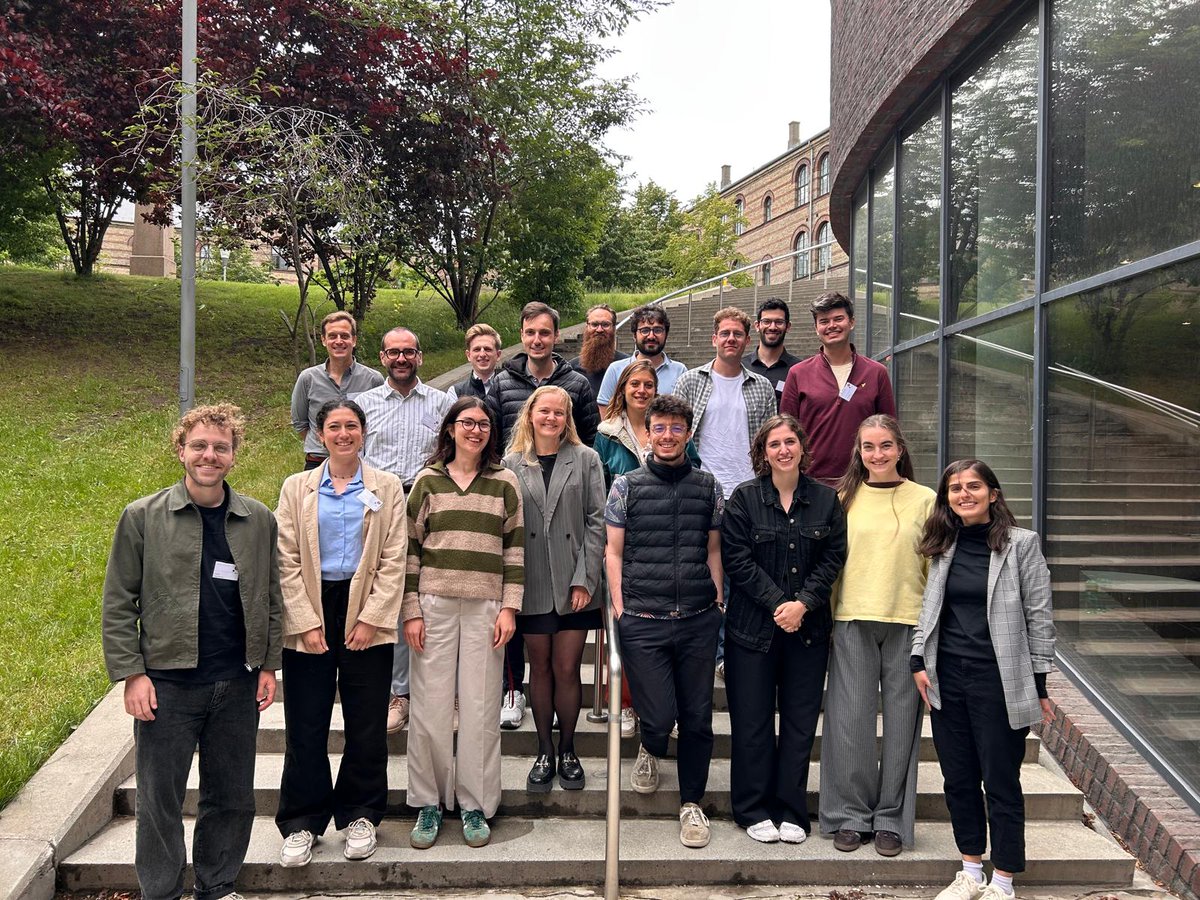
🎉A big thank you to everyone who participated in the PhD Workshop in Labor and Behavioral Economics 2026, hosted at @CEBI_UCPH, University of Copenhagen! The workshop brought together amazing researchers for talks and discussions - and we couldn't have asked for a better crowd.
3
4
17
1,403

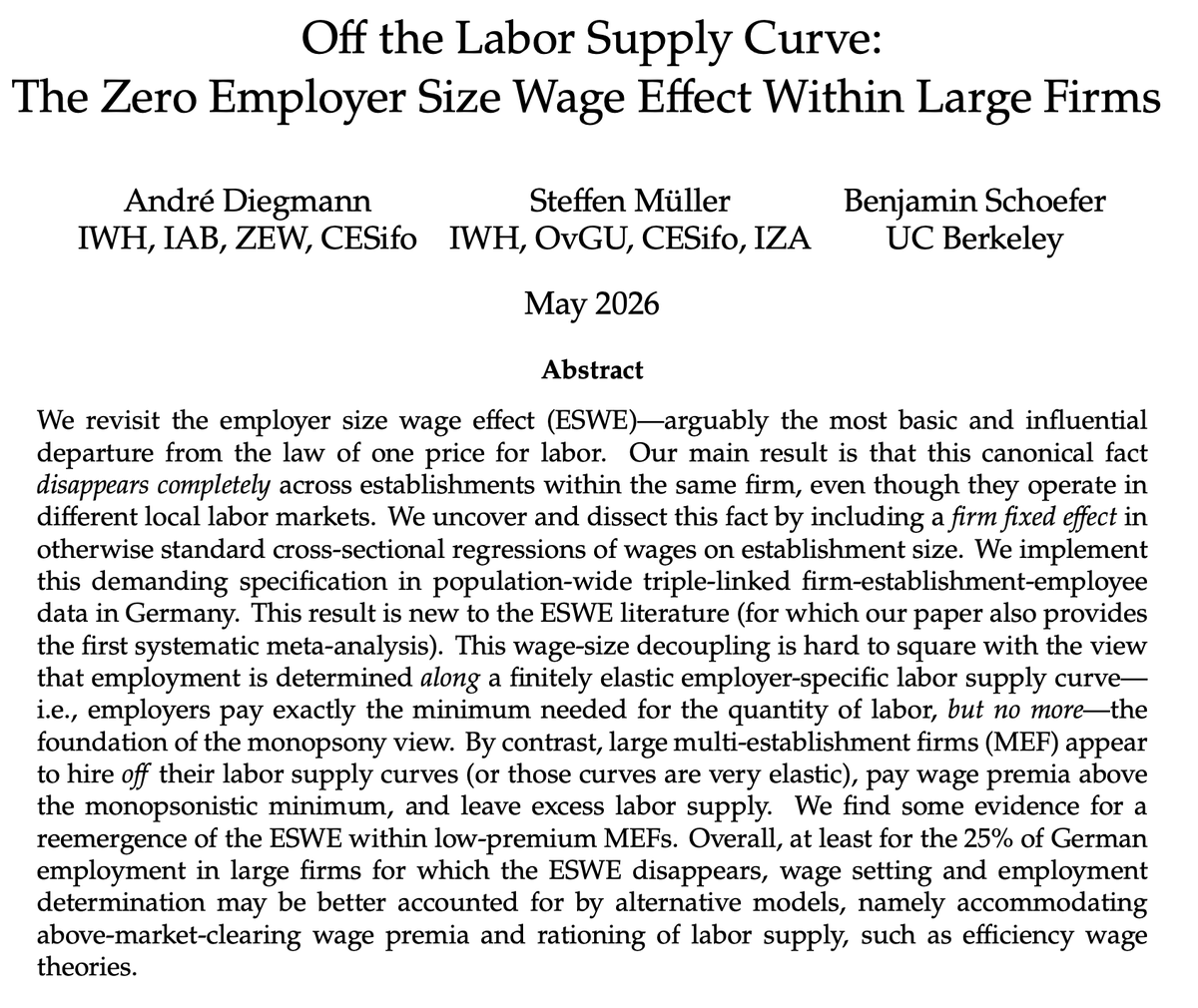
New CEPR Discussion Paper - DP21569
Off the Labor Supply Curve: The Zero Employer Size Wage Effect Within Large Firms
Andre Diegmann, Steffen Müller @IWH_Halle, Benjamin Schoefer @Schoefer_B @UCBerkeley @berkeleyecon
ow.ly/E8PO50Z6ItB
#CEPR_LE #CEPR_MG #CEPR_OE #EconTwitter
4
9
1,537
Larger employers pay more: the canonical "size wage effect."
Monopsony: To be larger, they *must* pay more<=>labor supply is finitely elastic.
Tension: *No* size wage effect w/in multi-unit firms.
=>Hiring off, not along, LS curve?
New paper w/@AndreDiegmann & Steffen Müller:
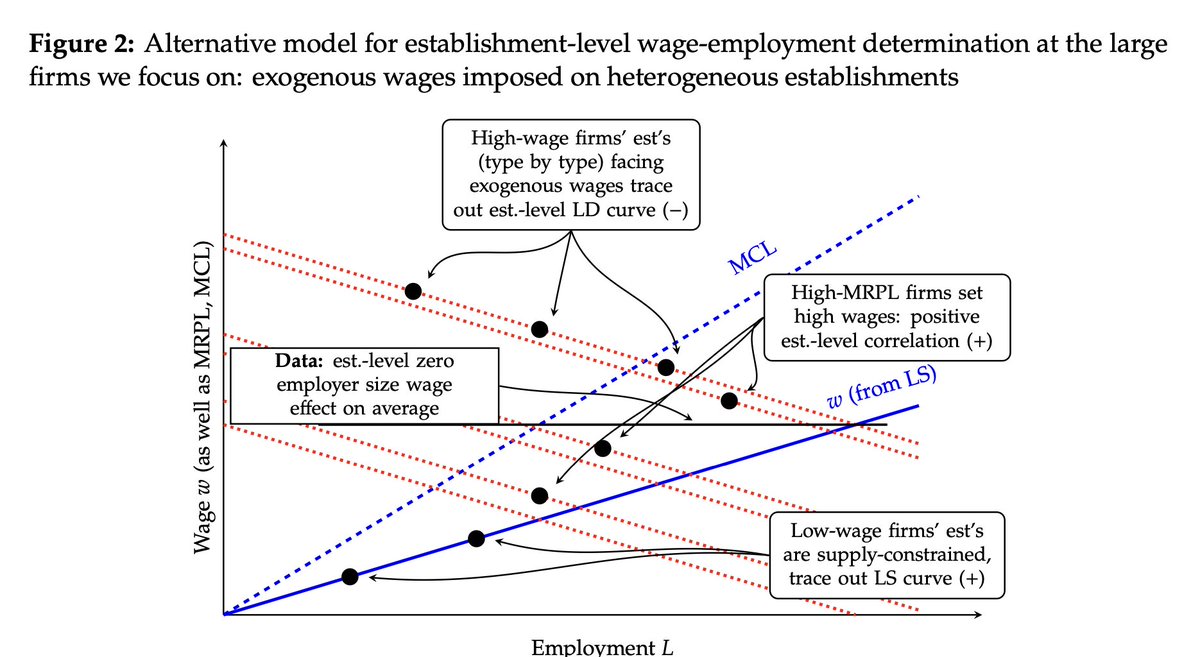
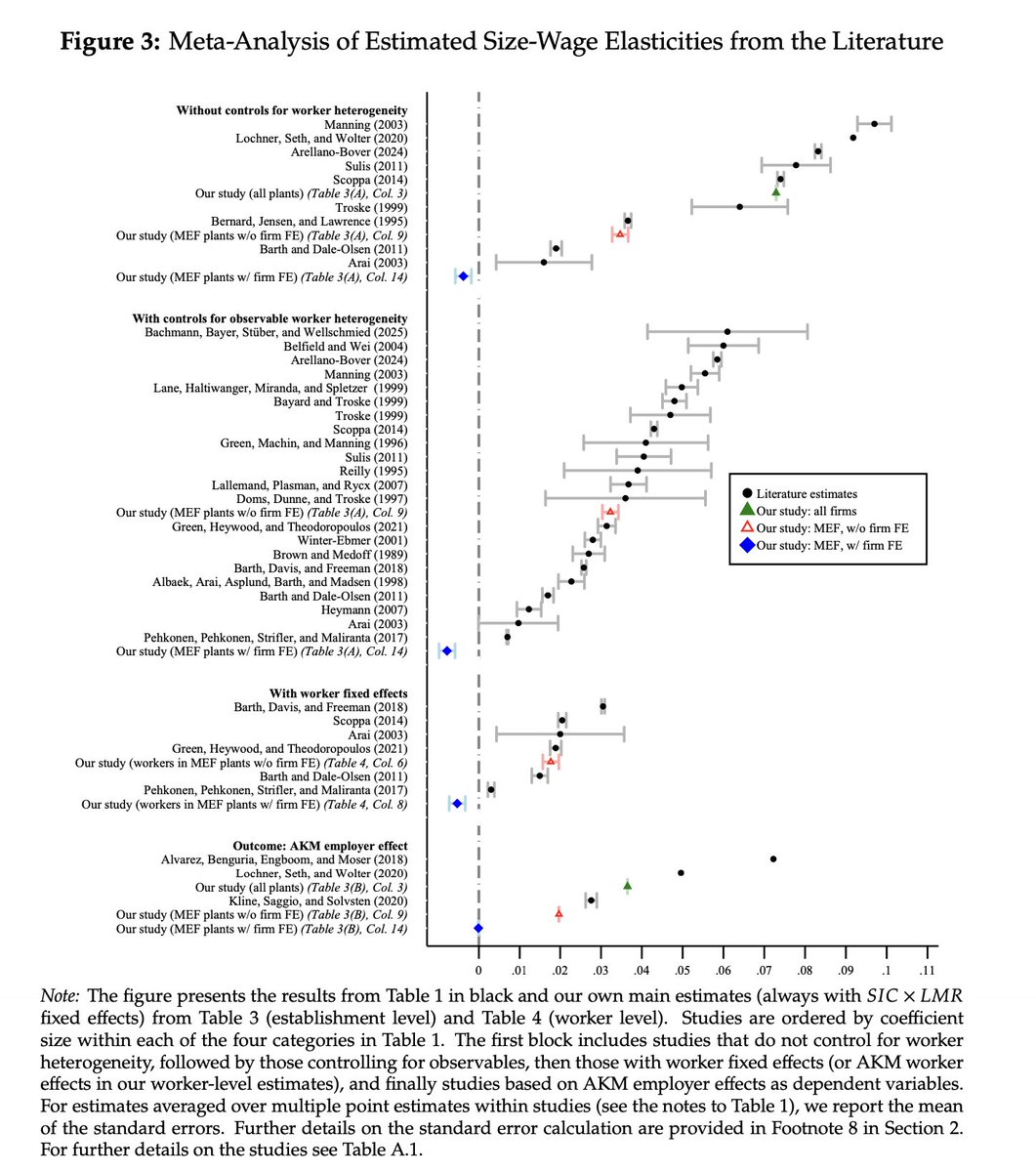
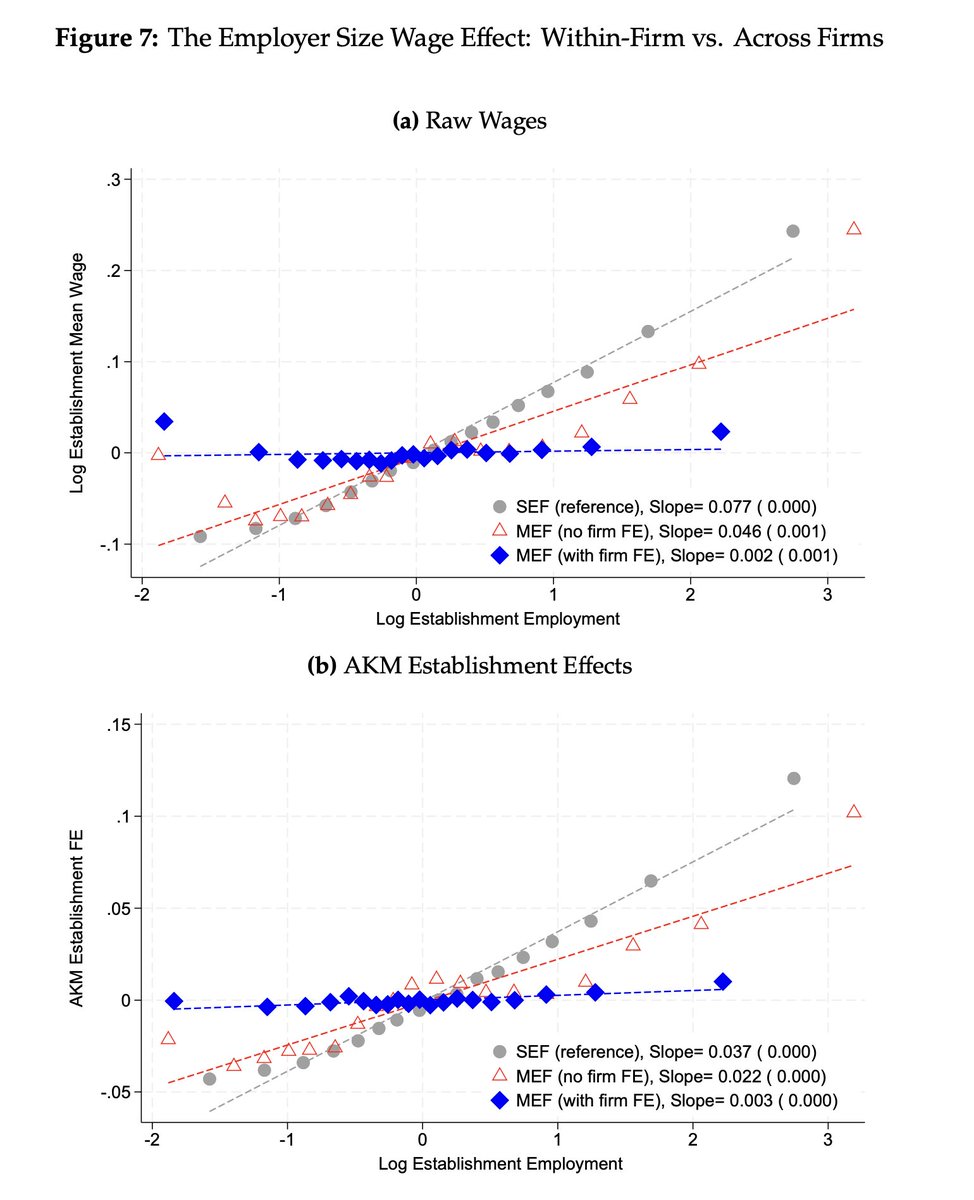

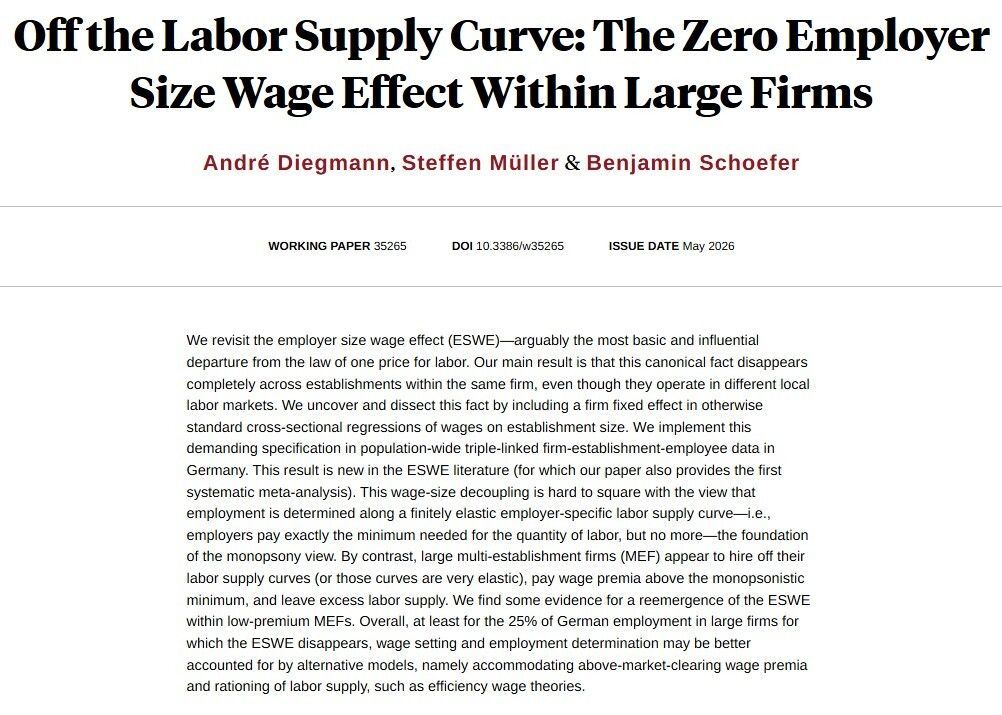
The employer size wage effect disappears completely across establishments within the same firm, even though they operate in different local labor markets, from @AndreDiegmann, Steffen Müller, and @Schoefer_B nber.org/papers/w35265
16
99
15,674

The employer size wage effect disappears completely across establishments within the same firm, even though they operate in different local labor markets, from @AndreDiegmann, Steffen Müller, and @Schoefer_B nber.org/papers/w35265
9
33
19,815
Benjamin Schoefer retweeted

May 27
This was a fantastic conference structured around how labor markets function and policies for maximum employment. Many thanks to all the presenters. Thanks to @JeffHorwich for taking the time (on the weekend!) to speak to our presenters and digest all their papers!

"Almost all of the leading, serious quantitative labor economists--in one room." Solid review from our recent "Micro & Macro Foundations of Labor Markets" conf., assembled by our @Simon_Mongey & Patrick Kehoe w/ Elena Pastorino, Magne Mogstad & Erik Hurst. bit.ly/4v86Qp6
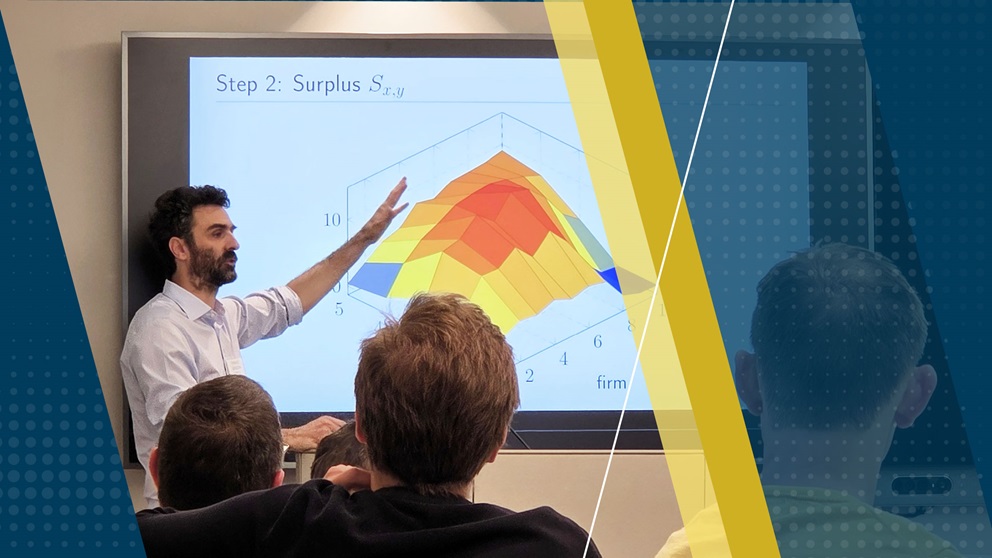
ALT A person is giving a presentation using a slide that shows a 3D graph with colorful, triangular sections labeled "Step 2: Surplus S_{x,y}" on a large screen. Several people are seated and attentively watching in the foreground.
1
3
52
7,145
Benjamin Schoefer retweeted

"Almost all of the leading, serious quantitative labor economists--in one room." Solid review from our recent "Micro & Macro Foundations of Labor Markets" conf., assembled by our @Simon_Mongey & Patrick Kehoe w/ Elena Pastorino, Magne Mogstad & Erik Hurst. bit.ly/4v86Qp6
ALT A person is giving a presentation using a slide that shows a 3D graph with colorful, triangular sections labeled "Step 2: Surplus S_{x,y}" on a large screen. Several people are seated and attentively watching in the foreground.
9
22
9,511
Benjamin Schoefer retweeted

Mar 30
Forthcoming in AEJ: Applied Economics: "Deadwood Labor? The Effects of Eliminating Employment Protection for Older Workers" by Emmanuel Saez, Benjamin Schoefer, and David Seim. aeaweb.org/articles?id=10.12…
1
6
39
4,923
Benjamin Schoefer retweeted

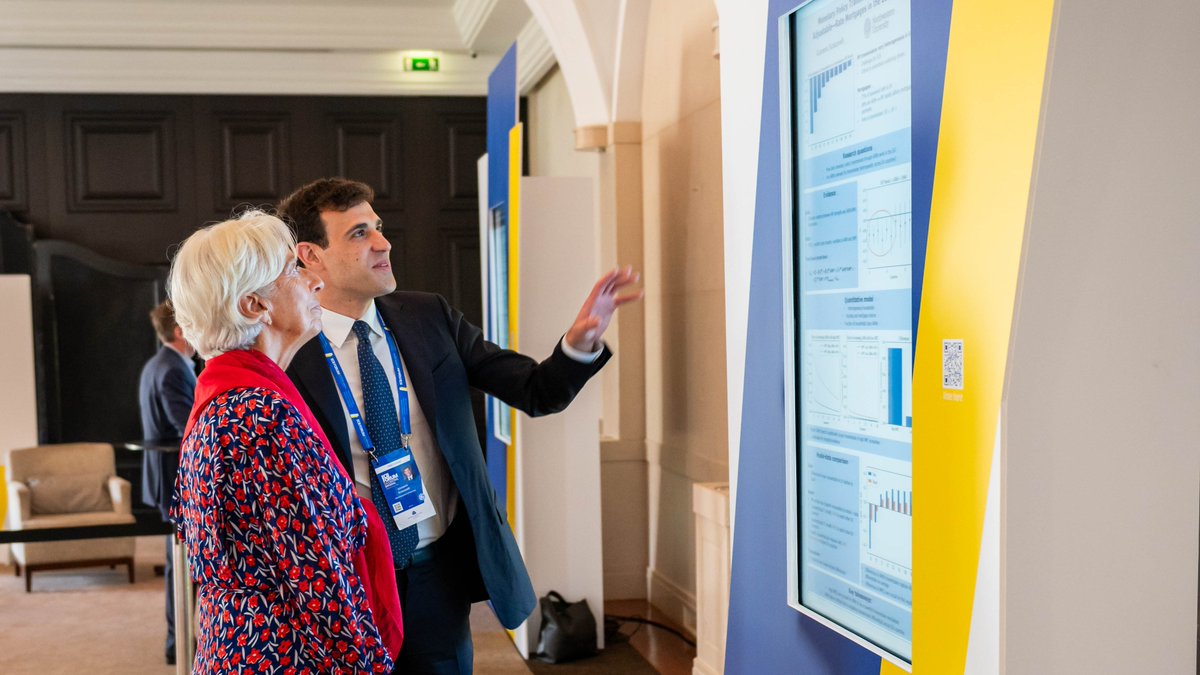
To all young PhD students in econ & finance: Please make sure you apply for the #YoungEconomistPrize at our #ECBForum at Sintra. This is a once-in-a-lifetime experience where all finalists can present their work and interact with distinguished researchers and policymakers.
Feb 26

📣 Eager to help shape Europe’s economic future? 🇪🇺
Are you a PhD student in economics or finance? Why not share your research with us? Apply for the Young Economist Prize to join us in Sintra 🇵🇹 for the #ECBForum on Central Banking!
Apply by 2 March ➡️ link.europa.eu/WFFQJq
8
26
6,380
Benjamin Schoefer retweeted
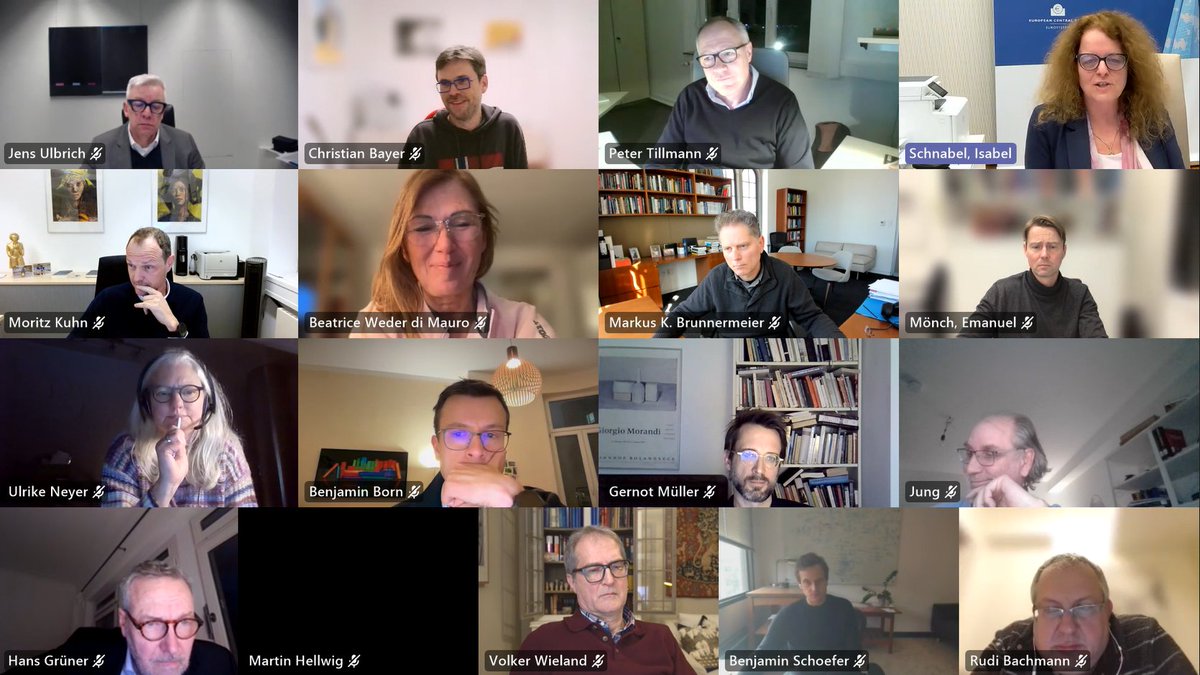
Another great round of discussions with German-speaking economists, today on productivity, defense, financial stability, exchange rates, geopolitical risks and the future of Europe. Thanks for joining!
5
6
52
7,976

Jan 23
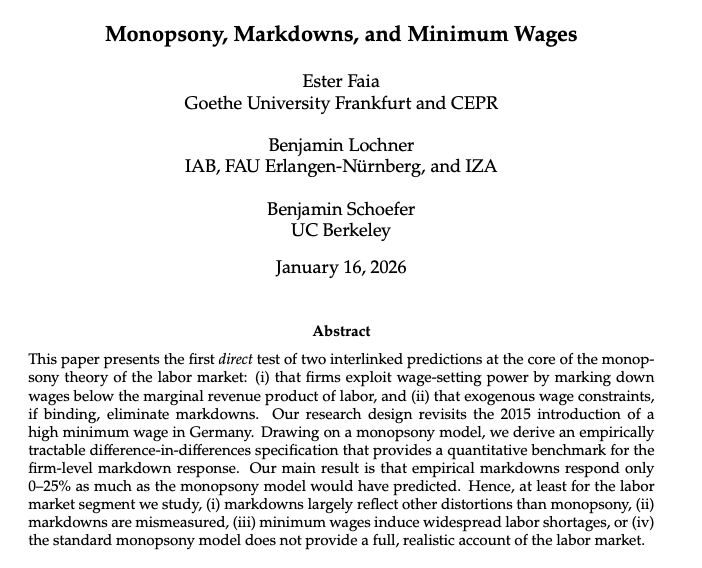
New paper:
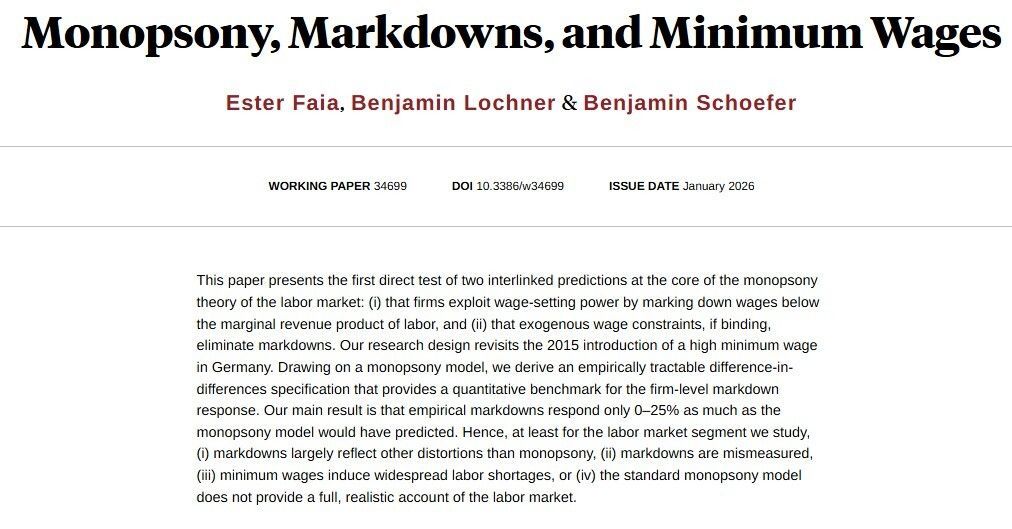
"Monopsony, Markdowns, and Minimum Wages"
w/ E. Faia & B. Lochner
First direct test of influential idea:
Employers exploit monopsony (wage setting) power to "mark down" wages<MRPL.
=>Minimum wages make firms "wage takers" & curb markdowns.
Puzzle: hard to see in data!
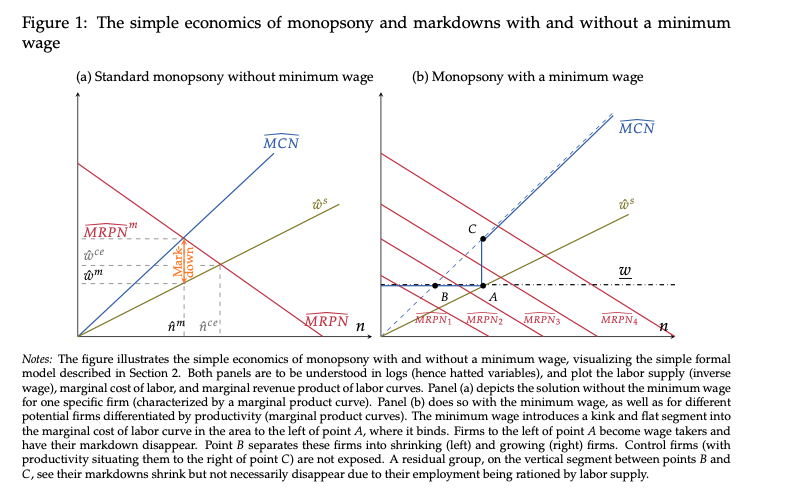
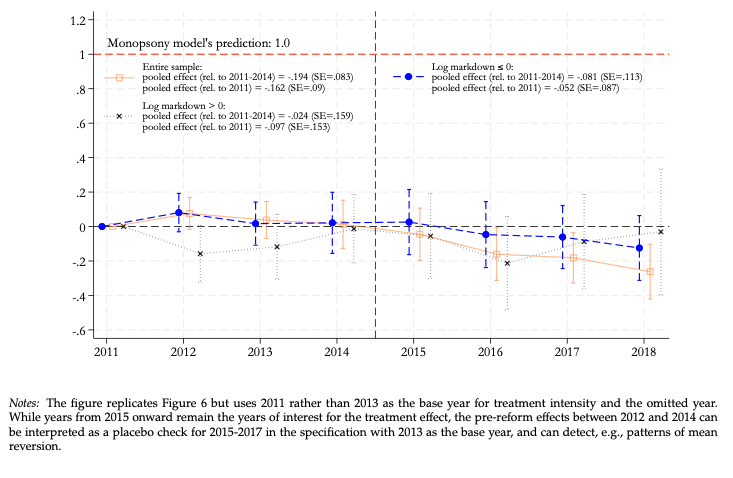
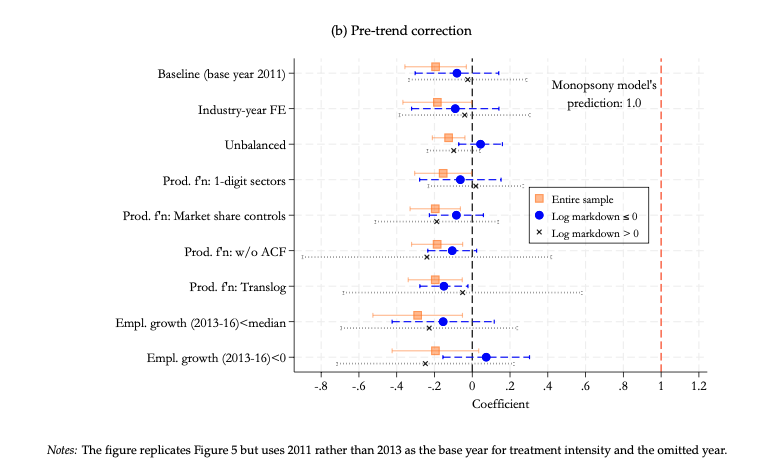
Examining whether measured wage markdowns reflect monopsony power by studying the minimum wage introduction in Germany, from Ester Faia, Benjamin Lochner, and @Schoefer_B nber.org/papers/w34699
8
39
260
68,673
Jan 23
Raises question: what is the weak link? Monopsony model? Markdown measurement? Research design (theory-model link, empirical implementation),...?
Ungated PDF here:
eml.berkeley.edu/~schoefer/s…
1
17
2,159
Examining whether measured wage markdowns reflect monopsony power by studying the minimum wage introduction in Germany, from Ester Faia, Benjamin Lochner, and @Schoefer_B nber.org/papers/w34699
19
73
32,155
Benjamin Schoefer retweeted

1 Dec 2025
📢 PhD Workshop in Labor and Behavioral Economics 2026 📢
The next edition will take place at @CEBI_UCPH , Copenhagen (June 8–9, 2026).
Keynote speakers: Ingar Haaland (NHH) & Benjamin Schoefer (UC Berkeley).
Call for Papers: sites.google.com/view/behavi…
Deadline: Jan 31, 2026
3
5
21
8,420

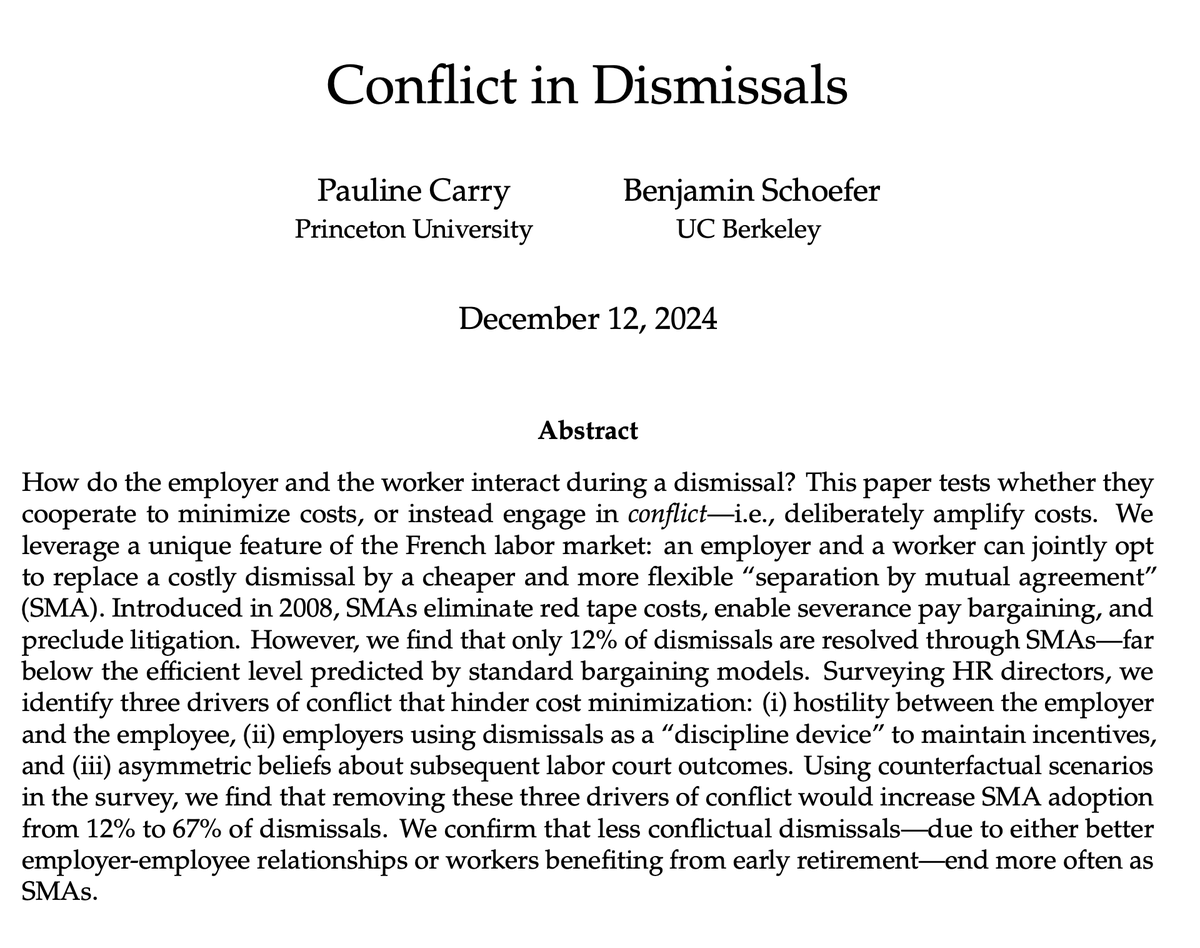
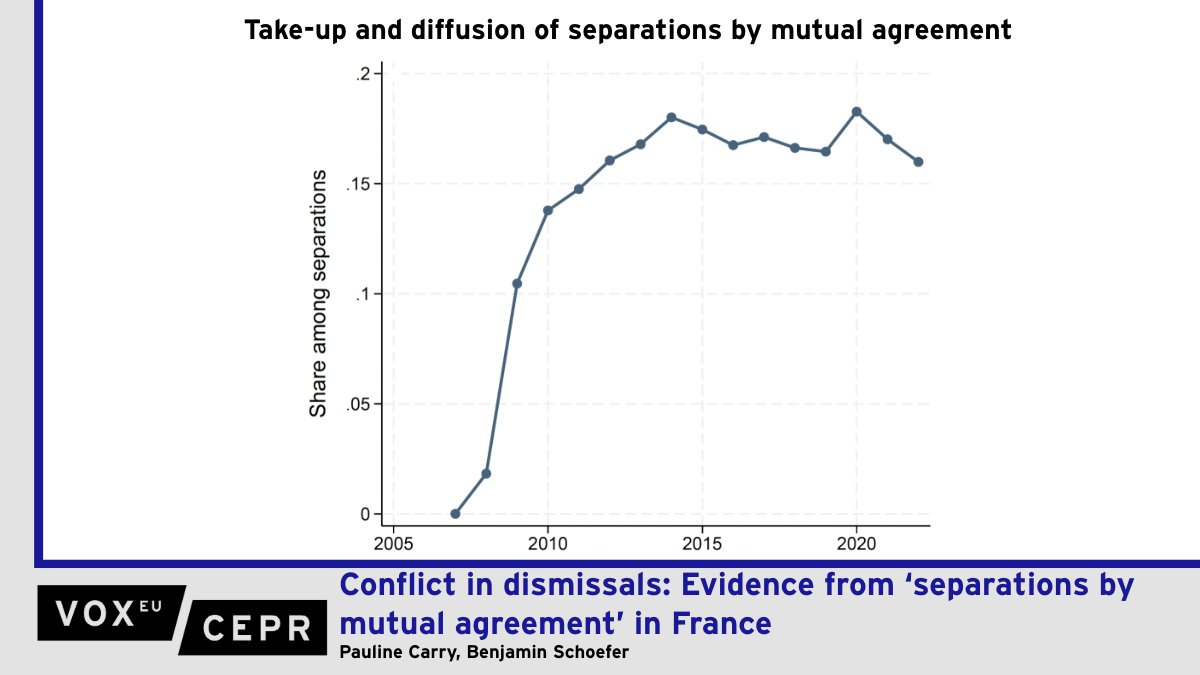
Conflict in dismissals: Evidence from ‘separations by mutual agreement’ in France
Pauline Carry @PaulineCarry @PrincetonSPIA, Benjamin Schoefer @Schoefer_B @UCBerkeley @berkeleyecon @sffed
ow.ly/paSp50Xux8H
1
6
1,888
17 Oct 2025
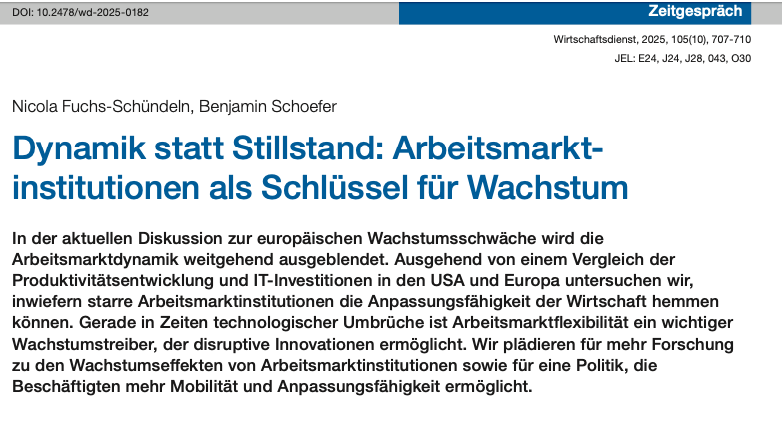
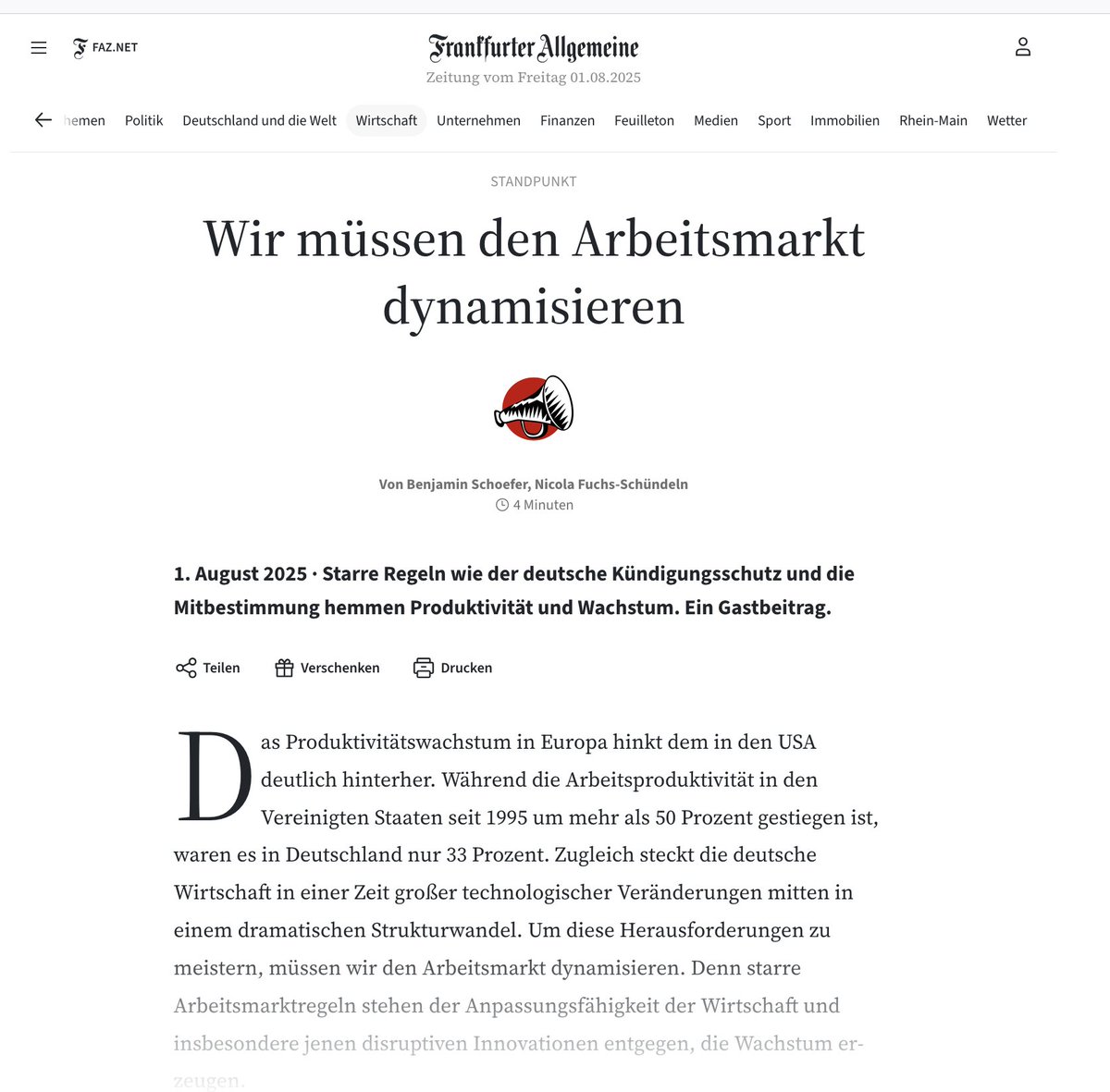
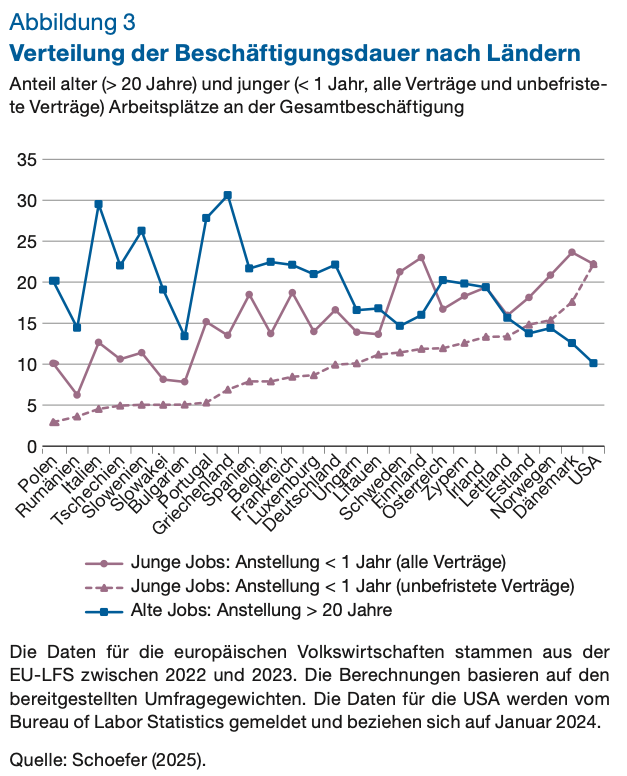
Nicola Fuchs-Schündeln & ich im Wirtschaftsdienst
@Zeitschrift_WD:
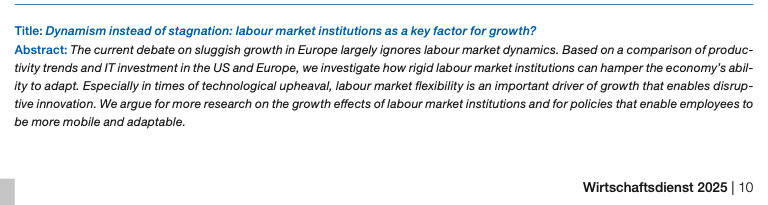
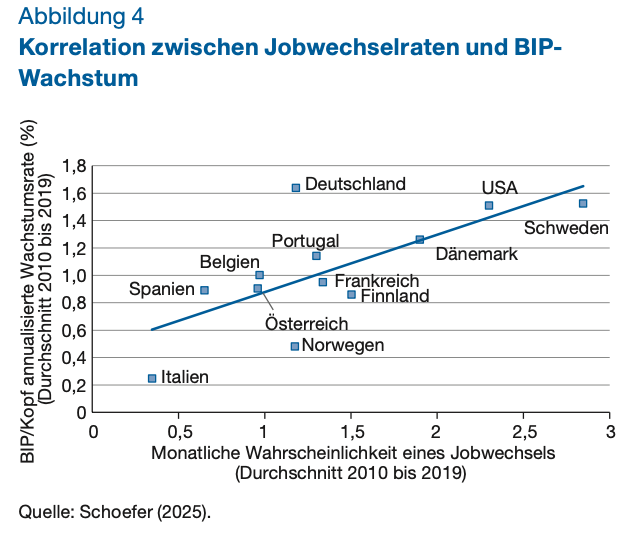
"Dynamik statt Stillstand: Arbeitsmarktinstitutionen als Schlüssel für Wachstum"
Wie könnte "Dynamisierung" des Arbeitsmarkts Europas Wachstums förden?
PDF
wirtschaftsdienst.eu/pdf-dow…
Web
wirtschaftsdienst.eu/inhalt/…
1
499
Benjamin Schoefer retweeted

29 Sep 2025
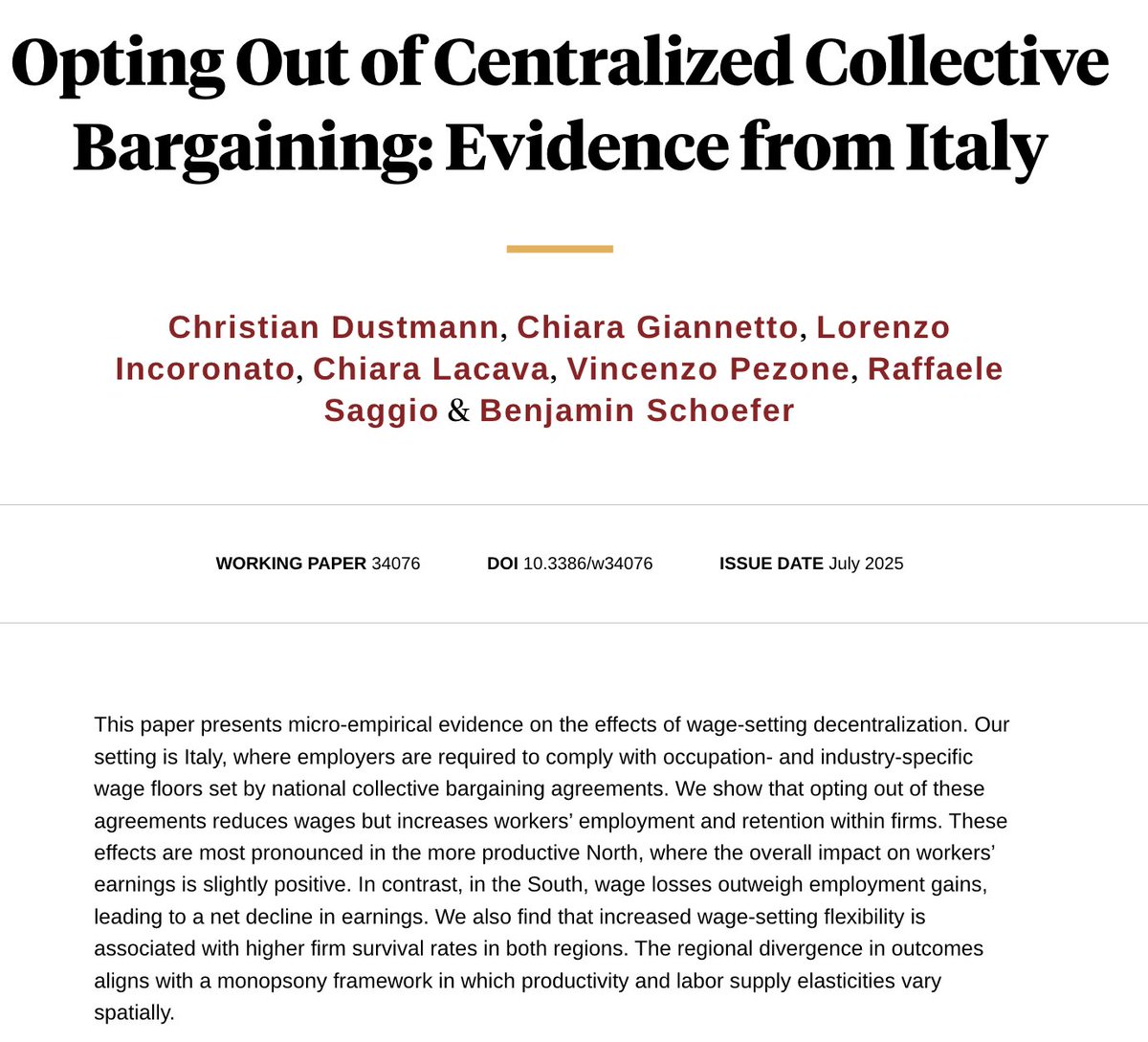
What happens when firms set wages outside of national agreements?
"The Winners and Losers from Collective Bargaining Decentralization", by Christian Dustmann, @c_giannetto, @l_incoronato, @chiaralac, Vincenzo Pezone, @raffaelesaggio, and @Schoefer_B. rfberlin.com/ri-01-25-collec…
4
11
1,369
Benjamin Schoefer retweeted

18 Sep 2025
📢 Come work with us - we are hiring!
@Princeton Industrial Relations Section is hiring Senior Research Specialists!
Work directly with faculty, dive into labor economics research, and prep for grad school.
Apply 👉 irs.princeton.edu/senior-res…
Please spread the word!
@econ_ra
5
7
28
4,284
Benjamin Schoefer retweeted
17 Sep 2025
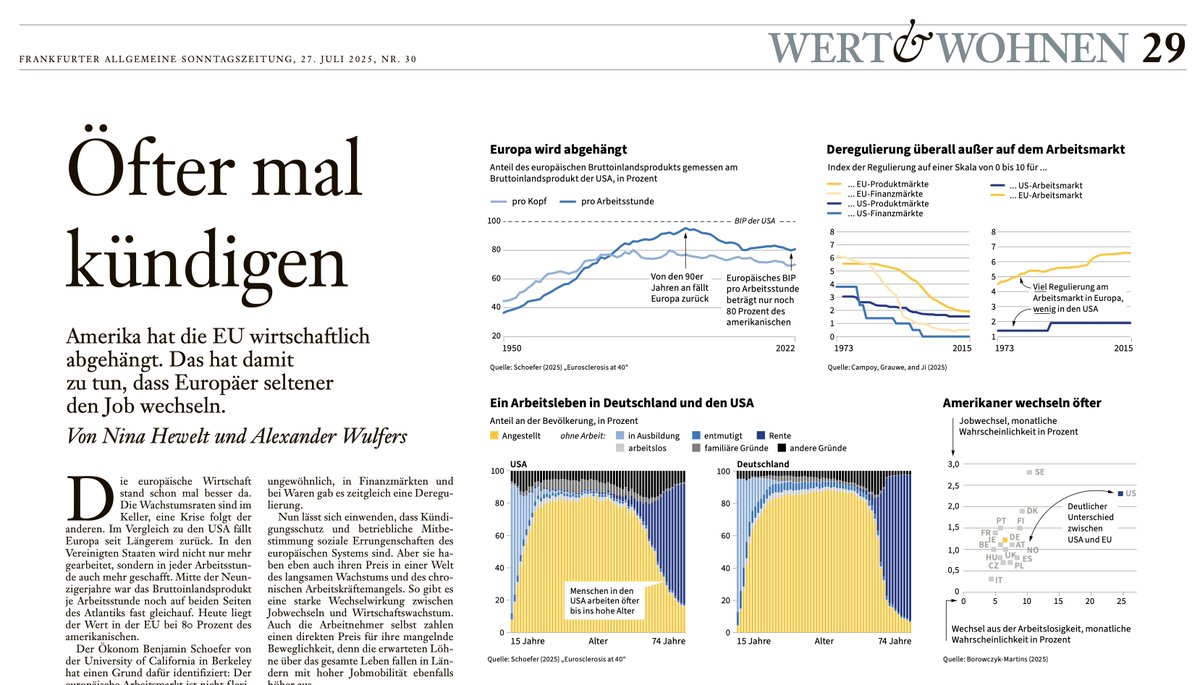
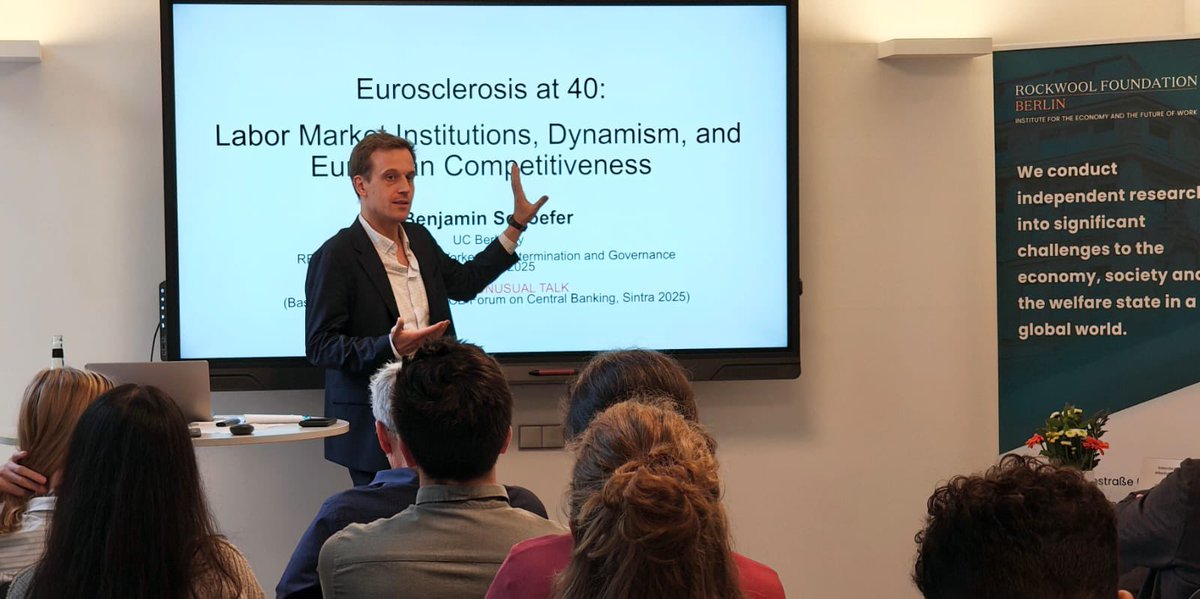
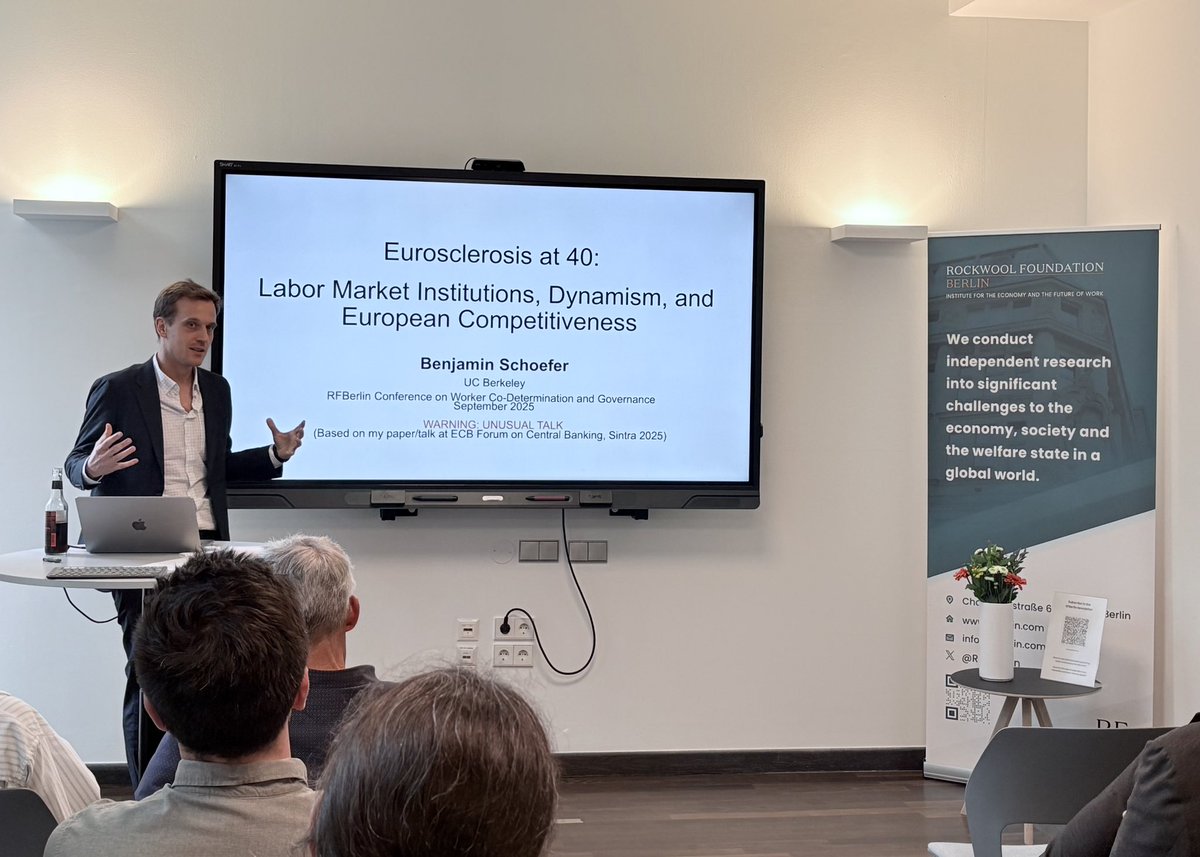
We are delighted to conclude the RFBerlin Conference on Worker Co-Determination and Governance with a keynote lecture on “Eurosclerosis at 40: Labor Market Institutions, Dynamism, and European Competitiveness” by @Schoefer_B.
1
1
736
Benjamin Schoefer retweeted

29 Aug 2025
8/10
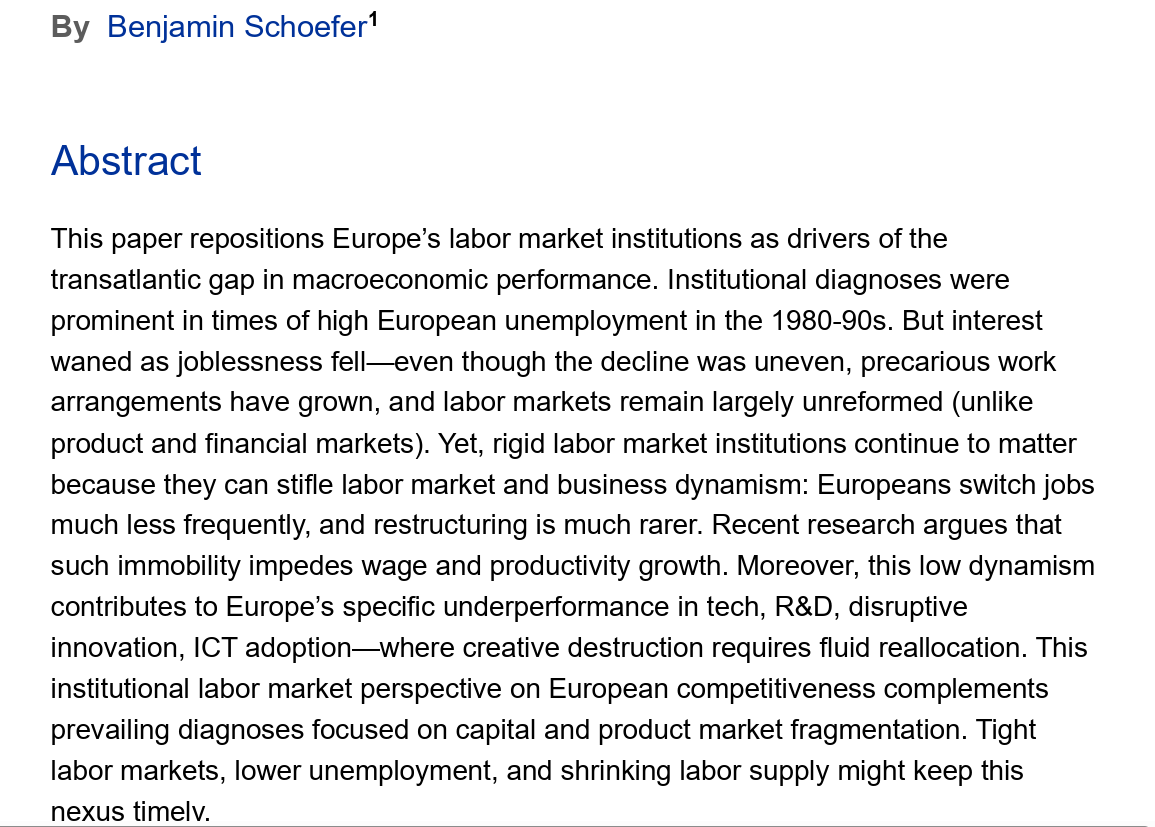
What worries me is that Europe lagged badly in adopting information technology (ICT). As Benjamin Schoefer (2025) argued in Sintra, rigid labor markets and high failure costs discouraged firms from disruptive tech. ecb.europa.eu/pub/pdf/sintra…
1
7
29
2,516
Benjamin Schoefer retweeted

7 Aug 2025
We’re proud to host Benjamin Schoefer, Professor at UC Berkeley and expert in unemployment, labor market institutions, and policy reform. His work has informed labor policy in the US and Europe.
1
2
1
628