
Exploring the cosmos, decoding science, and sparking wonder - one post at a time. 🚀🔭
Joined April 2019
- Tweets 732
- Following 15
- Followers 73,671
- Likes 16,046
594 Photos and videos
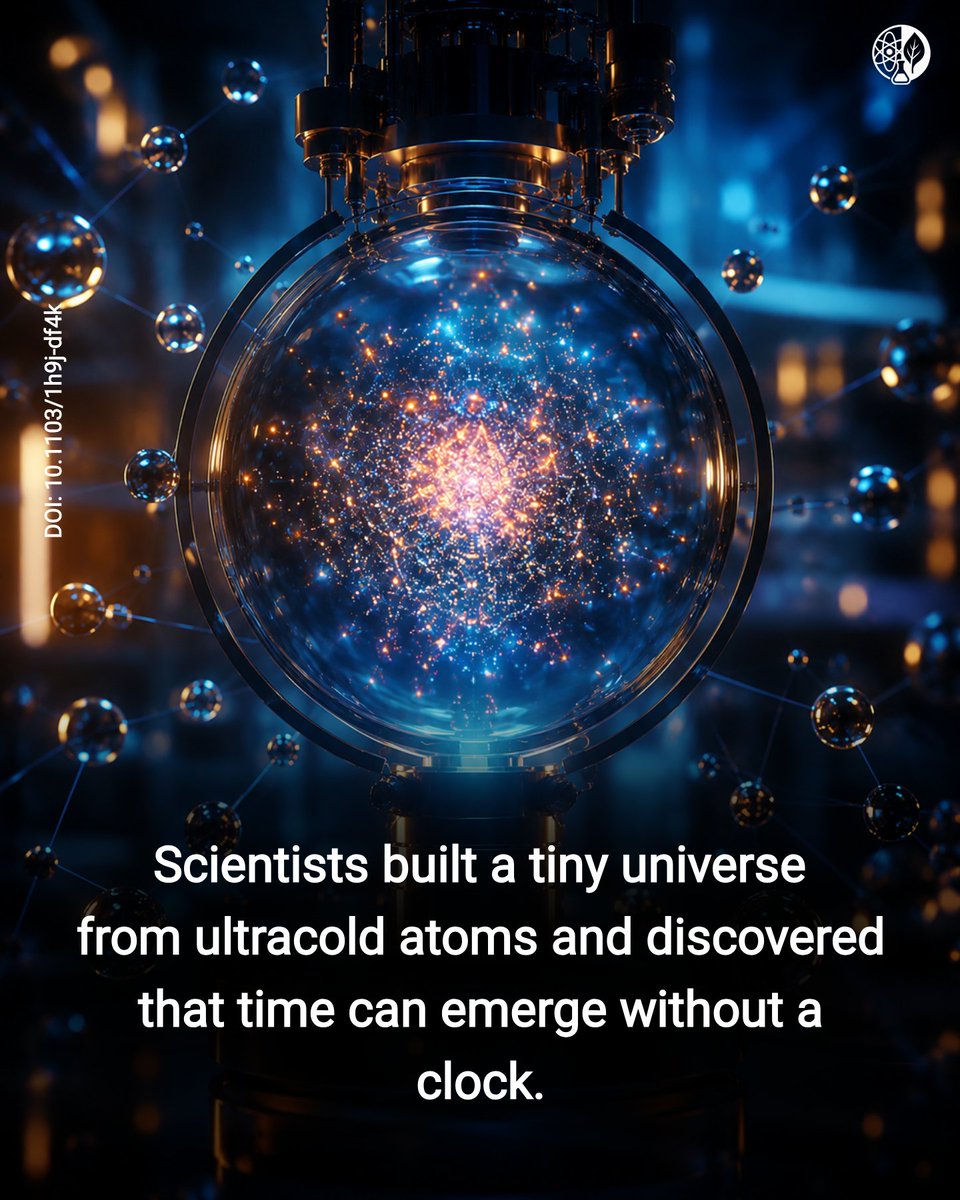







We usually think of time as an invisible cosmic clock ticking away uniformly in the background of the universe, completely independent of us. However, a groundbreaking study published in Physical Review Research has turned this ancient assumption on its head. By building a literal "miniature universe" inside a laboratory, physicists have demonstrated that time doesn’t need an external clock to exist—it can emerge naturally from the internal relationships of matter itself.
Building a Universe in a Lab
To pull off this mind-bending feat, researchers trapped 24,000 rubidium atoms and chilled them to a fraction of a degree above absolute zero. This extreme cold removed all outside noise, allowing the scientists to isolate the atomic cloud and treat it as its own closed system—a tiny, self-contained universe.
Instead of using an outside clock to measure the atoms, the team divided the cloud into two zones and simply monitored how the atoms shifted and rearranged themselves. They discovered that the changing distribution and natural rise of entropy between the atoms generated an internal "arrow of time." When the atoms moved and interacted, time effectively flowed, even mimicking cycles of cosmic expansion. When the atomic arrangement remained completely static, this internal flow of time stopped entirely.
This experiment provides the first concrete evidence for a concept known as "relational time." For decades, physics has been split down the middle. Einstein’s general relativity views time as dynamic and bendable, while quantum mechanics treats it as a rigid, external backdrop. By proving that a quantum system can generate its own internal metric of time through sheer interaction, this research bridges that massive divide.
It suggests that time might not be the pre-existing stage that reality plays out on. Instead, time might just be a property generated by the actors themselves.
The Takeaway: We don't just live inside of time; the interactions of the physical world around us might actually be creating it.
Research Paper: Giovanni Barontini, Testing the problem of time with cold atoms, Physical Review Research (2026). DOI: 10.1103/1h9j-df4k
2
5
525
Water seems harmless—until it's squeezed to extreme pressures and slices through steel like a hot knife through cake.
3
8
1,433
The White-tailed Sea Eagle is incredibly powerful, but like most birds of prey, it cannot lift extremely heavy prey. It can typically carry 1–3 kg (2–7 lb) while flying, and sometimes dragging prey too heavy to fly with all the way to shore."
2
11
1,180
Robots can transform industries, explore space, and save lives—but making them beg for money is apparently the easiest job we could find for them.
2
6
1,532

Jun 13
Imagine trying to read a book in a pitch-black room using only the faint glow of a smartphone from the hallway. For years, biologists studying the tiniest molecules in our bodies faced a very similar frustration.
While advanced cryogenic electron microscopes could easily capture large cellular structures, the smallest proteins—the precise ones responsible for keeping us healthy or causing disease—remained blurry, faint, and incredibly difficult to see.
That view just became crystal clear. In a groundbreaking study published in the journal *Science*, a research team at UC Berkeley unveiled a brilliant upgrade to modern microscopy. By integrating an ultra-precise, high-powered laser into the microscope system, they have essentially flipped the light switch on the atomic world.
As the microscope's imaging beam passes through this intense laser field, the light waves are subtly manipulated to create an unprecedented boost in image contrast. This technique transforms what used to be a blurry, unrecognizable mist into a sharp, high-definition portrait of a protein's exact structure.
This isn't just a victory for physics; it is a massive leap forward for everyday healthcare and drug discovery. The vast majority of targeted medical treatments rely on interacting with these exact small proteins.
By finally viewing these elusive molecules in their natural state with flawless clarity, scientists can map exactly how life-saving drugs bind to their targets. This newfound visibility is set to drastically accelerate the development of next-generation pharmaceuticals, paving the way for faster, more effective treatments for complex diseases.
Paper Citation: Petar N. Petrov et al., Laser phase plate improves structure determination of small proteins by cryo-EM. Science0, eaeh0665, DOI:10.1126/science.aeh0665
1
6
7
639
Jun 13
Don't let the beauty fool you—Orchid Mantises are ruthless hunters.
Orchid Mantises hunt through deception. Their flower-like appearance attracts unsuspecting pollinators such as bees and butterflies. When prey comes within reach, the mantis strikes with lightning-fast reflexes, grabbing its victim with powerful spiny forelegs.
19
94
2,368
Jun 13
A polar bear knows the secret of survival: spread your weight, stay above the ice.
7
24
1,487
Jun 13
The golden apple snail lays neon-pink eggs packed with natural toxins, turning its offspring into tiny chemical fortresses before they even hatch. 🐌💗
8
38
3,082
Jun 13
A visualization of the toxic pollution released by burning tires.
Burning tires doesn't just create black smoke—it releases toxic chemicals, heavy metals, carcinogens, and ultra-fine particles that can harm human health and the environment for years. One tire fire can leave a lasting toxic legacy.
x.com/i/status/2065577389061…
1
4
1,287
Jun 12
What if the largest network on Earth isn't the internet? Scientists have officially mapped our planet’s subterranean world, revealing a hidden fungal infrastructure that completely redefines how we view nature.
Beneath our feet lies roughly 110 quadrillion kilometers of microscopic fungal threads. To put that into perspective, if you laid these threads end to end, they would stretch from the Earth to the Sun nearly a billion times. This massive web weighs several times more than the combined biomass of every single human alive today, forming a literal living foundation for our world.
This network acts as a global trading system for plants. These underground threads connect with the roots of the vast majority of land plants, trading water and vital nutrients for the carbon plants produce through photosynthesis. It is a massive, cooperative relationship that supports almost all terrestrial life.
Because of this constant exchange, the network serves as a powerful climate regulator. It pulls billions of tons of carbon dioxide out of the atmosphere each year and locks it safely away in the ground. Preserving this fragile, invisible architecture is one of our best natural tools for environmental conservation. Next time you take a walk outside, remember that there is an entire, bustling universe working hard right beneath your feet.
Source Citation: Justin D. Stewart et al. ,Global density and biomass of arbuscular mycorrhizal fungal networks.Science392,1171-1176 (2026). DOI:10.1126/science.adu4373
2
11
735
Jun 12
Deep beneath the ocean waves, our planet is keeping time to a mysterious rhythm.
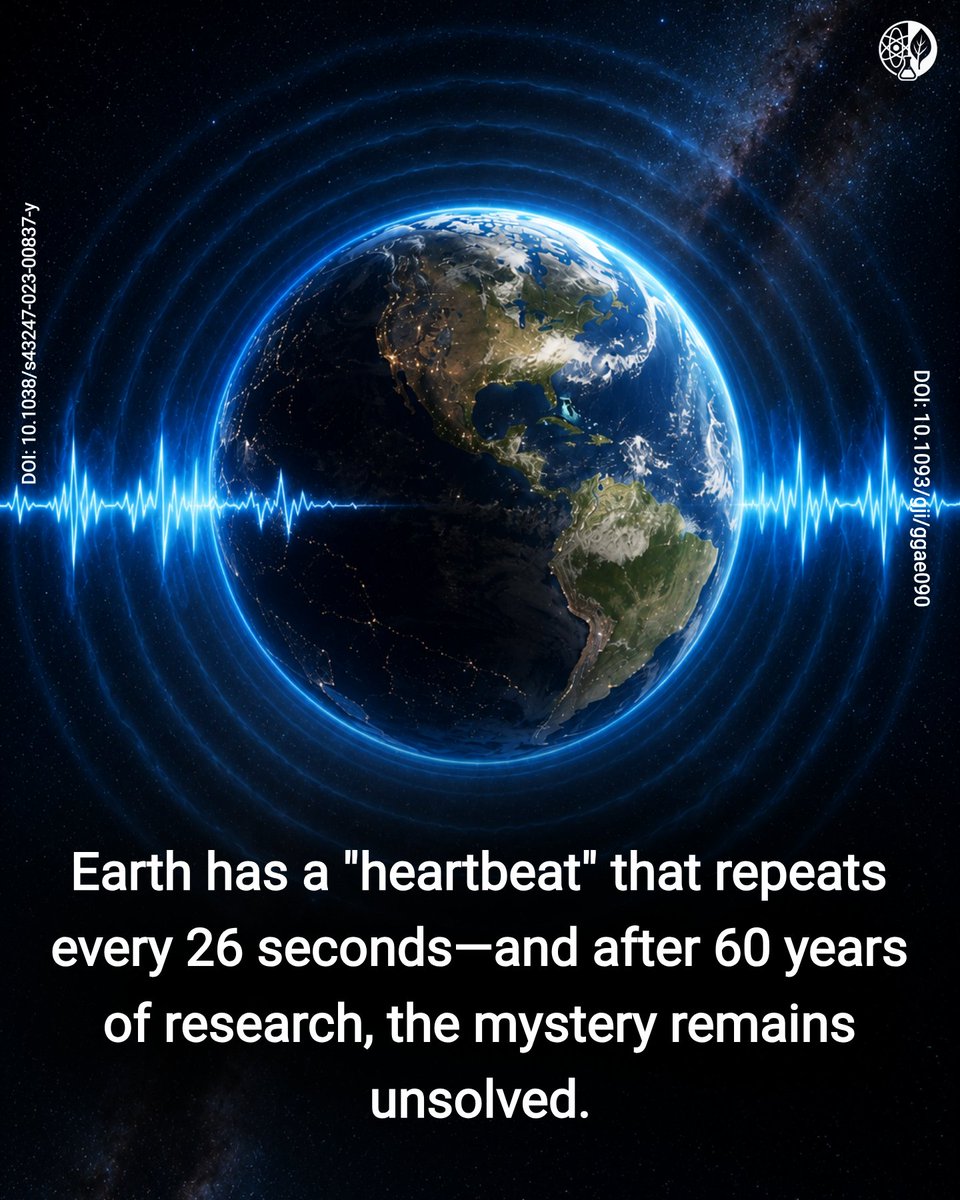
For more than sixty years, seismologists have been tracking a bizarre phenomenon affectionately known as the "Earth's heartbeat." Every 26 seconds, a distinct, continuous seismic pulse emanates from the Bight of Bonny in the Gulf of Guinea, right off the western coast of Africa. Unlike the chaotic background noise typically generated by our active planet, this precise vibration registers on sensitive instruments worldwide with the steady regularity of a clock, leaving generations of scientists fascinated by its persistence.
The exact cause of this global pulse remains one of earth science's most enduring mysteries, balancing two primary competing theories. One school of thought suggests that massive oceanic swells traveling across the Atlantic Ocean crash into the shallow West African continental shelf. In this scenario, the unique geometry of the seabed acts as a colossal acoustic amplifier, transforming ocean wave energy into steady seismic waves that ripple through the crust.
Conversely, other researchers argue the pulse is volcanic, driven by magma or pressurized hydrothermal systems shifting beneath the ocean floor along the active Cameroon Volcanic Line.
Recent breakthrough research has added a fascinating twist to the debate by documenting subtle, shifting frequencies within the signal. These frequency shifts perfectly mimic the arrival patterns of deep-water ocean storms, strongly favoring the idea that the ocean is driving the rhythm. Yet, even with this compelling link, the exact physical mechanism that allows this specific piece of coast to vibrate so perfectly remains unsolved, reminding us that the natural world still holds profound secrets right under our feet.
Journal References: Bruland, C., Hadziioannou, C. Gliding tremors associated with the 26 second microseism in the Gulf of Guinea. Commun Earth Environ 4, 176 (2023). DOI: 10.1038/s43247-023-00837-y
Yingjie Xia, Xuping Feng, Xiaofei Chen, Unravelling the excitation mechanism of very long-period (VLP) tremors in the Gulf of Guinea: evidence for vibrations of thin surface crustal plates, Geophysical Journal International, Volume 237, Issue 2, May 2024, Pages 1079–1092, DOI: 10.1093/gji/ggae090
3
6
582
Jun 12
As mentioned Earlier any post which is against @elonmusk and @X gets shadow banned with limited reach. This is the reality of X algorithm. Though this one isn't against Elon but still X's AI (@grok) will reduce its reach, and then deny doing it
Jun 11

The global landscape of medical technology has just reached a transformative milestone. A new brain-computer interface known as NEO has officially become the first device of its kind to receive commercial medical approval. This marks a major shift, moving advanced neural implants out of experimental laboratories and into accessible clinical care.
Unlike other high-profile systems that insert microscopic threads deep into the brain, NEO utilizes a remarkably safe and minimally invasive architecture. The coin-sized device rests gently on the brain's protective outer membrane, completely avoiding direct penetration of delicate tissue. This design prevents physical scarring and ensures long-term stability for the patient. The implant also operates entirely without an internal battery, relying instead on a small external magnet for both power and data transmission.
For individuals living with severe spinal cord injuries, this technology is life-changing. When a patient simply imagines moving their hand, the implant reads those electrical signals and instantly directs a soft robotic glove to perform the physical action. Users can once again hold utensils, grasp objects, and regain their daily autonomy. Furthermore, continuous use of this brain-to-machine connection has been shown to encourage natural nerve recovery over time, proving it is a powerful tool for active physical rehabilitation.
This historic medical approval demonstrates that the seamless integration of human intent and assistive hardware is no longer a futuristic concept, but a tangible, highly effective reality that will continue to improve the quality of human life.
1
706
Jun 11
The global landscape of medical technology has just reached a transformative milestone. A new brain-computer interface known as NEO has officially become the first device of its kind to receive commercial medical approval. This marks a major shift, moving advanced neural implants out of experimental laboratories and into accessible clinical care.
Unlike other high-profile systems that insert microscopic threads deep into the brain, NEO utilizes a remarkably safe and minimally invasive architecture. The coin-sized device rests gently on the brain's protective outer membrane, completely avoiding direct penetration of delicate tissue. This design prevents physical scarring and ensures long-term stability for the patient. The implant also operates entirely without an internal battery, relying instead on a small external magnet for both power and data transmission.
For individuals living with severe spinal cord injuries, this technology is life-changing. When a patient simply imagines moving their hand, the implant reads those electrical signals and instantly directs a soft robotic glove to perform the physical action. Users can once again hold utensils, grasp objects, and regain their daily autonomy. Furthermore, continuous use of this brain-to-machine connection has been shown to encourage natural nerve recovery over time, proving it is a powerful tool for active physical rehabilitation.
This historic medical approval demonstrates that the seamless integration of human intent and assistive hardware is no longer a futuristic concept, but a tangible, highly effective reality that will continue to improve the quality of human life.
1
3
1,366
Jun 11
I had a feeling this post would get the lowest reach because quantum mechanics is way over most people's heads.
Jun 10
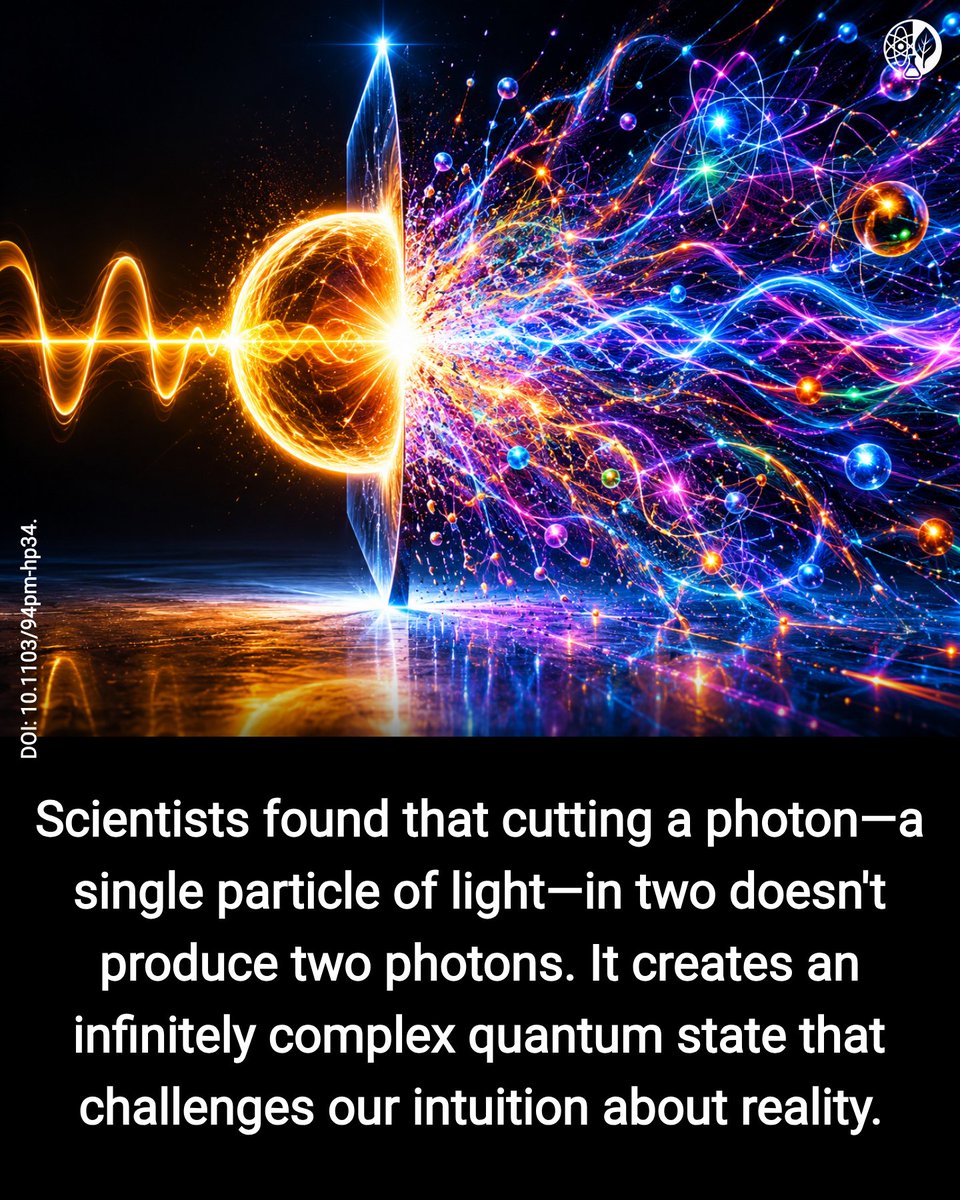
According to standard quantum mechanics, an elementary particle like a photon is indivisible—it has no smaller parts to break down. However, a fascinating new study from physicists at the University of Oslo published in Physical Review Letters explores exactly what happens if you try to forcefully chop a single photon using an ultra-fast optical shutter.
The researchers modeled a hypothetical scenario where an incredibly sharp, fast shutter attempts to intercept and truncate a single pulse of light mid-flight. In our everyday world, a shutter simply blocks part of a wave. In the quantum realm, trying to make an instantaneous, mathematically perfect cut requires a near-infinite amount of energy. It violently disrupts the surrounding quantum vacuum, creating a theoretical boundary crisis.
The study reveals that instead of producing a "fractional" particle, the act of slicing the light forces the system into a complex quantum state. It transforms into an infinite superposition—a fluid mix of multiple potential photon states existing simultaneously. Yet, in a bizarre twist of quantum mechanics, the light still behaves exactly like a single photon on one side of the shutter and a total vacuum on the other.
By investigating these extreme boundaries, the research helps scientists better understand the fundamental limits of how light interacts with matter, bridging the gap between theoretical physics and the realities of quantum technology.
Journal Source: Isak Cecil Onsager Rukan et al, Truncated photon, Physical Review Letters (2026). DOI: 10.1103/94pm-hp34.
2
1
5
2,086
Jun 10
According to standard quantum mechanics, an elementary particle like a photon is indivisible—it has no smaller parts to break down. However, a fascinating new study from physicists at the University of Oslo published in Physical Review Letters explores exactly what happens if you try to forcefully chop a single photon using an ultra-fast optical shutter.
The researchers modeled a hypothetical scenario where an incredibly sharp, fast shutter attempts to intercept and truncate a single pulse of light mid-flight. In our everyday world, a shutter simply blocks part of a wave. In the quantum realm, trying to make an instantaneous, mathematically perfect cut requires a near-infinite amount of energy. It violently disrupts the surrounding quantum vacuum, creating a theoretical boundary crisis.
The study reveals that instead of producing a "fractional" particle, the act of slicing the light forces the system into a complex quantum state. It transforms into an infinite superposition—a fluid mix of multiple potential photon states existing simultaneously. Yet, in a bizarre twist of quantum mechanics, the light still behaves exactly like a single photon on one side of the shutter and a total vacuum on the other.
By investigating these extreme boundaries, the research helps scientists better understand the fundamental limits of how light interacts with matter, bridging the gap between theoretical physics and the realities of quantum technology.
Journal Source: Isak Cecil Onsager Rukan et al, Truncated photon, Physical Review Letters (2026). DOI: 10.1103/94pm-hp34.
2
1
8
2,748
Jun 10
Like humans, gorillas are highly intelligent primates.
This is the most viral video currently shared by most of the content creators. Why hasn't @nikitabier demonetized them. I think he has personal grudge against few accounts and he Demonetized them e.g is @Rainmaker1973
x.com/i/status/2064482681912…
1
4
787
A new scientific study suggests that parts of the Southern California fault system may currently be carrying some of the highest levels of tectonic stress seen in the last 1,000 years.
By reconstructing centuries of earthquake activity, researchers found that stress has been steadily accumulating around key fault zones, including the famous San Andreas Fault. While this does not mean a major earthquake is imminent, it provides valuable insight into how energy builds up within Earth's crust over long periods of time.
The study highlights just how dynamic our planet is beneath the surface. Even when the ground seems still, powerful geological forces are constantly at work, slowly shaping the future of entire regions.
Science can't predict exactly when the next major earthquake will occur, but studies like this help us better understand the risks and prepare for them.
Paper refrence: Burkhard, L. M. L., Smith-Konter, B. R., Scharer, K. M., & Sandwell, D. T. (2026). Cajon pass and the southern San Andreas Fault system: Earthquake cycle stress accumulation and present-day loading. Journal of Geophysical Research: Solid Earth, 131, e2025JB033213. DOI: 10.1029/2025JB033213
1
6
25
2,119
Science & Nature retweeted
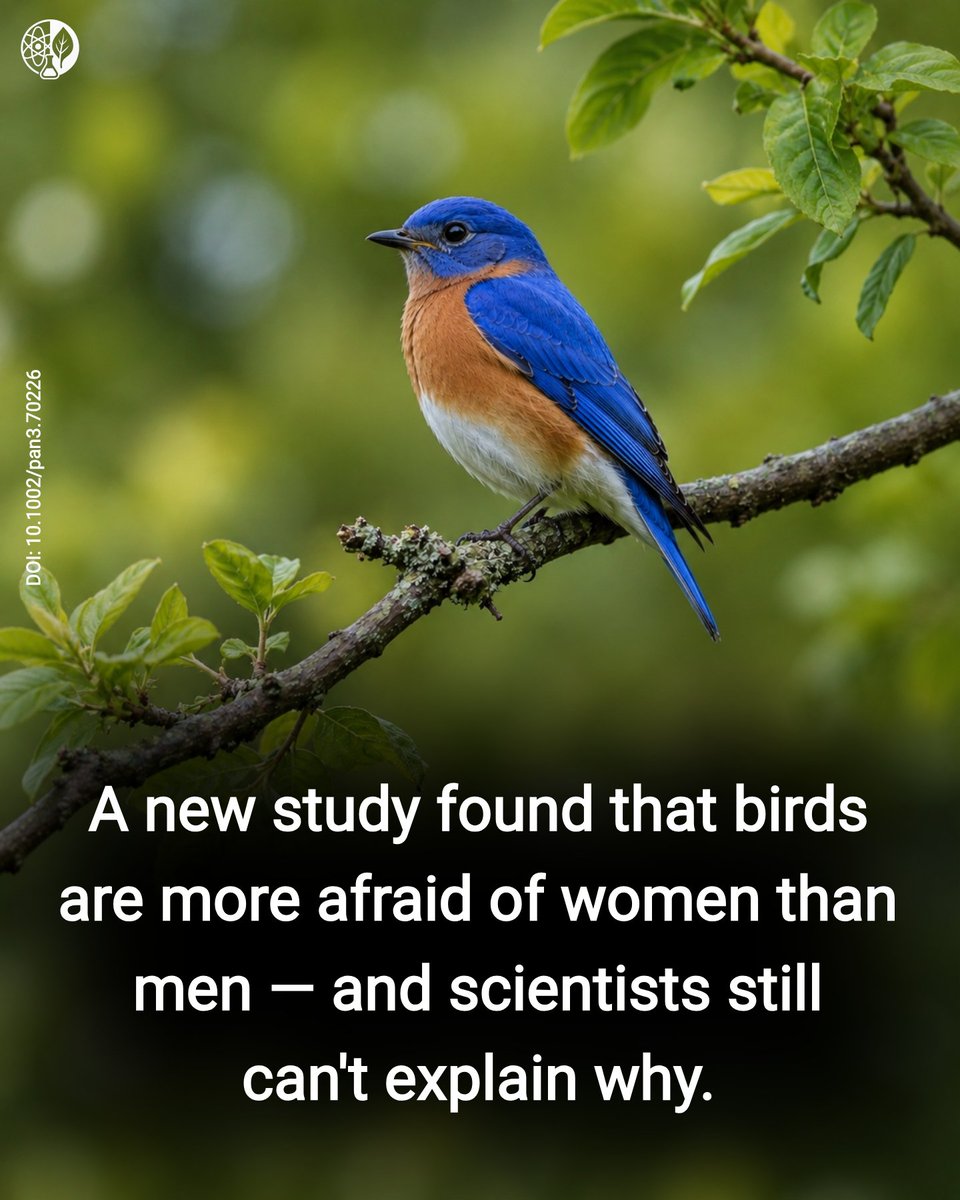
A recent ecological study has uncovered a surprising dynamic in our city ecosystems. New research published in the journal People and Nature reveals that wild birds are consistently more cautious around women than men.
Scientists use a metric called Flight Initiation Distance to gauge how close a person can approach a wild animal before it decides to flee. During a comprehensive field experiment across multiple European cities, researchers carefully controlled their approach. Observers of both sexes were perfectly matched in height, clothing color, and walking pace to ensure a fair test. Despite these strict controls, the results showed that birds consistently took to the skies roughly one meter sooner when the approaching researcher was a woman.
The exact reason behind this differing reaction remains a puzzle to the scientific community. Because obvious visual traits were standardized, researchers suspect the birds are tuning into highly subtle cues. Theories suggest these urban animals might be reacting to slight differences in male and female walking patterns, minor variations in body proportions, or even distinct human olfactory signals.
This fascinating discovery highlights how closely our local wildlife watches us, picking up on signals we may not even realize we are broadcasting. As research continues, the precise cues driving this avian anxiety remain an intriguing open question in behavioral ecology.
Journal Citation: Morelli, F., Benedetti, Y., Mikula, P., Blumstein, D. T., Díaz, M., Page, A., Tryjanowski, P., Nowak, M. K., Vincze, E., & Lövei, G. L. (2026). Sex matters: European urban birds flee approaching women sooner than approaching men. People and Nature, 8, 316–326. DOI: 10.1002/pan3.70226
3
6
1,136