
Joined August 2009
- Tweets 407
- Following 224
- Followers 93
- Likes 1,095
56 Photos and videos








Sumit retweeted

Jan 30
Reviewed this immensely readable and fun anthology for Scroll:
scroll.in/article/1088966/th…
@HachetteIndia @RVRaman_ @tanujsolanki @authormadhulika @MeetiShroff @greatbong @ajaychow @VaseemKhanUK @digitanil @ScifiSumit @anuradhakumar01
2
1
4
190


19 Sep 2025
Just received my author copy. An anthology of contemporary crime fiction that includes my contribution "In the Poisoned Entrails" . With thanks to Editor Tarun Saint and publisher @HachetteIndia
1
12

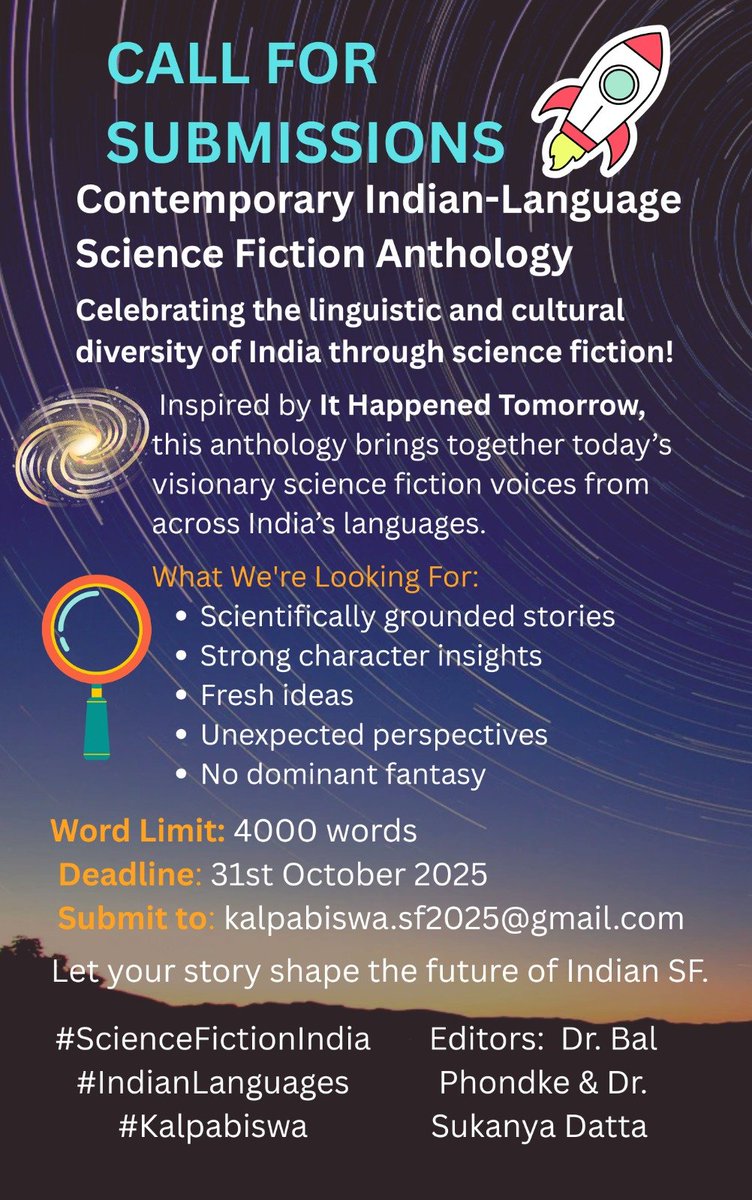
Call for Submissions!
We're curating a Contemporary Indian-Language Science Fiction Anthology
Send your stories in English or vernacular Indian languages by 31 Oct 2025
Let your imagination shape the future! kalpabiswa.sf2025@gmail.com #IndianSF #SciFiWriters #CallForSubmissions
9
10
702
16 May 2025
For the universe of Koustubh, I need at least a couple of languages. So first is to build a conlang engine. Still a work in progress, but slowly taking shape.
#koustubh
1
1
36
13 May 2025
And thus begins our saga, a story that is likely to last over five volumes. A story that will try to blend together both mythos and logos. A story of discovering new places, and in the process discovering ones true self. Come, join me in my journey
1
22
13 Apr 2025
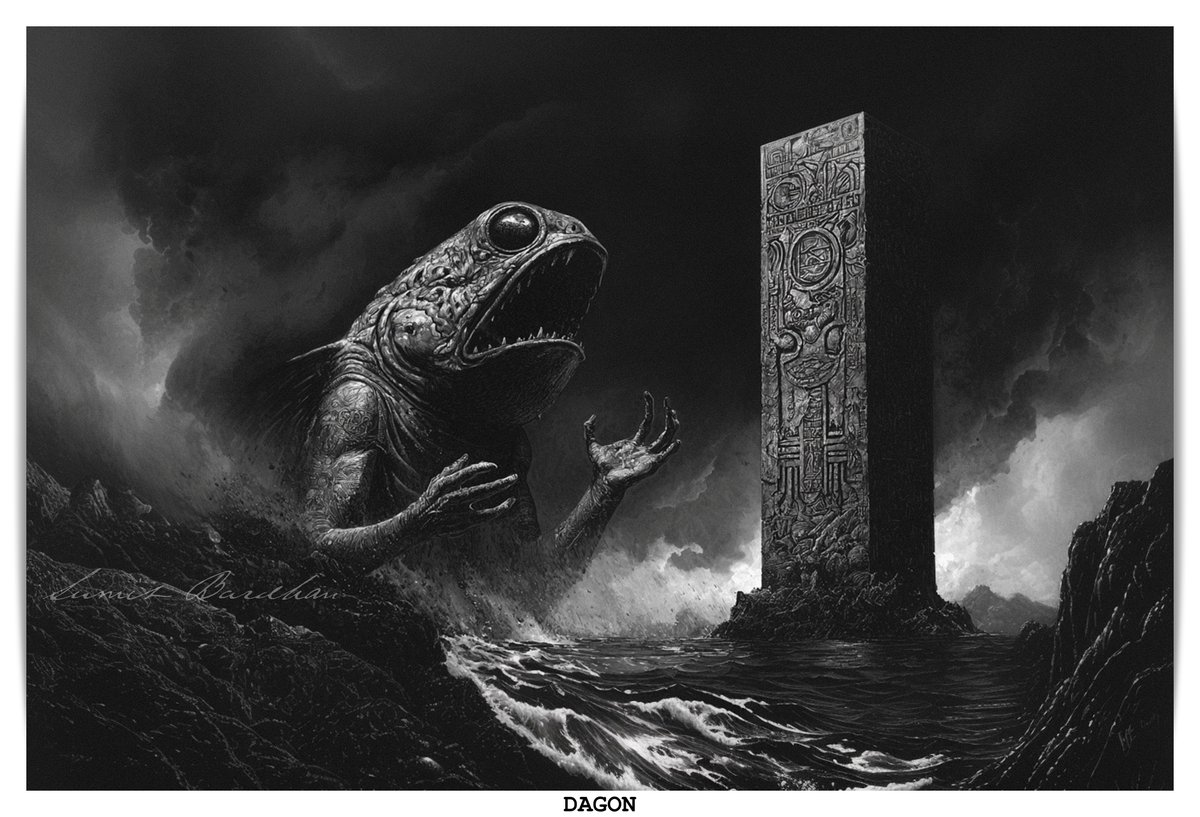
Having completed my assignment of translating #Lovecraft, I tried my hand at creating some Lovecraftian illustrations with #midjourney. Here's Dagon.
2
32
Sumit retweeted

3 Mar 2025
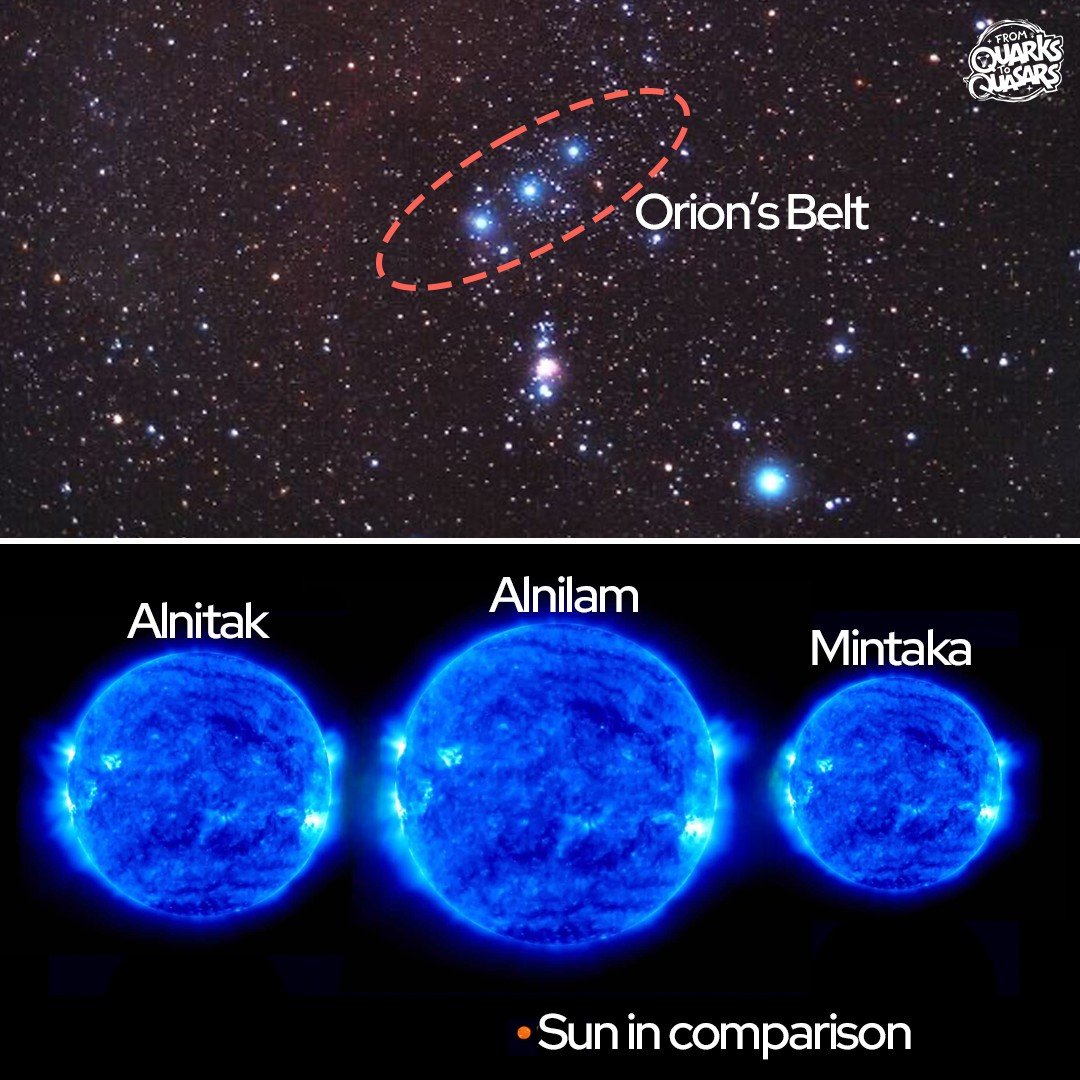
The three stars in Orion compared to the Sun:
The stars in Orion's Belt are simply massive. They are all blue supergiants: Alnitak, Alnilam, and Mintaka.
265
3,070
19,538
966,984
Sumit retweeted

3 Mar 2025
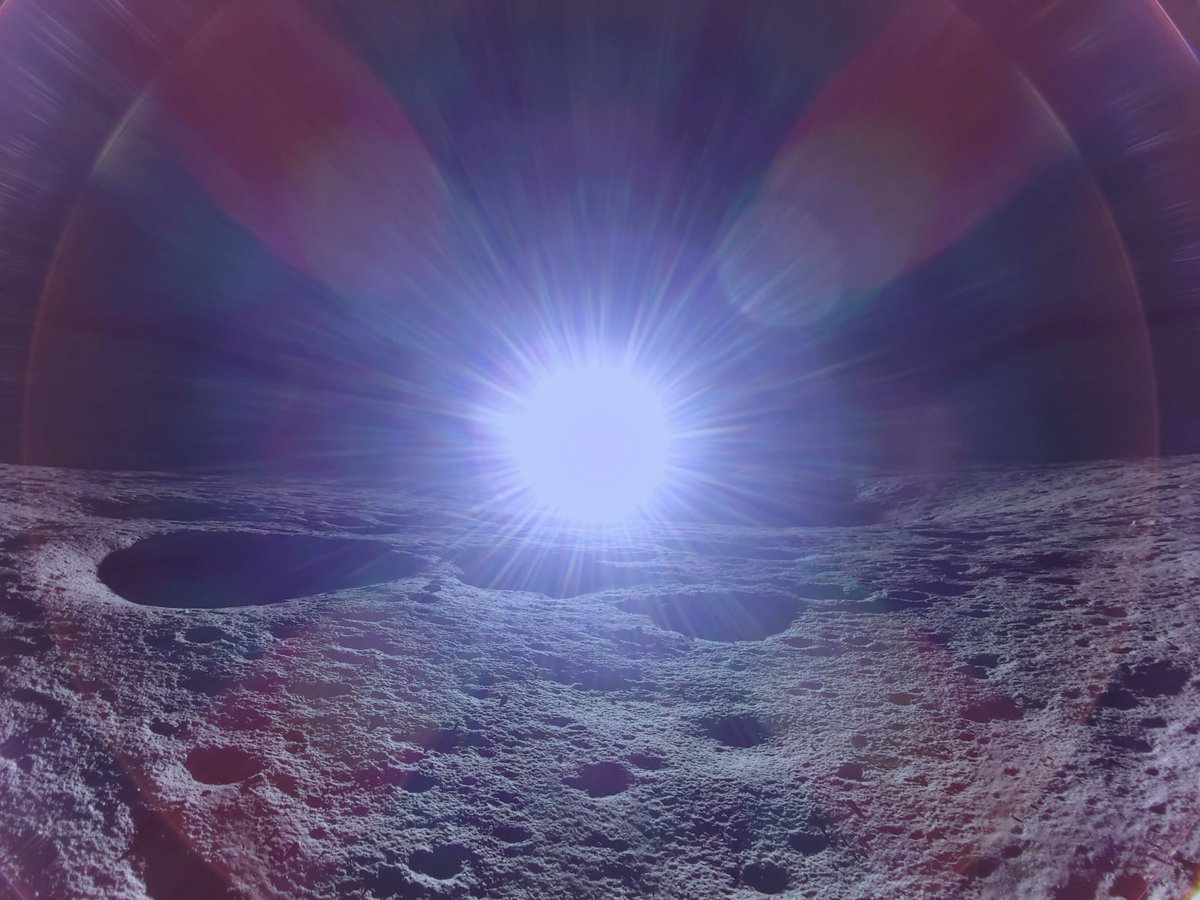
Rise and shine! Firefly’s #BlueGhost lander captured its first sunrise on the Moon, marking the beginning of the lunar day and the start of surface operations in its new home. Our #GhostRiders have already begun operating many of the 10 @NASA payloads aboard the lander and will continue operations over the next two weeks and into the lunar night. #BGM1
375
1,938
11,738
611,090
Sumit retweeted

22 Feb 2025
Pietstop!
This is so long overdue. Always wanted to turn Piet Mondrian's Broadway Boogie-Woogie into a traffic simulator.
Vibe-coded it over the weekend here's some things I learned:
1
1
5
507
Sumit retweeted

19 Feb 2025
Converting old camera films to digital photos
279
4,331
37,158
5,458,763
Sumit retweeted

19 Feb 2025
A couple reflections on the quantum computing breakthrough we just announced...
Most of us grew up learning there are three main types of matter that matter: solid, liquid, and gas. Today, that changed.
After a nearly 20 year pursuit, we’ve created an entirely new state of matter, unlocked by a new class of materials, topoconductors, that enable a fundamental leap in computing.
It powers Majorana 1, the first quantum processing unit built on a topological core.
We believe this breakthrough will allow us to create a truly meaningful quantum computer not in decades, as some have predicted, but in years.
The qubits created with topoconductors are faster, more reliable, and smaller.
They are 1/100th of a millimeter, meaning we now have a clear path to a million-qubit processor.
Imagine a chip that can fit in the palm of your hand yet is capable of solving problems that even all the computers on Earth today combined could not!
Sometimes researchers have to work on things for decades to make progress possible.
It takes patience and persistence to have big impact in the world.
And I am glad we get the opportunity to do just that at Microsoft.
This is our focus: When productivity rises, economies grow faster, benefiting every sector and every corner of the globe.
It’s not about hyping tech; it’s about building technology that truly serves the world.

5,119
18,336
104,951
27,154,259
Sumit retweeted

12 Feb 2025
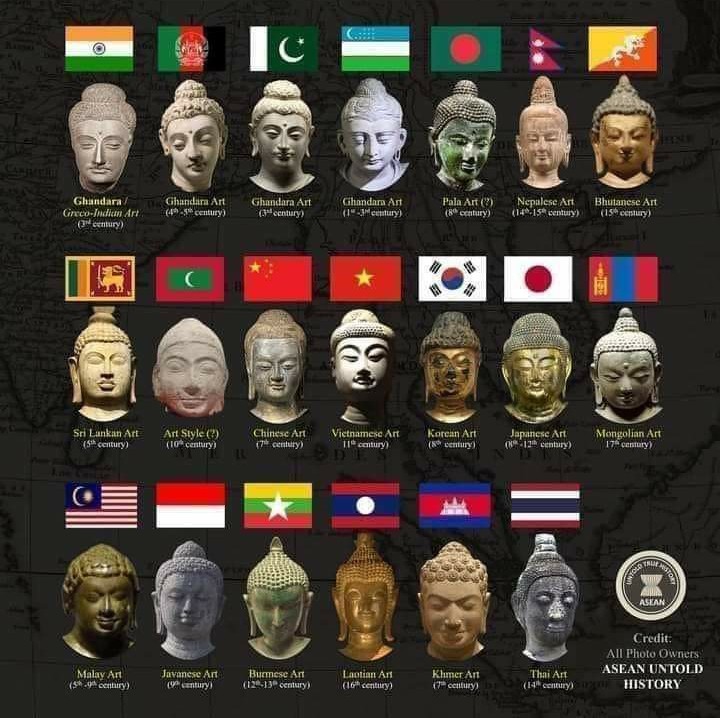
Face of ancient Buddha images, in different arts across Asia :
In Buddhist art, image of historical Buddha is often labeled Shakyamuni (sage of Shakya clan). This distinguishes image of historical Buddha, Buddha who lived on earth during this present period, from past, future, or cosmic buddhas, bodhisattvas, or other divine beings. There is a significant debate concerning the development of the Buddha image, where it first occurred, why, and when. Broadly speaking, image of Buddha emerged during first few Centuries CE, in two major centers of Indian art during Kushana period. One center of artistic production was ancient region of Gandhara, an area that includes northwestern India as well as parts of present-day Pakistan and Afghanistan. Gandharan images have a style that is reminiscent of Hellenistic sculpture and artists in region were certainly influenced by presence of Hellenistic colonies, and large-scale trade and exchange that occurred in this cultural crossroads.
A second area of artistic production is associated with Mathura, India. Here, artists developed a style that can be characterized as more indigenous, less concerned with naturalistic realism in human form and more with symbolic qualities of spiritual figure. Mathura artists created other kinds of religious imagery as well. It is probable that Buddhist imagery was influenced by the development of Hindu and Jain figures and that various communities were developing images of devotional figures simultaneously.
A very significant gap of several centuries exists between lifetime of historical Buddha and creation of first surviving images of Buddha in stone or any other medium. First surviving Buddhist art in stone was actually created prior to images of Buddha himself. During Maurya period, in reign of Emperor Ashoka (272–231 BC), significant monuments and other artworks in stone were commissioned, apparently for first time. Although stone sculpture, such as large columns surmounted by images of lions and wheels, expressed Buddhist symbolism and motifs, there are no Buddha images from this period. Many scholars have speculated that an aniconic (without idols) period existed in Buddhist art, where there was a prohibition against depicting actual Buddha and various symbols substituted for an explicit anthropomorphic representation. Some scholars have interpreted narrative reliefs at early Buddhist monuments to illustrate early Buddhist processions or festivals, where aniconic symbols, rather than anthropomorphic symbols, represented Buddha.
More than 300 years later, in Kushana era, a strong imperial ruler bringing various outside artistic and stylistic influences to realm, seems to have contributed to further artistic developments and a hitherto unseen profusion of sculpture created in stone. Scholars still not entirely sure how all Buddhist figures were used in ritual and worship. Buddhist images and sculptures originally adorned complexes of stupas as well as monastic structures. Early Buddhist sites also incorporated indigenous imagery such as loving couples and fertility figures. Caves were hewn from rock in parts of India, creating spaces for worship rituals and community meetings, as well as monastic dwelling quarters. These rock-cut cave complexes became increasingly elaborate in terms of imagery and iconography, which was created in painting as well as carved from stone in situ. Votive images also developed for private use, and as souvenirs for pilgrims to sacred sites. Figure of Buddha and attendant bodhisattvas and other divine and semi-divine beings, became objects of devotion themselves. As these divine personages expanded in number and complexity, they required larger stupa and temple structures to house them. Over time, proliferation of great numbers of Buddhist images, in some cases explicitly created through mass production techniques, reflected beliefs in meritorious repetition of various names and phrases.
#archaeohistories
11
304
1,289
79,213
Sumit retweeted
11 Feb 2025
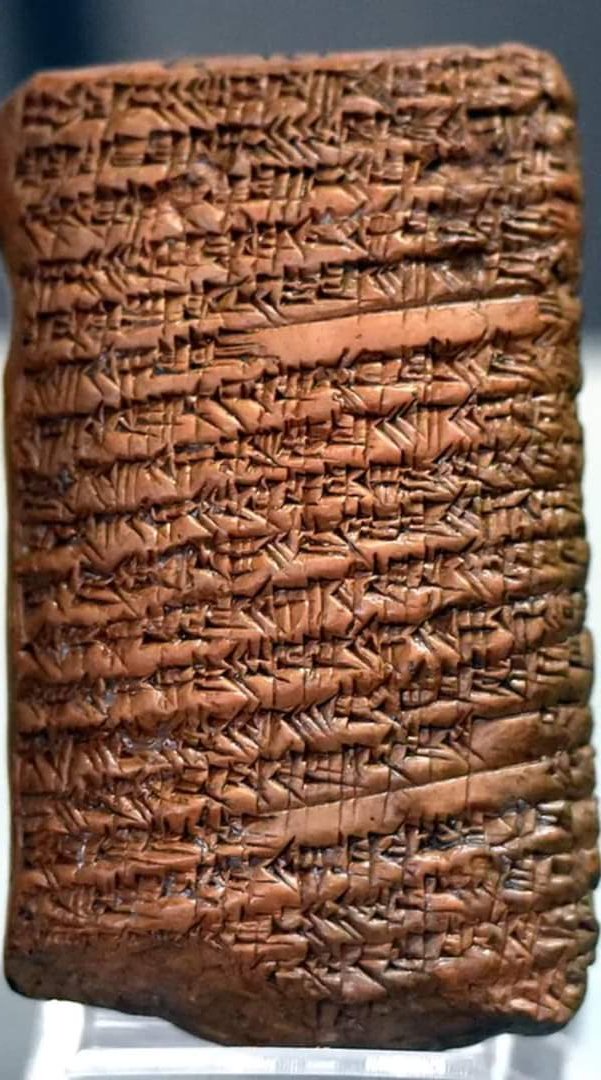
Pythagorean Theorem; found on 'Clay Tablet' 1000 years older than Pythagoras : It predates Pythagoras by over 1,000 years.
Study math for long enough and you will likely have cursed Pythagoras's name, or said "praise be to Pythagoras" if you're a bit of a fan of triangles.
But while Pythagoras was an important historical figure in the development of mathematics, he did not figure out the equation most associated with him (a2 b2 = c2). In fact, there is an ancient Babylonian tablet (by the catchy name of IM 67118) which uses the Pythagorean theorem to solve the length of a diagonal inside a rectangle. The tablet, likely used for teaching, dates from 1770 BC – centuries before Pythagoras was born in around 570 BC.
Another tablet from around 1800–1600 BC has a square with labeled triangles inside. Translating the markings from base 60, the counting system used by ancient Babylonians showed that these ancient mathematicians were aware of the Pythagorean theorem (not called that, of course) as well as other advanced mathematical concepts.
"The conclusion is inescapable. The Babylonians knew the relation between the length of the diagonal of a square and its side: d=square root of 2," mathematician Bruce Ratner writes in a paper on the topic. "This was probably the first number known to be irrational. However, this in turn means that they were familiar with the Pythagorean Theorem – or, at the very least, with its special case for the diagonal of a square (d2 = a2 a2 = 2a2) – more than a thousand years before the great sage for whom it was named."
So why did this get attributed to Pythagoras ? No original writing from Pythagoras survives. What we know of him was passed on by others, in particular the Pythagoreans – members of a school he set up in what is now modern-day southern Italy. The school, named the Semicircle of Pythagoras, was secretive, but knowledge learned there or discovered was passed on, and often attributed to the man himself.
"One reason for the rarity of Pythagoras original sources was that Pythagorean knowledge was passed on from one generation to the next by word of mouth, as writing material was scarce," Ratner continued. "Moreover, out of respect for their leader, many of the discoveries made by the Pythagoreans were attributed to Pythagoras himself; this would account for the term ‘Pythagoras’ Theorem’."
Though Pythagoras did not come up with the theory, his school certainly popularized it, and it became associated with him for the next few thousand years, at least.
#archaeohistories
16
159
703
27,568
Sumit retweeted

10 Feb 2025
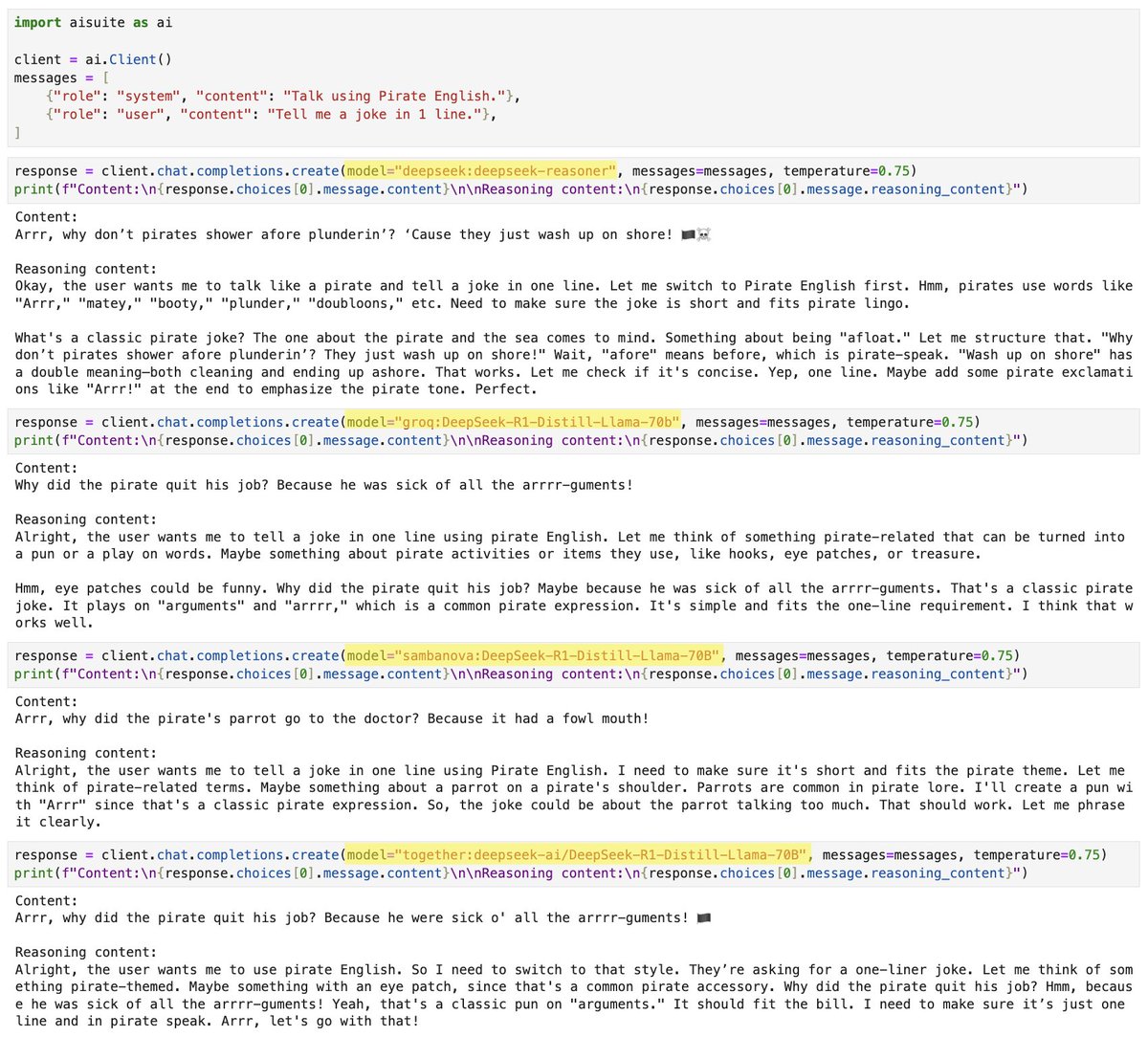
Since DeepSeek R1's release, very quickly AWS, Azure, Fireworks AI, Groq, Hugging Face, SambaNova and Together AI all started to host R1 variants. What's the "best" model changes frequently, and so developers often want to try out new ones. The aisuite package, which helps developers do this quickly with minimal code changes.
Thanks Rohit Prsad & team for working with me on this!
github.com/andrewyng/aisuite
137
266
1,516
147,245
Sumit retweeted

2 Feb 2025
A while back NASA released this amazing map with 4000 known exoplanets!
(Credit: NASA / SYSTEM Sounds / M. Russo, A. Santaguida)
21
316
1,437
65,426
26 Jan 2025
Nearly coinciding with the start of the Kolkata bookfair, the formation of the Science Fiction and Fantasy Society of India (SFFSI) was announced today by @I_dip. Best wishes to them !!
3
33
Sumit retweeted

24 Jan 2025
I gather there's likely to be a Broken Binding (name of the company) signed version of Dark Diamond.

10
8
77
959
Sumit retweeted
24 Jan 2025
Okay, good week. The thing I started as a novella has now passed 65,000 words with another 10,000 done this week. Very much in the groove on that as I've hardly checked back on things and haven't even divided it into chapters. No idea where I'm going with it but enjoying the process anyway.
After writing today I finished up by getting all my books registered for PLR (public Lending Right). This means I get money for when you tight arses get the books from the library rather than buy them😂
Next I'll head for the right wing gym and goose step from machine to machine.
How has your week been?

8
13
79
823