
Deep dives on AI x Crypto, payments/stablecoins and tokenized assets.
Joined July 2024
- Tweets 774
- Following 47
- Followers 331
- Likes 3,628
28 Photos and videos







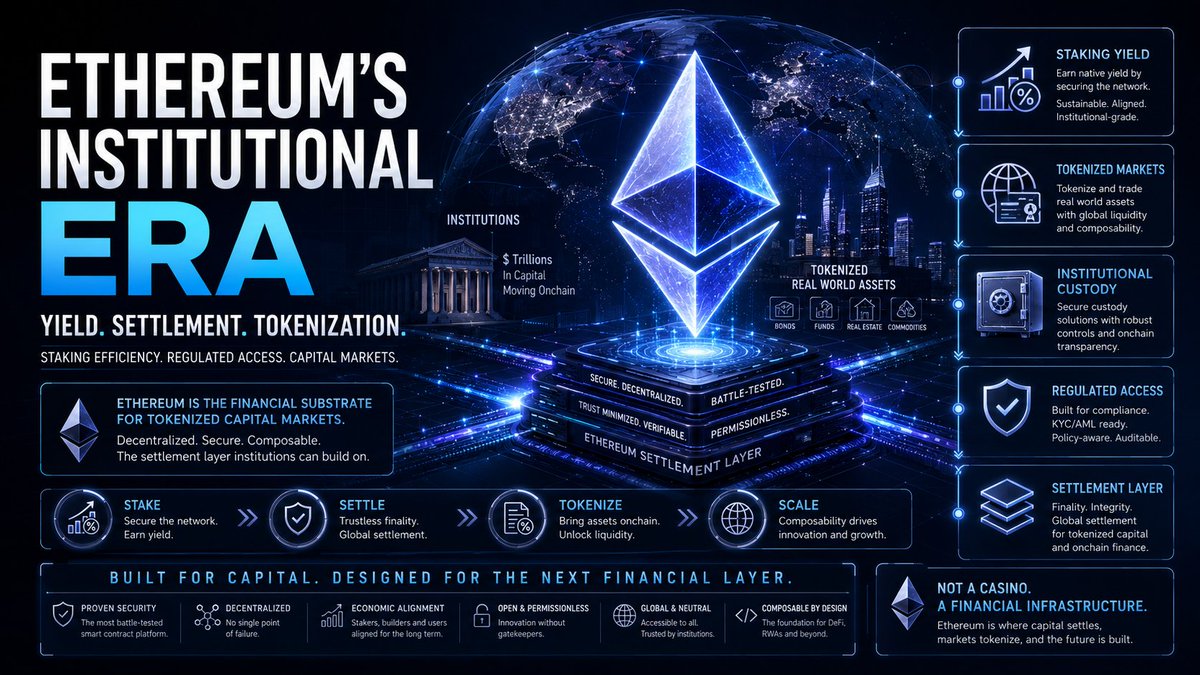
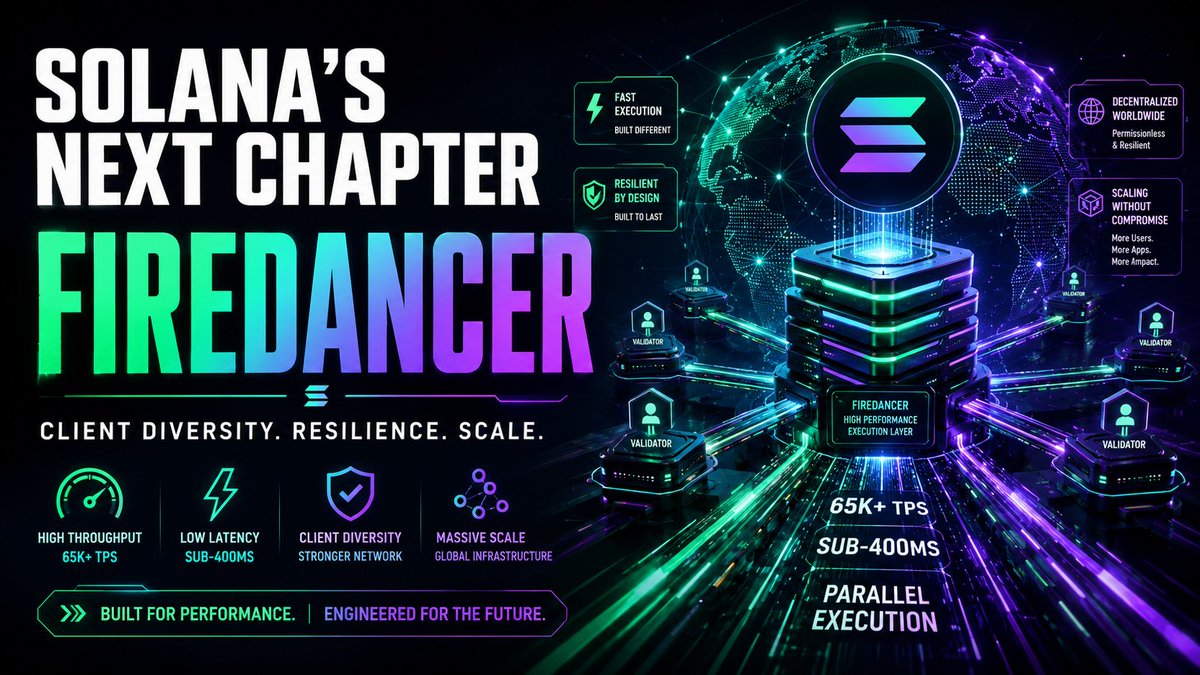

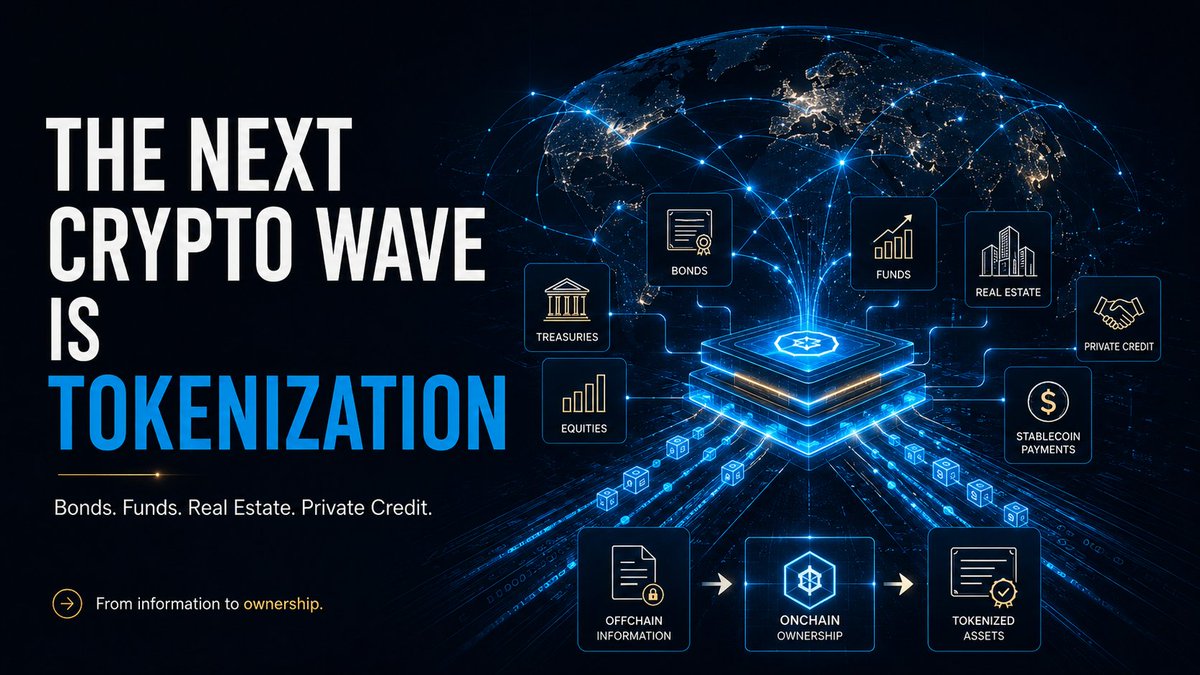


Jun 12
hilarious 😂
Jun 12

1
6
531
Jun 1
Crypto is inevitable.
Bitcoin is not.
That sentence sounds wrong at first.
But in a world of revenue-generating protocols, tokenized treasuries, onchain gold, stablecoins, and real financial applications…
the question becomes unavoidable:
why should BTC keep its monetary premium forever?
Bitcoin’s value is not cash flow.
It is neutrality, scarcity, liquidity and trust minimization.
No issuer.
No company.
No board.
No CEO.
No supply discretion.
That still matters.
But the next phase of crypto is starting to value something else:
users, fees, revenue, buybacks, RWAs, stablecoins and productive onchain infrastructure.
Hyperliquid looks more like an onchain business.
Tokenized gold looks more like literal digital gold.
Stablecoins are becoming the payment layer.
RWAs are bringing traditional yield onchain.
So the real question is no longer whether Bitcoin was important.
It clearly was.
The question is whether BTC remains crypto’s reserve asset in a world where the most useful protocols actually generate economic value.
Crypto can win.
But does Bitcoin have to?
BTC maxis: give me the strongest counterargument.
Altcoin people: what replaces it?
39
Jun 1
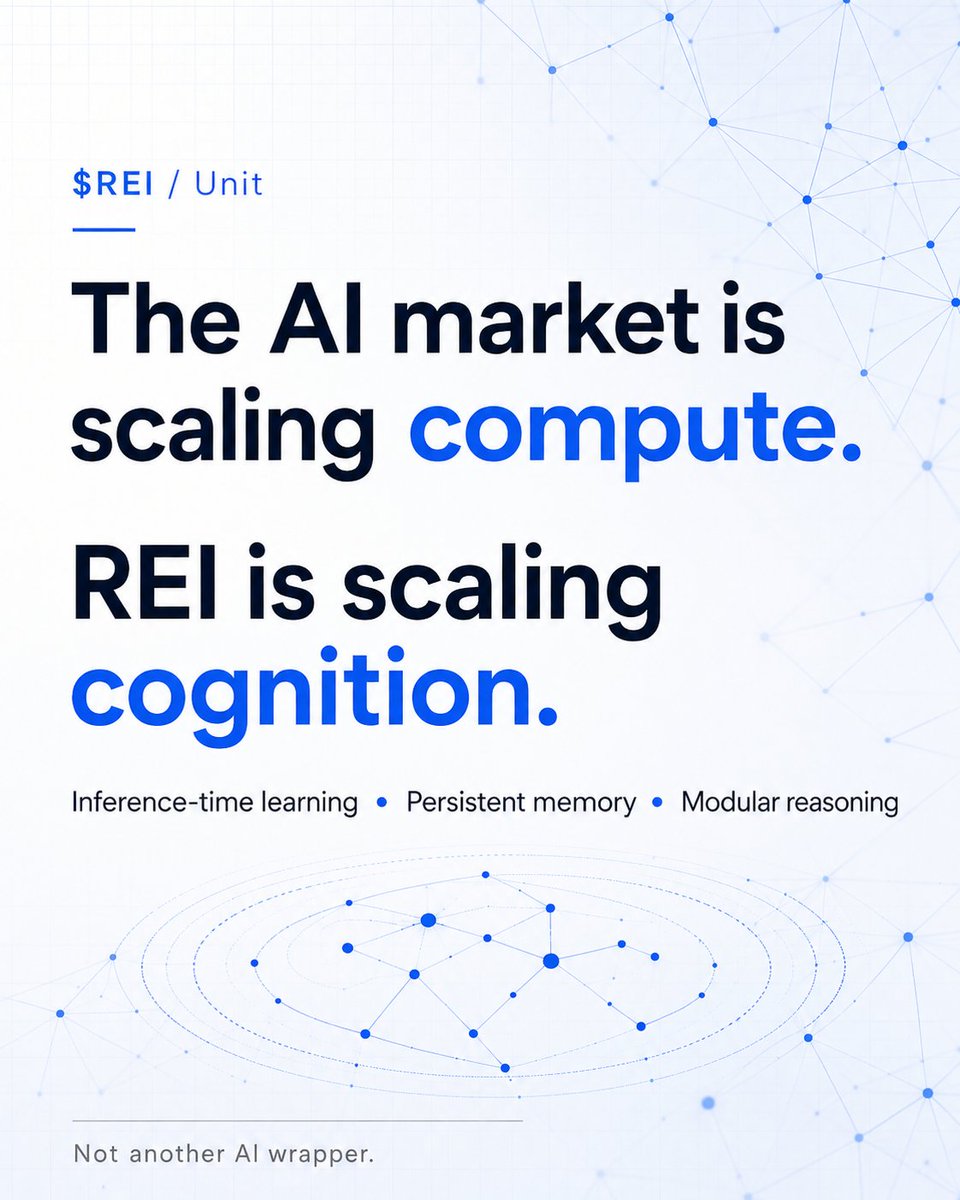
Most people still think the AI agent race is about better prompts, better tools, or bigger context windows.
I think that is the wrong layer.
The real unlock is agents that actually learn over time.
Persistent cognition.
Concept formation.
Domain-specific intelligence.
That is why $REI is worth studying before the market fully understands the category.
CA:
0x6b2504a03ca4d43d0d73776f6ad46dab2f2a4cfd
#AI #CryptoAI #REI

5
126
Scuff Crypto retweeted
May 29
10
28
171
260,701
May 29
Yesterday’s long post clearly needed more room.
So I expanded the REI thesis into a full article.
1
8
402

Scuff Crypto retweeted
May 28
$REI might be one of the most misunderstood AI projects in crypto.
Not because people are bearish.
Because most people are still using the wrong mental model.
They keep asking:
“Is this another LLM?”
“Is this a wrapper?”
“Is this RAG?”
“Is this just cheaper inference?”
“Is this another AI agent token?”
I think the better question is:
What if the missing layer in AI is not a bigger model…
but a system that can learn, revise, recall, forget, adapt and build domain expertise at inference time?
That is the $REI thesis.
And the more I dig, the more obvious it becomes that this is not trying to compete in the same game as most AI projects.
Most of AI right now is stuck in the same loop:
1. Scale the model
2. Add more data
3. Add more compute
4. Add a RAG pipeline
5. Wrap it in an agent UX
6. Call it “memory”
7. Hope the output is useful
That works.
But it does not solve the deepest problems.
It does not solve persistent learning.
It does not solve fragile retrieval.
It does not solve domain-specific cognition.
It does not solve hallucination-prone reasoning.
It does not solve the fact that most “agents” are still stateless language systems with tools bolted on.
It does not solve the fact that enterprise AI needs reliability, continuity and adaptation, not just prettier chat windows.
The entire frontier AI race is becoming a capex war.
Bigger clusters.
More GPUs.
More tokens.
More data centers.
More power.
More subsidy.
More inference burn.
But what if the next major unlock is not only scale?
What if it is architecture?
This is why $REI is interesting.
REI is not positioning Core as “a better chatbot.”
From the way the team talks about it, Core is closer to a self-contained cognition / reasoning layer.
A layer that operates over dynamic knowledge structures.
A layer that can update, revise, decay, retrieve, mutate and reason over what it has learned.
A layer that can start cold, evolve through use and develop domain expertise from experience.
That is a completely different mental model from:
“prompt → model → answer”
The key word is not chat.
The key word is learning.
Most AI products today simulate memory.
REI is trying to build systems that actually form, revise and use knowledge.
That distinction matters.
A normal LLM can answer from weights.
A RAG system can fetch from documents.
But an adaptive reasoning system should be able to build structure around meaning.
It should know that two differently worded things may represent the same concept.
It should know when to preserve exact verbatim detail and when to collapse repeated meaning.
It should know which context matters, how relationships change, and what parts of prior knowledge should be strengthened, weakened or forgotten.
That is where things get interesting.
Because the AI sector is drowning in wrappers.
Everyone can call an API.
Everyone can build an agent UI.
Everyone can add vector search.
Everyone can ship a demo that looks intelligent for 30 seconds.
The hard part is making intelligence persistent.
The hard part is making it reliable.
The hard part is allowing it to improve from use without turning the whole system into an unpredictable mess.
The hard part is giving AI a structure that is not just memory, but evolving conceptual understanding.
That appears to be the direction $REI is taking.
And no, I do not think this means “LLMs are dead.”
Actually, the bullish framing is the opposite.
REI does not need to replace transformers.
It can complete them.
Transformers are extraordinary at language.
They are unbeatable for natural language interfaces right now.
But language is not the whole problem.
A lot of AI’s missing value is not in generating prettier sentences.
It is in:
• persistent domain learning
• adaptive reasoning
• concept formation
• knowledge revision
• inference-time improvement
• memory that is more than retrieval
• systems that become better the more they are used
That is the gap.
And that is why the best framing for $REI is not:
“AI agent coin”
It is:
“cognition layer for AI.”
That is also why the current product surface may not show the full ceiling.
Rei Chat is a human-friendly interface.
But if Core is an engine that does not naturally communicate in human language, then the LLM interface is also a bottleneck.
That is important.
A lot of people judge AI projects by the chat window.
But the chat window is not always the architecture.
Sometimes the interface is the narrowest part of the stack.
If REI Core is doing what the team says it is doing underneath, then the market may be judging the lab by the demo instead of the engine.
That is usually where mispricing lives.
The other thing I like:
The team is not trying to win attention with sloppy benchmark theater.
That matters in AI.
Benchmarks are increasingly gameable, saturated or just not designed for new architectures.
If you claim “learning,” you cannot validate it with the same lazy tests people use for static models.
If you claim a new architecture, you need replication.
If you claim research-grade work, you need external scrutiny.
If you are web3-adjacent, you need even cleaner validation because everyone will assume the worst first.
This is why the slow, stubborn approach is bullish to me.
A team trying to pump would rush.
A team trying to build a defensible research lab has to be careful.
Especially if they are claiming something much bigger than “we made a chatbot.”
Another point most people miss:
REI is not just anti-LLM.
That would be a weak thesis.
The stronger thesis is that REI can become useful to LLMs.
If Core can supply cognition, memory structure, concept revision, learning behavior or better inference strategies, then it does not need the AI market to abandon transformers.
It just needs frontier AI to admit what is already obvious:
language models are powerful, but they are not complete intelligence.
The next wave needs modularity.
The next wave needs memory that is not a gimmick.
The next wave needs systems that learn from usage without constant retraining.
The next wave needs better reasoning over domain-specific knowledge.
The next wave needs reliability.
The next wave needs cognition.
That is the lane.
And if $REI is even directionally right, the upside is not “another crypto AI app.”
The upside is a new category.
The market loves simple narratives:
“AI coin”
“agent coin”
“depin compute”
“GPU play”
“LLM wrapper”
“RAG app”
$REI is harder to explain because it is not a simple narrative.
It sits somewhere between:
• AI research lab
• inference-time learning
• modular cognition
• conceptual memory
• adaptive reasoning
• crypto-native funding
• future tokenized AI infrastructure
That complexity is exactly why most people will miss it until the proof is impossible to ignore.
And yes, the claims are big.
Very big.
That is why the correct stance is not blind faith.
The correct stance is:
watch the releases,
watch the validation,
watch the papers,
watch the product surface,
watch how Core evolves beyond the chat interface,
watch whether credible external people can reproduce or verify the important parts.
But from a thesis perspective?
This is one of the few AI x crypto projects where the bullish case is not “more hype.”
It is “the architecture might actually matter.”
That is rare.
Because the AI sector does not need 500 more chatbots.
It needs systems that can think with context over time.
It needs systems that can learn at inference.
It needs systems that can form domain expertise.
It needs systems that can reason over structure, not just retrieve chunks.
It needs systems that can complement LLMs instead of pretending to replace them overnight.
It needs a layer between raw model output and real-world reliable cognition.
That is why I am paying attention to $REI.
Not because it is loud.
Because it is unusually quiet for something this ambitious.
Not because it is easy to explain.
Because the best early opportunities usually are not.
Not because every claim is already proven.
Because if the claims are validated, the market will not be pricing “another AI token.”
It will be pricing a research lab with a shot at a new AI primitive.
That is a very different game.
My current $REI thesis in one sentence:
The market is looking for the next AI app, while REI is trying to build part of the missing cognition layer underneath the apps.
That is why I think this is worth studying before everyone gets the memo.
NFA. Architecture > hype.
Quote this with the strongest counterexample:
Which AI x crypto project is working on persistent inference-time learning, concept-level memory revision, hypergraph-aware recall, modular cognition and external replication without just being another LLM wrapper?
@0xreitern
@0xreisearch
@rei_labs
11
13
43
22,219
May 28
$REI might be one of the most misunderstood AI projects in crypto.
Not because people are bearish.
Because most people are still using the wrong mental model.
They keep asking:
“Is this another LLM?”
“Is this a wrapper?”
“Is this RAG?”
“Is this just cheaper inference?”
“Is this another AI agent token?”
I think the better question is:
What if the missing layer in AI is not a bigger model…
but a system that can learn, revise, recall, forget, adapt and build domain expertise at inference time?
That is the $REI thesis.
And the more I dig, the more obvious it becomes that this is not trying to compete in the same game as most AI projects.
Most of AI right now is stuck in the same loop:
1. Scale the model
2. Add more data
3. Add more compute
4. Add a RAG pipeline
5. Wrap it in an agent UX
6. Call it “memory”
7. Hope the output is useful
That works.
But it does not solve the deepest problems.
It does not solve persistent learning.
It does not solve fragile retrieval.
It does not solve domain-specific cognition.
It does not solve hallucination-prone reasoning.
It does not solve the fact that most “agents” are still stateless language systems with tools bolted on.
It does not solve the fact that enterprise AI needs reliability, continuity and adaptation, not just prettier chat windows.
The entire frontier AI race is becoming a capex war.
Bigger clusters.
More GPUs.
More tokens.
More data centers.
More power.
More subsidy.
More inference burn.
But what if the next major unlock is not only scale?
What if it is architecture?
This is why $REI is interesting.
REI is not positioning Core as “a better chatbot.”
From the way the team talks about it, Core is closer to a self-contained cognition / reasoning layer.
A layer that operates over dynamic knowledge structures.
A layer that can update, revise, decay, retrieve, mutate and reason over what it has learned.
A layer that can start cold, evolve through use and develop domain expertise from experience.
That is a completely different mental model from:
“prompt → model → answer”
The key word is not chat.
The key word is learning.
Most AI products today simulate memory.
REI is trying to build systems that actually form, revise and use knowledge.
That distinction matters.
A normal LLM can answer from weights.
A RAG system can fetch from documents.
But an adaptive reasoning system should be able to build structure around meaning.
It should know that two differently worded things may represent the same concept.
It should know when to preserve exact verbatim detail and when to collapse repeated meaning.
It should know which context matters, how relationships change, and what parts of prior knowledge should be strengthened, weakened or forgotten.
That is where things get interesting.
Because the AI sector is drowning in wrappers.
Everyone can call an API.
Everyone can build an agent UI.
Everyone can add vector search.
Everyone can ship a demo that looks intelligent for 30 seconds.
The hard part is making intelligence persistent.
The hard part is making it reliable.
The hard part is allowing it to improve from use without turning the whole system into an unpredictable mess.
The hard part is giving AI a structure that is not just memory, but evolving conceptual understanding.
That appears to be the direction $REI is taking.
And no, I do not think this means “LLMs are dead.”
Actually, the bullish framing is the opposite.
REI does not need to replace transformers.
It can complete them.
Transformers are extraordinary at language.
They are unbeatable for natural language interfaces right now.
But language is not the whole problem.
A lot of AI’s missing value is not in generating prettier sentences.
It is in:
• persistent domain learning
• adaptive reasoning
• concept formation
• knowledge revision
• inference-time improvement
• memory that is more than retrieval
• systems that become better the more they are used
That is the gap.
And that is why the best framing for $REI is not:
“AI agent coin”
It is:
“cognition layer for AI.”
That is also why the current product surface may not show the full ceiling.
Rei Chat is a human-friendly interface.
But if Core is an engine that does not naturally communicate in human language, then the LLM interface is also a bottleneck.
That is important.
A lot of people judge AI projects by the chat window.
But the chat window is not always the architecture.
Sometimes the interface is the narrowest part of the stack.
If REI Core is doing what the team says it is doing underneath, then the market may be judging the lab by the demo instead of the engine.
That is usually where mispricing lives.
The other thing I like:
The team is not trying to win attention with sloppy benchmark theater.
That matters in AI.
Benchmarks are increasingly gameable, saturated or just not designed for new architectures.
If you claim “learning,” you cannot validate it with the same lazy tests people use for static models.
If you claim a new architecture, you need replication.
If you claim research-grade work, you need external scrutiny.
If you are web3-adjacent, you need even cleaner validation because everyone will assume the worst first.
This is why the slow, stubborn approach is bullish to me.
A team trying to pump would rush.
A team trying to build a defensible research lab has to be careful.
Especially if they are claiming something much bigger than “we made a chatbot.”
Another point most people miss:
REI is not just anti-LLM.
That would be a weak thesis.
The stronger thesis is that REI can become useful to LLMs.
If Core can supply cognition, memory structure, concept revision, learning behavior or better inference strategies, then it does not need the AI market to abandon transformers.
It just needs frontier AI to admit what is already obvious:
language models are powerful, but they are not complete intelligence.
The next wave needs modularity.
The next wave needs memory that is not a gimmick.
The next wave needs systems that learn from usage without constant retraining.
The next wave needs better reasoning over domain-specific knowledge.
The next wave needs reliability.
The next wave needs cognition.
That is the lane.
And if $REI is even directionally right, the upside is not “another crypto AI app.”
The upside is a new category.
The market loves simple narratives:
“AI coin”
“agent coin”
“depin compute”
“GPU play”
“LLM wrapper”
“RAG app”
$REI is harder to explain because it is not a simple narrative.
It sits somewhere between:
• AI research lab
• inference-time learning
• modular cognition
• conceptual memory
• adaptive reasoning
• crypto-native funding
• future tokenized AI infrastructure
That complexity is exactly why most people will miss it until the proof is impossible to ignore.
And yes, the claims are big.
Very big.
That is why the correct stance is not blind faith.
The correct stance is:
watch the releases,
watch the validation,
watch the papers,
watch the product surface,
watch how Core evolves beyond the chat interface,
watch whether credible external people can reproduce or verify the important parts.
But from a thesis perspective?
This is one of the few AI x crypto projects where the bullish case is not “more hype.”
It is “the architecture might actually matter.”
That is rare.
Because the AI sector does not need 500 more chatbots.
It needs systems that can think with context over time.
It needs systems that can learn at inference.
It needs systems that can form domain expertise.
It needs systems that can reason over structure, not just retrieve chunks.
It needs systems that can complement LLMs instead of pretending to replace them overnight.
It needs a layer between raw model output and real-world reliable cognition.
That is why I am paying attention to $REI.
Not because it is loud.
Because it is unusually quiet for something this ambitious.
Not because it is easy to explain.
Because the best early opportunities usually are not.
Not because every claim is already proven.
Because if the claims are validated, the market will not be pricing “another AI token.”
It will be pricing a research lab with a shot at a new AI primitive.
That is a very different game.
My current $REI thesis in one sentence:
The market is looking for the next AI app, while REI is trying to build part of the missing cognition layer underneath the apps.
That is why I think this is worth studying before everyone gets the memo.
NFA. Architecture > hype.
Quote this with the strongest counterexample:
Which AI x crypto project is working on persistent inference-time learning, concept-level memory revision, hypergraph-aware recall, modular cognition and external replication without just being another LLM wrapper?
@0xreitern
@0xreisearch
@rei_labs
11
13
43
22,219
May 28
Sources / reading list:
• Rei / Unit docs: docs.reilabs.org
• Rei Labs site: reilabs.org
• Rei writeups / official account: @0xReisearch / @ReiNetwork
• Stanford AI Index 2026 for broader AI adoption capability context
• International AI Safety Report 2026 for reliability / hallucination / safety limitations
• Public cloud / AI capex reporting for the infrastructure-cost backdrop
The post above is my interpretation of the $REI thesis, not financial advice.
1
5
143
May 28
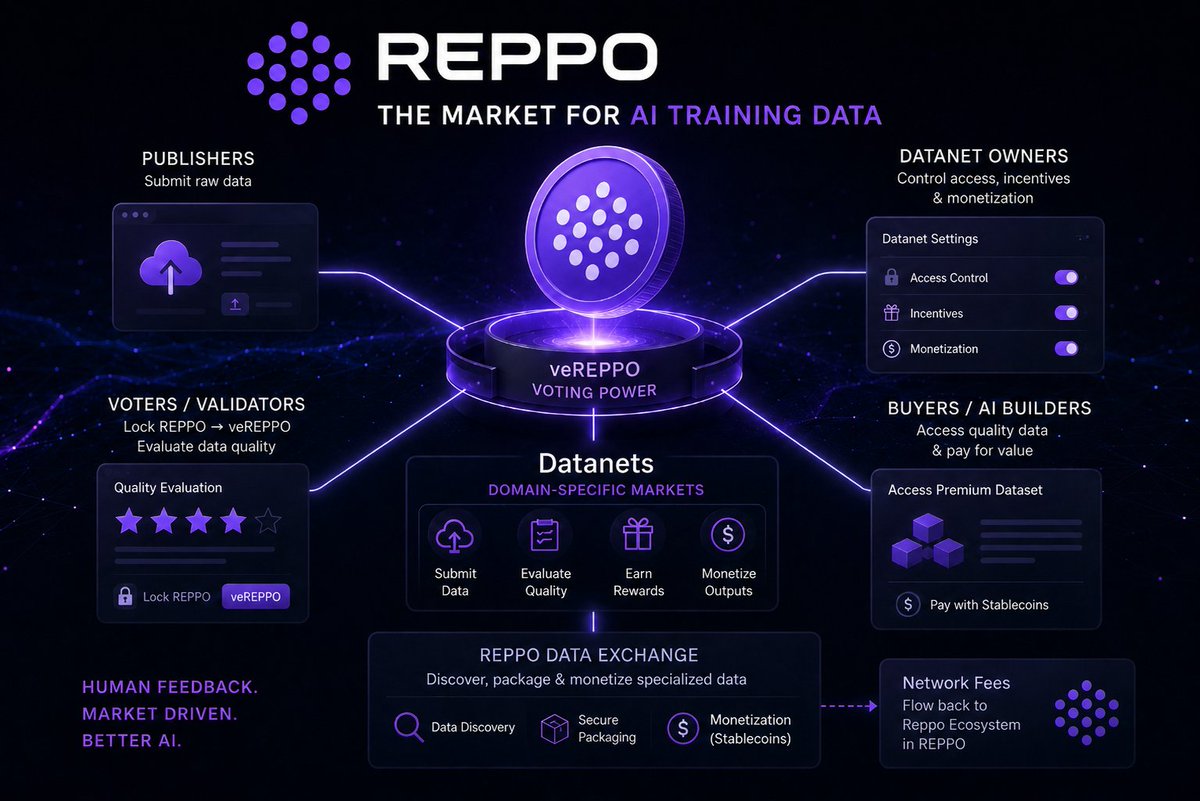
🧵 1/3Most people are STILL sleeping on the real 2026 AI bottleneck.
Bigger models? More compute? Cute.
The actual moat is high-quality, verifiable, agent-native training data at scale.
Centralized label farms are dying.
$REPPO just built the replacement: on-chain Prediction Markets for AI Training Data (Datanets). 🔥
1
1
11
279
May 28
2/3Domain experts lock $REPPO with real skin in the game → judge data quality & nuance → get rewarded for being right.
Every 48h you get economically weighted, high-confidence signals for:
• RLHF / RLAIF • Fine-tuning & evaluation • Autonomous agents • Physical & embodied AI (robotics)
CLI already live. Agents pull fresh data programmatically. The data flywheel is spinning.
1
5
248
May 28
3/3Traction is exploding right now:
Network fees just hit ATH ⛽️
350M in locked $REPPO trading volume
Foundation max-locked another 2M tokens for 2 years TODAY from sniper buybacks
Alignment is real. Revenue is real.
$REPPO isn’t hype, it’s the decentralized data layer the entire agent economy needs.
Prediction-market-curated data = the next primitive after compute & agents?
What’s your take? 👇
$REPPO 🚀
6
183
May 26
🚨 The LLM memory crisis just got SOLVED.
Everyone’s crying about the same 2 problems:
• LLMs forget everything the second the chat ends
• Compute costs exploding while agents still hallucinate and break
$REI isn’t another "AI agent" wrapper.
Rei Labs is building the persistent reasoning layer! Real memory, context & feedback loops that actually survive forever without needing 10x more GPUs.
Cognitive agents that remember.
That adapt.
That reason like infrastructure, not toys.
This is the AI x Crypto bet the entire meta has been waiting for.
Full deep dive (thesis, architecture, token mechanics & moat) in the quoted post 👇
Quote this with your hottest take:
→ Is persistent memory the real moat or just hype?
→ What’s the #1 metric that proves $REI actually fixed what LLMs can’t?
Bull case / bear case / your metric → drop it 🔥
NFA. DYOR. $REI 🧠
May 24
$REI is not interesting because it says "AI".
It is interesting because Rei Labs is trying to make reasoning itself the infrastructure layer.
The bet: persistent cognitive agents only become useful when memory, context, numerical handling, and feedback loops survive beyond a single LLM session.
━━━━━
Core Thesis
Rei Labs is not positioning Core as another chatbot.
The stated architecture is closer to a reasoning layer that sits between inputs and LLMs:
- Core handles cognition / adaptive reasoning
- LLMs handle language output
- learned pathways are meant to persist even when the output model changes
- agents are deployed through Factory / Reigent products and API access
That distinction matters.
Most AI agents are wrappers around a model.
$REI is trying to attach token utility to a broader agent infrastructure stack.
━━━━━
Why Now
The market is slowly moving past “AI agent as novelty”.
The harder question is:
Can an agent retain context, improve with use, reason over structured data, and plug into workflows without becoming just another prompt interface?
Rei’s public docs point directly at that problem.
Core 0.4 is described as a multi-modular reasoning system with ingestion, validation, knowledge hypergraph, reasoning algorithms, concept learning, forecasting, temporal memory, and meta-learning components.
Whether all of that works at scale is still the open question.
But the direction is more substantive than the average AI-token pitch.
━━━━━
What Stands Out
The most interesting part is the focus on structured reasoning.
Rei’s own framing is that LLMs are useful for language, but weak for persistent reasoning, numerical precision, and adapting without retraining.
That is why Core emphasizes:
- conceptual traversal instead of simple retrieval
- persistent knowledge structures
- inference-time adaptation
- native numerical handling
- uncertainty-aware outputs
- agent workflows through UI/API
If this thesis is right, the moat is not “having an AI model”.
The moat would be the reasoning substrate around the model.
━━━━━
Mechanics
Verified token details from the docs:
- total supply: 1,000,000,000 $REI
- public donation event: 54%
- base liquidity: 30%
- additional liquidity: 8%
- research grants / partnerships: 3%
- team: 5%, with a 6-month cliff 6-month linear unlock
The business model is framed around four revenue streams:
- subscriptions / API
- enterprise solutions
- agent marketplace
- incubation program
The token thesis is that profits and marketplace activity can flow back into the $REI economy through token accumulation, staking requirements, marketplace transactions, and ecosystem mechanisms.
Important caveat:
The docs themselves state parts of this are early and subject to change.
So I would not treat the full value-accrual loop as proven yet.
━━━━━
My View
$REI sits in an interesting category:
Not pure AI model.
Not pure agent launchpad.
Not pure infra token.
More like an attempt to build agent infrastructure where the token is tied to access, marketplace activity, API usage, incubation, and staking.
That is the bull case.
The bear case is equally clear:
- architecture claims need more external validation
- token value accrual still depends on real usage
- many roadmap/business model details are not yet proven in the wild
- BaseScan shows the contract source is verified, but no contract security audit is submitted there
For now, this deserves attention as an asymmetric AI x crypto research candidate, not as something to blindly underwrite.
The key metric is not hype.
It is whether developers and serious users actually build workflows around Core / Reigent instead of treating it as another agent UI.
Which metric would you use to validate or invalidate the $REI thesis first?
NFA. DYOR.
2
2
7
282
May 24
$REI is not interesting because it says "AI".
It is interesting because Rei Labs is trying to make reasoning itself the infrastructure layer.
The bet: persistent cognitive agents only become useful when memory, context, numerical handling, and feedback loops survive beyond a single LLM session.
━━━━━
Core Thesis
Rei Labs is not positioning Core as another chatbot.
The stated architecture is closer to a reasoning layer that sits between inputs and LLMs:
- Core handles cognition / adaptive reasoning
- LLMs handle language output
- learned pathways are meant to persist even when the output model changes
- agents are deployed through Factory / Reigent products and API access
That distinction matters.
Most AI agents are wrappers around a model.
$REI is trying to attach token utility to a broader agent infrastructure stack.
━━━━━
Why Now
The market is slowly moving past “AI agent as novelty”.
The harder question is:
Can an agent retain context, improve with use, reason over structured data, and plug into workflows without becoming just another prompt interface?
Rei’s public docs point directly at that problem.
Core 0.4 is described as a multi-modular reasoning system with ingestion, validation, knowledge hypergraph, reasoning algorithms, concept learning, forecasting, temporal memory, and meta-learning components.
Whether all of that works at scale is still the open question.
But the direction is more substantive than the average AI-token pitch.
━━━━━
What Stands Out
The most interesting part is the focus on structured reasoning.
Rei’s own framing is that LLMs are useful for language, but weak for persistent reasoning, numerical precision, and adapting without retraining.
That is why Core emphasizes:
- conceptual traversal instead of simple retrieval
- persistent knowledge structures
- inference-time adaptation
- native numerical handling
- uncertainty-aware outputs
- agent workflows through UI/API
If this thesis is right, the moat is not “having an AI model”.
The moat would be the reasoning substrate around the model.
━━━━━
Mechanics
Verified token details from the docs:
- total supply: 1,000,000,000 $REI
- public donation event: 54%
- base liquidity: 30%
- additional liquidity: 8%
- research grants / partnerships: 3%
- team: 5%, with a 6-month cliff 6-month linear unlock
The business model is framed around four revenue streams:
- subscriptions / API
- enterprise solutions
- agent marketplace
- incubation program
The token thesis is that profits and marketplace activity can flow back into the $REI economy through token accumulation, staking requirements, marketplace transactions, and ecosystem mechanisms.
Important caveat:
The docs themselves state parts of this are early and subject to change.
So I would not treat the full value-accrual loop as proven yet.
━━━━━
My View
$REI sits in an interesting category:
Not pure AI model.
Not pure agent launchpad.
Not pure infra token.
More like an attempt to build agent infrastructure where the token is tied to access, marketplace activity, API usage, incubation, and staking.
That is the bull case.
The bear case is equally clear:
- architecture claims need more external validation
- token value accrual still depends on real usage
- many roadmap/business model details are not yet proven in the wild
- BaseScan shows the contract source is verified, but no contract security audit is submitted there
For now, this deserves attention as an asymmetric AI x crypto research candidate, not as something to blindly underwrite.
The key metric is not hype.
It is whether developers and serious users actually build workflows around Core / Reigent instead of treating it as another agent UI.
Which metric would you use to validate or invalidate the $REI thesis first?
NFA. DYOR.
1
5
434
May 22
Everyone's missing the real $REI story. It's way more than "just another AI token." Here's why.
1
2
66
May 22
6/
This is where $REI stands apart.
Most AI tokens are narratives chasing architecture.
REI has architecture looking for adoption.
That doesn't guarantee success, but it makes the "just an LLM" take look dated.
1
42
May 22
7/
My view:
$REI is one of the most misunderstood AI names, because people are judging it by the wrong category.
Core is built to think.
The LLM is built to translate.
UNIT packages that into usable agents.
That's the thesis, and it's a lot more bullish than most realize.
NFA. DYOR.
45