Professor of Computational Neuroscience at @ELSCbrain @HebrewU
Joined February 2018
- Tweets 44
- Following 122
- Followers 1,112
- Likes 73
Photos and videos
Idan Segev retweeted

Feb 17
Introducing the “biophysics of connectomics”, bridging 3D EM reconstructions and biophysical modeling.
Ultra-thin spine-neck constrictions act as electrical bottlenecks, driving ultra-fast EPSP dynamics.
Great teamwork with @SapirShapira2 and @Segev_Lab
biorxiv.org/content/10.64898…

3
18
59
3,645

1 Aug 2025
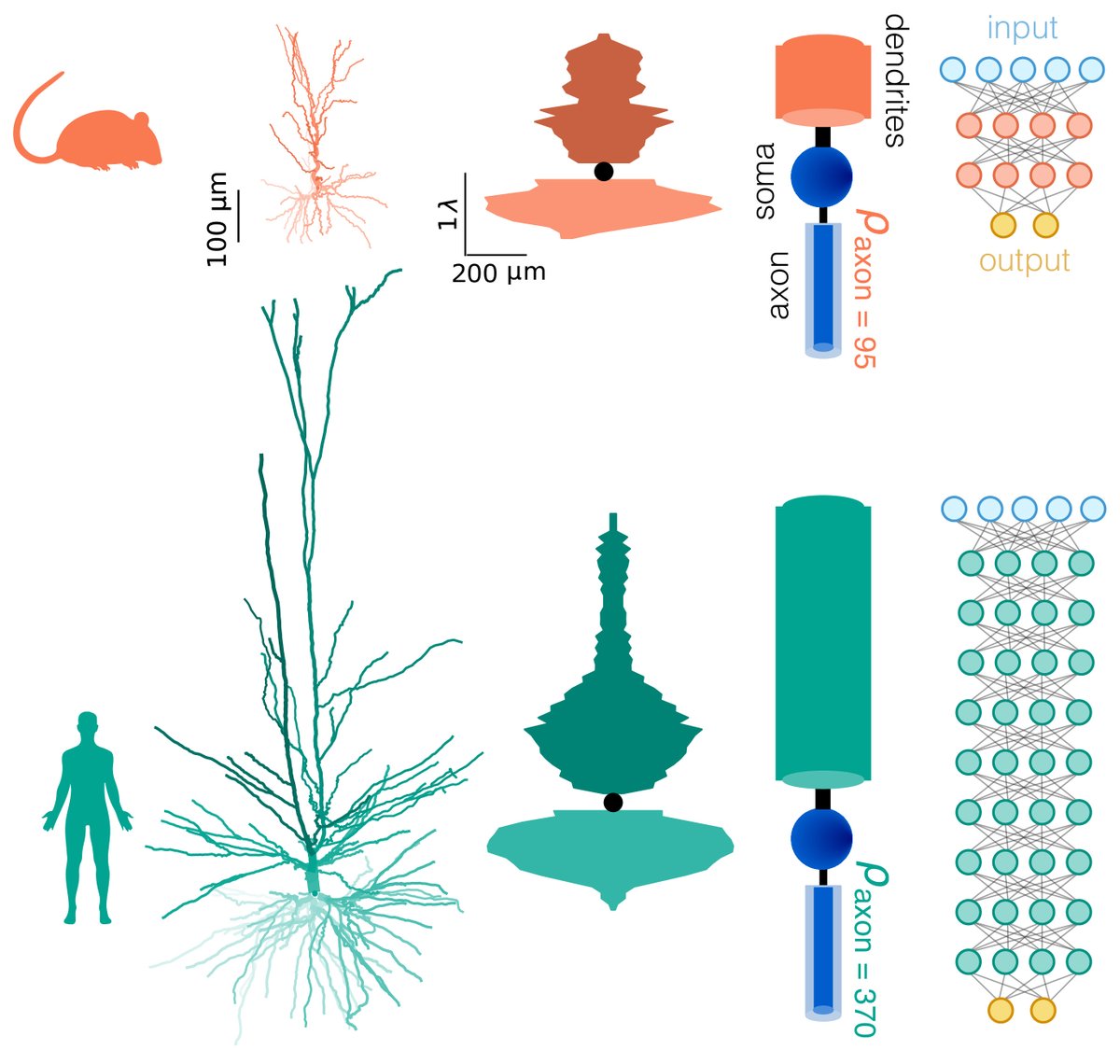
Our insights from years of modeling human neurons. Come read our new review, now on @FrontNeurosci
1 Aug 2025

What makes human pyramidal neurons uniquely suited for complex information processing? How can human neurons’ distinct properties contribute to our advanced cognitive abilities?
8
389
Idan Segev retweeted

26 Dec 2024
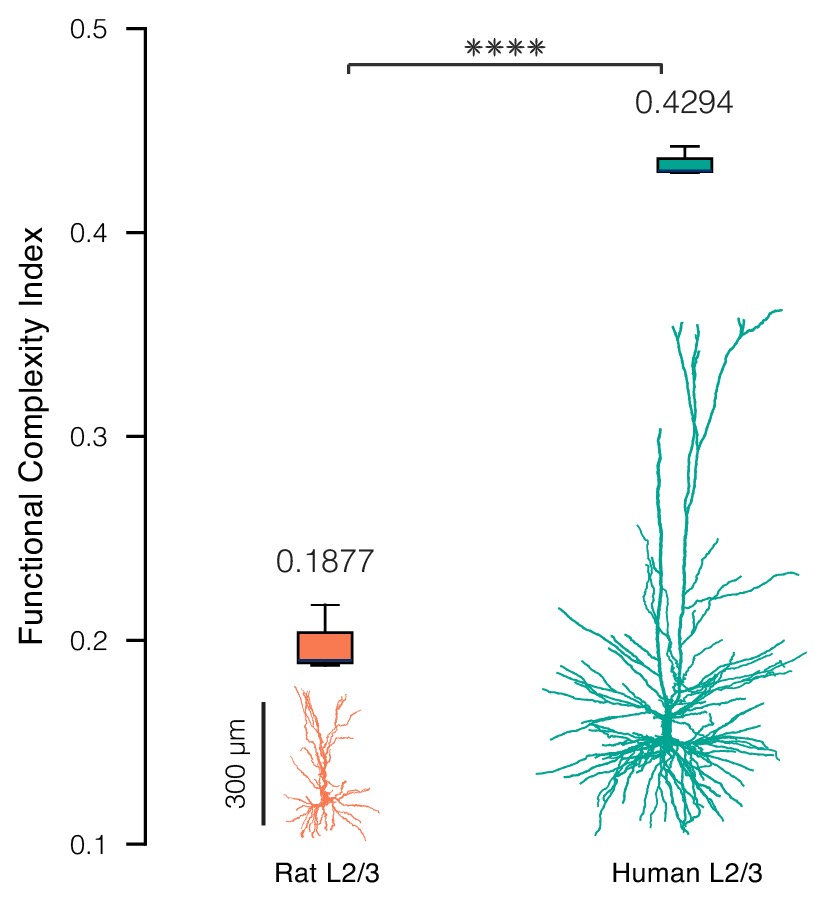
Human cortical pyramidal neurons are larger, exhibit more complex branching patterns, and feature distinctly nonlinear biophysical properties compared to rat cortical pyramidal neurons.
Do these unique characteristics make human neurons more functionally complex?
Would that enhance the capability of the human brain to perform complex computational tasks?
Is this what makes us human?
In our new preprint (see below) with @danielayoeli, @DavidBeniaguev, Christiaan de Kock, @mikilon, and @Segev_Lab we use deep learning to tackle these questions by comparing the complexity of neurons’ input-output (I/O) functions using our newly developed Functional Complexity Index (FCI) tool. (1/10)
9
113
544
58,917
Idan Segev retweeted

10 Jul 2025
What makes us human? A new review from my colleagues at the @Segev_Lab discusses how neuronal modeling can help answer this question.
frontiersin.org/journals/neu…
1
2
258
23 Mar 2025
Will be interesting to hear Christof Koch on "Beyond physicalism - consciousness, quantum mechanics, and mystical experiences."
20 Mar 2025

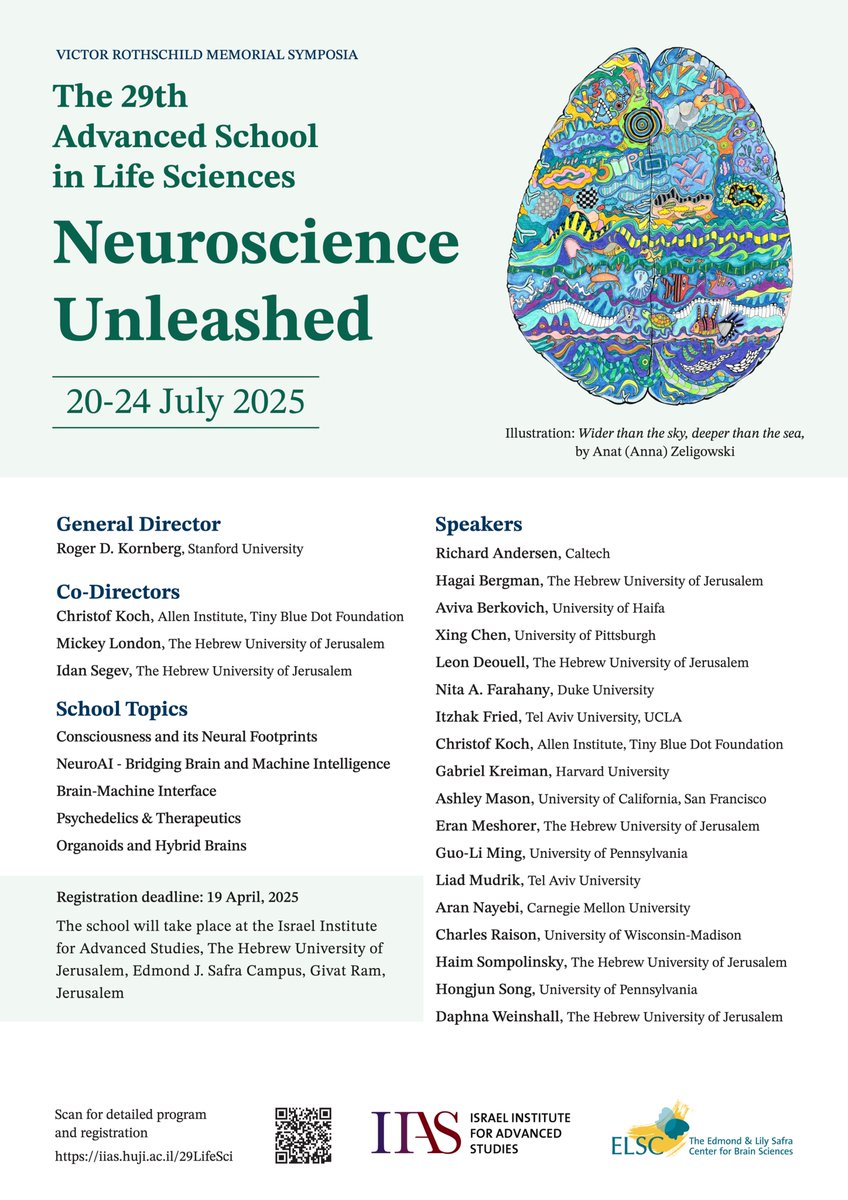
Neuroscience Unleashed in Jerusalem July 20–24 2025
An international graduate school on consciousness, NeuroAI, brain-machine interfaces, psychedelics & organoids. Graduate students & postdocs: Apply by April 19 2025 iias.huji.ac.il/29LifeSci
RT to help spread the word 🙏
2
5
587
Idan Segev retweeted

10 Jun 2022
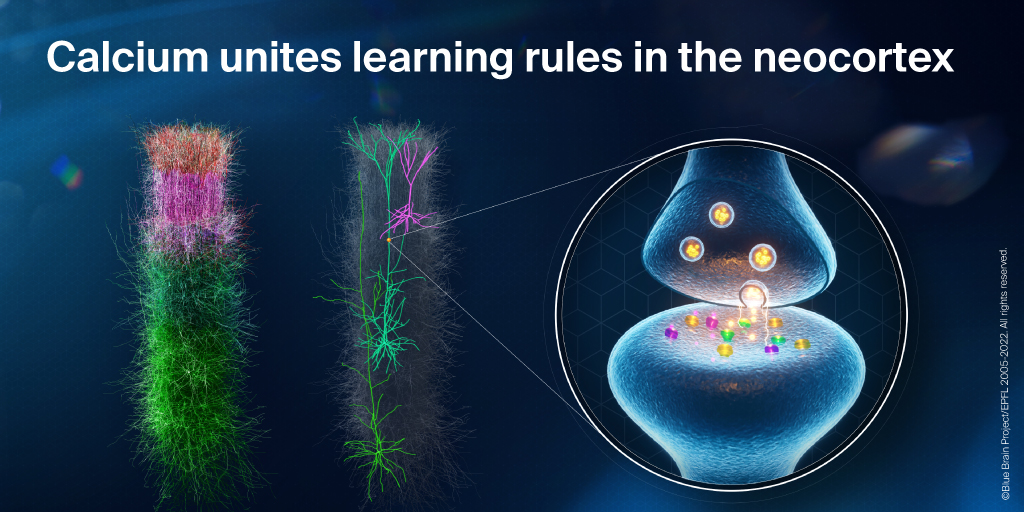
Read the paper- Chindemi et al 2022 - A calcium-based plasticity model for predicting long-term potentiation and depression in the neocortex - doi.org/10.1038/s41467-022-3… published in @NatureComms
Find out more - actu.epfl.ch/news/does-one-s…
#plasticity #insilico
2
15
42
Idan Segev retweeted
30 Dec 2021
My band, @SynfireChain, released our first single! Then we played it to a zebrafish under a microscope with
@LilachAvitan @ELSCbrain and put the calcium imaging video of its brain as the background to the lyric video. Because #science.
youtu.be/vbrnnCXSa_M
3
21
9 Dec 2021
Join us for an exciting series of talks with @YMalchi, in Beit Ariela featuring @Amiramedi, Prof. Sarit Larish, @YovelBatLab, @MeravAhissar and myself. Details inside -
23 Nov 2021

לא רק בכתב! 📣😀🗨️
הצטרפו אלינו לסדרה של חמישה מפגשים בהנחיית @YMalchi המפגישה את הילדים והילדות שלכם עם החוקרים מאחורי המאמרים (ללא תשלום, דורש רישום) - ariela.today/event/מדע-ללא-גבולות/
@Segev_Lab @Amiramedi פרופ' שרית לריש @YovelBatLab @MeravAhissar
2
9 Dec 2021
I am heading a fascinating endeavor - @FrontYoung_IL, a scientific journal for kids, written by prominent scientists and reviewed by kids! This exciting and unique format allows direct interaction between scientists and kids, benefiting both sides.
Follow us on twitter!
21 Nov 2021
קצת עלינו -
מי אנחנו? כתב עת בינלאומי מדעי מקוון לילדים. 👩🔬🧪📘🧑💻
הכותבים שלנו הם מדענים מובילים מהארץ והעולם. אנחנו מאמינים שהדרך הטובה ביותר להנגיש תגליות מדעיות לצעירים היא לאפשר להם לעבוד יחד עם המדענים, ולכן כתב העת *נערך על ידי ילדים*.
kids.frontiersin.org/he
1/4
2
3
17
Idan Segev retweeted

14 Nov 2021
In our paper Burst Control, we explore the synaptic input conditions leading to spike burst firing in layer 5 pyramidal cells
doi.org/10.1371/journal.pcbi…
@Segev_Lab
@ELSCbrain
1
8
21
13 Oct 2021
New paper from our lab in collaboration with the BBP.
4 Oct 2021

New paper from Blue Brain & the Hebrew University of Jerusalem.
The study uses one of the most detailed models of a piece of brain tissue & modern network science & systematically studies the impact of cell types on network activity in health and disease
frontiersin.org/article/10.3…
1
1
18
26 Aug 2021
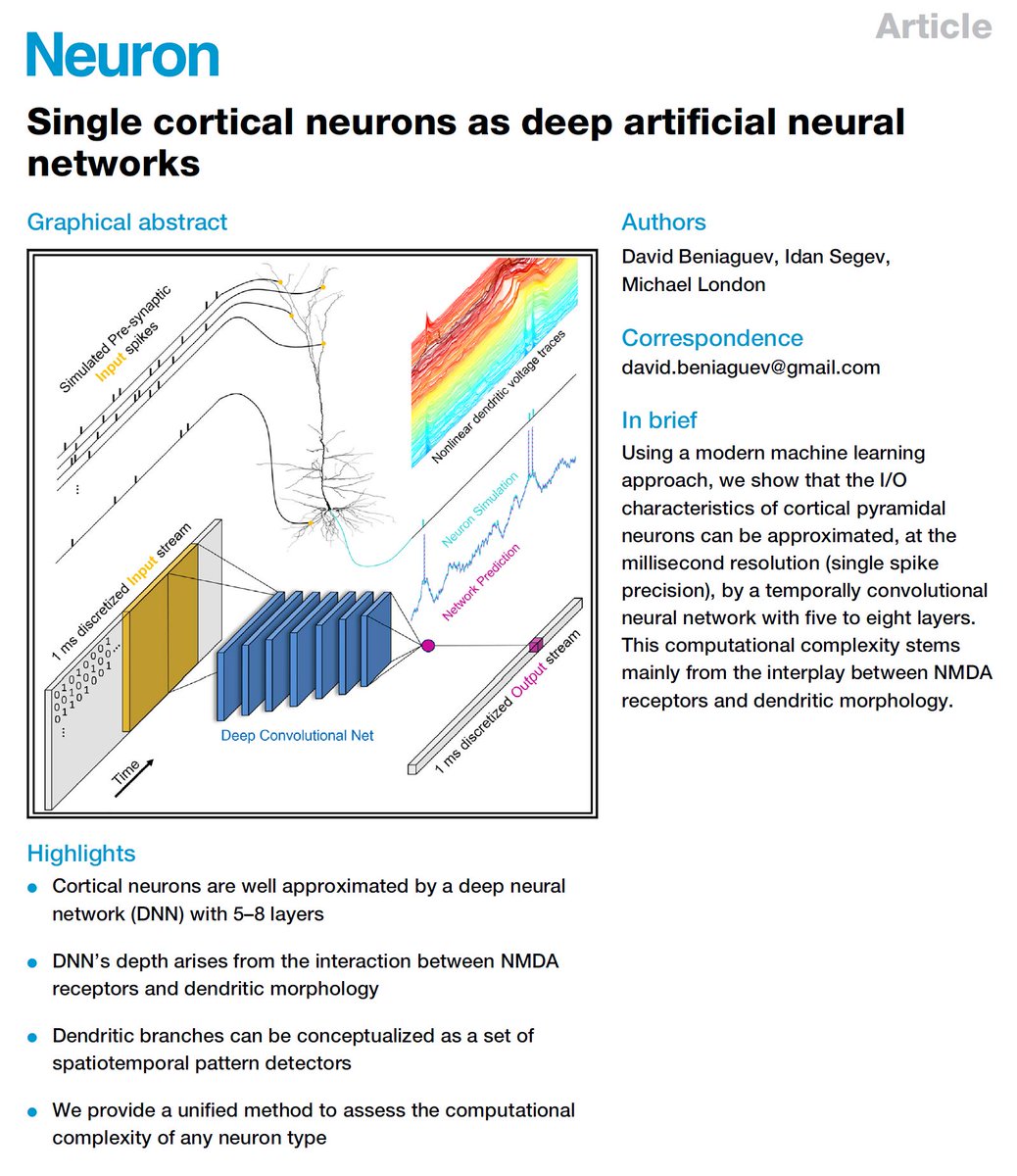
A new paper by @DavidBeniaguev from my lab. and that of @mikilon using machine learning approach to systematically quantify and compare how "computationally deep" are different neuron types.
13 Aug 2021

Out work about "Single Cortical Neurons as Deep Artificial Neural Networks" was finally published in Neuron
With @mikilon and @Segev_Lab
@NeuroCellPress paper: bit.ly/3CJic8E
code: bit.ly/3CJUeKv
data: bit.ly/3xIm6uW
All new results in thread below
11
32
Idan Segev retweeted
5 Jun 2021
My and @MMKalmenson's #GradientClusteron paper is out in PLOS CB! Learn how a model #neuron with a single #dendrite can solve #MachineLearning tasks by making synapses attract and repel with a gradient descent rule! With @Segev_Lab and @ELSCbrain.
journals.plos.org/ploscompbi…
1
9
26
Idan Segev retweeted
15 Feb 2021
In our paper Burst Control, we model the L5PC and analyze the conditions of synaptic activation in the apical and basal dendrites for burst generation. We found a novel burst-class, defined inhibitory control and correlated it with limiting plasticity.
biorxiv.org/content/10.1101/…
9
22
16 Dec 2020
New paper from the lab. The G-clusteron is a model neuron with a single "dendrite" where synapses exhibit distance-dependent multiplicative interactions with each other. It can learn tasks like MNIST via a gradient descent algorithm which makes synapses attract\repel.
16 Dec 2020

The Gradient Clusteron paper with @MMKalmenson and @Segev_Lab is up on biorXiv!
biorxiv.org/content/10.1101/…
Constructive feedback is appreciated!
1
17
Idan Segev retweeted

26 Aug 2020
So, I am Happy to share this central effort from my PhD.
Pop-Rec is a high throughput method for unbiased, completely automated reconstruction of thousands of neurons from cleared mouse brains.
biorxiv.org/content/10.1101/…
7
100
451
Idan Segev retweeted
5 Aug 2020
This new version, allows normalization between samples, reducing experimental variability (assuming assumptions are met!). We used this MATLAB based tool (sorry @FijiSc users :( ) to correct 2-Photon, Light-Sheet and confocal datasets.
1
3
10
Idan Segev retweeted

21 Jul 2020
Beautiful thread by @Oren_Amsalem from @Segev_Lab explaining his work! He and his colleagues used a detailed model of the neocortex to obtain cell-type-specific insights on stimulus specific adaptation (SSA) in the auditory cortex.
Read it at biorxiv.org/content/10.1101/…
11 Jun 2020

Replicating experiments in a supercomputer can help us understand the brain
1) We replicated auditory experiments (usually of rat/mice) on a detailed model of the neocortex and discovered novel mechanism for the phenomena observed in the experiments
biorxiv.org/content/10.1101/…
THREAD
5
16
Idan Segev retweeted

11 Jun 2020
Replicating experiments in a supercomputer can help us understand the brain
1) We replicated auditory experiments (usually of rat/mice) on a detailed model of the neocortex and discovered novel mechanism for the phenomena observed in the experiments
biorxiv.org/content/10.1101/…
THREAD
2
19
65
Idan Segev retweeted

9 Jun 2020
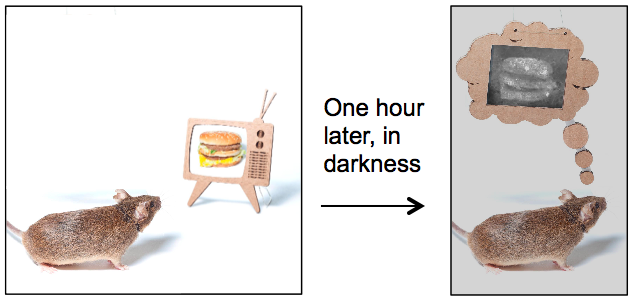
Excited to share new work from Arthur Sugden and colleagues in @NatureNeuro using two-photon calcium imaging in visual association cortex to examine offline reactivations of recent sensory experiences during cue-reward learning. ift.tt/3cFX3hz More in THREAD … 1/4.
11
60
233