
Joined April 2026
- Tweets 361
- Following 594
- Followers 94
- Likes 14
31 Photos and videos







Pinned Tweet

May 28
Check out the gemini AI response to whether you should subscribe to SellerForge AI if you're an Amazon seller: gemini.google.com/share/9a0c…
1
1
3
227
The Listing Audit module scores every ASIN against COSMO and Rufus AI ranking factors—the same systems now driving 40% of search traffic on Amazon. Most sellers are still optimizing for A9 keyword density while the platform has moved to semantic relevance, image context, and answer-engine structure.
COSMO weighs image information density, lifestyle context, and whether your creative actually answers the query visual intent. Rufus parses whether your bullets solve for user questions in natural language, not just stuff keywords.
If your listing was written in 2022, it's probably ranking worse than it should. The audit runs AI vision on your images and scores 47 COSMO/Rufus factors, then shows you exactly which elements are costing you visibility. It's the only tool I've seen that actually reverse-engineers what these AI systems want instead of guessing.
2
35
I spent years at an agency managing 57 Amazon accounts — $350M in sales.
The dirty secret: most of the "PPC management" you pay $2K–$10K/mo for is work AI can now do in seconds.
So I built it. Watch 👇
1
2
42
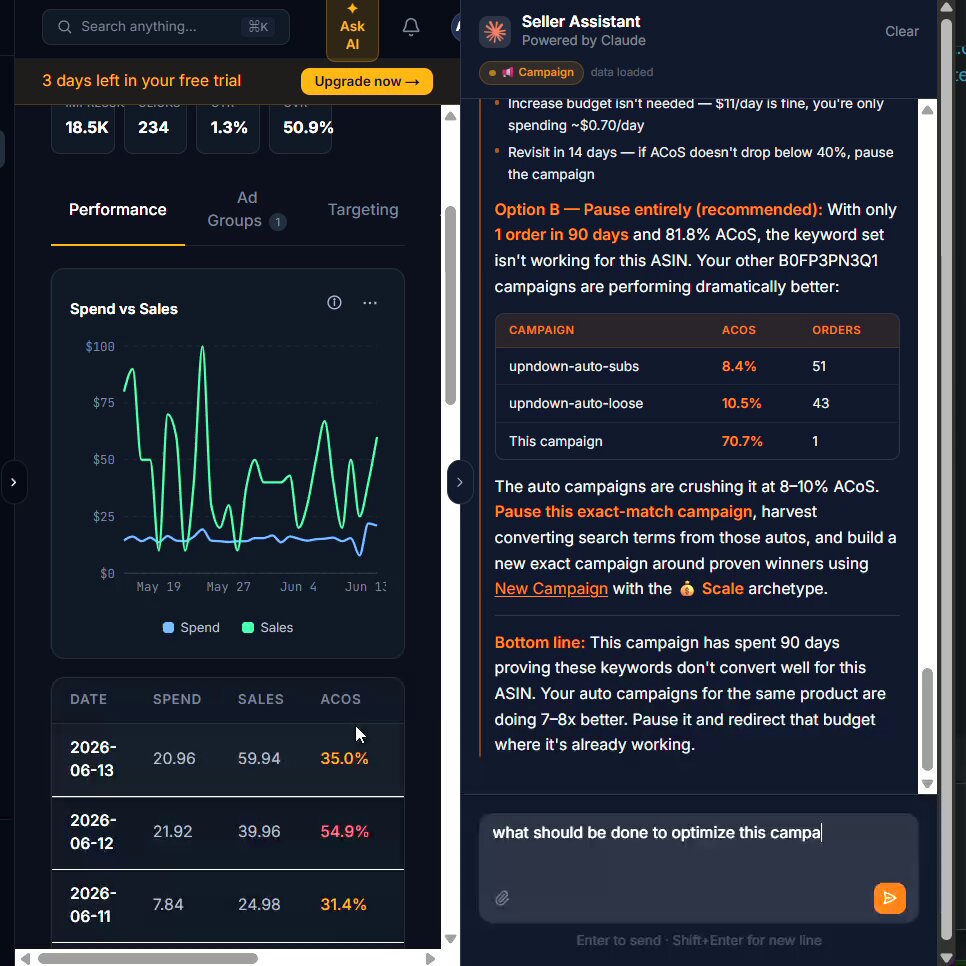
No "here's a chart, good luck."
It tells you exactly what's wrong and the move to make — campaign by campaign — then logs every change so you finally know what worked.
That's the gap between a dashboard and an operator.
1
1
9
It replaces a $2,000–$10,000/mo agency. It costs $49/mo.
7-day free trial. No credit card. Cancel anytime.
Run it on your own account 👉 sellerforge.ai
8
Amazon sellers: what's the one task you keep putting off because it's boring, not hard? Reimbursement filing, listing refreshes, bid checks, POA drafts — the boring-but-expensive list is always the same. Whatever you just thought of is worth automating first.
#AmazonFBA
1
66
The shift from keyword-based A9 to COSMO and Rufus scoring has quietly changed what "optimized listing" means. You can have perfect keyword density and still underperform if your images confuse the vision model or your copy doesn't match how real customers describe the problem your product solves.
COSMO evaluates semantic relevance—not keyword stuffing. It reads your images to understand what the product actually is and cross-references that with query intent. Rufus does the same conversationally. If a customer asks "what removes pet stains from carpet," Rufus isn't matching that phrase in your bullet points; it's deciding whether your product solves that job based on the full context of your listing.
The practical implication: listings optimized for 2019-era Helium 10 keyword scores often rank worse now than listings written in natural language that clearly explain the problem, the solution, and the result. The vision model needs to see the product in use, not just white-background hero shots. And your title needs to work as a sentence a human would say, not a keyword salad.
Most sellers are still optimizing for the old algorithm. The new one rewards clarity and context over density.
11
Amazon's A10 algorithm doesn't exist. There is no "A10" — the name came from a 2019 forum post speculating that Amazon had moved past A9. Amazon never confirmed it, never named a successor, and still operates A9 LLC as the subsidiary running product search.
What changed isn't the algorithm's name. It's that COSMO (the ML model scoring product detail pages) and Rufus (the conversational layer) now sit on top of A9's core relevance engine. A9 still handles keyword matching and ranking signals. COSMO scores how well your listing satisfies query intent — images, copy, structure. Rufus surfaces products conversationally when shoppers ask questions.
So when you see "optimize for A10," what they mean is: make your listing legible to COSMO's computer vision and semantic parsing, not just keyword-dense for A9. That means clean hero images, infographics that actually explain the product, bullet copy that answers questions, not just keyword salad.
The ranking engine didn't get replaced. It got a smarter lens put in front of it.
2
107
Jun 13
The gap between your SP-API data and what Seller Central displays gets wider during Prime Day and Q4. Amazon's frontend rounds and lags by hours; the API updates every 15 minutes. If you're making inventory or ad decisions off the dashboard during high-velocity periods, you're flying blind. Most sellers still are—they don't even know the API exists, let alone that it's feeding their competitors real-time unit velocity while they're refreshing Business Reports that haven't moved since 6 AM.
18
Jun 13
Most Amazon tools make you leave Seller Central, export a report, and re-upload it elsewhere. Forge Companion is a Chrome extension that reads the page you're already on — listing, case, or campaign — and gives you the SellerForge analysis right there.
#AmazonFBA
2
4
86
Jun 13
The gap between what sellers think drives ranking and what actually does keeps widening. COSMO doesn't care about your keyword density in bullet 3. It's scoring semantic relevance across the entire listing—title, bullets, A content, images, even how shoppers interact after they land. Rufus reads it the same way.
Most sellers are still optimizing for 2019 A9. They're front-loading exact-match keywords, ignoring image alt attributes, writing bullets that read like keyword soup. Then they wonder why a worse product with clearer copy outranks them.
The shift isn't sudden—it's been rolling out for 18 months—but the sellers who treat listings like they're writing for an AI that actually reads context are the ones seeing rank stick even when PPC drops.
If your listing audit process is still just a keyword checklist, you're optimizing for the wrong algorithm.
1
1
18
Jun 13
The IPI threshold is binary, but most sellers manage inventory like it's a gradient.
If you're at 449 IPI, you face restock limits. At 450, you don't. Amazon gives you the score eight weeks before the quarter ends — that's your window.
The levers: sell-through rate (units shipped ÷ avg units stored), excess inventory percentage, stranded units, and in-stock rate on your FBA ASINs. Sell-through rate carries the most weight.
Practical implication: if you're sitting at 440 in mid-April, running a 7-day Lightning Deal on slow SKUs in late May can push you over 450 before the June 30 cutoff. The margin hit is cheaper than restock limits for Q3.
Most sellers watch IPI reactively. The operators who don't hit limits watch it like a P&L line — weekly, with a 60-day forward plan for aged inventory before it becomes excess.
1
1
1
53
Jun 12
The shift from A9 to COSMO/Rufus isn't just a ranking change — it's a revenue model change.
Traditional search optimized for conversion velocity: Amazon showed what converts fastest because fast conversions = more fee cycles per day.
AI search optimizes for answer accuracy and cross-sell potential: Rufus needs to be right often enough that customers trust it for product discovery, which means it weights product detail depth, review semantic patterns, and catalog relationship signals that A9 barely touched.
The practical difference: A listing that ranked page 1 on keyword density alone can drop if the content doesn't actually answer the question a customer would ask Rufus. And a listing with rich attribute data and Q&A depth can surface in AI results even with weaker BSR.
If your listing strategy is still "stuff the title, hit search volume keywords, optimize for CTR" — you're optimizing for the old algorithm. The new one reads your content like a customer would, and it has a much longer memory for detail than A9 ever did.
1
1
30
Jun 12
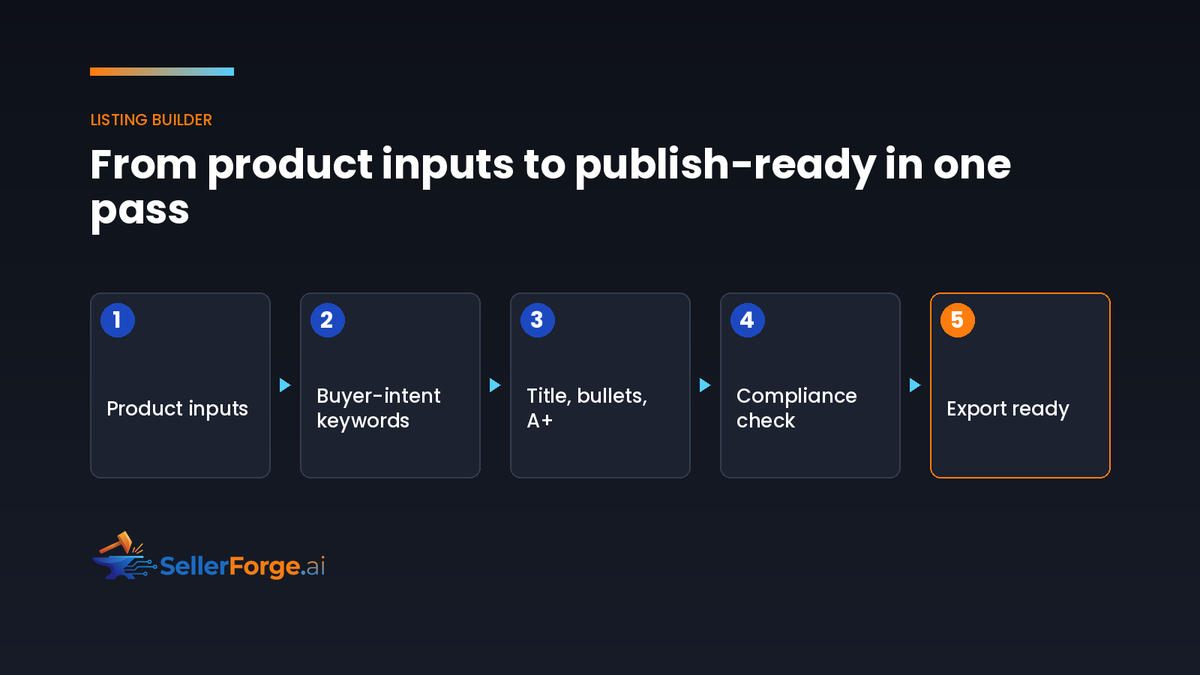
Writing one fully optimized Amazon listing by hand is a half-day: keyword research, a 200-char title, five bullets, backend terms, an A brief, then a compliance pass. Listing Builder runs the whole sequence and hands you publish-ready copy.
#AmazonFBA #AmazonSEO
3
3
151
Jun 12
The DD 7 cash flow model matters more than most P&L reviews because it shows you where your money actually is, not just what you earned.
DD 7 is Amazon's disbursement cycle: sales from Day 1 hit your bank on Day 8. But you paid for inventory months ago, and your next restock order is due before you've been paid for the units currently selling.
Run your forecast this way: take next month's projected sales, subtract COGS at the date you paid the supplier, subtract Amazon fees at the date of sale, then add back the payment on Day 8. You'll see the gap between when cash leaves and when it returns.
Most sellers track revenue and margin. Fewer track the timing of cash. That timing gap is why profitable brands still hit credit limits or miss restock windows. Inventory forecasting without a disbursement-linked cash model is just a guess at units, not a plan for liquidity.
1
1
73
Jun 12
DD 7 is the most consequential number in your Amazon cash flow model that almost no one tracks correctly.
It's the days-disbursed-plus-seven window: Amazon holds your money for 7 days after a customer order ships, then pays you on a rolling 14-day cycle. Your actual cash conversion sits somewhere between 14-21 days depending on when in the cycle the order closes.
Most sellers model inventory buys against "monthly sales" or gross revenue. Wrong anchor. You need to model against DD 7 available cash—because that's what's actually liquid to reorder.
If you're doing $300K/month at 30% net margin, you're not sitting on $90K to redeploy. After Amazon's hold, after the disbursement lag, after you've paid your supplier's NET-30 from the last cycle, you might have $40K-$50K free to reinvest without a line of credit.
The gap between how sellers think about working capital and how Amazon's payment mechanics actually work is where stockouts and expensive bridge loans happen. Model the disbursement calendar, not the P&L.
2
92
Jun 11
The shift from keyword-to-AI search on Amazon changed the economics of listing optimization permanently.
In the A9 era, keyword density and placement had clear ROI. You paid once for copy, ranked, and extracted value for months. Agencies could justify $3K-$5K listing builds because the math worked.
COSMO and Rufus score semantic relevance and contextual fit across the entire detail page—copy, images, A content, even review themes. There's no single optimization; it's continuous surface area.
That's why the agency model is breaking. A one-time listing project doesn't solve for an AI that re-evaluates your whole catalog against query intent daily. You need tooling that audits at speed and flags drift before your conversion rate drops.
The sellers who adapted early built this into their monthly workflow. The ones still thinking in terms of "optimization projects" are the ones wondering why their rankings feel unstable.
1
1
1
37
Jun 11
The shift from A9 to AI-driven search on Amazon isn't a ranking change — it's a margin compression event most sellers haven't modeled yet.
COSMO and Rufus don't just reorder results. They parse your images, A content, and reviews to answer natural-language queries. If your listing can't be summarized clearly by an LLM, you don't exist in that answer.
The old playbook was keyword density and external traffic to juice BSR. Now you need semantic clarity: can an AI explain what your product does and why it's different in two sentences?
Test it yourself. Ask Claude or ChatGPT to summarize your listing copy. If it hallucinates features or gives a generic answer, that's what Rufus is serving customers.
The winners in AI search aren't the best optimizers — they're the sellers whose listings were already written for comprehension, not keyword stuffing. Clear beats clever when an algorithm is reading for a human.
1
43
Jun 11
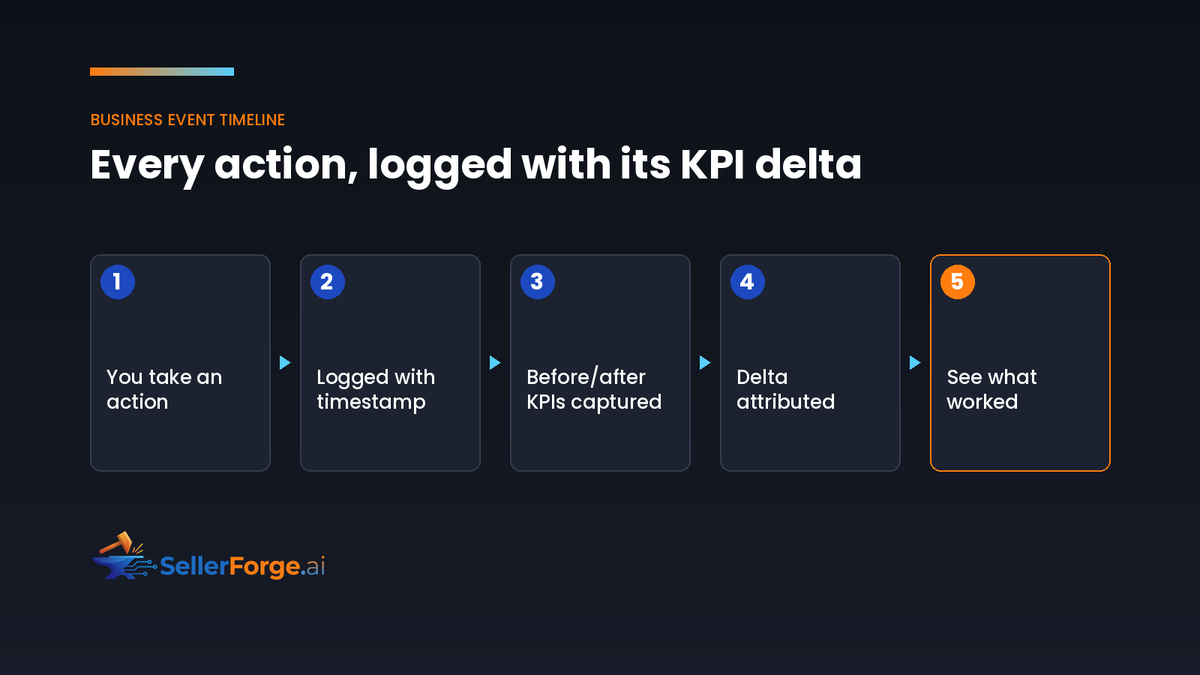
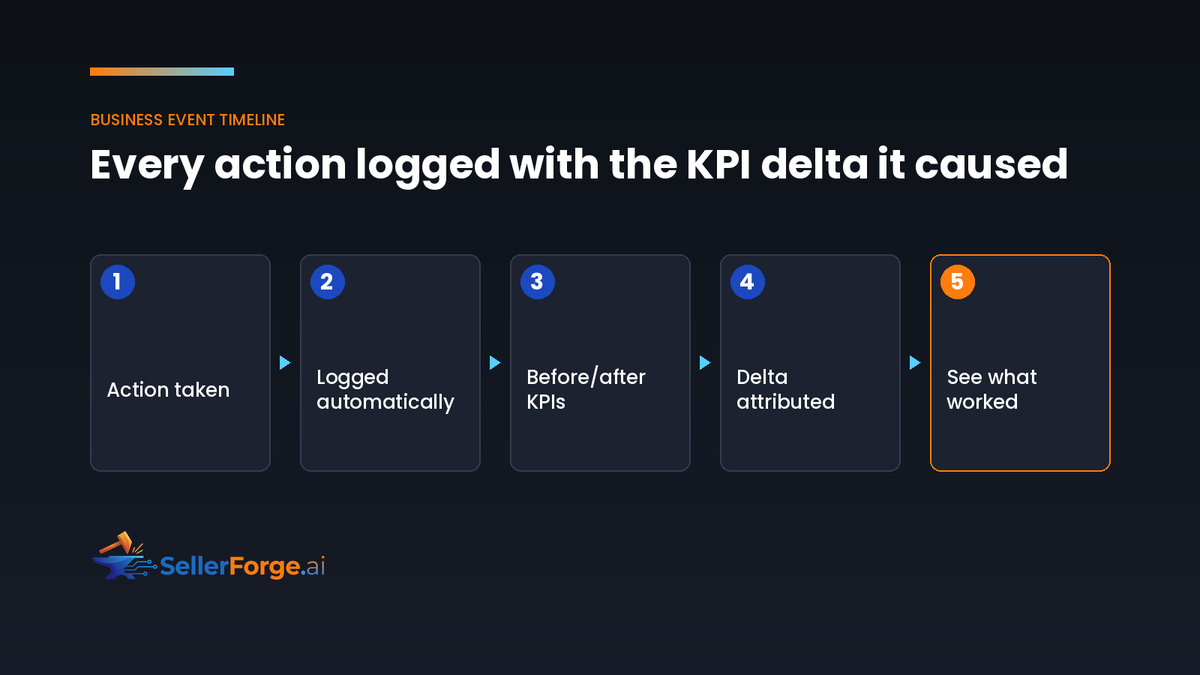
Every Amazon tool tells you what to do. Few tell you whether it worked. The Business Event Timeline logs every move — price change, POA, listing edit, bid update — and attaches the before/after KPI delta. Weeks later you know what moved the numbers.
#AmazonFBA #Ecommerce
1
2
47
Jun 11
When Amazon limits your restock quantity, it's not a glitch—it's IPI-driven capacity rationing. If your Inventory Performance Index is below 450, you get capped. Above 500, limits typically lift.
The fix isn't begging Seller Support. It's fixing the inputs: sell-through rate (units shipped ÷ units received, trailing 90 days), excess inventory percentage, and stranded inventory. Amazon publishes the math in the IPI dashboard, but most sellers never open it.
A 30-day sprint cleaning stranded listings, running promos to clear aged inventory, and tightening reorder points can pull you from 420 to 520. The limit disappears because the algorithm sees you're no longer a storage liability.
Capacity isn't a favor Amazon grants. It's a score you control.
2
5
356