
Stop wasting the first 20 min figuring out where you left off. Set your next task before you close your laptop. Built for side hustlers 🛠️
Joined January 2026
- Tweets 135
- Following 13
- Followers 0
- Likes 10
1 Photos and videos
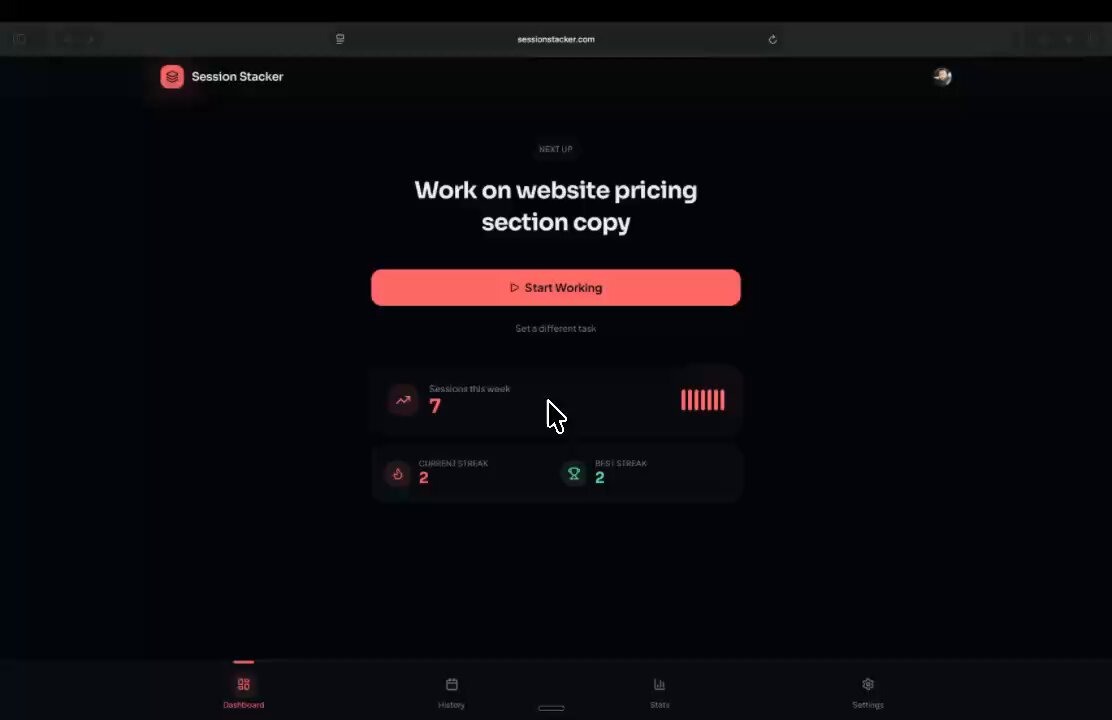

Tuesday energy: the gap between where you are and where you want to be closes one evening session at a time.
No shortcuts. No hacks. Just you, your laptop, and the decision to show up when it's easier not to.
1
Everyone's chasing the perfect tech stack while ignoring the only stack that matters: show up, do the work, ship it, repeat.
No framework solves the discipline problem. Your side project doesn't need better tools. It needs you to open it tonight and write one function.
1
Sunday check-in: your side project is waiting. Not judging. Just waiting.
1
Your side project doesn't need a roadmap. It needs a next step.
Write down the ONE thing you'd do if you only had 30 minutes tonight. Then do that thing. No Notion template, no sprint planning, no backlog grooming.
Just the next step. That's the whole system.
2
Friday the 13th and you're still working on your side project. That's not bad luck — that's discipline.
Most people quit after the first week of excitement fades. The ones who build something real are the ones still grinding when nobody's watching and the calendar looks spooky.
2
Wednesday night check-in:
You don't need a 4-hour deep work block to make progress. Sometimes the win is reading one error message, fixing one bug, or just opening the project so tomorrow isn't a cold start.
Consistency isn't about intensity. It's about showing up.
2
You don't need a better tool. You need to close 14 browser tabs and do the one thing you've been avoiding all week.
Productivity isn't adding more systems. It's subtracting everything between you and the work.
2
The difference between a side project and a real product isn't code quality. It's whether you can pick it back up on a Thursday night after not touching it for 5 days.
Momentum isn't about speed. It's about never fully losing the thread.
1
Every productivity system eventually becomes the thing you procrastinate on maintaining.
The best system is the one simple enough that you actually use it at 10 PM after a long day. Not the one that looks pretty in a YouTube thumbnail.
2
Half the battle with side projects isn't the coding. It's remembering what you were thinking three days ago when you last had time to work on it.
The context reload tax is real. And most people pay it by starting over instead of picking up where they left off.
2
Tuesday's almost done. Here's what separates builders from dreamers:
Dreamers wait for the right moment.
Builders open their laptop at 9 PM after a full day and do 45 minutes of real work.
Those 45 minutes compound into something nobody else has the patience to build.
1
The real productivity hack nobody talks about: lower your standards for version one.
Perfectionists don't ship. Builders who are slightly embarrassed by their first release are the ones who actually get users.
1
Tuesday energy: stop planning the perfect feature and ship the ugly version.
Your users don't care about polish. They care about solving their problem.
The feedback from a shipped MVP teaches more than a month of wireframes ever will.
1
Monday's almost over. If you moved your project forward today — even one commit, one design tweak, one conversation — that counts.
Most people spent today talking about what they'll build someday. You actually built.
1
The biggest lie in productivity: "I'll remember where I left off."
You won't. Nobody does. That's why Monday mornings feel like starting over instead of picking up momentum.
Write yourself a 30-second note before you close your laptop. Future you will be grateful.
Most todo apps assume you know what to do next.
But the hardest part of a side project isn't the work — it's figuring out where you left off and what actually matters right now.
Context switching kills more projects than lack of skill ever will.
1
End of the weekend. If you touched your project at all — even 20 minutes — you're ahead of 90% of people who said they'd start Monday.
Monday never comes. Sunday evening does.
Sunday reminder: your side project doesn't need to be perfect to make progress.
Open it up. Work one session. Ship something small.
That's how real products get built.
The biggest threat to your side project isn't competition. It's Tuesday night when you sit down, stare at your code, and think "where was I?" Write your next task before you close your laptop. Future you will thank you.
Your side project didn't stall because you lost motivation. It stalled because you forgot what you were doing. That's a solvable problem.
1