
Singer/Songwriter, Director of Operations at Basically Income PAC (BasicallyIncome.org), AI Educator and Enjoyer, Retrogaming YouTube Consumer
Joined July 2008
- Tweets 62,467
- Following 52
- Followers 2,746
- Likes 68,006
5,923 Photos and videos



Pinned Tweet

26 Feb 2024
It is, now, time for me to receive free money from the universe again. Thank you.
1
9
1,905
Jun 16
10
Jun 13
Starting soon: Basically Income PAC’s Basic Income Roundtable, today at 11:00 a.m. Eastern / 8:00 a.m. Pacific on Clubhouse.
Today's guest is Karl Widerquist, Professor of Philosophy at Georgetown University in Qatar.
Find our house "Basically Income PAC" on Clubhouse to join.
20
Shael Riley🍄 retweeted

Jun 10
Sometimes in life all you need is $50 million dollars.
432
574
3,596
147,632
Jun 6
Join the Basic Income Roundtable at the top of the hour, starting in ~15 minutes, on the Clubhouse app. Search for the "Basically Income" house and join the Basic Income Roundtable event, or friend me on the app--username "ShaelRiley".
9
May 16
The Basic Income Roundtable begins at the top of the hour. If you're here, I hope to see you there. clubhouse.com/i/basic-income…
22
Shael Riley🍄 retweeted

May 14
Wow.
May 13

JUST IN: Business schools are slashing MBA tuition by as much as 50% due to falling demand.
134
72
2,991
798,434
May 9
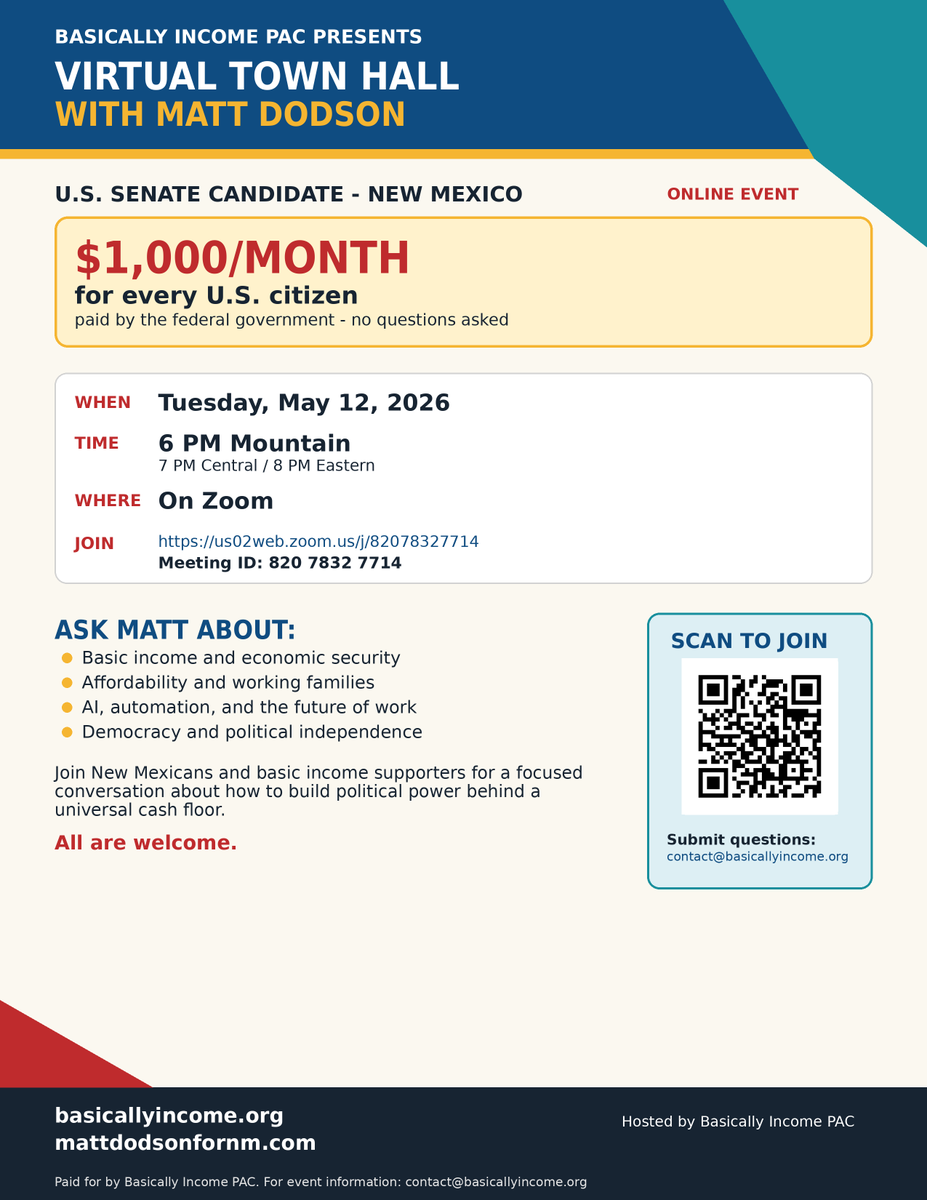
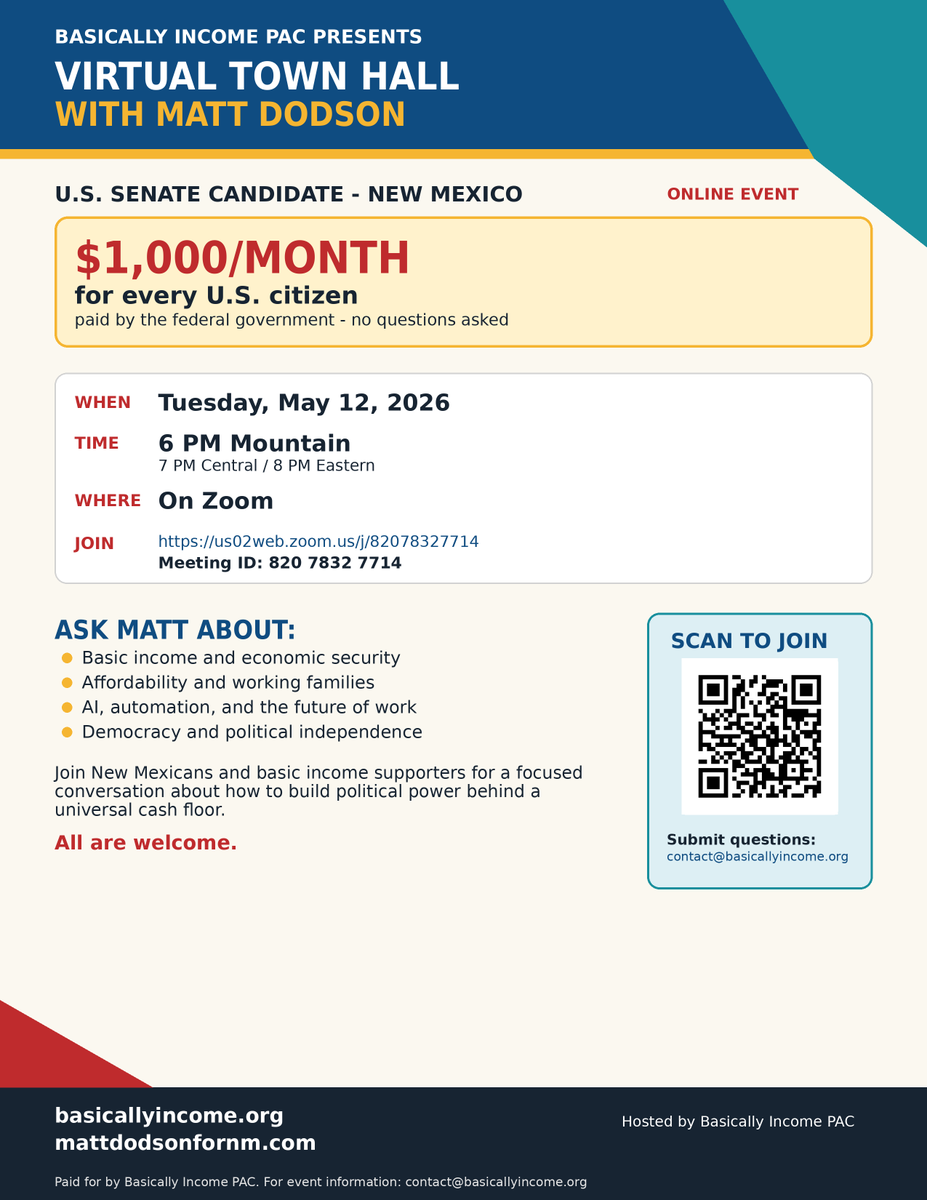
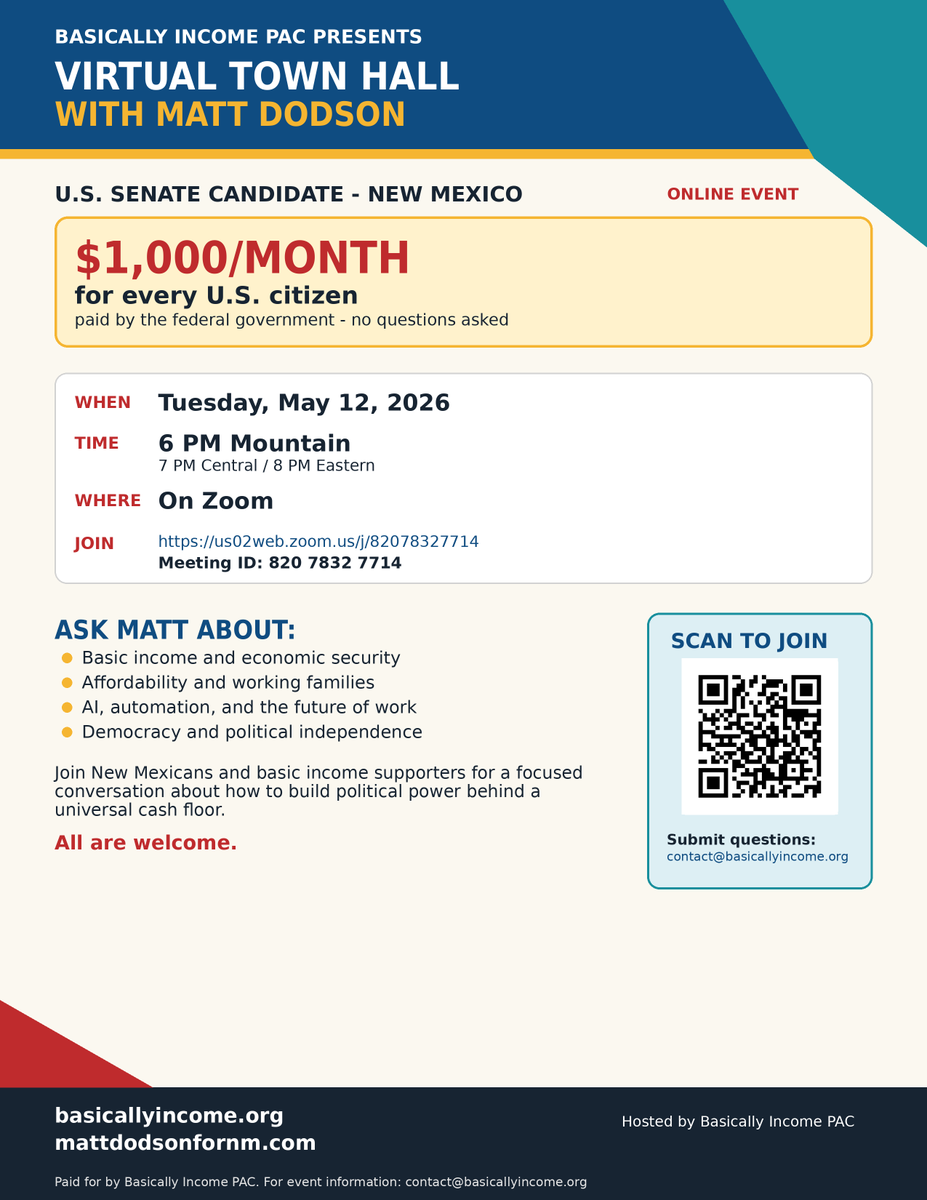
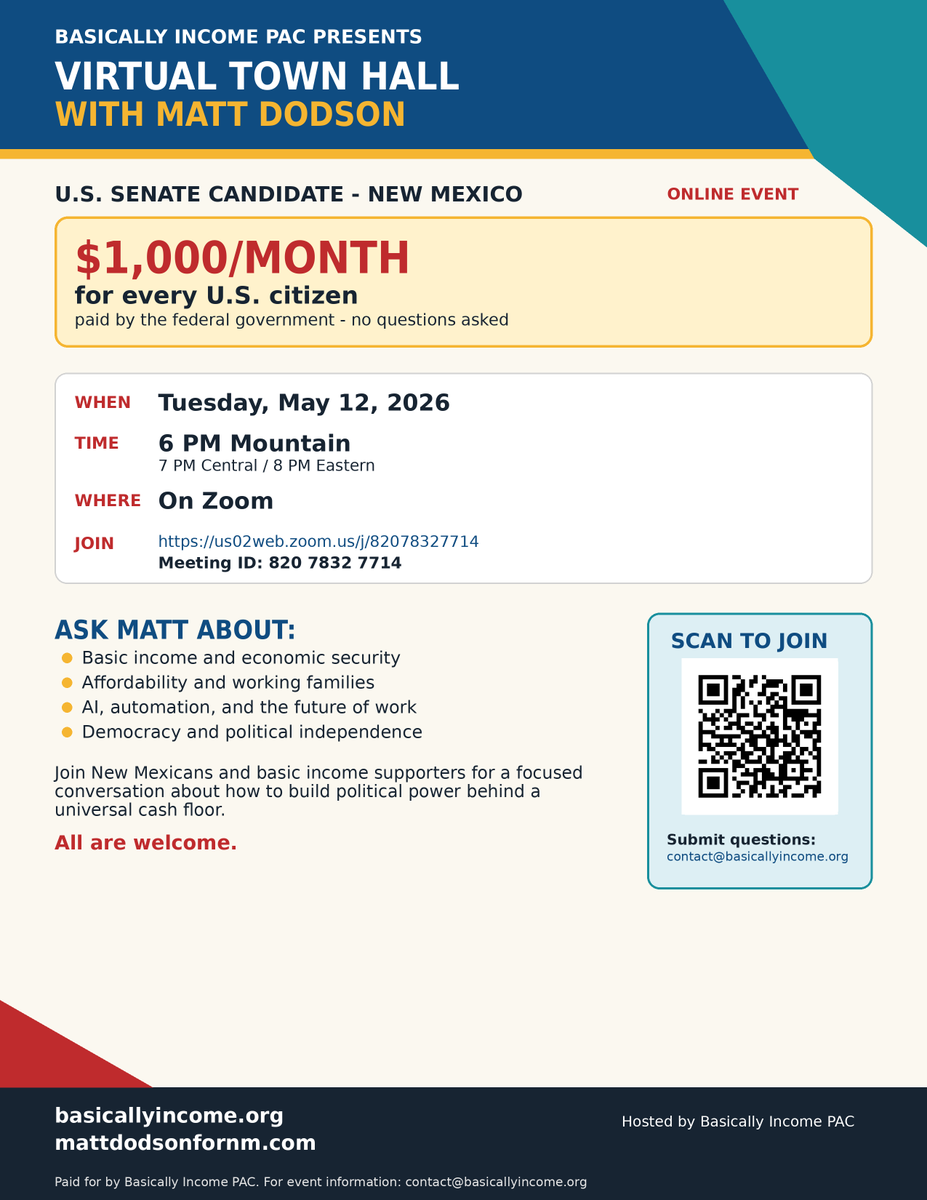
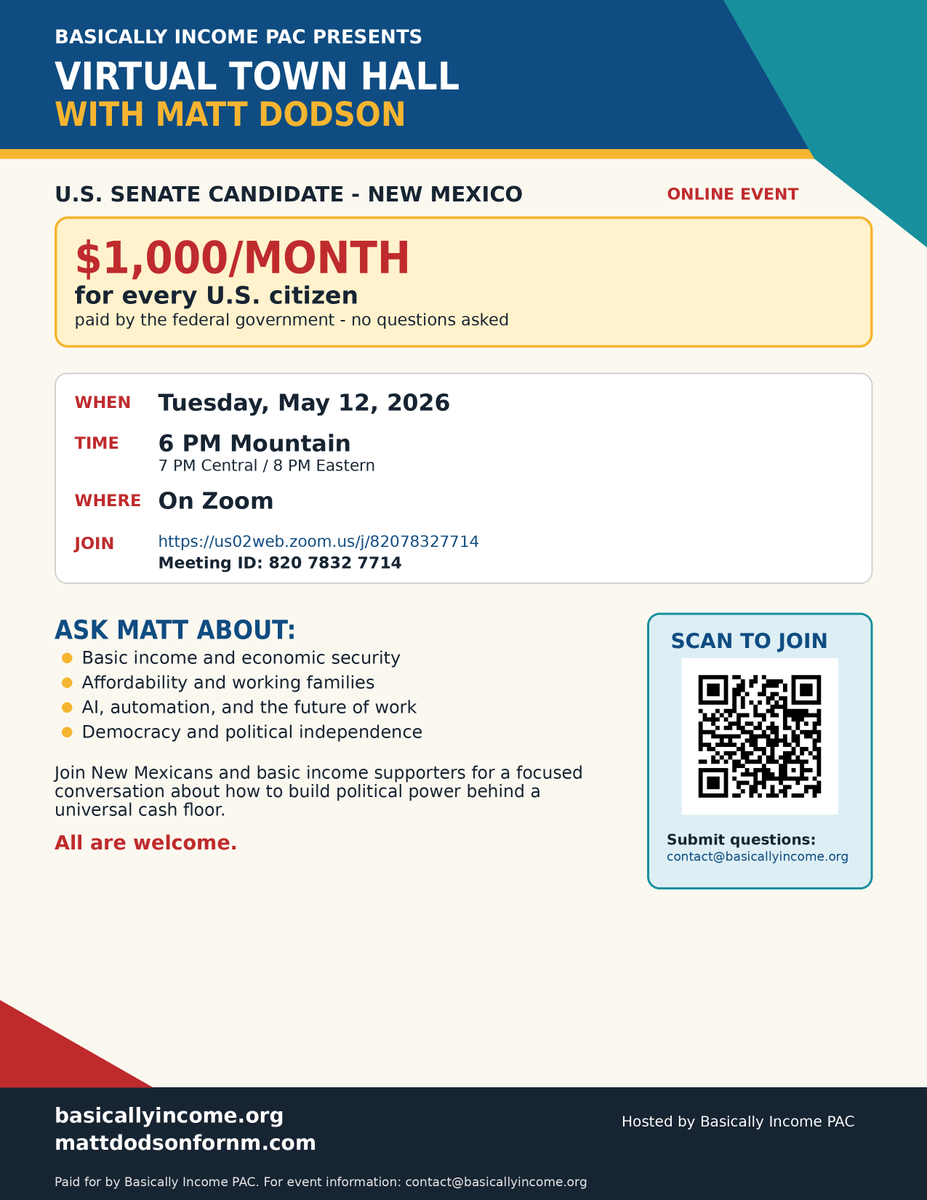
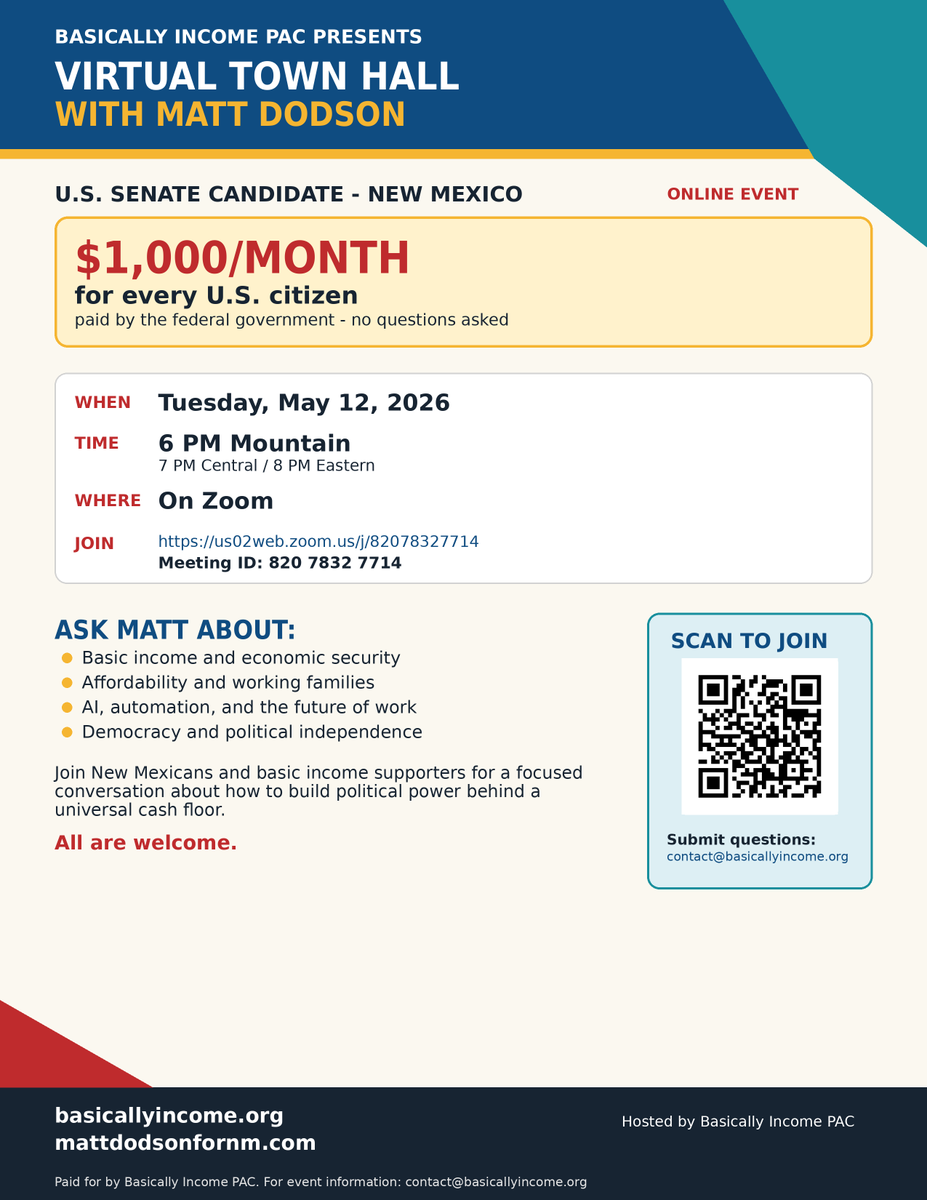
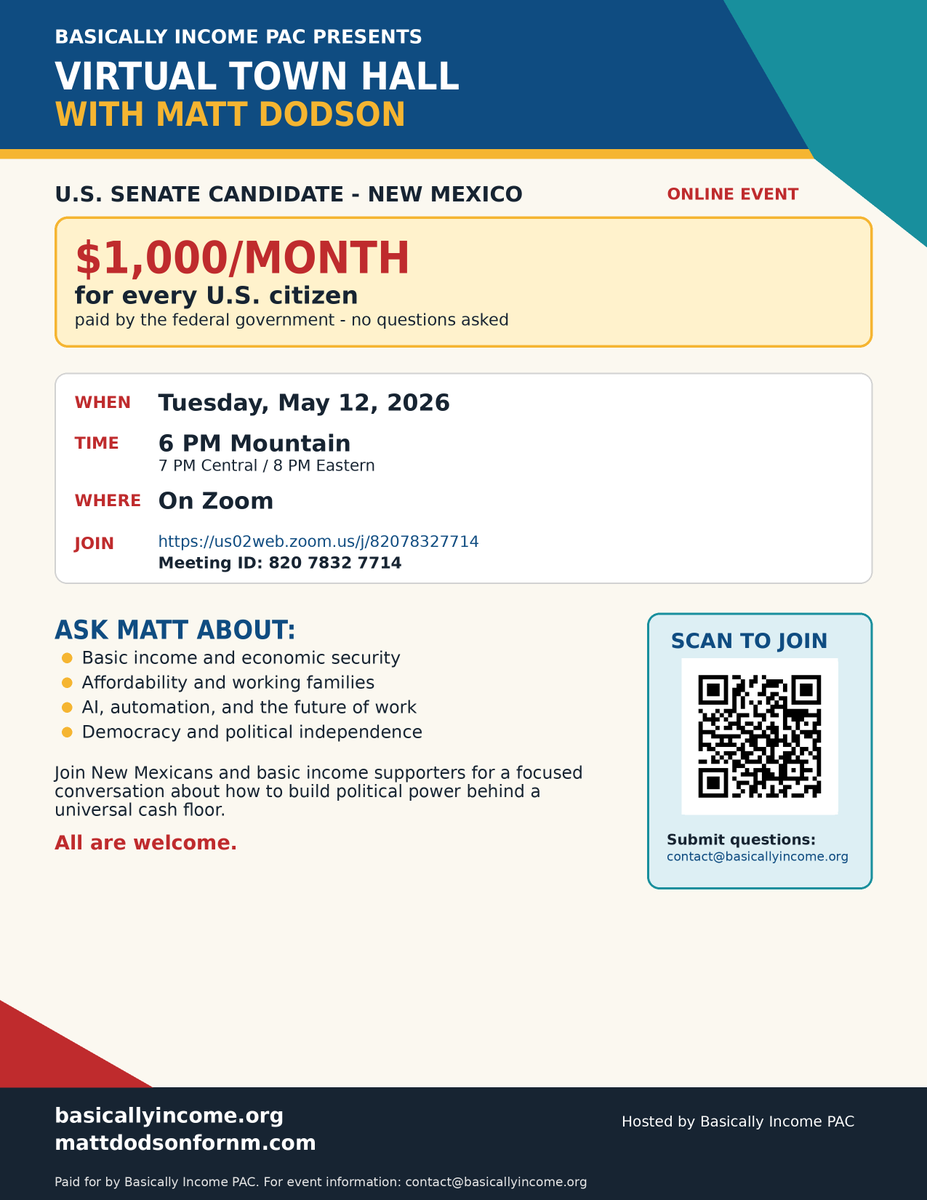
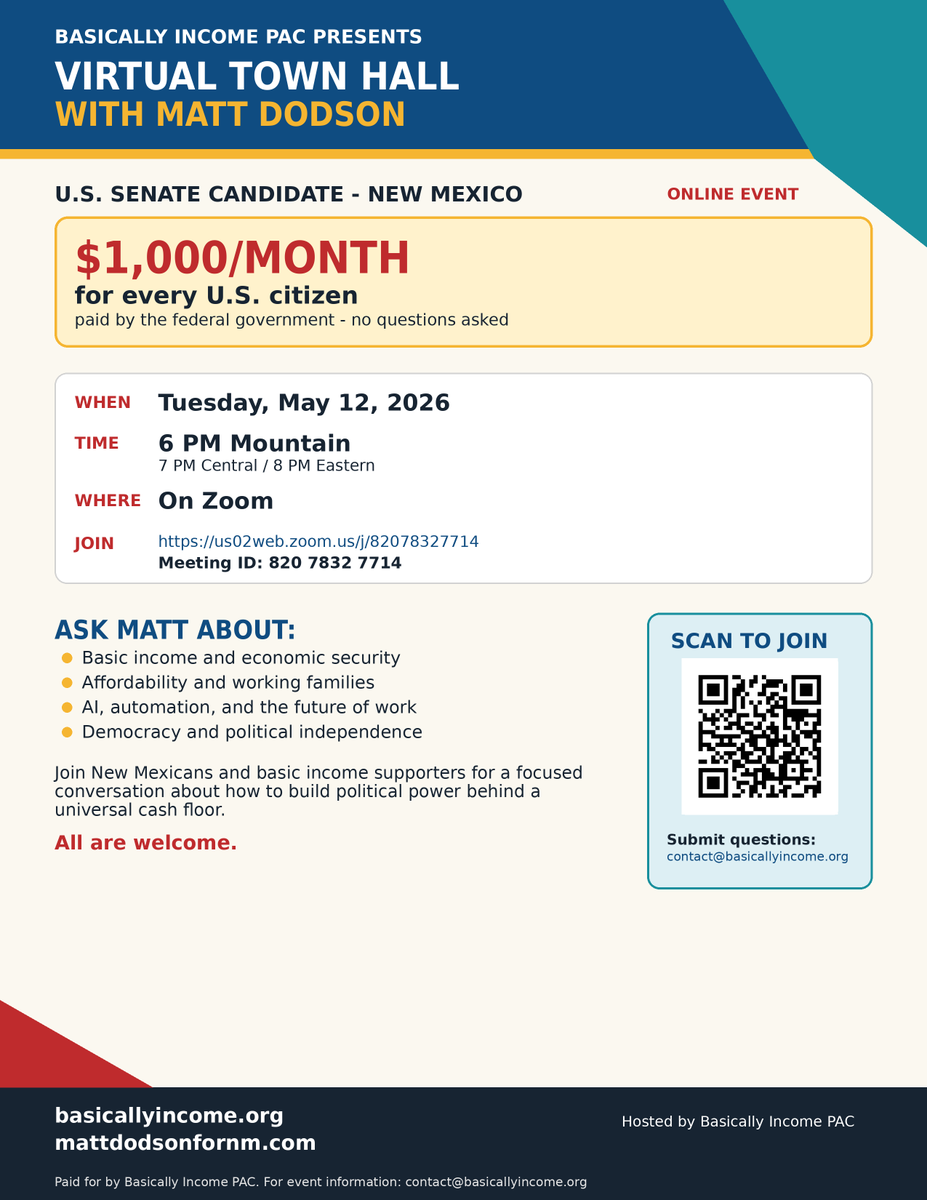
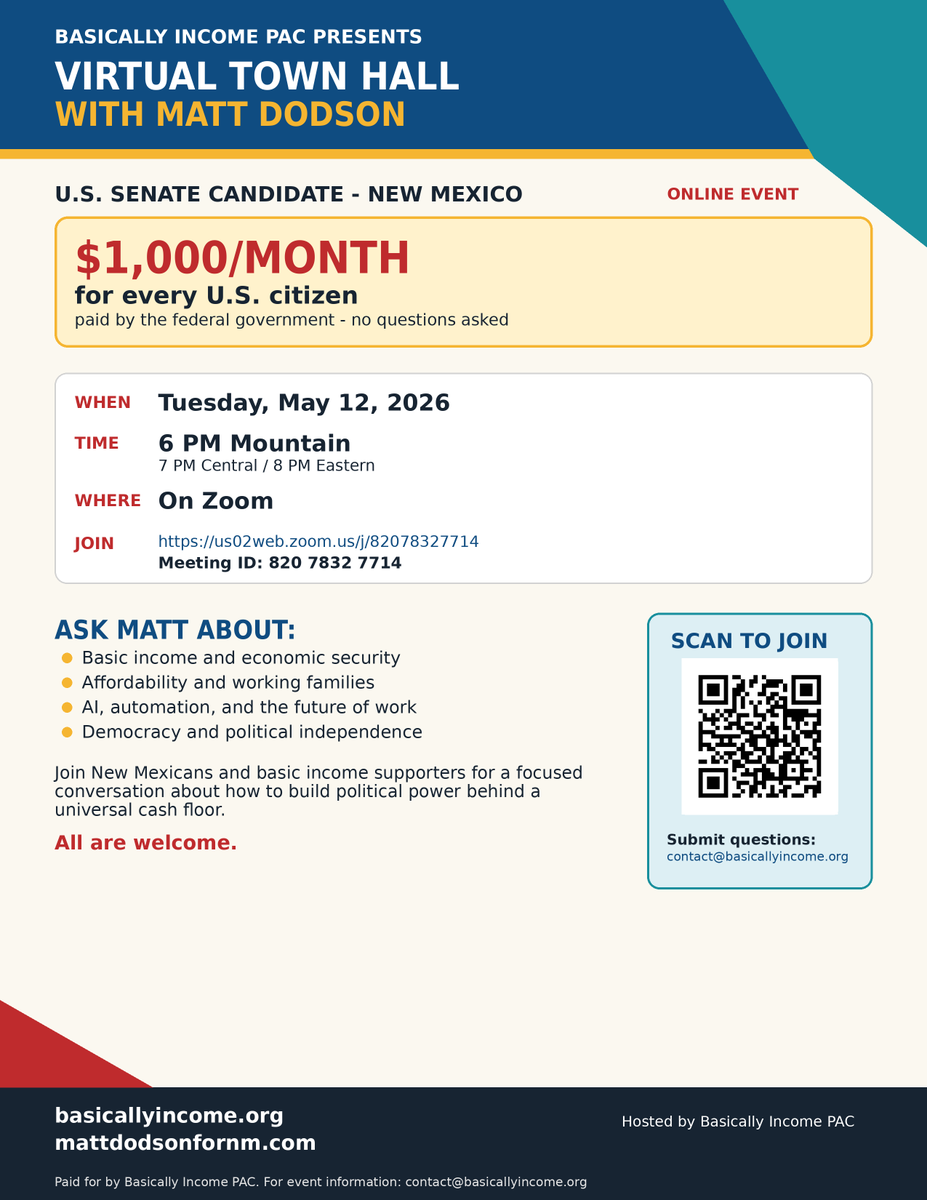
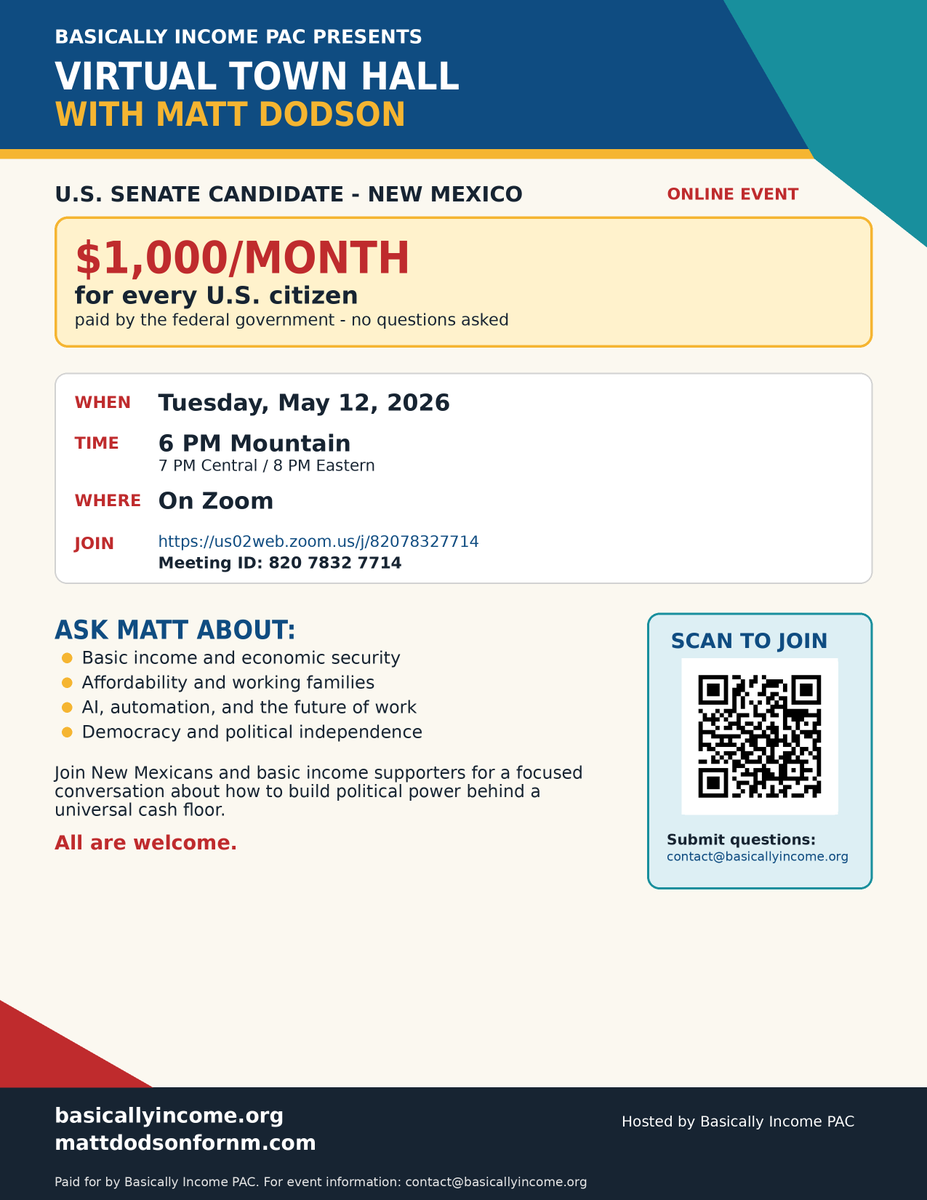
Join Basically Income PAC for a Virtual Town Hall with Matt Dodson (our endorsed US Senate candidate from New Mexico) Tuesday, May 12, 2026 6 PM Mountain / 7 PM Central / 8 PM Eastern
2
59
May 7
Universal Basic income needs champions in Congress.#UBI
Join Basically Income PAC's virtual town hall with Matt Dodson, our endorsed U.S. Senate candidate in NM.
Tue, May 12
6 MT / 7 CT / 8 ET
Matt supports $1,000/month for every U.S. citizen.
Join: us02web.zoom.us/j/8207832771…
1
3
9
479
May 3
Are you busy tonight? Meet Basically Income PAC on Clubhouse for our good-vibes-only financial literacy class Q&A, run by our Executive Director Sheridan Lund.
How will you spend your extra $1,000 a month? clubhouse.com/invite/qgESOa0…
27
Apr 29
In response, we at Basically Income PAC have written a wonderful piece on why you, @elonmusk, will inevitably support Universal Basic Income not just as a talking point, but as federal policy, backing the candidates who make it happen in coming elections.
basicallyincome.org/blog/Why…

Universal HIGH INCOME via checks issued by the Federal government is the best way to deal with unemployment caused by AI.
AI/robotics will produce goods & services far in excess of the increase in the money supply, so there will not be inflation.
1
38



Shael Riley🍄 retweeted
Apr 17
It’s clear that AI will wind up funding universal income. Let’s make that happen ASAP.
2,752
597
6,067
1,029,587
Shael Riley🍄 retweeted

Apr 12
Alan Watts on why trying harder is often the worst thing you can do.
Alan Watts identified a pattern that runs through the heart of Daoist and Zen philosophy, one he called the backwards law.
The idea is simple and deeply counterintuitive:
"When you would be strong, very often the best course is to be weak. When you would be powerful, the best course is often to withdraw."
Most of us are conditioned to believe that the path to any outcome is direct effort. Want connection? Pursue it. Want strength? Force it. Want happiness? Chase it.
But Watts argues that many of the things we most want in life are precisely the things we repel through our pursuit of them.
He uses solitude as the clearest illustration of this paradox:
"It's when you learn to love solitude that, paradoxically as it may seem, you are better able to get on with others."
The person who needs company who cannot sit alone, who craves connection and hunts for it is often the most difficult to be around. Their need fills the room. It creates pressure.
But the person who is genuinely comfortable with themselves? That ease is magnetic. They don't demand anything from the interaction. And so the connection forms naturally.
This is what Watts means by the backwards law. Contrary things come from unexpected directions. The outcome arrives not through the front door of direct effort, but through the side door of letting go.
33
192
1,285
70,705
Shael Riley🍄 retweeted

Apr 8
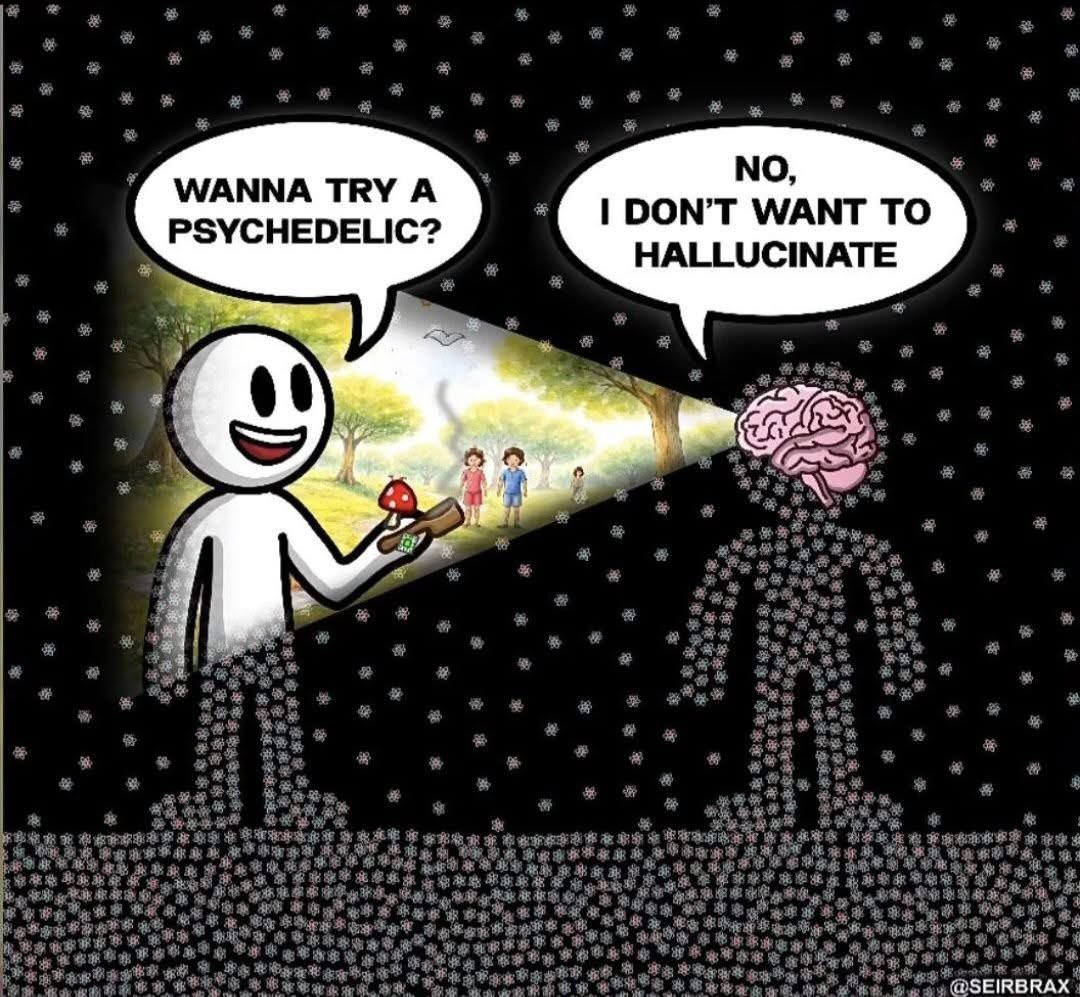
imagine perceiving less than 1% of reality and then trying to tell someone they are delusional
58
182
1,532
64,290
Apr 1
At Basically Income PAC, we have a wonderful new blog post by Faye Ku (@PalestineMATH) this morning: A Mother's Day Sermon: youtu.be/1s_JnLwaOfs
1
1
55
Mar 25
Thanks, Google! Now, the question is: can I run a quantized version of Kimi K2 on an old Nvidia gaming laptop from 2016?
Also, can I figure out how to correctly setup Node? (This is what stopped me from finishing an Open Claw installation last time😅)
Mar 24

Introducing TurboQuant: Our new compression algorithm that reduces LLM key-value cache memory by at least 6x and delivers up to 8x speedup, all with zero accuracy loss, redefining AI efficiency. Read the blog to learn how it achieves these results: goo.gle/4bsq2qI
60