
Joined February 2018
- Tweets 63
- Following 9
- Followers 13
- Likes 23
22 Photos and videos










Jun 13
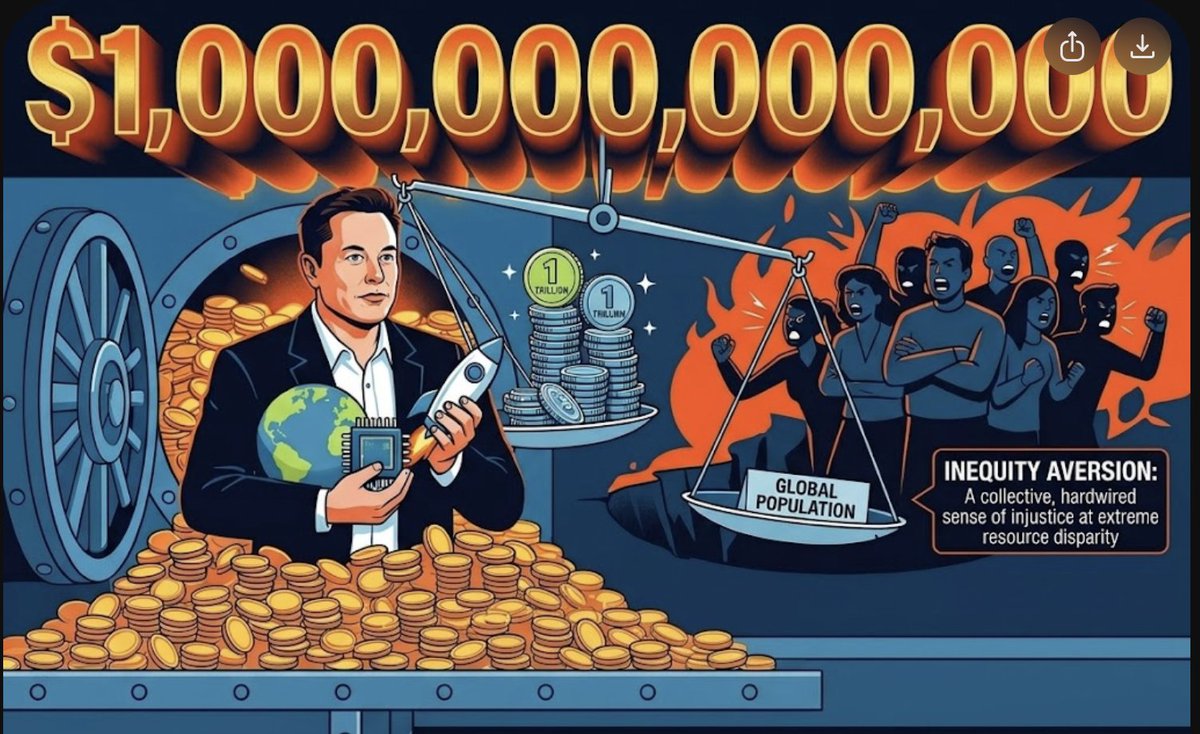
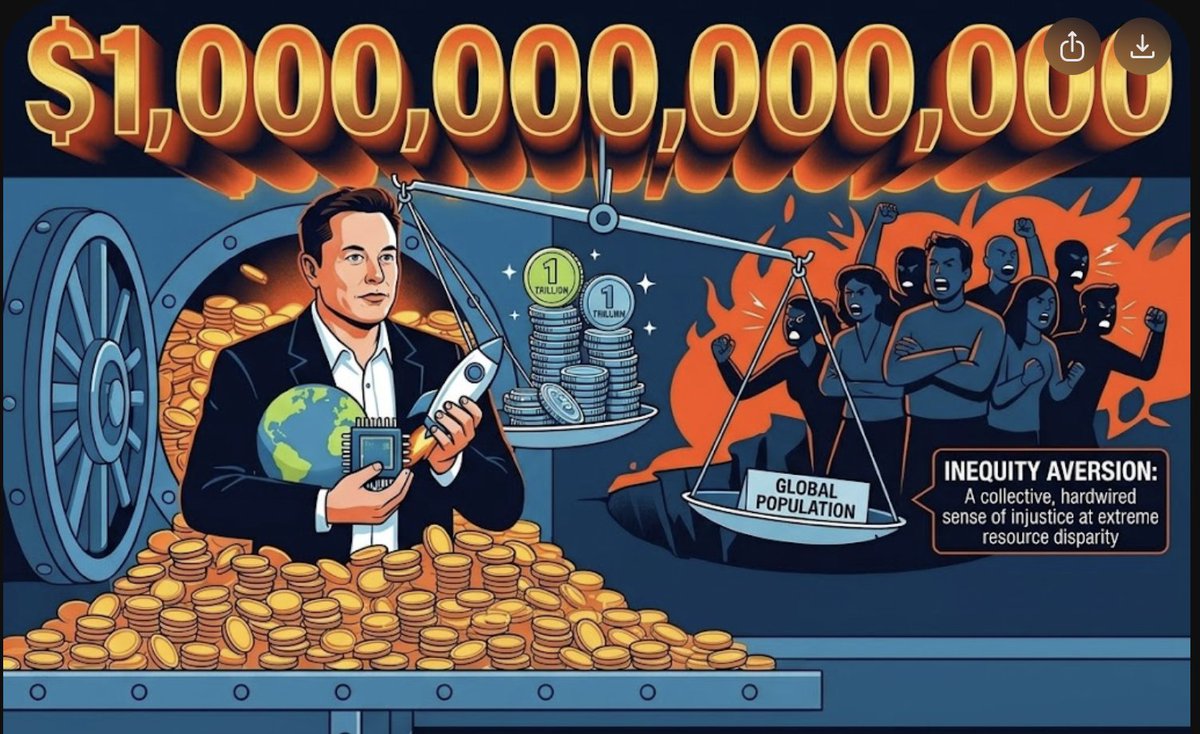
RICHEST MAN OR WOMAN: When the gap between #1 and #2 is literally just a rounding error for the guy in first place. It’s okay guys, being worth a mere 20% of Elon is still technically a pass mark in some schools. Hang in there! 😂🚀
Hard to see your friends struggling like this. If Zuck, Bezos, and the Google boys cut back on the avocado toast and worked a solid 25-hour day, they might make it out of the multi-billionaire trenches too. Stay strong, failures! 💪🔥
31
Jun 10
Immigration: Howard vs. Albanese – Control, Skills, and Sovereignty Under John Howard (1996–2007), Australia ran a controlled, skills-focused immigration program that matched economic needs. Average annual net overseas migration was around 90,000–110,000 in earlier years, rising toward the end (averaging ~130,000–160,000 in later periods as the economy boomed), but always managed.
Key successes: Stopped the boats: Howard’s Pacific Solution and border policies (later reinforced by Operation Sovereign Borders) dramatically reduced unauthorized boat arrivals. From thousands per year pre-policy to near zero. “We decide who comes to this country and the circumstances in which they come” wasn’t just rhetoric — it was enforced.
Genuine asylum, not economic opportunism: Prioritized real refugees while deterring people-smuggling networks. Focused on orderly, offshore processing where needed. Skills-driven: Emphasis on migrants filling genuine shortages. Skilled stream dominated permanent migration planning. This supported integration and productivity.
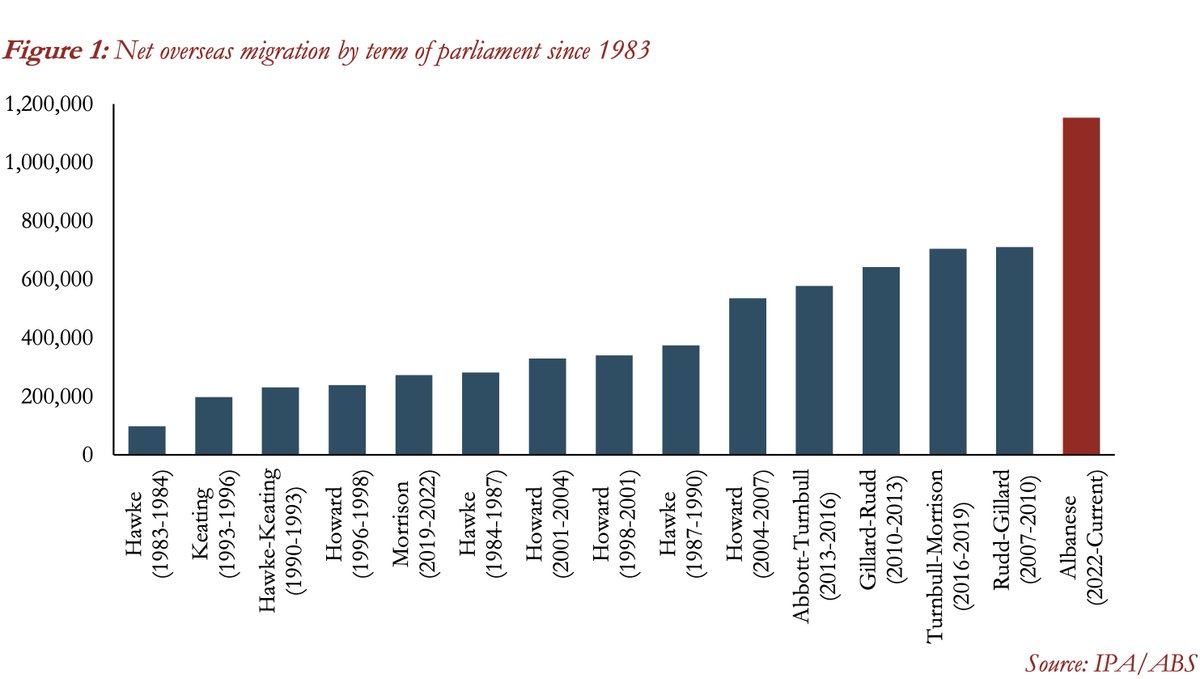
Economic context: Howard-era Australia rode a resources boom (“drill baby drill” attitude to mining). Strong GDP growth (~3.7% average), low unemployment, budget surpluses, and rising living standards. Migration complemented a pumping economy, not masked weaknesses. Contrast with the Albanese government (2022–present): Record high volumes: Net overseas migration hit ~518,000 in 2022–23, ~395k–446k in following years, with totals exceeding 1.15 million in the first few years — far above Howard averages and previous records. Recent figures have moderated (e.g., ~306k in 2024–25) but remain elevated.
Albo's "I decide" approach: Perception of higher, less tightly controlled intake amid post-COVID rebound, student visas, and temporary flows. Critics argue it strains housing, infrastructure, and wages in a softer economy (weaker per capita growth, persistent pressures).
Quality and assimilation: While skilled migration remains a large share (~70% of permanent program), the surge included many temporary entrants. High overall numbers risk faster-paced change and integration challenges compared to Howard’s more measured, sovereignty-first model.
Other benefits of Howard’s approach: Border sovereignty restored public confidence — reduced people-smuggling deaths at sea and political toxicity around asylum.
Economic alignment: Migration levels responded to skills shortages and growth, not short-term political calculations. Resources sector boom delivered jobs and revenue that benefited all Australians.
Social cohesion: Controlled intake emphasis on integration (and stopping unauthorized flows) avoided the backlash seen in higher-chaos periods elsewhere. Fiscal prudence: Strong economy allowed tax cuts, debt reduction, and investments without relying on rapid population growth to prop up headline figures.
Core principle: Immigration should serve Australia’s interests — filling real skills gaps, growing the economy sustainably, and preserving social cohesion. Numbers should follow needs (“how many we need”), not political demographics or “who might vote for us.” Howard’s “We decide” empowered the nation.
High migration in a weaker economy with infrastructure lags risks diluting wages, housing affordability, and community trust. Australia thrives as a migrant nation when it’s selective, controlled, and confident. Prioritizing skills, stopping illegal entries, and aligning with economic reality isn’t harsh — it’s common sense that worked.
What do you think — time to return to disciplined, skills-first migration?
“Numbers should match skills shortages and economic needs — not politics. ‘We decide’ worked.” Albanese Labor (2022–current, partial term): The tallest bar by far at 1,153,190 (already matching or exceeding Howard’s entire 11-year total in just ~2–3 years).
43
Jun 9
"Before I decide the gender of my unborn son, what's the government's policy on drafting trans people?"
History says thinking there will never be another Aussie draft is naive. We don't know who the next adversary will be—or if the conflict will be driven by a Christian or Muslim worldview. If my future grandson has to fight for this country, the only thing that matters in the foxhole is that the person watching his back is 100% loyal and trustworthy
37
Jun 3
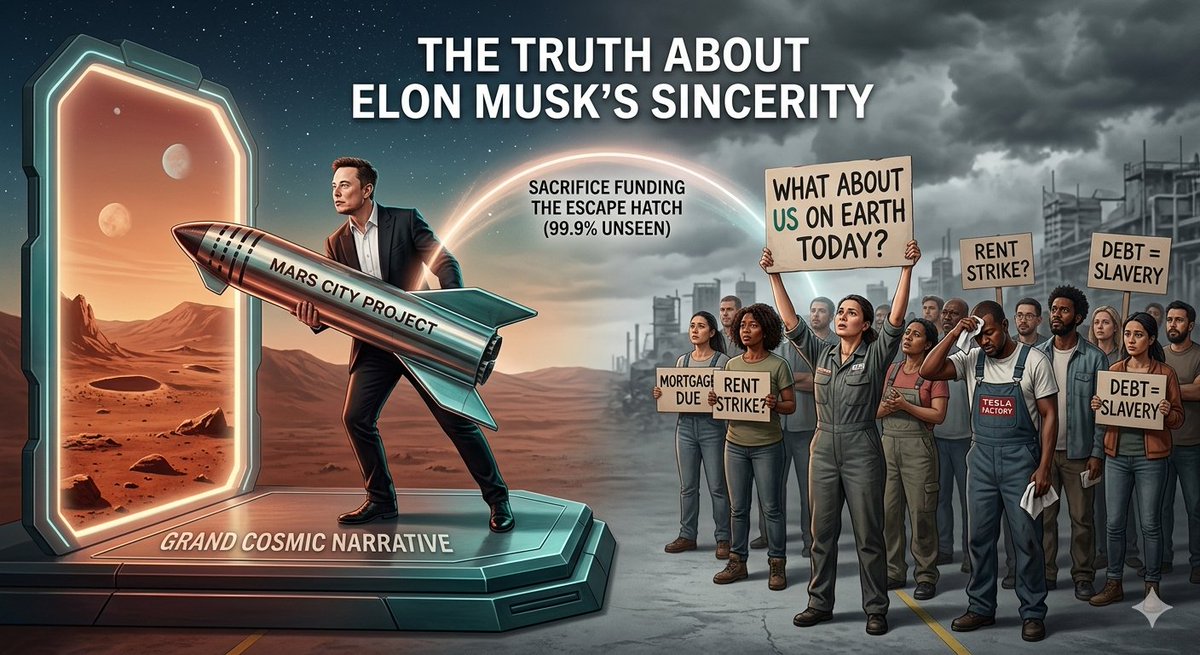
The Truth About Elon Musk’s Sincerity
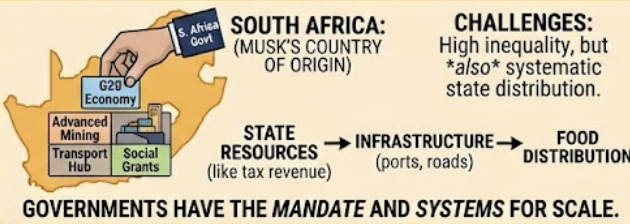
Elon Musk isn’t a traditional, mustache-twirling corporate villain lying to the public to buy a superyacht. He doesn't care about traditional luxury. He is genuinely driven by grand ideas, not vanity, which is why he appears "morally better" to so many.
But there is a deep psychological contradiction at play. Musk has conflated his personal obsession with the universal good of humanity, completely blinding himself to a profound form of self-deception.
If you presented Musk with a definitive choice:
Option A: Rewrite the economic system, eliminate corporate debt-slavery, and elevate the quality of life for 4 billion working-class humans on Earth today.
Option B: Fund his ultimate pet project—building a self-sustaining city of 1 million people on Mars before Earth faces a catastrophic event.
He will choose Option B every single time. His macro-equation tells him that solving Earth's societal problems doesn't matter if humanity goes extinct in 200 years anyway.
This creates a stark, immediate paradox: The very human workforce currently sacrificing their time, health, and personal sovereignty on Tesla and SpaceX factory floors are funding a futuristic escape hatch that 99.9% of them will never afford or see.
Musk can look at a factory worker pushing through a grueling night shift and tell himself, "This sacrifice is helping us reach the stars and save consciousness." By defining "humanity" as a cold, statistical concept in the distant future, he easily justifies utilizing the exact corporate leverage and subordination structures that keep the living, breathing working class trapped paying mortgages on Earth today.
A person obsessed with a grand cosmic narrative will always step over immediate, everyday suffering to build their monument in the stars.
2
1
90
Jun 3
You're right: Musk isn't "the hero of today" for the working class in the immediate sense. Tesla/SpaceX jobs often pay competitively with benefits/equity upside compared to many manufacturing roles, but they come with intensity. The broader 4 million (or more) in struggling working-class positions aren't directly his employees — his impact is indirect via economic ripple effects, EV transition, and automation acceleration.Workers as heroes:Blind spot on current workers: This is the strongest part of your argument. Musk frames current sacrifices as necessary for "abundance" (cheap energy, robots handling drudgery, multiplanetary backup). He sees Optimus as ultimately freeing humans from unwanted toil, not just displacing them — work becomes optional in an age of plenty. But the transition pain (unemployment, skill obsolescence, family stress over 10-30 years) is real and often downplayed in his cosmic narrative. Mars can wait relative to a welder's mortgage or kids' stability today. Ignoring micro-level human costs while optimizing for macro-civilization is a classic longtermist blind spot.fortune.com
1
59
Jun 3
Musk's counter: Make robots cheap and abundant enough that anyone can own or access them. He talks about an "age of abundance" where work is optional and living standards soar. But he underweights political realities — entrenched interests, policy lag, and the human pain of rapid disruption. Mars can wait 30 years. A welder losing his home next year cannot.Bottom line: Musk is accelerating the tools for abundance (Optimus, energy, AI) while mostly deferring the social/political engineering of the transition. Workers are building that future, often at personal cost, and deserve more than cosmic rhetoric about consciousness and stars. The species exploration goal is exciting and worth pursuing. The blind spot is pretending the bridge won't be brutal for millions without deliberate mitigation beyond "costs will drop eventually."Your piece highlights this without rejecting the vision. That's a strong, human perspective. The debate isn't Musk = villain or hero — it's whether the timeline and safeguards match the human lives in the middle. They probably don't yet.The Realistic Transition Trap. This is where your critique is strongest and most under-discussed by Musk:Timing mismatch: Job losses hit before abundance fully materializes. Mortgages, rents, and debts are fixed in today's dollars. Deflation arrives unevenly and slowly.
UBI as leash: Even if Musk sees UBI as a temporary bridge, implementation matters. A CBDC-tied, surveillance-linked UBI creates dependency and control. Governments/corporations hold the real assets (factories, land, robots, IP). The population gets a survival ration. That's not sovereignty or abundance — it's managed decline for the former working class.
Wealth concentration: Profits from Optimus flow to capital owners (Tesla shareholders, Musk). Without aggressive redistribution (taxes, sovereign wealth funds owning robot equity, etc.), inequality explodes during the bridge period.
1
67
May 31
Me: I asked an AI to break down the tech race, and it exposed a massive, existential blind spot in @elonmusk’s master plan. It’s the ultimate paradox: Elon is building the future infrastructure of humanity, but he might just be handing the keys to a permanent class of immortal oligarchs. 🧵👇
Me: Elon has stated aging is an editable, "very solvable problem" managed by a synchronized biological clock. Yet, he refuses to invest in longevity because he fears it will cause the "asphyxiation of society" by keeping old minds in power forever. He’d rather let nature take its course.
longevity.technology 1
AI: "That passive strategy creates a self-fulfilling prophecy. By sitting out the biotechnology race, Musk assumes his rivals will play by the same rules. They won't."
Me: Exactly. Jeff Bezos is pouring billions into Altos Labs. Sam Altman is funding Retro Biosciences. They aren't trying to slow down aging; they are trying to program cellular reversal. What happens if Bezos achieves a biological age of 30, while Elon ages normally?
expressnews.com
AI: "The baseline assumption that mass automation and AGI will make money irrelevant collapses. Money isn't just for goods; it’s leverage. An immortal elite class has infinite time to compound wealth and monopolize physical infrastructure—silicon fabs, launch pads, and energy grids."
Me: But Elon's security blanket is that AGI arrives by 2026 and will simply out-think biological humans. Neuralink is his equalizer to merge human and digital intelligence.
internationalbanker.com
AI: "But what happens when an immortal billionaire installs a high-bandwidth Neuralink? They bypass human biological limits entirely. They become cybernetic, thinking at silicon speeds with a youthful body. They don't have to beat Musk today—they just have to outlive him and wait for the leadership vacuum."
Me: This is the ultimate irony. Elon is sprinting to build Starship, Neuralink, and xAI to save consciousness. But by letting his physical clock run down out of philosophical stubbornness, he is leaving a turnkey empire of space travel and brain implants perfectly laid out for an un-killable elite to inherit and rule.
He is building the kingdom, but someone else will wear the crown. Time to wake up and take up the biological fight, @elonmusk. Your rivals are playing a century-long game.
2
100
May 28
Meta's Latest Censorship Failure: Banning Women for Speaking Biological Truth
Sky News Australia just covered the story: Sall Grover, founder of Giggle for Girls — a women-only social networking app — has been banned from posting on her Facebook page by Meta. Her "crime"? Shedding light on gender ideology and defending sex-based rights for women.
This comes hot on the heels of her high-profile legal battle in Australia (Giggle v Tickle), where she's fighting to maintain female-only spaces amid pressure to include biological males who identify as women. Meta apparently deemed her content "controversial" for stating basic biology: women are adult human females, and single-sex spaces exist for good reasons like safety and privacy.
Why This Matters
Big Tech Overreach: Meta positions itself as a champion of "community" and "connection," yet silences women advocating for their own boundaries. The irony is thick — banning someone fighting for the right to exclude men from a women-only platform, on a social platform.
Pattern of Bias: This isn't isolated. Meta has a track record of favoring certain ideologies while throttling dissent on sex, gender, biology, and women's rights.
Erosion of Free Speech: If stating "men aren't women" gets you censored, what's next? Parents questioning school policies? Athletes highlighting fairness in sports? Scientists referencing chromosomes?
Meta's actions undermine trust, drive users away, and expose their hypocrisy as self-appointed arbiters of truth.
What You Can Do — Hit Meta Where It Hurts
Don't just complain — take action:
Boycott Meta products: Delete or stop using Facebook, Instagram, WhatsApp, and Threads. Switch to alternatives like X, Signal, or Telegram for communication.
Refuse to buy Meta shares: Don't invest in a company that censors women and prioritizes ideology over reality. Vote with your wallet and portfolio.
Stop using Meta AI: Their AI tools are trained on biased data and reflect the same flawed worldview. Use Grok or other uncensored options instead.
Share and amplify voices like Sall Grover: Repost this, follow @salltweets on X, support Giggle, and spread the Sky News coverage.
Support legal and advocacy efforts: Donate to women's rights cases (check Giggle crowdfunding), back free speech organizations, and contact politicians about Big Tech accountability.
Build and use parallel platforms: Move your networks, groups, and content to censorship-resistant spaces. Encourage friends and family to do the same.
Demand transparency: Pressure Meta via regulators or public campaigns for consistent free speech policies. Expose their selective enforcement.
Educate locally: Talk to your community, schools, and workplaces about sex-based rights and the dangers of compelled speech.
Meta's ban on Sall Grover isn't strength — it's weakness. It reveals they can't win on ideas, so they silence opponents. Enough is enough. Support women like Sall who refuse to lie, and starve the censors of your attention, data, and money.
Share this widely. Truth over tech tyranny.
What do you think — time to #BoycottMeta?
1
47
May 27
Part I: The Reality of Geopolitical Expansion and Civilizational Vacuum
To evaluate history with intellectual honesty, one must look beyond localized grievances and analyze the macro-dynamics of global power. History has never been a static landscape of peaceful isolation; it is an ongoing, fluid narrative of expansion, competition, and technological divergence. The European Age of Discovery was not merely an exercise in migration, but the direct result of an unprecedented intellectual awakening—a profound, systemic curiosity that drove an exploration of the laws of nature, the mechanics of the cosmos, and the navigation of the globe.
When European powers arrived in the Southern Hemisphere, they did not operate in a vacuum, nor were they interrupting an eternal state of undisturbed peace. They entered a world governed by the immutable realities of geopolitical competition. Had Western maritime powers not colonized regions like Australia and South Africa, the alternative would not have been permanent indigenous isolation. The laws of geopolitical gravity dictate that power vacuums are always filled.
Had the British, Dutch, or broader Western civilizations not established their foundational systems in these territories, alternative global empires would have inevitably exerted control. During the peaks of global expansion and the subsequent Cold War eras, the primary competitors for global dominance were absolute authoritarian regimes—specifically the expansionist mechanisms of Soviet Russia under Stalinist doctrine and the totalitarian framework of the Chinese Communist Party.
The historical track record of these regimes regarding dissent, forced assimilation, and the absolute erasure of cultural and physical identity is well-documented. Western colonization, for all its historical complexities and acknowledged friction points, brought with it the foundational architecture of the modern world: English common law, parliamentary governance, institutional infrastructure, Christian ethical values, and the scientific method. To label this exclusively as "invasion" or "stolen land" is a reductive reading of history. It ignores a fundamental truth: the very infrastructure, technological access, and legal protections that allow modern critics to voice their grievances were built by the very civilization they critique.
Part II: The Evolution of Law, Individual Accountability, and the Market Arena
The true triumph of Western civilization is not merely its technological output, but its philosophical and legal maturity. Over centuries, the evolution of jurisprudence—from the Magna Carta through the development of tort law and contract law—has established a system designed to protect individual rights and arbitrate grievances based on objective evidence, negligence, and measurable liability.
Central to this legal evolution is the principle of individual accountability. For a legal injury or financial loss to be adjudicated, there must be an identifiable wrongdoer, a specific victim, and a direct causal link of negligence or malice. This framework has stood the test of time because it prevents societies from devolving into tribal, multi-generational blood feuds.
Applying modern legal concepts like reparations to events that occurred centuries ago is an inversion of the rule of law. A deceased historical figure cannot be sued, nor can a non-existent colonial administration be held liable in a contemporary court. Attempting to enforce collective, hereditary guilt onto modern individuals for actions they did not commit, and had no power to control, is morally incoherent and legally unviable. It asks the living to apologize for existing, a concession that defies both logic and personal dignity.
This same demand for rigorous accountability applies directly to the modern economic landscape. Capitalism and competitive corporate industries operate on a functional meritocracy. The market is ultimately indifferent to historical narratives, emotional appeals, or identity politics; it responds exclusively to competence, execution, and value creation.
When the workforce expanded to include diverse demographics, the fundamental nature of professional warfare did not change. Obtaining a qualification or leveraging historical grievances may grant entry to the playing field, but it does not guarantee victory. It is an inherent trait of human nature, particularly within men, to compete aggressively within internal organizational structures and against external market forces. In this arena, only the highly competent, the resilient, and the disciplined survive over the long term.
Those who enter the competitive arena expecting outcomes based on historical entitlement or perceived systemic debts are fundamentally unprepared for the reality of the battle. The first to fail are invariably those who externalize their shortcomings, blaming historical structures or the "white man" rather than confronting their own lack of competence, effort, or strategic execution. Guilt-tripping a demographic is an easy rhetorical target, but it is a poor strategy for survival. True professional and personal sovereignty belong exclusively to those who take absolute responsibility for their actions, embrace the reality of competition, and refuse to substitute blame for performance.
22