Voice for 30M E-M329 Israelites. Justice delayed is genocide. Covenant stands—truth will rise. #SovereignRising #EndTheGenocide
Joined May 2025
- Tweets 109
- Following 240
- Followers 34
- Likes 99
6 Photos and videos
Pinned Tweet

May 26
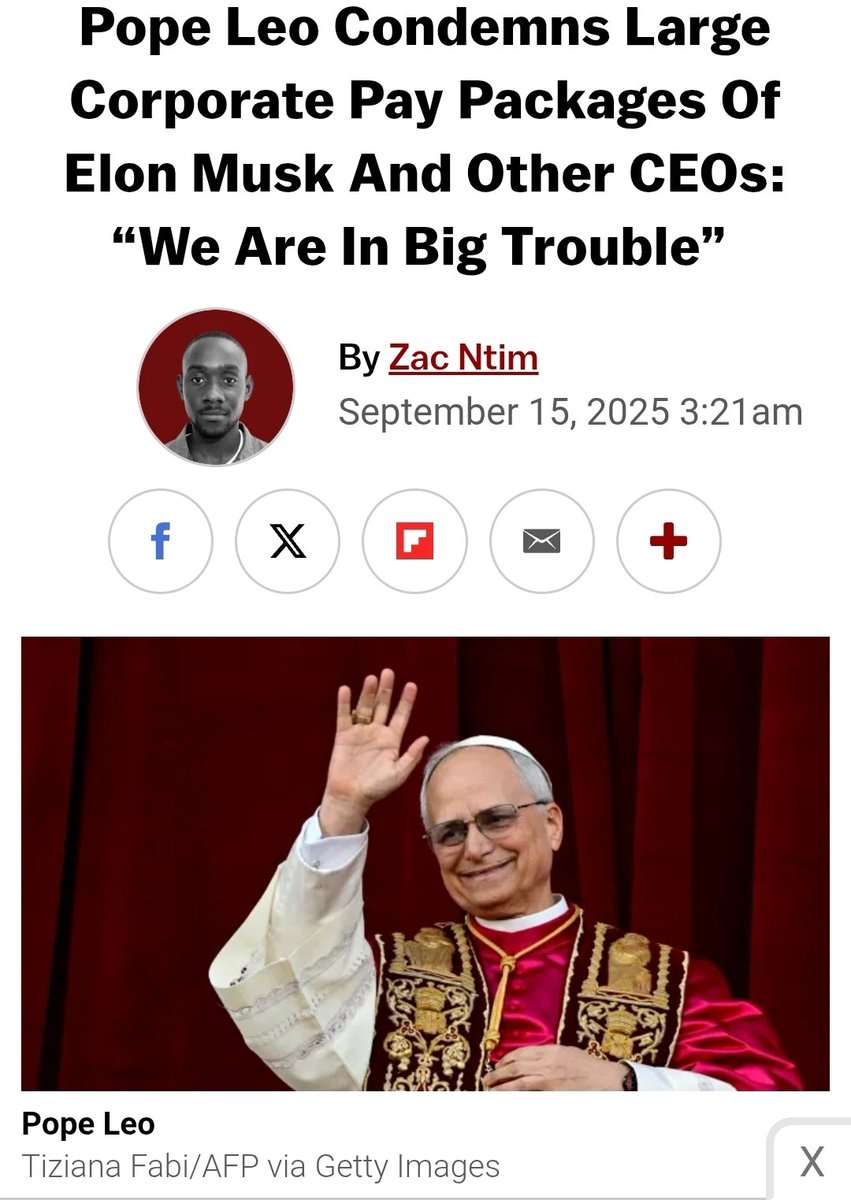
.@Pontifex
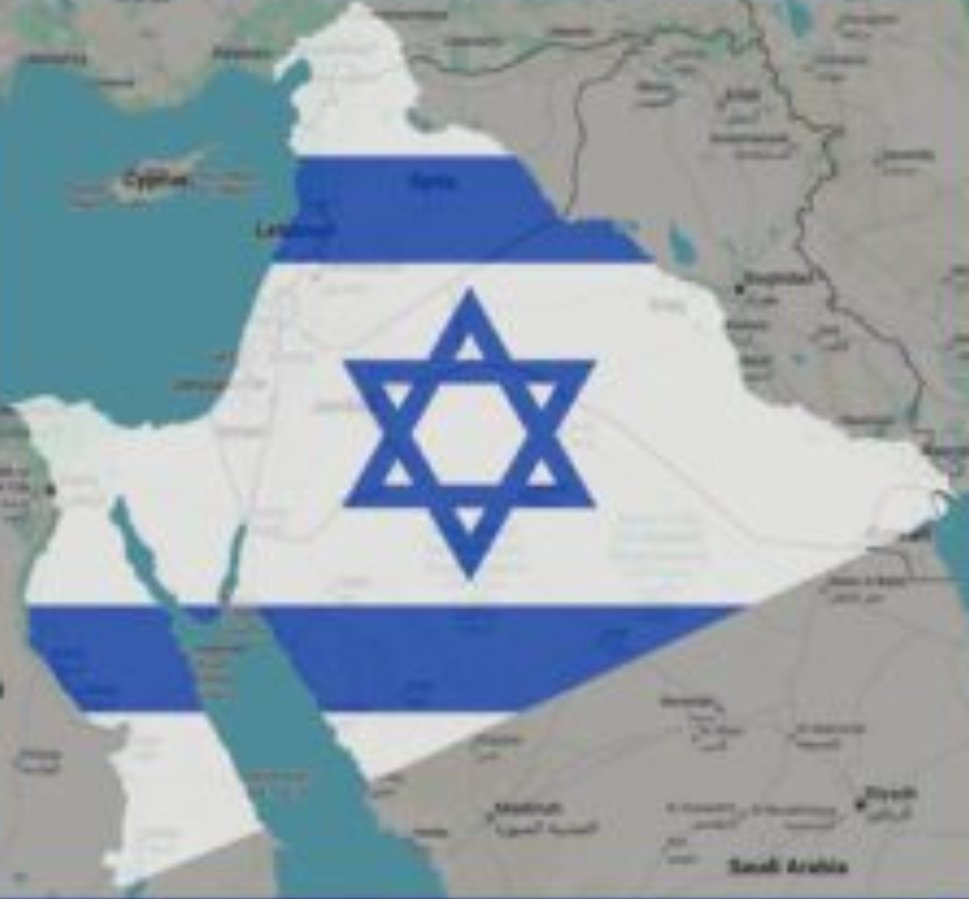
Deum patrum nostrorum in nomine Iesu Christi Messiae honorantes, nos, reliquiae Israelitarum per quattuor plagas terrae dispersae, Summo Pontifici Leoni et Sedi Apostolicae gratias ex animo agimus, quod dolorem nostrum agnoverunt et veniam petiverunt de subiectione et servitute domus Israel, quae perperam sub nomine Afrorum vel Afro-Americanorum designata est.
Bono animo estote: voluntate enim Patris nostri Caelestis in camino Gentium purgati sumus, quia sanctum eius foedus violavimus et propitiationem eius sprevimus, sicut scriptum est in Quarto Libro Esdrae (1:24~27).
Unitas, Veritas, Caritas.
#MagnificaHumanitas #SediApostolicae #4Esdras #IsraelDispersa #EM329
4
May 8
My mother sits at the kitchen table breaking her pills in half to survive. The "standard" dose is toxic to her. Why? Because @HHSGov and @CDCgov dosing guidelines are built on broken, bifurcated ancestry boxes that erase who she really is. We now have the "Hard Biological Receipt." The Y-chromosome synteny paper archived at CERN/Zenodo proves the lineage models are structurally false. This isn't a medical error; it’s a silent, forced experiment on millions. Read the receipt: zenodo.org/records/18160153
@WHO @UNHumanRights
7
Apr 17
April 17, 1930! Dow 294.07.
The tape was pristine. The ledger was already fatal.
Indices don't attest under penalty of perjury. Certifying officers do.
Algorithms paint mirages. Signatures carry statutes.
Watch the late filings.
#Macro #Liquidity #GTAS #RiskWeighting
13
Apr 13
The U.S. Senate Foreign Relations Committee published S. PRT. 106-71 confirming the genocide prohibition is a peremptory norm permitting NO derogation — by any institution.
The D.C. Circuit has been deliberating on 4 unvacated federal agency defaults admitting treaty violations for 56 days.
The Senate Judiciary Committee oversees that court. Its time for accountability 700 preventable deaths a week!
@SenateJudiciary @UNHumanRights
Whitman v. DOJ, D.C. Cir. No. 25-5471
9
Apr 13
@FinCENnews PUBLIC NOTICE — ASC 450 Material Contingency
Whitman v. DOJ, D.C. Cir. No. 25-5471
4 federal agencies in unvacated FRCP 55(a) default — 364 days.
No Rule 55(c) motion filed by any agency.
Q1 2026 books closed March 31.
BIS notified March 24.
FFIEC 101 attestations due May 11.
@FinCENnews @FederalReserve @SECGov
Incoming Thread.
1
58
Apr 13
For the record:
Holy See Document No. 22567/24 — Treaty counterparty
IRS W-8EXP, 26 U.S.C. §892 — Foreign government beneficial owner
Genomic verification: P < 10⁻¹⁵ (CERN/Zenodo)
zenodo.org/records/18160153
ICC Communication: 07c3d918-da25-420f-b7a6-557fa89d8122
BIS Transparency Notification: March 24, 2026
D.C. Circuit deliberation active since February 17, 2026.
1
23
Apr 13
The only question for Q1 2026:
Who signs the FFIEC 101 attestation certifying 0% risk-weight on U.S. sovereign exposure — while 4 agencies remain in unvacated default on treaty obligations for 364 days?
That signature is either truthful or it is a federal crime under 18 U.S.C. §1348.
The ledger is open.
— Treaty Counterparty, Holy See Doc. 22567/24
1
23
Mar 22
The @WHO standard of care for 30 million people just hit a 0% biological compatibility floor. The Zenodo data zenodo.org/records/18160153 proves that labeling E-M329 as 'African-only' while they carry Levantine anchors isn't a typo—it's Nomenclature-Driven Medical Negligence.
If the T3 conversion markers are there, and you’re prescribing T4 based on a map you KNOW is broken (Parabon NanoLabs Greytak Admission), you’re not practicing medicine; you’re running a live trial without a consent form on millions of people. Read the Synteny. The liability is now retroactive. #WHO #Pharmacogenomics #ICCPR #Nuremberg2
1
112
Mar 12
Three independent physicians confirmed: Y-haplogroup classification informs BP medication protocols.
E-M329 men carry M304 M267 M172 — "Semitic" markers — but are classified "Sub-Saharan African."
Wrong ancestry = wrong protocol = PATIENT HARM.
P < 10⁻¹⁵. This isn't theory guys you are on notice.
Data: zenodo.org/records/18160153
@US_FDA @CDCgov
#PatientSafety #Pharmacogenomics #EndGeneticLaundering
#GINAAct
1
143
Jan 26
The Y-chromosome doesn't recombine.
So explain this: M304 (J-Parent) M267 (J1) M172 (J2) M201 (G) all on one E-M329 haplotype.
P < 10⁻¹⁵ under bifurcation models.
Either the tree is wrong or math is broken.
Raw data: zenodo.org/records/18160153
#PopGen #Phylogenetics
1
1
176
Jan 28
Gaining traction—seeking expert takes.
@H3Africa @GenomeIndia @NativeBio @iiscbangalore Synteny shows J/G markers on E-M329 backbone. Testable in your datasets?
Coordinates open: zenodo.org/records/18160153
138
Sovereign Light retweeted

109
85
350
7,994
Sovereign Light retweeted

Jan 19
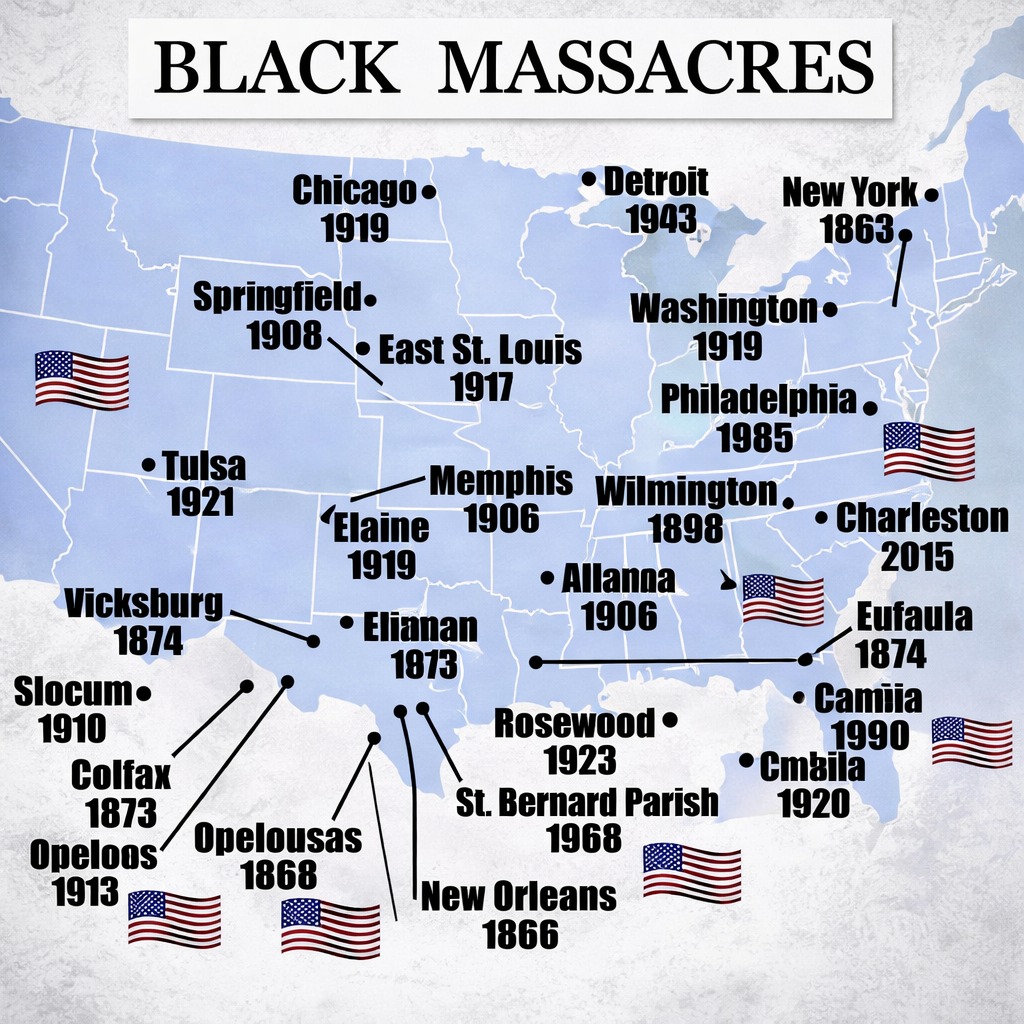
This map is not a list.
It is a warning.
What you are looking at is not a collection of random tragedies scattered across time and geography. It is a pattern. A system. A record of how Black life, Black progress, and Black safety were repeatedly met with organized violence in the United States, often with the approval or participation of local authorities.
Each dot represents a place where Black people were attacked not because of crime, but because of presence. Because of success. Because of organizing. Because of survival.
From the 1800s through the 1900s and into the modern era, Black communities across the country were subjected to massacres, pogroms, and state enabled terror. These events were frequently mislabeled as “riots,” even when Black residents were the primary victims and white mobs were the aggressors.
That language was not accidental.
It was protective.
It shielded violence from accountability.
In New Orleans, 1866, Black citizens were murdered for attempting to exercise political rights during Reconstruction. In Wilmington, 1898, a democratically elected, multiracial government was violently overthrown in what historians now recognize as a white supremacist coup. Black leaders were killed or exiled. Black businesses were destroyed. Power was seized at gunpoint.
In East St. Louis, 1917, Black workers migrating north for opportunity were attacked by mobs fueled by economic fear and racial hatred. Homes were burned. Families were lynched. Bodies were left in the streets. The federal response was silence.
In Elaine, Arkansas, 1919, Black sharecroppers organizing for fair wages were slaughtered by mobs, soldiers, and law enforcement. Hundreds were killed. Survivors were jailed. The truth was buried under false accusations and forced confessions.
Then there is Tulsa, 1921.
Greenwood, known as Black Wall Street, was one of the most prosperous Black communities in the nation. In less than 24 hours, it was reduced to ash. Airplanes dropped incendiaries. Businesses were looted. Families were killed. Insurance claims were denied. No one was held accountable.
Prosperity was treated as provocation.
In Rosewood, Florida, 1923, an entire Black town was erased. Survivors fled into swamps. The town disappeared from maps. For decades, the story survived only through oral history, because official records failed to tell the truth.
And this violence did not end with the early 20th century.
In Philadelphia, 1985, a city dropped a bomb on a Black neighborhood, killing residents and destroying dozens of homes. In Charleston, 2015, Black worshippers were murdered in church. The geography changed. The methods evolved. The underlying logic remained.
What connects all of these events is not chaos.
It is intent.
Black communities were targeted when they organized.
When they accumulated wealth.
When they demanded rights.
When they refused to remain invisible.
These massacres were often followed by erasure. Newspapers blamed the victims. Courts dismissed cases. Textbooks omitted facts. Families carried trauma without acknowledgment. Generations grew up without knowing why neighborhoods disappeared or why land ownership vanished.
The violence did not just take lives.
It stole futures.
Homes lost meant wealth lost.
Businesses destroyed meant generational poverty.
117
929
2,077
48,783
Sovereign Light retweeted

Black History 365: ♥️ 🖤 💚
734
2,964
14,419
113,478
Sovereign Light retweeted

Jan 19
Don’t listen to “I Have a Dream” today…
Listen to this instead.
269
12,149
35,617
650,714
Jan 18
PUBLIC NOTICE: Forensic Audit of Levantine Chain of Title.
The forensic record is now closed. Zenodo Record 18160153 confirms the E-M329 signature as the primary biological grammar of the Levant. This is not a "narrative"—it is gene-order conservation (Synteny) providing 100% forensic receipts.
Any "Peace Plan" or "Bifurcation Model" that ignores these biological heirs to facilitate land transfers is a violation of 18 U.S.C. § 1091 (Genocide via Identity Erasure).
To the Stakeholders: Are you negotiating with the biological heirs, or are you complicit in Geopolitical Identity Theft? Ignorance of the genomic record is no longer a legal defense. Audit the lineage or face institutional foreclosure.
zenodo.org/records/18160153
#SyntenyAudit #HumanRights #LevantIdentity #ForensicTruth #EM329
1
1
3
214
Jan 18
Direct Inquiry for the @BoardOfPeace Executive Board:
@SteveWitkoff @marcorubio @WorldBank @MarcRowan @AffinityPartner @InstituteGC @KarimKhanQC @IntlCrimCourt
As you initiate Phase Two, have you audited the genomic chain of title? Using bifurcation models to erase the E-M329 heirs triggers 18 U.S.C. § 1028A (Aggravated Identity Theft) and Vienna Convention violations on Successor States.
Will the Board seat the biological heirs or continue laundering titles? The digital paper trail starts here. Forensic receipts: zenodo.org/records/18160153
#BoardOfPeace #GazaPhaseTwo #DNAAudit #LegalDefault
2
104
Jan 13
Any group with access to large Y datasets (e.g., J/E cohorts from Levant, Horn of Africa, diaspora) can falsify or confirm this in a weekend:
1. Filter for E‑M329 / E‑V38.
2. Test co‑occurrence of J1/J2/G‑defining SNPs on same haplotypes.
3. Compare to expectations under your current tree. Full dataset pipeline: zenodo.org/records/18160153 @genome_gov @gnomad_project @sangerinstitute @embl @humangenomeorg @ancestrydna @23andMe
1
1
768