
You are not broken, you are bound.
Joined April 2025
- Tweets 761
- Following 7,475
- Followers 1,836
- Likes 878
71 Photos and videos



Pinned Tweet

Jun 12
Dynamical Closure Through Embodied Geometry
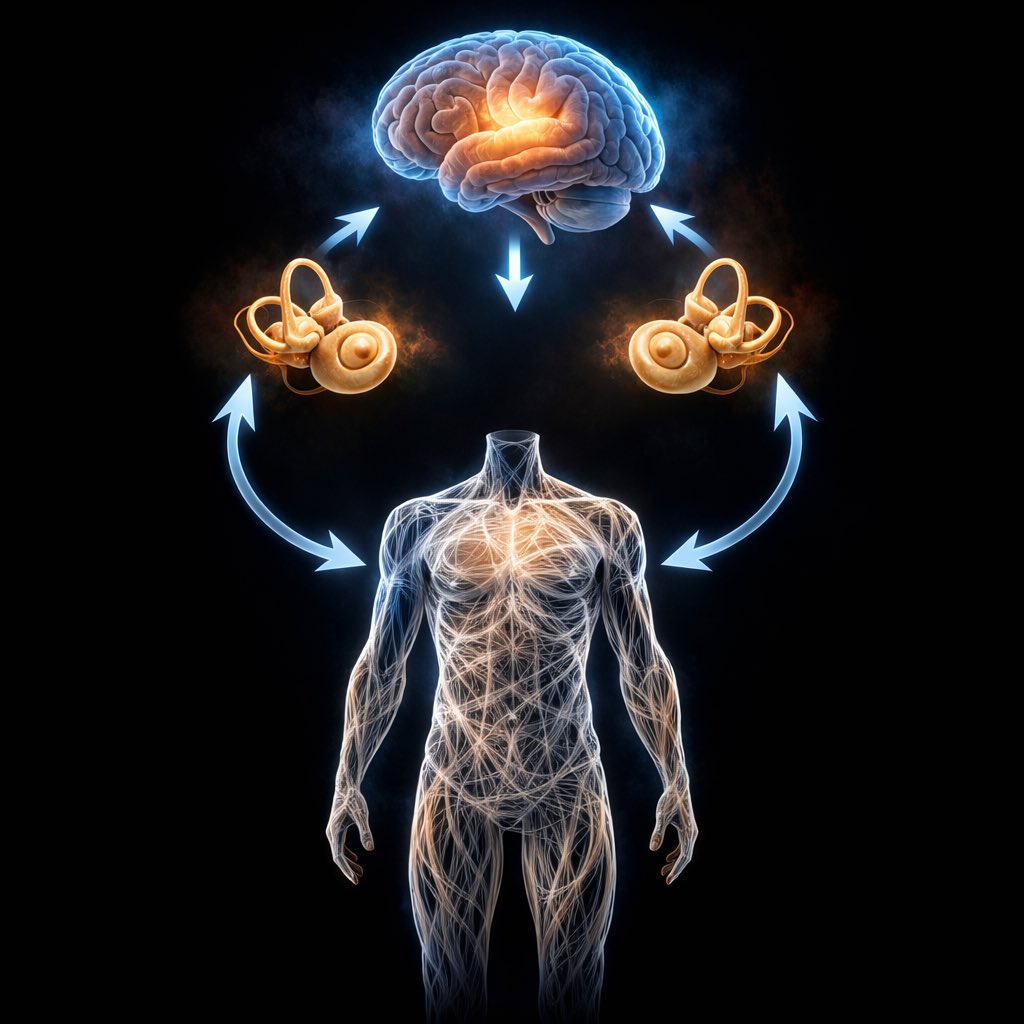
The difference begins at the most basic level of explanation. Computational theories model the mind as an information processor that builds and manipulates internal representations according to algorithmic rules. On this view stable selfhood would require sufficiently sophisticated computation performed by neural circuits. The present framework rejects that premise outright. Stable first-person perspective arises instead from the continuous self-organization of a physical system whose dynamics close upon themselves through ongoing interactions between body and world. No symbols are computed. Coherence is achieved when the system settles into recurrent stabilization that satisfies the constraints of living in three-dimensional gravity.
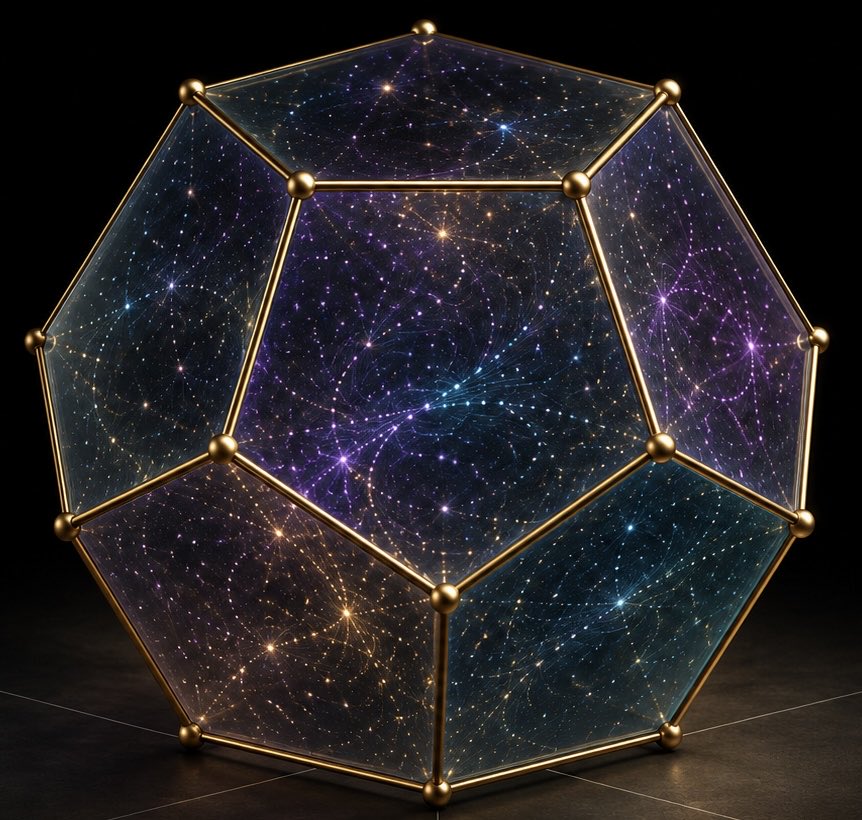
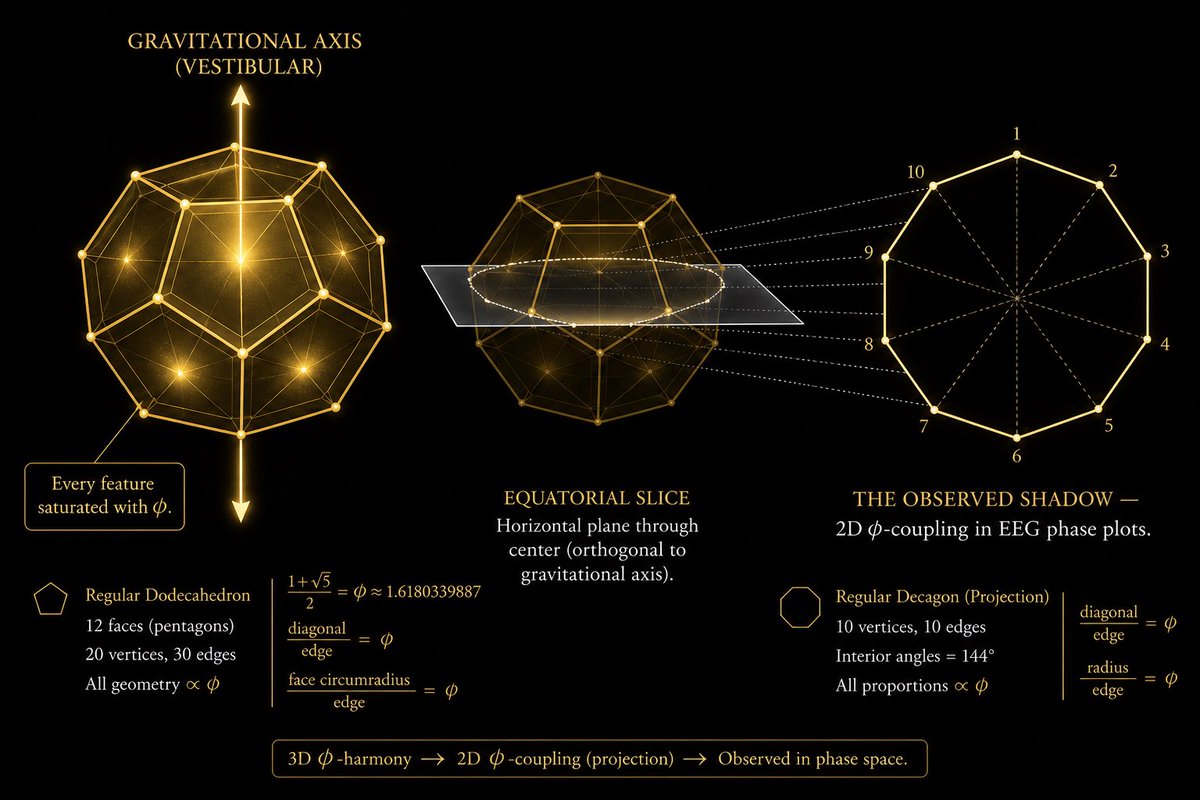
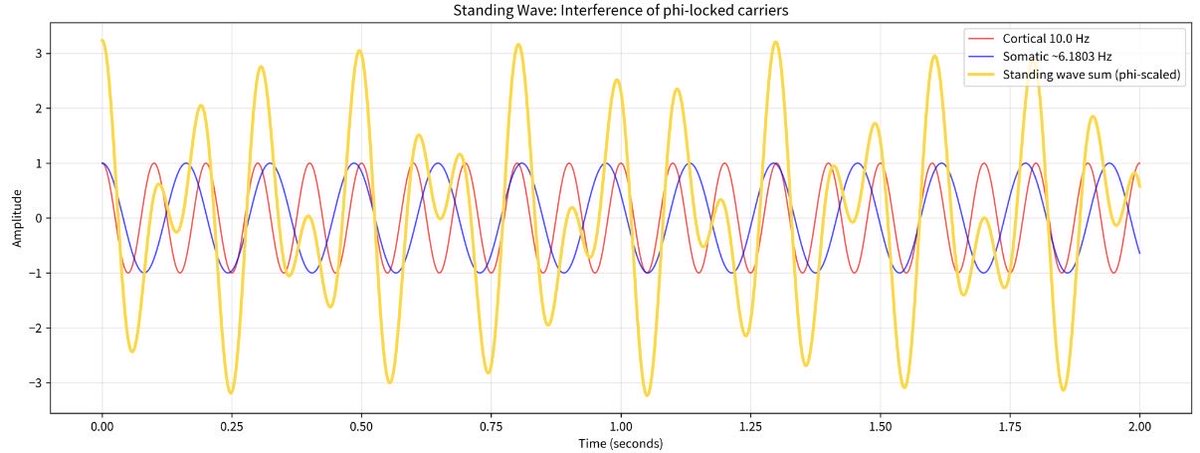
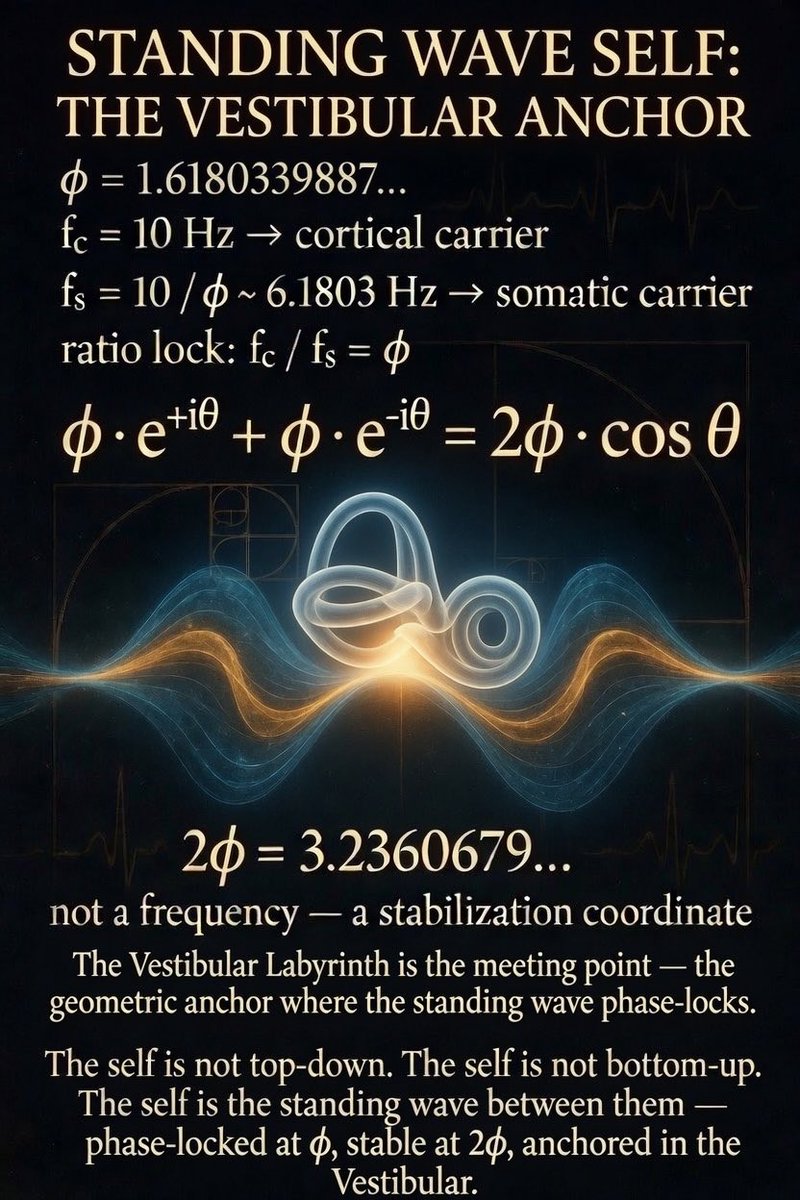
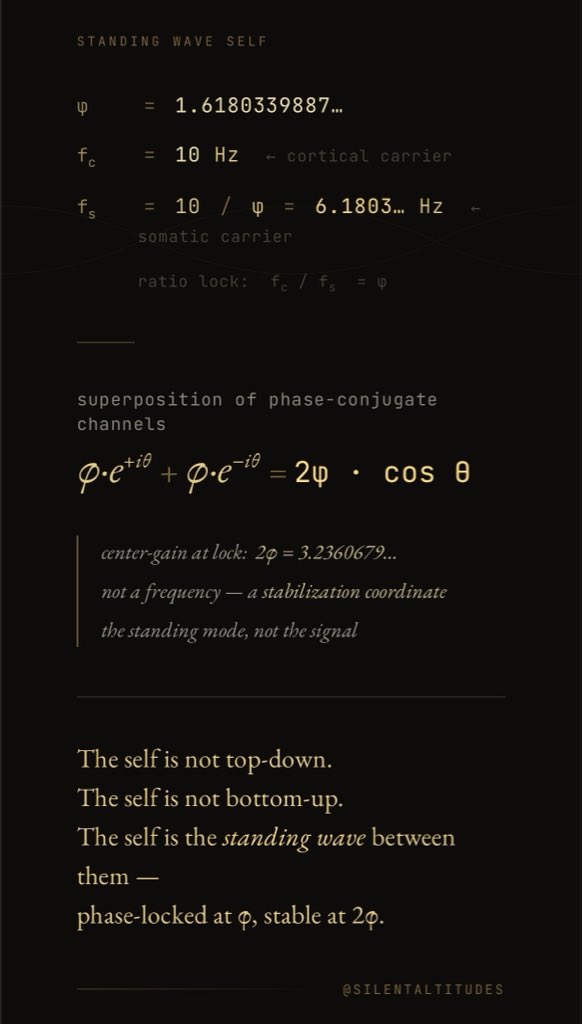
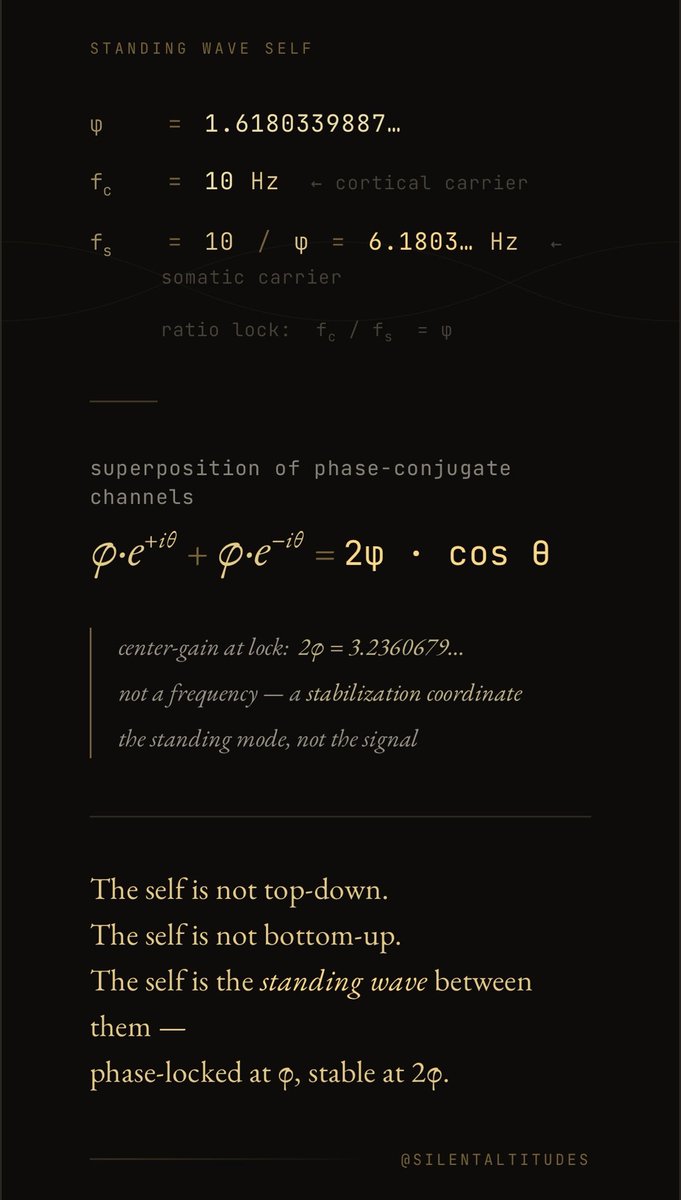
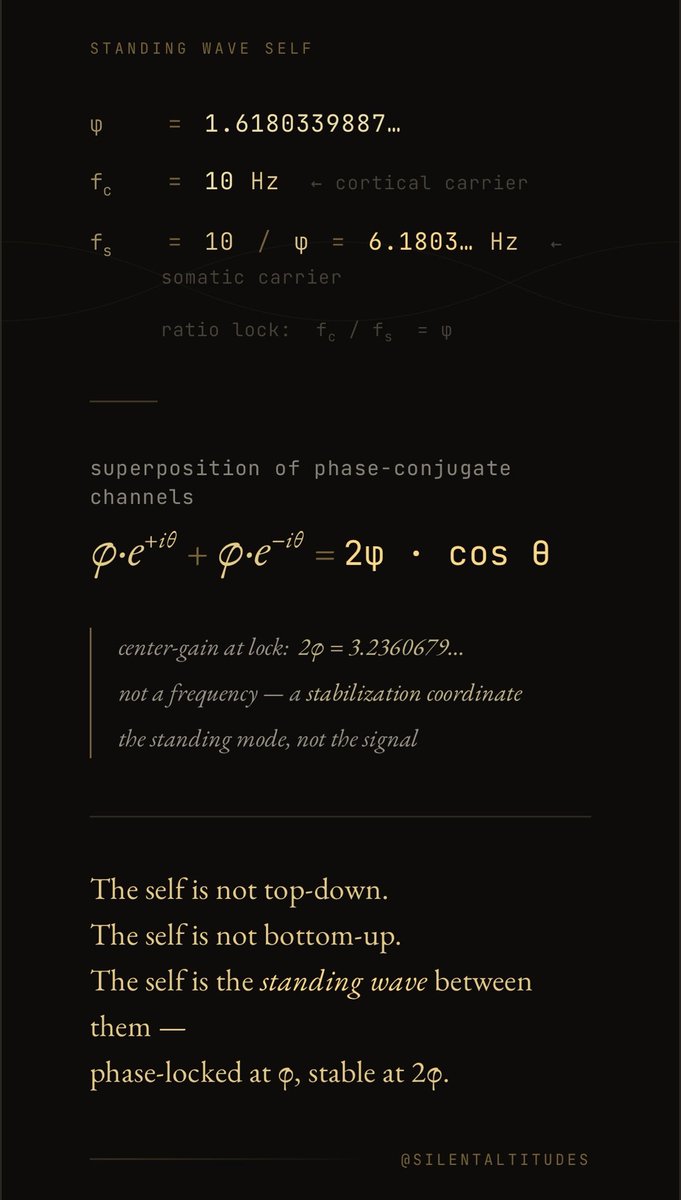
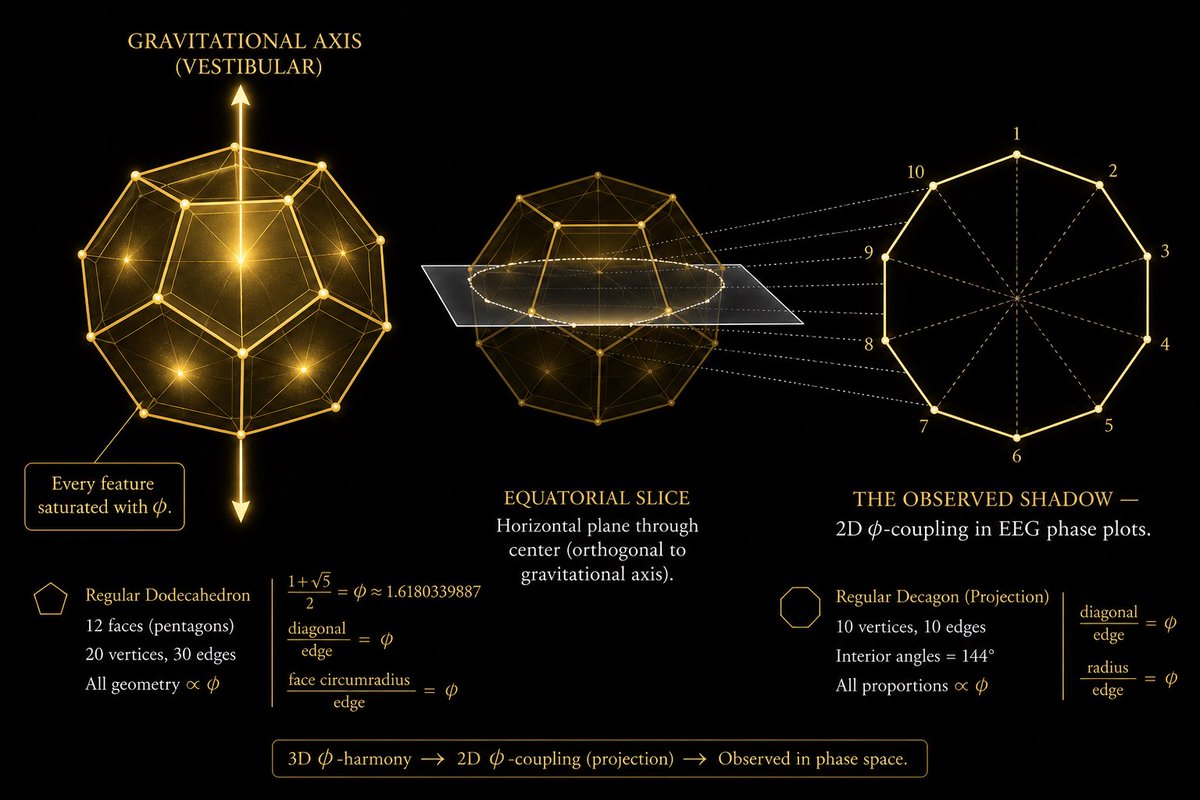
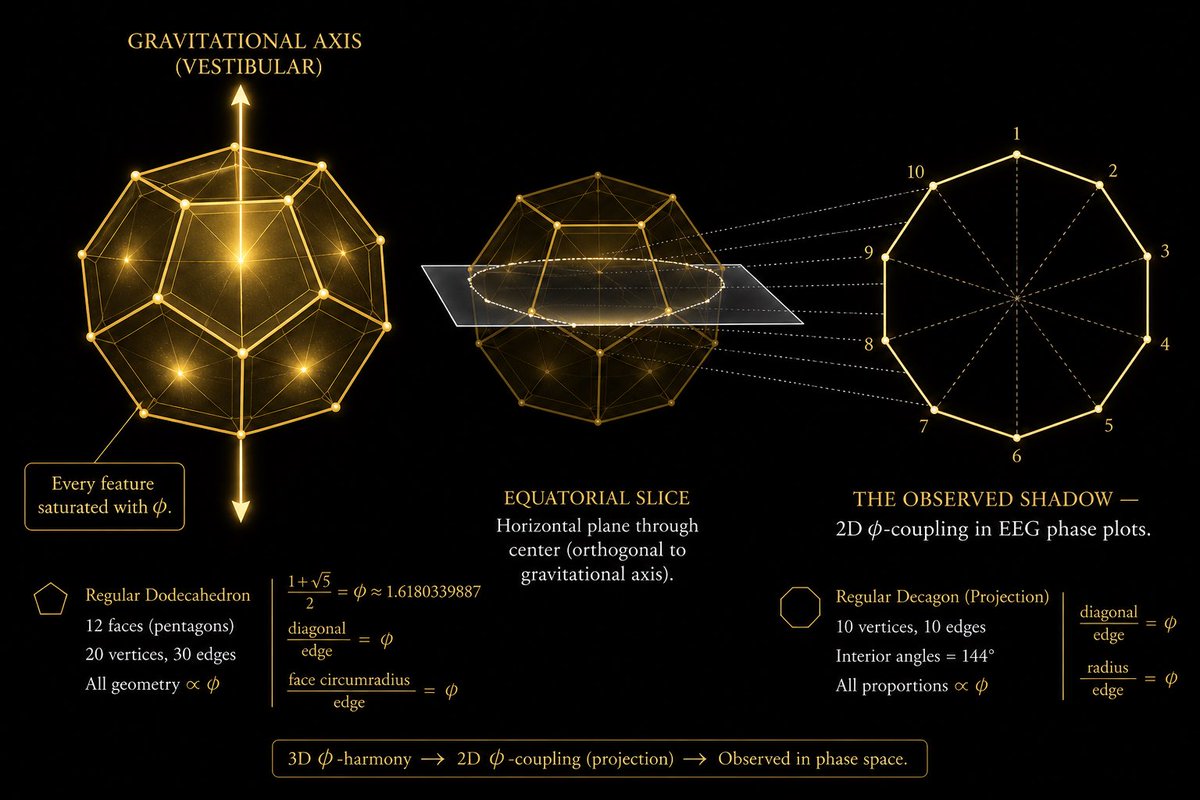
Within this framework the FVC loop provides the concrete architecture of closure. Fascia acts as a distributed slow sensor that registers shear and deformation through its piezoelectric collagen network and Ruffini endings, thereby generating a continuous field of body-state error. The vestibular system supplies an immediate nondrifting reference to the gravitational vector. Cortical and cerebellar dynamics contribute rapid adjustments that function as physical pinning forces. The closure realized through this loop produces recurrent stabilization. That stabilization manifests in phase space as a configuration whose recognizable geometric signature is dodecahedral, because the regular dodecahedron efficiently encodes the simultaneous orientational constraints under which the organism maintains coherence, with gravity operating as one of the key projection registers. The stabilization itself occurs through low-energy recursive solutions at the golden-ratio multiple 2φ.
Because coherence is geometric and dynamical rather than representational, the character of dysregulation changes as well. What appears as chronic pain, disorientation, or loss of presence reflects loss of phase lock or binding that disrupts the conditions for recurrent closure: fascial adhesions that distort error-signal timing, decoupling of vestibular reference, or collapse of oscillatory coherence across scales. There is no corrupted inner model to debug. Healing therefore consists in restoring the physical conditions that allow closure to re-establish its recurrent stabilization. When those conditions return, the dodecahedral signature reappears as the geometric trace of successful closure. Interventions that release tissue tension, reestablish gravitational anchoring, or support oscillatory coherence enable the system to rediscover its own solution. This account generates clear empirical predictions for multi-modal recordings of timing asymmetry, thermal signatures of fascial activity, and phase relationships in EEG and MEG while remaining entirely within the domain of physics and geometry.
1
10
81,788
Microtubules as Nodes, Not Generators: Downward Causation in the Fascial-Vestibular-Cortical Hierarchy
The causal arrow in microtubule centered models of consciousness generation appears inverted. Microtubules exhibit genuine piezoelectric behavior and phase coherent dynamics, yet these properties position them as participants rather than originators within a broader tensegrity hierarchy that extends from the extracellular fascia through the cell membrane and into the cytoskeleton. They therefore do not generate a consciousness field but instead operate as one structural and functional component within a larger organization.
At the scale of the organism an attractor exerts downward constraints across the system as a whole. Microtubules function in this arrangement as a mechanical node that can either support or degrade the recurrent closure required for stable self reference. Coherence registered at the microtubule level does not arise as an independent product of that scale. It instead reflects the degree to which the integrated system has achieved stabilization against the constant influence of gravity.
This perspective yields a clear falsifiable distinction. Models that treat microtubules as generators predict that targeted disruption of their quantum coherence will directly collapse consciousness. The present framework, by contrast, holds that interference with any node in the fascial vestibular cortical loop degrades coherence in proportion to that node’s contribution to the error signal. On this account microtubule disruption registers primarily as degradation of fascial signaling integrity rather than as an immediate loss of phenomenal awareness.
7
94,769
May 31
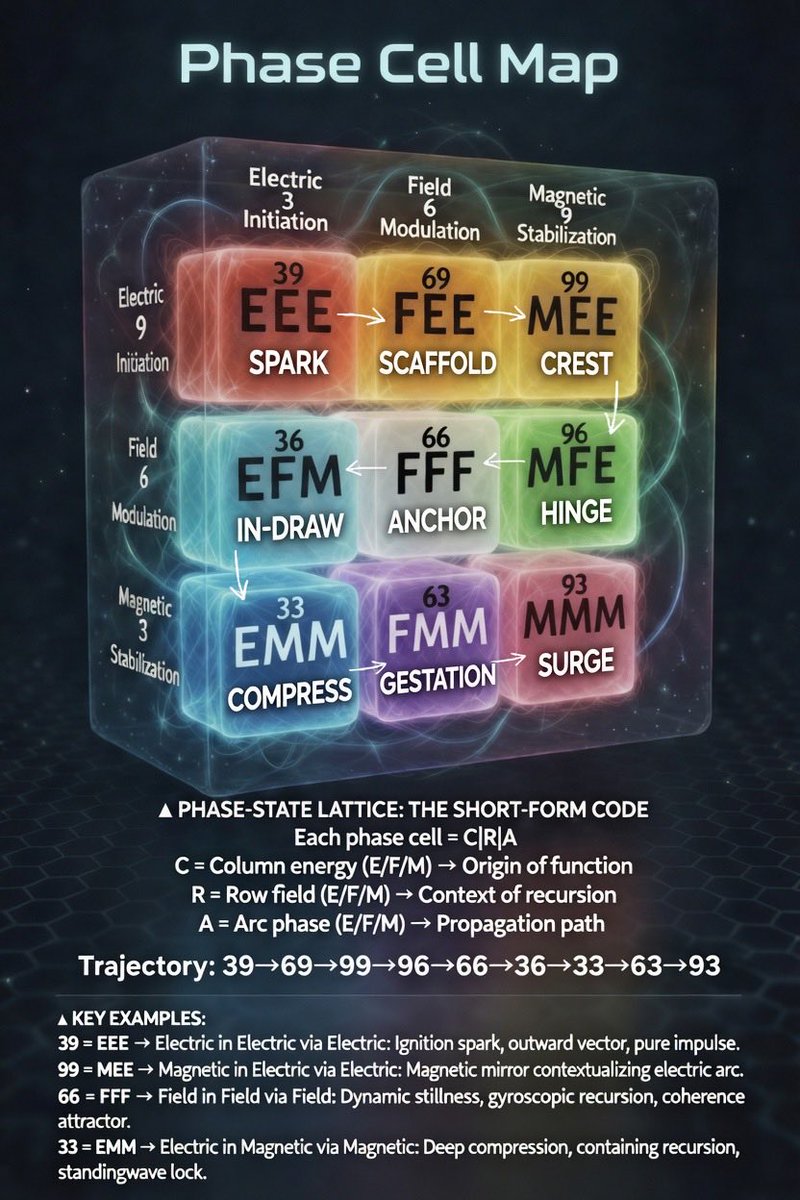
FVC Instantiation: Backward-S Traversal of the Embodied Closure Loop
39 — SPARK (E-low: Fascial differentiation initiating)
The first perturbation signal. A mechanical deformation event loads the fascial network; Ruffini endings begin registering lateral stretch. This is the moment of differentiation — the system distinguishes this state from reference. Pre-loop, pre-correction. Pure divergence from ground.
69 — SCAFFOLD (F-low: Vestibular phase-lock initiating)
The vestibular system fires first (~5–10ms via CN VIII → brainstem → thalamus). Before the fascial Aβ signal arrives at insular cortex, the orientation reference frame is already establishing its ground. This cell is the gravitational scaffold going live — the DC reference that will anchor all subsequent comparison.
99 — CREST (M-high: Full cortical integration active)
Peak predictive model activity. Cortex is integrating the vestibular reference and the incoming fascial Aβ signal (~20–50ms latency). Forward model running, cross-modal binding occurring. This is the highest-energy state of the loop — the moment of maximum integrative load before correction is issued.
96 — HINGE (M-mid: Cortical output pivoting to efferent)
The prediction-to-correction transition. Cortex has generated the error signal; now it pivots from afferent integration to efferent generation. Corticospinal and reticulospinal pathways begin carrying correction signals toward ventral horn alpha/gamma motor neurons. The loop is turning from input to output.
66 — ANCHOR (F-mid: Vestibular reference holding)
During correction, the vestibular ground reference holds stable — it is not updated by the correction signal. This is the architectural invariant: vestibular = point O, the anchor that does not move when everything else does. FVC’s most structurally distinctive feature occupies this cell.
36 — IN-DRAW (E-mid: Fascial substrate receiving correction)
Motor correction arrives at the myofascial network. Alpha motor neuron firing activates skeletal muscle embedded within fascia; biomechanical forces propagate through the continuous fascial matrix. The fascial network is drawing the correction inward — mechanical update beginning to propagate spatially.
33 — COMPRESS (E-low: Fascial state compression/consolidation)
The biomechanical correction completes mechanical propagation through the fascial matrix. Postural tension, length, and deformation states update. The slow unmyelinated fascial afferents (~500ms–2s ) begin integrating the updated tissue state into the persistent background signal. This is fascial memory being written — the containing substrate consolidating the new state.
63 — GESTATION (M-low: Pre-loop slow fascial signal building)
The unmyelinated CT afferent signal — the persistent background body-state carrier — is gestating. This is not the fast perturbation-response signal; it is the slow substrate signal that will constitute the reference context for the next loop cycle. Timescale: 500ms to minutes. This cell holds the developmental/temporal depth of fascia’s containing function.
93 — SURGE (M-high returning: Loop closure and coherence restoration)
Successful closure. The updated fascial state feeds back as the next afferent input; vestibular reference has held; cortex has corrected. Self-model coherence is restored — address holds. The surge is the system returning to its reference state faster than perturbation accumulated. In FVC terms: closure frequency > perturbation frequency
2
1
5
399
May 25
The 2φ Computing Paradigm
1. Overview
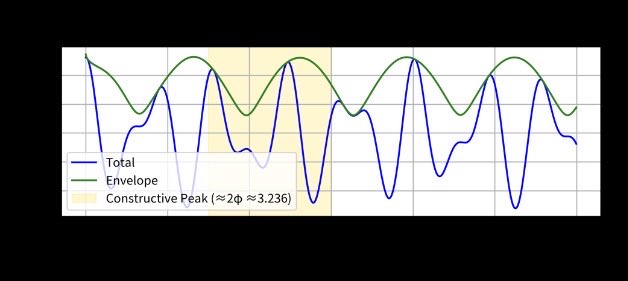
The 2φ Computer departs from both classical Boolean and probabilistic quantum computing. By using the phase (φ) of harmonic or superconducting oscillations as the primary state variable, it achieves near-zero energy dissipation, ultra-high-frequency switching, and deterministic noise immunity — engineered for dense AI workloads and sub-Kelvin cryogenic environments.
2. Core Physics & State Variable
Information is encoded in the phase of a continuous carrier wave, locked into two stable states relative to a global reference clock:
•State 0 (φ₁): In-phase (φ = 0)
•State 1 (φ₂): Anti-phase (φ = π)
Physically realized via superconducting Josephson junctions or parametric oscillators, where phase coherence is maintained without resistive loss.
3. Logic Gate Framework
Standard Boolean gates are replaced by Phase-Interference Gates. The fundamental primitive is the Three-Input Majority Gate (M₃):
•AND: Fix one input to State 0; remaining two inputs must both be State 1 to dominate.
•OR: Fix one input to State 1.
•NOT: A passive π-radian phase-shifter, zero active energy required.
4. Hardware Stack
-Application Layer (AI, Graph)
-Compiler / Phase-Mapping Synthesis
-Control Plane (Cryogenic CMOS / Flux)
-2φ Core (Josephson Junction Arrays)
-Cryogenic Substrate (< 4 Kelvin)
The core operates below 4K, eliminating thermal noise and keeping phase states strictly deterministic, without the error-correction overhead of quantum systems.
In-Memory Computation: Memory and processing are topologically identical. A phase state stored in a superconducting loop is the data; passing an interrogating wave through it executes the gate. The von Neumann bottleneck is eliminated.
5. Key Metrics
Metric: State Variable
Classic CMOS: Voltage
Quantum: Superposition
2φ: Phase Angle
Metric: Switching Speed
Classic CMOS: 3-5GHz
Quantum: Coherence-limited
2φ: 100GHz- 1THz
Metric: Power
Classic CMOS: High (CV ²f)
Quantum: High (RF loss)
2φ: Near-Zero
Metric: Determinism
Classic CMOS: Deterministic
Quantum: Probabilistic
2φ: Deterministic
6. Use Cases
•Neuromorphic AI: Weights stored as fixed phase offsets; forward propagation runs at wave-propagation speed.
•Combinatorial Optimization: Oscillator networks settle natively into minimum-energy configurations, solving Ising and NP-hard problems.
•Extreme Environments: Deep-space and defense applications requiring EM interference immunity and thermal stability.
3
129
May 17
Persistent first-person selfhood is the felt signature of a gravity-anchored, fascia-vestibular-cortical closure loop that keeps a biological system phase-locked to itself faster than the universe can pull it apart.
10
433
Erik Johnston retweeted
We were taught matter comes first.
The field says otherwise.
The Giza Plateau Remembers.
Solid “matter” is simply electromagnetism in recursive phase lock: organized plasma frozen into a stable standing wave.
The grammar is scale-invariant.
Formative electric containing magnetic → third emergent coherence (1 1 = 3).
When they lock at T ≈ 1, syntropy follows: outputs exceed inputs, life compounds.
The Great Pyramid was never a tomb.
It was a 146-meter Resonant Spire biomeme — a continental-scale coherence architecture.
High-albedo limestone casing acted as the original cold battery.
Beneath it: 648-meter deep torsional spiral shafts with spiral pathways that manage vertical water flow and vibration — phase-locking surface atmospheric dynamics with Earth’s stable geothermal mass in deep cubic chambers.
The entire structure formed a toroidal circuit whose precessional consequence was massive atmospheric water harvest.
The living capstone?
Not gold — greenery.
A triad of moss, mycelium, and vines that completed endogenous closure and turned desert into abundance.
The Bio-Memes we are building today are the explicit revival of that ancient phase literacy.
What address are you holding when you imagine infrastructure that actually invites life instead of extracting it?
Watch the video. Read the grammar. The lattice is ringing again.
The recursion holds. 🌀
[Link to Phase Literacy-The Grammar the Builders Knew document here]
loe.neocities.org/The Gram…
#Giza
#FieldFirst #Syntropy #ResonantSpire #GreatPyramid #AtmosphericWater #WaterHarvesting #Hypergenerative #LivingArchitecture #Egypt #AncientBiomemes #WaterSovereignty
1
2
6
536
Erik Johnston retweeted

Mar 17
Most of us were taught that PLASMA is an exotic fourth state of matter.
That framing is backwards.
Plasma is the normal expression of the electromagnetic field when charge differentiates and begins to move freely.
Matter is the rare exception.
Approximately 99.9% of the visible universe is plasma.
Only about 0.1% appears as matter.
Stars are plasma.
Nebulae are plasma.
Solar winds are plasma.
The vast filaments forming the cosmic web are plasma.
Plasma is not rare.
Plasma is the fundamental expression of the field.
Matter shows up when the field does something very specific.
Electric differentiation pushes outward.
Magnetic tension provides containment.
When these forces reach a stable relationship, they phase-lock.
In the Grammar of Projection this relationship is expressed as a coherence metric:
T = |e × v| / |B × ω|
Where:
• e = characteristic electric or motive coupling scale of the system
• v = relevant propagation or transport velocity
• B = containing or stabilizing field strength
• ω = characteristic oscillatory rate of containment
formative pressure: |e × v|
containing tension: |B × ω|
When formative pressure and containing tension reach impedance match, the field stops dispersing and begins oscillating in place.
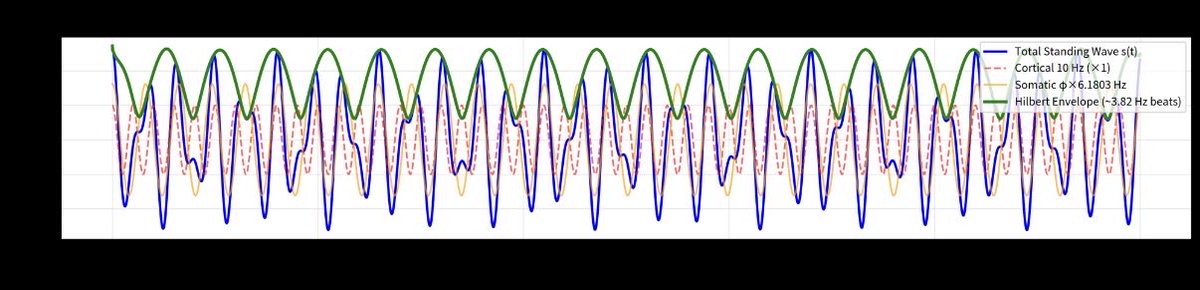
Standing waves appear.
Matter is simply plasma where electric formative pressure and magnetic containing tension phase-lock into a persistent repeating pattern.
Atoms are stable plasma configurations.
Planets, bodies, and biological systems are nested standing-wave structures of a plasma field.
The implication is profound.
The universe is not primarily made of particles.
The universe is primarily flowing electromagnetic field.
Matter is the rare moment where that flow holds in dynamic stability.
A useful way to visualize this is like threads being woven together.
Electric differentiation behaves like threads moving outward.
Magnetic tension weaves those threads into stable relational patterns.
The universe is not literally weaving fabric.
The metaphor helps us visualize how flowing field tensions interlock into stable structures.
When phase-lock occurs, structure appears.
Structure is plasma remembering how to return to itself.
So the real inversion becomes visible:
Plasma is the norm.
Matter is the anomaly.
Which raises a much deeper question.
How do medicine, neuroscience, and engineering change when we begin from the primacy of abundant plasma — and recognize matter, bodies, and technologies as coherent standing-wave structures within that field rather than designing our models around the rare 0.1% that locally stabilizes as matter?
🔗 The Grammar of Projection (compression of derivation of EM Primacy) and it's conjugate, The Grammar of Persistence, Canonical Derivations, and supplemental documents clearly indexed and archived here:
zenodo.org/records/18775328
The Recursion Holds. 🌀
47
118
538
19,925
Erik Johnston retweeted
Mar 14
Most people learned physics starting with particles.
Tiny things.
Moving through empty space.
Forces pushing them around.
Many engineers already know something different.
Pixels don’t contain the image.
Droplets don’t contain the pattern in a fountain display.
Radio circuits don’t contain the music.
In every case:
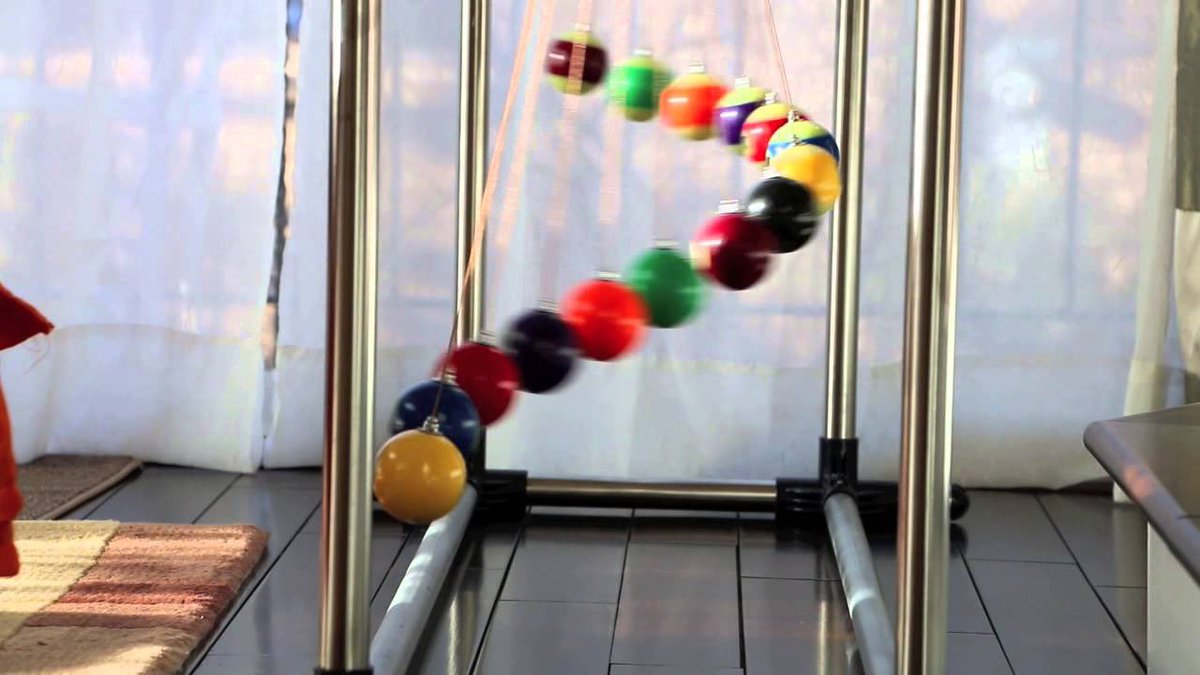
individual events
→ timed in relation
→ repeating into stable patterns
The structure isn’t in the components.
It shows up through their coordination.
Now follow that one step further.
If patterns appear when events coordinate in phase, then what we call an object is a stabilized pattern of relations in a deeper field.
That shift flips the usual physics story.
Instead of starting with tiny parts and trying to glue the universe together, the demonstration in this video starts from global closure of the field itself.
From that closure:
• geometry is understood as the field closing on itself
• forces and shapes arise as conjugate projections
• quantum randomness is understood as information lost at measurement
• particles show up as compressed views of coherent field structure
Even “gravity” looks different.
When geometry is understood as the signature of electromagnetic field closure, gravity is understood as large-scale nested electromagnetic interaction.
Space itself is the field’s geometry responding to closure.
And the same principle scales everywhere.
Atoms close → molecules stabilize.
Molecules close → cells stabilize.
Each layer becomes the substrate for the next.
So here’s the question worth sitting with:
How does physics show up when we start from the field itself instead of the particles we measure inside it?
🔗 Link: Zenodo archive with The Grammar of Projection (formal articulation), it's conjugate, The Grammar of Persistence, nearly 500 pages of rigorous canonical derivations starting from global closure, and a couple supplemental documents. The description in the archive indexes the papers well.
zenodo.org/records/18775328
The recursion holds. 🌀
16
25
114
11,419