
690 Photos and videos








Jun 5
Pretty wild how under-studied women’s health seems to be!
>>>
• From 1977 to 1993, FDA guidance recommended excluding women who could become pregnant from Phase I and early Phase II drug trials.
• 8 of 10 prescription drugs withdrawn from the US market between 1997 and 2000 posed greater health risks for women than men.
• Heart disease is the leading cause of death in women. Yet women are about 50% more likely to be initially misdiagnosed during a heart attack, and those misdiagnosed face about a 70% higher risk of death within 30 days.
• In cardiovascular trials, women are still underrepresented relative to disease prevalence in 62% of studies, with no improvement over recent decades.
• Women receive less pain medication than men at the same reported pain score. In one controlled study, nurses rated an identical case as less painful when the patient was described as female.
• Endometriosis affects roughly 1 in 10 women and takes an average of about 11 years to diagnose in the US.
1
2
20
2,247
May 23
9/ Get yourself out of the loop. No manual PRs, no typing into the terminal, no checking CI. If you catch yourself testing for it, stop! The agent needs to prove the work is done; your job is to double check.
6
6
324
49,313
May 23
10/ Spend 20 % of your time on the meta. Make sure any mistake you notice is incorporated into future instructions so it doesn't happen again. Iterate on the process the agent is following. Improve the testing harness. However, be careful about over-engineering the workflow. Usually, simpler is better.
15
4
409
42,323
May 23
6/ Adversarial review is what makes long, unattended runs possible. Before any task is checked off, a fresh read-only sub-agent reviews the diff against the todo plan and return gaps. (This is often too powerful and you need to dial back from over-engineering).
13
8
440
51,788
May 23
8/ Set up long-lived sessions with roles: planner, implementer, adversarial reviewer, black-box tester, issue triager, deep code reviewer. Your job is to wire them together so the implementer is never idle, and monitor and review to make sure everything is working and catch mistakes.
6
5
304
47,586
May 23
4/ Drive it with a persistent task list. Your job is to add vetted tasks faster than it can complete them. It's like shoveling coal into a steam engine. Each task should be: what to do, how to verify, proof notes once completed. The bar is: if satisfied as written, you'd trust the result. Queue as much work as you can before you stop working for the night, especially on Fridays.
5
8
482
61,015
May 23
5/ Spend most of your time on plan docs, not watching the agent. I usually create plans in a short-lived planning session, append one or more tasks, then kill the session. Good plan docs are self-contained, specify interface-level details, and include an explicit end-to-end verification strategy. It's worth it to keep iterating on plans until they are extremely good.
4
6
419
56,650
May 23
2/ Think bigger. This is the most common mistake I see: tasks scoped too small. At this point you want to be aiming for work that would take a good engineer multiple weeks.
8
4
553
72,082
May 23
3/ Try using one long-running implementer session for the entire project. Mine routinely run for days or even weeks continuously, compacting many, many times. Compaction works now. Long sessions remember your conventions and patterns and you stop needing to re-explain things.
12
10
558
144,927
May 23
1/ Some things I've learned recently running coding agents on large-scale projects. Most of this contradicts advice from 6 months ago!
95
209
3,085
571,017
May 13
Coding agents are everywhere now, so Notion's primitives are going lower-level and more general.
We just shipped a new concept called Workers – it's a hosted compute sandbox with convenient APIs for:
- Sync: 2-way sync a Notion database with any external data source
- Tools: build secure custom tools for your agents to connect to any external system
- Webhooks: expose an endpoint any external service can call
More soon!
May 13

Introducing: the Notion Developer Platform
New building blocks that help you (and your coding agents) sync any data source, build any tool, and orchestrate any agent.
Follow along 👇 x.com/i/broadcasts/1AJEmOArr…
5
8
132
27,122
Apr 24
Models are changing really fast, often in ways that will break your product and technical assumptions.
There's no way around this – the only way forward is to relentlessly iterate to make sure you're on target with what's available now, and what you can see on the horizon.
The good news is, it's easier than ever to do this if you properly apply coding agents!

finally: @simonlast @sarahmsachs on Latent Space!
Notion has rebuilt Notion AI 5 times. This is the first time Simon has told the entire story.
I've been trying to do this interview for ~3 years. We run @latentspacepod on Notion since inception, as does every other top tech company. Notion is one of the top ~3? knowledge work tools in the world, crossing 100M users in 2024 and now shipping the AI productivity suite that @ivanhzhao wants to be "steel and steam for organizations" — the backbone of a new Industrial Revolution of Infinite Minds that will change the world.
9
1
52
9,551
Apr 16
Very excited to show you what we're brewing!
Apr 16
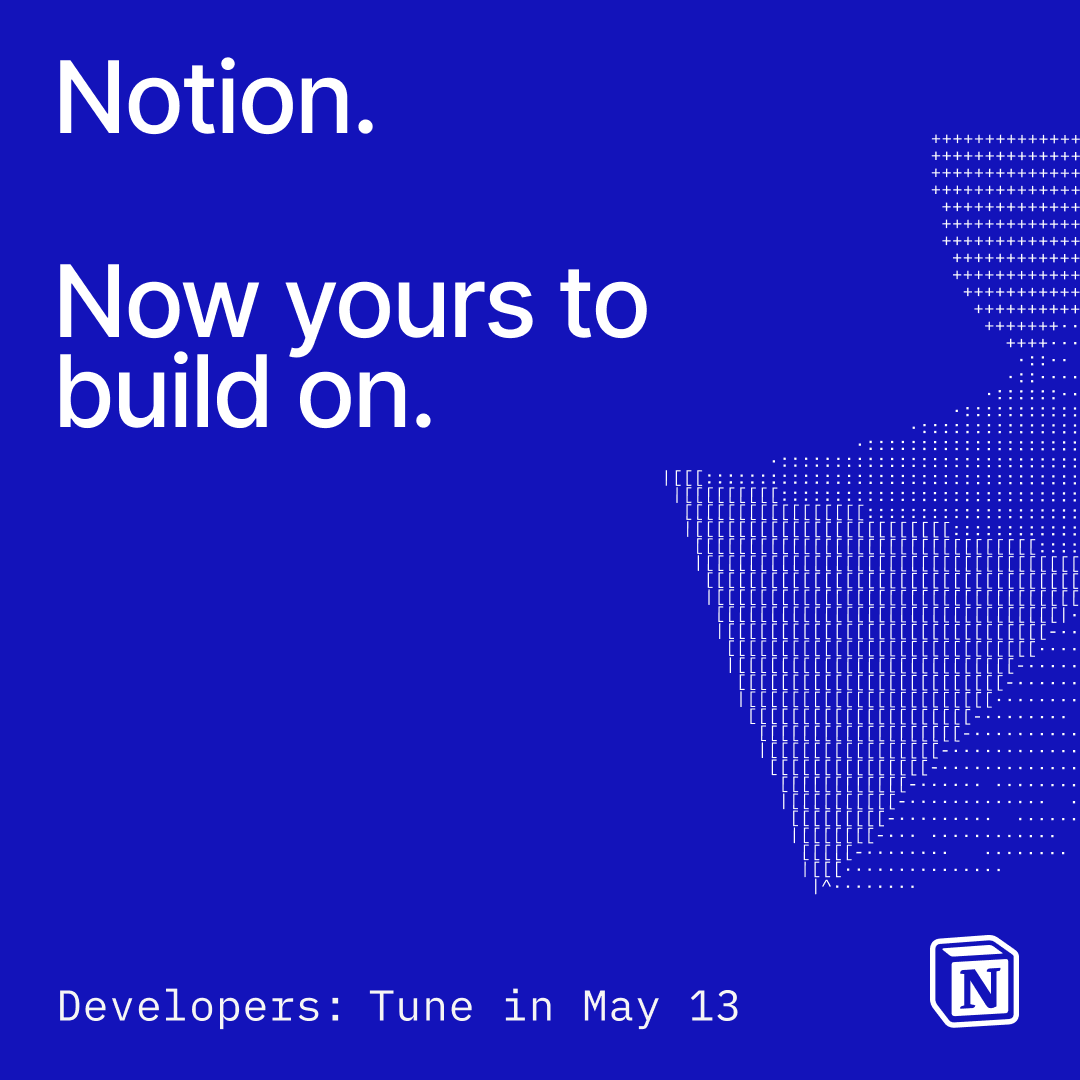
Developers: Join us on May 13.
A first look at our new developer platform. Let's build, together.
ntn.so/developers
4
1
34
7,926
Apr 14
Some notes on how I got a coding agent to work for 13 days straight:
Self-verification: the agent needs to be able to end-to-end verify everything itself. Design efficient testing layers that make sense for your project, and make sure the agent can effectively loop on them to prove correctness.
Write spec documents: work with the agent to fully specify goals, full implementation details, and verification in a document. It's almost always fruitful to iterate on this multiple times. This could be anywhere: a Notion page, or just a simple .md file.
Use a running to-do list: break down complex work into a to-do list that you can see and edit. As you think of more things for it to do next, you can just add more to-dos. This could be anywhere: a page or database in Notion, or a .md file.
Adversarial review: as a step in the process, the agent should ask another agent to review the spec and implementation and make sure there are no gaps. Force the agent to loop on this until it's totally aligned. This can use sub-agents if that's supported, or you can design a simple CLI that calls another agent. The key thing is to invoke a fresh agent context.
This was for a prototype of a new product. It's easier to do all of this on a small codebase, but the principles work anywhere.

Our co-founder, Simon’s record is letting a coding agent run for 13 days straight.
His bedtime routine now includes giving his agents enough work to keep running until breakfast 🍳
@simonlast
@saranormous
10
32
378
67,789
Simon Last retweeted

Mar 30
The loudest story about AI is a lonely one. One person with an army of chatbots. Other humans are friction.
That gets the future wrong. The best things aren’t built alone.
In a moment of change, we want to remind the world (and ourselves) what Notion stands for:
— Think Together
195
411
2,999
1,213,369
Mar 17
Sharing a few of my favorite prompt snippets for coding:
For iterating on a spec:
Please step back and think again. How can we make this SIMPLER and DUMBER while still achieving our goals?
For planning:
<goal here>
Please research the codebase to make sure you fully understand how stuff currently works, and make a detailed plan to achieve the above.
Your plan must be fully fleshed out and include only concrete actions such as editing files and running commands (ie. your plan cannot include actions like “read this file”).
Your plan must also include how you will verify it is correct yourself, end-to-end.
Don’t make any code changes yet. Research now as much as you need and then chat back with your full plan when ready.
For debugging:
Please think carefully and truth seek. Don't just blindly re-run things and hope they will work. Read the code, and liberally add temporary logging statements anywhere in the codebase to verify logic works as you expect (just remember to not commit them). Dig deep and take the time to really figure out the root causes of problems.
6
14
427
81,996

Our cofounder @SimonLast hasn't written a line of code since last summer.
With custom agents running while he sleeps, entire products get built without him touching the keyboard.
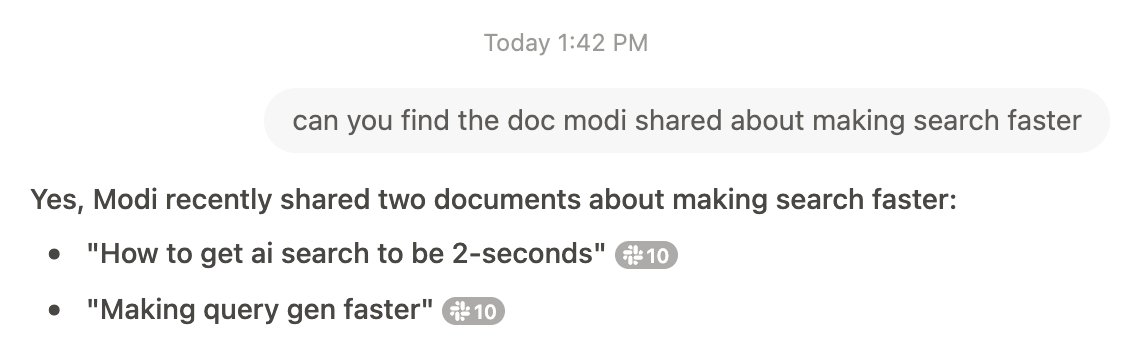
Custom agents run his inbox. Route bugs. File tasks. Search across Slack, Drive, and Notion—and find him answers, not links.
He sat down with @Saranormous on @NoPriorsPod to share what it looks like when the entire company runs on agents.
13
10
152
28,878
Our cofounder @simonlast built the first Custom Agent at Notion. It had one job: route product feedback.
Then he gave it a blank page and let it figure out the rest.
Now the whole company relies on it 👀
8
12
287
87,931
Feb 24
With Notion Workers, you can build a custom integration that connects your custom agent to pretty much anything, usually in under 10 minutes!
Feb 24

Alongside Custom Agents, we're also quietly releasing an "extreme pre-alpha" of something called Notion Workers. I joined Notion dreaming we would one day make it a developer platform, and this is just the start!
github.com/makenotion/worker…
5
3
87
24,180
Feb 24
Custom agents are here – I'm so proud of the team for this launch!
My personal favorite: I set up an email triage custom agent a few months ago and it completely solved email for me. I get a daily recap of what I need to see, and anything I don't is automatically archived.
Introducing Custom Agents. The AI team that never sleeps 🌙
They’re autonomous, built for teams, and easy for anyone to build. Give them a job, set a trigger or schedule, and they'll get it done 'round the clock.
6
3
76
7,093