
Joined August 2009
- Tweets 894
- Following 1,227
- Followers 710
- Likes 879
71 Photos and videos



I just completed Getting Started with Self-Sovereign Identity with @edXOnline! edx.org/course/getting-start…
5
I used to think behavior change was about restriction.
Don’t do this.
Avoid that.
Cut this out.
But that system doesn’t scale.
It breaks under stress.
What actually started working was a shift in framing:
From avoidance → to positive system design.
Instead of asking:
“What should I stop doing?”
I started asking:
“What can I consistently accumulate?”
For example:
hours of dietary discipline
days of physical activity
blocks of focused behavior
Not as punishment.
As measurement.
Because systems improve what they can see.
Another realization:
Writing became part of the infrastructure.
Not for ideas.
But for clearing cognitive load.
A way to close open loops before they accumulate.
And something simple emerged from all of this:
What you measure grows.
What you forbid collapses.
#systems #habits #builders #selfimprovement
2
25
Simon P. H. L. retweeted

Hey @X👋 hope you're enjoying your weekend!
This one is very special to me...
I want you to meet @melissapekel, my partner in everything and a co-founder @keeponboard!
She's returning to X, and looking to #connect with:
🧙 Founder friends.
🌟 Startup builders.
🤺 The people on X who build in public.
🤩 Indie hackers.
💡Champs figuring out big problems
🚀Shipping side projects.
Drop ⬇️a "Hi and let's all connect🙋♂️
15
1
21
978
I continue sharing my distillation of morning pages every day as an entrepeneur.
Random thoughts, worries, insights, ideas.
Then I filter them, curate them, and publish the main takeaways of each session.
1
6
139

Jun 13
I’ve been thinking about something that most builders underestimate:
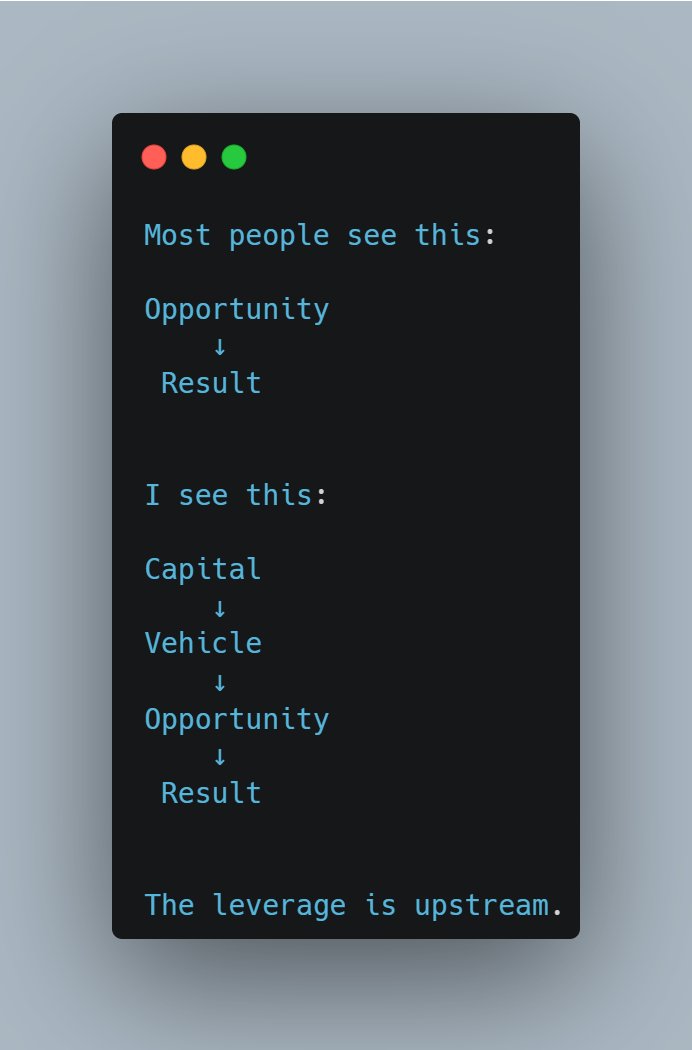
Money is not just capital.
It’s a system state variable.
it changes cognitive load
it affects creative throughput
it stabilizes or destabilizes execution
When financial pressure drops, something subtle happens:
The mind stops simulating survival.
And starts building again.
That’s when I noticed another layer:
I’ve been unconsciously designing a personal operating system:
mind, body, emotion as separate layers
“performance mode” vs “growth mode”
space for rest, play, and exploration
Not as philosophy.
As architecture.
Because execution doesn’t come from motivation.
It comes from system stability.
And life itself seems to move in cycles:
Preparation → transition → execution
The mistake is trying to live in one mode permanently.
Builders don’t just build products.
They build the conditions under which building becomes possible.
#founders #buildinpublic #systems #mentalmodels
3
97
Jun 12
I’ve been writing through a phase where my thinking feels “blocked” in execution.
At first I assumed it was a productivity problem.
But it’s not.
It’s a system load problem.
unfinished emotional threads running in the background
memory loops consuming attention
tension between logic (build) and expression (process)
And when that load increases…
the system compensates:
distraction loops (games, scrolling, avoidance)
overthinking instead of shipping
false productivity (planning instead of building)
Conclusion -> The CPU is saturated.
What changed the signal for me:
This isn’t something you “fix” with discipline.
It’s something you clear through output channels.
Sometimes:
writing is not content
it’s garbage collection for the mind
a way to free cognitive bandwidth
And I realized something simple:
You don’t scale output by forcing more focus.
You scale it by reducing what’s running in the background.
Not everything needs to become a project.
Some things just need to be processed so the system can breathe again.
That’s when building starts again.
Clean state -> forced state.
#founders #builders #programming #systemsthinking
2
2
114
Jun 11
I’ve been experimenting with mindfulness as a founder building multiple mental systems.
And I noticed something simple:
It doesn’t fail because of complexity.
It fails because it’s not anchored.
“I should be mindful” is not a system
good intentions don’t survive morning chaos
identity alone doesn’t create consistency
What actually works is structure:
→ attach it to a fixed moment
→ remove the decision step
→ make it the default behavior, not an option
For me, the insight was clear:
If mindfulness requires remembering, it won’t survive real workdays.
So I stopped treating it as a practice.
And started treating it as an input to my system.
Not something I do when I remember.
Something that happens because the structure allows no alternative.
Discipline is not intensity.
It’s design.
#mindfulness #systems #founder #habits
1
2
75
Jun 11
After years of consuming courses, books, and ideas, one realization changed how I think about building a career:
Don't just build products. Build context.
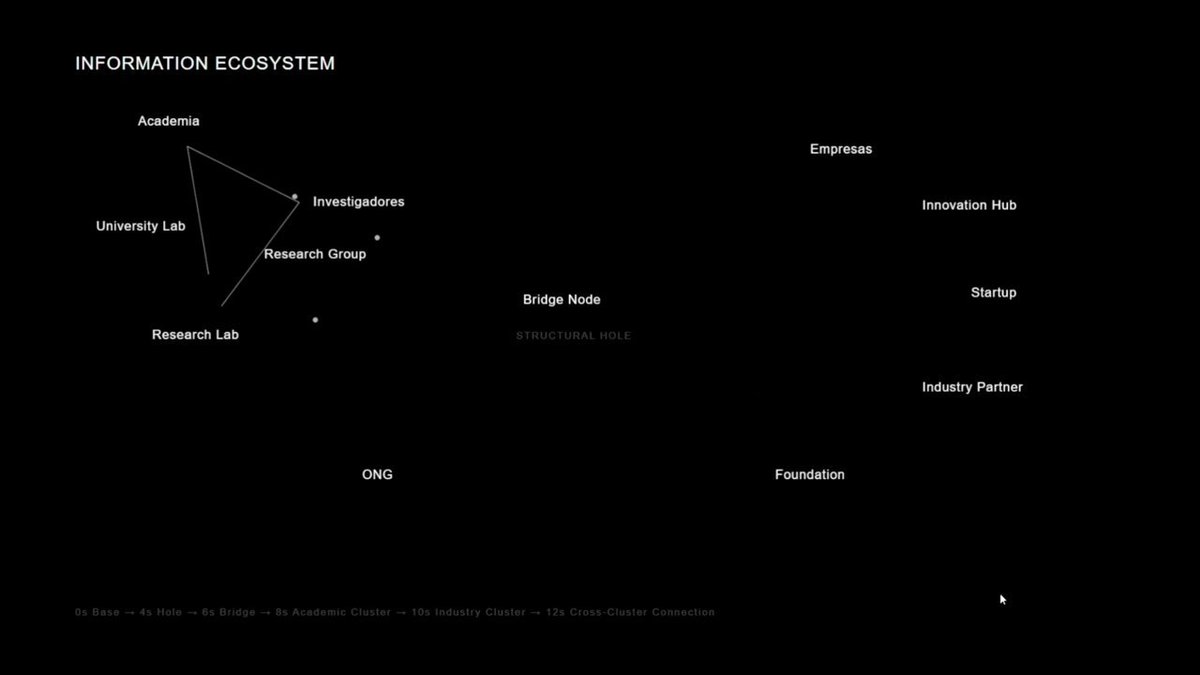
I'm no longer trying to become a "networker." I'm trying to become an infrastructure node.
Someone who:
maps ecosystems,
connects people,
synthesizes knowledge,
spots opportunities early,
and creates trust through signal, not noise.
A curated network is an asset.
A mental model is an asset.
A knowledge map is an asset.
Sometimes spending hours studying an ecosystem isn't procrastination—it's building the internal map that makes better decisions possible.
The goal isn't to know everyone.
The goal is to become someone who helps others navigate complexity.
In the long run, capital compounds through context, credibility, and connection.
#KnowledgeManagement #NetworkScience #DigitalSovereignty
2
53
Jun 10
I've taken hundreds of online courses over the years.
My new rule is simple:
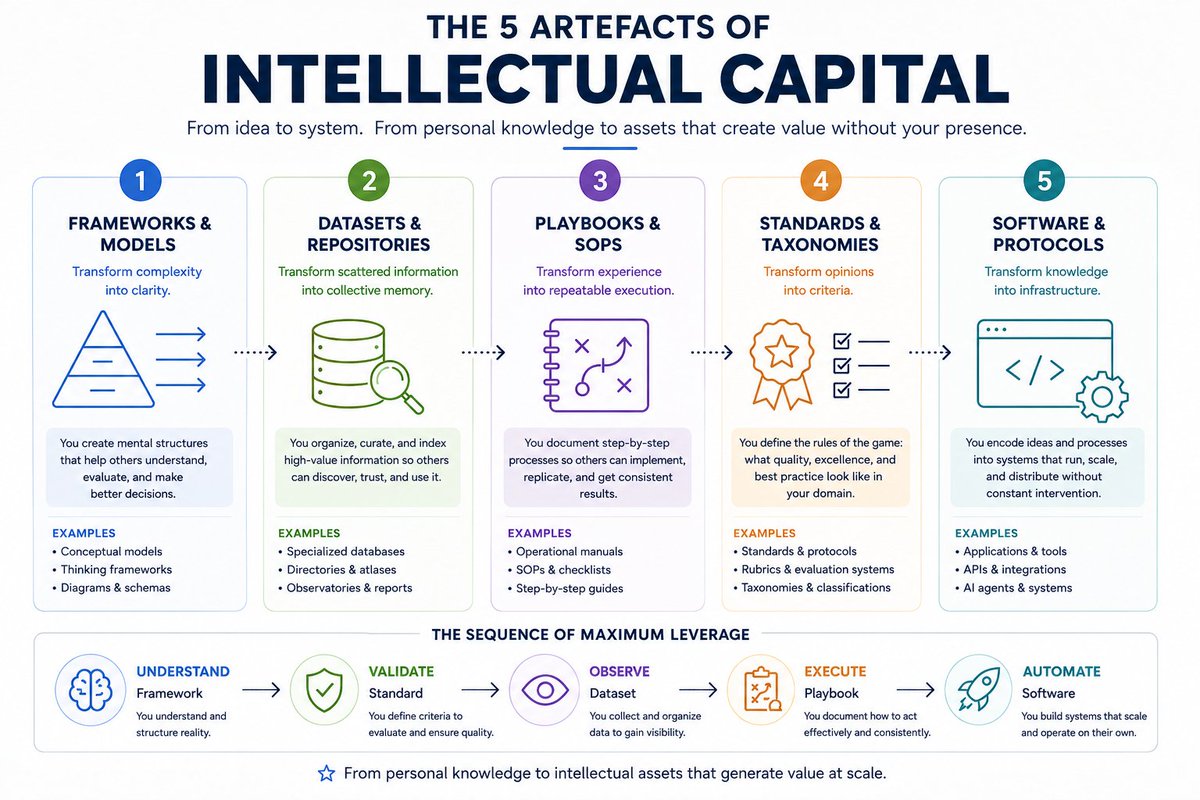
No new course until I've built one tangible artifact from the previous one.
An article.
A dataset.
A visualization.
A tool.
A piece of software.
A framework.
Learning only becomes valuable when it's converted into something that exists outside your head.
Less collecting.
More building.
That's how I want to practice learning by doing and second-order learning.
1
3
63
Jun 10
I’ve noticed something that used to hit me hard as a builder — especially before AI changed how we learn and build.
At the time, learning felt like the bottleneck.
But it wasn’t.
Execution loops were.
Back then it was already easy to fall into this pattern:
take courses
follow learning paths
collect frameworks
optimize productivity systems
It felt like progress.
But there was a hidden failure mode:
→ input without output
You feel productive.
But nothing actually gets built.
I saw this clearly in myself:
more LinkedIn Learning
more Notion systems
more mental models
more planning layers
But the system was missing the only thing that mattered:
shipping loops.
Because learning only becomes real when it exits the system as output.
Another thing I underestimated:
Performance was never just cognitive.
It was always physiological.
sleep
training
nutrition
energy state
Those set the ceiling long before any framework does.
What’s interesting is this:
Even though AI has radically changed access to knowledge and speed of execution…
this core pattern hasn’t changed at all.
If anything, it’s amplified.
So the real shift remains the same:
Stop optimizing for input.
Start optimizing for closed loops.
Build → ship → iterate.
That’s where learning becomes real.
And that’s where it has always become real.
#builders #learning #systems #productivity
2
57
Jun 9
Tengo una teoría: hay personas con ideas muy avanzadas que no tienen con quién hablarlas.
Demasiado raras para una aceleradora. Demasiado serias para un foro cualquiera.
Para esas personas estoy creando La Ciudad3la — un espacio informal donde las ideas no necesitan estar terminadas, solo ser genuinas.
Si eres uno de ellos, DM abierto.
#WeirdScience #PensamientoLateral #CienciaFrontera #Futurismo #IdeasNoConvencionales
1
27
Jun 9
A note to self from these morning pages:
Writing is not inspiration.
It’s a system.
What I was really building here:
• a daily thinking practice
• a creativity unlocking tool
• a discipline of output over time
Constraints I noticed matter:
• 30-day commitment
• 1 page per day (not perfection)
• no overthinking, just writing
• delayed review (don’t read too early)
Tools are part of the system:
• faster editor (removing friction)
• mechanical keyboard (physical feedback loop)
• structured environment (NOTION, notes, workflow)
But the deeper pattern is this:
• creativity comes from repetition, not intensity
• clarity comes from writing, not thinking
• direction emerges from accumulation, not planning
Then there’s the meta layer:
Ideas I was trying to organize:
• a framework for “opportunity” (center, circumvention, possession)
• a set of nonfiction books in progress
• systems for explaining complexity to different audiences (families, kids, builders)
But the real bottleneck wasn’t ideas.
It was synthesis.
Too many directions → need for compression.
Final insight:
Writing is not about expressing what you think.
It’s about discovering what you actually think.
#Writing #Creativity #DeepWork #Thinking
2
40
Jun 8
A simple reminder I wrote down:
Focus in the now.
No fantasies.
Just execution.
What that really means:
• Stop projecting into imagined futures
• Reduce mental noise
• Return attention to what is in front of you
Discipline is not complexity.
It’s simplification.
Maximal effort comes from:
• clear attention
• embodied presence
• removing distractions
A simple operating system:
• meditate
• train the body
• do the work
• rest properly
• eat with awareness
• pray or reconnect to meaning
Not motivation.
Not inspiration.
Just alignment between attention and action.
Be a force of will by reducing everything that is not the present task.
#Discipline #Focus #DeepWork #Mindset
27
Jun 8
These are just a few of my productivity tools to keep the chaos organized:
The Architecture: Notion, Second Brain, LocalCodex 🧠
The Strategy: Research Notebook, Diario de Campo, Diagrams 📊
The Routine: Morning Pages, Bullet Journal, Calendars 🗓️
The Execution: Pomodoros, Timeboxing, Checklists ⏱️
Hey #solofounders, what does your stack look like? Drop your weapons of choice below! 👇
1
1
51
Jun 8
Civilizations thrive on infrastructure. In the 21st century, individuals must build their own.
If you rely only on willpower, you've already lost.
To maximize your creativity and freedom, you need a robust personal infrastructure:
⚡ Systems over goals: Automate the mundane to free up cognitive load.
📷 Networked thought: Build a digital second brain to capture insights instantly.
🔋 Energy management: Design an environment that forces focus and recovery.
Your autonomy is directly limited by the quality of your systems. Build accordingly.
1
25
Jun 7
🧵 1/3
For years, we admired the 10x engineer.
AI is creating a new archetype:
The engineer who builds systems that produce software.
10x becomes 100x.
The developer becomes the factory.
But leverage changes more than productivity.
It changes what becomes valuable.
2
1
2
46
Jun 7
🧵 2/3
Factories optimize output.
Labs optimize discovery.
Workshops cultivate mastery.
As software becomes abundant, code itself becomes less scarce.
Judgment becomes scarce.
Taste becomes scarce.
Choosing the right problem becomes scarce.
1
23
Jun 7
🧵 3/3
The question isn't whether AI can help us produce more.
It clearly can.
The question is what humans should do with the leverage.
Maybe the future isn't a world of software factories.
Maybe it's a world where factories are automated and humans return to the medieval workshop:
craft, curiosity, mastery, and judgment.
What becomes valuable when production is no longer the constraint?
14
Jun 7
Most people think money reduces stress.
Not always.
Sometimes money comes attached to:
• approvals
• gatekeepers
• bureaucracy
• uncertainty
And uncertainty creates a hidden tax:
attention.
A few things I've learned:
• Dependency creates anxiety.
• Anxiety destroys focus.
• Focus creates value.
• Value creates money.
• Therefore, protecting focus is often more important than chasing money.
The more your livelihood depends on someone else's decision:
→ the more mental bandwidth you lose
→ the more energy goes into things you can't control
→ the less energy remains for building
The strongest builders optimize for:
• ownership
• autonomy
• direct value creation
• direct customer relationships
Money is a result.
Focus is the asset that produces the result.
Protect accordingly.
#BuildInPublic #Entrepreneurship #DeepWork #Founders
21
Jun 7
How do you design human systems for maximum individual and collective flourishing?
Calling all social scientists and systems engineers. Drop your frameworks, books, or theories below. 🧵👇
23