
Simplicity Group is a research-driven advisory firm positioned as the bridge between institutions and startups.
Joined August 2022
- Tweets 2,406
- Following 144
- Followers 3,480
- Likes 2,615
Photos and videos
Pinned Tweet
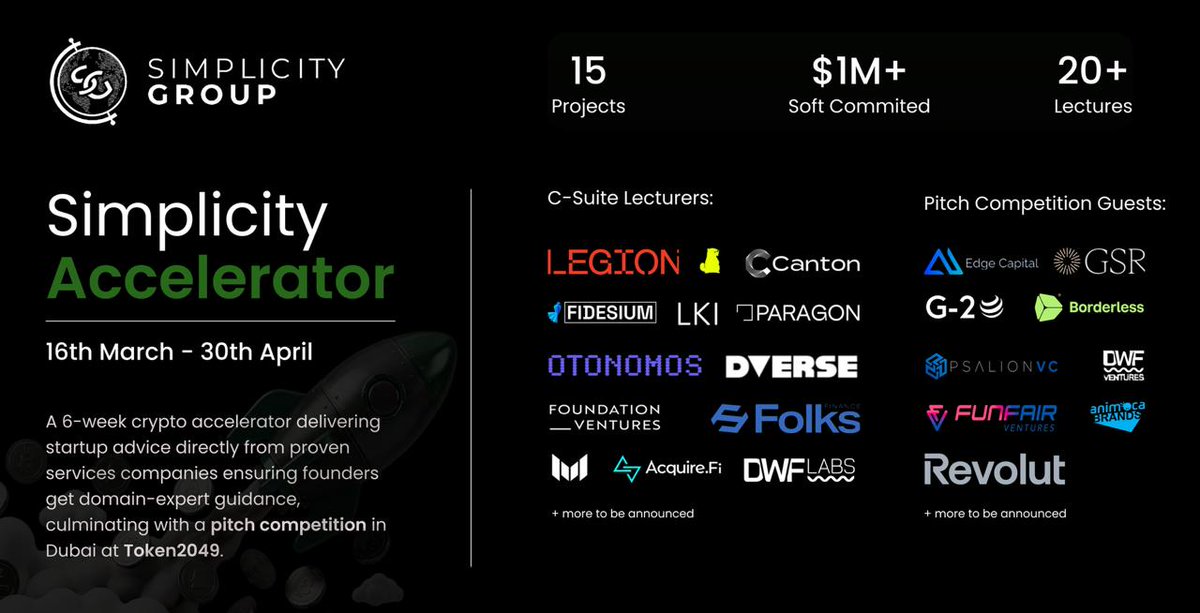
We're launching the Simplicity Accelerator 🚀
The 6 week programme, 16 March - 30 April, will see weekly 1-2-1 sessions and hands-on guidance from our team, as well as daily lectures from elite service providers and successful projects on:
Week 1: Business principles
Week 2: Chains, and entity set up
Week 3: Marketing
Week 4: Tokenomics
Week 5: Fundraising
Week 6: Token Launch
Week 7: Pitch competition in Dubai (or dial in)
We end the programme with a pitch competition in Dubai at Token2049 on the ~30th April. Our amazing venture partners have soft committed over $1M and counting, so be prepared!
📝 Apply here (by 28th Feb): forms.gle/U62Jg6PN2ys1jnM98
ℹ️ More info:
simplicitygroup.xyz/accelera…
3
4
37
3,502
It's great to see the crypto community in the UK care so much about the industry and regulation. Maybe I'm (Alex) not privy to this happening elsewhere, but I've only seen the UK crypto SMBs and @SuperteamUK go this extra mile to help the government.
Onwards and upwards!
Jun 3

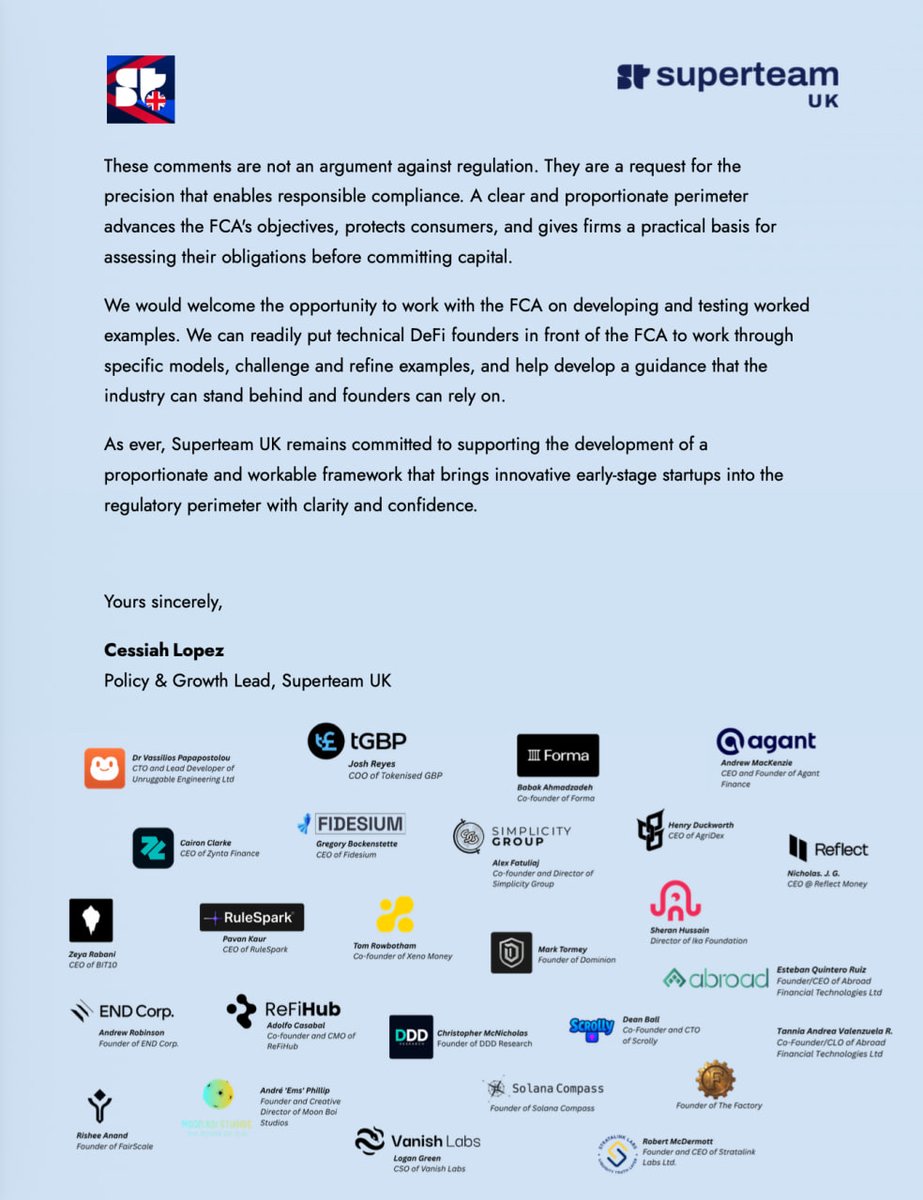
The future of DeFi in the UK shouldn't be decided without the people building it.
Today, we submit our response to the FCA's perimeter consultation.
Backed by 20 founders, all pushing for rules that can give DeFi a home here.
We fight for the progress we need. 🦾🇬🇧
3
150

May 29
Incorporation helps founders limit their liability, which is very key for entrepreneurship. Below are some common Web3 entities, by our good friends @Otonomos from our Accelerator

Startups Incorporation Hack.
Web3 Entity Decision Matrix
Choosing the right legal structure is one of the biggest decisions when building in Web3.
Token? DAO? Foundation? Devco?
Different use cases need different legal wrappers.
🧵We broke it down👇
( full explanation📽️)
1
1
4
261
May 28
CEX listing is graduation, not growth; you have already raised, built a community, and shipped product before you even start the conversation.
Negotiation begins months before TGE, and your listing manager is the 1% relationship that decides whether your token clears T1 or sits in tier-3 limbo. Upbit alone takes months of community prep, and perps are the volume lever you build pre-spot when the day-one order book is thin.
@BenedettoBio, Founder of @FolksFinance, delivered a lecture on the real mechanics of CEX listings: the building model of valuation that puts CEXs at the top of the stack rather than the foundation, what exchanges charge in security deposits, token percentages, and fiat fees, and the tokenomics patterns that get projects listed today (postponed unlocks, longer cliffs, 0% TGEs, and CEX multisig holds).
Watch the full lecture here:
youtube.com/watch?v=Rs_XVoxJ…
1
1
102
May 27
Super insightful lecture for our accelerator, thank you guys. The best entity set up guys in the market.
Full lecture: youtu.be/jq6YJthDH3s
Weeks ago, we visited our friends at @SimplicityWeb3 to talk about entity formation for crypto projects ⚖️
Our approach is simple:
• Token Issuance Vehicle 🪙
• Foundation 🏛️
• Devco 🛠️
One entity for issuance.
One for the project.
One for operations.
Different roles. Different risks. Lower liability.
Full breakdown here 👇
3
6
336
May 27
Congrats to our portco @worldofdypians for getting onto Binance🔥
May 27

Deposits for $WOD are now open on @BinanceUS!
Trading on the WOD/USDT pair will begin on May 28 at 7 a.m. EDT.
@worldofdypians is a Web3 gaming project that is available in Early Access on the Epic Games Store and is powered by the WOD token on BNB Chain.
7
18
981
May 27
Picking a launchpad is not really a choice between launchpads; it is a choice about how you want to trade money for distribution.
CEX launchpads leave the founder with 60 to 80% of what's raised; decentralised vehicles leave 93 to 97%, curated 90 to 95%. The difference is who shows up to your TGE and what you net at the end. FDVs across the board are too high, and an open auction is the only mechanism that lets the market price you honestly.
@matty_, Co-Founder of @legiondotcc, delivered a lecture on the four launchpad vehicles (CEX, decentralised, curated, airdrop), why retail is more vesting-sensitive than VCs and how that should shape your round, and what moves the needle at TGE: day-one Binance plus Coinbase or Kraken, Upbit follow-up, market maker retainers, and OTC desk access.
Watch the full lecture here:
youtube.com/watch?v=emryqlnp…
1
2
15
4,425
May 26
Building with no exit in mind, then trying to engineer one at the last minute and discovering the acquirer was never going to buy what you built is all too common.
Acquirers pay for revenue, EBITDA, users, volume, AUM, licences, and defensible tech; they will not touch ideas, moatless tech, fake users, or expired narratives. The cap table, the IP documentation, and the KPIs you set on day one are what determine the multiple, not the pitch you make on day 1,000.
@FryeCryptoGuy, Co-Founder of @Acquire_Fi, delivered a lecture on building for acquisition from day one: the real valuation ranges (2 to 10x revenue, 2 to 15x EBITDA, AUM and licence multiples), the deal structures that decide founder net (asset sale, share sale, acqui-hire, token dissolution at close), and what drives exchanges, market makers, and institutions to acquire in the first place.
Watch the full lecture here:
youtube.com/watch?v=k5Hnnud8…

4
137
May 25
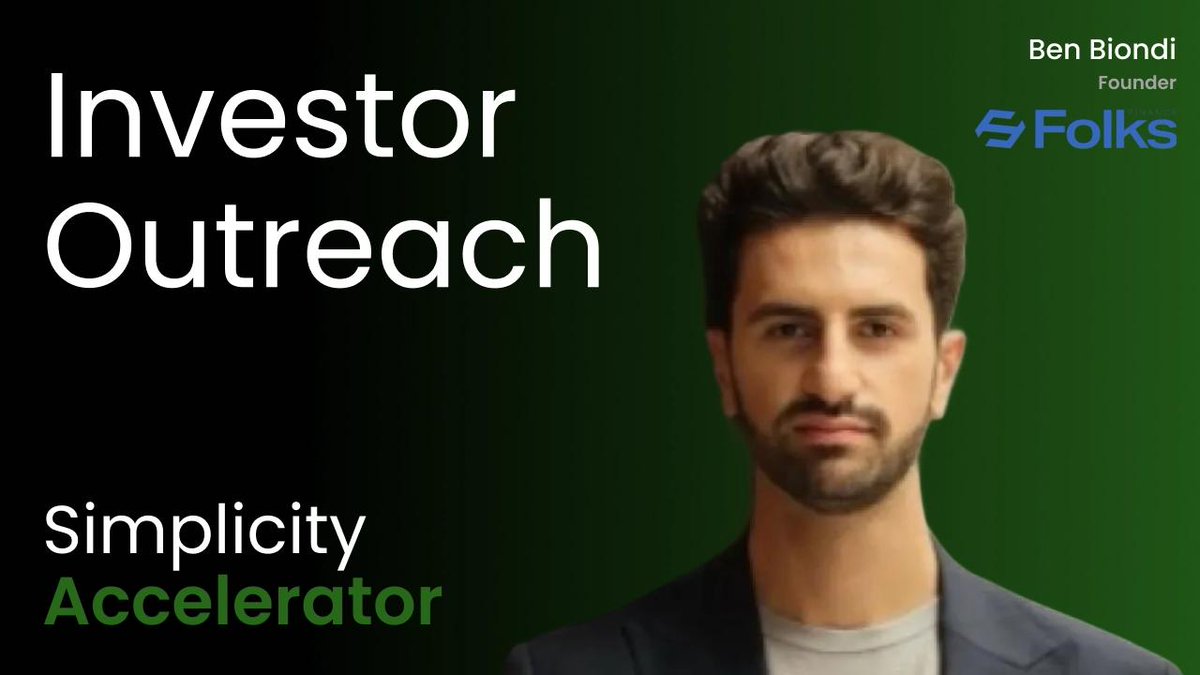
Going from $0 to T1 VCs is not luck; it is months of working up from middlemen to the funds that move markets.
You can spend a year hearing zero commitments, then watch every fund commit in the same week once narrative alignment lands. Sending the same deck to every VC kills the round before it starts; each one needs a custom pitch tied to their thesis.
@BenedettoBio, Founder of @FolksFinance, delivered a lecture on how he raised from Borderless, Jump, OKX, and CB Ventures: how to set VC deadlines (and when to extend them), how narrative alignment won Folks Finance its private round lead, and why VCs increasingly want token warrants alongside equity to derisk their position.
Watch the full lecture here:
youtube.com/watch?v=zSZl-htK…
1
5
333
May 22
This will be the only conference where we'll actually listen to the panels. Excited to go
May 22

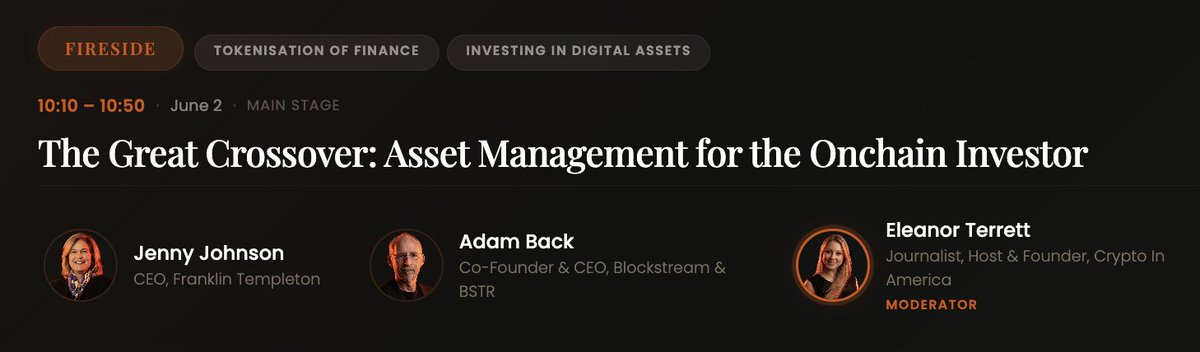
1/
For a decade, Web3 and TradFi argued.
In 2026, they're sitting at the same table.
In 10 days, Jenny Johnson (CEO @FTDA_US, $1.5T AUM) and @adam3us (Co-Founder, @Blockstream , inventor of Hashcash) open Proof of Talk 2026 on the same stage.
That fireside is the thesis of the entire event.
@proofoftalk
1
5
160
May 21
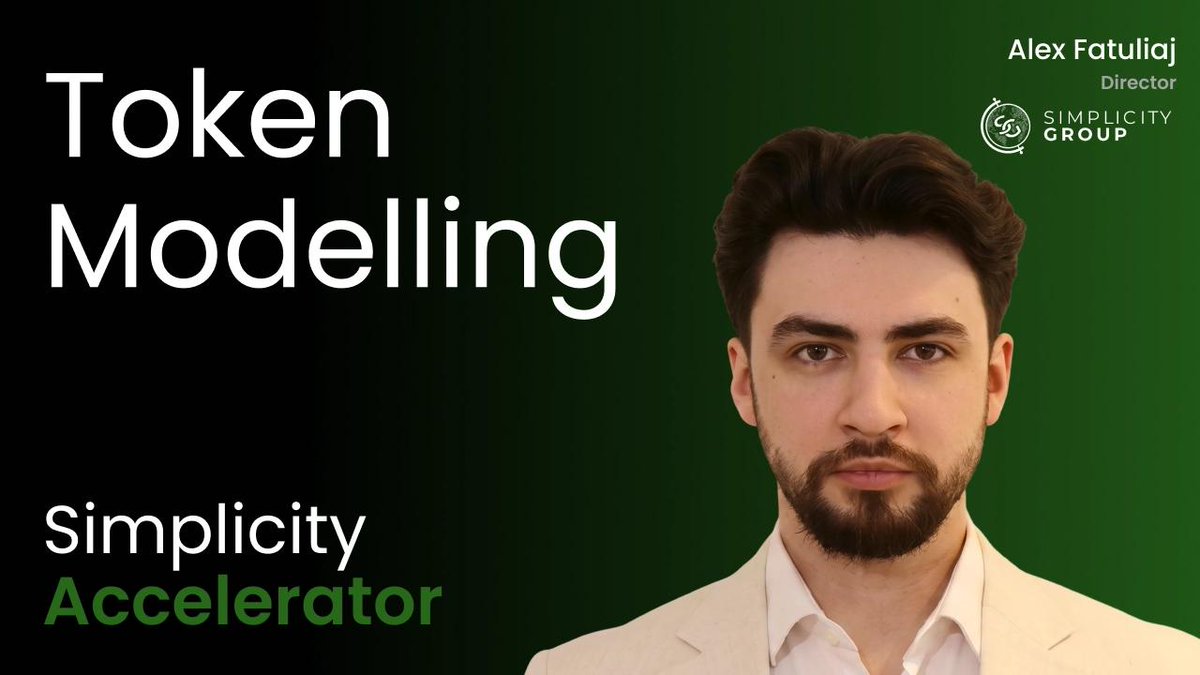
Token modelling work is a minefield of jargon and overengineered spreadsheets that nobody on the team can read.
Deterministic models answer the questions a project usually has; agent-based models cost ten to twenty times more and are rarely worth it in crypto, where the question that matters is whether your token is held or sold, not which simulated agent did what at hour 3,427. The point of a model is not to predict the future; it is to understand the levers you control before you launch.
Our Co-Founder and Director @0xAFat, delivered a lecture on picking the right modelling approach without overpaying: when deterministic models are enough, where stochastic randomness genuinely changes the answer, and the rare cases where agent-based modelling is worth the cost.
Watch the full lecture here:
youtu.be/F9d5M_UUyu8
1
4
86
May 20
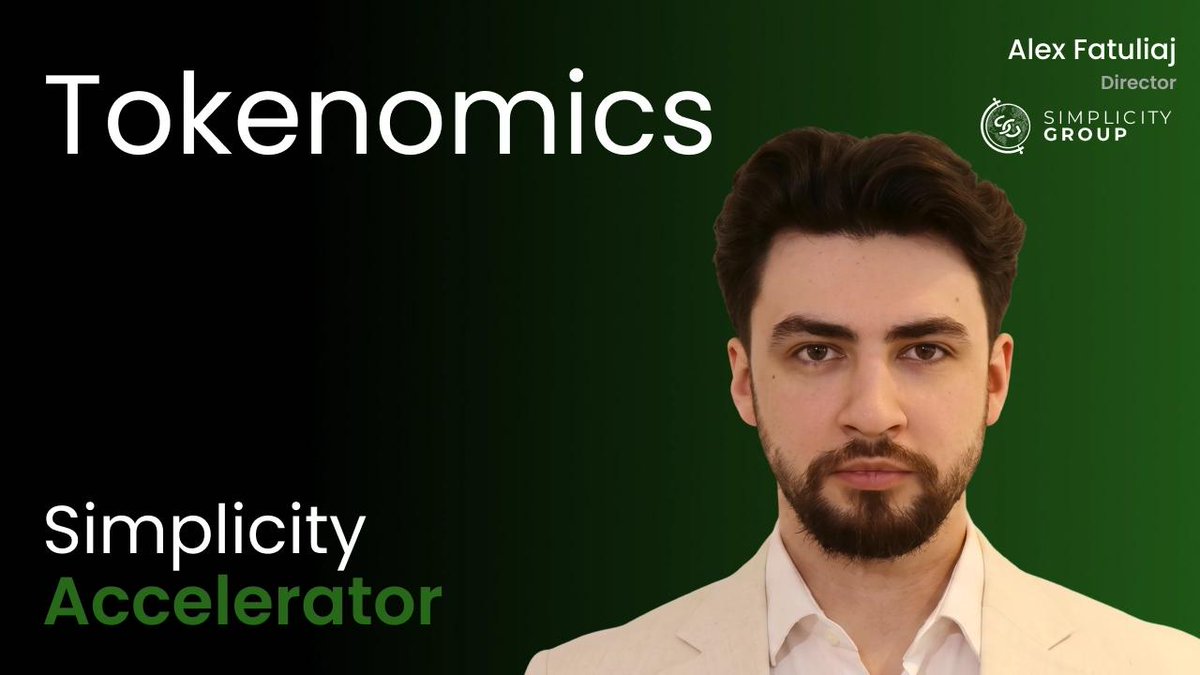
Almost all tokens launch at the wrong FDV because the number was chosen by vibe, not by maths.
A defensible FDV is supply meeting demand, with buy pressure measured against the months it has to last; pick the number any other way and you are guaranteeing the dead chart that follows TGE. Allocations and vesting compound the same problem, since the cap table you set on day one is the seller you face for the next four years.
Our Co-Founder and Director @0xAFat, delivered a lecture on building tokenomics that survive TGE: the buy-pressure-times-months formula for a defensible FDV, the allocation mistakes that crash tokens within months of launch, and vesting designs that protect price action without killing early contributor upside.
Watch the full lecture here:
youtu.be/FXWOJPWDy0A
1
4
95
May 18
Token launches list four or five utilities and then wonder why none of them stick.
A token cannot do every job at once: a medium of exchange has to be liquid and circulating, whereas a governance token needs to be held to retain value, and a fee token needs to be captured or burned. Stacking those mandates onto a single asset is what turns a token economy into a slow-moving crisis.
Our Co-Founder and Director @Simplicity_dan, delivered a lecture on token utilities and policy: how to design utility around real demand drivers rather than narrative, how regulatory exposure varies by utility type and jurisdiction, and why a list of utilities on a one-pager is marketing, not an economic system.
Watch the full lecture here:
youtu.be/cMaXS7CUkuU
4
110
May 15
Crypto teams burn between $50K and $500K a year on events without ever measuring the return.
The event is not the product; the relationships you build and the content you generate are. Skip the 48 to 72 hour follow-up window after the event closes, and the ROI collapses, no matter how many people you spoke to on the floor.
Zachary J, Co-Founder of @partyactionppl, delivered a lecture on getting real ROI from events: the three pillars (thought leadership, marketing and PR, networking), why covering a bar tab is often better ROI than a full activation, and why hosting your own event can lock competitors out of your target audience.
Watch the full lecture here:
youtube.com/watch?v=3EspMQiJ…
1
1
216
May 14
A community is not a follower count. It is a group of people who can be mobilised, segmented, and converted with intent.
Most Web3 communities die because the founders never defined who their ICP is, what they want, what they fear, and what success looks like for them. Without that map, every campaign is a guess and every retention drop is a surprise.
@Jeytery1, CIO of @solus_group, delivered a lecture on running a community like a chessboard, not a Discord: how to map Team, Ambassadors, and Members, how to build double-ended funnels that turn users into recruiters, and how to apply the AAARRR Pirate framework (Awareness, Acquisition, Activation, Revenue, Referral, Retention) to community growth.
Watch the full lecture here:
youtube.com/watch?v=mUkTYdml…
3
1
7
831
May 12
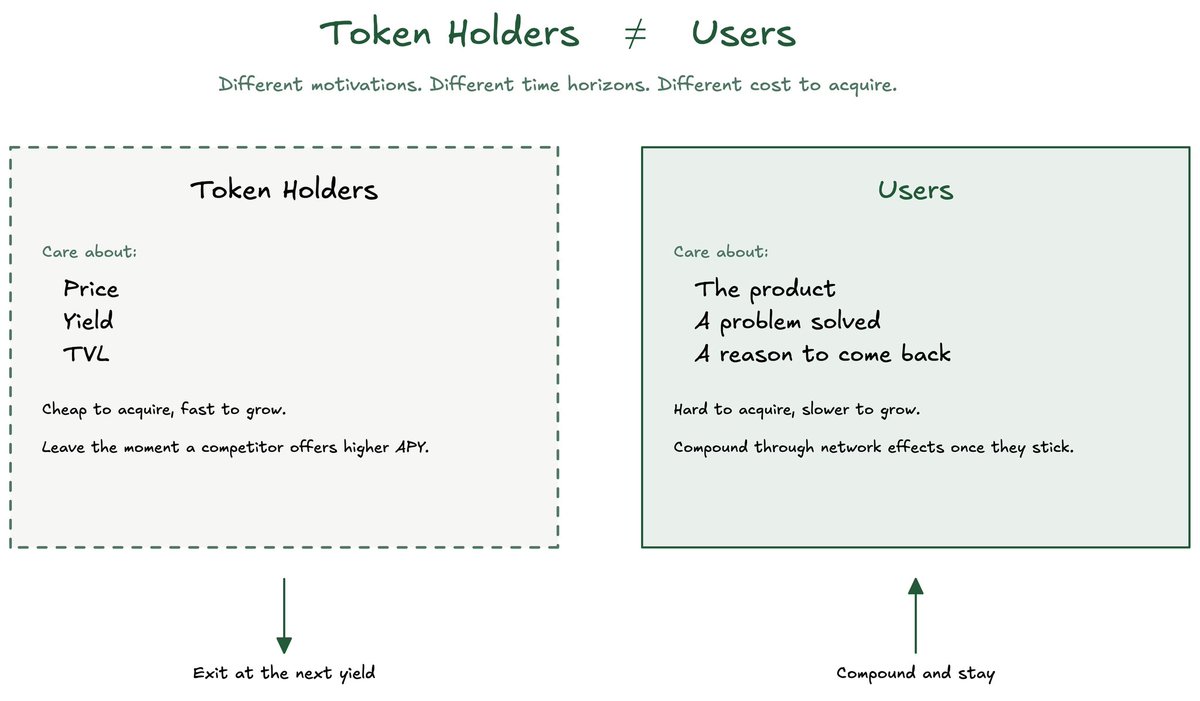
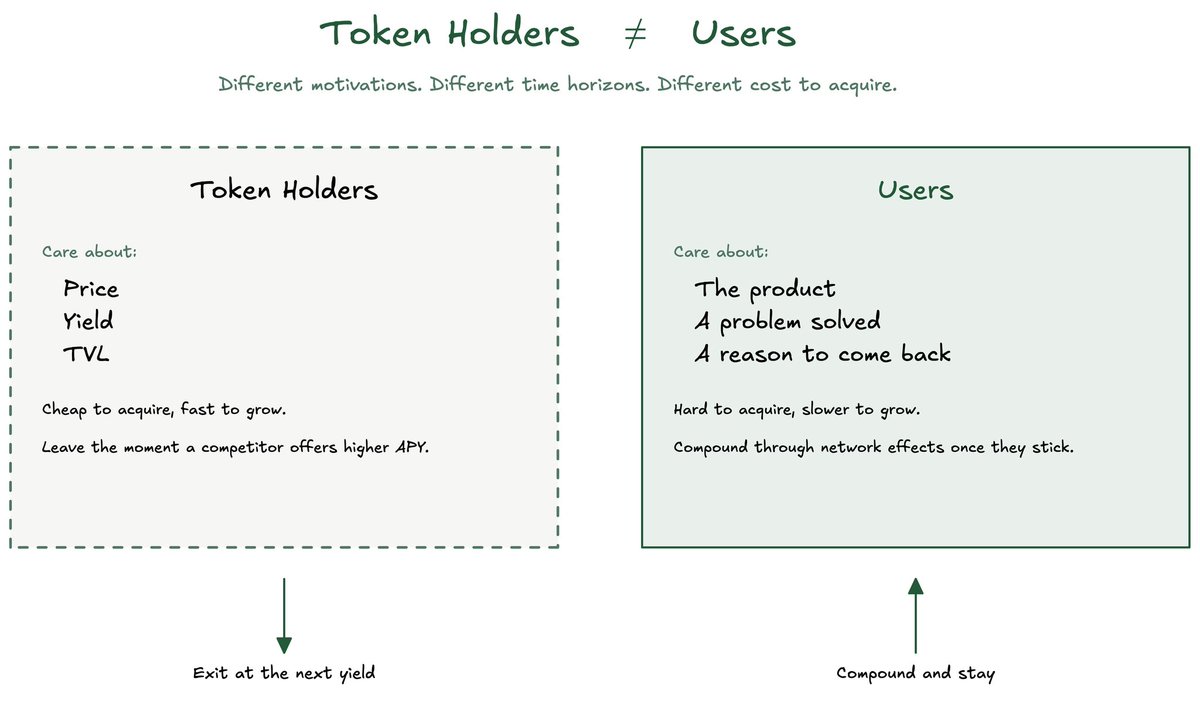
Most projects acquire token holders, then mistake them for users.
The two are different. Token holders care about price, yield, and TVL; users care about whether your product solves their problem.
Coffee shop analogy: if you reinvest revenue in better WiFi instead of better coffee, you grow until a competitor opens with better WiFi, the WiFi people leave, the advertisers leave, and the coffee buyers were never enough to keep the lights on.
Token holders are cheaper to acquire and look great on a chart. Real users take longer, cost more, but compound through network effects.
Read the full article:
simplicitygroup.xyz/blog/tok…
4
93
If you're a new time founder, this is arguably the best conversation about how to present yourself, your company, and, most importantly, how to grow.
@ParagonWeb3 are our recommended PR agency, and this conversation confirms the deep knowledge Conrad has on the topic.
The question at ~23 minutes past, "How would you grow if you lost everything except your knowledge?" is the step by step guide for new founders.
Check it out below
May 7
How do you grow your company? Branding and personal lessons from the Conrad's journey, Co-Founder of digital asset PR agency Paragon Strategy @ParagonWeb3. Hosted by Alex @SimplicityWeb3 x.com/i/broadcasts/1pKkOyVWY…
7
163
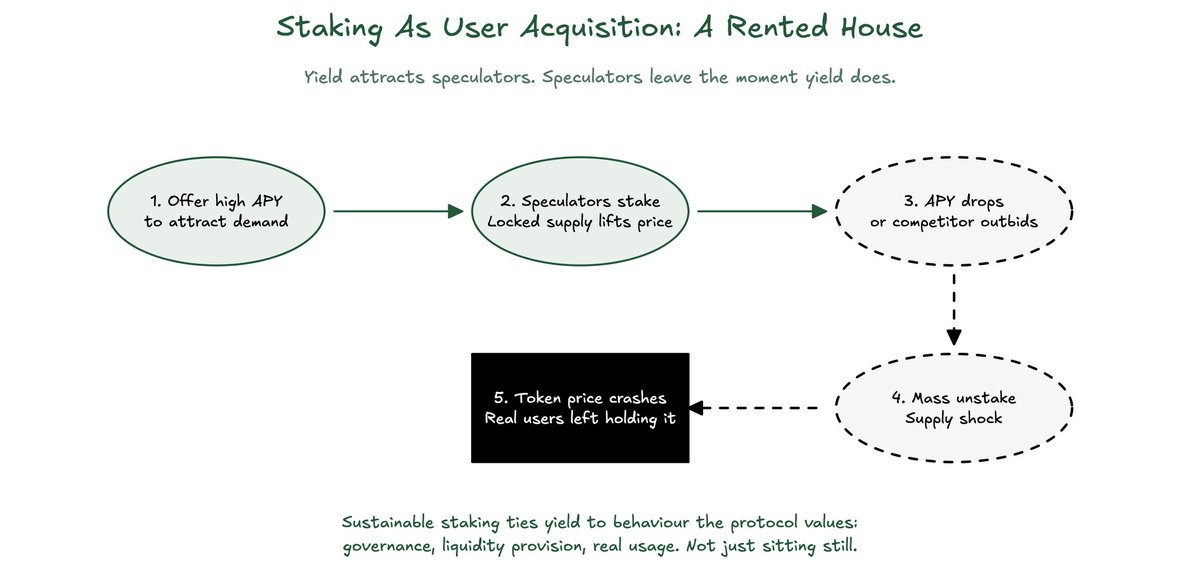
Staking is presented as user acquisition. It is usually mercenary capital acquisition.
Non-PoS protocols offering staking yield are renting liquidity from speculators who shift wherever the APY is highest. Once you reduce the APY, or a competitor outbids you, those stakers cash out at the same time and your token takes the supply shock.
The only sustainable staking design ties rewards to behaviour the protocol actually values: governance participation, liquidity provision, real protocol usage. If a holder gets paid for sitting still, you are taxing your real users to fund your future exit liquidity.
Read the full article:
simplicitygroup.xyz/blog/tok…
3
89
Solana is one of the most founder-friendly ecosystems in crypto, and most builders on it are leaving the resources unclaimed.
The investor network, the Colosseum hackathon, Superteam, MonkeDAO, Madlads; these are not perks, they are distribution. Teams that win on Solana use them as leverage; teams that lose treat them as marketing fluff and try to build in isolation.
@CapinUK, UK Lead at @SuperteamUK, delivered a lecture on the practical Solana playbook: how to access angel allocations and the investor map, how to use Blockworks and Dune to validate the data in your pitch deck, and how documenting the build journey took one founder from 2K to 18K followers in three months.
Watch the full lecture here:
youtube.com/watch?v=1B5oNWd4…
2
2
14
484
Digital Asset founders treat legal structure as an afterthought, until they discover what unlimited personal liability looks like in practice.
Token issuance, the foundation, and the operating company each carry different risks; ring-fencing them is what stops a regulatory action against one entity from collapsing the entire project. Jurisdiction is not cosmetic; it dictates who can sue you and where.
@hanverstraete, Founder of @Otonomos, delivered a lecture on the holy trinity structure for Digital Asset projects: where to incorporate the token issuer (BVI, Panama, Wyoming), where the foundation should sit (Cayman, Panama, Swiss, Wyoming), and why the DevCo should never hold tokens or core protocol assets.
Watch the full lecture here:
youtu.be/jq6YJthDH3s
3
2
10
395
Most projects skip modelling because they think it is about predicting price. It is not.
Modelling is about stress-testing decisions before they cost you. Whether your token is at 4 dollars or 7 dollars in month three does not matter; whether changing your staking APY from 6% to 12% kills your collateral ratio absolutely does.
Time Wonderland's lambo counter assumed everyone would keep staking forever (3,3). One stochastic model would have shown the death spiral when even a small fraction sold; instead, the team found out live, on a bridge they could not unbuild.
Models cost five figures. The mistakes they catch usually cost seven or eight.
Read the full article:
simplicitygroup.xyz/blog/why…
1
7
78