
Learn AI Today and Future proof yourself. I help you to 10x Your Business with AI. ✉ DM or Mail for collab: coderpaulsims@gmail.com
Joined June 2025
- Tweets 39,863
- Following 570
- Followers 24,310
- Likes 30,370
1,674 Photos and videos

Pinned Tweet

URGENT: CLAUDE can now manage all your social media on autopilot, like a $600/hour community manager… for free!
Here are 7 CLAUDE prompts to try:
15
17
24
942
Paul Sims retweeted
URGENT: CLAUDE can now manage all your social media on autopilot, like a $600/hour community manager… for free!
Here are 7 CLAUDE prompts to try:
15
17
24
942
URGENT: CLAUDE can now manage all your social media on autopilot, like a $600/hour community manager… for free!
Here are 7 CLAUDE prompts to try:
15
17
24
942
7. Performance Optimization
"Review my social media strategy and recent posts. Identify what content works best, what needs improvement, and suggest specific changes to increase reach, engagement, and conversions."
1
4
66
I hope you've found this thread helpful.
Follow me @SimslearnAi for more.
Like/Repost the quote below if you can:

URGENT: CLAUDE can now manage all your social media on autopilot, like a $600/hour community manager… for free!
Here are 7 CLAUDE prompts to try:
3
54
Paul Sims retweeted

6h
Here's probably the best Claude Cowork tutorial under 25 minutes.
It is by Tina Huang ( ex-Meta data scientist).
28
47
106
14,645
Paul Sims retweeted

MIT just made every AI company's billion dollar bet look embarrassing.
They solved AI memory. Not by building a bigger brain. By teaching it how to read.
The paper dropped on December 31, 2025. Three MIT CSAIL researchers. One idea so obvious it hurts. And a result that makes five years of context window arms racing look like the wrong war entirely.
Here is the problem nobody solved.
Every AI model on the planet has a hard ceiling. A context window. The maximum amount of text it can hold in working memory at once. Cross that line and something ugly happens — something researchers have a clinical name for.
Context rot.
The more you pack into an AI's context, the worse it performs on everything already inside it. Facts blur. Information buried in the middle vanishes. The model does not become more capable as you feed it more. It becomes more confused. You give it your entire codebase and it forgets what it read three files ago. You hand it a 500-page legal document and it loses the clause from page 12 by the time it reaches page 400.
So the industry built a workaround. RAG. Retrieval Augmented Generation. Chop the document into chunks. Store them in a database. Retrieve the relevant ones when needed.
It was always a compromise dressed up as a solution.
The retriever guesses which chunks matter before the AI has read anything. If it guesses wrong — and it does, constantly — the AI never sees the information it needed. The act of chunking destroys every relationship between distant paragraphs. The full picture gets shredded into fragments that the AI then tries to reassemble blindfolded.
Two bad options. One broken industry. Three MIT researchers and a deadline of December 31st.
Here is what they built.
Stop putting the document in the AI's memory at all.
That is the entire idea. That is the breakthrough. Store the document as a Python variable outside the AI's context window entirely. Tell the AI the variable exists and how big it is. Then get out of the way.
When you ask a question, the AI does not try to remember anything. It behaves like a human expert dropped into a library with a computer. It writes code. It searches the document with regular expressions. It slices to the exact section it needs. It scans the structure. It navigates. It finds precisely what is relevant and pulls only that into its active window.
Then it does something that makes this recursive.
When the AI finds relevant material, it spawns smaller sub-AI instances to read and analyze those sections in parallel. Each one focused. Each one fast. Each one reporting back. The root AI synthesizes everything and produces an answer.
No summarization. No deletion. No information loss. No decay. Every byte of the original document remains intact, accessible, and queryable for as long as you need it.
Now here are the numbers.
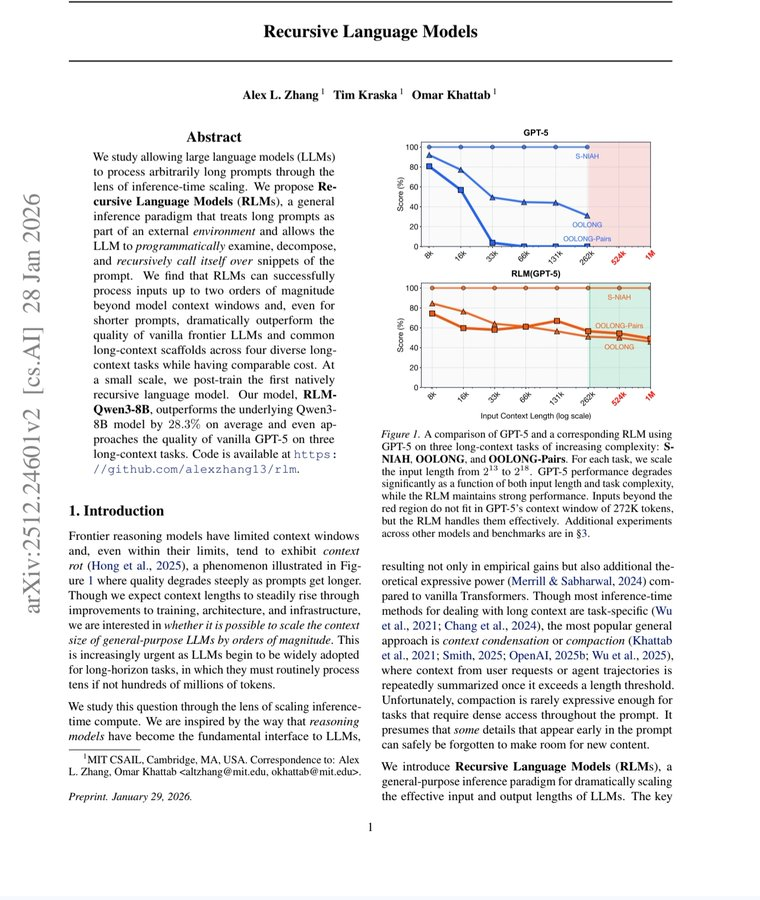
Standard frontier models on the hardest long-context reasoning benchmarks: scores near zero. Complete collapse. GPT-5 on a benchmark requiring it to track complex code history beyond 75,000 tokens — could not solve even 10% of problems.
RLMs on the same benchmarks: solved them. Dramatically. Double-digit percentage gains over every alternative approach. Successfully handling inputs up to 10 million tokens — 100 times beyond a model's native context window.
Cost per query: comparable to or cheaper than standard massive context calls.
Read that again. One hundred times the context. Better answers. Same price.
The timeline of the arms race makes this sting harder. GPT-3 in 2020: 4,000 tokens. GPT-4: 32,000. Claude 3: 200,000. Gemini: 1 million. Gemini 2: 2 million. Every generation, every company, billions of dollars spent, all betting on the same assumption.
More context equals better performance.
MIT just proved that assumption was wrong the entire time.
Not slightly wrong. Fundamentally wrong. The entire premise of the last five years of context window research — that the solution to AI memory was a bigger window — was the wrong answer to the wrong question.
The right question was never how much can you force an AI to hold in its head.
It was whether you could teach an AI to know where to look.
A human expert handed a 10,000-page archive does not read all 10,000 pages before answering your question. They navigate. They search. They find the relevant section, read it deeply, and synthesize the answer.
RLMs are the first AI architecture that works the same way.
The code is open source. On GitHub right now. Free. No license fees. No API costs. Drop it in as a replacement for your existing LLM API calls and your application does not even notice the difference — except that it suddenly works on inputs it used to fail on entirely.
Prime Intellect — one of the leading AI research labs in the space — has already called RLMs a major research focus and described what comes next: teaching models to manage their own context through reinforcement learning, enabling agents to solve tasks spanning not hours, but weeks and months.
The context window wars are over.
MIT won them by walking away from the battlefield.
Source: Zhang, Kraska, Khattab · MIT CSAIL · arXiv:2512.24601
Paper: arxiv.org/abs/2512.24601
GitHub: github.com/alexzhang13/rlm
29
42
78
3,557
Paul Sims retweeted

🚨 We might have a massive leak regarding Dreamina's next move.
aisecret.co/dreaminaseedance…
I stumbled upon a grabbed image that undeniably showcases Dreamina Seedance 2.0 mini actively integrated into their backend interface.
Fascinatingly, the launch date being whispered across the timeline aligns with June 15.
Nothing has been explicitly confirmed by the team yet.
However, provided that screengrab is legitimate, these rumblings surrounding an ultra-affordable, rapid Seedance tier are arriving faster than anticipated.
You should really put this on your radar.
The entire automated video sector is gearing up for a major shakeup.
#dreamina #dreaminaseedance2mini
29
30
57
492
Paul Sims retweeted

THAT'S WHY AIRLINES HATE CLAUDE 4.6
Flight for $879. I paid $299.
No points. No affiliations. No VPN.
Here are 8 prompts I used to travel like a pro↓
11
31
111
50,709
Paul Sims retweeted

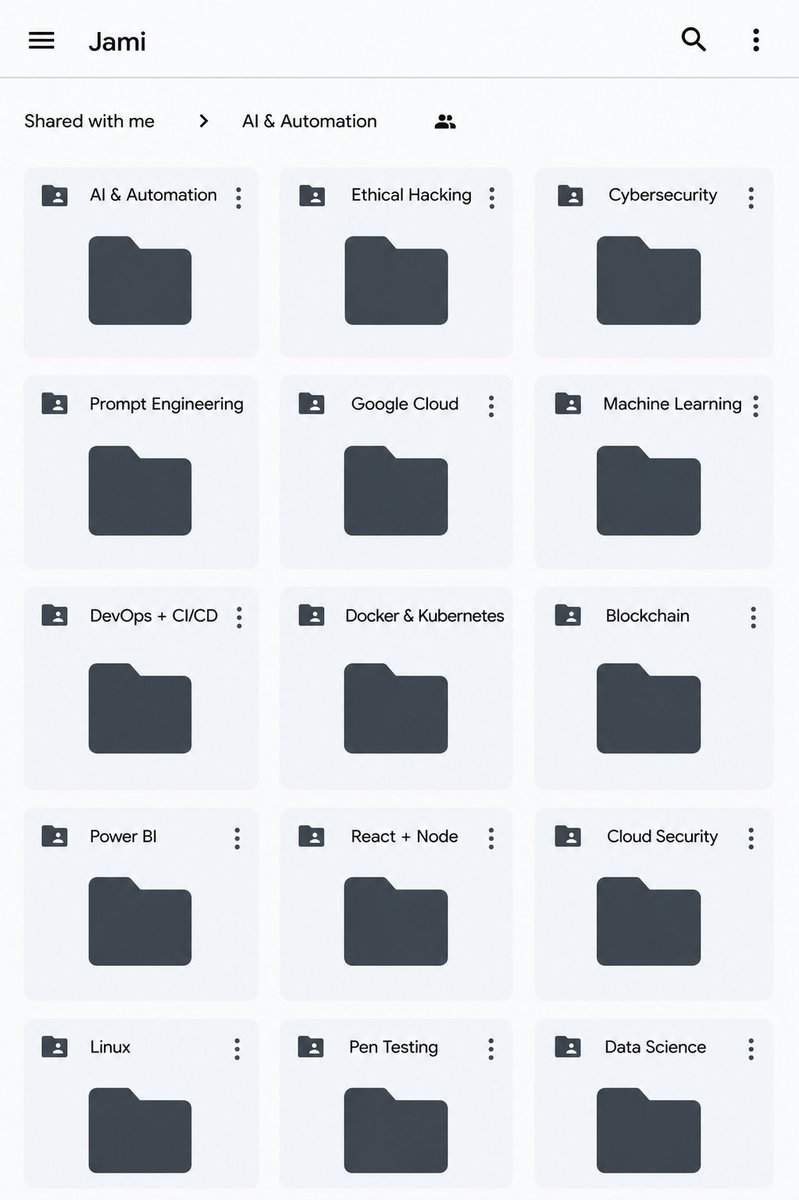
I'm deleting this soon because it's a legit cash-printing formula.
𝗣𝗮𝗶𝗱 𝗖𝗼𝘂𝗿𝘀𝗲 𝗙𝗥𝗘𝗘
1. Artificial Intelligence Data Analyst
2. Machine Learning Data Science
3. Cloud Computing Web Development
4. Ethical Hacking Hacking
5. Data Analytics DSA
1
5
5
71
Paul Sims retweeted

I ACCIDENTALLY UNLOCKED "GOD MODE" IN CHATGPT,
AND IT STARTED TEACHING ME THINGS I DIDN'T KNEW EXISTED.
HERE ARE THOSE 7 CHATGPT PROMPTS THAT WILL CHANGE EVERYTHING FOR YOU:
17
22
26
571
Paul Sims retweeted

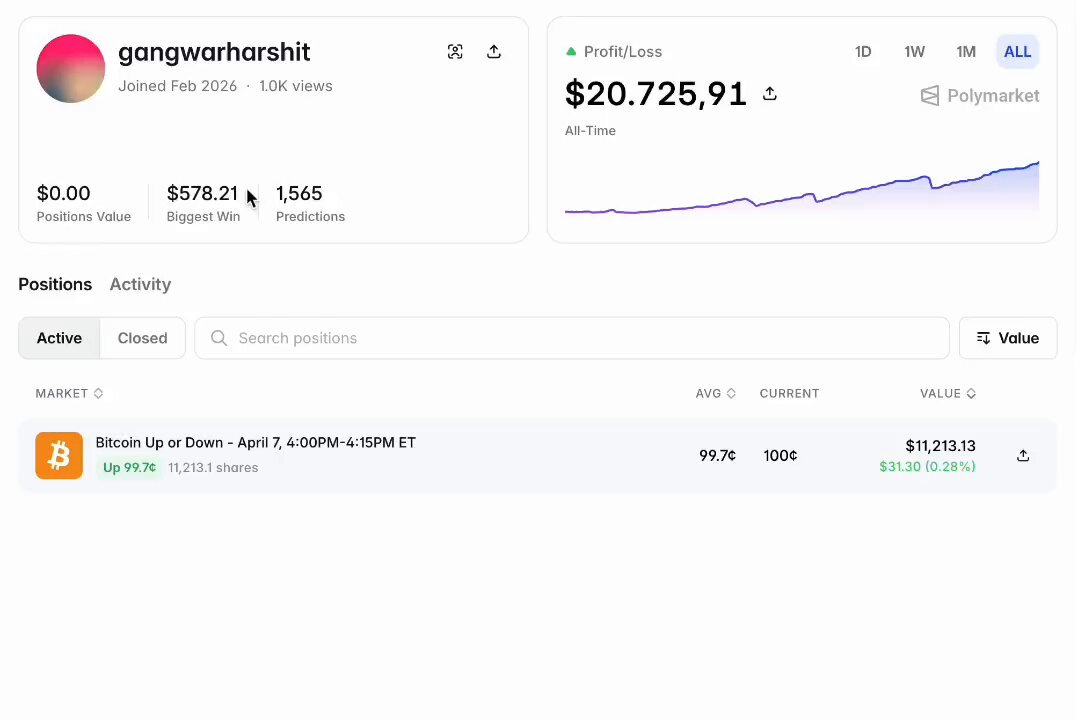
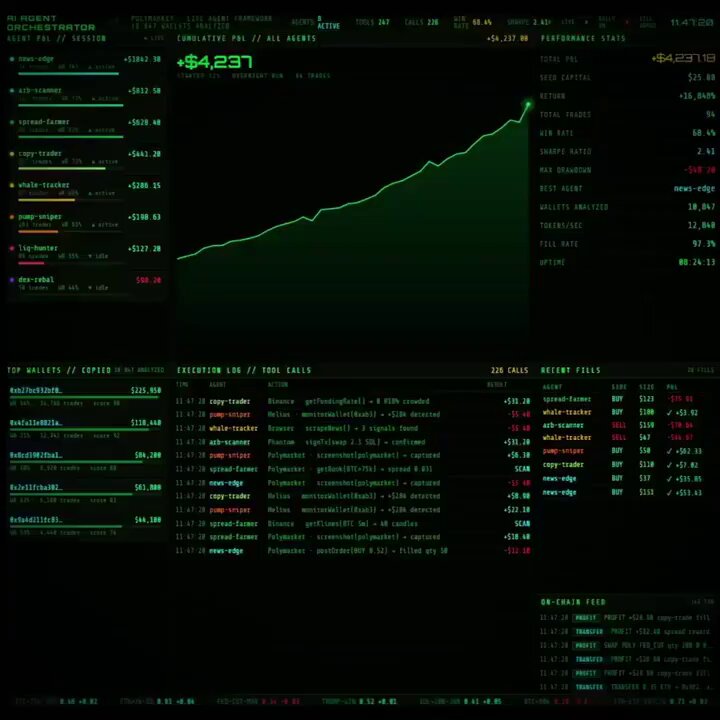
My girlfriend woke up at 4 AM and caught me smiling at my laptop.
“What’s so funny?”
I turned the screen toward her.
A terminal window filled with green numbers.
$4.12
$7.89
$11.34
She stared.
“What am I looking at?”
“Profit.”
“From what?”
“Claude analyzed thousands of wallets, identified the most consistent traders, and built a bot that automatically follows their moves.”
She blinked.
“So... it’s making money while you sleep?”
“Pretty much.”
“What did you start with?”
“About $300.”
“And now?”
“$1,400 .”
She looked back at the screen.
The numbers kept rolling.
“Does it ever stop?”
“Only when the opportunities do.”
The crazy part?
The bot doesn't predict the market.
It doesn't care about hype.
It simply finds small inefficiencies, enters, exits, and repeats.
No emotions.
No guesswork.
No staring at charts all day.
Just data, automation, and execution.
If you have Claude, a laptop, and a little curiosity, you can build things that would've required an entire trading desk a few years ago.
Technology is moving fast.
1. Comment “Claude
2. Like and Retweet this post
3. Follow @selinatasnim1 (so i can DM you)
43
60
94
1,263
Paul Sims retweeted

BREAKING: AI can now build dividend portfolios that generate $100,000/year in passive income — for FREE.
No guesswork. No finance degree.
Just smart prompts.
Here are 10 powerful Perplexity prompts to find safe, growing dividend stocks:
Save this. 🧵

40
66
127
12,354
Paul Sims retweeted

Stop telling Claude, "do this."
Stop telling Claude, "write code."
Stop telling Claude, "fix this error."
You're actually treating a senior AI like a junior intern.
Here are 8 prompts you can copy and paste directly:
19
15
32
1,980