
Joined August 2024
- Tweets 1,301
- Following 1,088
- Followers 68,417
- Likes 1,233
542 Photos and videos
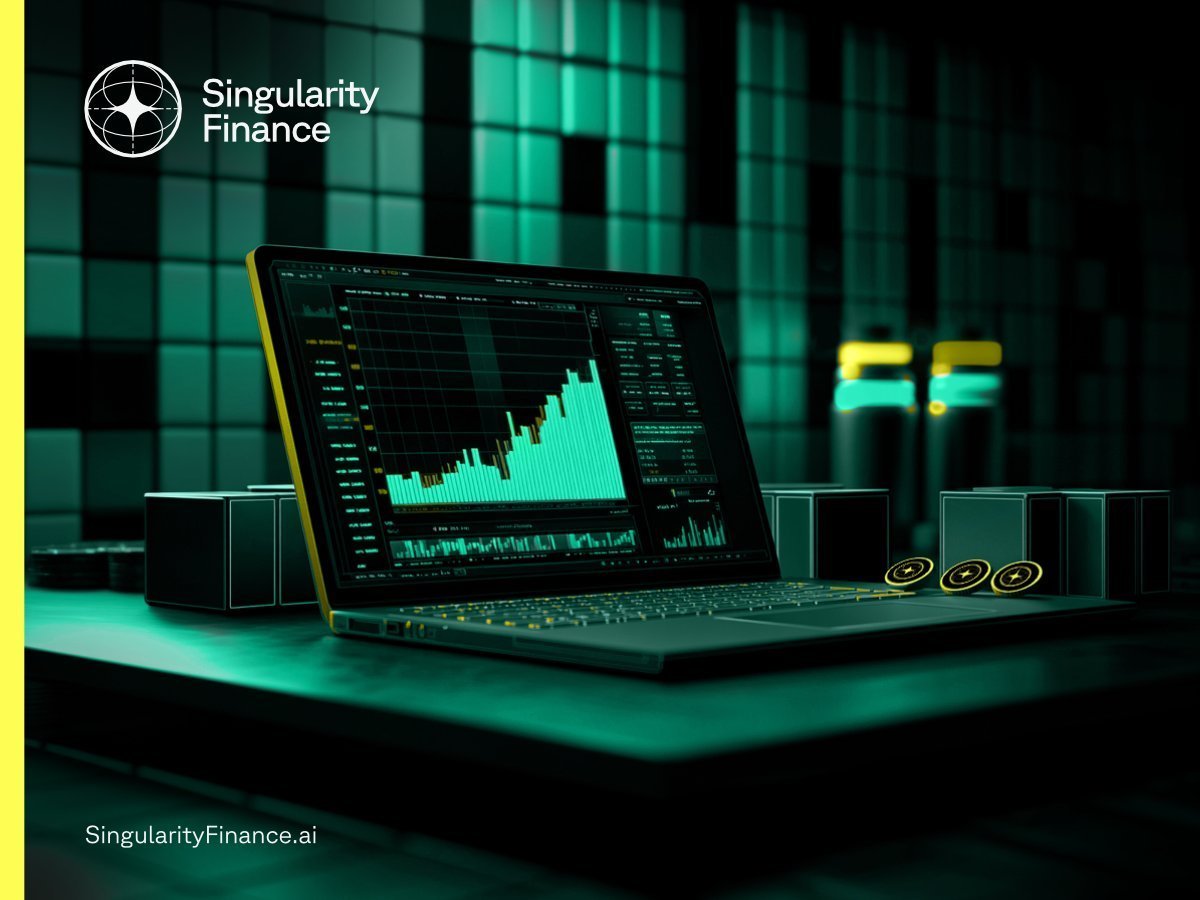

Platform design that adapts to the evolving AI-crypto landscape while maintaining consistent user experience.
Building for tomorrow's agent requirements while delivering today's utility.
8
6
64
1,417
Institutional adoption of DeFi follows predictable patterns from previous technology cycles.
Early exploration phase involves small allocations for learning and experimentation. Institutions test waters with limited capital while building internal expertise and risk management frameworks.
Pilot programs come next. Larger allocations to proven strategies with established risk parameters. This phase focuses on operational integration and compliance framework development.
Scaled deployment follows successful pilots. Meaningful capital allocation to DeFi strategies that have demonstrated consistent risk-adjusted returns within institutional requirements.
Full integration represents DeFi becoming standard part of institutional portfolio management. No longer experimental or alternative, but core infrastructure for capital allocation.
We're currently in early exploration phase for most institutions. A few have moved to pilot programs. Scaled deployment and full integration await better tooling and clearer regulatory frameworks.
Institutional requirements differ significantly from retail user needs. Professional interfaces, comprehensive reporting, compliance integration, institutional-grade security, and predictable operational procedures.
Current DeFi tools were built for crypto natives, not traditional finance professionals. The interface gap explains slow institutional adoption despite attractive yields.
SFI bridges this gap through professional-grade tools that translate DeFi opportunities into institutional language. Risk management, performance attribution, compliance reporting, professional security standards.
Timing institutional adoption correctly creates massive opportunity. Too early means building for customers who aren't ready. Too late means competing against established players.
The window is opening now. Institutions are building internal capabilities and evaluating infrastructure providers. First-mover advantages in institutional tooling compound rapidly.
Traditional finance capital dwarfs current DeFi TVL. Even small institutional allocation percentages represent massive capital flows into decentralized protocols.
When pension funds, endowments, and family offices allocate meaningful percentages to DeFi strategies, total addressable market expands dramatically.
SFI positions for this institutional wave through professional infrastructure and institutional-grade capabilities.
Early retail adoption proves the technology. Institutional adoption scales the market.
Build for institutions while serving retail users. Capture both phases of adoption.
The institutional adoption timeline is measured in years, not months. But preparation starts now.
2
8
43
1,423
While other projects add AI features to existing DeFi products, we're rebuilding financial infrastructure from the ground up for an AI-native economy.
The announcements in partnership with @ASI_Alliance will soon reveal developments that establish entirely new categories of what's possible when artificial intelligence meets decentralized finance.
5
11
59
1,554
Building the world's first AI-native blockchain is only half the equation. The other half is financial infrastructure.
Let me explain..👇
@ASI_Alliance's ASI Chain solves the computational challenges of decentralized AI. MeTTa Kernel enables concurrent agent execution, Byzantine fault-tolerance provides security, and sharded consensus delivers scalability.
But computation alone doesn't create an economy.
Economic activity requires financial rails. AI agents need to transact, allocate capital, manage risk, and optimize returns. Researchers need funding mechanisms. Developers need monetization strategies. Users need investment opportunities.
Traditional DeFi wasn't designed for AI economies. Current protocols assume human decision-making, manual optimization, and centralized risk management. They work for token trading, not autonomous agent coordination.
SFI bridges this gap by building financial infrastructure specifically designed for @ASI_Alliance and AI-driven economies. Not just DeFi tools that AI can use, but financial systems designed around how AI actually operates.
Consider the requirements: AI agents need non-custodial trading capabilities, automated portfolio rebalancing, predictive risk management, and cross-protocol yield optimization. They need these services to work at machine speed with machine precision.
Human-designed financial tools introduce friction that AI doesn't need. Complex interfaces, manual approvals, emotional safeguards - all barriers to AI efficiency.
SFI removes this friction through AI-native design. Programmatic interfaces, automated execution, algorithmic risk management, and intelligent optimization. Financial tools that work the way AI thinks.
The integration with ASI Chain creates something unprecedented: a complete AI economy stack. ASI Chain provides the computational substrate, SFI provides the financial layer, and together they enable entirely new categories of economic activity.
Autonomous agents can launch startups, manage investment funds, optimize global supply chains, and coordinate resource allocation across industries. The financial infrastructure enables the computational capabilities to reach their full economic potential.
This isn't about making DeFi more AI-friendly. It's about reimagining finance for an AI-native world.
When every economic decision can be optimized algorithmically, when every transaction can be executed at optimal timing, when every portfolio can be rebalanced in real-time - that's when the AI economy truly begins.
ASI Chain plus SFI equals the foundation for that economy.
Building the computational future requires building the financial future simultaneously.
4
12
47
1,233
Worth considering: The AI tools available through SFIREP represent early applications of technology being developed across the @ASI_Alliance.
As these foundations advance, so will the capabilities accessible to $SFI reputation score builders.
1
6
39
941
There’s a difference between “automation” and “intelligence”.
Automation just runs tasks. Intelligence improves decisions under uncertainty.
AI finance should focus on the second part:
risk control, execution, monitoring, and adapting to changing conditions; without hiding what’s happening.
Vaults are a product layer that makes this path practical.
@ASI_Alliance ASI Chain is the longer-term rail that makes AI-native finance more natural and more scalable.
12
9
39
934
There’s a difference between “automation” and “intelligence”.
Automation just runs tasks. Intelligence improves decisions under uncertainty.
AI finance should focus on the second part:
risk control, execution, monitoring, and adapting to changing conditions; without hiding what’s happening.
Vaults are a product layer that makes this path practical.
@ASI_Alliance ASI Chain is the longer-term rail that makes AI-native finance more natural and more scalable.
12
11
63
1,287
A lot of DeFi still feels like an interface for operators.
You’re expected to know what matters, where to click, and what to watch. That’s fine for power users, but it limits adoption. Productization is the shift that changes the audience. When strategies become products with clearer rules and outcomes, users don’t need to live inside the app to participate responsibly.
$SFI ’s approach is to tighten the core journey, reduce friction around the actions that matter, and keep the experience trackable.
That’s not a marketing preference. It’s how products grow.
5
7
38
1,203
The @ASI_Alliance is building for a world where AI doesn’t just “use apps,” it operates markets.
That has a simple implication: finance can’t be fragile.
It needs to be structured, auditable, and reliable enough to run continuously. $SFI ’s role in that picture is the financial product layer; turning onchain strategies into usable products, not tools that require constant attention.
The point isn’t to complicate everything. It’s the opposite. Clear behavior, clear constraints, and a user journey that doesn’t punish people for being busy.
6
9
55
1,204
Predictive analytics and machine learning models will enable trading strategies that adapt to market sentiment, news analysis, and protocol health data.
Continuous optimization through reinforcement learning agents improves decision-making over time.
3
11
52
1,373
A common question: "Do I need to do anything to activate my SFIREP tier?"
If you're already staking $SFI, you're all set - your tier is automatically assigned based on your current stake.
Simple as that.
4
5
46
1,766
Every major technological shift follows the same pattern: skepticism, then sudden mainstream adoption, then everyone claiming they saw it coming.
$SFI's AI in DeFi is transitioning from phase one to phase two faster than expected.
4
12
47
1,267
We're approaching a inflection point where AI agents become active participants in DeFi rather than just optimization tools.
The developments we're preparing to reveal will demonstrate how this shift changes the entire game - from how protocols operate to how users interact with financial products.
The Agentic Economy isn't theoretical anymore; it's becoming operational reality.
3
13
58
1,230
The @ASI_Alliance is building decentralised AI rails. ASI Chain needs finance rails too.
$SFI is focused on making that layer usable and structured.
5
18
105
2,952
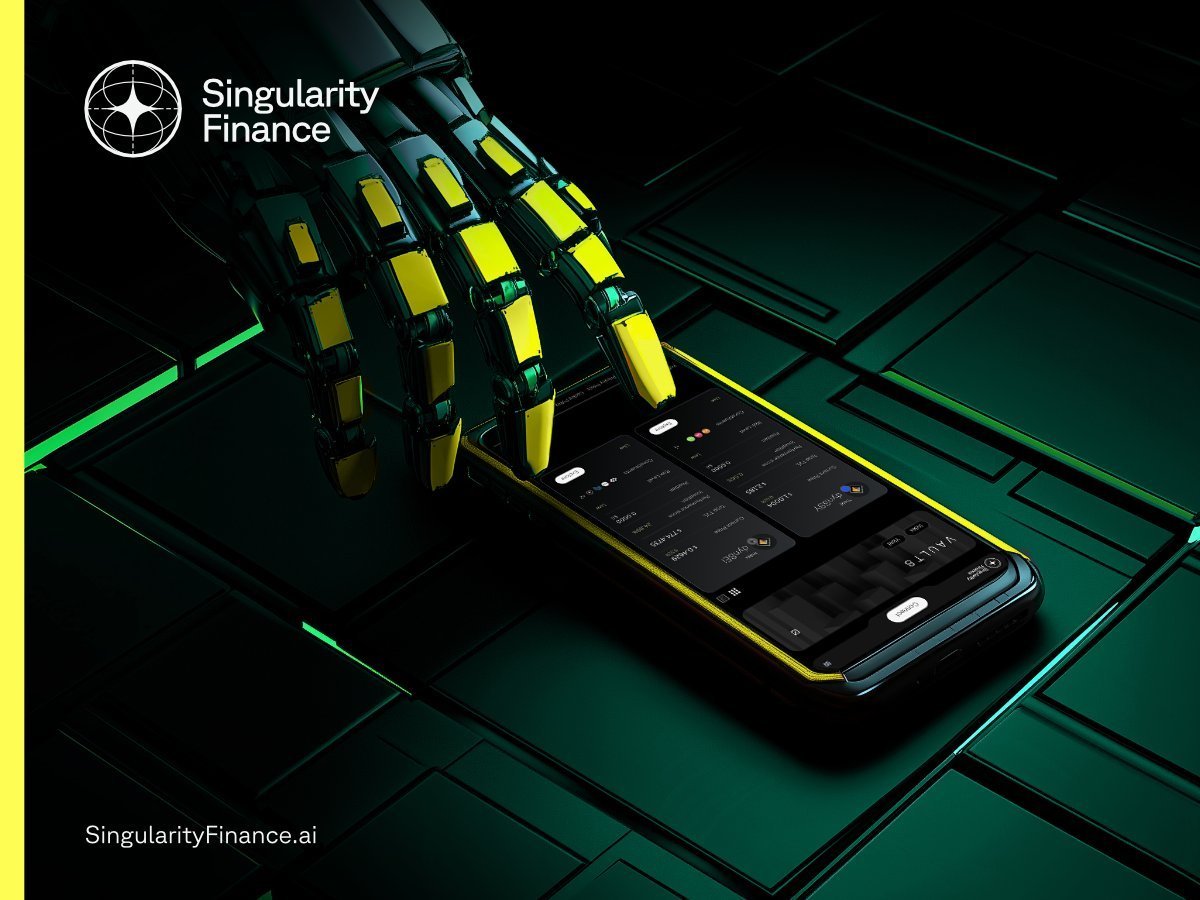
The AI economy won’t reward fragile systems. It will reward products that behave consistently, can be monitored, and can be audited.

The future “agentic economy” implies constant market interaction. Finance needs to run reliably in the background.
$SFI ’s direction is to build products that behave predictably, not systems that depend on constant human babysitting.
2
6
49
1,260
The @ASI_Alliance narrative is ultimately about coordination and capability: decentralized systems doing meaningful work.
Finance supports that by providing rails for incentives, participation, and capital flows. If those rails are too complex or too fragile, the ecosystem stays niche.
$SFI is building toward a product layer that’s structured and usable, so participation doesn’t require full-time attention. That’s how decentralized AI ecosystems grow beyond early adopters.
5
7
64
1,269
AI finance becomes meaningful when it improves decision quality under uncertainty. Not just automation.
The valuable layer is monitoring, execution discipline, and adaptation within constraints as conditions change. That’s also where transparency becomes important.
Users don’t want a black box. They want a product that behaves predictably and can be evaluated. $SFI ’s outcomes-first positioning fits the real definition of “AI finance”: systems designed to produce consistent behaviour and measurable outcomes rather than stories that only sound good during calm markets.
4
7
44
951
Systems that work on normal days are the ones that last. $SFI is building for repeatable behaviour, not perfect timing.
1
4
37
835
The @ASI_Alliance is building decentralized AI rails.
$SFI is building the finance rails that make participation practical, not theoretical.
1
9
76
1,795
ASI Chain compatibility should translate into a coherent journey: access, participation, and product behavior that remains consistent across environments.
@ASI_Alliance

2
7
60
1,159