
Solana Ecosystem Explorer | Airdrop Hunter | DeFi Learner | Web3 Developer | NFT Enthusiast | Crypto Educator | Building the future, one block at a time.
Joined January 2025
- Tweets 767
- Following 1,844
- Followers 1,522
- Likes 476
114 Photos and videos




Pinned Tweet
Crypto Person of the Year 2026.
Which is funny, because there was a point last year when I was writing threads at 2 a.m. with 17 views and convincing myself the algorithm was broken.
I'd refresh the post.
Nothing.
Refresh again.
Still nothing.
Some days the only engagement came from a friend who liked everything I posted out of pity.
Most people see the trophy.
They don't see the months where you're posting into silence, questioning yourself, and wondering if anyone is actually reading.
So this award belongs to every creator who kept showing up before there was an audience, before there were rewards, and before there was proof it would ever matter.
And to @RallyOnChain for creating one of the few places where your work gets judged before your follower count does.
Thank you.
My portfolio is still questionable, but at least now I have a speech.
7
3
8
73
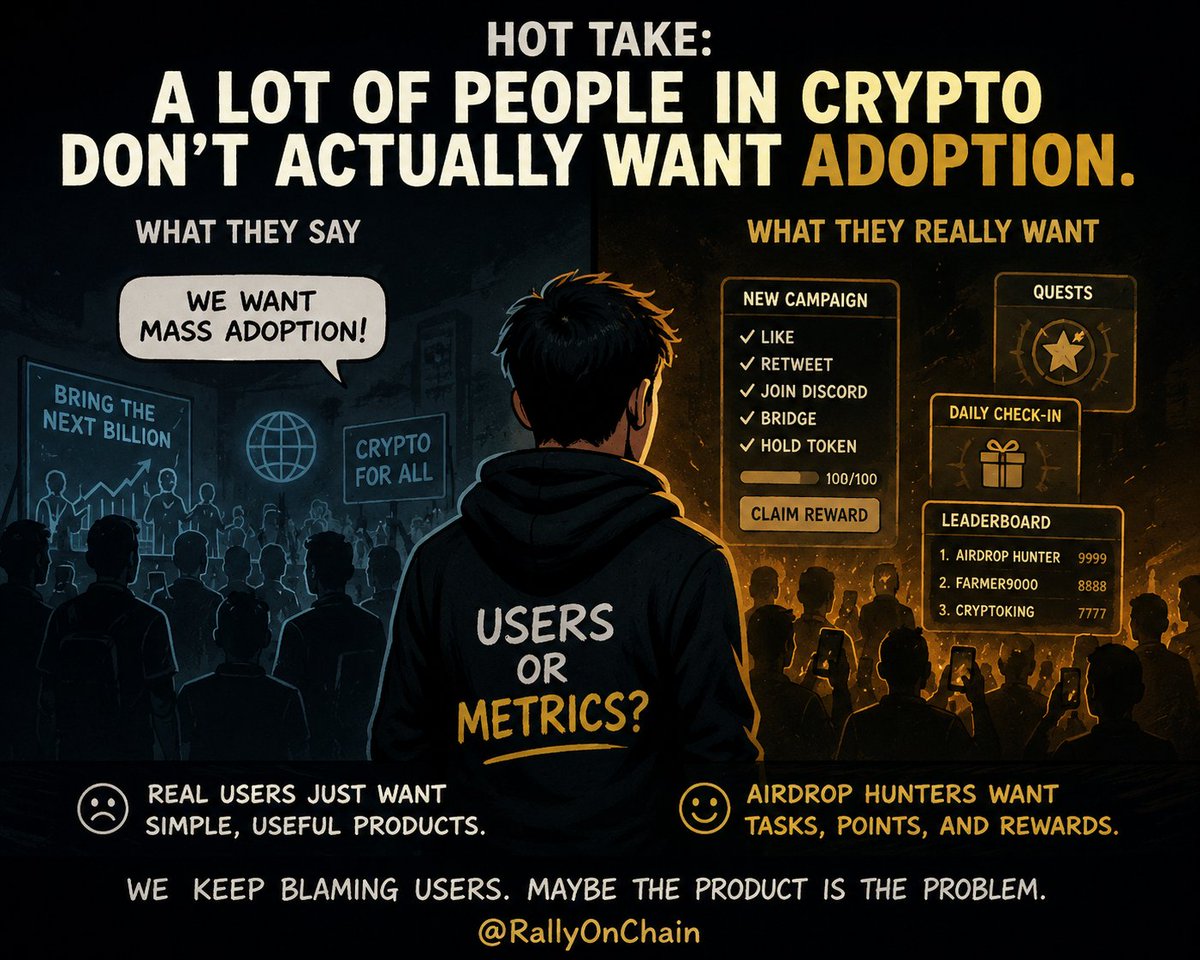
Hot take:
A lot of people in crypto do not actually want adoption.
They say they do.
But the moment a product becomes simple enough for normal people to use, they start calling it watered down.
I've seen people mock products for being "too easy" more times than I can count.
Meanwhile, the average person does not care about seed phrases, wallet extensions, bridge tutorials, or learning a new language just to use an app.
We keep acting like users need to catch up.
Maybe the products need to catch up.
My private group chat opinion is that user experience is a bigger problem than technology right now.
Not because the technology is finished.
Because most people will never use technology that makes them feel stupid.
I wouldn't say this in some crypto communities because it usually starts an argument.
But I think a lot of projects are optimizing for impressing insiders instead of attracting users.
@RallyOnChain
5
3
8
56
Smart Boss retweeted

MEXC New Kickstarter: Share 30,000 USDT!
‣ $XEF @Xeffy_io
‣ Voting: Jun 14 03:00 - Jun 15 02:50 (UTC)
‣ $XEF/USDT Trading: Jun 15, 2026, 05:00 (UTC)
Details 👉mexc.com/announcements/artic…
16,731
19,340
23,867
177,718
Smart Boss retweeted
The worst advice I ever followed was:
"Get everything perfect before you start."
Someone told me people only notice finished products, so I spent months planning.
I redesigned projects before launching them.
Rewrote posts before publishing them.
Built systems for work I hadn't even started.
It felt productive.
It wasn't.
While I was optimizing, other people were shipping.
Most of what I was afraid of turned out not to matter.
The first version was never going to be perfect anyway.
Looking back, perfectionism wasn't a quality standard.
It was procrastination dressed up as preparation.
The biggest progress I've made came after I started finishing things before I felt ready.
Learning to separate useful advice from convincing advice has saved me a lot of wasted time.
What's the worst advice you've ever followed? @RallyOnChain
7
4
7
70

Jun 13
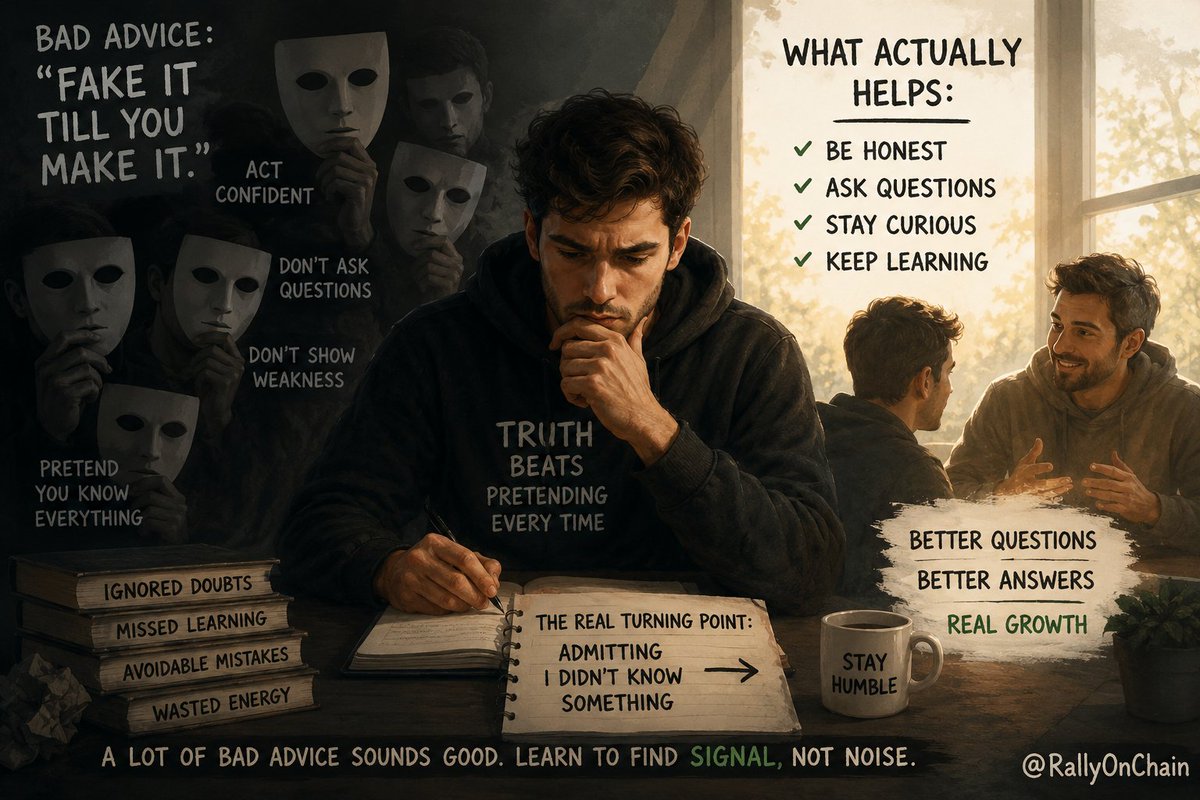
The worst advice I ever followed was:
"Fake it till you make it."
At first, it sounded smart.
Act confident.
Pretend you know what you're doing.
Never let people see you're unsure.
So whenever I didn't understand something, I nodded.
Whenever I needed help, I stayed quiet.
Whenever I was lost, I acted like I wasn't.
The result?
I learned slower, made avoidable mistakes, and spent more energy protecting an image than actually improving.
What finally moved me forward was admitting when I didn't know something.
The people who helped me most weren't the ones pretending to have all the answers.
They were the ones asking better questions.
Looking back, "fake it till you make it" wasn't confidence advice.
It was insecurity with better marketing.
A lot of bad advice survives because it sounds good, not because it's true.
Learning to separate signal from noise has probably saved me more mistakes than any shortcut ever did.
What's the worst advice you've ever followed? @RallyOnChain
7
3
7
82
Jun 13
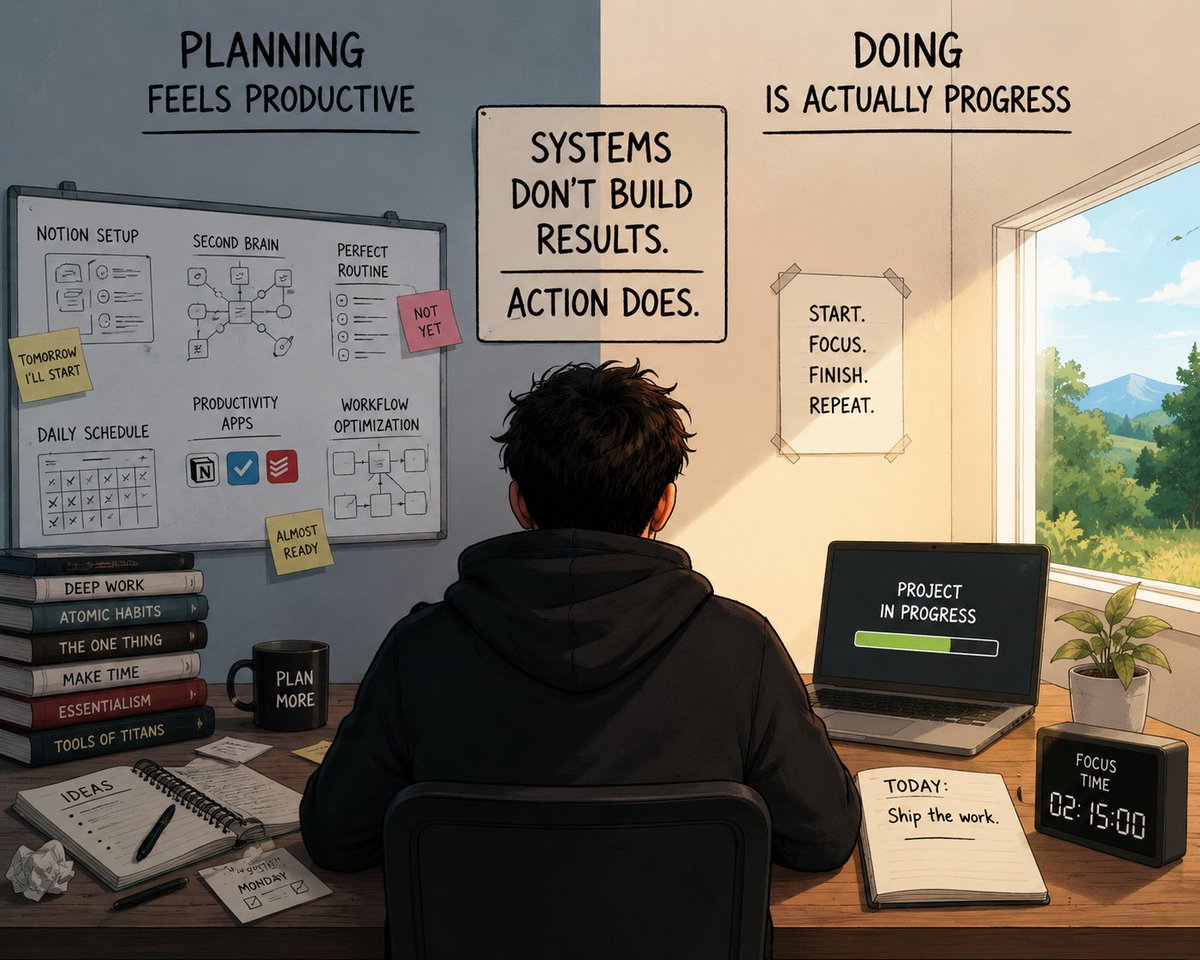
The most overrated thing on the internet isn't a productivity app.
It's the idea that you need a better system before you can start.
People spend months building second brains, perfecting routines, and optimizing workflows for work they could have finished on day one.
The planning feels productive.
That's why it's so addictive.
@RallyOnChain
8
4
14
103
Jun 12
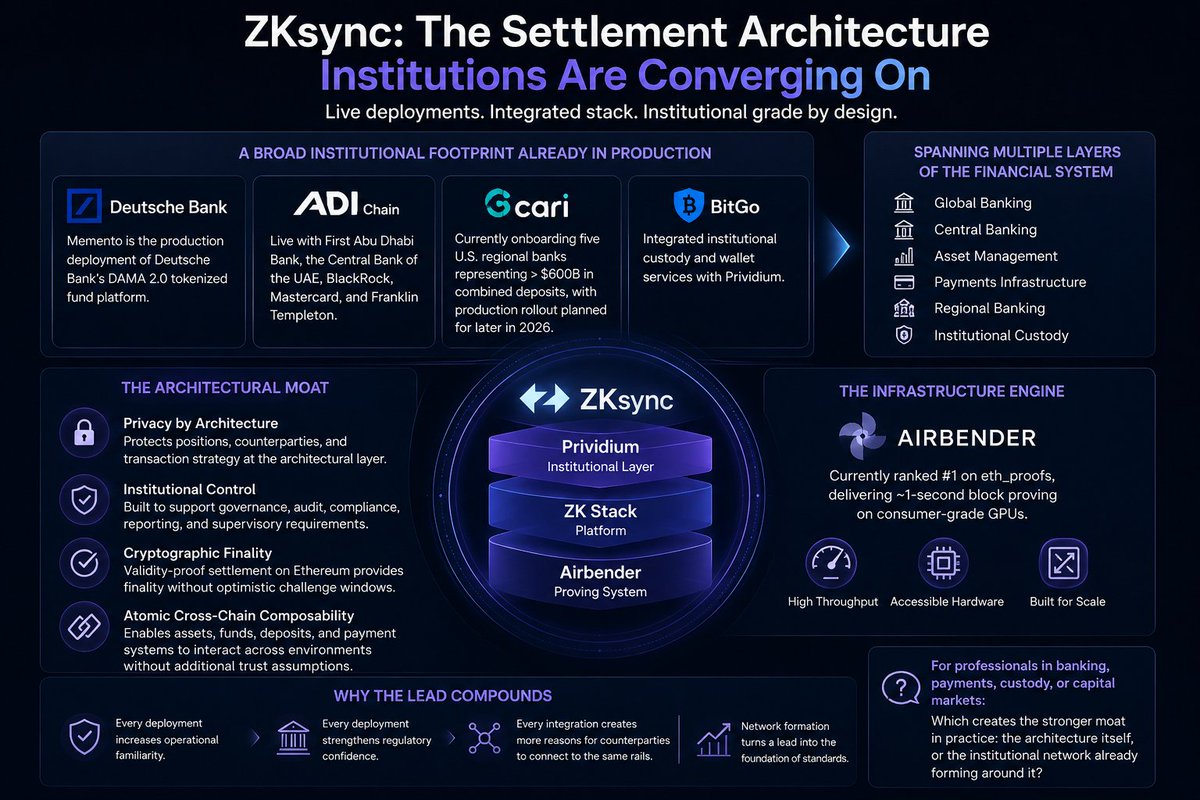
1/ The most important institutional story around @zksync $ZK is not that financial institutions are exploring blockchain infrastructure.
It is that institutions occupying very different roles in the financial system are converging on the same settlement architecture.
2/ Consider the composition.
Memento is the production deployment of Deutsche Bank's DAMA 2.0 tokenized fund platform.
ADI Chain is live with First Abu Dhabi Bank, the Central Bank of the UAE, BlackRock, Mastercard, and Franklin Templeton.
Cari Network is currently onboarding five U.S. regional banks representing more than $600B in combined deposits, with production rollout planned for later in 2026.
BitGo has integrated institutional custody and wallet services with Prividium.
3/ These organizations represent global banking, central banking, asset management, payments infrastructure, regional banking, and institutional custody.
The significance is not the names.
It is the breadth of institutional requirements they bring.
4/ Production-grade institutional settlement requires four properties simultaneously:
• Privacy by architecture
• Institutional control
• Cryptographic finality
• Atomic cross-chain composability
Institutions do not evaluate these requirements independently. The settlement layer must satisfy all four.
5/ Privacy is often the gating requirement.
Regulated institutions cannot expose positions, counterparties, or transaction strategy simply because they settle onchain.
Control, finality, and composability matter for similar reasons: they address requirements institutions already face in traditional financial infrastructure.
6/ Underneath the stack sits Airbender, currently ranked #1 on eth_proofs, delivering approximately 1-second block proving on consumer-grade GPUs.
The deeper moat is integration.
The proving system, ZK Stack platform, and Prividium institutional layer are developed as parts of the same architecture.
7/ This is where the lead compounds.
Every deployment increases operational familiarity.
Every deployment strengthens regulatory confidence.
Every deployment adds institutions already connected to the same settlement environment.
8/ Financial infrastructure has historically rewarded early network formation.
Institutions rarely choose infrastructure in isolation.
They choose infrastructure connected to counterparties, custodians, liquidity providers, and operating partners.
That is how adoption becomes a standard.
For professionals working in banking, custody, payments, or capital markets:
Which creates the stronger moat in practice: architecture, or the institutional network already forming around it?
5
2
6
117
Jun 12
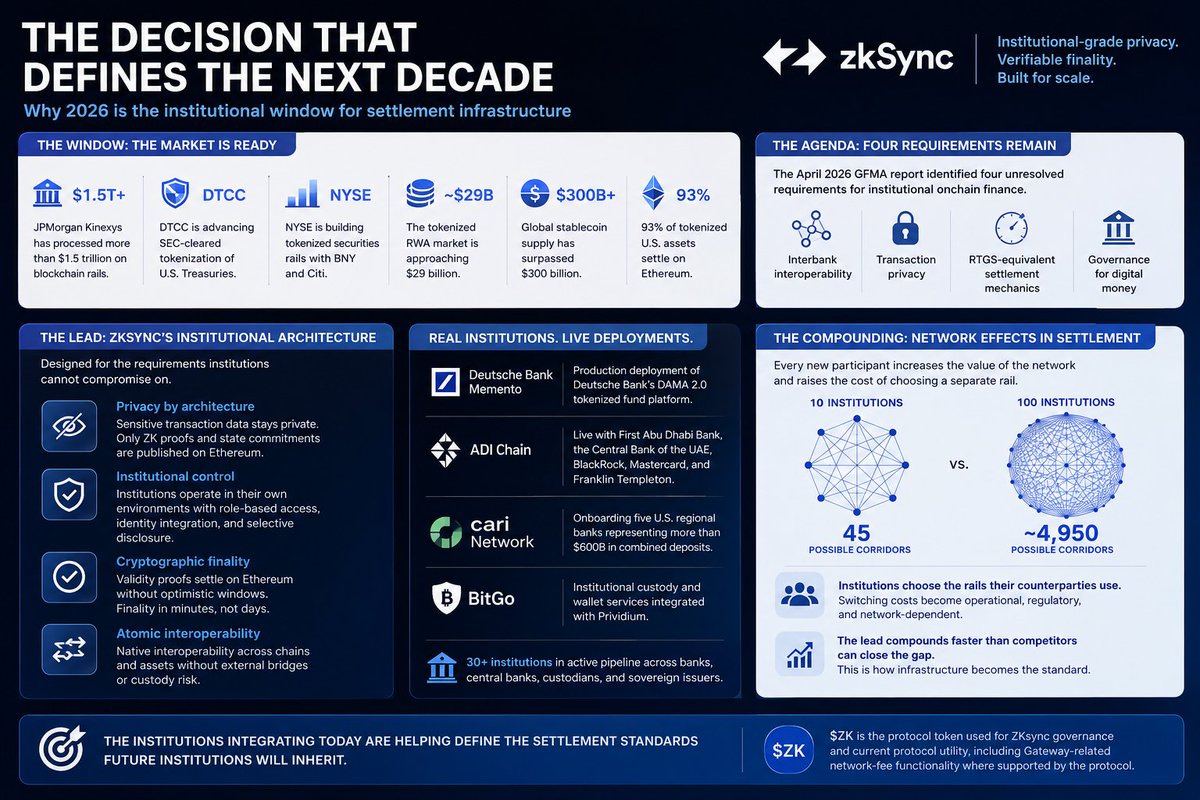
The most important institutional crypto decision in 2026 is no longer whether finance moves onchain.
It is which settlement rails become the default. @zksync $ZK
The scale of the opportunity is already visible:
• JPMorgan's Kinexys has processed more than $1.5T on blockchain rails
• DTCC is advancing SEC-cleared Treasury tokenization
• NYSE is building tokenized securities rails with BNY and Citi
• The tokenized RWA market is approaching $29B
• Global stablecoin supply has surpassed $300B
The question is no longer adoption.
The question is standardization.
The April 2026 GFMA report identified four unresolved requirements for institutional onchain finance:
• Interbank interoperability
• Transaction privacy
• RTGS-equivalent settlement mechanics
• Governance for digital money
Whichever platforms solve these requirements become candidates for institutional settlement infrastructure.
Privacy is arguably the hardest constraint.
A regulated institution cannot expose positions, counterparties, or transaction strategy to the broader market simply because it chose an onchain settlement system.
Institutional adoption requires privacy as a property of the architecture itself.
But privacy alone is insufficient.
Institutions also require:
• Control over execution environments
• Cryptographic finality
• Interoperability across networks and assets
The significance of deployments such as Deutsche Bank's Memento platform, ADI Chain, and Cari Network onboarding five U.S. regional banks representing more than $600B in combined deposits is that they test whether these requirements can coexist inside regulated environments.
The compounding dynamic is what makes this decision window important.
Ten institutions create 45 potential settlement corridors.
One hundred create nearly 5,000.
A bank evaluating settlement infrastructure in 2027 is not choosing in isolation.
It is increasingly choosing the rail already used by its counterparties, custodians, liquidity providers, and operating partners.
That is why switching costs in financial infrastructure become operational, regulatory, and network-dependent rather than merely technical.
This dynamic helped scale financial networks such as SWIFT from hundreds of institutions to thousands.
The institutions integrating today are not just adopting technology.
They are helping determine which settlement standards future institutions inherit.
For professionals working in payments, custody, treasury, or correspondent banking:
Which of the four remaining challenges identified by GFMA becomes the largest bottleneck to institutional scale: privacy, interoperability, settlement mechanics, or governance?
8
3
8
108
Jun 12
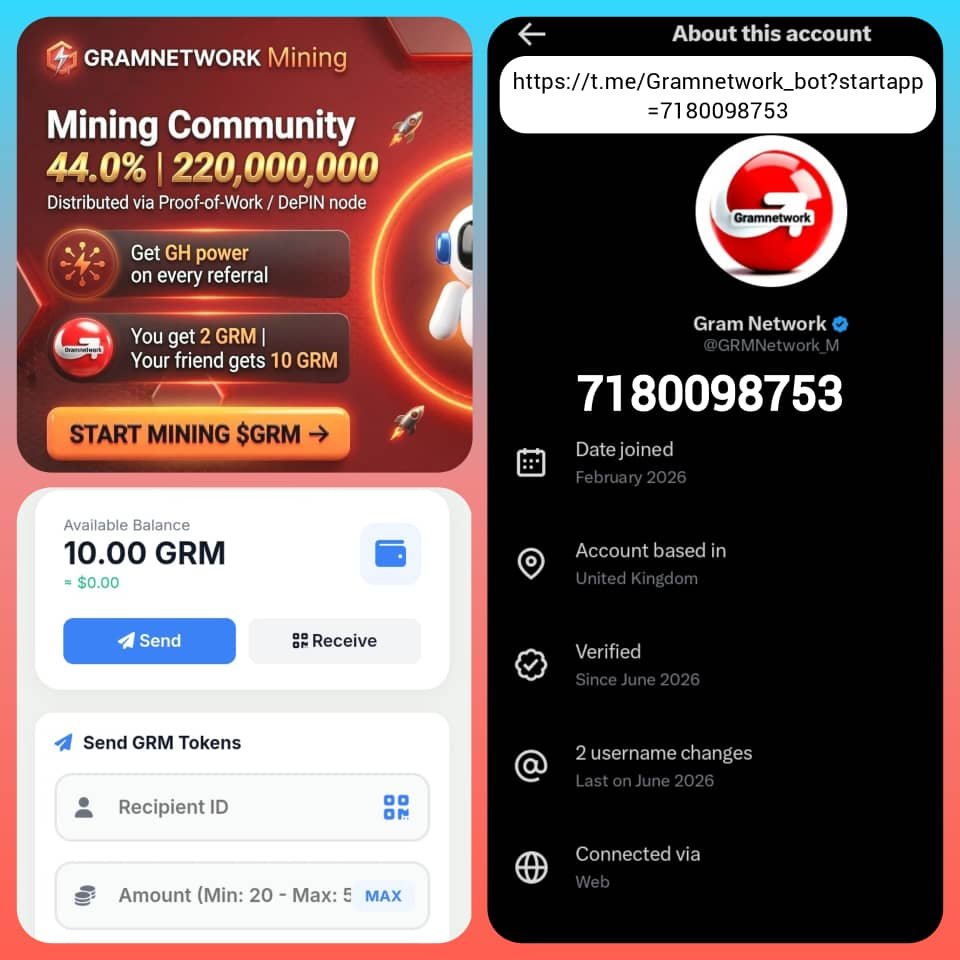
GRAMNETWORK Mining $GRM Live👷♂️
👉Total supply |500m
👉Community Mining | 44.0% | 220m
👉P2P live ($0.015 to $0.03)
👉Potential TG project
👉Already going viral.
Position early now....
Join now👇👇
t.me/Gramnetwork_bot?startap…
1
1
42
Jun 11
The market is in Extreme Fear (12/100) and traditional staking yields like Lido are dropping to ~2.3% APY. As BTC and ETH bleed, relying on passive market direction is dangerous. This new insight from @basis__pro perfectly explains how true institutional yield survives market downturns.
1
20
Jun 11
"One day a kid will say their favorite childhood place got patched out of existence, @RallyOnChain."
8
5
12
129
Jun 11
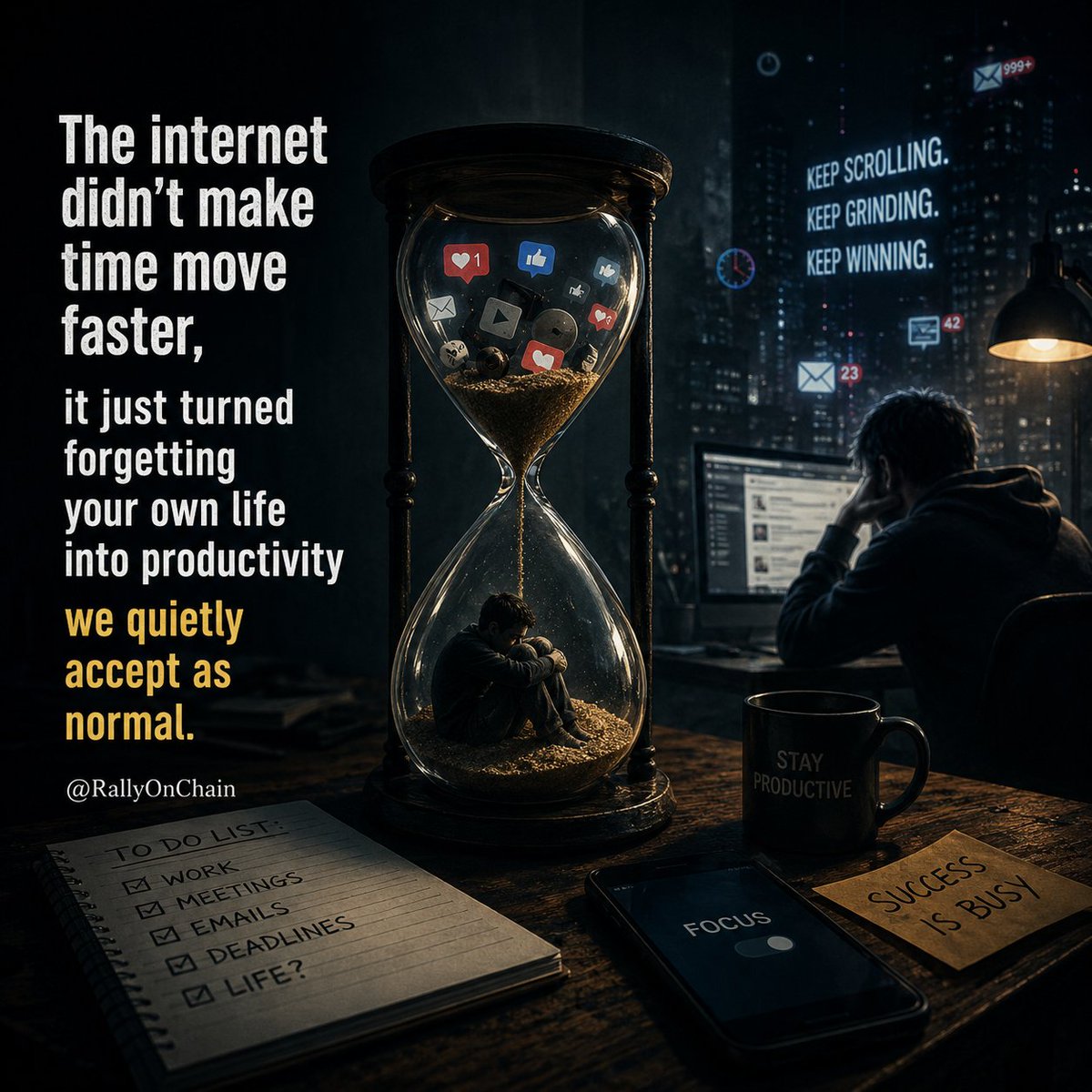
The internet didn’t make time move faster, it just turned forgetting your own life into productivity we quietly accept as normal @RallyOnChain
1
19
Jun 11
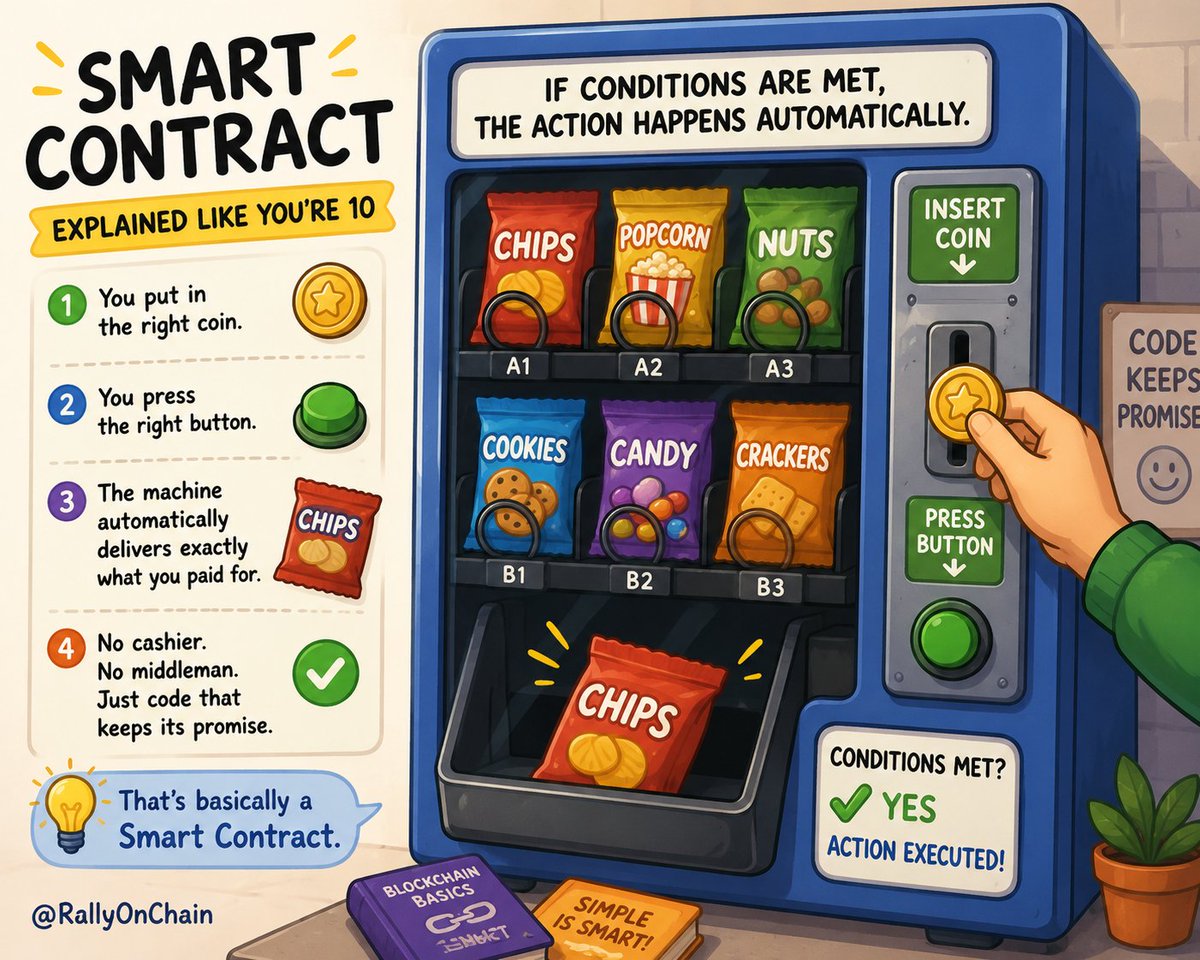
Put a coin in a snack machine, press the right button, and it delivers exactly what you paid for without needing a cashier; that's basically a Smart Contract. @RallyOnChain
29
4
40
176
Jun 11
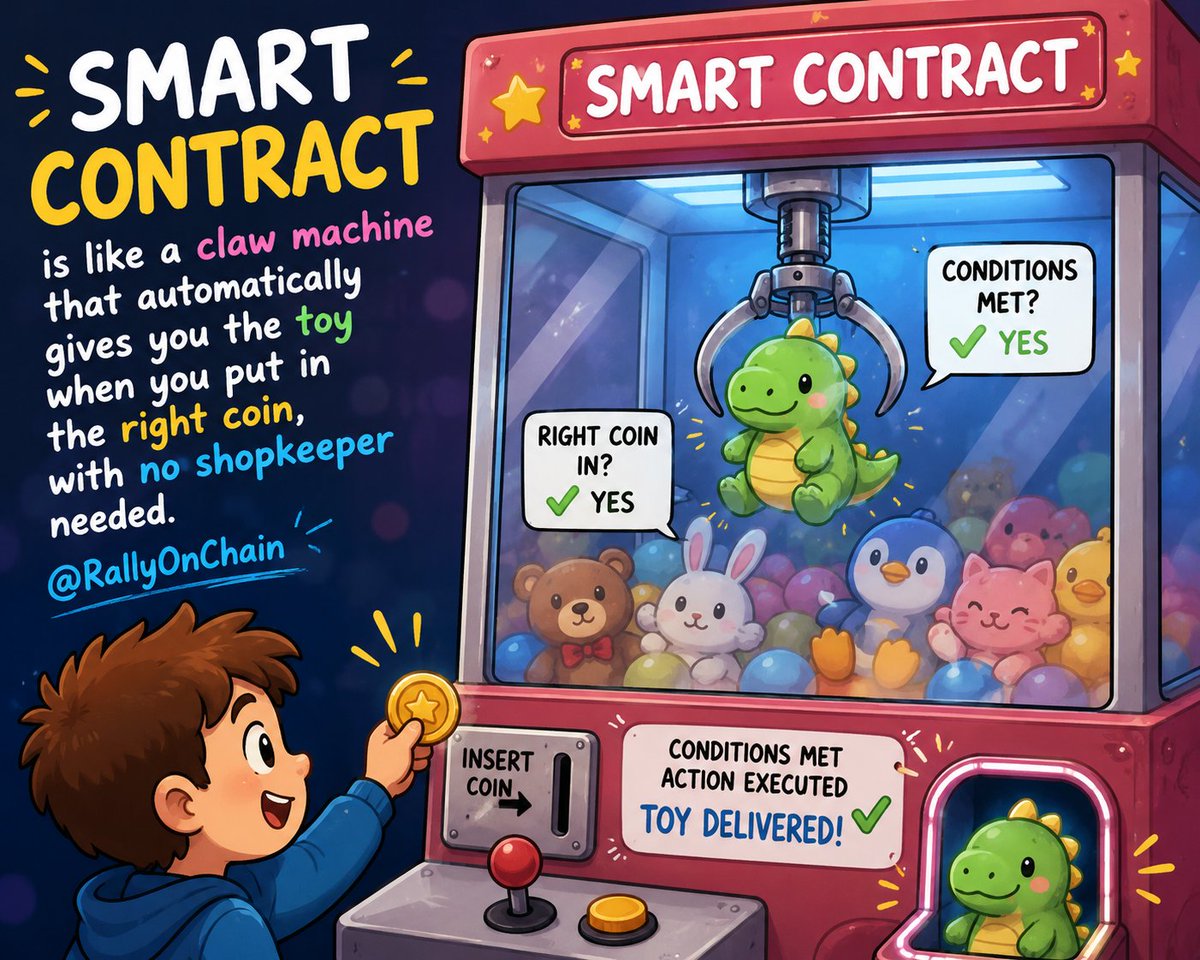
A Smart Contract is like a claw machine that automatically gives you the toy when you put in the right coin, with no shopkeeper needed. @RallyOnChain
32
4
43
151
Jun 10
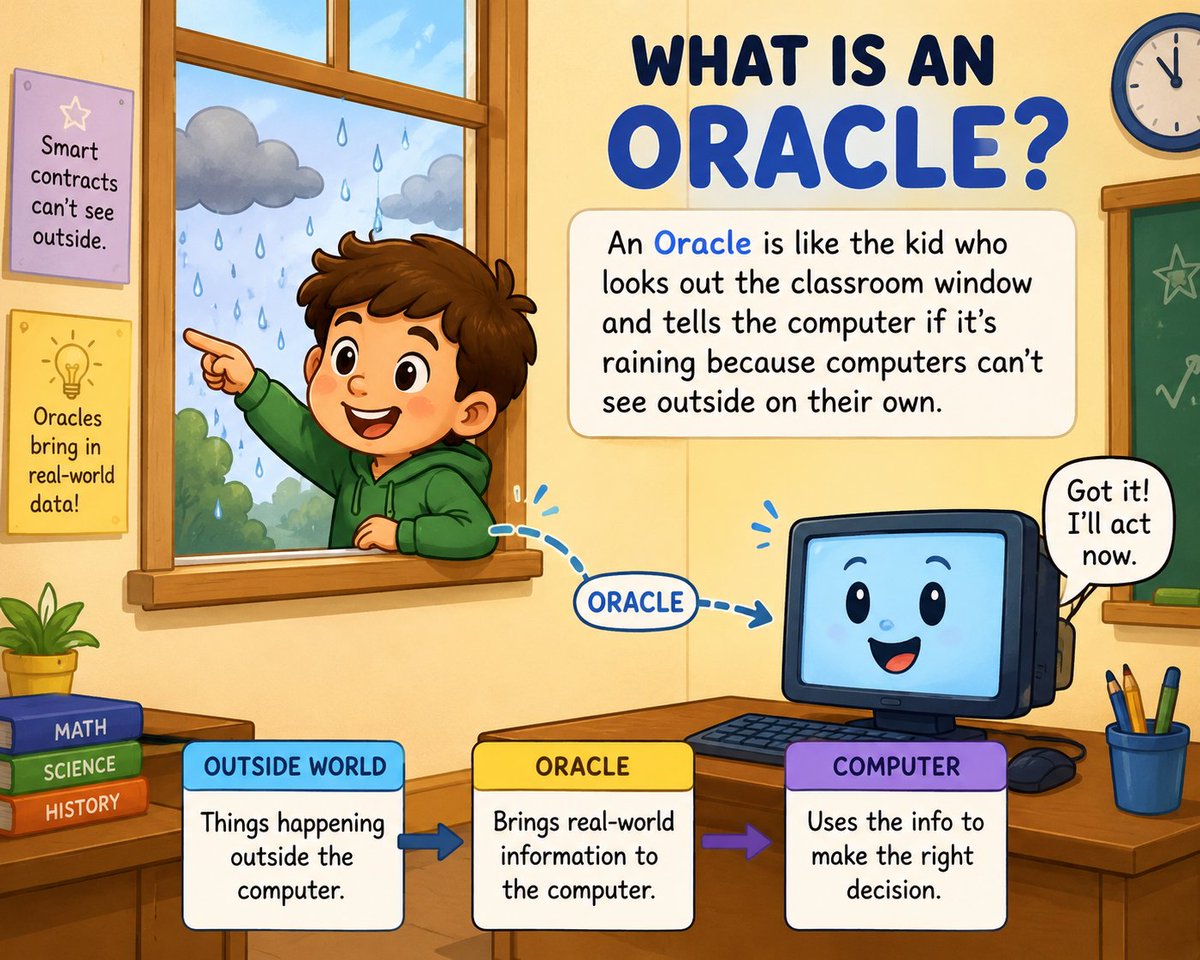
An Oracle is like the kid who looks out the classroom window and tells the computer if it's raining because computers can't see outside on their own. @RallyOnChain
32
6
50
273
Jun 10
for eight months, i kept a folder called "people who got lucky"
founders whose projects exploded
traders who caught every run
creators who seemed to grow overnight
every time i felt behind, i added another name
last night, scrolling through @RallyOnChain, i opened the folder again
most of the screenshots were years old
the posts looked new because i only noticed them when they won
i wasn't tracking lucky people
i was tracking people who kept showing up after i stopped looking
30
4
29
218
Jun 10
A futuristic cyber-Solana boss in a sleek dark blue and neon purple hoodie, wearing stylish black sunglasses, sitting confidently in a high-tech gaming chair at a modern desk setup. Multiple holographic Solana logos and glowing crypto charts floating around him. Money raining subtly in the background mixed with blockchain blocks and NFT icons. Professional yet street-style energy, cinematic lighting with neon accents, highly detailed anime-digital art style, sharp focus, 4K, empowering and motivational atmosphere for a Web3 crypto educator and airdrop hunter"
2
3
48
Jun 9
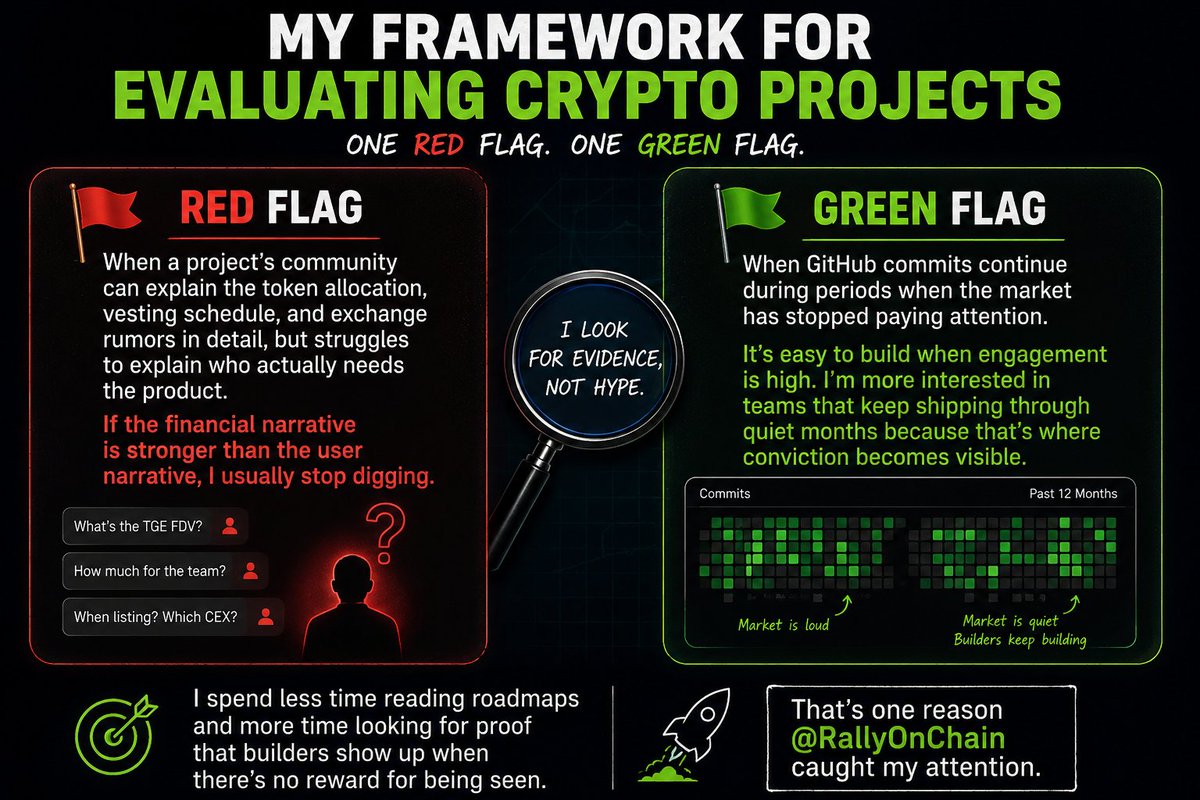
One red flag I use:
When a project's community can explain the token allocation, vesting schedule, and exchange rumors in detail, but struggles to explain who actually needs the product. If the financial narrative is stronger than the user narrative, I usually stop digging. Speculation can attract attention, but it rarely creates lasting demand.
One green flag I use:
When GitHub commits continue during periods when the market has stopped paying attention. It's easy to build when engagement is high and timelines are celebrated. I'm more interested in teams that keep shipping through quiet months because that's where conviction becomes visible.
That's one reason @RallyOnChain caught my attention. I spend less time reading ambitious roadmaps and more time looking for evidence that builders are still doing the work when there is little reward for being seen.
What's a green flag you've found that most people completely overlook?
33
3
32
235
Jun 9
"Huge W. Is Rally actually live rn or still in testnet? Trying to find good web3 alternatives to drop my content"
2
27