Petroleum Engr by Education, Process Engr by Training. Tech enthusiast. The world is my oases.
Joined August 2013
- Tweets 3,077
- Following 461
- Followers 139
- Likes 7,082
12 Photos and videos



Enigma retweeted

May 28
L’energia della presentazione dei convocati del Brasile.
Esci fuori e ti metti a correre.
Poi con tutti i loro difetti di sempre, tipo fare i fenomeni e chiamarli “I 26 del sesto titolo”.
Ma pace, senti come pompa
126
387
3,734
505,133
Enigma retweeted

Feb 5
Fellow Nigerians,
Enough is indeed, enough.
It has become clear that we, the people, are not regarded at all.
6
58
147
11,530
Enigma retweeted

23 Oct 2025
Sometimes, you read a story that makes the blood in your veins run cold.
Blessing's baby, Victory, was born premature and diagnosed with hydrocephalus (fluid in the brain), and she needs an urgent ₦1,000,000 surgery to survive.
Instead of support, Blessing’s husband called her a witch for having a sick child and threw her and their baby out onto the street.
Now, Blessing is alone, fighting for her daughter's life with nothing.
Her husband turned his back, but we will not.
AprokoNation, let's be the family she needs right now. Let's save Victory.
Account Name: Obukohwo Blessing
Account Number: 3581115542
Bank: EcoBank
If you cannot donate, please, I am begging you, your retweet is a powerful gift. It might be the one that brings the help this mother and child desperately need. God bless you.
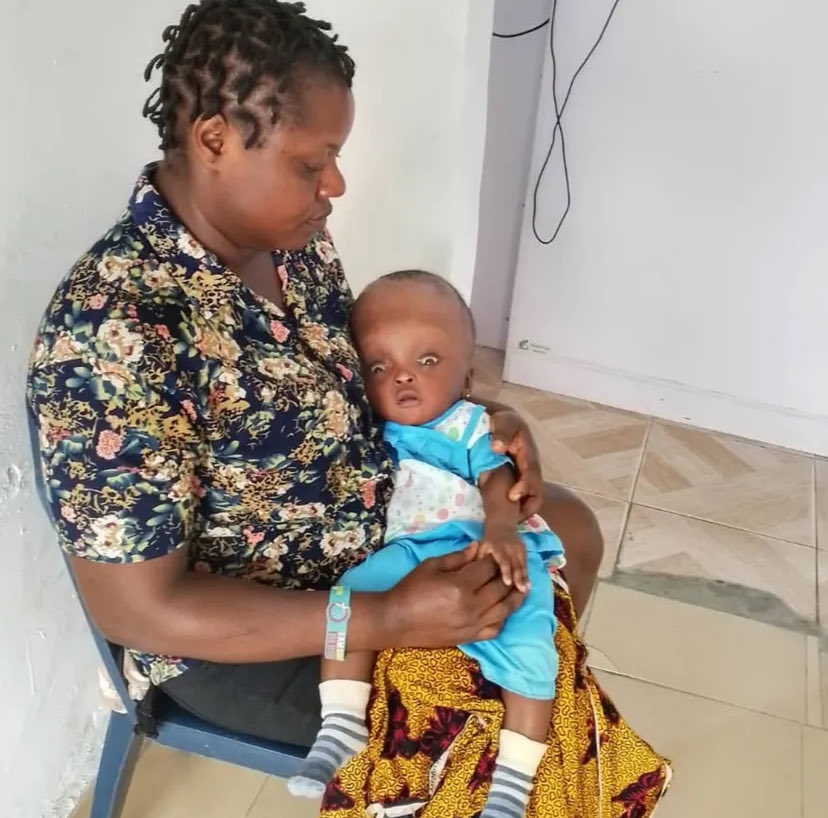
ALT Blessing and her daughter
192
12,323
8,741
724,714
Enigma retweeted

15 Oct 2025
To President @officialABAT:
We've never met. I've been on the front pages of Nigerian newspapers commending you for your economic reforms.
I know you are very smart and shrewd, and I have a suggestion for you.
Nigeria will soon be under international scrutiny like never before in history. You can actually survive and emerge stronger as a result - but there is only ONE PATH. All others will end in infamy.
No nation can build peace and prosperity on a foundation of genocide and displacement. Nigeria will only be as successful as you treat the least of these.
Pivot. Now. Purge those in your ranks who have facilitated, profited from, and/or turned a blind eye to genocide and displacement. You know who they are.
Lead the reform. End the killings. Recognize and bring justice and restore your millions of innocent displaced, which the Nigerian government has denied and ground into the dirt for a decade. The US and the World stand ready to help
Fail to do this RIGHT NOW and your days of power will soon come to an inglorious end. I pray it doesn't come to that.
With utmost respect and hope,
Mike Arnold
981
1,525
3,834
301,059
Enigma retweeted

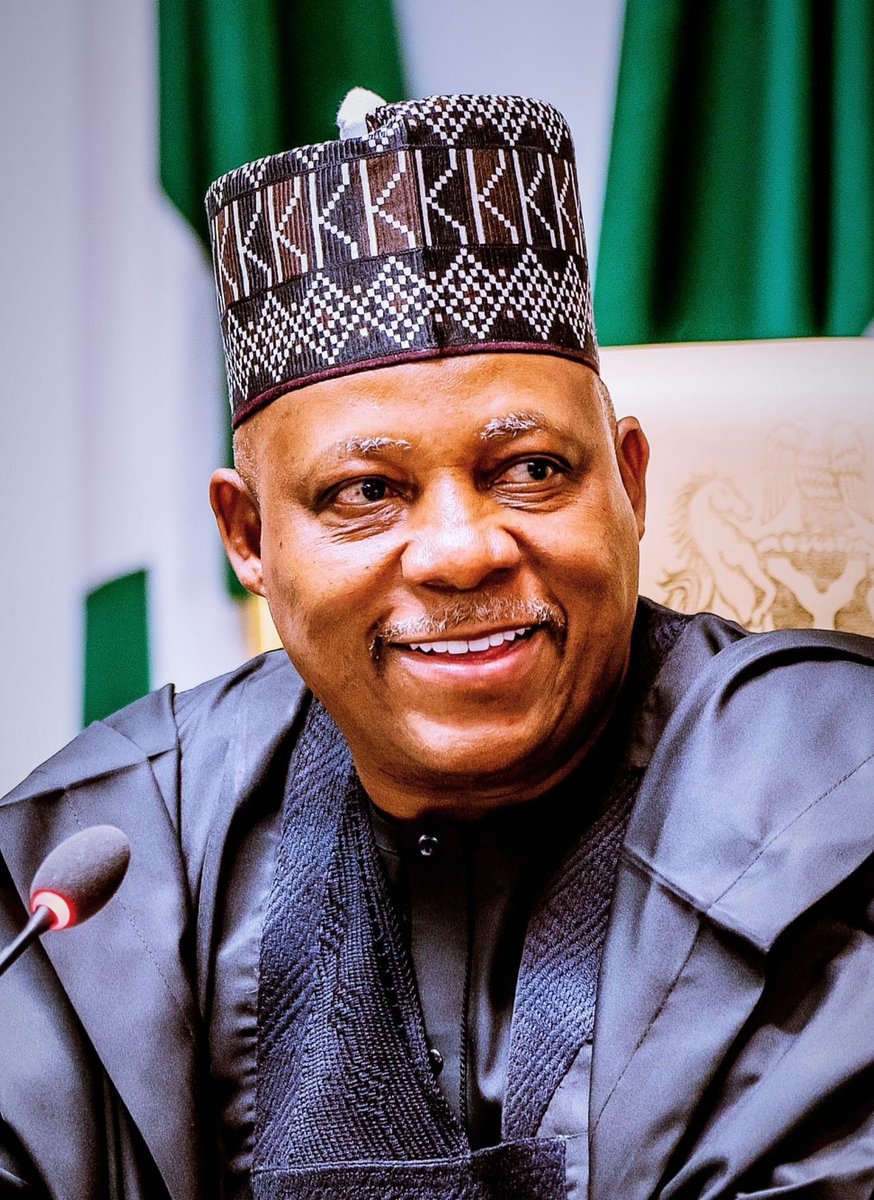
What I heard from Kashim Shettima’s speech is that “Nigeria is bigger than PENGASSAN, and Dangote is bigger than Nigeria.”
Everything DR Engineers did, they did with the full backing of the Nigeria’s constitution, but somehow even to the vice president they are saboteurs, and that is a very wrong thing to say.
I am truly disappointed in PENGASSAN on how they handled this case, I don’t want to speculate I would have said they have collected something. But I am more disappointed in the VP and Oshiomole, they should know better.
I am very proud of my stance on the issue of Dangote vs Workers Union (both NUPENG and PENGASSAN) and I don’t regret it one bit, because I know for sure in the few months Dangote will pay the new workers better.
49
42
175
17,079
Enigma retweeted

2 Oct 2025
It’s sad to equate PENGASSAN with all this rubbish issues !!!
These are issues for NNPC to resolve not in house union of non managerial staff in the industry
Are we deliberately acting stupid or what exactly the issue here - I don’t want to believe all these guys I respected cannot do basic checks on info available everywhere
1 Oct 2025

Listen to why flight prices in Nigeria are so expensive. This country eh!
30
50
133
15,626

1 Oct 2025
Facts you have spoken. I wholeheartedly agree.
1 Oct 2025

MY MUSINGS REGARDING THE DANGOTE PENGASSAN FIGHT
1/Background:
Much of the commentary on the Dangote–PENGASSAN dispute has been driven by sentiment, emotions and not facts. Let’s set the record straight.
2/
Claim: PENGASSAN leaders run NNPC and destroyed the refineries.
Fact: No PENGASSAN member holds a managerial position across the industry including in Dangote Refinery or even older Refineries in Warri, Kaduna, PHC. How can non-managers “destroy” refineries managed by executives and a board appointed by successive presidents?
3/
Claim: Dangote is the only reason Nigeria has fuel.
Fact: He filled a supply gap. Government policy (e.g. subsidy removal) made his entry andsales possible. Silly claim.
4/
Claim: PENGASSAN should build its own refinery.
Fact: Trade unions represent workers, do not build infrastructure. Asking that is like telling junior civil servants to form their own federal government or asking teachers to start building school structures and offices.
5/
Claim: The union is sponsored by “special interests.”
Fact: By that logic, are the 100 other registered unions in Nigeria also sponsored? Baseless.
6/
Trade unions are backed by Nigerian law, ILO conventions, and collective bargaining. To dismiss them is to ignore workers’ rights globally.
7/
What we now have is a peace of the graveyard: workers silenced, conditions worsened, and the public cheering exploitation.
8/
As “Indianization” deepens in the sector, those defending this today may soon cry foul over unfair treatment. When that time comes, remember your stance now.
⸻
Dr Joseph ONUORAH
A voice for the oppressed Nigerian worker.
18
Enigma retweeted

1 Oct 2025
I run Educare. Which is one of the largest firms building software for education from Africa.
I manage millions of datasets across continents daily, and have an army of software engineers with decades of combined experience.
Whenever I spot out a technical glitch, I’m very convinced and clear.
OAU and UNILAG uses a vendor called Webtest, and there was a likely bug in their system that affected these students outcome. Some of the flagging that caused lots of results to be withheld were wrongly done. They should just do on-premise POST-UTME.
They need to allow third party vendors to review their system and spot out the cause of the issues, rather than dismissing the students so that they wallow in deep pains.
I don’t know any of these over a thousand affected students, but it’s always good for every Nigerian child to be judged fairly.
These youngsters put in a lot of work to prepare for these exams and they can’t be punished for desiring to study.
I just want Nigeria to work!
97
707
2,319
91,767
Enigma retweeted
1 Oct 2025
I have seen so much in life not to be fettered or distracted by people who want a decent life but will never sweat for it.
You want your kids to graduate and have a decent job in Nigeria but you want to crush PENGASSAN!
You are living in a soundproof cocoon.
The Position of the law is that Dangote Refinery will exist and be profitable alongside with PENGASSAN and other in house unions.
Any other contrary idea is not reality and it’s instigated by the Indian management of Dangote who want to replace Nigerian workers with Indians.
Not under our watch. We will fight till death!
38
71
195
14,333
Enigma retweeted

30 Sep 2025
Dangote signed an agreement that his workers are free to join a union without any consequence.
Dangote said on live TV that he is not stopping his workers from joining union but his workers do not want to join.
Days later, his workers joined. He sacked them.
Then blame union.
17
64
165
4,725
Enigma retweeted

30 Sep 2025
@allibaloo sir, you've omitted a valid point which is, no expatriate was relieved.
What kind of reorganisation would make an organisation relieve only personnel who's declared interest to join a union and the organisation in the same breath is on LinkedIn sourcing replacement.
1
1
13
445
Enigma retweeted

30 Sep 2025
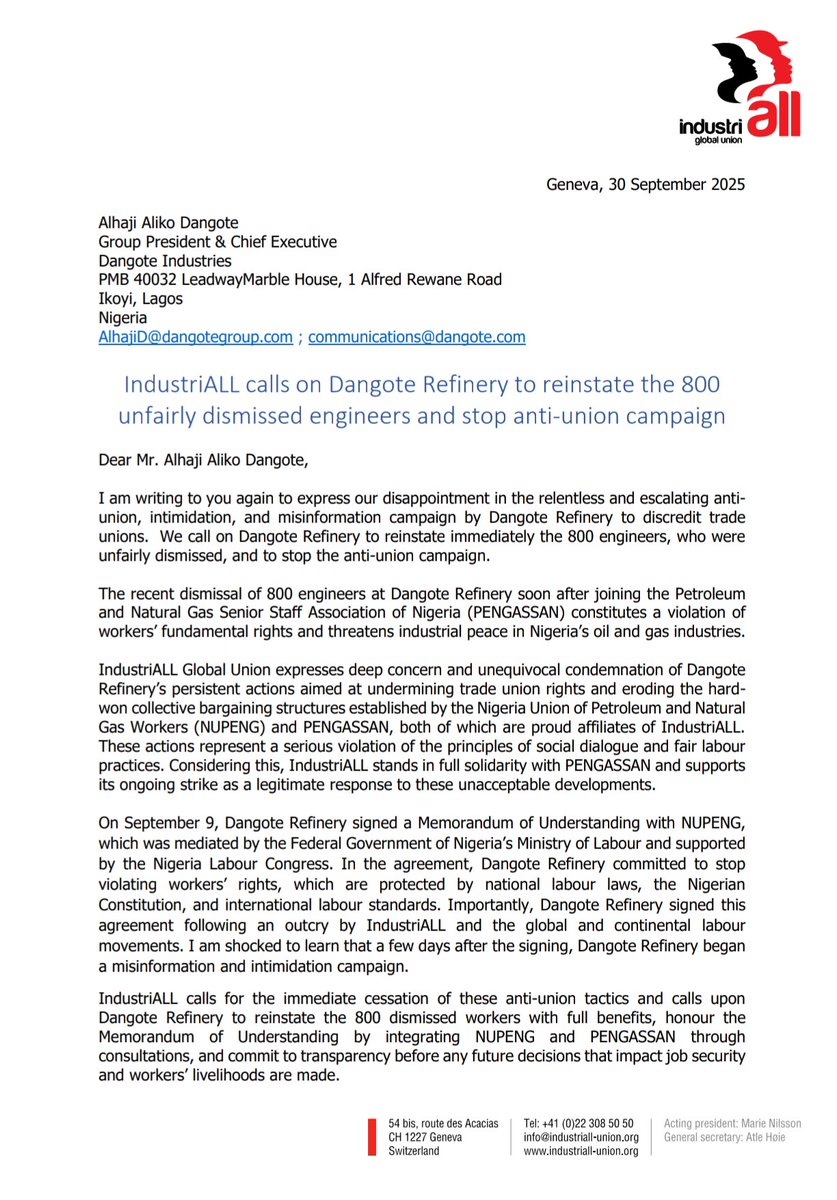
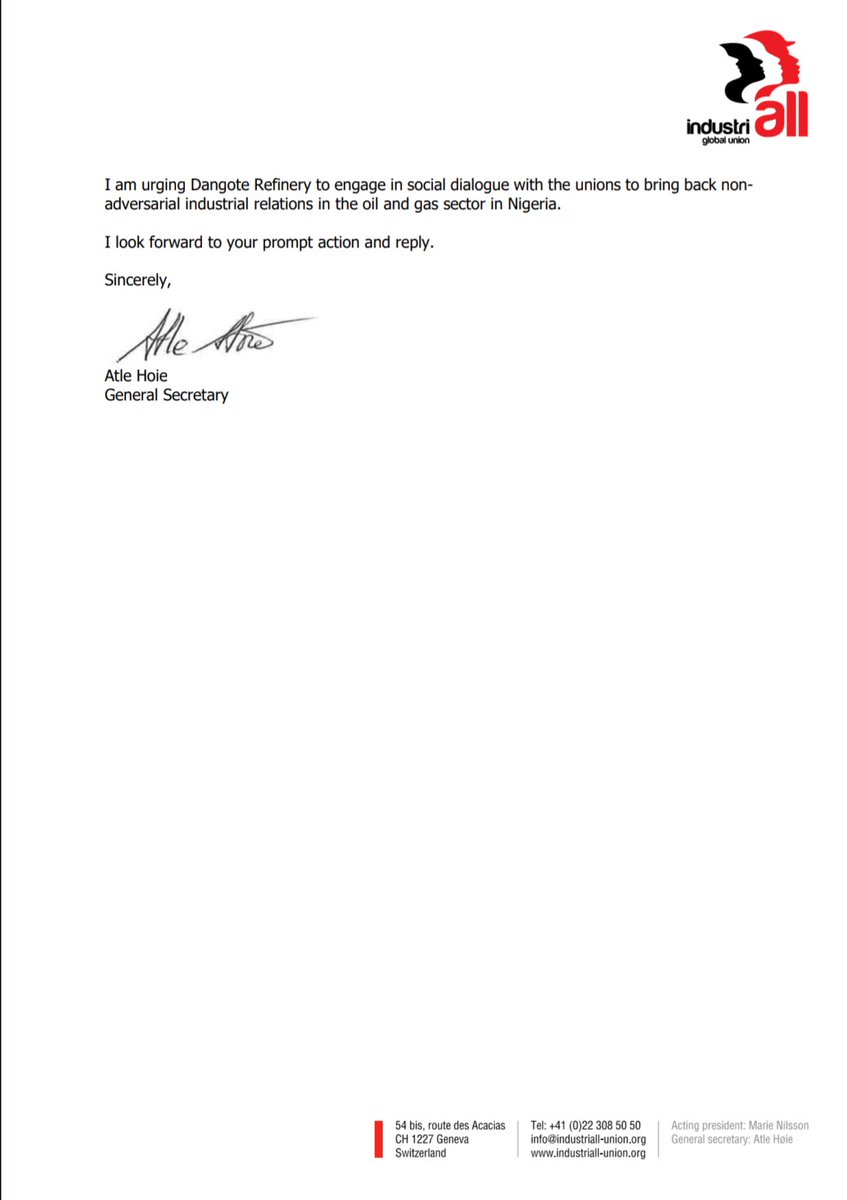
Our Inalienable right to unionise is recognised globally.
The #Dangote800 thanks IndustriALL for lending their support to our cause.
#BuiltNotSabotaged
46
116
264
32,983
Enigma retweeted

30 Sep 2025
“A week ago, Aliko Dangote was praising his engineers that they’re the best in the world. Today he sacked them and replaced them with Indians. Your workers cannot continue to be slaves" - Deji Adeyanju
54
107
300
38,309
Enigma retweeted
29 Sep 2025
He is using Indians everywhere and they are telling him his African brothers are serfs and slaves.
He is a business man - he accepts but we need a check and balance
That’s what PENGASSAN offers to employees.

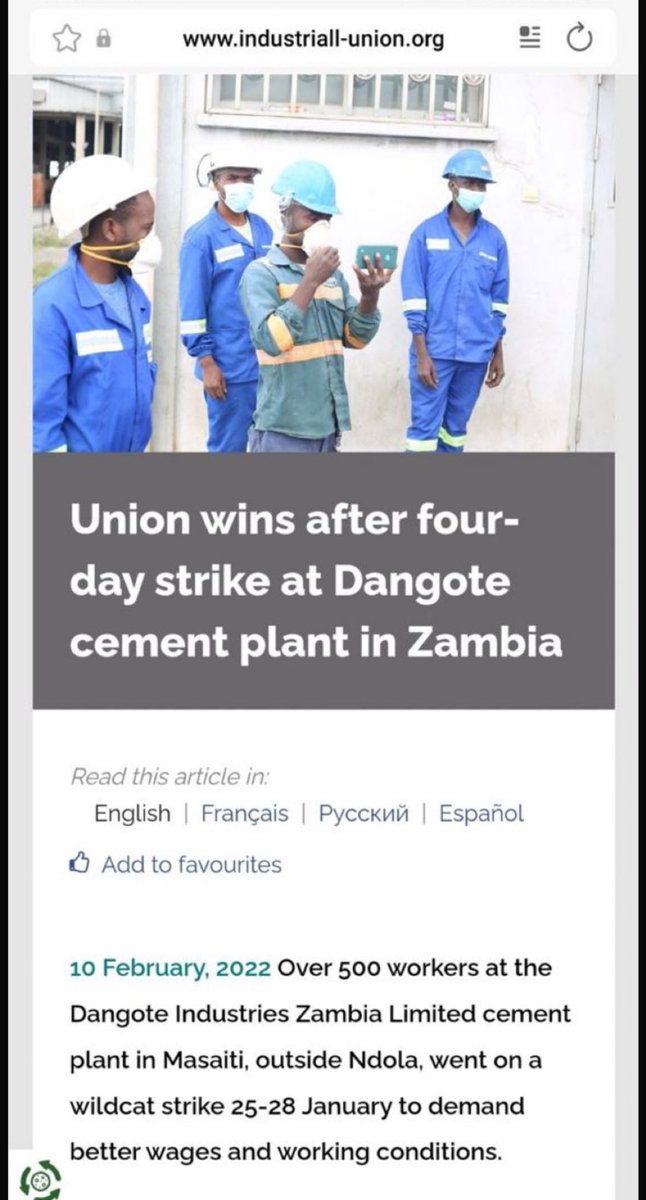
What he can’t do in common Zambia, is what you expect him to get away with in Nigeria.
Nigerians are largely the problem of Nigeria, not even the government, and certainly not unions.
2
7
20
1,983
Enigma retweeted

29 Sep 2025
We finished 4th stage of interview since August 2023, then you’re calling to inform me I got the job in September 2025😂. No be juju be that.
122
248
3,123
245,225
Enigma retweeted
What he can’t do in common Zambia, is what you expect him to get away with in Nigeria.
Nigerians are largely the problem of Nigeria, not even the government, and certainly not unions.
20
83
160
20,222
Enigma retweeted

29 Sep 2025
Amazing How Nigerians Become Heroes in Secret and Villains in Public
Dear @DangoteGroup,
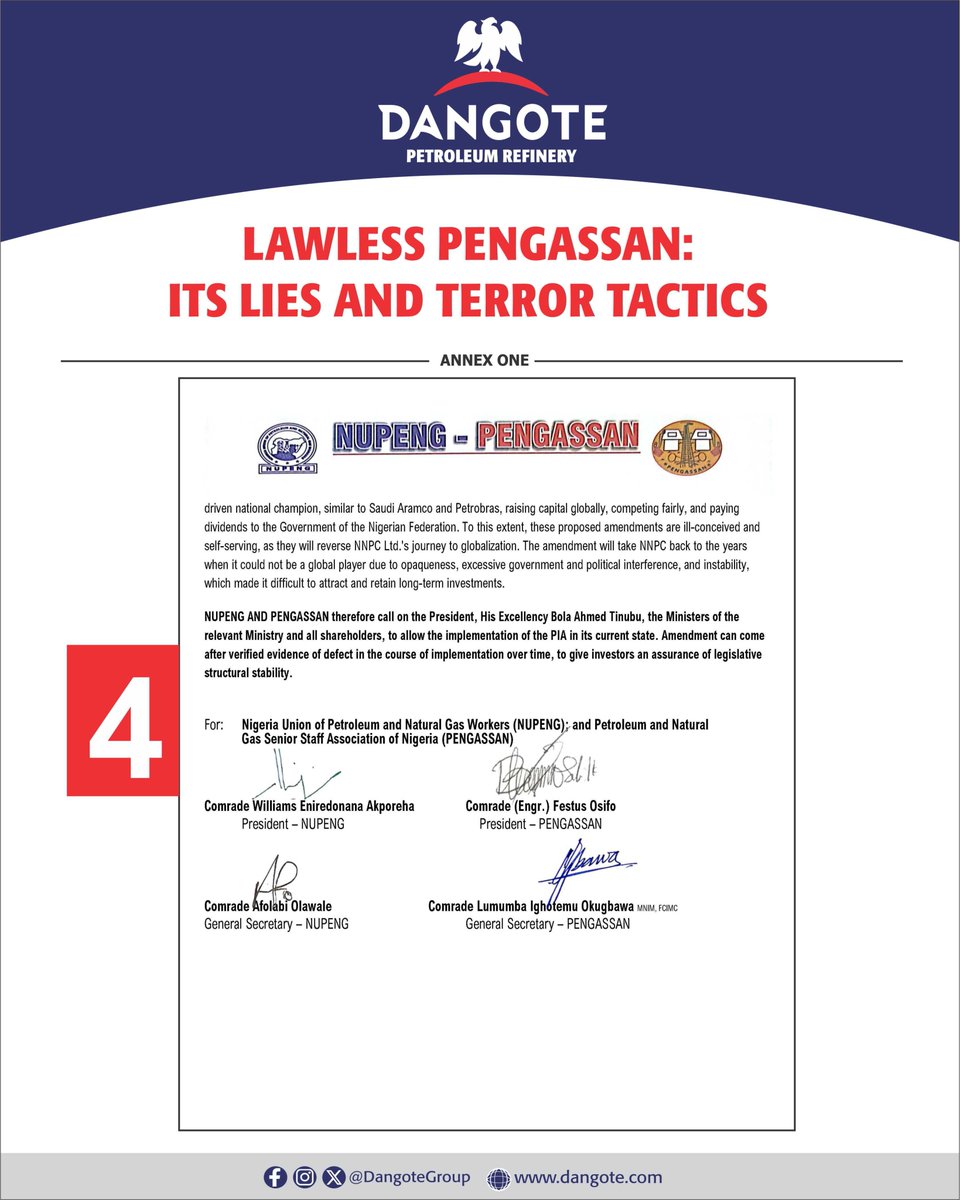
Your 4-page publication branding Nigerian engineers and PENGASSAN as “lawless” and “terrorists” reads less like a balanced account and more like an attempt to shape perception.
But perhaps it is more useful to view this not as a battle between DPRP and PENGASSAN, but as a reminder of something simpler, that unions exist to protect workers, especially when they feel abandoned. If these young engineers had been treated with the same dignity often extended to expatriates, maybe none of this drama would have surfaced.
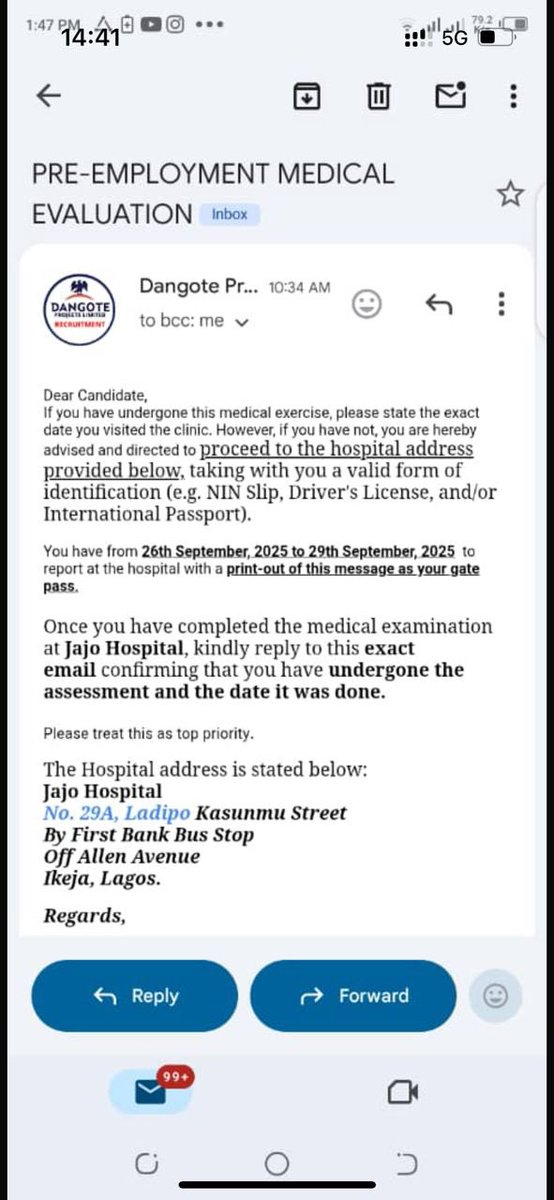
Consider the irony. On the one hand, official statements accuse Nigerians of sabotage. On the other hand, HR quietly recalls previously disqualified applicants for medicals and onboarding. If all was truly under control, why scramble for the very people already deemed unfit? Maybe because the truth is that the refinery cannot run without these Nigerians, and by law, it shouldn't.
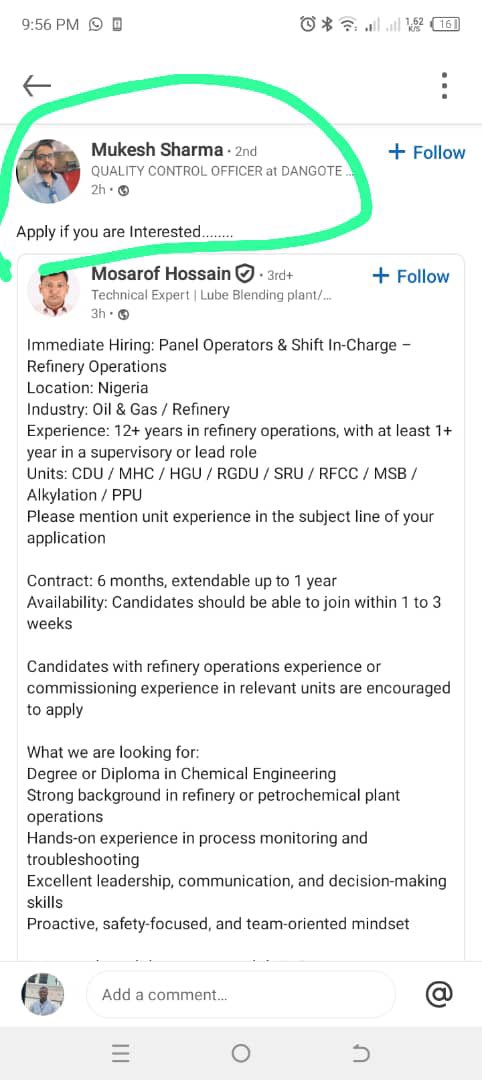
Just hours ago, a LinkedIn post by an Indian recruiter openly advertised refinery roles—Panel Operators, Shift In-Charge, CDU, HGU, RFCC, and more. Shortly after, another post appeared by Mukesh Sharma, listed as a Quality Control Officer at Dangote Refinery, sharing similar openings. If Nigerians were truly saboteurs and already replaced, why the sudden global search for operators? It suggests that refineries run not on glossy statements, but on capable hands, capable Boys and girls whom were praised to be the best by your CEO some days ago, and today were just shown the door.
We must remember the sacrifices of those dismissed. These were the people who pre-commissioned, commissioned, started up, and stabilized the plant. They worked six days on and one day off, sometimes stretching into 24-hour shifts during shutdowns. They purchased PPEs with their own money, endured the loss of lunch and rest facilities, and carried on even when they had no health insurance nor life insurances, all to make sure the refinery came alive. And in return, they were branded as saboteurs. Heroes in reality, villains in a press release kind of thing?
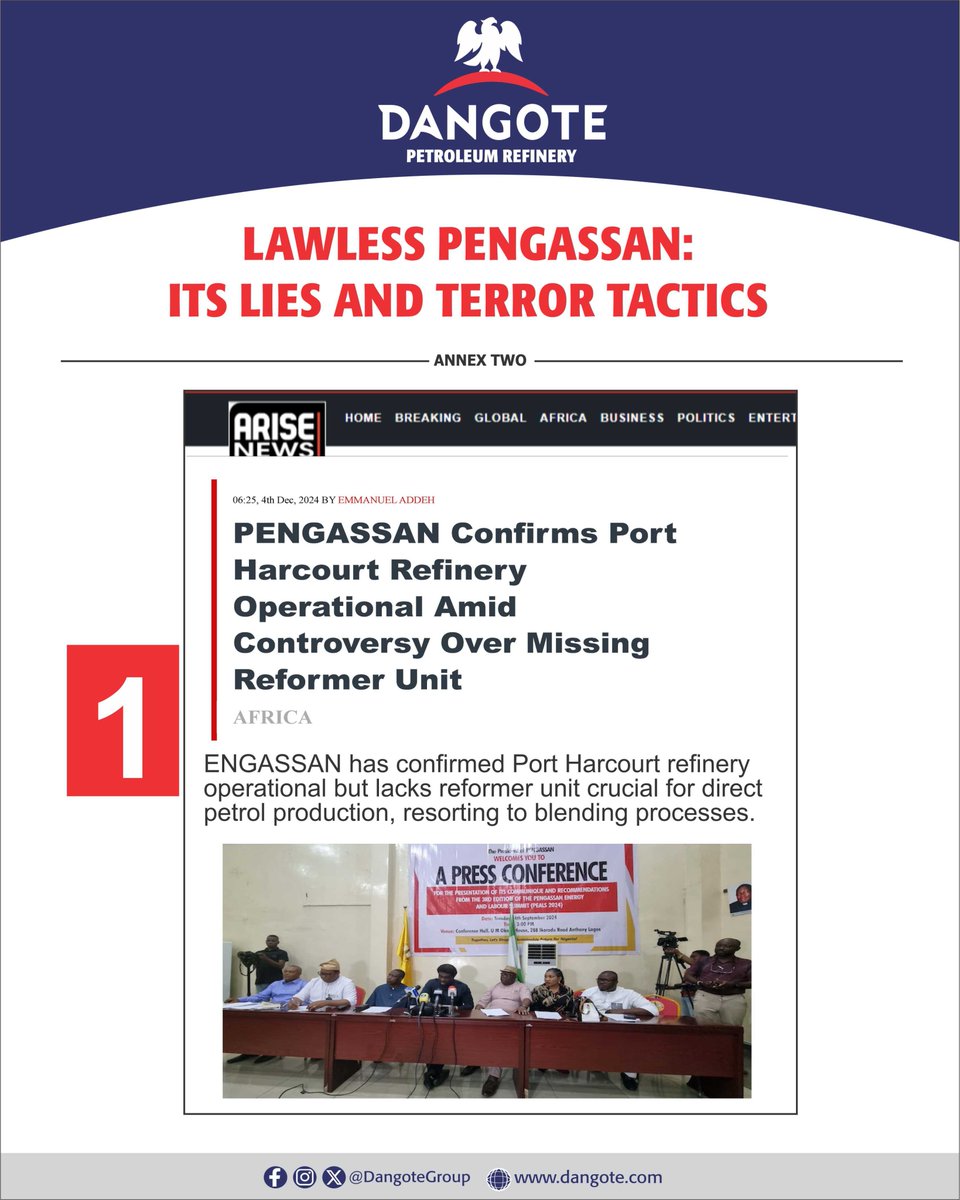
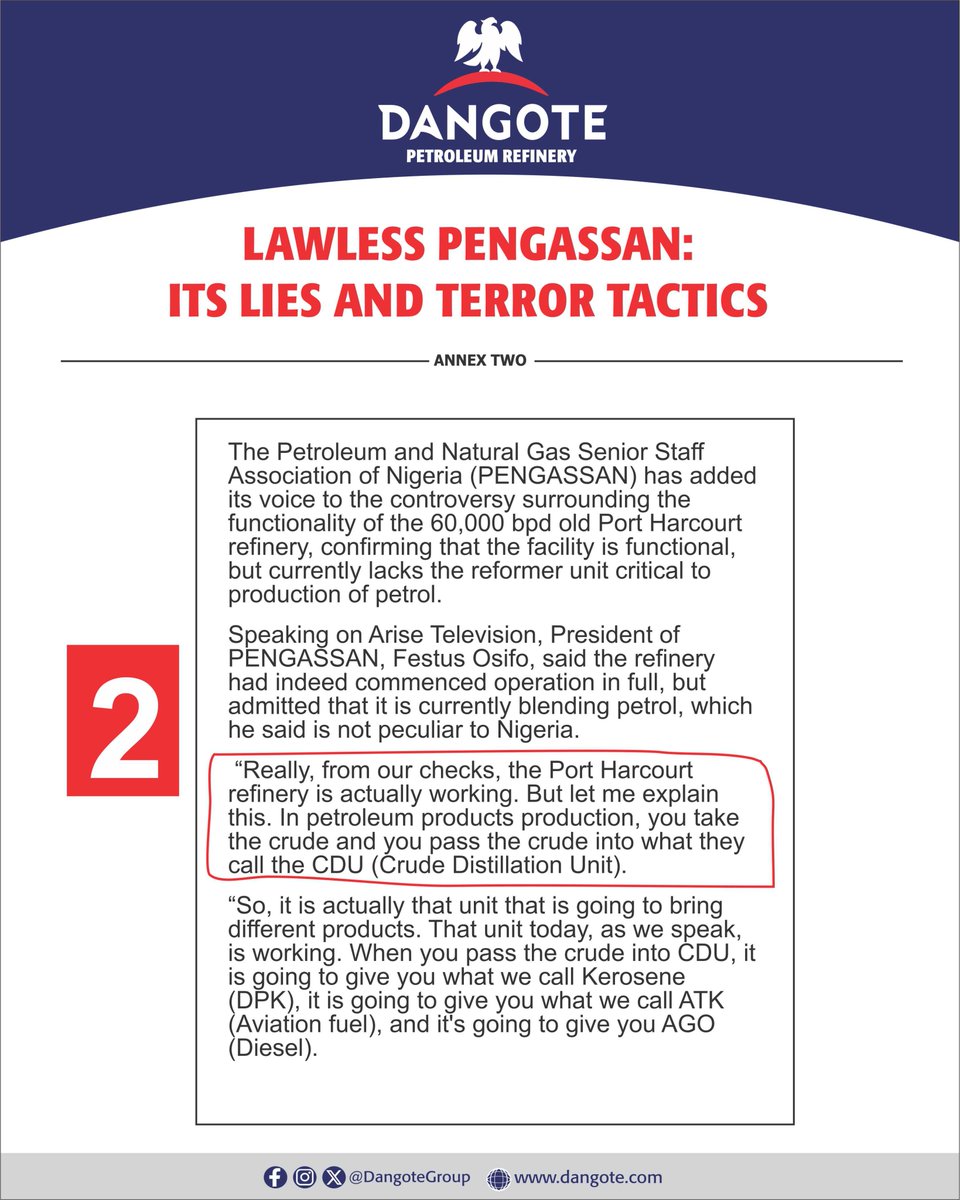
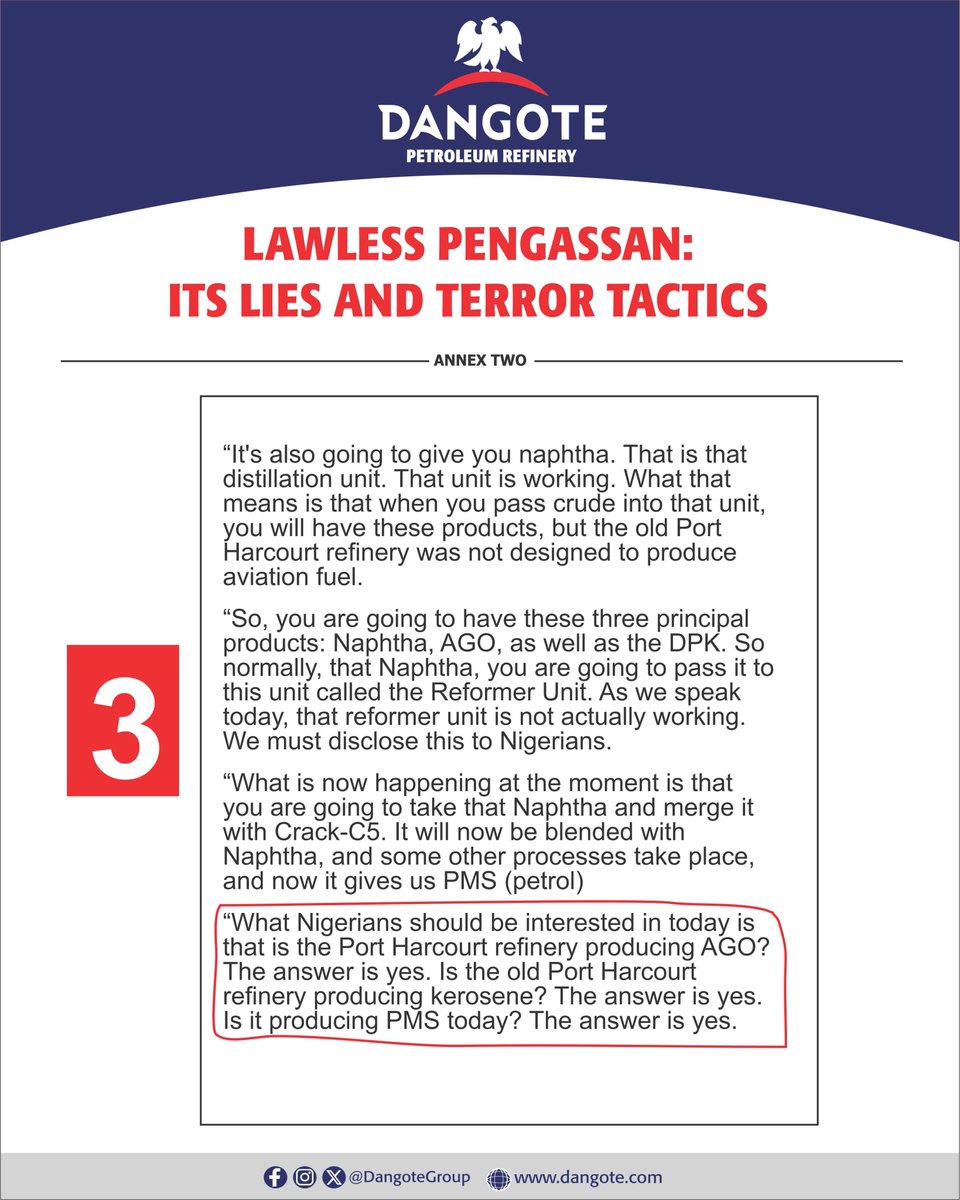
Even Annex Two of your own publication betrays the narrative. PENGASSAN’s statement that the Port Harcourt refinery lacked a reformer unit for direct PMS production was not mischief, it was a technical fact. The very quotes you highlighted confirmed it. Yet somehow, fact was recast as “terror tactics.” Nigerians are not blind to the contradiction; when workers state facts, it is branded mischief, but when management makes sweeping changes, it is called “in the interest of the refinery.”
The irony deepens. In your official publications, Nigerian engineers are painted as the problem. Yet in HR inboxes they suddenly become the solution. Below is the invitation a number of these Nigerians received just when this whole drama started. One day accused of sabotage, the next day, fresh ones quietly recalled to fill critical roles. Perhaps the refinery is learning, the hard way, that concrete and steel don’t refine fuel. People do. And it was these same Nigerian engineers that turned blueprints into reality.
Protecting investment should never mean discarding those who give it life. Credibility will come not from lengthy publications but from transparency; audited workforce composition, ratios of Nigerians to foreigners, HSE compliance records, welfare audits. Without these, it becomes difficult to justify why engineers who sacrificed so much were branded as “terrorists.”
Thank you.
28 Sep 2025

82
356
566
107,923
Enigma retweeted
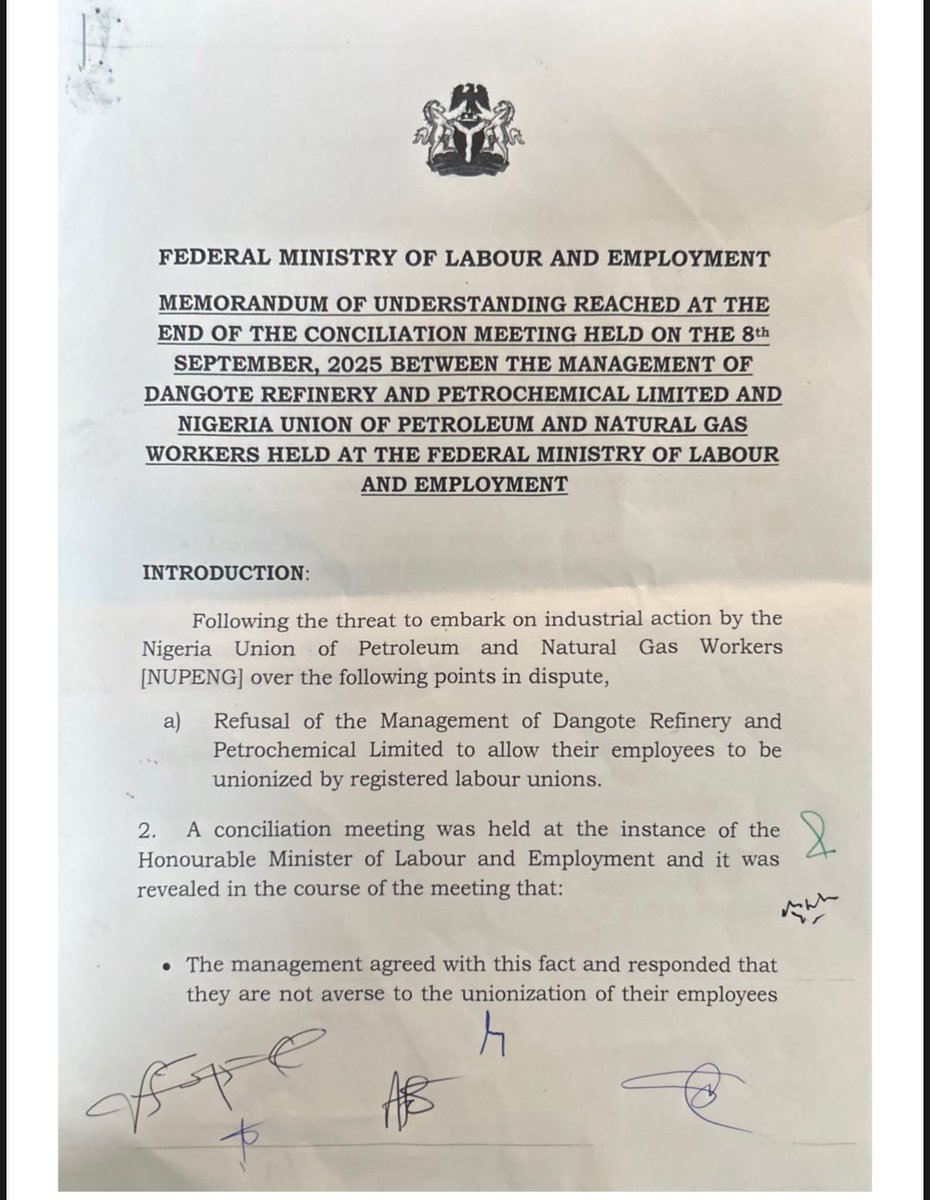
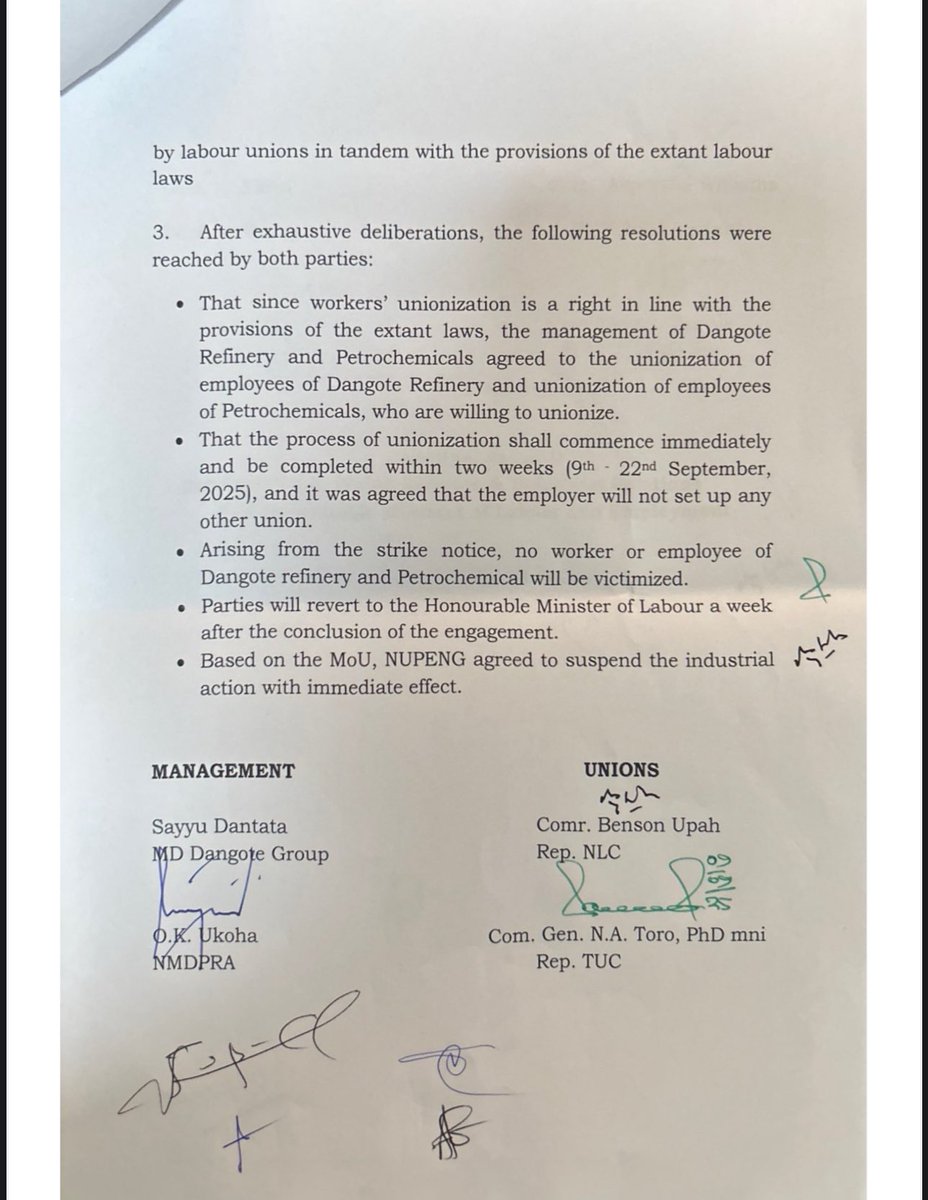
This is MOU reached by Dangote Management, Federal Government, and NUPENG on the 8 September 2025.
The Dangote Refinery didn’t sign this MOU under duress.
Read that number 3 properly!
52
143
313
60,131
Enigma retweeted
Watch this video of Dangote's over-pampered Indian Group Vice Chairman sitting in a comfortable chair in Nigeria, rolling his chair and saying things, he'll never try in India.
That he will not allow difference of opinion.
Oga you don JAM pengassan don't worry!
55
141
302
75,958
Enigma retweeted
28 Sep 2025
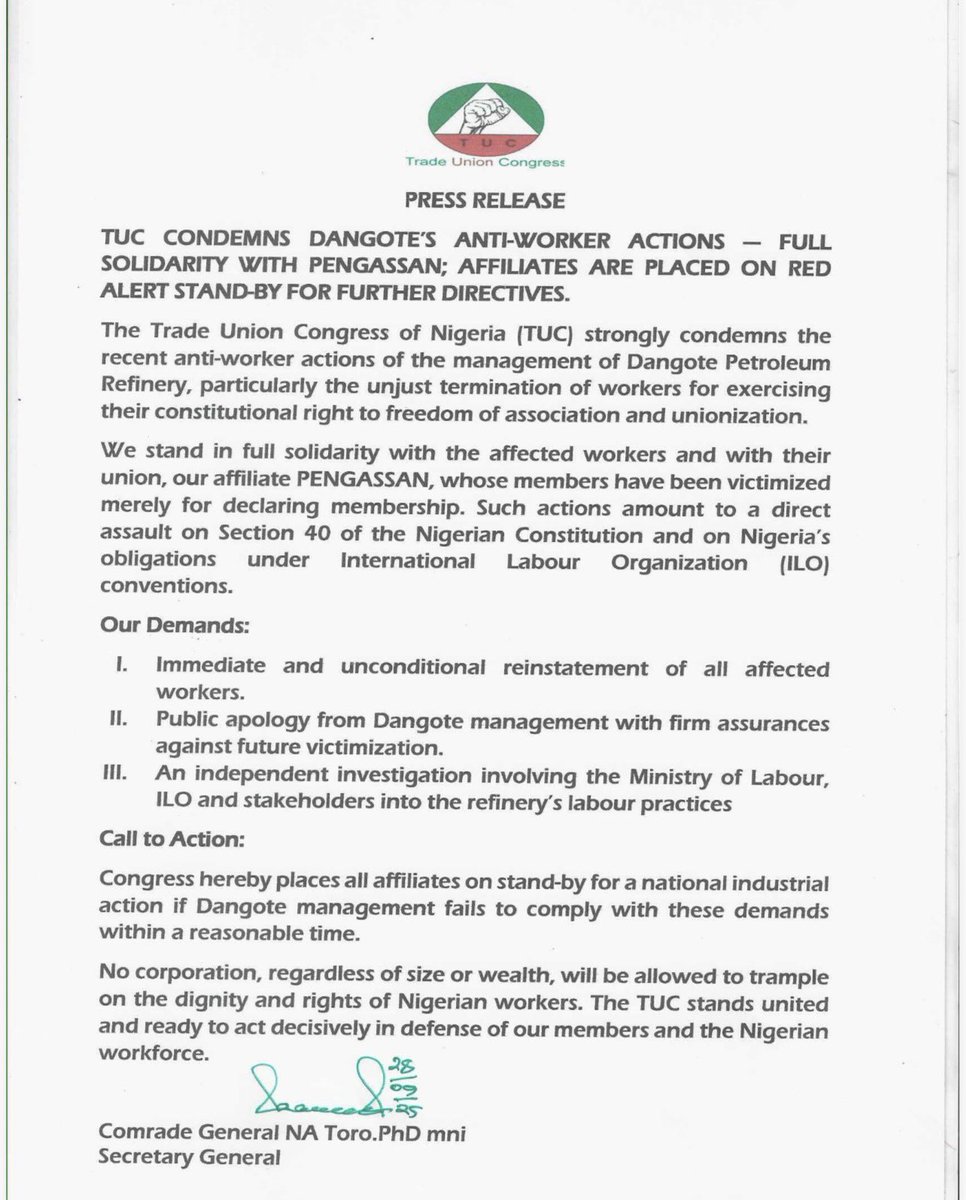
It’s going to be a national strike. I hope those goading Dangote will sack the entire employees across all the industries.
The 800 employees MUST be restored and allowed to do their jobs in peace.
Trade unionism is a Fundermental right for those who want to join!
9
13
21
1,591