
Since 1927, publishing thought-provoking, original research on pressing social issues and social welfare policies, organizations, and practices.
- Tweets 268
- Following 1,160
- Followers 1,519
- Likes 238














ALT Headshot of Associate Professor Meg Feely
ALT Display table featuring copies of UChicago Press Journals, including Social Service Review



ALT Social Service Review
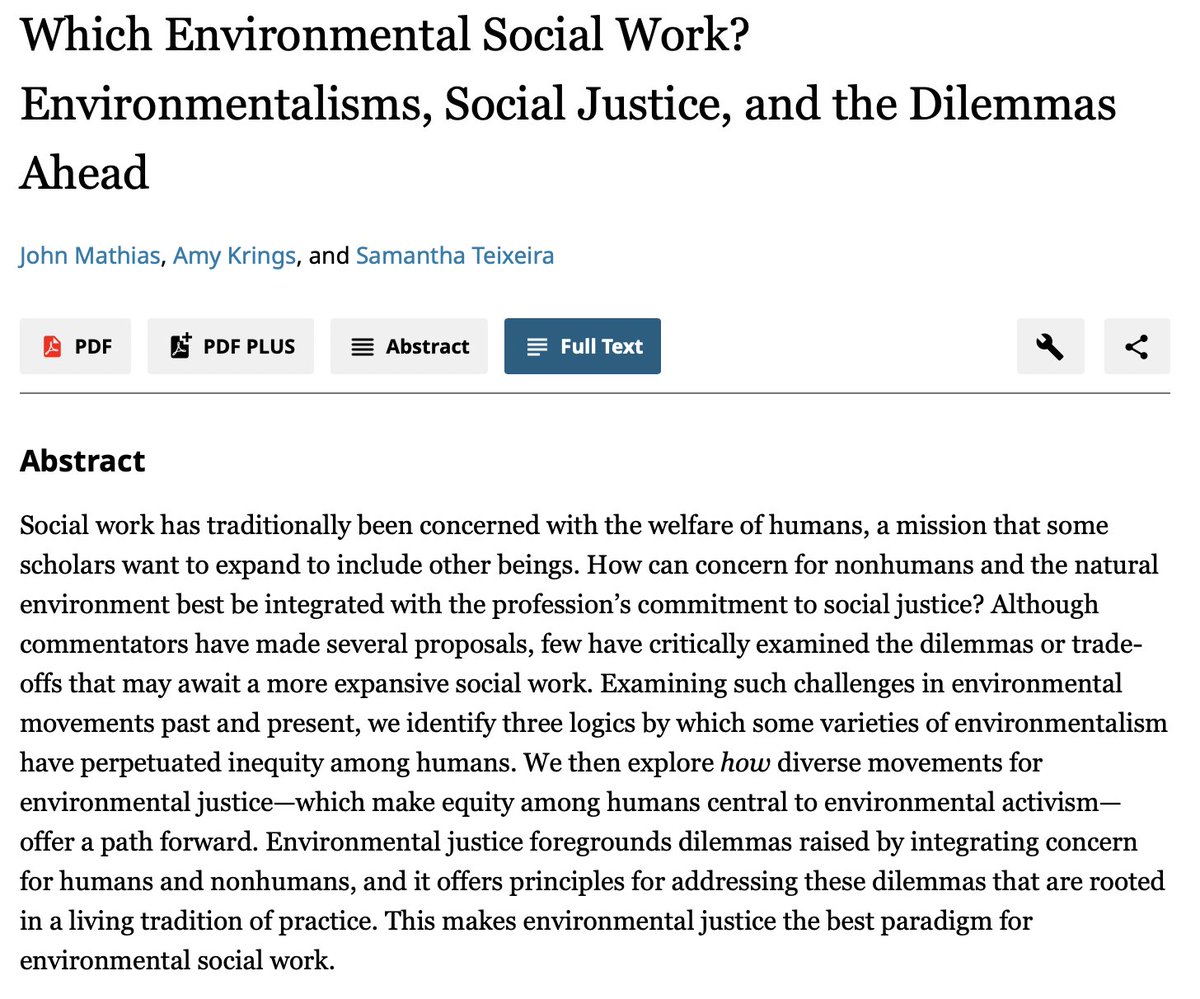
ALT Social work has traditionally been concerned with the welfare of humans, a mission that some scholars want to expand to include other beings. How can concern for nonhumans & the natural environment best be integrated with the profession’s commitment to social justice? Although commentators have made several proposals, few have critically examined the dilemmas or trade-offs that may await a more expansive social work. Examining such challenges in environmental movements, we identify 3 logics by which some varieties of environmentalism have perpetuated inequity among humans. We then explore how diverse movements for environmental justice—which make equity among humans central to environmental activism—offer a path forward. Environmental justice foregrounds dilemmas raised by integrating concern for humans & nonhumans, & it offers principles for addressing these dilemmas that are rooted in a living tradition of practice. This makes environmental justice the best paradigm for social work.

ALT Social work has traditionally been concerned with the welfare of humans, a mission that some scholars want to expand to include other beings. How can concern for nonhumans & the natural environment best be integrated with the profession’s commitment to social justice? Although commentators have made several proposals, few have critically examined the dilemmas or trade-offs that may await a more expansive social work. Examining such challenges in environmental movements, we identify 3 logics by which some varieties of environmentalism have perpetuated inequity among humans. We then explore how diverse movements for environmental justice—which make equity among humans central to environmental activism—offer a path forward. Environmental justice foregrounds dilemmas raised by integrating concern for humans & nonhumans, & it offers principles for addressing these dilemmas that are rooted in a living tradition of practice. This makes environmental justice the best paradigm for social work.
ALT SSR's BlueSky profile. The background issue is a set of bound volumes of Social Service review, and the profile pic is the SSR logo. The handle is SocServReview.BSky.Social. The bio reads, "Since 1927, publishing thought-provoking, original research on pressing social issues and social welfare policies, organizations, and practices." The first (and only) post reads, "Social Service Review has joined BlueSky! If you are looking for innovative and rigorous research on social issues, social welfare policy, administration, or practice, please give us a follow. More to come!"

ALT Social Service Review
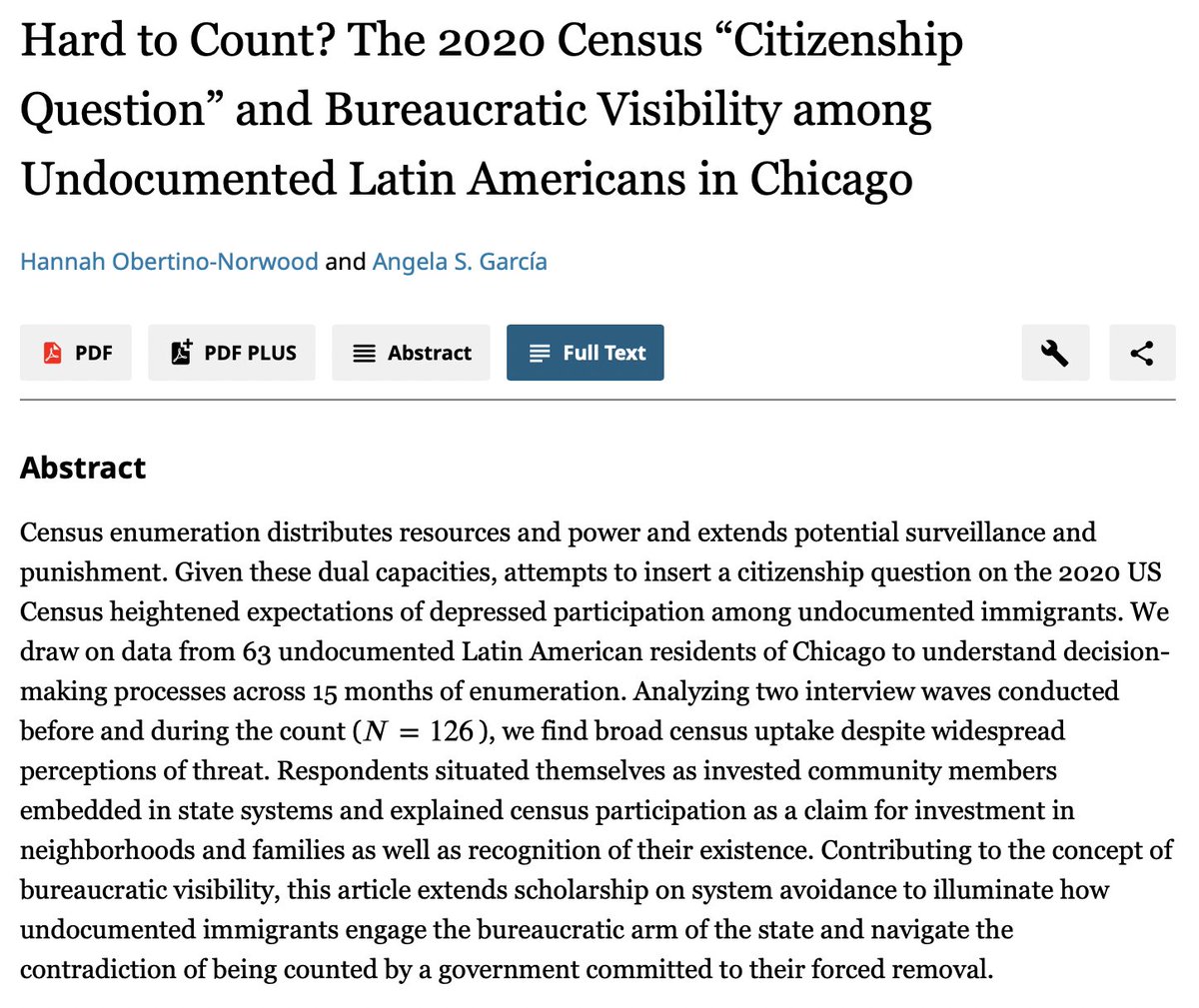
ALT Census enumeration distributes resources and power and extends potential surveillance and punishment. Given these dual capacities, attempts to insert a citizenship question on the 2020 US Census heightened expectations of depressed participation among undocumented immigrants. We draw on data from 63 undocumented Latin American residents of Chicago to understand decision-making processes across 15 months of enumeration. Analyzing two interview waves conducted before and during the count (N=126), we find broad census uptake despite widespread perceptions of threat. Respondents situated themselves as invested community members embedded in state systems and explained census participation as a claim for investment in neighborhoods and families as well as recognition of their existence. Contributing to the concept of bureaucratic visibility, this article extends scholarship on system avoidance to illuminate how undocumented immigrants engage the bureaucratic arm of the state (continued)


ALT Headshot of Jessica Pac inside wearing black blazer and white shirt.

ALT Headshot of Lonnie Berger outside wearing black shirt.