Joined February 2023
- Tweets 159
- Following 620
- Followers 490
- Likes 119
99 Photos and videos
Pinned Tweet

Jan 20
𝐓𝐨𝐰𝐚𝐫𝐝𝐬 𝐈𝐧𝐜𝐥𝐮𝐬𝐢𝐯𝐞 𝐁𝐮𝐬𝐢𝐧𝐞𝐬𝐬 𝐌𝐨𝐝𝐞𝐥𝐬 𝐟𝐨𝐫 𝐒𝐨𝐢𝐥 𝐇𝐞𝐚𝐥𝐭𝐡: 𝐒𝐢𝐱 𝐏𝐞𝐫𝐬𝐩𝐞𝐜𝐭𝐢𝐯𝐞𝐬 𝐨𝐧 𝐕𝐚𝐥𝐮𝐞𝐬
Through a series of interviews we are exploring transformative changes and inclusive business models for soil health, gathering insights from researchers, practitioners, and innovators across Europe.
Our goal? To understand the many ways soil creates value and how we can support those who care for it.
🌍 We are delighted to kick off the series with our coordinator Erik Mathijs, who introduces the SoilValues project and presents our first policy brief: Towards Inclusive Business Models for Soil Health: Six Perspectives on Values.
The policy brief proposes a framework that builds on the Total Economic Value approach and identifies six complementary perspectives:
1️⃣ 𝐏𝐫𝐨𝐝𝐮𝐜𝐭𝐢𝐯𝐢𝐬𝐭 – soil as productive capital, improving yields and reducing costs
2️⃣ 𝐄𝐜𝐨𝐬𝐲𝐬𝐭𝐞𝐦 𝐒𝐞𝐫𝐯𝐢𝐜𝐞𝐬 – soil as a provider of public goods such as carbon storage and water regulation
3️⃣ 𝐑𝐞𝐬𝐢𝐥𝐢𝐞𝐧𝐜𝐞 – soil as insurance against environmental and economic shocks
4️⃣ 𝐍𝐨𝐧-𝐮𝐬𝐞 𝐯𝐚𝐥𝐮𝐞 – protecting soil for future generations and societal well-being
5️⃣ 𝐈𝐧𝐭𝐫𝐢𝐧𝐬𝐢𝐜 𝐯𝐚𝐥𝐮𝐞 – recognizing soil’s inherent worth beyond human utility
6️⃣ 𝐒𝐨𝐜𝐢𝐚𝐥 𝐯𝐚𝐥𝐮𝐞 – soil health as a driver of inclusive governance, equity, and innovation
▶️ 𝐖𝐚𝐭𝐜𝐡 𝐭𝐡𝐞 𝐢𝐧𝐭𝐞𝐫𝐯𝐢𝐞𝐰 𝐡𝐞𝐫𝐞: lnkd.in/eXan4tTK
Read the policy brief here: lnkd.in/ezstNJJ4
#soilvalues #soilhealth #euprojects #sustainability #businessmodels #MissionSoilWeek #agriculture
1
5
135
May 13
𝐂𝐚𝐫𝐛𝐨𝐧 𝐟𝐚𝐫𝐦𝐢𝐧𝐠, 𝐩𝐨𝐥𝐢𝐜𝐲 𝐚𝐧𝐝 𝐭𝐡𝐞 𝐭𝐫𝐚𝐧𝐬𝐢𝐭𝐢𝐨𝐧 𝐭𝐨 𝐫𝐞𝐬𝐢𝐥𝐢𝐞𝐧𝐭 𝐟𝐚𝐫𝐦𝐢𝐧𝐠 𝐬𝐲𝐬𝐭𝐞𝐦𝐬
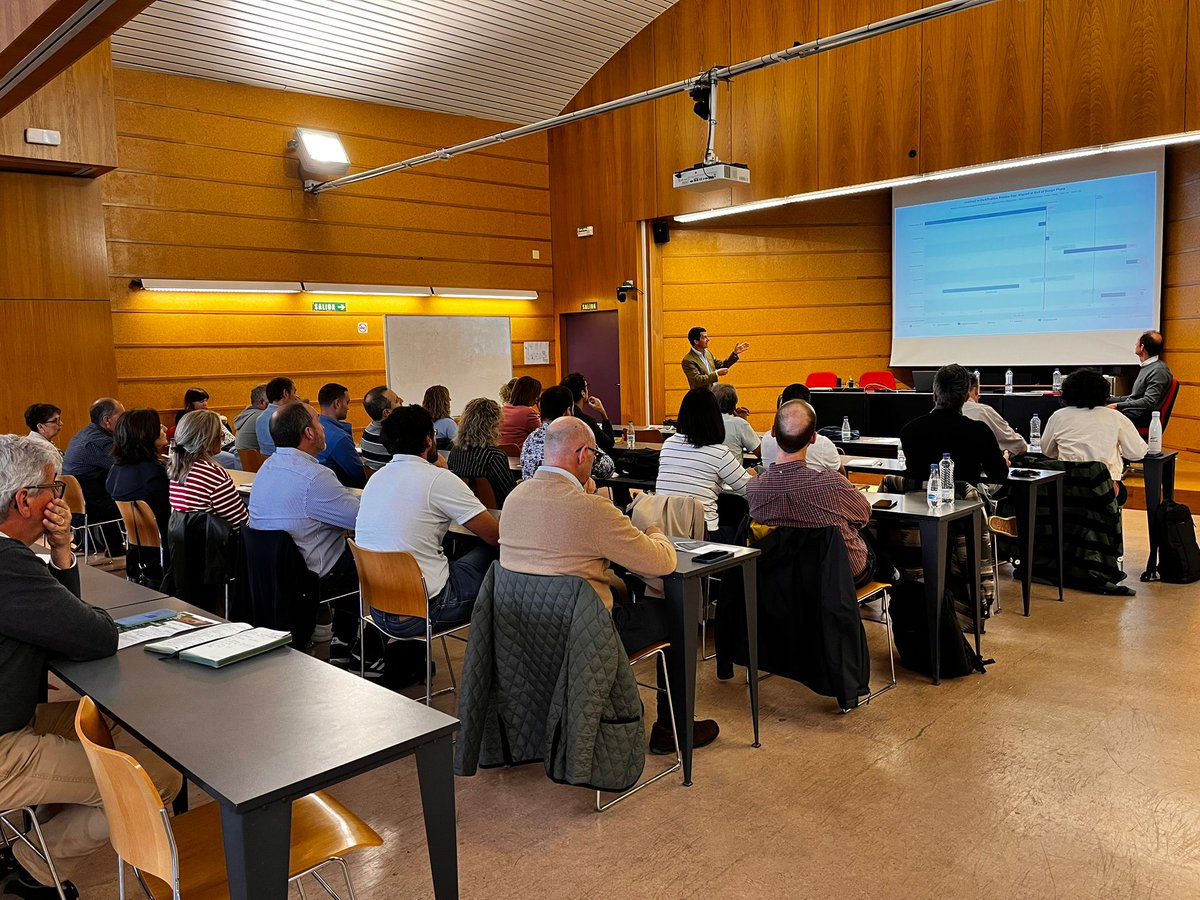
On 29 April 2026, our partner INTIA organised the 5th Spanish Community of Practice workshop, bringing together more than 60 participants from across the agricultural sector, including farmers, advisors, researchers, industry representatives, and public policy officials.
The workshop focused on incentives for environmental practices and carbon farming, exploring the latest developments in European regulations, the role of carbon farming within the CAP, and different compensation mechanisms supporting the transition towards more sustainable agricultural systems.
Key topics discussed included:
🌾 Climate objectives of the future CAP and related public funding
🌍 Cost-effectiveness of carbon farming practices
📑 European regulations and carbon credit programmes
🤝 Perspectives on carbon farming in the transition to resilient farming systems
#SoilValues #CarbonFarming #RegenerativeAgriculture #SoilHealth #CommunityOfPractice #SustainableFarming
1
2
2
54
Apr 29
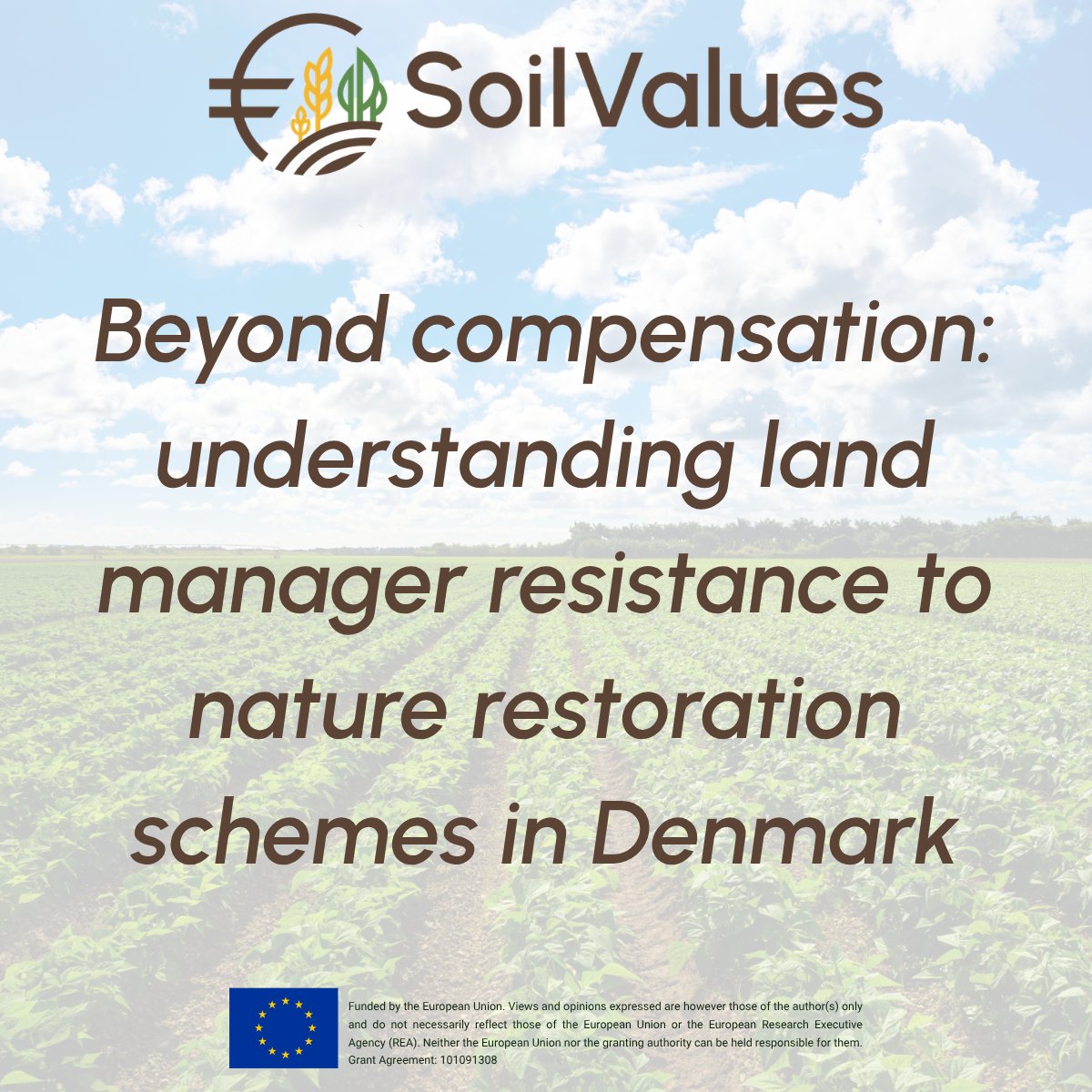
🌱 𝐖𝐡𝐲 𝐝𝐨 𝐥𝐚𝐧𝐝 𝐦𝐚𝐧𝐚𝐠𝐞𝐫𝐬 𝐡𝐞𝐬𝐢𝐭𝐚𝐭𝐞 𝐭𝐨 𝐫𝐞𝐬𝐭𝐨𝐫𝐞 𝐰𝐞𝐭𝐥𝐚𝐧𝐝𝐬, 𝐞𝐯𝐞𝐧 𝐰𝐡𝐞𝐧 𝐜𝐨𝐦𝐩𝐞𝐧𝐬𝐚𝐭𝐢𝐨𝐧 𝐢𝐬 𝐚𝐯𝐚𝐢𝐥𝐚𝐛𝐥𝐞?
Wetland restoration is central to Europe’s climate and biodiversity goals. Yet, participation in voluntary schemes remains lower than expected. Our latest research explores why.
Based on interviews with Danish land managers, the study shows that decisions are not driven by economics alone. Farmers balance financial considerations with family heritage, attachment to place, autonomy, and the day-to-day realities of running a farm.
At the same time, practical barriers, from administrative complexity to land fragmentation and policy uncertainty, can make participation challenging
👉 Key takeaway: increasing uptake requires more than financial incentives. Policies need to build trust, address operational constraints, and recognise the diverse values farmers attach to their land.
📄 Read the paper: soilvalues.eu/scientific-pap…
#SoilValues #NatureRestoration #Wetlands #SustainableFarming #SoilHealth #ClimateAction
1
3
8
112
Apr 7
𝐒𝐭𝐫𝐞𝐧𝐠𝐭𝐡𝐞𝐧𝐢𝐧𝐠 𝐫𝐞𝐠𝐞𝐧𝐞𝐫𝐚𝐭𝐢𝐯𝐞 𝐚𝐠𝐫𝐢𝐜𝐮𝐥𝐭𝐮𝐫𝐞 𝐢𝐧 𝐒𝐞𝐫𝐛𝐢𝐚
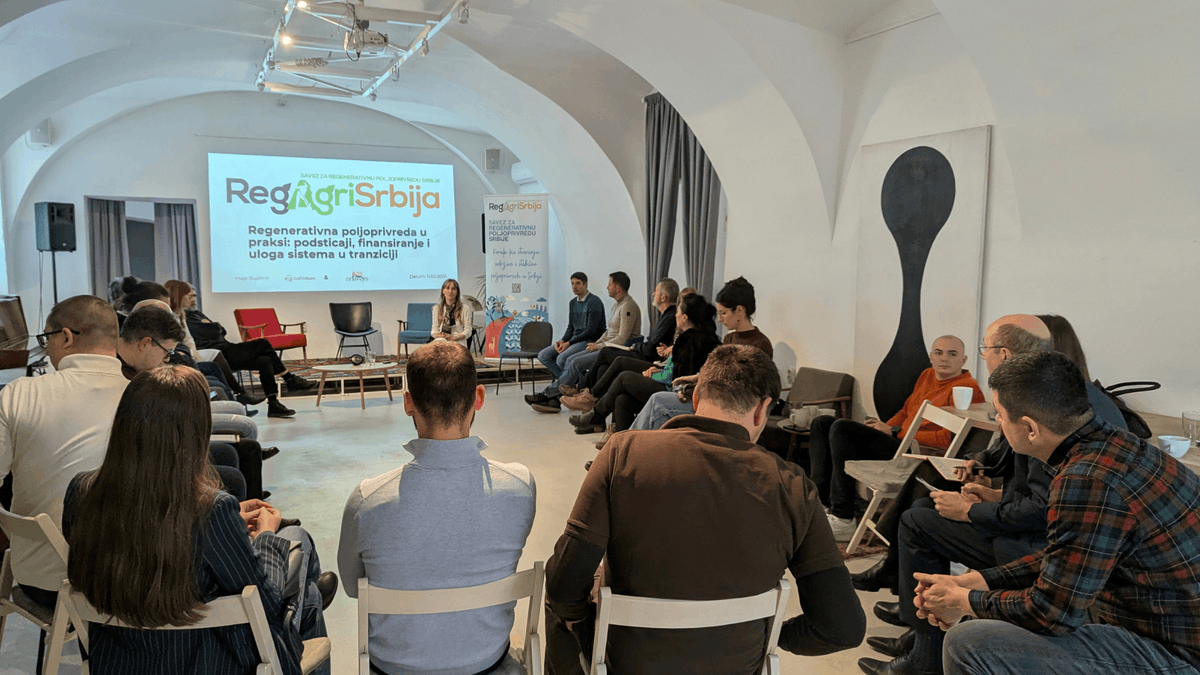
The 4th Serbian Community of Practice brought together members of the Regenerative Agriculture Alliance of Serbia. The meeting provided an opportunity to share concrete results in promoting and implementing regenerative practices across their respective institutions and sectors. From educational programmes to demonstration farms, the Alliance’s activities are steadily expanding across Serbia.
At the same time, key challenges and open questions were highlighted:
• Limited systemic support for farmers transitioning to regenerative agriculture
• Barriers to accessing financial resources
• The need to strengthen public awareness of soil health
• What regenerative agriculture means in the local context
• How to define and verify regenerative practices
• Which actors are essential to drive systemic change
Moving forward, collaboration will be essential to turn this momentum into lasting impact and to better support farmers in their transition.
#SoilValues #RegenerativeAgriculture #SoilHealth #CommunityOfPractice
2
1
3
75
Apr 7
𝐒𝐭𝐫𝐞𝐧𝐠𝐭𝐡𝐞𝐧𝐢𝐧𝐠 𝐫𝐞𝐠𝐞𝐧𝐞𝐫𝐚𝐭𝐢𝐯𝐞 𝐚𝐠𝐫𝐢𝐜𝐮𝐥𝐭𝐮𝐫𝐞 𝐢𝐧 𝐒𝐞𝐫𝐛𝐢𝐚
The 4th Serbian Community of Practice brought together members of the Regenerative Agriculture Alliance of Serbia. The meeting provided an opportunity to share concrete results in promoting and implementing regenerative practices across their respective institutions and sectors. From educational programmes to demonstration farms, the Alliance’s activities are steadily expanding across Serbia.
At the same time, key challenges and open questions were highlighted:
• Limited systemic support for farmers transitioning to regenerative agriculture
• Barriers to accessing financial resources
• The need to strengthen public awareness of soil health
• What regenerative agriculture means in the local context
• How to define and verify regenerative practices
• Which actors are essential to drive systemic change
Moving forward, collaboration will be essential to turn this momentum into lasting impact and to better support farmers in their transition.
#SoilValues #RegenerativeAgriculture #SoilHealth #CommunityOfPractice
1
1
4
88
Mar 25
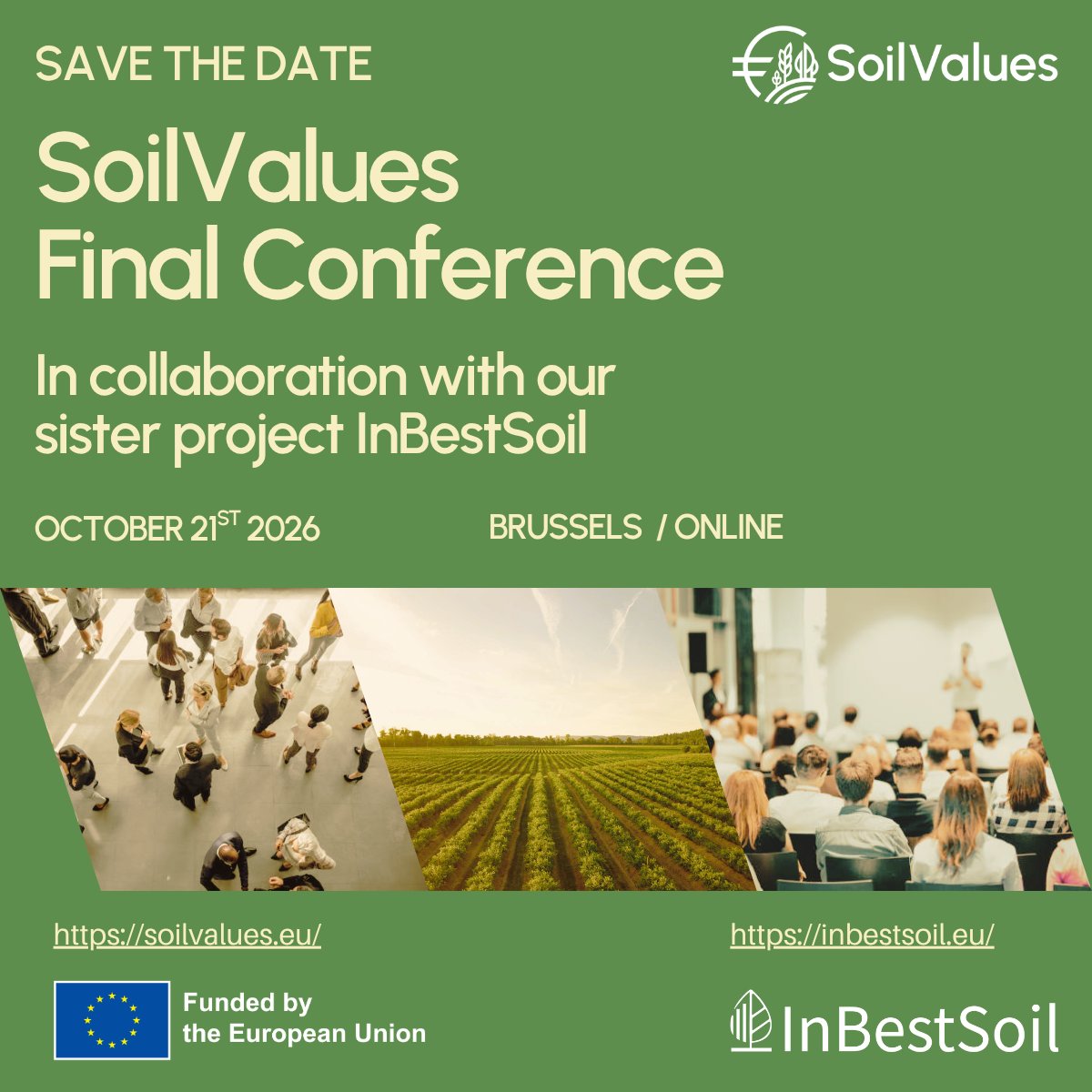
𝐒𝐚𝐯𝐞 𝐭𝐡𝐞 𝐃𝐚𝐭𝐞!
We are happy to announce that the 𝐒𝐨𝐢𝐥𝐕𝐚𝐥𝐮𝐞𝐬 𝐅𝐢𝐧𝐚𝐥 𝐂𝐨𝐧𝐟𝐞𝐫𝐞𝐧𝐜𝐞 will take place on 21 October 2026 in Brussels & online.
This final event will be organised jointly with our sister project InBestSoil, bringing together a wide range of stakeholders to exchange key results, insights, and future perspectives on soil health.
🌱 A unique opportunity to connect, learn and discuss soil health business models and sustainable land management.
More information on the program and registration will be shared soon—stay tuned!
🔗 soilvalues.eu/
🔗 inbestsoil.eu/
#SoilHealth #EUProjects #HorizonEurope #Sustainability #SoilValues #InBestSoil
1
3
3
151
Feb 25
📣 𝐒𝐨𝐢𝐥𝐕𝐚𝐥𝐮𝐞𝐬 𝐈𝐧𝐭𝐞𝐫𝐯𝐢𝐞𝐰 𝐒𝐞𝐫𝐢𝐞𝐬 – 𝐈𝐧𝐬𝐢𝐠𝐡𝐭𝐬 𝐟𝐫𝐨𝐦 𝐨𝐮𝐫 𝐬𝐢𝐬𝐭𝐞𝐫 𝐩𝐫𝐨𝐣𝐞𝐜𝐭 𝐈𝐧𝐁𝐞𝐬𝐭𝐒𝐨𝐢𝐥
In this episode of the SoilValues Interview Series, we share a set of conversations with partners from InBestSoil, our sister project, exploring how soil health can be supported through business models, Living Labs, and enabling policy frameworks.
We spoke with Andrés Rodriguez-Seijo, coordinator of InBestSoil, about the real costs of establishing soil health business models and the importance of sharing risks and investments among farmers, local public actors, and other stakeholders. He also reflects on the need to better recognise the many ecosystem services provided by healthy soils that often remain invisible in economic terms.
Virginia Sánchez Navarro, coordinator of Lighthouse 2, takes us to a former uranium mining area where soils face multiple risks: pollution, metallic contamination, hyper-acidification, and low nutrient levels. She explains how phytostabilisation approaches — combining metal-tolerant plants with organic and inorganic amendments — are being tested to reduce contamination and restore soil functions.
We also hear from Austra Zuševica, coordinator of Lighthouse 6, who shares experience from a gravel mining site affected by erosion and flooding, where restoration efforts focus on fertilisation and tree planting as first steps towards rebuilding soil structure.
Finally, Chiara De Notaris reflects on what the upcoming Soil Monitoring Law could mean for farmers in practice and which policy choices could help accelerate private investment in soil health. She also highlights the importance of policy coherence and of combining practice-based payments with outcome-based rewards to better balance farmers’ risks.
👉 Watch the full interviews and follow the SoilValues series for more expert perspectives on soil health, innovation, and policy: youtu.be/BLJ2so7Vei0
#SoilValues #InBestSoil #SoilHealth #LivingLabs #Sustainability #EUProjects
1
3
92
Feb 11
📣 SoilValues Interview Series – Rethinking Farming Models for Healthier Soils
In the second part of our conversation with Perrine BULGHERONI (ex HERVE-GRUYER), Mission Soil Ambassador, we focus more closely on her experience as an agroecology practitioner and on how new generations of farmers are reshaping the way farming is understood and organised.
Perrine reflects on the growing number of farmers who do not come from a traditional agricultural background and on the need to experiment with new farming models. She describes a shift from a conventional, individual-based vision of farming towards more cooperative and land-sharing systems, where several producers work together on the same field.
She is accompanying this approach with research across multiple dimensions — legal, accounting, farming, and agronomic — with the aim of developing a replicable hashtag#businessmodel that can adapt to local contexts.
The conversation also addresses some of the main barriers to adopting sustainable soil practices and the need to rebalance the system so that farmers can regain a fairer share of the value that is often lost along the chain before food reaches consumers.
👉 Watch Part 2 of the interview to explore how innovative farming models, cooperation, and systemic change can support healthier soils and fairer agri-food systems: lnkd.in/ejZJy8nX
#SoilValues #MissionSoil #SoilHealth #Agroecology #SustainableFarming #FoodSystems #EUProjects
1
57
Feb 4
📩 The SoilValues 5th Newsletter is out!
The fifth edition of the SoilValues newsletter marks an important moment in the project’s trajectory, as we enter its final year and accelerate our work on soil health and sustainable value-based business models.
In this edition you will find:
🔹 Field-level insights from Communities of Practice and Testing Grounds
🔹 Key takeaways from recent European events and policy-oriented discussions
🔹 Recent publications and interviews exploring incentives, governance, and socio-economic conditions for soil health transitions
🔹 Forthcoming events, including the Forum for the Future of Agriculture and the SoilValues Final Conference in Brussels
👉 Access the newsletter here: mailchi.mp/56808cf3129e/soil…
#SoilValues #SoilHealth #MissionSoil #HorizonEurope
1
8
94
Jan 28
📣 SoilValues Interview Series - What Enables the Transition to Healthier Soils?
In the latest episode of our SoilValues Interview Series, we spoke with Perrine Bulgheroni, Mission Soil Ambassador, about what truly enables the transition towards healthier soils — and how the risks and costs of this transition should be shared.
Perrine highlights the crucial role of farmer training and capacity building, stressing that knowledge generated at institutional and research levels must effectively reach those working on the ground. She also underlines the need for governance transformation, as current frameworks often fail to fully support long-term soil health practices.
Another key insight from this conversation is the importance of fair risk- and cost-sharing. When new soil-friendly business models are introduced, the burden should not fall solely on farmers. Instead, risks and costs should be shared across the entire society that benefits — including consumers and public institutions.
👉 Watch the full interview to discover why systemic change, inclusive governance, and shared responsibility are essential to make soil health transitions truly sustainable: youtu.be/zr7vU_iGFE0
#SoilValues #MissionSoil #SoilHealth #Sustainability #AgriFoodSystems #EUProjects
2
84
Jan 26
📣 SoilValues Interview Series – Rethinking Farming Models for Healthier Soils
In the second part of our conversation with Perrine Bulgheroni, Mission Soil Ambassador, we focus more closely on her experience as an agroecology practitioner and on how new generations of farmers are reshaping the way farming is understood and organised.
Perrine reflects on the growing number of farmers who do not come from a traditional agricultural background and on the need to experiment with new farming models. She describes a shift from a conventional, individual-based vision of farming towards more cooperative and land-sharing systems, where several producers work together on the same field.
She is accompanying this approach with research across multiple dimensions — legal, accounting, farming, and agronomic — with the aim of developing a replicable business model that can adapt to local contexts.
The conversation also addresses some of the main barriers to adopting sustainable soil practices and the need to rebalance the system so that farmers can regain a fairer share of the value that is often lost along the chain before food reaches consumers.
👉 Watch Part 2 of the interview to explore how innovative farming models, cooperation, and systemic change can support healthier soils and fairer agri-food systems: youtu.be/ghIiYY8PhQQ
#SoilValues #MissionSoil #SoilHealth #Agroecology #SustainableFarming #FoodSystems #EUProjects
2
5
100
Jan 21
From Governance to Practice: Business Models and Carbon Farming for Soil Health
In the first part of the interview, we reflected on the importance of a systemic approach to soil governance. In this second conversation, Tristano Bacchetti De Gregoris brings the discussion into practice, drawing on his experience in EU-funded projects.
The interview explores the methodological approach developed within GOV4ALL, with particular attention to how business models can support sustainable soil management and create the conditions for long-term engagement by land managers.
Tristano also shares his perspective on carbon farming, drawing on insights from Project Credible and discusses its potential to connect environmental ambition with economic feasibility during the transition towards more sustainable soil health practices.
🎥 Watch the full interview and follow our series as we continue bringing expert insights on soil health and sustainability.
lnkd.in/eRMvnHZb
#SoilValues #EUProjects #Farmers #SoilHealth #Sustainability
1
4
52
5 Dec 2025
𝐓𝐨𝐰𝐚𝐫𝐝𝐬 𝐈𝐧𝐜𝐥𝐮𝐬𝐢𝐯𝐞 𝐁𝐮𝐬𝐢𝐧𝐞𝐬𝐬 𝐌𝐨𝐝𝐞𝐥𝐬 𝐟𝐨𝐫 𝐒𝐨𝐢𝐥 𝐇𝐞𝐚𝐥𝐭𝐡: 𝐒𝐢𝐱 𝐏𝐞𝐫𝐬𝐩𝐞𝐜𝐭𝐢𝐯𝐞𝐬 𝐨𝐧 𝐕𝐚𝐥𝐮𝐞𝐬
Through a series of interviews we are exploring transformative changes and inclusive business models for soil health, gathering insights from researchers, practitioners, and innovators across Europe.
Our goal? To understand the many ways soil creates value and how we can support those who care for it.
🌍 To mark hashtag#WorldSoilDay, we are delighted to kick off the series with our coordinator Erik Mathijs, who introduces the hashtag#SoilValues project and presents our first policy brief: Towards Inclusive Business Models for Soil Health: Six Perspectives on Values.
The policy brief proposes a framework that builds on the Total Economic Value approach and identifies six complementary perspectives:
1️⃣ 𝐏𝐫𝐨𝐝𝐮𝐜𝐭𝐢𝐯𝐢𝐬𝐭 – soil as productive capital, improving yields and reducing costs
2️⃣ 𝐄𝐜𝐨𝐬𝐲𝐬𝐭𝐞𝐦 𝐒𝐞𝐫𝐯𝐢𝐜𝐞𝐬 – soil as a provider of public goods such as carbon storage and water regulation
3️⃣ 𝐑𝐞𝐬𝐢𝐥𝐢𝐞𝐧𝐜𝐞 – soil as insurance against environmental and economic shocks
4️⃣ 𝐍𝐨𝐧-𝐮𝐬𝐞 𝐯𝐚𝐥𝐮𝐞 – protecting soil for future generations and societal well-being
5️⃣ 𝐈𝐧𝐭𝐫𝐢𝐧𝐬𝐢𝐜 𝐯𝐚𝐥𝐮𝐞 – recognizing soil’s inherent worth beyond human utility
6️⃣ 𝐒𝐨𝐜𝐢𝐚𝐥 𝐯𝐚𝐥𝐮𝐞 – soil health as a driver of inclusive governance, equity, and innovation
▶️ 𝐖𝐚𝐭𝐜𝐡 𝐭𝐡𝐞 𝐢𝐧𝐭𝐞𝐫𝐯𝐢𝐞𝐰 𝐡𝐞𝐫𝐞: lnkd.in/eXan4tTK
Read the policy brief here: lnkd.in/ezstNJJ4
#soilvalues #soilhealth #euprojects #sustainability #businessmodels #worldsoilday #MissionSoilWeek #agriculture
38
26 Nov 2025
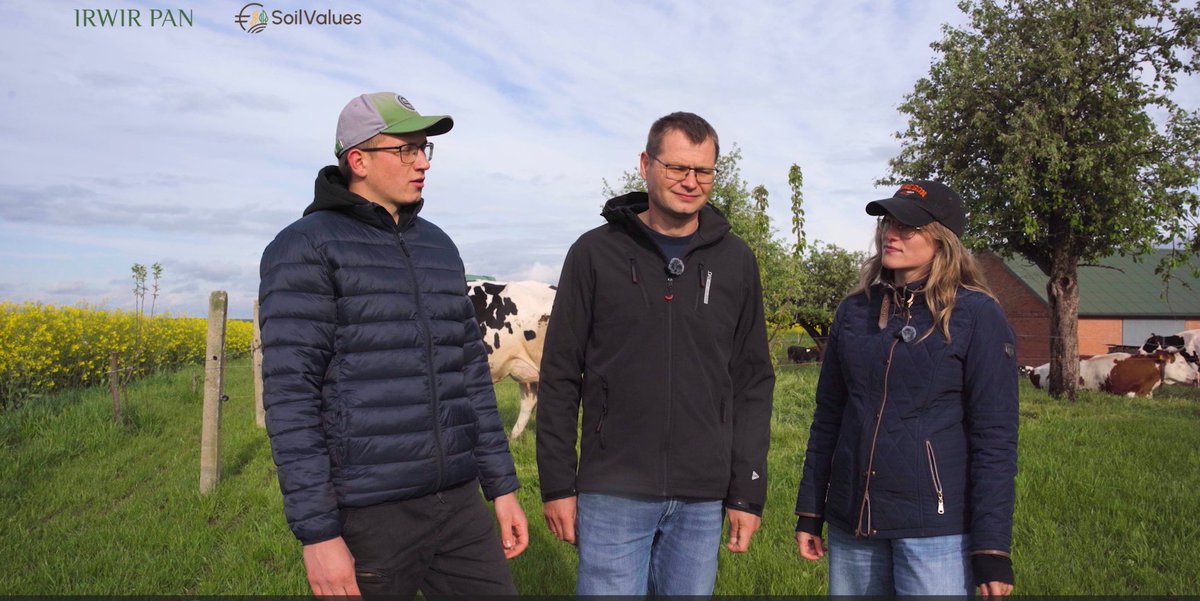
🌱 How do farmers translate soil-health knowledge into real, practical change on the ground?
In our new SoilValues field story from Poland, our project partner Adrianna Wojciechowska from IRWIR PAN meets with local farmers who are testing improved soil-management practices testing improved soil-management practices, including no-tillage, manure application, cover crops, and smarter crop rotations.
Their experience shows how small adjustments in field operations can make a meaningful difference for soil structure, biodiversity, and long-term productivity.
🎥 Watch the video to discover the farmers’ insights, the challenges they face, and what motivates them to innovate for healthier soils.
👉 youtu.be/_ExAjqP8Yqk
#SoilValues #SoilHealth #HorizonEurope #SustainableAgriculture #SoilBiodiversity #FarmingInnovation #EUProjects
2
50
19 Nov 2025
🌱 Communities of Practice (CoPs) are at the heart of SoilValues’ approach to innovating soil health. A CoP brings together farmers, researchers, businesses, and policymakers in a region to share knowledge and co-create solutions for sustainable land management.
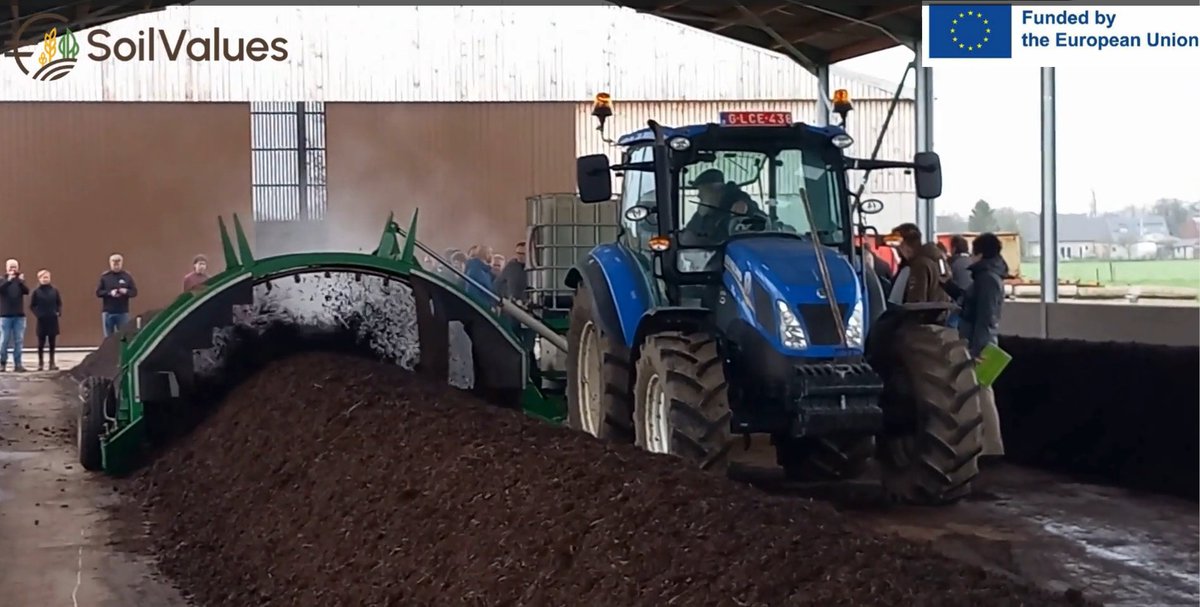
In Belgium, the CoP is focusing on a regional composting initiative in the northern part of the country. The goal is to create an economically and ecologically sound alternative fertilisation strategy — supporting farmers, enhancing soil fertility, and contributing to a more sustainable agricultural transition.
🎥 Watch our new video to learn more about the Belgian CoP and hear directly from the farmers and experts involved in this collaborative effort to strengthen soil health:
🔗 youtu.be/ckKRFqXDmnc
#SoilValues #SoilHealth #SustainableAgriculture #CommunityOfPractice #EUProjects #HorizonEurope #RegenerativeFarming
1
46
6 Nov 2025
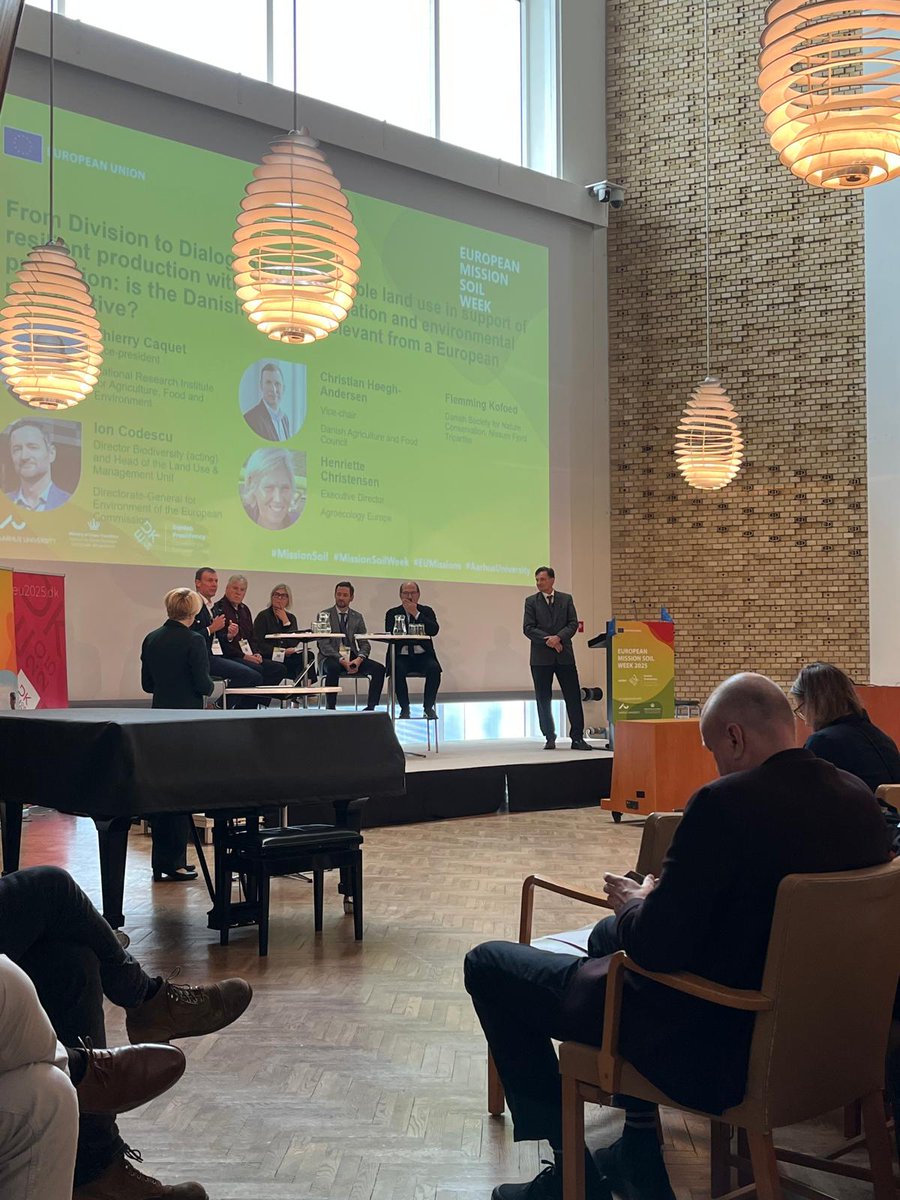
🌱 𝐖𝐫𝐚𝐩𝐩𝐢𝐧𝐠 𝐮𝐩 𝐚𝐧 𝐢𝐧𝐬𝐩𝐢𝐫𝐢𝐧𝐠 𝐰𝐞𝐞𝐤 𝐢𝐧 𝐀𝐚𝐫𝐡𝐮𝐬!
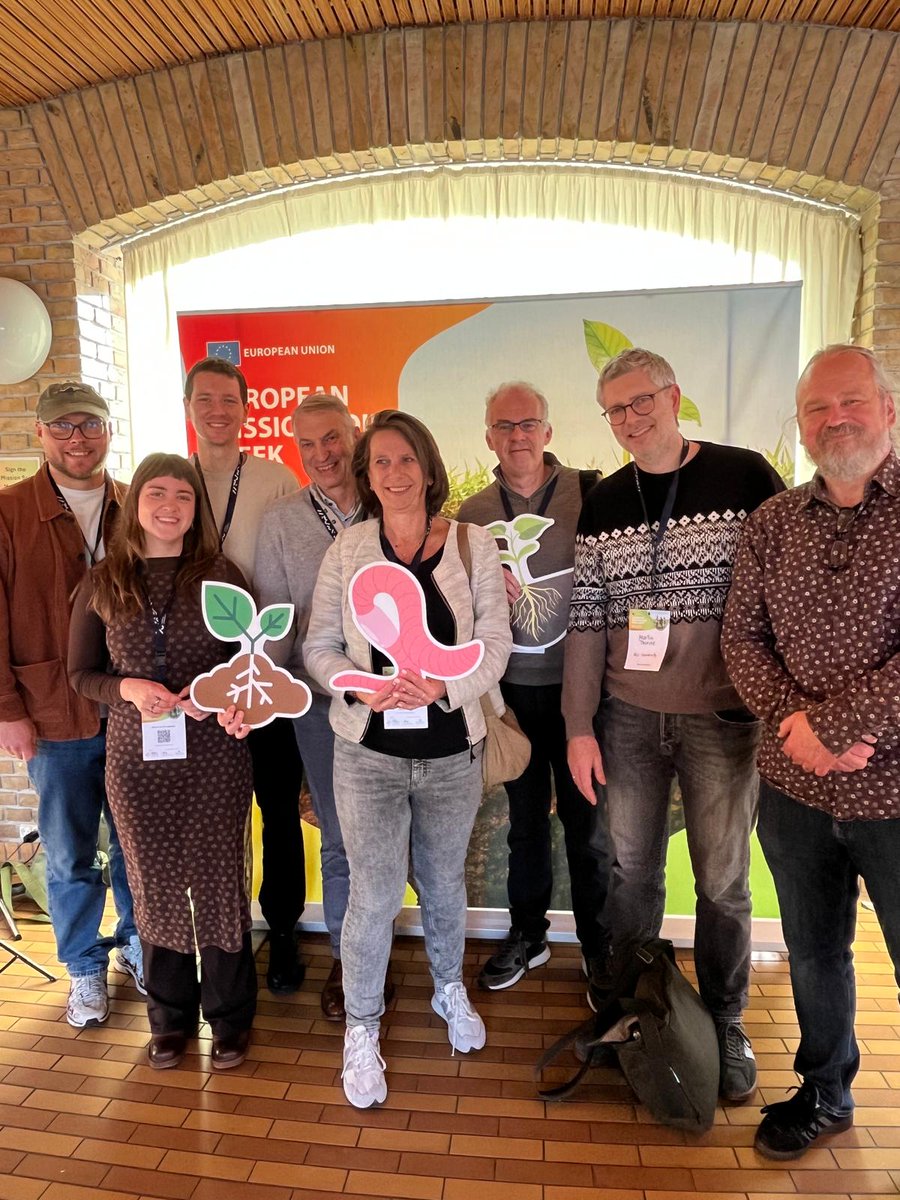
The European Mission Soil Week 2025 has come to an end — a vibrant exchange of ideas and collaborations to advance soil health across Europe.
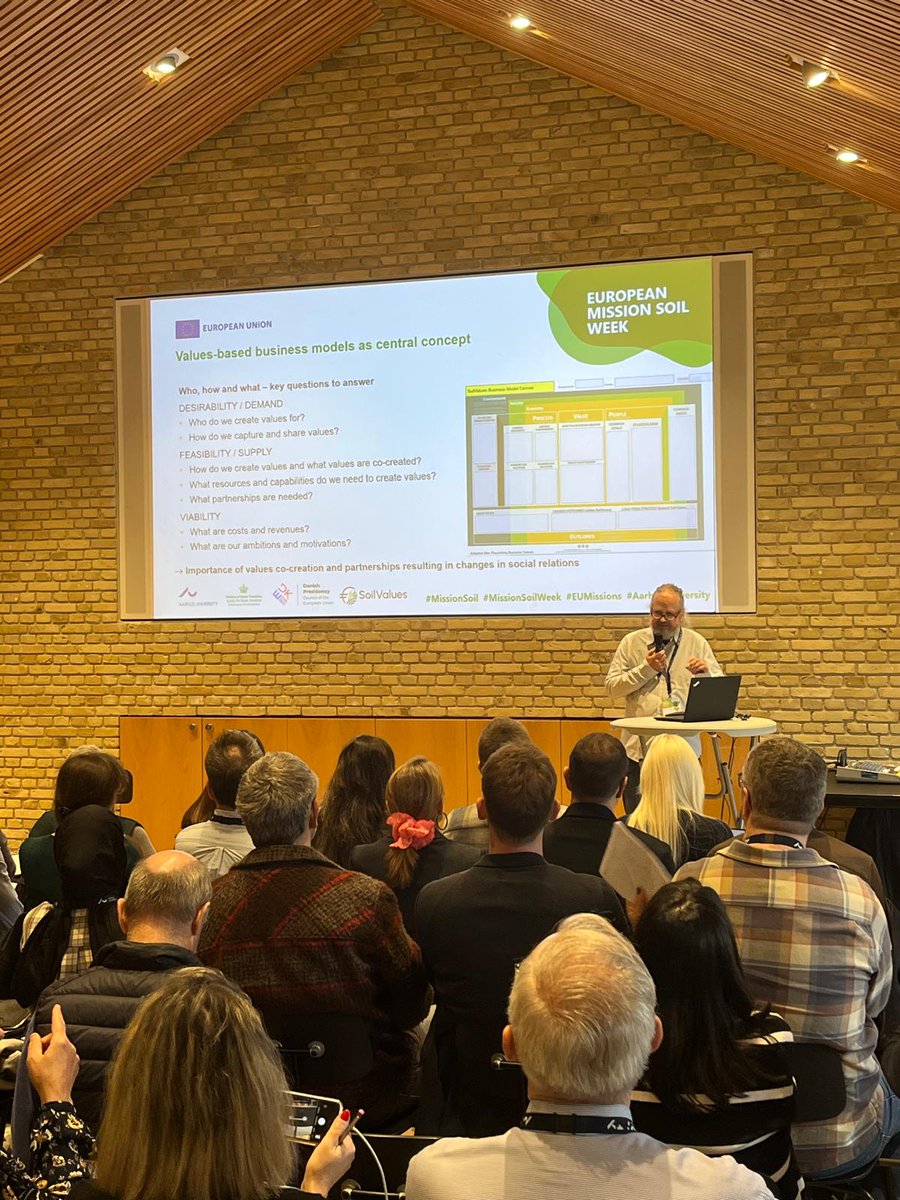
SoilValues contributed to the breakout session “Leveraging soil health for successful agricultural business models,” where Gerald Schwarz presented the project’s work and ideas about economically viable business models for soil health.
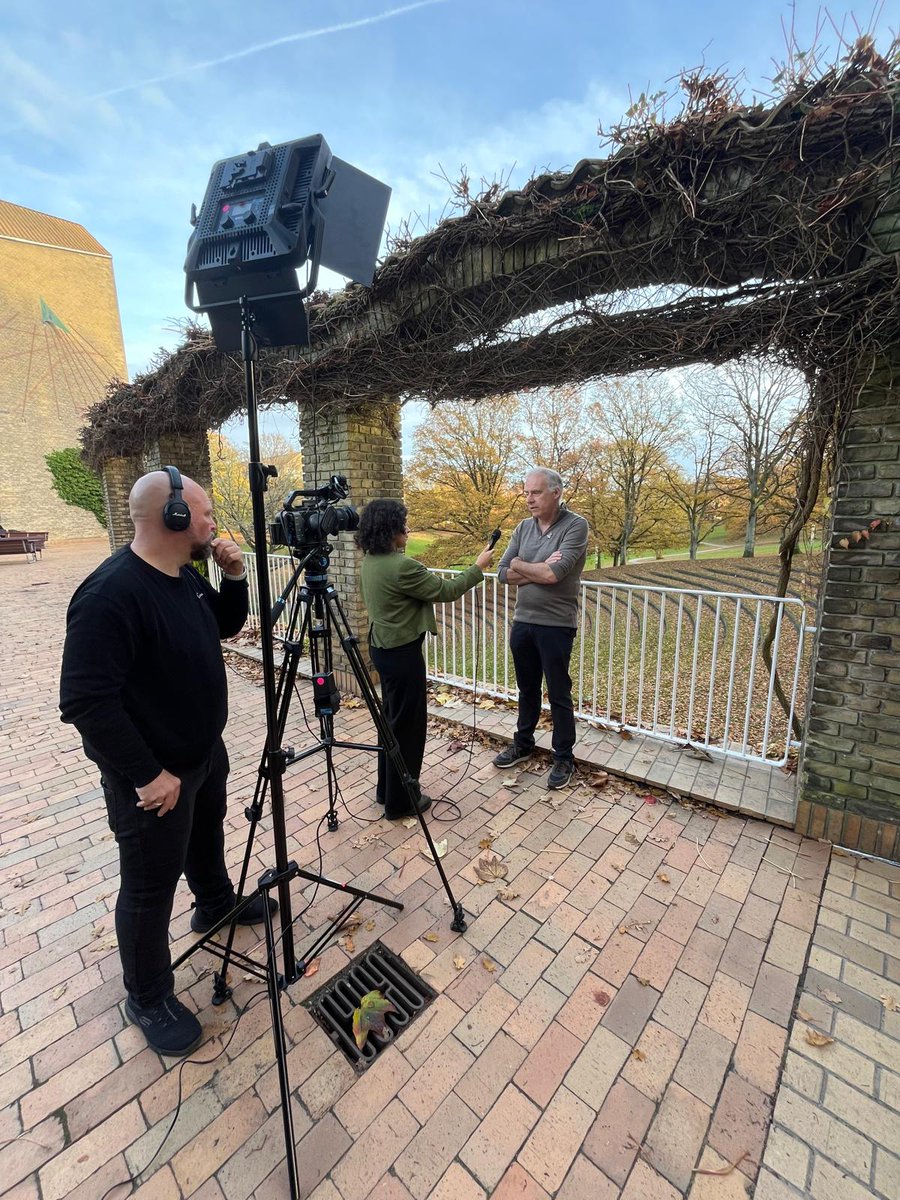
🎥 We also recorded a series of short interviews with leading experts on soil health and sustainable business models — capturing diverse perspectives on how to accelerate the EU transition towards healthier soils. Stay tuned for the upcoming video series!
A big thank you to all our partners who joined us in Aarhus and helped share the SoilValues vision — turning knowledge into action for healthier soils.
#SoilValues #MissionSoilWeek #SoilHealth #EUprojects #HorizonEurope #SustainableAgriculture #BusinessModels
1
33
29 Oct 2025
Healthy soils generate value in many different ways: they sustain food production, store carbon, support biodiversity, strengthen resilience to shocks, carry cultural meaning, and foster community well-being. But because these benefits are so diverse — and spread across many actors — no single policy instrument can capture them all.
Our new policy brief — “𝐓𝐨𝐰𝐚𝐫𝐝𝐬 𝐢𝐧𝐜𝐥𝐮𝐬𝐢𝐯𝐞 𝐛𝐮𝐬𝐢𝐧𝐞𝐬𝐬 𝐦𝐨𝐝𝐞𝐥𝐬 𝐟𝐨𝐫 𝐬𝐨𝐢𝐥 𝐡𝐞𝐚𝐥𝐭𝐡: 𝐬𝐢𝐱 𝐩𝐞𝐫𝐬𝐩𝐞𝐜𝐭𝐢𝐯𝐞𝐬 𝐨𝐧 𝐯𝐚𝐥𝐮𝐞” — proposes a framework that builds on the 𝐓𝐨𝐭𝐚𝐥 𝐄𝐜𝐨𝐧𝐨𝐦𝐢𝐜 𝐕𝐚𝐥𝐮𝐞 approach and identifies six complementary perspectives:
1️⃣ 𝐏𝐫𝐨𝐝𝐮𝐜𝐭𝐢𝐯𝐢𝐬𝐭 – soil as productive capital, improving yields and reducing costs
2️⃣ 𝐄𝐜𝐨𝐬𝐲𝐬𝐭𝐞𝐦 𝐒𝐞𝐫𝐯𝐢𝐜𝐞𝐬 – soil as a provider of public goods such as carbon storage and water regulation
3️⃣ 𝐑𝐞𝐬𝐢𝐥𝐢𝐞𝐧𝐜𝐞 – soil as insurance against environmental and economic shocks
4️⃣ 𝐍𝐨𝐧-𝐮𝐬𝐞 𝐯𝐚𝐥𝐮𝐞 – protecting soil for future generations and societal well-being
5️⃣ 𝐈𝐧𝐭𝐫𝐢𝐧𝐬𝐢𝐜 𝐯𝐚𝐥𝐮𝐞 – recognizing soil’s inherent worth beyond human utility
6️⃣ 𝐒𝐨𝐜𝐢𝐚𝐥 – soil health as a driver of inclusive governance, equity, and innovation
The message is clear: a 𝐦𝐮𝐥𝐭𝐢-𝐩𝐞𝐫𝐬𝐩𝐞𝐜𝐭𝐢𝐯𝐞 𝐩𝐨𝐥𝐢𝐜𝐲 𝐦𝐢𝐱 is essential. Market-based schemes can work for some values, but legal protections, cultural investments, and community-led initiatives are equally important. Only by aligning these diverse perspectives can we design fair and effective incentives for soil stewardship that last.
👉 𝐑𝐞𝐚𝐝 𝐭𝐡𝐞 𝐏𝐨𝐥𝐢𝐜𝐲 𝐁𝐫𝐢𝐞𝐟 𝐡𝐞𝐫𝐞: bit.ly/3Vpwgic
📚 Discover all our publications! bit.ly/3VTYfqu
#SoilValues #SoilHealth #Policy #Sustainability #EUProjects
1
2
60
21 Oct 2025
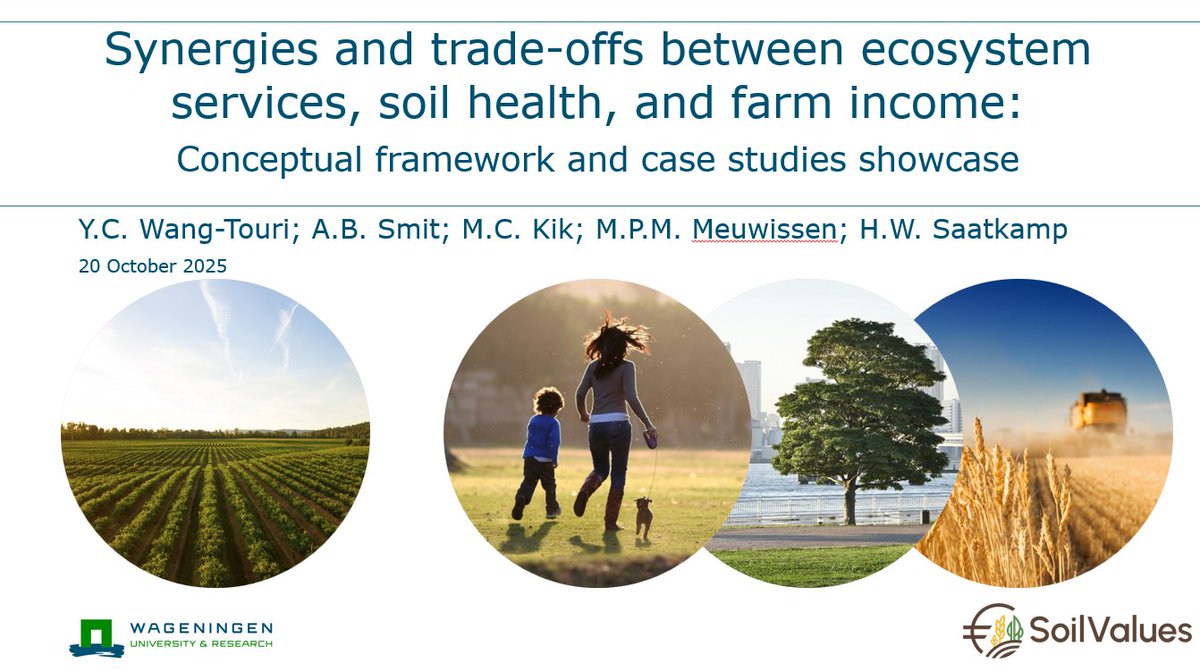
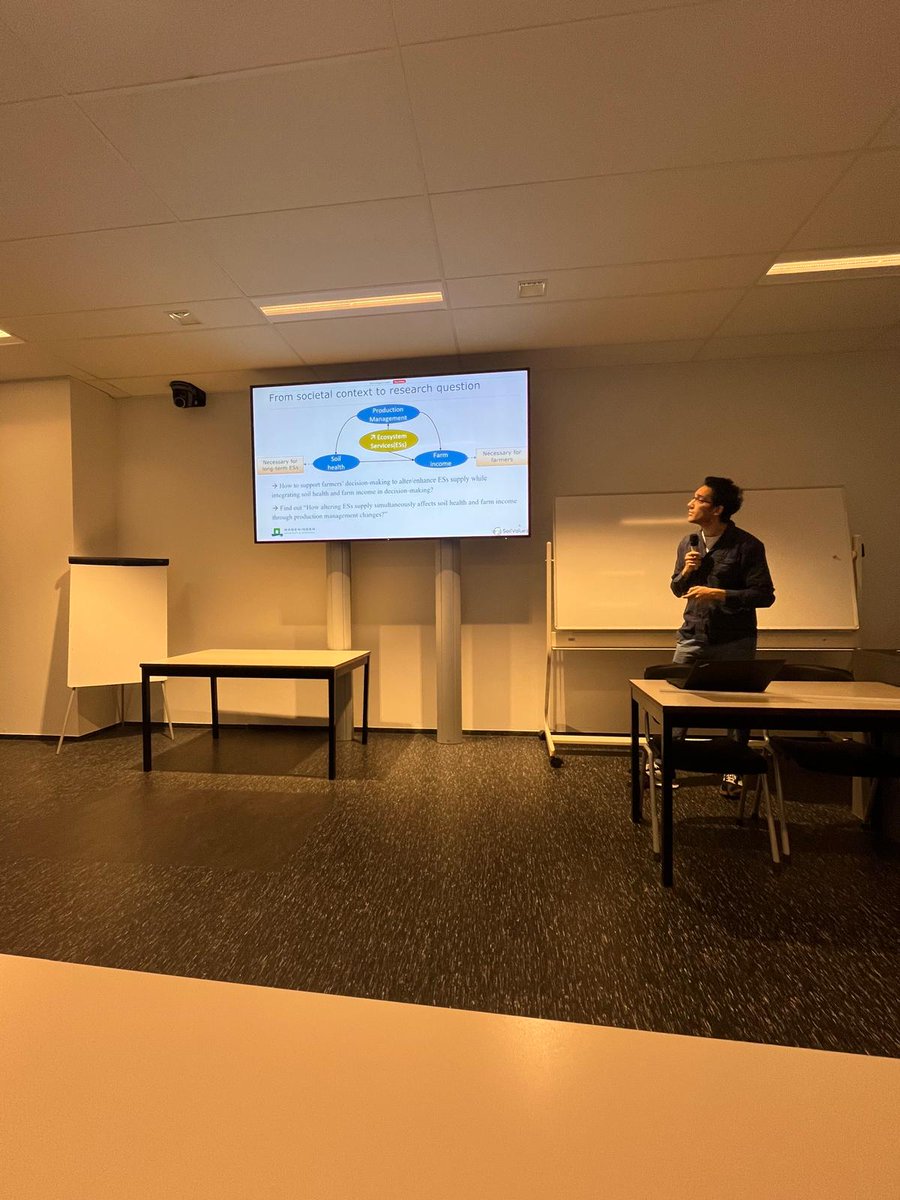
Yesterday, Youssef Wang-Touri (Wageningen University & Research) gave a seminar hosted by KU Leuven, presenting his latest paper: “Synergies and trade-offs between ecosystem services, soil health, and farm income: Conceptual framework and case studies showcase.”
🌱 In this engaging session, Youssef introduced the conceptual framework from his first article, which examines how changes in ecosystem services (ESs) supply can simultaneously impact soil health and farm income through farm management decisions. He explored key synergies and trade-offs and raised the critical question: How can we support farmers’ decision-making to alter or enhance ESs supply while integrating soil health and farm income into their choices?
💡 Beyond presenting results, the seminar was a valuable opportunity to gather feedback for his second paper—currently in progress—which focuses on co-designing sustainable farm business models. The discussion helped refine the participatory approach and deepen understanding of how farmers evaluate alternative strategies.
📚 This Seminar was part of the SoilValues' ongoing commitment to bridging research and practice in soil health and ecosystem services. Many thanks to Youssef Wang-Touri for sharing his work and to the KU Leuven partners for hosting an engaging and insightful seminar!
Read the full paper here: soilvalues.eu/scientific-pap…
#SoilValues #EcosystemServices #SoilHealth #SustainableAgriculture #CircularEconomy #HorizonEurope #RegenerativeAgriculture
1
2
130
1 Oct 2025
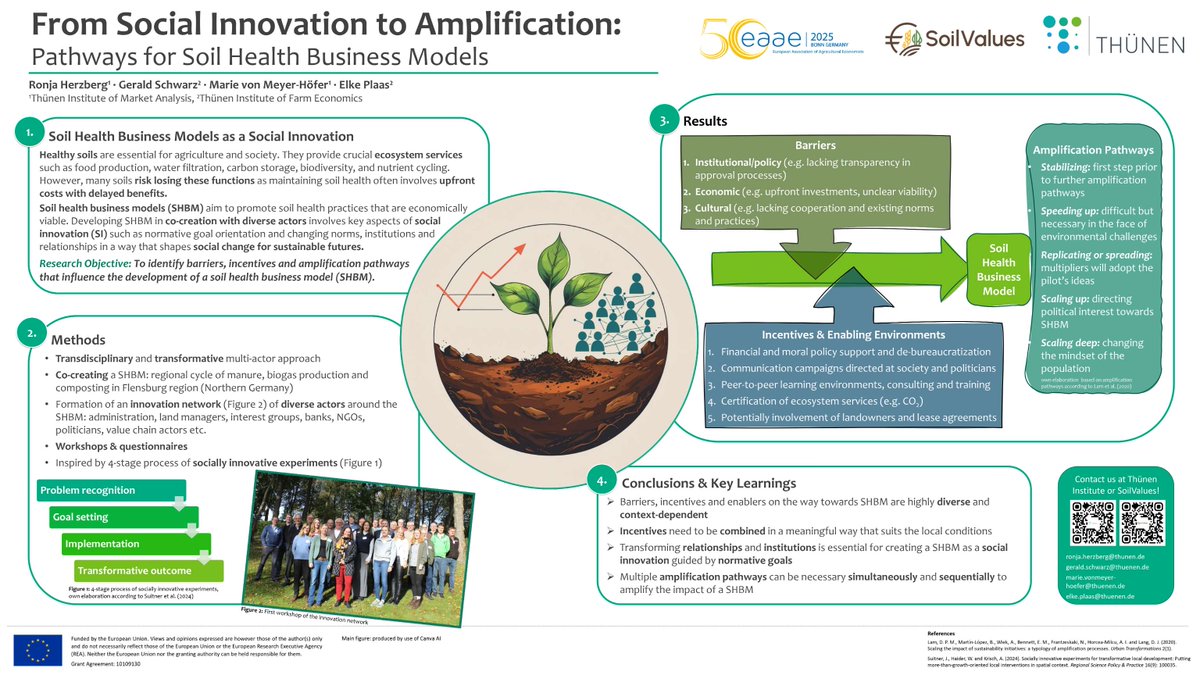
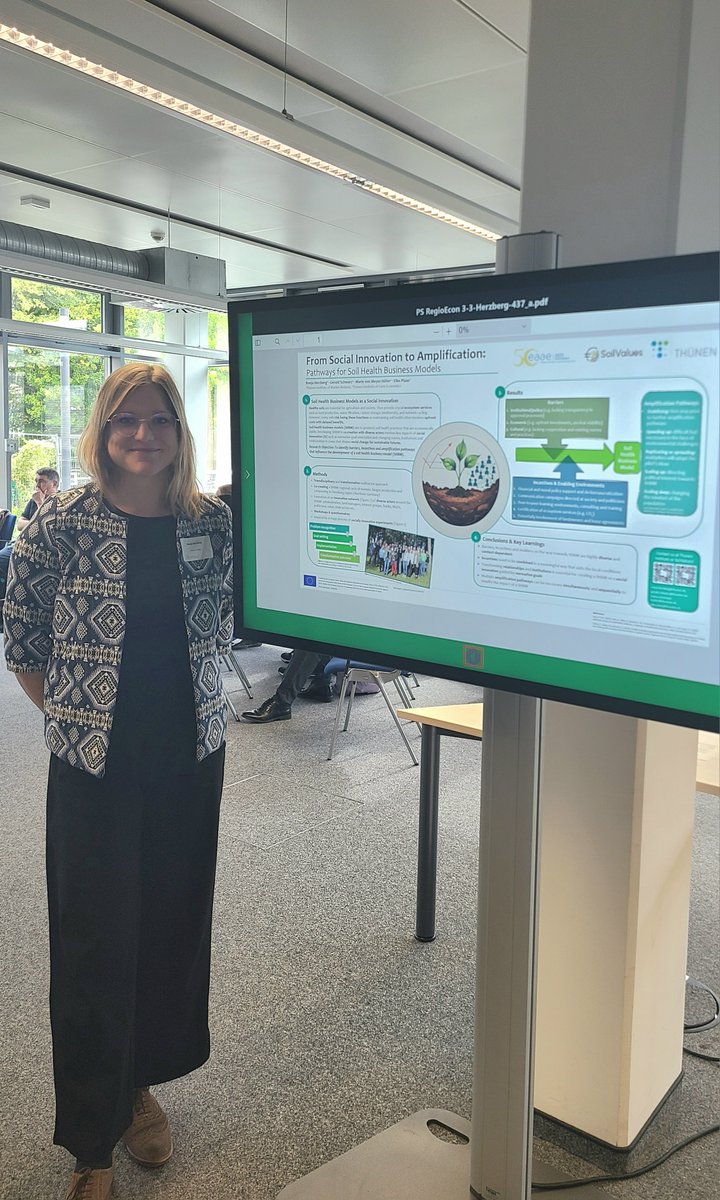
At EAAE congress 2025, SoilValues presented the poster: “𝐅𝐫𝐨𝐦 𝐒𝐨𝐜𝐢𝐚𝐥 𝐈𝐧𝐧𝐨𝐯𝐚𝐭𝐢𝐨𝐧 𝐭𝐨 𝐀𝐦𝐩𝐥𝐢𝐟𝐢𝐜𝐚𝐭𝐢𝐨𝐧: 𝐏𝐚𝐭𝐡𝐰𝐚𝐲𝐬 𝐟𝐨𝐫 𝐒𝐨𝐢𝐥 𝐇𝐞𝐚𝐥𝐭𝐡 𝐁𝐮𝐬𝐢𝐧𝐞𝐬𝐬 𝐌𝐨𝐝𝐞𝐥𝐬”
𝐇𝐞𝐚𝐥𝐭𝐡𝐲 𝐬𝐨𝐢𝐥𝐬 are essential for agriculture and society, yet many soils risk losing their crucial functions because maintaining soil health often involves upfront costs with delayed benefits. 𝐒𝐨𝐢𝐥 𝐇𝐞𝐚𝐥𝐭𝐡 𝐁𝐮𝐬𝐢𝐧𝐞𝐬𝐬 𝐌𝐨𝐝𝐞𝐥𝐬 (𝐒𝐇𝐁𝐌𝐬) aim to address this challenge by making soil-friendly practices economically viable. Developed in 𝐜𝐨-𝐜𝐫𝐞𝐚𝐭𝐢𝐨𝐧 with diverse actors, SHBMs embody key aspects of social innovation — changing norms, institutions, and relationships to support sustainable futures.
The research aimed to uncover the 𝐛𝐚𝐫𝐫𝐢𝐞𝐫𝐬, 𝐢𝐧𝐜𝐞𝐧𝐭𝐢𝐯𝐞𝐬, and 𝐚𝐦𝐩𝐥𝐢𝐟𝐢𝐜𝐚𝐭𝐢𝐨𝐧 𝐩𝐚𝐭𝐡𝐰𝐚𝐲𝐬 that shape SHBM development through a transdisciplinary case in the Flensburg region (Northern Germany), where we co-created a SHBM focused on 𝐦𝐚𝐧𝐮𝐫𝐞 𝐫𝐞𝐜𝐲𝐜𝐥𝐢𝐧𝐠, 𝐛𝐢𝐨𝐠𝐚𝐬 𝐩𝐫𝐨𝐝𝐮𝐜𝐭𝐢𝐨𝐧 and 𝐜𝐨𝐦𝐩𝐨𝐬𝐭𝐢𝐧𝐠
The findings show that barriers, incentives, and enabling conditions are 𝐡𝐢𝐠𝐡𝐥𝐲 𝐜𝐨𝐧𝐭𝐞𝐱𝐭-𝐝𝐞𝐩𝐞𝐧𝐝𝐞𝐧𝐭. Incentives need to be carefully combined and adapted to 𝐥𝐨𝐜𝐚𝐥 𝐫𝐞𝐚𝐥𝐢𝐭𝐢𝐞𝐬. Crucially, the transformation of relationships and institutions emerged as a cornerstone for creating SHBMs as genuine 𝐬𝐨𝐜𝐢𝐚𝐥 𝐢𝐧𝐧𝐨𝐯𝐚𝐭𝐢𝐨𝐧𝐬.
Finally, the research highlights that impact does not come through a single route: 𝐦𝐮𝐥𝐭𝐢𝐩𝐥𝐞 𝐚𝐦𝐩𝐥𝐢𝐟𝐢𝐜𝐚𝐭𝐢𝐨𝐧 𝐩𝐚𝐭𝐡𝐰𝐚𝐲𝐬 — from stabilizing and speeding up to scaling out or deepening — may need to be pursued simultaneously to achieve lasting change.
Many thanks to 𝐑𝐨𝐧𝐣𝐚 𝐇𝐞𝐫𝐳𝐛𝐞𝐫𝐠, 𝐆𝐞𝐫𝐚𝐥𝐝 𝐒𝐜𝐡𝐰𝐚𝐫𝐳, 𝐌𝐚𝐫𝐢𝐞 𝐯𝐨𝐧 𝐌𝐞𝐲𝐞𝐫-𝐇𝐨̈𝐟𝐞𝐫, and 𝐄𝐥𝐤𝐞 𝐏𝐥𝐚𝐚𝐬 for their valuable contributions to this work!
#SoilValues #SoilHealth #EcosystemServices #SustainableAgriculture #CircularEconomy #HorizonEurope #RegenerativeAgriculture
1
3
110
24 Sep 2025
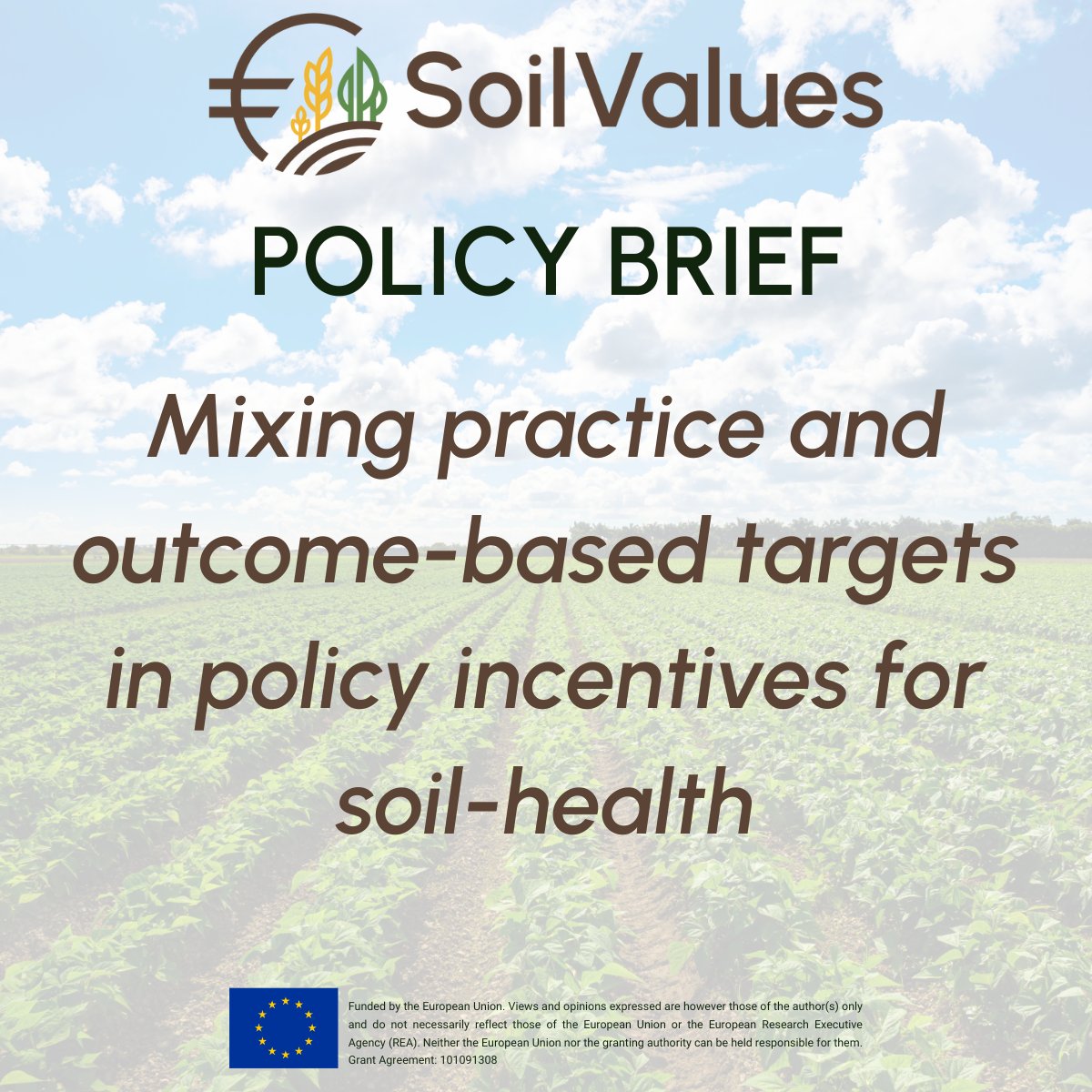
How should policy incentives be designed to truly support soil health? Our latest 𝐩𝐨𝐥𝐢𝐜𝐲 𝐛𝐫𝐢𝐞𝐟 — “𝘔𝘪𝘹𝘪𝘯𝘨 𝘱𝘳𝘢𝘤𝘵𝘪𝘤𝘦 𝘢𝘯𝘥 𝘰𝘶𝘵𝘤𝘰𝘮𝘦-𝘣𝘢𝘴𝘦𝘥 𝘵𝘢𝘳𝘨𝘦𝘵𝘴 𝘪𝘯 𝘱𝘰𝘭𝘪𝘤𝘺 𝘪𝘯𝘤𝘦𝘯𝘵𝘪𝘷𝘦𝘴 𝘧𝘰𝘳 𝘴𝘰𝘪𝘭-𝘩𝘦𝘢𝘭𝘵𝘩” — argues that the answer lies in striking the 𝐫𝐢𝐠𝐡𝐭 𝐛𝐚𝐥𝐚𝐧𝐜𝐞.
𝐏𝐫𝐚𝐜𝐭𝐢𝐜𝐞-𝐛𝐚𝐬𝐞𝐝 𝐢𝐧𝐜𝐞𝐧𝐭𝐢𝐯𝐞𝐬 remain crucial in the early stages of transition, giving farmers the upfront support they need to adopt new approaches. But on their own, they don’t always guarantee measurable improvements. On the other hand, 𝐨𝐮𝐭𝐜𝐨𝐦𝐞-𝐛𝐚𝐬𝐞𝐝 𝐢𝐧𝐜𝐞𝐧𝐭𝐢𝐯𝐞𝐬 reward tangible results, yet they can expose farmers to unpredictable risks and high implementation costs.
The interviews we conducted with policy experts show that a 𝐛𝐥𝐞𝐧𝐝𝐞𝐝 𝐚𝐩𝐩𝐫𝐨𝐚𝐜𝐡 is considered both more effective and fairer: practice-based incentives ensure 𝐬𝐭𝐚𝐛𝐢𝐥𝐢𝐭𝐲, while outcome-based ones encourage 𝐚𝐦𝐛𝐢𝐭𝐢𝐨𝐧 and reward 𝐢𝐦𝐩𝐚𝐜𝐭. Together, they create a pathway where farmers are supported in the short term while building long-term resilience for Europe’s soils.
👉 𝐑𝐞𝐚𝐝 𝐭𝐡𝐞 𝐏𝐨𝐥𝐢𝐜𝐲 𝐁𝐫𝐢𝐞𝐟 𝐡𝐞𝐫𝐞: bit.ly/3IpcyQP
📚 Discover all our publications! bit.ly/3VTYfqu
#SoilValues #SoilHealth #Policy #Sustainability #EUProjects #PolicyIncentives
3
47