Bestuurshoof: Solidariteit - Ons help bou aan 'n toekoms waarin ons kinders en hul kinders vry, veilig en voorspoedig sal wees.
Joined May 2013
- Tweets 18,117
- Following 138
- Followers 37,724
- Likes 139
1,562 Photos and videos

Strooipopland is ʼn wonderlike plek. Dit is die land waar jy jou eie werklikheid kan skep sonder enige oorsig of kritiek. Dit doen jy deur strooipoppe te skep. Jy gee vir jou strooipop ʼn naam en ken allerlei karaktereienskappe daaraan toe. Jy trek selfs vir jou strooipop klere aan. En dan trek jy weg en skiet op jou strooipop. Jy voel goed, want jy het strooipopland van die bose gered. Daar is net een probleem met strooipopland: dit is ver van die werklikheid verwyder.
So is strooipoppe die afgelope tyd na Solidariteit en AfriForum vernoem. Daar is selfs byname vir hulle uitgedink, klere is vir hulle aangetrek en karaktereienskappe is aan hulle toegedig. Met groot bravade is hierdie strooipoppe in lang artikels, radio-onderhoude en aanlyn uitbarstings afgeskiet. Daar is net een probleem: hierdie strooipoppe is nie Solidariteit of AfriForum nie.
So wat is die ware verhaal van ons beweging? Solidariteit en AfriForum is deel van die groter Solidariteit Beweging.
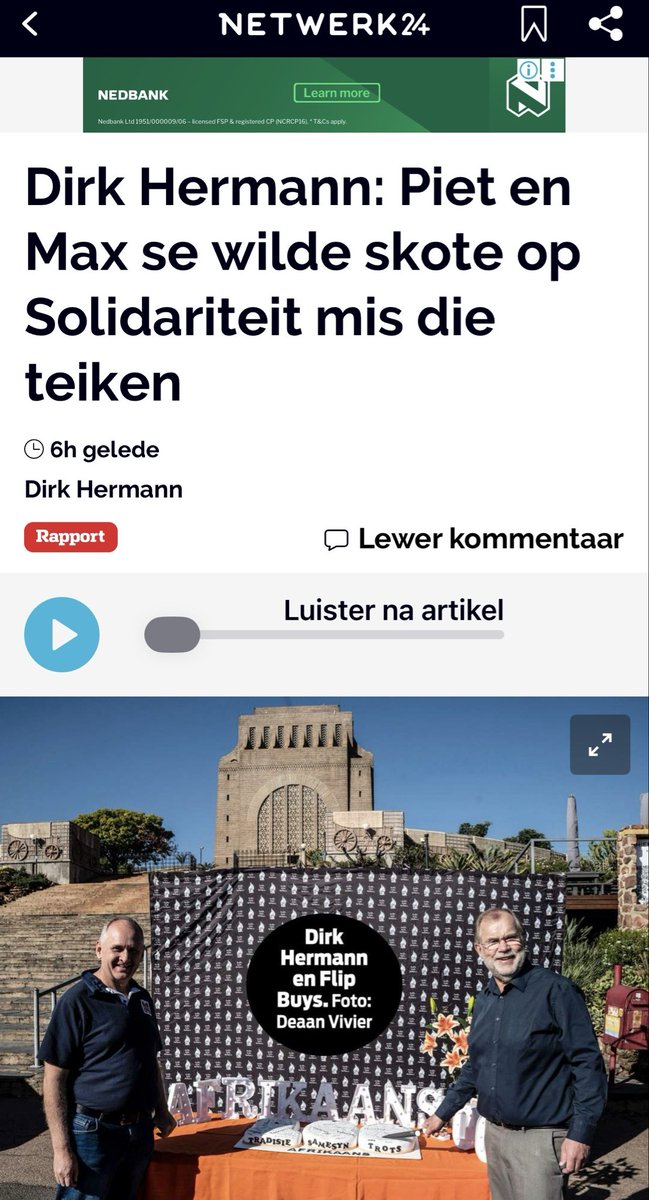
Dirk Hermann: Piet en Max se wilde skote op Solidariteit mis die teiken netwerk24.com/stemme/menings…
4
33
114
2,253
Dit is ‘n vreemde storie. Dit lyk of daar desperaat gesoek is na iets.
news24.com/investigations/af…
3
19
81
1,700
Dirk Hermann retweeted

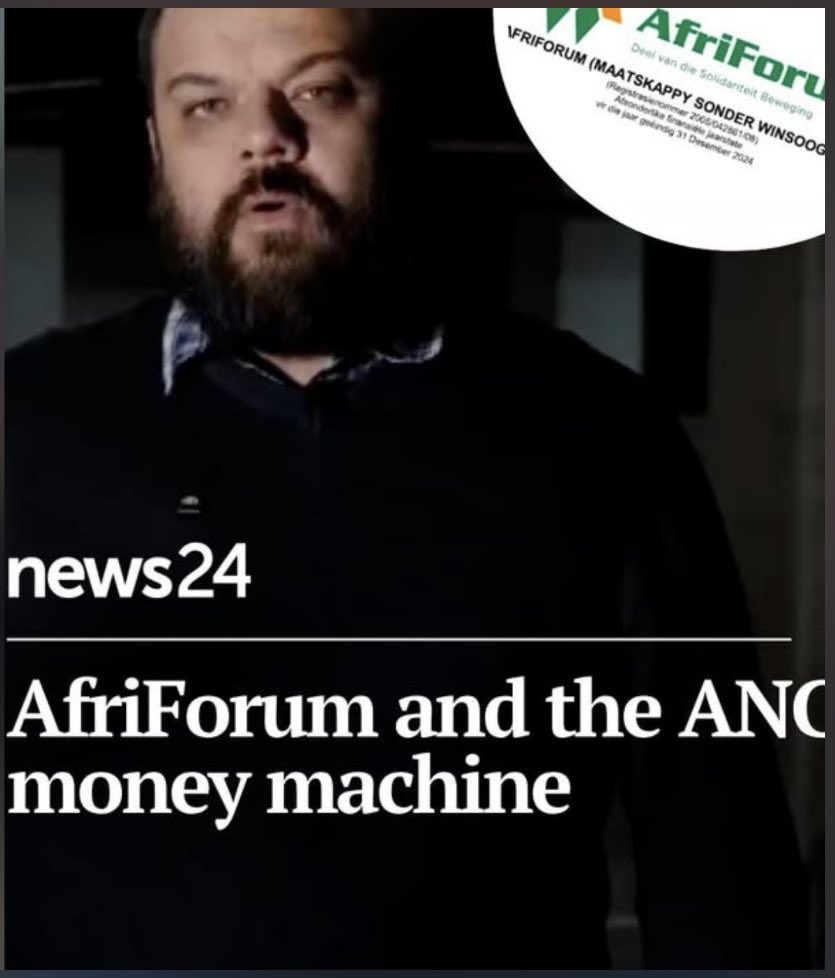
News24 Group donated R8 million to the ANC! News24 will not tell you this in the hit piece they are planning against @afriforum.
I place on record that @News24 refused to answer AfriForum’s questions regarding its parent company’s donations of R8 million to the ANC between 2021 and 2025. These questions were aimed at determining whether News24 considers it justifiable for its parent company to fund the ANC while numerous individuals in the ANC leadership have been implicated in corruption.
This question was relevant to AfriForum’s ability to respond effectively to News24’s enquiries, as reference is made to donations by one of the parent company’s fellow donors to the ANC, namely Thebe Stockbroking.
71
366
962
50,537

Jun 11
WerfNet: Goeie mense, goeie werk.
WerfNet is meer as net ʼn werwingsmaatskappy; dit is jou vennoot in die werwingsproses. In hierdie week se episode gesels ek met Dané Visser, direkteur van WerfNet, oor die belangrikheid van aanstellings op meriete. WerfNet het ʼn gaping in die mark gesien en is hier om jou deur die proses te lei. Kyk saam en deel jou mening oor aanstellings sonder meriete.
5
19
1,272
Jun 5
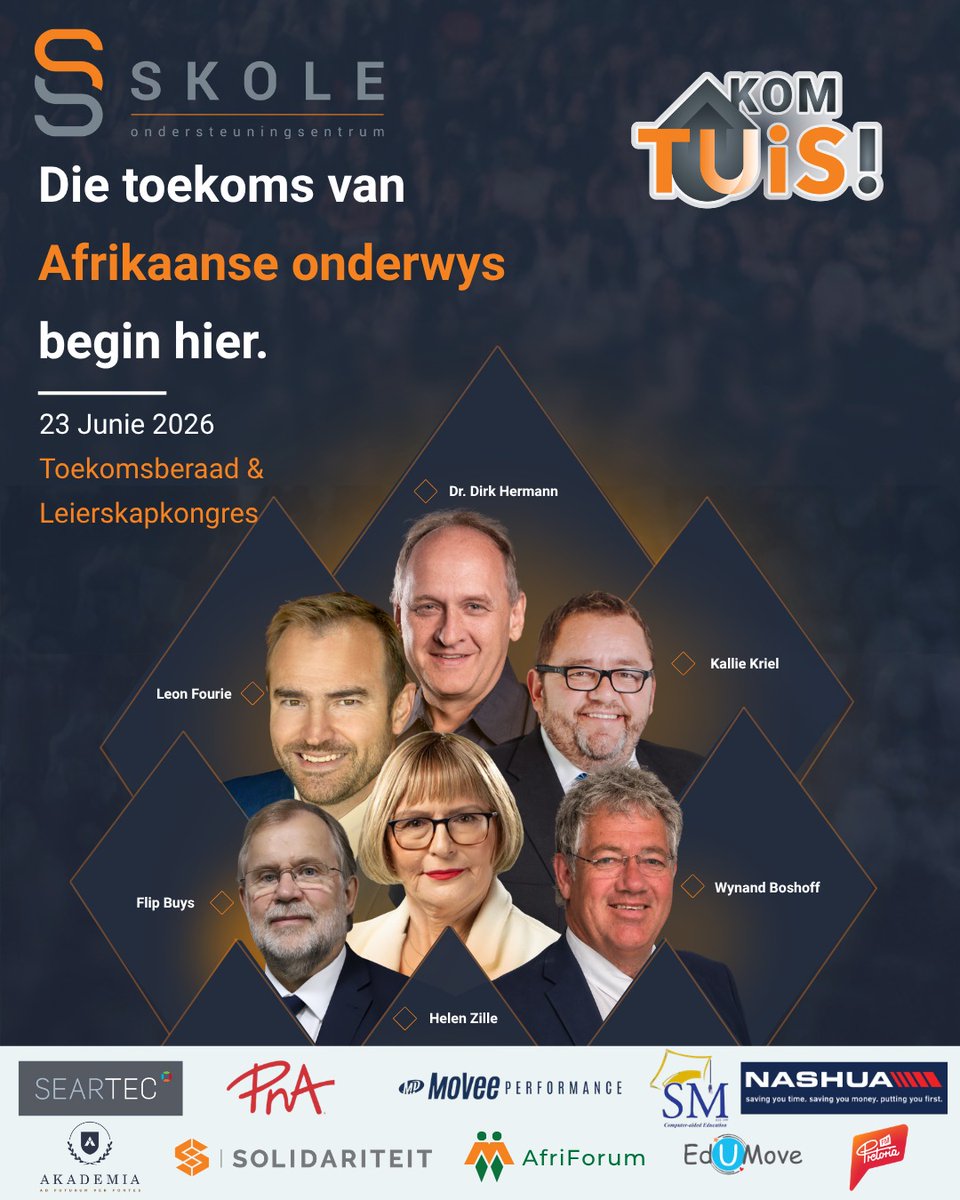
‘n Merker in die geskiedenis van Afrikaanse onderwys.

1
10
35
1,140
Dirk Hermann retweeted

Jun 5
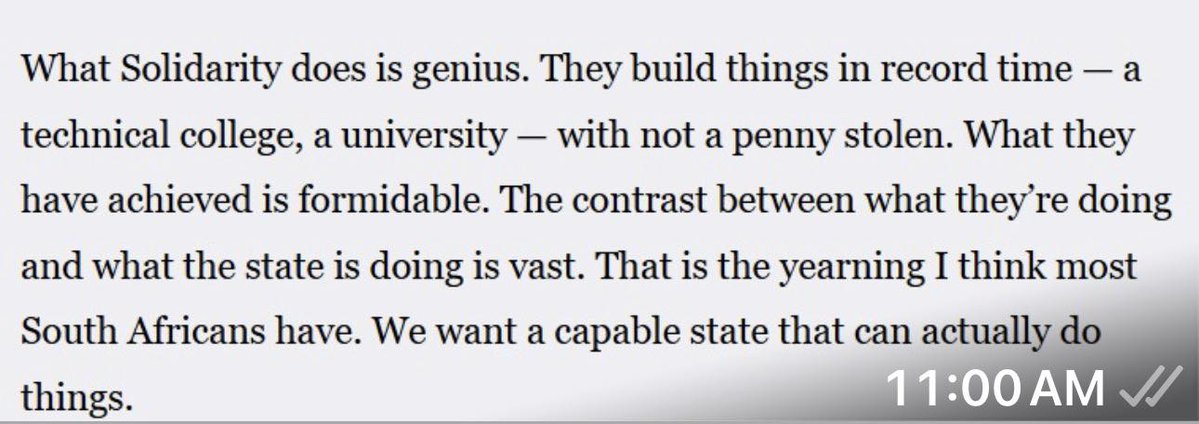
Selfs Max du Preez moet toegee:
“Wat Solidariteit doen is "genius". Hulle bou dinge in rekordtyd — ’n tegniese kollege, ’n universiteit — sonder dat een sent gesteel word. Die kontras met die staat is verpletterend.”
1
16
44
872

Dirk Hermann retweeted

Jun 4
Solidarity seeks urgent answers on subsidy crisis threatening elderly care
Solidarity’s Social Workers’ Network has sent an urgent letter to the Gauteng Department of Social Development (DSD) and the MEC for Social Development, Nomantu Nkomo-Ralehoko, regarding delays in subsidy payments to organisations that provide essential services, particularly to the elderly.
According to Bianca Smit, coordinator of Solidarity’s Social Workers’ Network, organisations that care daily for some of the most vulnerable members of society are being placed in an impossible position, while they are still expected to continue delivering services without interruption.
This applies especially to organisations that provide home-based care to elderly people and that have historically relied on subsidies for funding.
“The department’s failure to pay subsidies, or even to provide clarity regarding funding, is not only placing organisations under severe pressure. It is also jeopardising the safety, health and dignity of elderly people,” says Smit.
“The organisations no longer know when funding will be paid, or whether it will be paid in future at all.”
The network was informed by members of the Pretoria Council for the Care of the Aged and the Silwerkroon Home-Based Care Programme that service-level agreements have still not been finalised and that funding has yet to be approved, despite the fact that services are expected to continue uninterrupted.
The department itself continues to refer elderly people to these organisations. Solidarity warns that the need for care does not disappear simply because subsidy payments are delayed.
“Elderly people do not become less vulnerable because the department falls behind with its administration.
“They remain dependent on social work services, home-based care, nutrition programmes, health monitoring and protective services. The state cannot neglect its responsibilities and expect welfare organisations to carry the burden alone,” says Smit.
According to information received by the network, several organisations are already on the brink of operational collapse. Services are being scaled back, fewer people can be assisted, and the loss of experienced and professional staff is becoming an increasing risk.
“When these organisations begin to buckle, it is not the department that bears the consequences first, but rather the elderly person sitting alone at home.
“It is the vulnerable older person who receives less support, and it is families who are suddenly left without assistance,” explains Smit.
Solidarity warns that the consequences are already becoming visible and believes pressure on families and communities is increasing, creating a heightened risk of neglect. The potential closure of community-based programmes will further worsen the situation.
Therefore, the Solidarity Social Workers’ Network demands that the department immediately provide clarity regarding the status of funding and publish timelines for outstanding payments.
Furthermore, meaningful consultation with service providers is essential, and an emergency plan must be implemented to safeguard the continued care of elderly people.
2
33
83
2,142
Dirk Hermann retweeted

Jun 4
PODSENDING
Die ANC is lief vir politieke teater
Terwyl die ANC politieke teater speel, word regte mense se lewens elke dag geraak. Vir die regering mag dit dalk net speel-speel wees, maar die gevolge is werklik: Duisende mense verloor hul werk en sukkel om vir hul gesinne te sorg as gevolg van die besluite wat geneem word. In hierdie week se episode gesels Dirk Hermann met Connie Mulder oor hoe rassewette teen 2030 beëindig kan word. Die rasbuffel moet val, en ons sal nie rus totdat dit gebeur nie.
Kyk die podsending hier:
youtube.com/watch?v=U1pf1rwy…
1
8
17
984
Jun 4
Die ANC is lief vir politieke teater
Terwyl die ANC politieke teater speel, word regte mense se lewens elke dag geraak. Vir die regering mag dit dalk net speel-speel wees, maar die gevolge is werklik: Duisende mense verloor hul werk en sukkel om vir hul gesinne te sorg as gevolg van die besluite wat geneem word. In hierdie week se episode gesels ek met Connie Mulder oor hoe rassewette teen 2030 beëindig kan word. Die rasbuffel moet val, en ons sal nie rus totdat dit gebeur nie.
1
18
74
1,519
Jun 4
Hoe maak mens dit reg op X?
Jun 3

Dirk, please correct X on the original language of your post.
3
1
2
1,726
Jun 4
ILO invites Solidarity and SA government to conciliation over complaint regarding South Africa’s race-based laws
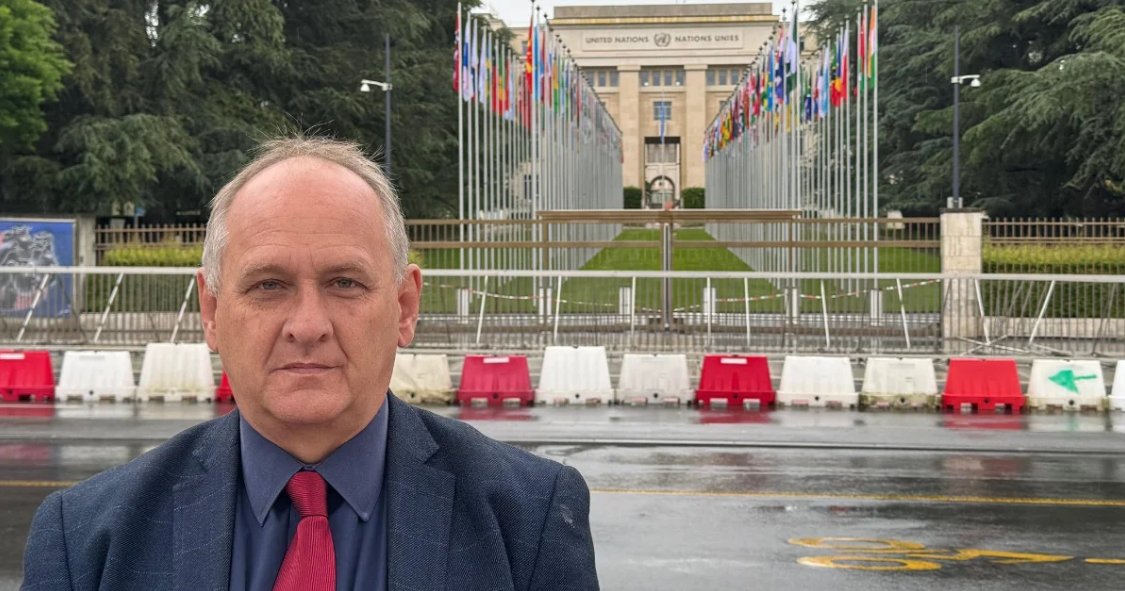
The International Labour Organization (ILO) of the United Nations (UN) has invited Solidarity and the South African government to participate in a conciliation process. This follows the submission of Solidarity’s complaint against certain aspects of the government’s race-based laws in Geneva, Switzerland, on 15 May 2026.
Should the conciliation process prove unsuccessful, the admissibility of Solidarity’s complaint will be heard in November this year during the ILO’s Governing Body session. This may be followed by a formal investigation into the South African government.
Solidarity’s complaint focuses specifically on the permanent nature and elite-driven character of race-based laws, but particularly on the fact that the South African government has breached a previous agreement between itself and Solidarity that was concluded under the supervision of the ILO.
“It is a major breakthrough that this international body has initiated a process following Solidarity’s complaint. The South African government is bound by international conventions as well as the previous agreement reached under the supervision of the ILO. We will not allow the government to get away with failing to comply with conventions and agreements,” said Dr Dirk Hermann, Chief Executive Officer of Solidarity.
In 2023, Solidarity and the South African government reached an agreement on race-based laws in the workplace following an ILO-facilitated process. Among other things, the agreement stipulated that race-based laws should be temporary, that no one may be dismissed based on race, and that race may not be the sole criterion for appointments or promotions – skills and a company’s unique circumstances must also be considered.
The agreement was made an order of the court, and the government was required to publish it in the Government Gazette. However, the government failed to do so, thereby breaching the agreement and acting in contempt of court.
In the meantime, Solidarity has also initiated legal proceedings in South Africa against the government for contempt of court.
33
145
407
10,979
Dirk Hermann retweeted
Jun 3
And also South Africa... "The U.S. has proposed tariffs of at least 10% on many trading partners following an investigation into goods allegedly produced by forced labor" wsj.com/economy/trade/u-s-pr… via @WSJ
1
7
19
1,136
Dirk Hermann retweeted
Jun 3
This is truly bad news for every South African (except for the political elite who are insulated from economic problems). It is therefore all the more urgent that an agreement be reached between South Africa and the USA. Declare farm murders a priority crime and improve rural safety. Reject "Kill the Boer". Strengthen property rights. Begin the systematic phasing out of racial laws. Return to a more non-aligned international policy.

The US is proposing to impose an additional 12.5% tariff (duty) on virtually all products imported from South Africa as a responsive action under Section 301 of the Trade Act of 1974.
15
79
270
9,237
Dirk Hermann retweeted

Jun 3
𝗦𝗼𝗹𝗶𝗱𝗮𝗿𝗶𝘁𝗲𝗶𝘁 𝘄𝗮𝗮𝗿𝘀𝗸𝘂 𝘁𝗲𝗲𝗻 𝗻𝗼𝗴 𝘁𝗮𝗿𝗶𝗲𝘄𝗲 𝗼𝗽 𝗦𝗔 𝘂𝗶𝘁𝘃𝗼𝗲𝗿𝗲
maroelamedia.co.za/nuus/sa-n…
1
2
2
725
Dirk Hermann retweeted
Jun 3
American demands in negotiations with the SA government are fair and sensible. South Africa is the most racially regulated country in the world and SA's largest trading partners must now insist on the phasing out of racial laws. Also demands about the Expropriation Act, SA's foreign policy and farm murders are fair demands that can actually be easily met.
thecommonsense.co.za/Editori…
26
154
558
11,226
Dirk Hermann retweeted
Jun 3
5
12
1,097