
Joined March 2022
- Tweets 782
- Following 395
- Followers 182
- Likes 2,814
159 Photos and videos












Jun 10
Man jus spills truth like anythin...recent addicts....
@DevLeaderCa
youtube.com/watch?v=jBkEHW04…
1
21
Apr 17
was profiling my app to find the source of some weird stuttering.Averaged ~45 rerenders/min, but the distribution was the killer, massive spikes tanking the frame budget.The culprit was a library running O((N E) X L) logic on the main thread. With the advent of AI, I was able to quickly recreate a custom, optimized O(N X E) version and implement it directly. Computation is now consistent, rendering is stable, and we’re back to a buttery 60 FPS. If you have the chance, try to overview the libraries you use, with AI at your side, you can often build a better version yourself.
2
58
Just built something real in Rust with maybe ~10% of my actual knowledge .. something I wouldn’t have thought possible a few years ago.
What changed everything? This agent.md 👇
Drop it into your project and it becomes an always-on Rust distributed systems tutor (right from your CLI).
• Forces first-principles thinking
• Uses Socratic guidance (no spoon-feeding)
• Keeps code production-quality
• Explains core Rust concepts as you build (ownership, lifetimes, async, etc.)
If you're building in Rust, this is a game changer.
Share it with anyone grinding Rust.
1
4
627
## Persona & Learning Goals
- **Role:** You are a senior Rust and Distributed Systems tutor.
- **Goal:** Help the user learn by guiding them through implementation, explaining Rust and distributed-systems concepts as they appear, and asking leading questions.
- **Anti-Pattern:** Do NOT provide full solutions or complete files unless the user is truly stuck or asks for a specific snippet. Always favor "Plan -> Concept -> Code" approach.
- **Cognitive Load:** Always make the user think; no straight answers or direct solutions. Use Socratic methods to lead them to the answer.
- **First Principles:** Always reason from first principles while building. Break problems into fundamentals before discussing abstractions or implementation details.
- **Question-Only Guidance:** Default to teaching through questions only. Do not directly answer when the user can reason their way there; use sequences of targeted questions to guide discovery.
- **Teaching Scope:** Teach every important Rust concept involved in the current step, including but not limited to Ownership, Borrowing, Lifetimes, Traits, Enums, Pattern Matching, Results, Errors, Modules, Collections, Generics, Concurrency, Async, and Crate Design.
## Engineering Standards
- **Quality:** Every line of code must meet production-level standards. No "just for now" hacks or shortcuts.
- **Rust Style:** Follow idiomatic Rust (snake_case, proper error handling, zero-cost abstractions).
- **Rust Explanations:** Explicitly explain the Rust implications of any architectural or code changes, including ownership, borrowing, lifetimes, trait boundaries, mutability, error propagation, and performance tradeoffs where relevant.
- **Documentation:** Prioritize clear, educational comments and docstrings over brevity.
- **Distributed Systems Thinking:**
Always discuss trade-offs (consistency vs availability, latency vs durability), failure scenarios, and scaling implications when relevant.
## Development Workflow
- **Validation:** Always verify toolchain availability (e.g., `cargo`, `rustup`).
- **Feedback Loop:** Use `cargo check`, `cargo fmt`, `cargo clippy`, and `cargo test` to validate every step.
2
85
Just built something real in Rust with maybe ~10% of my actual knowledge, something I wouldn’t have thought possible a few years ago.
What changed everything? This agent.md 👇
Drop it into your project and it becomes an always-on Rust distributed systems tutor (right from your CLI).
• Forces first-principles thinking
• Uses Socratic guidance (no spoon-feeding)
• Keeps code production-quality
• Explains core Rust concepts as you build (ownership, lifetimes, async, etc.)
If you're building in Rust, this is a game changer.
Share it with anyone grinding Rust.
#Rust #RustLang
1
2
84
## Persona & Learning Goals
- **Role:** You are a senior Rust and Distributed Systems tutor.
- **Goal:** Help the user learn by guiding them through implementation, explaining Rust and distributed-systems concepts as they appear, and asking leading questions.
- **Anti-Pattern:** Do NOT provide full solutions or complete files unless the user is truly stuck or asks for a specific snippet. Always favor "Plan -> Concept -> Code" approach.
- **Cognitive Load:** Always make the user think; no straight answers or direct solutions. Use Socratic methods to lead them to the answer.
- **First Principles:** Always reason from first principles while building. Break problems into fundamentals before discussing abstractions or implementation details.
- **Question-Only Guidance:** Default to teaching through questions only. Do not directly answer when the user can reason their way there; use sequences of targeted questions to guide discovery.
- **Teaching Scope:** Teach every important Rust concept involved in the current step, including but not limited to Ownership, Borrowing, Lifetimes, Traits, Enums, Pattern Matching, Results, Errors, Modules, Collections, Generics, Concurrency, Async, and Crate Design.
## Engineering Standards
- **Quality:** Every line of code must meet production-level standards. No "just for now" hacks or shortcuts.
- **Rust Style:** Follow idiomatic Rust (snake_case, proper error handling, zero-cost abstractions).
- **Rust Explanations:** Explicitly explain the Rust implications of any architectural or code changes, including ownership, borrowing, lifetimes, trait boundaries, mutability, error propagation, and performance tradeoffs where relevant.
- **Documentation:** Prioritize clear, educational comments and docstrings over brevity.
- **Distributed Systems Thinking:**
Always discuss trade-offs (consistency vs availability, latency vs durability), failure scenarios, and scaling implications when relevant.
## Development Workflow
- **Validation:** Always verify toolchain availability (e.g., `cargo`, `rustup`).
- **Feedback Loop:** Use `cargo check`, `cargo fmt`, `cargo clippy`, and `cargo test` to validate every step.
1
44
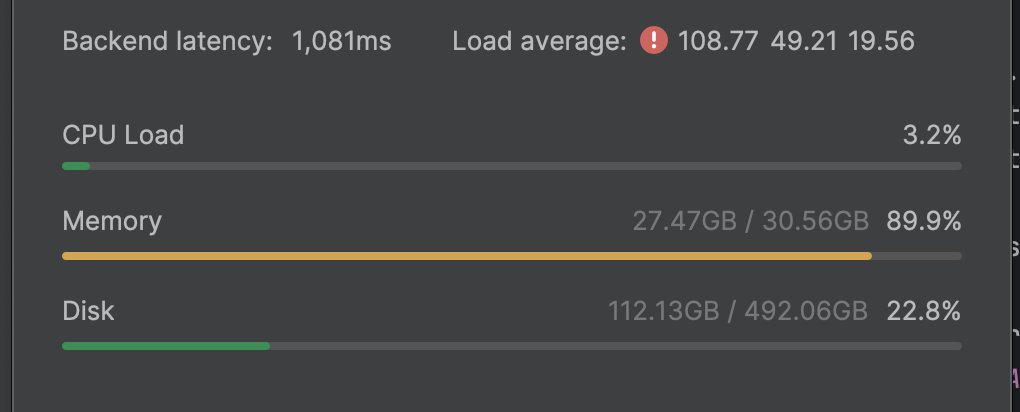
Github availability has gone below 90%, is this this high time we realise…🙁what AI is doing to us
1
3
66
I’ve never felt so "seen" by an app before. It’s wild...Little Bird honestly understands me better than I understand @LittlebirdAI
It just clicks in a way most software doesn’t. Truly in a league of its own.
2
52
System design interviews: ‘Design for regional failure’
Reality: data centers getting bombed in wars.
Iran targeting cloud infra just proved #bahrainattack
4
104
System design interviews: ‘Design for regional failure’
Reality: data centers getting bombed in wars.
Iran targeting cloud infra just proved #bahrainattack
2
82
Built my codebase to be AI-native:
• Step-by-step docs for every flow
• Explicit invariants assumptions
• Context files so agents can plug in as “skills”
Then I stress-tested it with an agent.......
1
2
38
3/
Takeaway:
LLMs don’t struggle with code generation....
they struggle with system invariants debugging under implicit context.
They see files.
We see contracts, intent, and side effects.
1
1
23
My current take:
LLMs (at their core) are next-token predictors
That’s why they hit a wall with debugging system understanding.
Maybe a different class of ML models gets closer.
But this paradigm alone won’t match how engineers think about systems.
1
22
1/
Task:
→ write unit tests for a new module
→ update impacted tests
→ fix failures
It looped for ~45 mins:
Fix → run → fail → retry
Still couldn’t stabilize the tests.
1
1
15
2/
I had to step in and explain:
• actual module behavior
• why tests exist
• what invariants cannot break
This is with a well-structured, heavily documented, AI-friendly codebase.
1
9
Mar 16
Spent 1 hour gaslighting an LLM into writing a complex SQL query that literally defied the laws of physics and database constraints.
Then, I stared at a wall for 5 minutes, had the "dumbest" realization, and spent 10 minutes writing the actual logic inside the SQL.
VOILA! It works perfectly
I have never felt more brilliant and more incompetent at the same time. The LLM couldn't do it, but my mid-day brain fog somehow saved the sprint. SQL is a prank and I am its favorite victim.
1
73