Educating the public on the abuses current & former Jehovah's Witnesses endure at the hands of the religion. Click the link for free anti-witnessing stickers.
Joined September 2022
- Tweets 230
- Following 850
- Followers 705
- Likes 363
57 Photos and videos






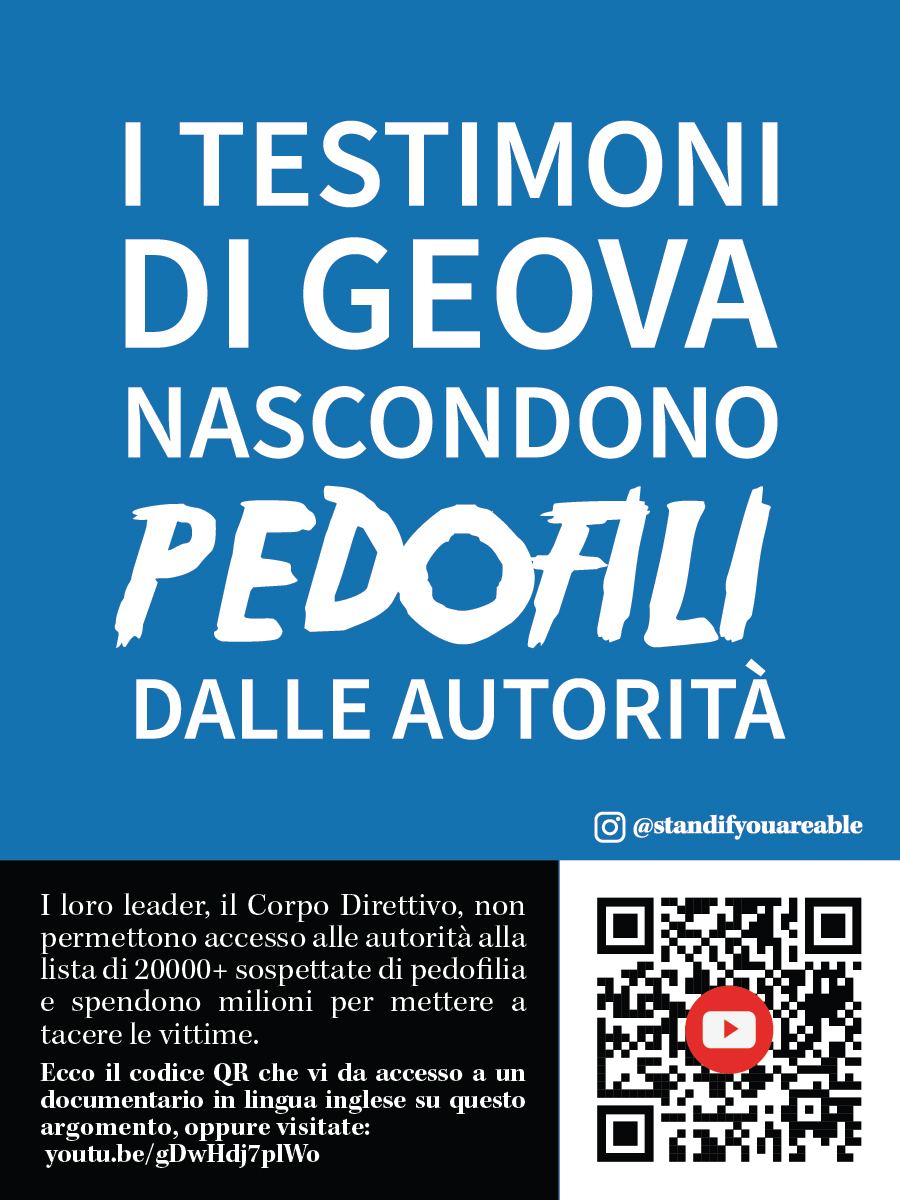
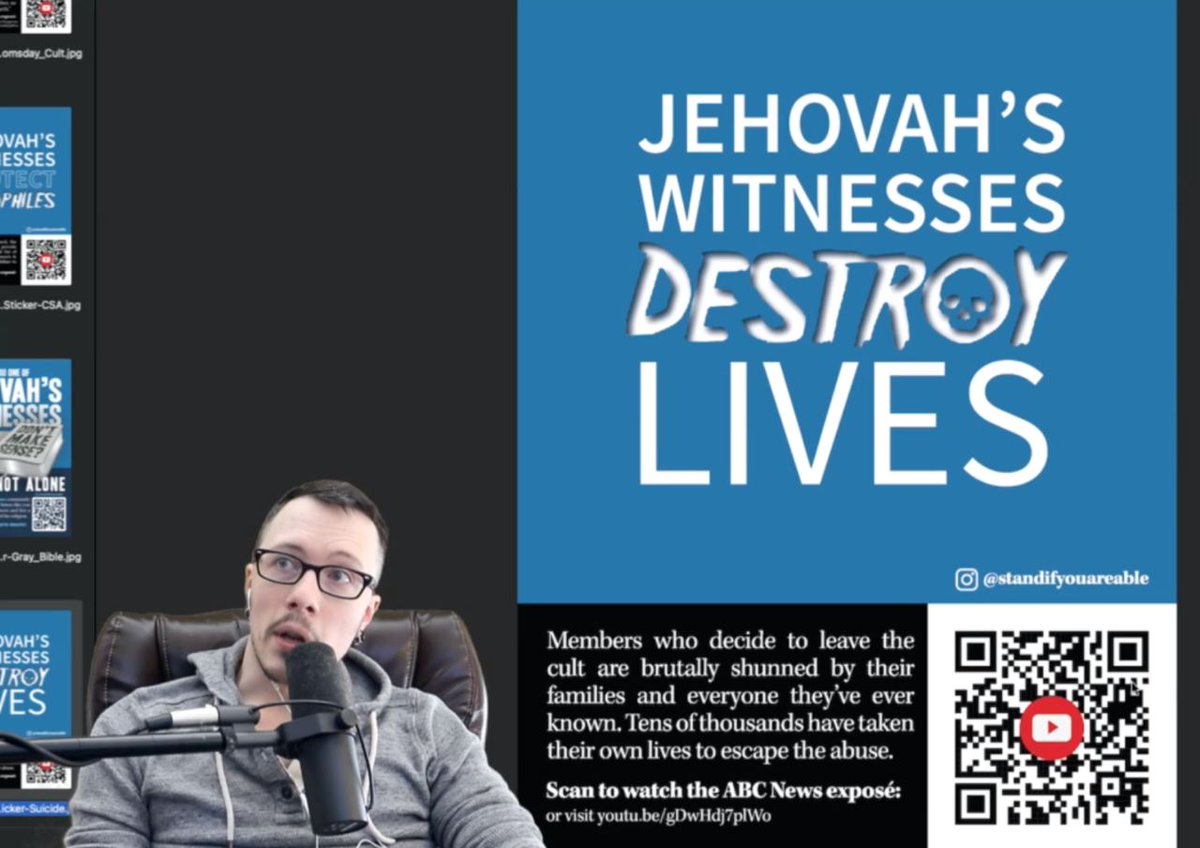
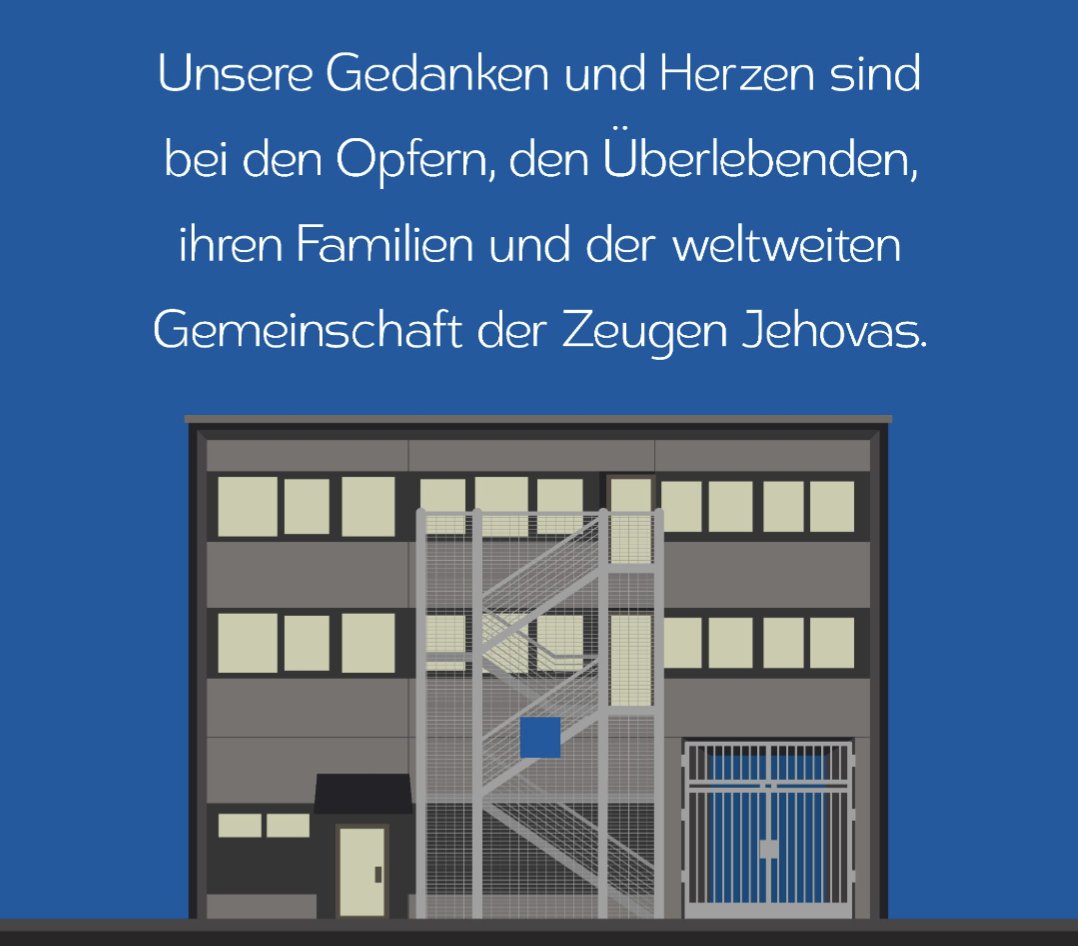

Are we even the slightest bit surprised?
17 Apr 2024

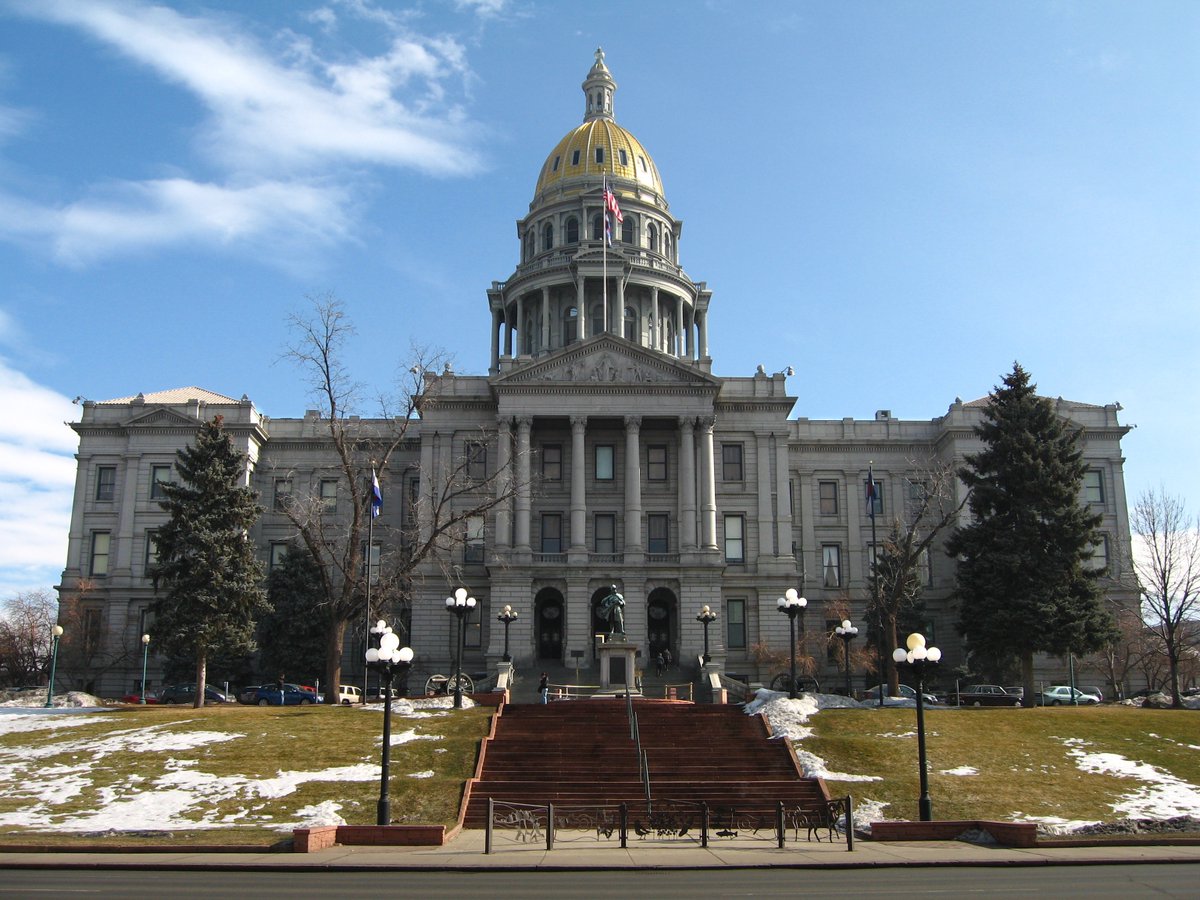
New: Colorado Republicans just blocked a bill that would help victims of childhood sexual abuse sue their abusers.
coloradosun.com/2024/04/17/c…
6
5
39
3,644

23 Mar 2024
2/2 Host @arjenlubach adds just the right amount of ridicule into the topic, with a little help from Sparlock the Satanic wizard and his Stickers.
Get your Sparlock Stickers at sparlock.nl
And get your slightly more informative stickers at standifyouareable.org
4
27
1,307
23 Mar 2024
1/2 The Dutch satirical news program @deavondshowvpro eviscerates Jehovhas Witnesses harmful practices in the best way. Amazingly done. We can only hope @LastWeekTonight takes note and brings a takedown like this to the English speaking world.
1
10
41
1,768
Standifyouareable 📨 retweeted

A great read on the power of literature and for #exjw 's, a description of our old life that's all too familiar, especially for women.
amp.theguardian.com/books/20…
@Larchwood20 @Ron_POMO @JillianLeeAdams @Mark_J_ODonnell @NewInTheTruth
3
6
32
8,412
An exJW that went through Jehovah's Witnesses PID volunteer training told me that Hendriks once said this during a training stream:
“The biggest victories we have as PID members are not the stories we get in the news, it’s the stories that DONT get published”

Some are wondering what PID is. PID stands for Public Information Department. In the USA, this is Watchtower's Public/Media Relations arm.
WT claims PID tells "accurate words of truth" to the media and officials.
They also push JW positive stories to get published in local media.
10
6
74
10,280
"We don't do it because we hate Jehovah's Witnesses"
#JWvsNorway
From Vårt Land
By @jfnilsen (machine translated by Google)
While we await the verdict
JEHOVAH'S WITNESSES: What kind of society should Norway be? Should we protect the weak, those who are affected when freedom of thought and belief is harshly punished, or should we continue to give our tax money because it is done in the name of religion?
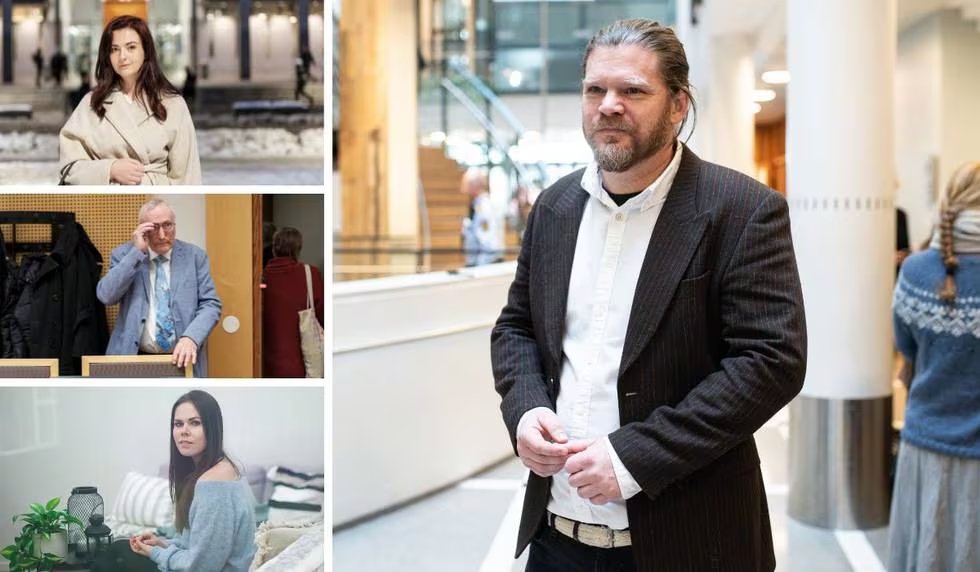
(THE WITNESS AGAINST THE WITNESSES: "What I think about most is the meeting with those I witnessed with," writes former member of Jehovah's Witnesses, Jan Frode Nilsen (right). He was moved by the testimonials of Noomi Ester Pilot, Rolf Furuli and Rakel Lima Fjelltvedt (in the column on the left))
It has now been two weeks since a group of traumatized people gathered in Oslo District Court to testify against their former religion . What I think about most is the meeting with those I witnessed with. The strength when they talked about their darkest experiences, the choices they had to make. The price they had to pay.
The witnesses
Noomi told about how, as a 17-year-old, she had to go through the humiliating process of repeated judicial selections only to be excluded right after turning 18. All alone in a foreign country, in a foreign city without family, friends, education, work and money . Noomi told about violence, complex PTSD, loneliness and fear, but also a story about getting up, creating a new life for herself.
I met Rolf Furuli, who has lived his whole life as a happy Jehovah's Witness, but in his older days saw that the religion he loved changed beyond recognition. Rolf was the one who chose to raise his voice . In the world of Jehovah's Witnesses, this is unforgivable, all his lifelong friends disappeared. I met a brave man who stepped in and told his story, with all the knowledge he has from a life in the innermost circles at the top level.
While I myself was sitting in the corridor outside Sal 127 and waiting for my turn, another witness came in with his certificate. The door opened and a young woman came out crying, loud and heartbreaking. She had twisted her soul, told her story with her head held high, a price for her freedom of thought that most people in Norway do not have to think about. Having to go straight in even afterwards was tough.
I think a lot about Rakel . A woman full of anxiety and trauma beforehand, who traveled into Oslo alone. Afraid of not being able to cope with the pressure. But who grew in the moment, stepped in with a clear voice and told his whole harrowing story. She, too, with two full rows of acquaintances from her time in Jehovah's Witnesses placed a few decimetres behind her back. She marked her religious freedom by wearing a cross hanging from her ear. I spoke to Rakel afterwards, she mentioned that if a mosque had given apostates 50 lashes if they left the religion, society would automatically react. "I would have gladly taken those whippings if I could have my family back!", she replied. "Easy!"
The denial
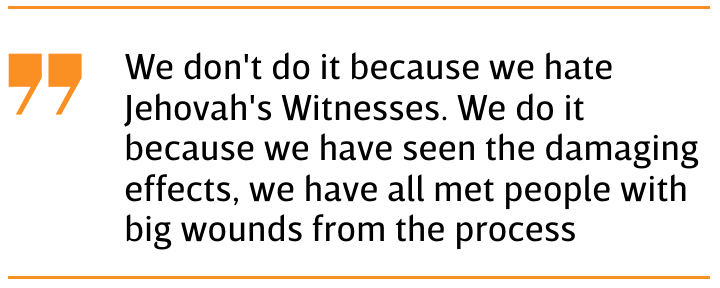
Fortunately, we rarely experience such drama in Norway, but in January 2024 it happened in Oslo Courthouse. It was hard for all of us, including me. We don't do it because we hate Jehovah's Witnesses. We do it because we've seen the damaging effects, we've all met people with big wounds from the process, people who don't get back on their feet the way we do. But it costs. A lot. And we stand there mostly alone.
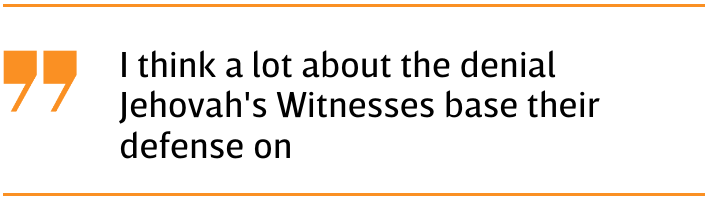
I think a lot about the denial Jehovah's Witnesses base their defense on. Flying the flag, standing up for what we believed in, was part of our upbringing. We were bullied. But we stood for our identity, the practice. We went around the neighborhood and knocked on doors, even if it cost money. We had to stand for what we were. But the leadership does the opposite. In court, they demanded that the Watchtower's literature be disregarded. Based on this premise, they say that there are no instructions from the leadership of Jehovah's Witnesses. Although their website is full of evidence for our claim, the court is asked to completely disregard this. A leadership that can publish the sentence " We must all be ready to follow the instructions we may receive, whether these seem sensible from a strategic or human point of view, or not" , presents itself in court as a group of individualists who do just as they themselves want.
Resource use
The use of resources Jehovah's Witnesses can trigger in such a case is striking. On their bench sat three lawyers from Glittertind, plus a Jehovah's Witness lawyer. Ryssdal invoiced NOK 6,100 VAT ($576 USD) per hour for its services. Spend a total of NOK 4.5 million ($425,300 USD) on this stage in the district court. There were visiting representatives from the "European Association of Jehovah's witnesses for religious freedom", one of whom got to deliver a long monologue to the judge at the end. The front rows of the courtroom were filled every morning by prominent Jehovah's Witnesses who wanted to own the room. Where we outcasts manage completely without public funds, based only on the desire to have our story told, we meet an organization that unleashes a flood of resources. Nevertheless, it is Jehovah's Witnesses who present themselves as an oppressed minority?
The verdict
So now we sit and wait for the judgment from the district court. Whether one is religious or not, we must all be judged at some point for our choices, the lives we lived here on earth. The person we were. The unconditional love for our children. The work we did to give them a safe and good platform in life. The fight for truth and justice.
Who are we as humans? Do we stand up for what is right, for love, humanity, taking care of the weak in life crises? Do we want to take care of our children, even if they don't follow the religion and the requirements we set for them, the frameworks we set around them? Or do we doubt rules, a fundamentalist interpretation of the Bible? Cut out deviants from our life? Let children take the consequences out there, all by themselves? Without his family, because God apparently requires this of us in some Bible verse?
Are you a person who wants to cut off contact with those closest to you, your own children, because they do not live up to your demands? Who made you believe that God wants this? What did Jesus say about religious leaders who trampled the weak? Who quoted a verse from the law and thus claimed immunity from basic humanity and love? What did he say about those who tithed mint and vegetables but neglected justice and love? If all of this is based on one's own conscience without external influence, how is it that Jehovah's Witnesses differ so violently from all the others who read the Bible without doing this to their children? And what kind of society should we be here in Norway? Should we protect the weak, those who are affected when freedom of thought and belief is harshly punished, or should we continue to give our tax money because it is done in the name of religion? We are all waiting for the verdict. In tension.
Vårt Land has been in contact with all the people mentioned in this chronicle. All have agreed to Jan Frode Nilsen's descriptions of them.
5
17
101
5,657
Standifyouareable 📨 retweeted

28 Jan 2024
Thank you to avoidjw.org for reporting this 🌻
"The Association now has the immediate intention of "making it clear to society that Jehovah's Witnesses have been promoting hatred of society for more than 50 years."
La Vanguardia
avoidjw.org/news/spanish-ass…
12
41
802
Standifyouareable 📨 retweeted

28 Jan 2024
Another JW Elder wakes up & says goodbye.
youtube.com/watch?v=owNS6iJY…
7
16
90
2,578
Time for testimony today was only 60 seconds.
So I had to greatly condense what I had to say, but this is my written testimony submitted to the committee:
Good Morning,
My name is Mitch...
I resigned as a one of Jehovah’s Witnesses almost a year ago in part due to learning of their Pervasive child abuse cover-ups.
I'd like to read some recent headlines:
Authorities charge 5 more in probe of child sexual abuse among Jehovah’s Witnesses in Pennsylvania
apnews.com/article/jehovahs-…
'You absolutely can do nothing': Mormon officials in Arizona accused of not reporting sexual abuse
(this is about a then 5 year old girl and then her younger siblings- The abuse went on for seven more years, while the bishop failed to report it to authorities.) 12news.com/article/news/loca…
Illinois attorney general finds massive cover-up of clergy sexual abuse
npr.org/2023/05/23/117777365…
Investigation reveals widespread sexual abuse and cover-ups by Archdiocese of Baltimore
pbs.org/newshour/show/invest…
Pennsylvania grand jury accuses over 300 priests of abuse, bishops of cover-up
ncronline.org/news/accountab…
A New Orleans priest confessed to abusing children. He returned to work and was never charged
theguardian.com/world/2023/j…
Catholic priest 'confessed 1,500 times to abusing children', victim says mandatory reporting could have saved him
abc.net.au/news/2020-01-18/c…
About 333,000 children were abused within France's Catholic Church, a report finds
npr.org/2021/10/05/104330234…
Spanish Church sexual abuse affected 200,000 children, commission finds
bbc.com/news/world-europe-67…
It is sad that with the bill last year, members of the legislature and lobbyists framed it as an attack on the Catholic faith. This bill is about protecting children.
Some of you might want to do some self reflection on why a religious organization and its lobbyists want you to frame reporting child abusers as an attack on their freedom. That says a lot about them.
I am reminded of Jesus mentioning something about Millstones around the neck of those that cause “little ones” to stumble.
Religious freedom should be respected and upheld, but there should be limits in a modern society.
Some lawmakers and lobbyists for the Catholic Church have expressed fears that there will be a "chilling effect" on child abusers coming forward to confession. So what! If you are just going to sit on that information and do nothing to protect children from further harm anyway, how is that any legitimate justification for keeping criminal acts against the most vulnerable secret?
There is no legitimate reason for secrecy when it comes to a child molester or rapist having the freedom to "clear their conscience" before a priest without fear of accountability. The likelihood of re-offending is incredibly high.
Let’s protect vulnerable kids. For some of these children raised in minority high control religions such as Jehovah’s Witnesses and Mormons, they have very few outside advocates and those in the insular group see it as their duty to protect God’s name = Protect the reputation of the religious organization. It is my opinion based on countless hours reviewing court cases and listening to victims that groups like the JWs, who have claimed they will follow mandatory reporting laws, have shown in practice that they will almost always take advantage of a loophole if there is one.
I urge you to support this bill AS IS, *if you and your colleagues can not see a path forward with removing the confession exemption. This compromise bill is better than no law, which Washington shamefully has failed to get similar bills passed 5 times previously.
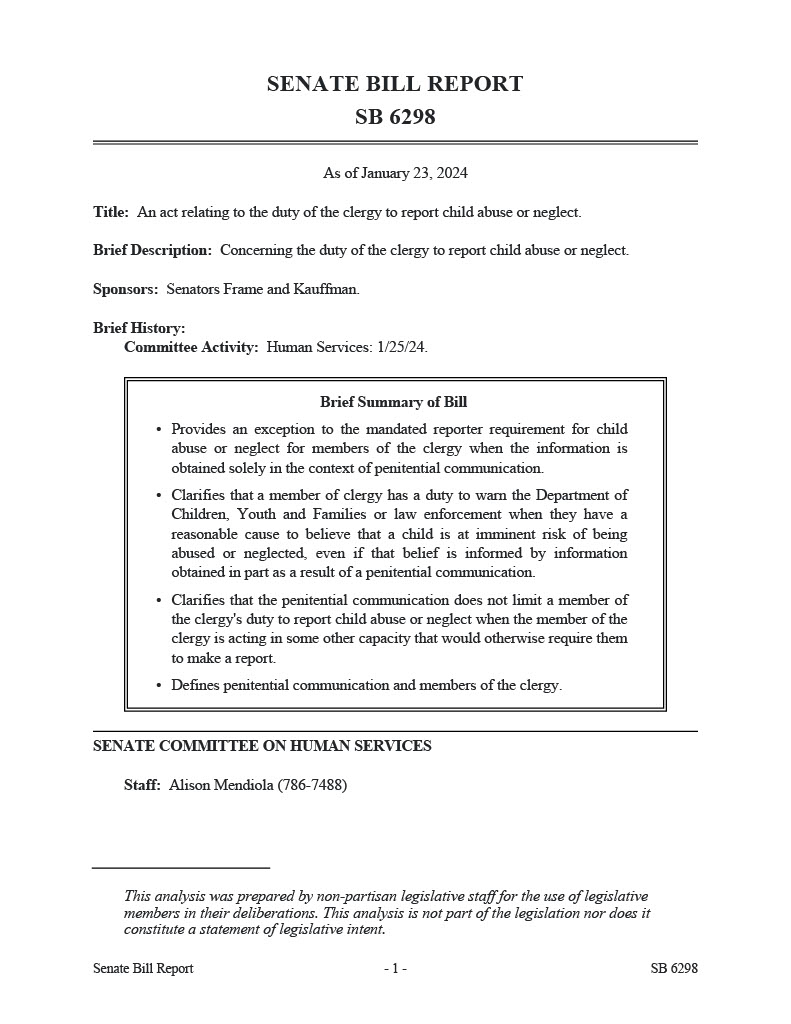
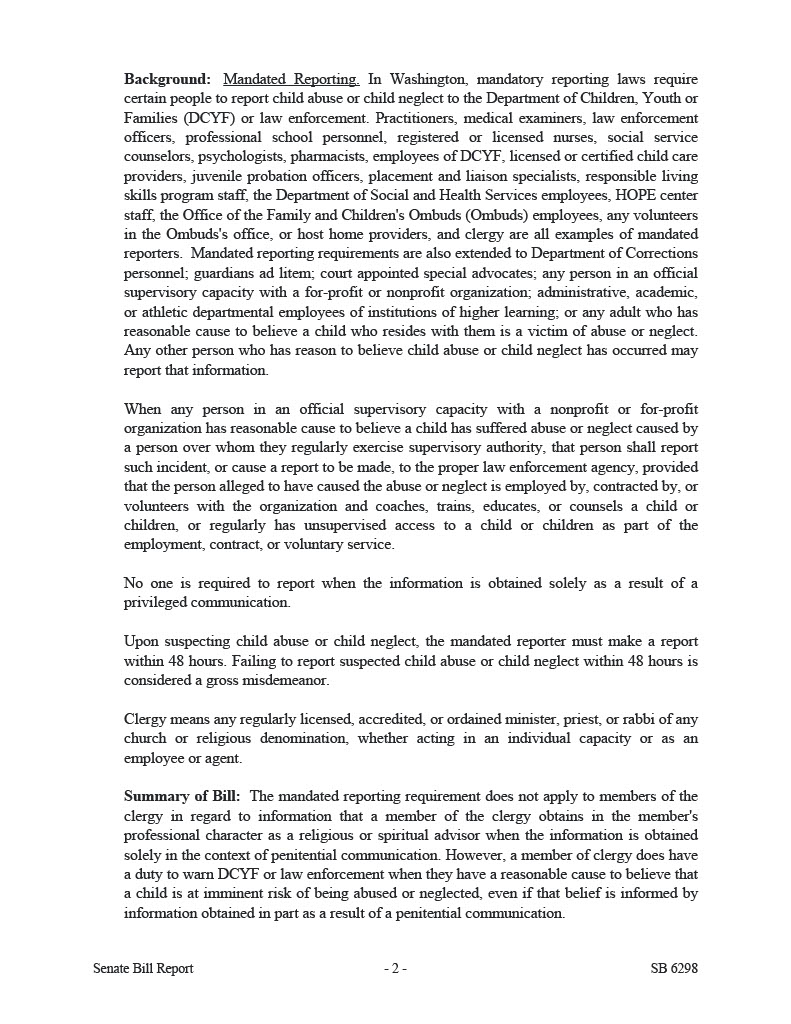
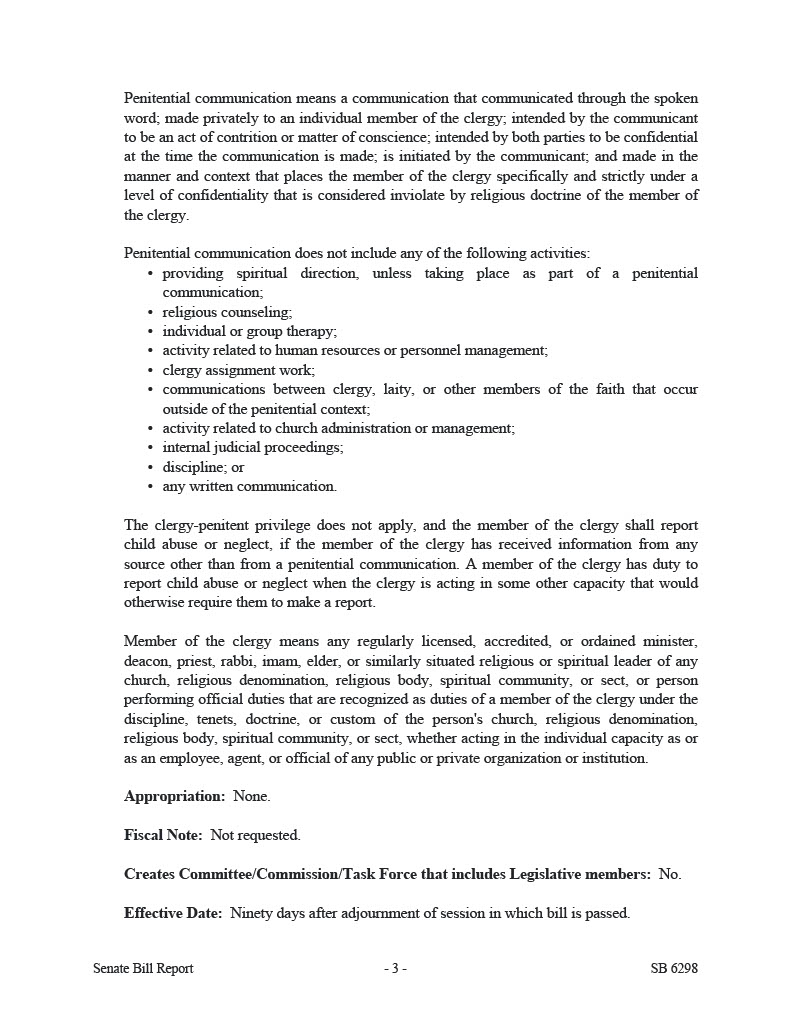
Washington State lawmakers have brought forward a new bill - SB 6298 "Concerning the duty of the clergy to report child abuse or neglect."
This bill picks up after the Senate failed to pass SB 5280 last session due to caving to the lobbyists of the Catholic Church because amendments to the bill removed the confession exemption that the Catholics, Mormons, and Jehovah's Witnesses along with other churches love to take advantage of to avoid reporting child abusers.
SB 6298 includes a narrowly defined confession exception. I'm not happy that this has to be included, but in order to have some form of clergy mandatory reporting... It's better than nothing. Which is what Washington currently has.
Below is a summary report on the bill.
The first hearing on the bill will be conducted tomorrow morning.
I'll be providing updates and links to videos when that becomes available.
18
20
112
9,551
Here is a link to the translated page as some have a hard time figuring that out.
mybelovedreligion-no.transla…
23 Jan 2024

Rolf Furuli has published a transcript of his testimony in court. Also some comments.
Only Norwegian version for now, but you can auto translate.
#JWvsNorway
mybelovedreligion.no/2024/01…
8
36
2,254
22 Jan 2024
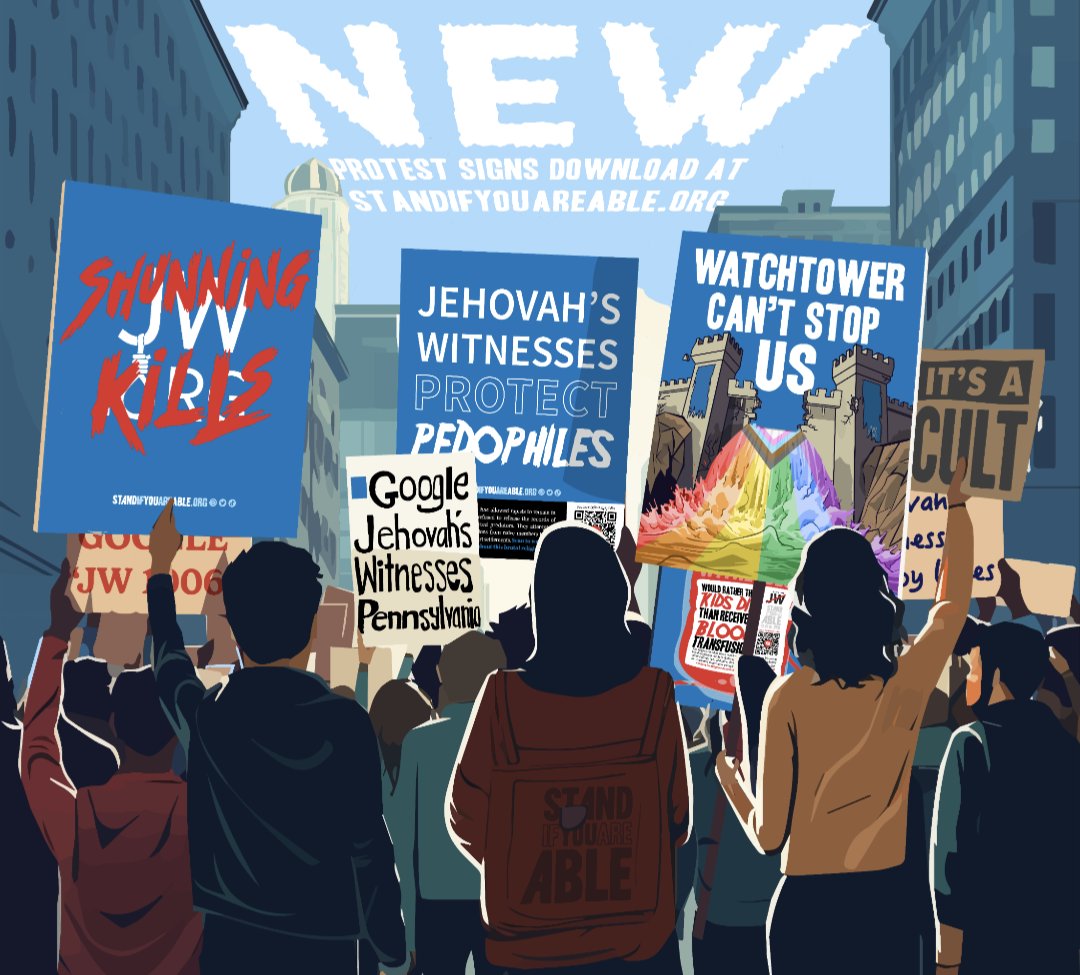
If Watchtower thinks we're making apostate brochures, let's give them apostate brochures, downloadable now at standifyouareable.com/activi…
#exjw #jw #jehovahswitness #bestlifeever #cult #activism #standifyouareable
9
28
133
8,731
Standifyouareable 📨 retweeted

31 Oct 2023
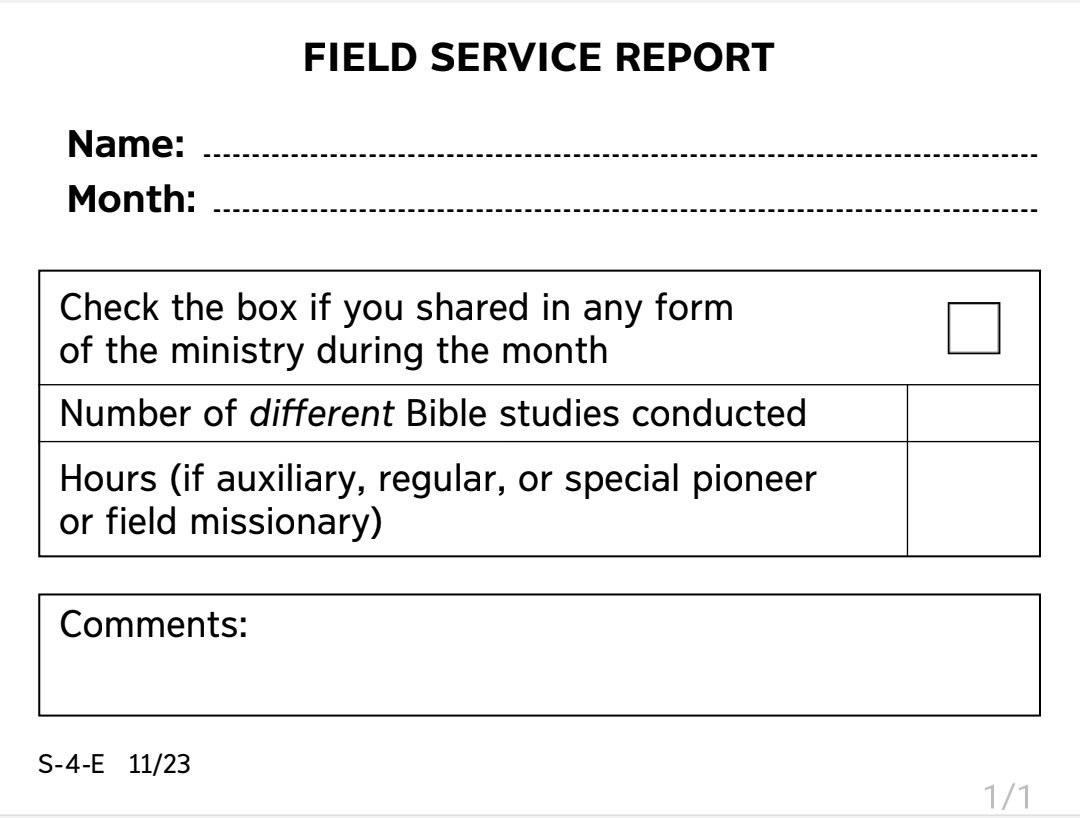
Behold, the latest S-4 form for Jehovah's Witnesses.
After 103 years of requiring JWs to report their "hours" spent knocking on doors, rank and file members may now simply check a box that they shared in "the ministry."
21
18
147
11,758


Standifyouareable 📨 retweeted

7 Oct 2023
AGM:
Samuel Herd announces NO MORE REPORTING MINISTRY TIME OR PLACEMENTS/ RETURM VISITS BEGINNING NOVEMBER 1.
Each publisher will indicate in a box if they shared in any form of the ministry in the month and how many different bible studies they conducted.
29
11
90
12,375
Standifyouareable 📨 retweeted

27 Sep 2023
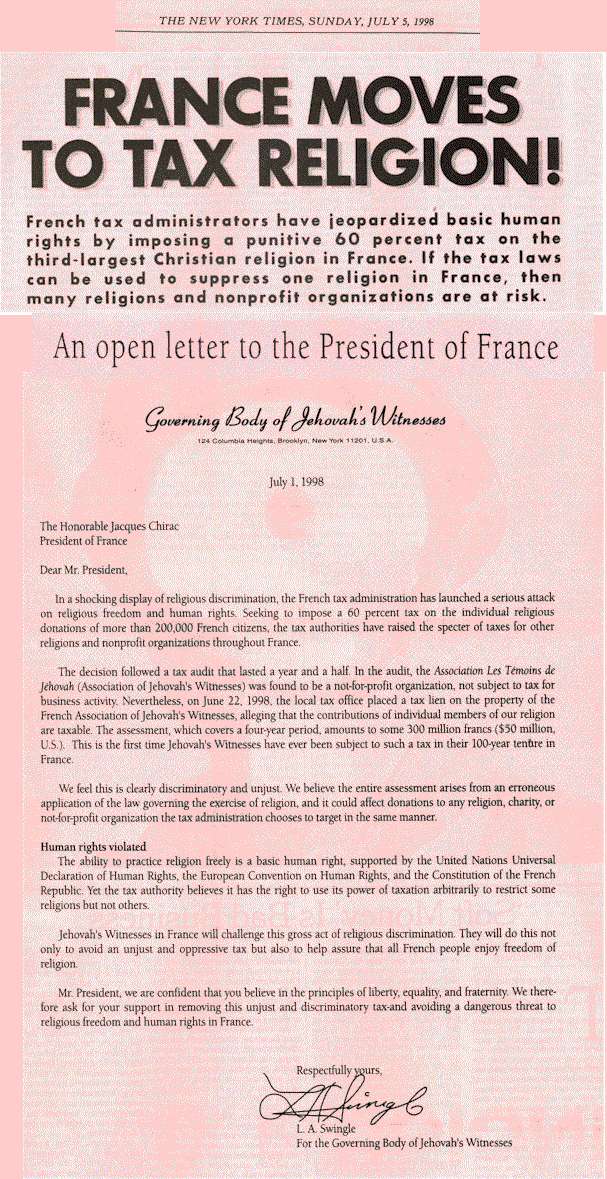
FROM THE ARCHIVES: On Sunday, July 5, 1998, the governing body of Jehovah's Witnesses took out a full ad in The New York Times newspaper and published an open letter to the President of France.
8
10
34
2,417
Standifyouareable 📨 retweeted
22 Sep 2023
“When asked if there are background checks the church conducts to qualify someone with a criminal history to serve as an elder, the church spokesperson reiterated that Smith was not an elder, and pointed to the Bible for eligibility.”
masslive.com/news/2023/09/a-…
14
12
64
4,397
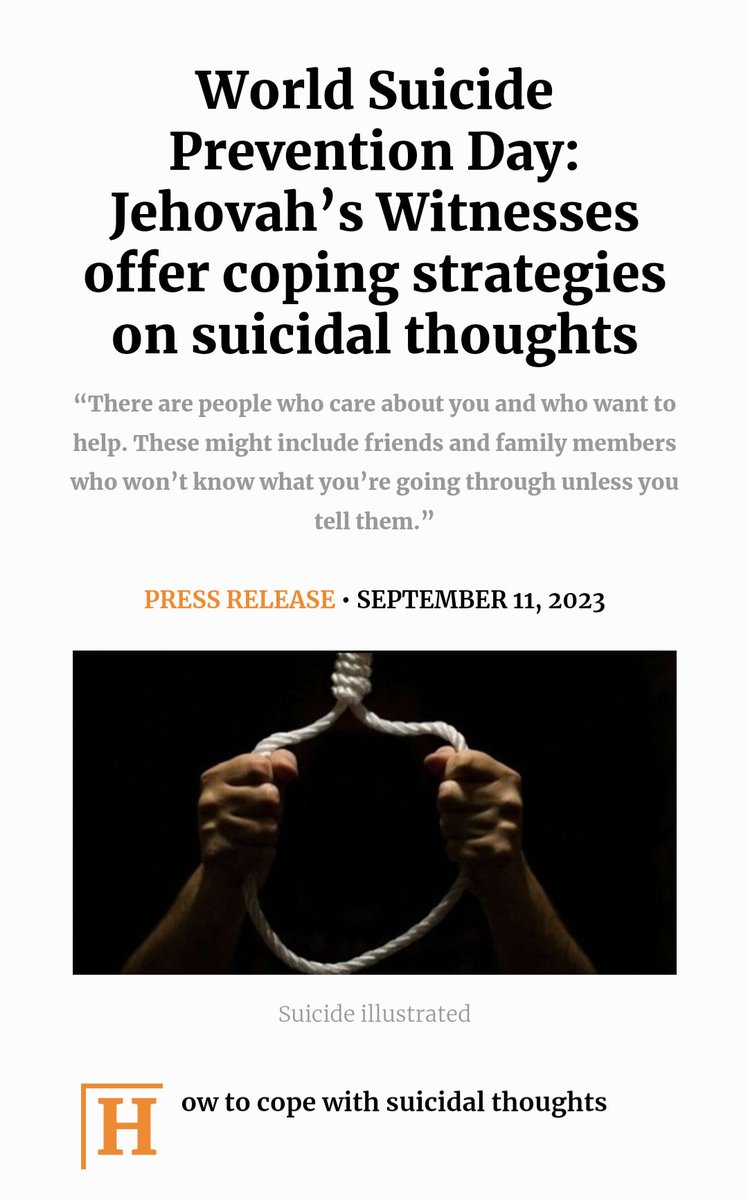
This is offensive propaganda from a global religious cult that shamelessly destroys families and is DIRECTLY responsible for countless suicides due to mandated shunning practices!
One of my goals is to bring greater media attention to this issue within the JW/exJW communities.
26
47
167
15,507