
Joined December 2024
- Tweets 2,618
- Following 429
- Followers 1,826
- Likes 19,107
145 Photos and videos

Pinned Tweet

21 Dec 2025
In the Gorgias, Socrates tells Callicles that the three conditions, or rather virtues, required for dialectic are frankness, benevolence, and intelligence.
Together, they constitute an excellent rule of thumb for discerning who (and who not) to engage with on this app.
3
7
123
12,408
I’d like to imitate the Problems (one of my favorite Peripatetic texts):
Why is it that the buzzing of flies is so irritating—indeed, to the extent that we seek their death, something we do less readily in the case of other animals and irritants?
Is it due to some peculiarity of the vibration alone, or is it because they remind us of decay and death?
1
8
284
Jun 13
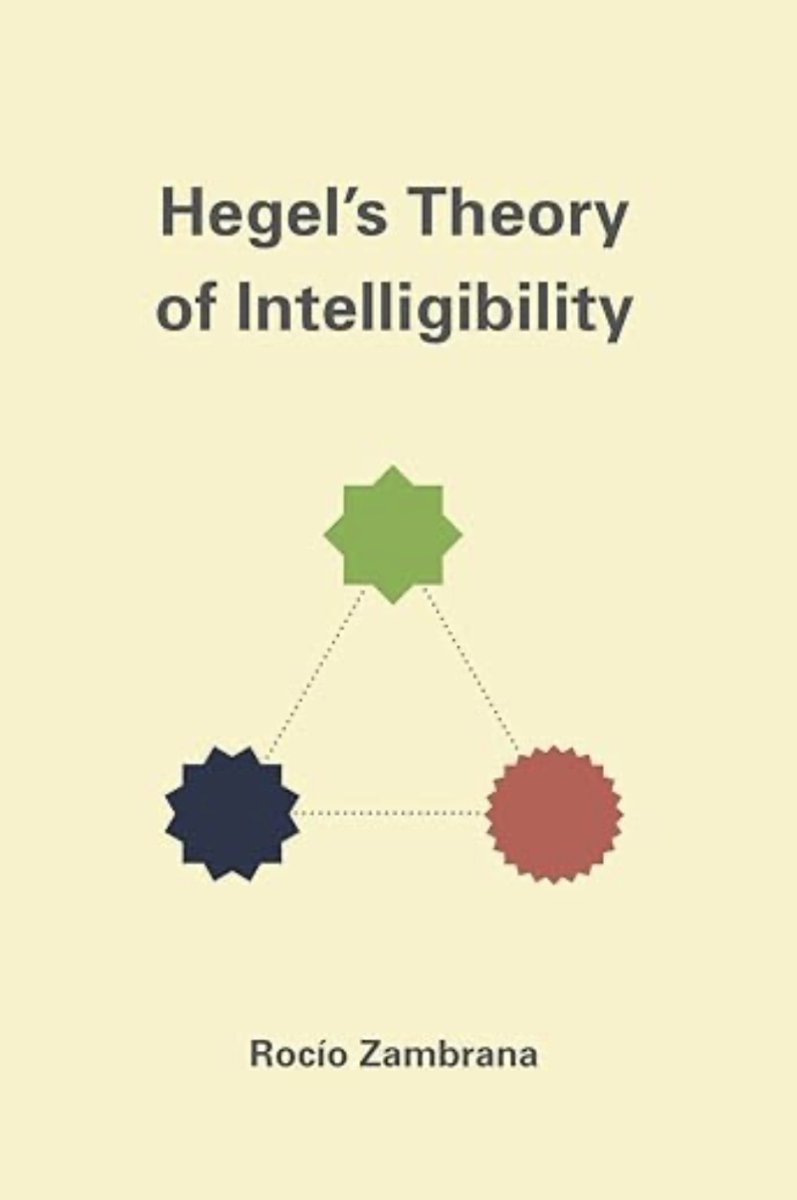
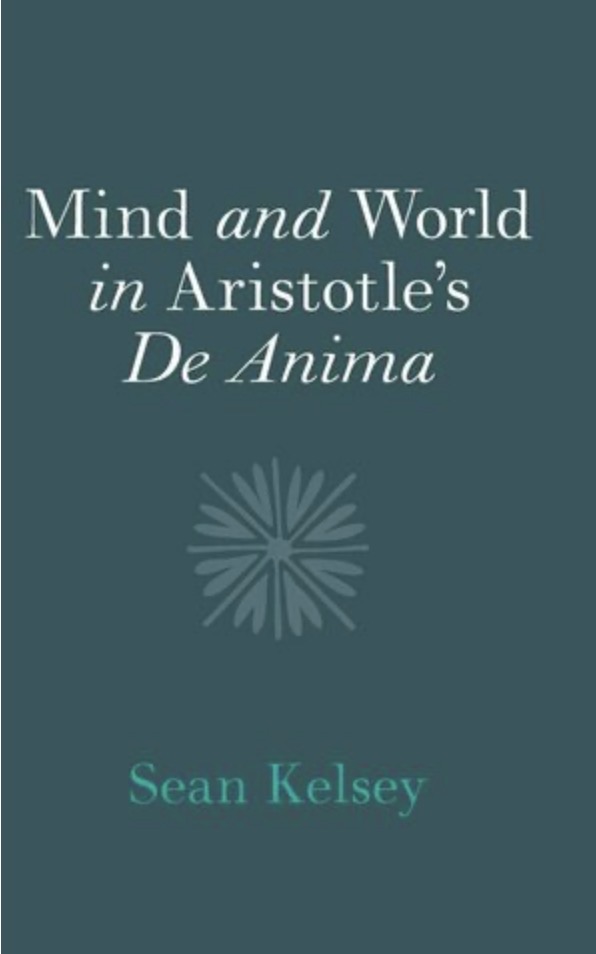
Has anyone read this book? It looks amazing, based on its title alone and the fact that the author seems to follow Pippin, at least in broad strokes.
4
9
93
4,163
Jun 12
The agent intellect is the mind’s thumb.
A fun aphorism, I think.
1
8
428
Jun 12
It’s amazing to me how often we get classical education wrong (judged in light of a very general and common understanding of what that term means).
It’s amazing b/c it doesn’t seem that hard to reproduce either its motivations or its general shape in outline (ofc the execution of classical education requires years to perfect, and that is why its current desuetude is so horrific—it’ll take decades or perhaps even longer to fully recover, especially in a utilitarian country like ours).
On the motivation: Classical education has little, if anything at all, to do with the “great books,” “Western heritage,” or “preserving Christian values.” Those things are all ex consequenti.
It has everything to do with an ordo discendi based on a correct understanding of how things are and how all things relate to God.
Classical education is fundamentally not indifferent to the way things are, the nature of the human intellect/soul, the goodness of truth, or the goodness of being. It presupposes all of these things (cf. Republic VI-VII).
In short, classical education is the ordo discendi adequate to the ordo essendi. It is thus *fundamentally* antagonistic to nihilism.
On its bare outline: There is a reason why there were seven liberal arts (studies of logos and kinds of quantity), why they were arranged the way they were (from more intelligible to us to more intelligible per se), why the classical texts of those arts and sciences were what they were (e.g., Donatus and Euclid are not just disposable), and why they were all meant to lead to philosophy, theology, and (in a sense) law.
Moreover, there is a reason why Latin, Greek, and Biblical Hebrew were essential to classical education. The best expositors of the various arts and sciences (Hebrew being an obvious exception here) did so in these languages. Hence, it stands to reason that you would use these languages for your studies (think instrumental causality here—these languages are the best instruments for appropriating the past and the truths articulated therein, though ofc mastery of Greek and Latin is more delightful than its instrumental role).
Knowledge of Greek and Latin (but really any language) also teaches a young mind what knowledge “feels like.” Having a habitus of knowledge (even if its just of an instrument like language) early on gives a child a general criterion for what is knowledge and what is BS.
Can you use this science to interact with the world the way you use Latin to interact with things, people, or the past? Yes? Great, you probably know something!
Do you not have it that way, or is it impossible to have it that way? No? Well that’s either because you don’t know it or the “discipline” is not real (e.g., insert pseudo-science here).
In sum, I don’t think either the goals or ordo of classical education are that complicated. That’s why I am puzzled by Christian schools (though it’s not just them) that claim to be practicing it. If you want to do Great Books, or whatever, that’s fine. But don’t call it Classical Education. That is a clearly defined thing, and it does’t do anyone any good to obscure this fact.
Jun 12

What is with the larp of all these American "classical" homeschooling whatever programmes. If they want to be traditional so bad they should stop lapping and give the kids actual Latin and Greek grammars and have them begin study of Aristotle's Organon.
4
18
1,274
Jun 12
Another attempt to articulate the meaning of intelligibility for Aquinas (and many of his sources):
Knowability in general: being measured as either a contrary or as a determinate negation of some paradigmatic unity (either in a genus or in a focal group).
Examples: The unit measures numbers in discrete quantity, white measures colors (no racial element implied, ofc, it has to do with eye piercing-ness for Aristotle), circles measure lines (and maybe figures?), opportunity measures time, virtue measures qualities, the commensurate measures quantity in general, the day measures the other times *of the day* (note how we include day in the name of the genus!), the present in the genus of times (sorry, Heidegger), eternity in relation to time (eat it Heidegger!)
Intelligibility: measuring *oneself* as a determinate negation of another along a continuum of act and potency.
Examples: Our understanding of ourselves thinking about some material thing; an angel’s understanding of all things insofar as it is mediated via other angelic intellects, God’s hyper-intelligible understanding of all things as determinate negations of Himself (God is weird because His understanding isn’t really mediated at all, its “mediated” through Himself—which is not really mediation at all, so, in a way, God isn’t really intelligible).
We can thus think of intelligibility as a “kind” of knowability.
On the one hand, knowability extends to absolutely everything that is either one or one-many (i.e., all things insofar as the can stand in either a genus or quasi-genus—hence prime matter is totally unknowable as sheer plurality).
On the other hand, intelligibility includes the note of *self* negation. Its extension is limited to immaterial beings insofar as only immaterial substances have the being-life-thinking sufficient to relate to themselves via some other.
Thus, all intelligible substance is simple being, living being, and self-thinking being (hence the tradition’s penchant for reditio/epistrophe/circular metaphors all the way back to Parmenides).
2
10
690
Jun 12
Thumbs : Agent Intellect :: Other Fingers : Possible Intellect
They are parts of one whole, but the thumb is what enables the hand to form a closed circle and so act as one.
1
6
299
Jun 12
It seems to me that if all commensuration of objects is a determinate negation of the paradigmatic measure of self-knowing, then Hegel’s criticisms of intellectual intuition probably would not apply to Aristotle’s account of nous.
1
1
6
643
Jun 11
Big claim: The debate about the divinity vs. humanity of the intellect(s) in De Anima III.4-5 could have been avoided by taking Aristotle’s analogy to hands in III.8 literally.
As he shows in his biological works, the hand is one power of the human being that both makes and becomes the tools that it uses. Hence, it is the tool of tools.
Likewise, the intellect is one power of the human soul that both makes and becomes the forms of things that it thinks. Hence, it is the form of forms.
1
2
27
1,304
Jun 9
Aristotle’s answer to the skeptic in Gamma seems to amount to something like the following: you are always already thinking being (every statement, signification, and gesture) presupposes the thought of “unity,” “multiplicity” “same,” “other,” “opposition,” etc.
Everything you do is bound up in logical form (i.e., the structure of being).
You cannot avoid thinking being, since you cannot avoid the thought of “one,” and everything that is “one” is what it is.
If you cannot help but think being, so you might as well get good at it!
4
1
37
1,187
Jun 10
correction: *you cannot help but think being, so you might as well get good at it!*
3
229
Jun 9
A follow up on this point: it seems to me that there is a likeness between the mortal sin of sloth and skepticism.
Aristotle says that the mind can know all things, just as the faith teaches that you can become one with God.
Both the skeptic and the sloth look at these tremendous goods and say to themselves, like fools, “no thanks, it’s too hard, I don’t think it’s possible anyway.”
Jun 9

In the De anima, Aristotle takes it as a fact to be explained that nous/mind can know all things.
That he did so should give us pause and prompt a kind of wonder.
We can know all things.
This is a fact, for which there must be some cause.
This “optimism” is sublime and contrasts sharply with how we do philosophy today—catering to the skeptic and those who think first philosophy is impossible.
Aristotle’s response, I think, would be, “no, you can answer the skeptic if you want to—see Meta. Gamma for details—but the rest of us are going to get on with science and the business of knowing things as they are.”
Perhaps, at some point, you should ignore the skeptic and just “get on with it.”
We can know all things and we can know them as they are.
Yes. That is amazing.
Now, how is that possible?
13
794
Jun 9
A weird parallel between thinking being and counting time—two instances of reciprocal measurement.
As said before, I think Aristotle holds that the determinate activity of commensurating of a thing by its form is the activity of measuring how that form defects from the indeterminate activity of self-thinking.
If so then thinking and being measure each other in different respects.
The determinacy of the form measures the mind, but the mind’s simplicity measures the form.
Weirdly (or perhaps not?), such co-dependent measurement also seems to occur between time and motion. The unity of the soul (it’s implict temporal sense of before and after) measures motion by articulating it via number and motion measures time through its uniform succession.
As Thinking and Being measure one another so, too, do Time and Motion.
What’s also strange is that Aristotle thinks both time and thinking are related to life, the first as its articulation of the before and after, the second as its articulation of things by their form.
Why is there this analogy?
9
458
Jun 9
In the De anima, Aristotle takes it as a fact to be explained that nous/mind can know all things.
That he did so should give us pause and prompt a kind of wonder.
We can know all things.
This is a fact, for which there must be some cause.
This “optimism” is sublime and contrasts sharply with how we do philosophy today—catering to the skeptic and those who think first philosophy is impossible.
Aristotle’s response, I think, would be, “no, you can answer the skeptic if you want to—see Meta. Gamma for details—but the rest of us are going to get on with science and the business of knowing things as they are.”
Perhaps, at some point, you should ignore the skeptic and just “get on with it.”
We can know all things and we can know them as they are.
Yes. That is amazing.
Now, how is that possible?
5
6
39
2,471