
Joined January 2021
- Tweets 3,766
- Following 542
- Followers 363
- Likes 7,578
272 Photos and videos



Pinned Tweet

11 Apr 2021
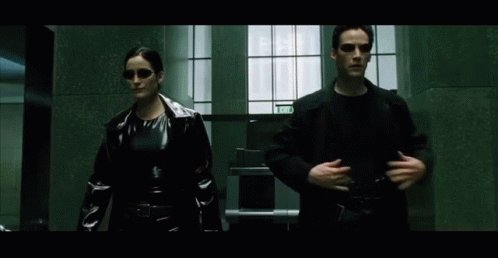
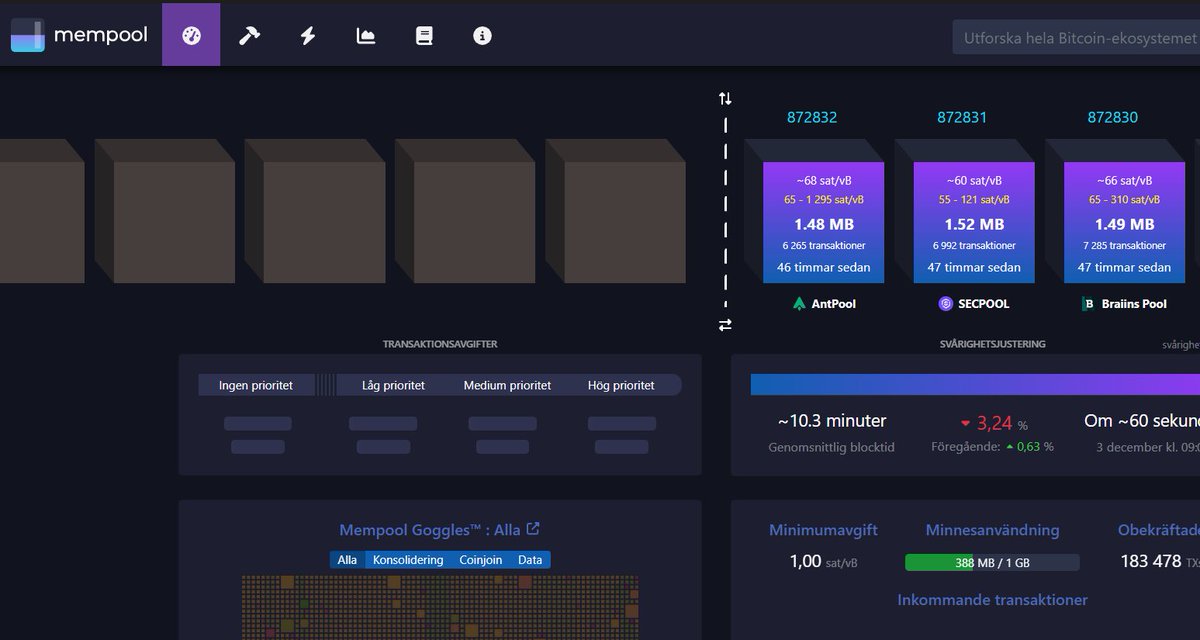
"An idea is like a virus. Resilient. Highly contagious. And even the smallest seed of an idea can grow. It can grow to define or destroy you." - Dom Cobb on #bitcoin
2
2
12
🤣🤣
Jun 5

A lot of people invest like this, too.
17

State Space retweeted

Mar 19
Took the Gripen out for a ride yesterday.
Strong, smart and at supersonic speed - Sweden!
X – won’t you help me? Send this to someone who also should get themselves a piece of world class engineering and innovative adaptable software.
Welcome to Sweden, we are open for business.
336
848
8,070
421,389
Mar 18
Kollektivavtal är sjuka - skillnad mellan npgon som kliver in från gatan och en duktig erfaren oerson med 25 års erfarenhet kan maximalt bli ungefär 10% högre lön. Incitament för gott arbete ovh initiativ?
1
32

State Space retweeted

Feb 25
You are being lied to by your own senses.
Right now, you are strapped to a rock spiraling through the cosmic void at half a million miles per hour.
We aren't floating in peaceful circles; we are being violently dragged across the Milky Way.
x.com/i/status/9801459730149…
206
337
1,885
92,477
Feb 17
Absolute legend!

19
Feb 16
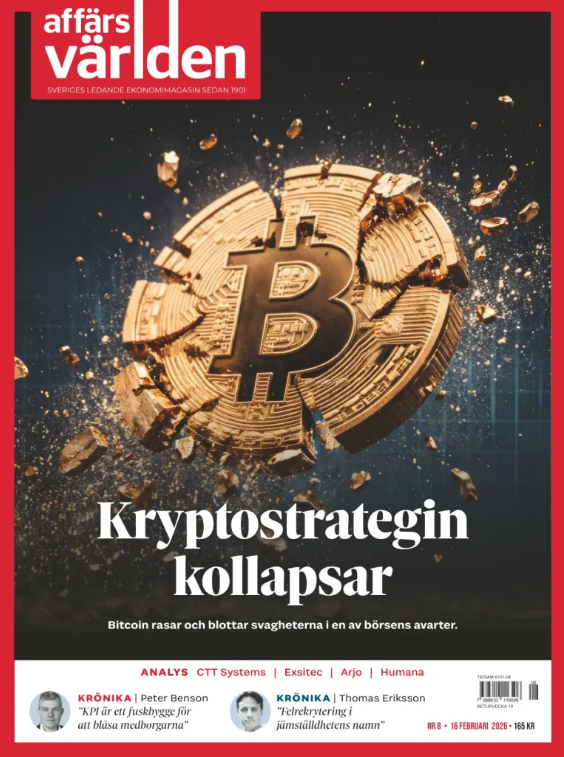
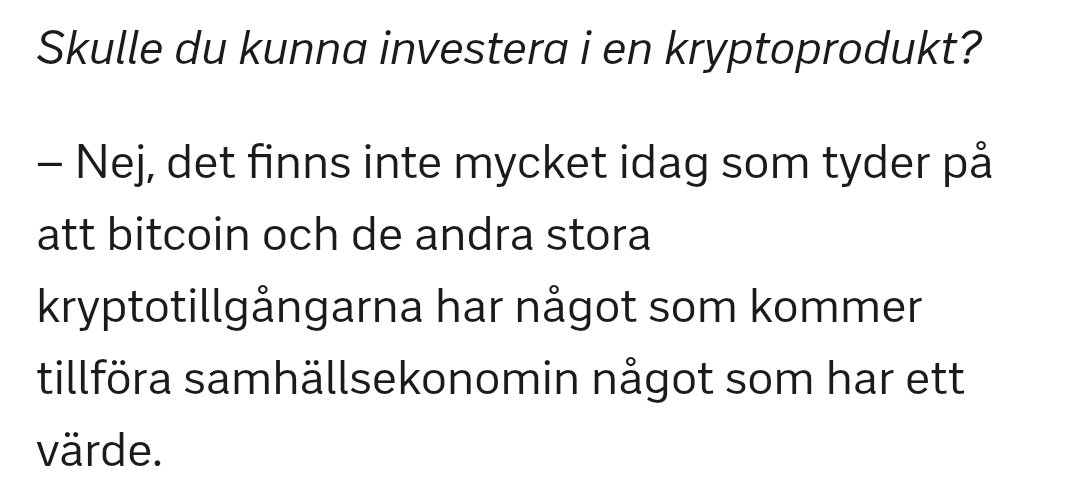
Front page of one of Swedens leading business magazines. The Editor-in-Chief is a long standing bitcoin sceptic. Here, correctly i might add, pointing out the challenges of many treasury companies.
20
State Space retweeted

Feb 10
I got a call from a scammer yesterday.
Me: “Hello.”
Scammer: (thick, heavy accent) “Hello. This is Tom Smith from Microsoft Support. We are seeing a lot of virus activity coming from your device.”
Me: “Oh no. My device? Are you sure?”
Scammer: “Oh yes, Madam. We have many reports.”
Me: “Oh, jeez. How can I fix it?”
Scammer: “It’s okay, Madam. We can help you right now. Are you in front of your device?”
Me: “Yes. I was just about to use it. I’m glad you called.”
Scammer: “Good, Madam. Please push the Start button.”
Me: “I think it’s already on.”
Scammer: “Okay, Madam. Now click on Control Panel.”
Me: “I don’t see that.”
Scammer: “Do you see a bunch of information above the Start button?”
Me: “Yes.”
Scammer: “That is your Control Panel.”
Me: “Wow. I didn’t realize it had a name.”
Scammer: “Yes, Madam. Now press Internet Options.”
Me: “I don’t see any Internet options. I don’t think I bought that feature. This is just a cheap one.”
Scammer: “All devices have Internet, Madam. Press the Start button again.”
Me: “Okay. Same as before.”
Scammer: “That’s fine, Madam. We will restart your device. Please turn it off.”
Me: “Um… I don’t know how. I’ve never turned it off. It kind of just stays on.”
Scammer: “There must be an off button. How do you stop it when it’s running?”
Me: “I usually press the big button.”
Scammer: “Okay, Madam. Press that button.”
Me: “Okay.”
Scammer: “Is your device off?”
Me: “No. The door popped open.”
Scammer: “Door? Is there a disc inside?”
Me: “No. There’s a burrito.”
Scammer: “Why is there a burrito in your computer?”
Me: “Computer? I thought you said this was microwave support.”
1,309
6,259
112,613
4,385,616
State Space retweeted

Jan 31
I generally hate AI, but this “Star Wars” takedown of Jake Tapper and Anderson Cooper is tremendous…
😂
841
10,063
37,686
1,585,058

State Space retweeted

Jan 12
Video message from Federal Reserve Chair Jerome H. Powell: federalreserve.gov/newsevent…
19,455
45,697
244,809
89,662,695
State Space retweeted

16 Nov 2025
“If I put $100 in Bitcoin in 2010 I’d have $2.8B now.”
No.
If you bought $100 of Bitcoin in 2010 and watched it go to:
$1k → $100k → $1.7M
and did nothing
Then watched $1.7M go to $170k
and still did nothing
Then watched $170k go to $110M
and still did nothing
Then watched $110M wither to $18M
and still did nothing
Then watched $18M surge to $390M
and still did nothing
Then watched $390M deteriorate to $85M
Then watched $85M climb to $1.6B
and still did nothing
Then watched $1.6B shrink to $390M
and still did nothing
Then watched $390M surge to $2.8B
and then for some reason finally decided to do something…
Then yes, $100 in 2010 would be worth $2.8B today.
491
1,184
12,236
982,533
State Space retweeted

23 Oct 2025
A million seconds ago was October 11th
A billion seconds ago was 1993
A trillion seconds ago was 30,000 B.C.
The US national debt is now rising by $1 Trillion every ~180 days.
684
7,156
48,582
3,331,994
2 Oct 2025
🏹 -> 🎯
@enlundm: Kontrollens pris är kvävd innovation affarsvarlden.se/kronika/enl…
1
3
833
State Space retweeted

19 Sep 2025
COLDCARD takes Bitcoin security seriously.
No shortcuts. No compromises.
We’re giving away a COLDCARD Q to help one Bitcoiner level up their security.
To enter:
👍 Like 🔁 Repost
💬 Comment your favorite COLDCARD security feature
218
212
464
33,131

State Space retweeted

15 Aug 2025
Bitcoin’s Security Budget Problem is Solved
Bitcoin’s “security budget” is often framed by altcoiners as a looming shortfall as block subsidies halve. That framing mixes two different things. The rules of Bitcoin (eg 21 million cap, validity of transactions, block weight limits) are secured by full nodes and private keys. Miners don’t set or change those rules; they only propose blocks that fit within them. What mining buys is settlement finality: how costly it is to censor or reorder recent blocks. The question, then, is whether the network can reliably make reorgs and censorship uneconomic as the subsidy shrinks.
Contrary to what Ethereum influencers claim, Bitcoin’s budget for finality is NOT a fixed paycheck; it’s a market price that rises when needed. When marginal miners can’t cover electricity costs after a halving, they shut off, blocks slow temporarily, and the difficulty adjusts every 2,016 blocks to restore ~10‑minute blocks for the miners who remain. When confirmations become scarce or unreliable, whether from congestion or attack, the fee rate (sats per vbyte) climbs as users compete for the next block. That converts scarcity directly into miner revenue. At 1,000 sats/vB across ~1,000,000 vB, a single block’s fees are about 10 BTC—often more than the subsidy. We’ve seen this play out: fee blow‑offs in 2017 and 2021, and in May 2023 multiple blocks where fees alone exceeded the subsidy. In practice, miners respond by filling blocks to capture those fees, not by leaving money on the table.
Users have levers that steer revenue to the honest tip. With Replace‑By‑Fee (RBF) and Child‑Pays‑for‑Parent (CPFP), they can rebroadcast transactions with higher fees or attach a high‑fee child to an unconfirmed parent, instantly elevating inclusion priority. That concentrates rewards on blocks that confirm parents and makes omitted transactions a bounty for whichever miner defects from any censoring or undercutting strategy. Mining pool competition operationalizes the effect: when fees are rich and visible, each pool has a dominant incentive to defect first and claim them now, collapsing any cartel that tries to suppress or sequence transactions for nefarious purposes.
If attacks persist, receivers can raise confirmation thresholds for high‑value transfers, stretching an attacker’s required time and energy while urgent senders bid up fees to start that clock immediately. These logical user‑side controls ensure that any sustained attack must burn growing resources against rising rewards for the honest chain.
The solution to the security budget problem is clear: nodes lock the rules; difficulty adjustments re‑equilibrate participation; the fee market prices scarce blockspace on demand; RBF/CPFP and mining pool competition route revenue to the parent‑confirming chain; and confirmation policy dials assurance as high as needed. Empirically, Bitcoin has already demonstrated this behavior: fee spikes during stress, miners maximizing fee inclusion, and rapid reversion to normal once backlogs clear. As subsidy declines, fees don’t have to be permanently high; they need to be responsive when finality is under threat. That responsiveness is exactly what we observe. The “security budget problem” isn’t a gap to be filled with permanent tail inflation, it’s a market process that scales up the cost of attacks precisely when it matters.
73
90
528
107,987