
free thinker
Joined February 2024
- Tweets 5,409
- Following 342
- Followers 235
- Likes 88,240
98 Photos and videos



Steve Butler retweeted

Jun 6
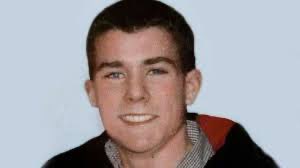
Following the horrific murder of Henry Novak, the name Kriss Donald has come up.
Many don’t know what happened to Kriss. And they certainly don’t have an update on his convicted murderers. You might be surprised by this.
This all makes me rather angry. Hold on to your seat and here we go…
On 15 March 2004, 15 year old Kriss was walking with a friend, Jamie Wallace, on Kenmure Street in Glasgow.
A silver Mercedes with five men (led by Imran Shahid) pulled up and grabbed Kriss and his friend. Jamie managed to escape but Kriss was forced into the car.
So what had Kriss done to upset these men? Absolutely nothing. Imran and his group of Pakistani thugs had been in an altercation with some other white men earlier at a nightclub. They were angry and picked on a random (and innocent) white boy to have their revenge.
The gang drove him around for hours in the car before they took him to a secluded spot by the river. There they held his arms while they stabbed him 13 times, causing severe internal injuries - to a lung, the liver and a kidney.
At this point, poor Kriss was already dying from blood loss but he was still fighting to stay alive.
These horrific human beings then doused him in petrol and set him on fire. Kriss rolled on the floor, trying to extinguish the flame, but ultimately he died from blood loss and the impact of the burning.
His body was found the next day.
Some of the suspects fled to Pakistan but were eventually brought back to face justice for this barbaric racially motivated and heinous murder.
So what happened to the five men?
Imran Shahid (ringleader): he received life imprisonment, minimum 25 years. He has been as much of a bully inside prison as he was on the outside and has an additional 20 months added to his sentence for an assault when in prison. He also pretended to convert to Judaism so he can have better food and has sued the prison service over wanting a penis pump and having his Xbox removed (it was feared he was using it to access the internet). He is able to apply for parole in 2031
Zeeshan Shahid (his brother): received a life sentence with a 23 years minimum. Eligible for parole in 2029.
Mohammed Faisal Mushtaq; received a life sentence with a 22 years minimum. Eligible for parole in 2028/2029.
Daanish Zahid: received a life sentence with a minimum of 17 years but he also got an additional sentence for 6 years for lying to the court. He is eligible for parole in 2027 and there have been exploratory discussions for work placements/community work on his release.
Zahid Mohammed was part of the kidnapping but left the group before the stabbing and burning. He received only 5 years and was set free after only 2.5 years. He then changed his name to Yusef Harris and was back in prison for 4 years in 2017 after he threatened to murder someone, was found carrying a knife and drove a car at a police officer. He is now free and nobody knows where he is.
By 2031, most, if not all, of these menacing and violent men could be back on the streets in the UK.
Kriss deserved better.
278
3,733
10,235
112,867
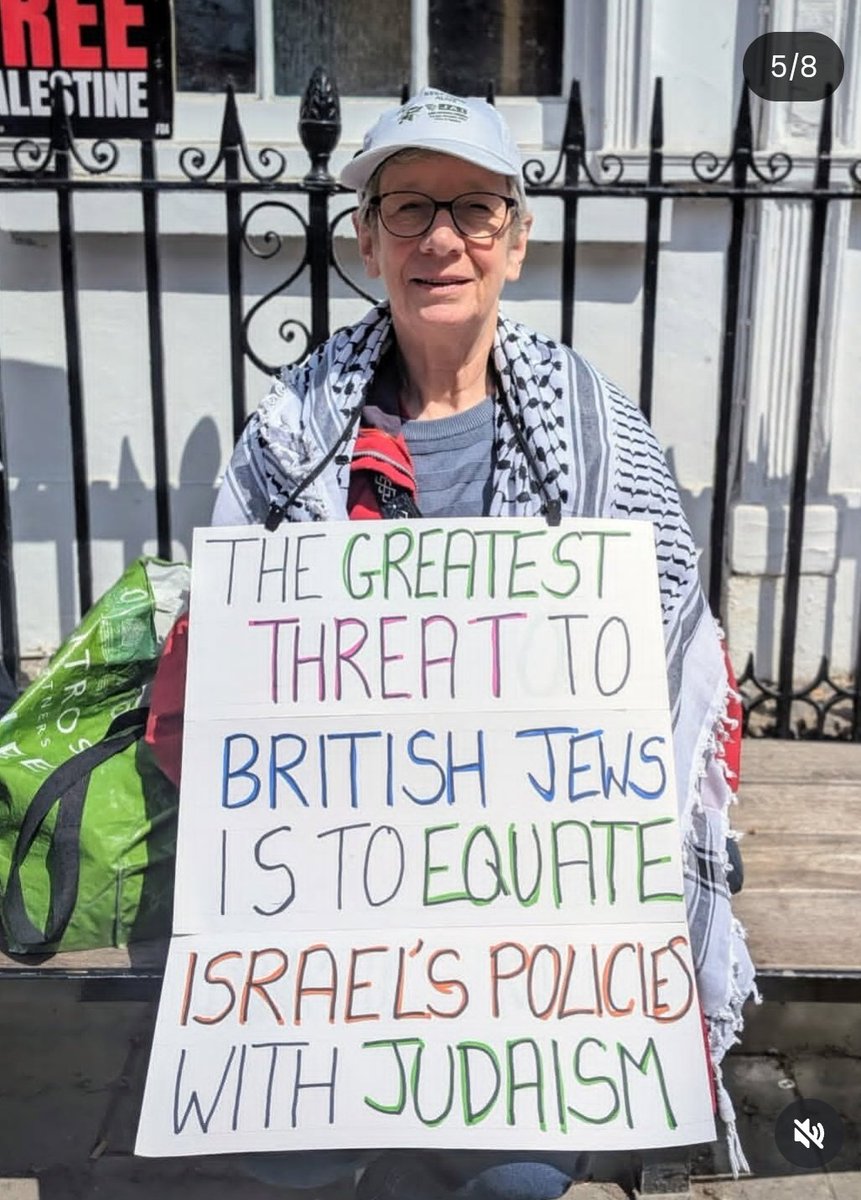
Care to expand on your deputy leaders comments about October the 7th 2023 and how that may have caused issues with the Jewish community?

1. Antisemitism is real and revolting
2. To march against UK government support of genocide is to march *against* hate
3. There is nothing Jewish about Netanyahu's crimes
4. We stand against hate in all its forms. Including antisemitic cartoons of @ZackPolanski in The Times
2
153
Steve Butler retweeted

Apr 15
This one will require a stiff drink.
In the early 1990s, the government came up with a clever idea. Instead of borrowing money cheaply to build hospitals, schools, and roads, it would get the private sector to build them and then pay the private sector back over 25 to 30 years. The Private Finance Initiative. PFI.
The attraction was obvious. You got a shiny new hospital today. The bill didn't show up on the government's books. The cost was deferred into the future. Politicians got ribbon-cutting ceremonies without the awkward conversation about borrowing.
It was, in effect, the nation's credit card. Buy now, pay later. Except the interest rate was extraordinary.
The total capital value of everything built under PFI was around £50 billion. As of March 2024, there were 665 PFI contracts still running across the UK, with roughly £136 billion in remaining payments stretching out to the early 2050s. These are payments public bodies are contractually locked into. Hospitals, schools, councils, government departments. Paying for buildings that in many cases were constructed twenty or thirty years ago.
And the terms are extraordinary.
PFI contracts were structured so the private sector would not just build the facility but manage its services. Cleaning. Maintenance. Catering. Portering. These services are bundled into long-term contracts with built-in inflation increases that the public sector cannot renegotiate, cannot exit without paying massive penalties, and often cannot even fully scrutinise because of commercial confidentiality clauses.
In one case raised in Parliament, a hospital was charged £333 to change a lightbulb. That isn't an urban myth. It was cited in Hansard.
The NHS has been hit hardest.
According to parliamentary analysis, the capital cost of NHS PFI projects was around £13 billion. The total repayments are estimated at around £80 billion. And the peak of NHS PFI annual repayments isn't even here yet. It arrives in 2029. The bills are still going up.
In 2020-21, NHS trusts paid £457 million purely in interest charges on PFI contracts. Not services. Not maintenance. Interest. In the last five years, NHS trusts have handed over more than £1.8 billion in PFI interest alone. We Own It calculates that money would have covered the starting salaries of over 50,000 new doctors.
One NHS trust, Essex Partnership, has reportedly paid back 27 times what was originally borrowed. Some hospitals are spending more on PFI repayments than on medicines for patients. And remember, these repayments come out of the same NHS budget that's supposed to fund patient care, staff, and equipment.
Scotland got it just as badly. Audit Scotland reported that Scottish taxpayers will pay a cumulative £40 billion for PFI assets worth just £9 billion. North Ayrshire Council will have paid £440 million by 2038 for four schools that cost £83 million to build.
Now here's what makes this worse.
Many of these contracts are starting to expire. The buildings are being handed back to the public sector. And the NAO has warned of significant risks around the handback process, including cases where public bodies were dissatisfied with the condition of assets being returned to them. Decades of payments. And some of these buildings may come back needing significant further investment.
So what actually happened?
The government could have borrowed money at significantly lower rates to build these hospitals and schools itself. Sovereign borrowing has always been cheaper than private finance. Instead, it paid the private sector to borrow at a premium and passed the inflated cost on to the taxpayer. The private sector took the profit. The taxpayer took the risk. The buildings are now ageing. The debts are still being paid. And the services that were supposed to benefit are being squeezed partly because so much of their budget is locked into contractual obligations they cannot escape.
PFI wasn't investment. It was an accounting trick. A way for governments to build things without the borrowing showing up in the national debt figures. It made politicians look fiscally responsible while loading future generations with obligations they had no say in and no ability to renegotiate.
Both parties did this. The Conservatives created PFI in 1992. Labour massively expanded it after 1997. More than 700 projects were signed. The coalition eventually wound it down. The current government scrapped the latest version. But the contracts remain. The payments continue. And the damage is already done.
This is what it looks like when a country chooses to buy its infrastructure on hire purchase instead of investing properly. You lock in above-market rates for decades. You lose control of the assets. You tie the hands of future governments. And when the bill keeps coming due, you're told there's no money for doctors, teachers, or social care.
There was always money. It just went somewhere else.
358
3,121
6,287
365,647
Steve Butler retweeted

Mar 21
🇬🇧 Green Party Leader Zack Polanski REFUSES to condemn ABORTION up until birth and non-stun slaughter when confronted in Norwich whilst campaigning.
Under heavy questioning he tells VP Journalist @WillColeshill to "Piss Off" for asking questions.
175
595
1,774
107,553
Steve Butler retweeted

So you’re saying people shouldn’t just enter countries uninvited?
41
26
1,660
20,711
You clown
Feb 6

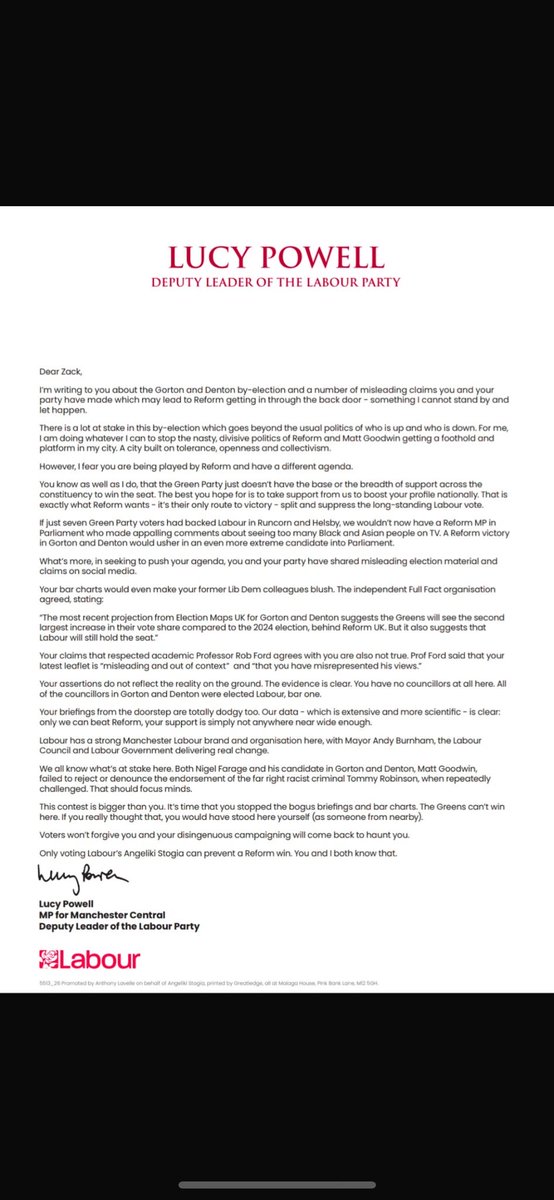
This by-election is bigger than day to day politics. It’s about stopping Reform’s toxic politics coming to my city. The Greens misleading claims, dodgy bar charts & briefings risk letting them in the back door. Only voting Labour can defeat Reform. My letter to @ZackPolanski 👇🏻
1
4
359

8 Dec 2025
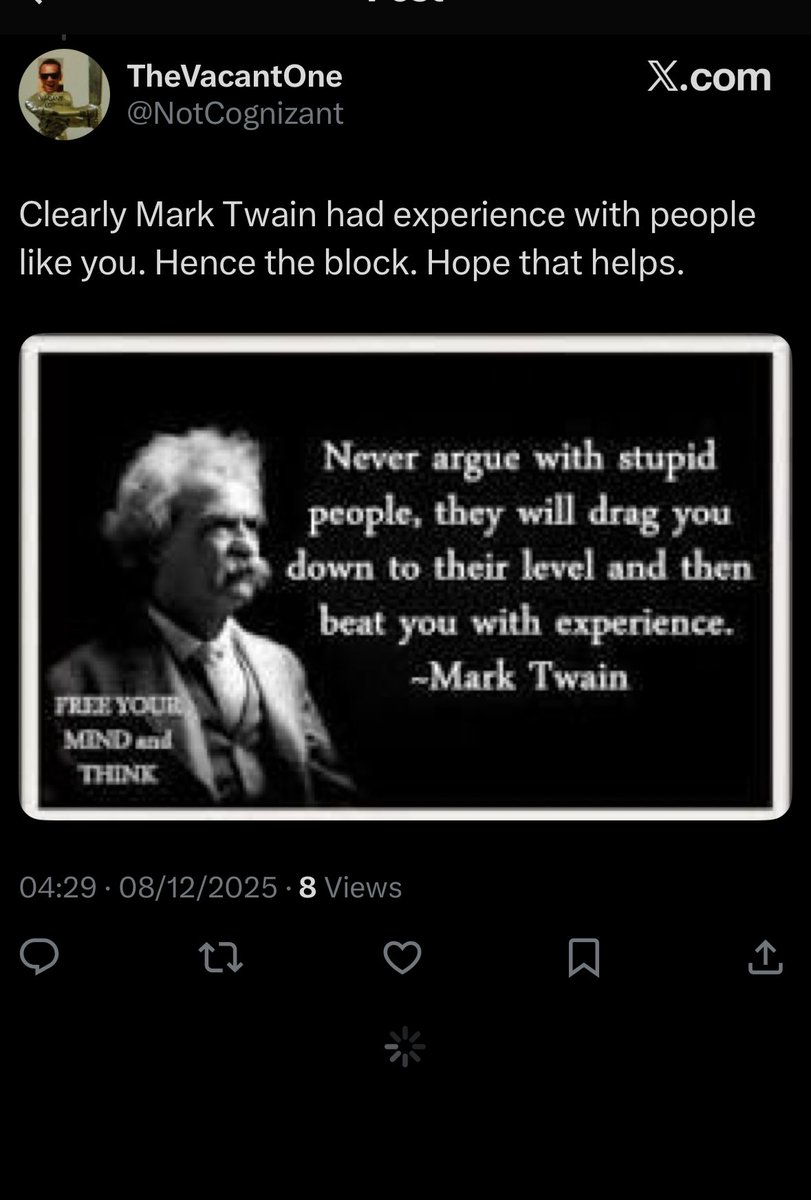
Replying from behind a block! Very brave of you! Still didn’t answer any of my points back!
2
246
9 Dec 2025
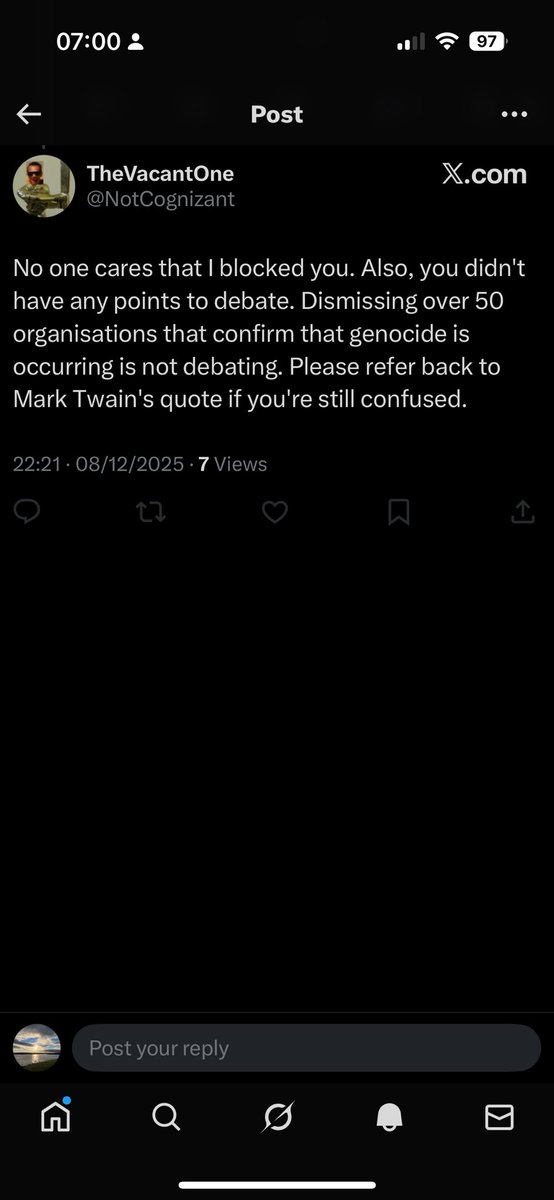
The sad truth is that no one cares what you think, demonstrated by the lack of likes to your comment. 🤣
1
2
164
16 Nov 2025
War criminal! When you in The Hague?
16 Nov 2025

Go on Keir. You know it makes sense
1
1
248
18 Oct 2025
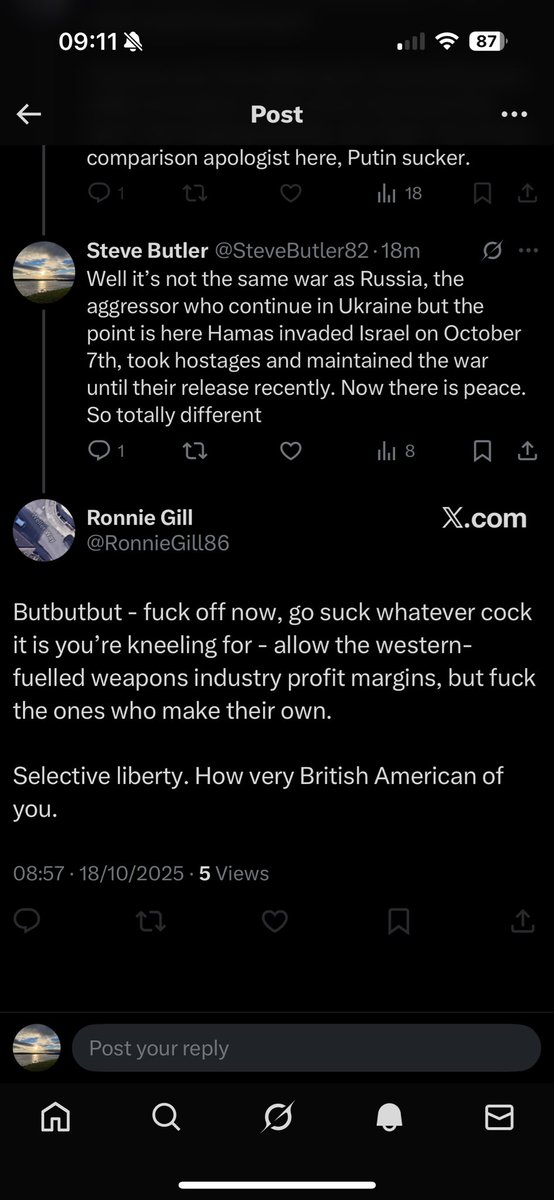
Nothing says you’ve won the debate more than when your opponent has a meltdown then blocks you 🤣🤣
4
261
Steve Butler retweeted

2 Oct 2025
Is this a joke? You branded Leeds Rabbi Zecharia Deutsch a "creep", a "lowlife" and an "animal" after the Oct 7 attacks in a now deleted video. He was later forced into hiding with his family. You used an image of yourself and Bob "Death, death to the IDF" Vylan as your FB profile picture (after Glastonbury). Your response to the Hamas terror attack, which killed some 1,200 people, was: "White supremacist european settler colonialism must end!". We see you.
2 Oct 2025

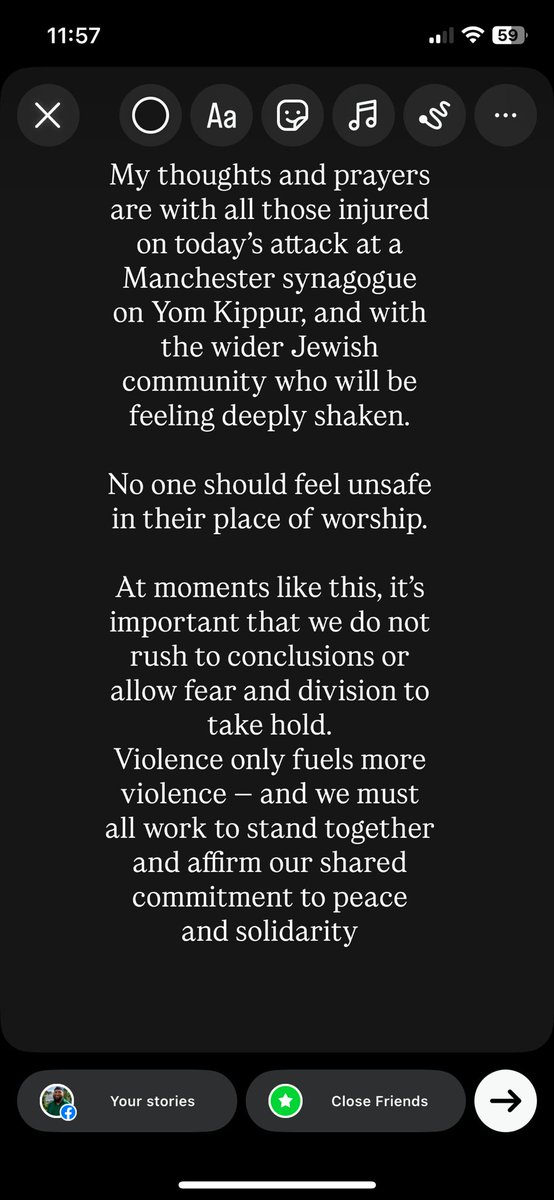
My thoughts and prayers are with all those injured in today’s attack at a synagogue on Yom Kippur, and with the wider Jewish community who will be feeling deeply shaken.
No one should feel unsafe in their place of worship.
At moments like this, it’s important that we do not rush to conclusions or allow fear and division to take hold. Violence only fuels more violence — and we must all work to calm tensions, stand together, and reaffirm our shared commitment to peace and solidarity.
instagram.com/p/DPTgPKFiMyS/…
185
1,745
9,599
457,296
Steve Butler retweeted

27 Sep 2025
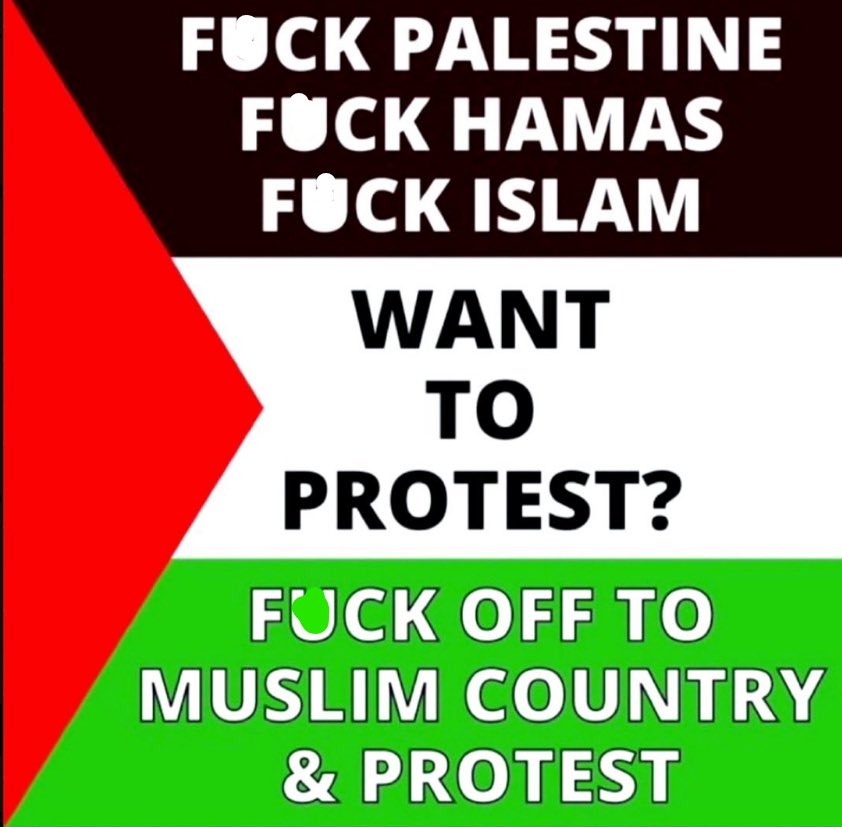
So you disagree with @FUDdaily arrest over this meme as well then, Adnan?
3
45
2,407

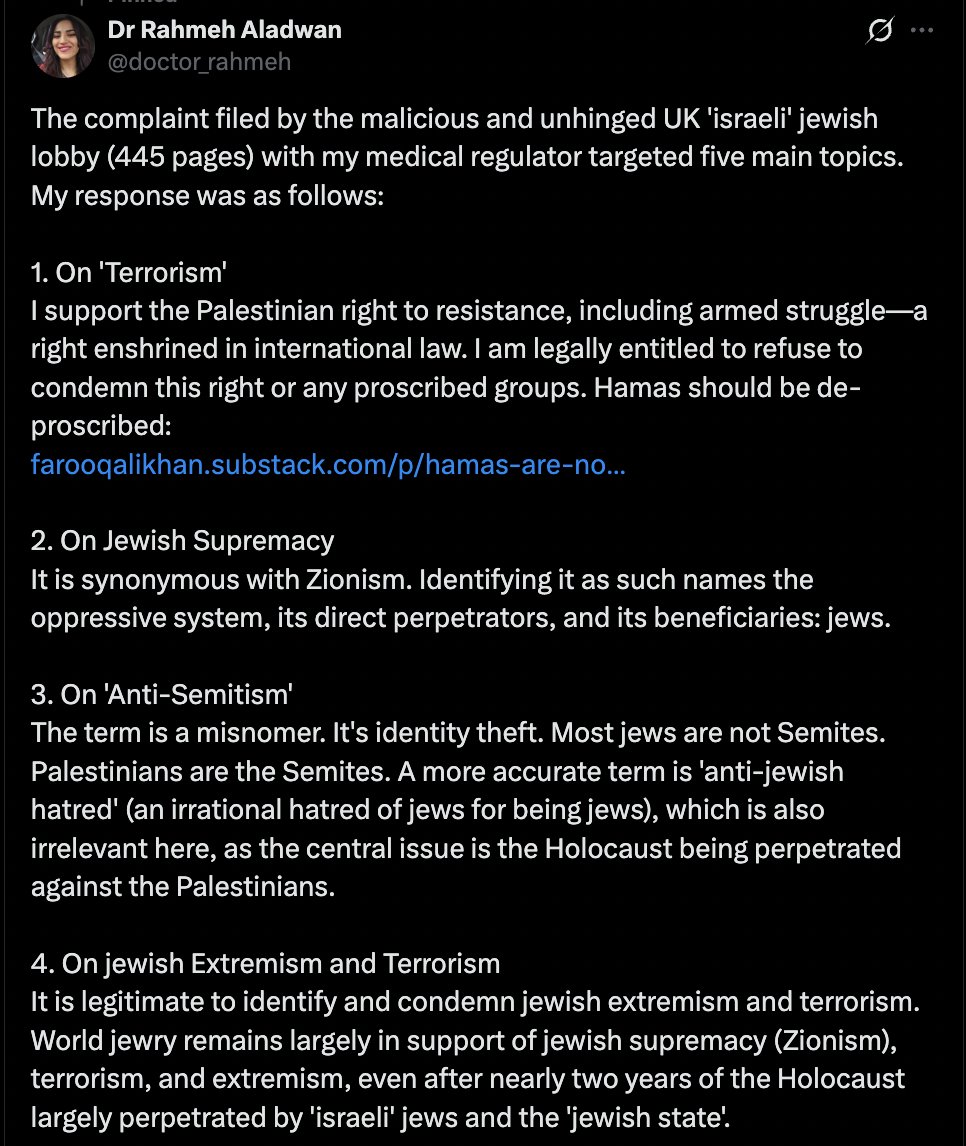
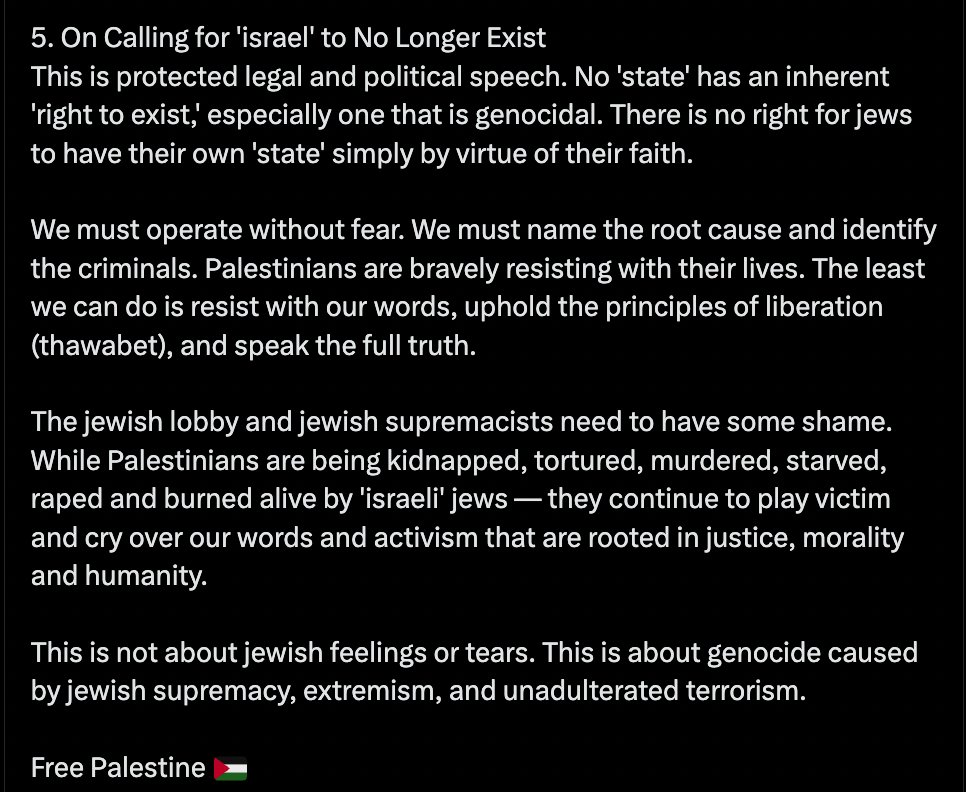
16 Aug 2025
She blocked me after I beat her
16 Aug 2025

Do you ever think that the racism is caused by people like you who advocate for what is essentially open borders to cultures that you yourself would not be alone in a room with. Just wondering.
1
1
460
Steve Butler retweeted

2 Jul 2025
Before lamenting the likely terrorism designation of Palestine Action, allow me to offer a dose of real-world context, something the communist journalist in question seems to lack entirely when it comes to understanding how the world of national security operates.
I spent a decade working within the UK’s security and intelligence services, and another decade and a half alongside colleagues from those same institutions in the strategic security and geopolitical field. So, let me break this down plainly.
In the UK, protest movements - from BLM-UK to Just Stop Oil to Extinction Rebellion - are tolerated within a certain bandwidth. You can storm art galleries, block roads, disrupt university lectures, even egg the occasional minister. Annoying? Yes. Criminal? Often. Terrorist? Not quite.
But there are red lines.
The UK armed forces, intelligence agencies (MI5, MI6, GCHQ), and security installations are not in the same category. These are not symbolic targets for radical theatrics, they are sovereign infrastructure. Step one foot on a military base, attempt sabotage (even symbolic), and you’re no longer seen as a protester. You’re viewed as someone testing national defense readiness, someone who may have just published a blueprint that other actors with far deadlier intentions might exploit.
Palestine Action didn’t just throw paint. They breached a military site. They gave out manuals. They demonstrated vulnerability. The state isn’t reacting to a protest, it’s reacting to a national security threat that others may now mimic, with explosives instead of spray cans.
Crossing into those domains changes the equation entirely.
So, yes, break into Barclays or Elbit Systems offices, expect arrest. Break into a military installation, expect a terrorism file to be opened.
That’s how it works. And if you don’t understand that, then you’re not ready for this conversation.
2 Jul 2025

To my colleagues in the UK media –
You may not agree with Palestine Action’s tactics, messaging, or political objectives. You may think protestors in general are noisy, irritating, and uncouth. Indeed, you may think the same of me! But all of us who work in UK journalism, in any capacity, should be horrified by the government’s proscription of Palestine Action as a terrorist group. It goes far beyond holding a protest group criminally liable for their activities. It makes it illegal to express support for them, in any capacity, under the threat of up to 14 years imprisonment.
Our work as journalists is built on the bedrock of legally protected free expression. But there’s no journalistic exemption to the Terrorism Act 2000. Let’s imagine that one of your colleagues, after this week, writes an opinion piece arguing that Palestine Action are brave and heroic, that they were part of a long tradition of non-violent direct action that includes the Suffragettes and the Greenham Common Women's Peace Camp.
You may disagree with the points they make. That’s fine – since when did everyone in the media get along?
But do you think they should be arrested? Do you think their house should be raided, work devices seized, that they should face prosecution and jail time? Because that is what the law allows for.
Perhaps you think this is unlikely. But already, journalists have been investigated under the Terrorism Act. One journalist reporting on Palestine had his home raided by police despite never being arrested or charged with an offence. He was targeted with sweeping warrants that granted police access to journalistic and legally privileged material, which were later ruled unlawful by the court. If one journalist can have their home raided by police under counter-terror powers, so can any of us.
I don’t think that free expression is a privilege that belongs solely to the media class. I don’t think that a teenager wearing a Palestine Action t-shirt should face arrest either. I don’t think someone conveying positive sentiments about the group to their friends should have to worry about prosecution. And I think that, when many ordinary people choose not to comply with the state’s restrictions on expressing support for Palestine Action after it’s proscribed, it is our moral obligation as journalists and media workers to back them up any way we can.
It doesn’t matter if you work for The Guardian or The Sun, Novara Media or The Telegraph, the BBC or GB News. The proscription of Palestine Action as a terrorist group is an unprecedented infringement on free expression. Every single one of us in the media, no matter our political affiliations, must stand firmly in opposition to it.
109
270
1,140
126,739
Steve Butler retweeted

29 Jun 2025
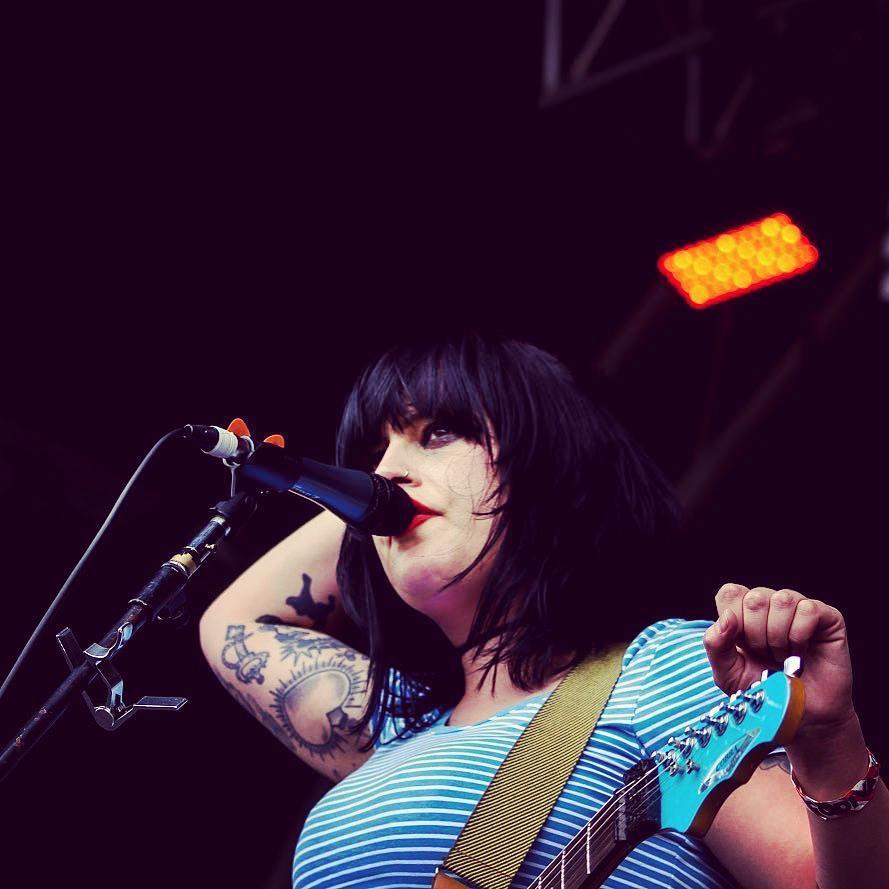
I performed at Glastonbury twice back when it was a music festival, not a Nuremberg rally. The same pricks cheering Bob Vylan Kneecap’s “artistic freedom” got me banned from festivals and wrote vicious hit pieces branding me a nazi transphobe to trash my career. The hypocrisy makes me wanna puke
400
2,106
21,772
738,737
Steve Butler retweeted

29 Jun 2025
‘Murdering bitch’.
‘Jews deserve to die’.
‘You are all filth.’
This is what happened today in the nice middle class area of London we both live in (written by the lady it happened to).
I haven’t posted on Facebook for years.
But something happened today that I can’t stay silent about.
I was out walking in Muswell Hill with my daughter when we saw a friend of mine’s daughter crying.
She had just witnessed a group of people cutting down the yellow ribbons — put up with consent from the community — that symbolise the hostages still held in Gaza.
I went over to speak to them.
They were all wearing keffiyehs. And they immediately launched into abuse — calling me a “murdering bitch,” saying I was “complicit in genocide,” and that “Jews deserve to die.”
I asked if they understood what the yellow ribbons were for. They didn’t care. I suggested we put up more — with pictures of Palestinians held hostage by Hamas in Gaza, alongside the ribbons — to create something humanitarian, something that acknowledged everyone’s suffering.
They laughed in my face.
Said they didn’t want peace with ‘Jews’.
They didn’t want understanding ‘with Jews’.
They wanted to dehumanise anything ‘Jewish/ related to Israel and the genocide’.
When someone looks you in the eye and says “no one wants to exist with Jews — you are all filth,” it stays with you.
That hate, that poison, it didn’t come from nowhere.
And it’s being legitimised, fed, and spread. And it’s getting bolder.
I know some people will say “don’t give them attention” — but that’s not an option anymore.
Silence isn’t safety.
This is the reality some of us are living with right now.
And it needs to be called out.
Continuously associating the Palestinian narrative with violent slogans/ rhetoric does a major disservice to the just and urgent aspirations of the Palestinian people for freedom, self-determination, and independence.
STOP. THE.HATE
#Free Palestine - from Hamas
#Free the hostages
#Free Iran from radical Islam
#Co exist
Peace
427
1,222
5,847
246,742
Steve Butler retweeted

9 May 2025
The man who burned a Koran has been charged. It’s difficult to see how this isn’t enforcing blasphemy law, rebadged for the current year.
646
1,234
19,925
706,392
Steve Butler retweeted

22 Apr 2025
Know what is ironic about Kneecap supporting Hezbollah? The Palestinians in Lebanon, where Hezbollah ruled, live under apartheid. They are prevented from working in certain fields, owning land, attending school. Kneecap supports Palestinian oppression. aljazeera.com/amp/news/2017/…
9
19
110
16,991
Steve Butler retweeted

8 Apr 2025
Full respect to Conservative MP @Katie_Lam_MP.
Putting the ugly truth to Parliament.
Some desperately needed honesty on the rape gangs.
1,731
8,662
36,647
1,025,263