
UTXOracle Inventor. Run it from your own node or watch the live stream at utxo.pro. Free api at api.utxoracle.io/latest.json
Joined February 2018
- Tweets 6,517
- Following 0
- Followers 5,238
- Likes 10,378
910 Photos and videos



Pinned Tweet

Jun 10
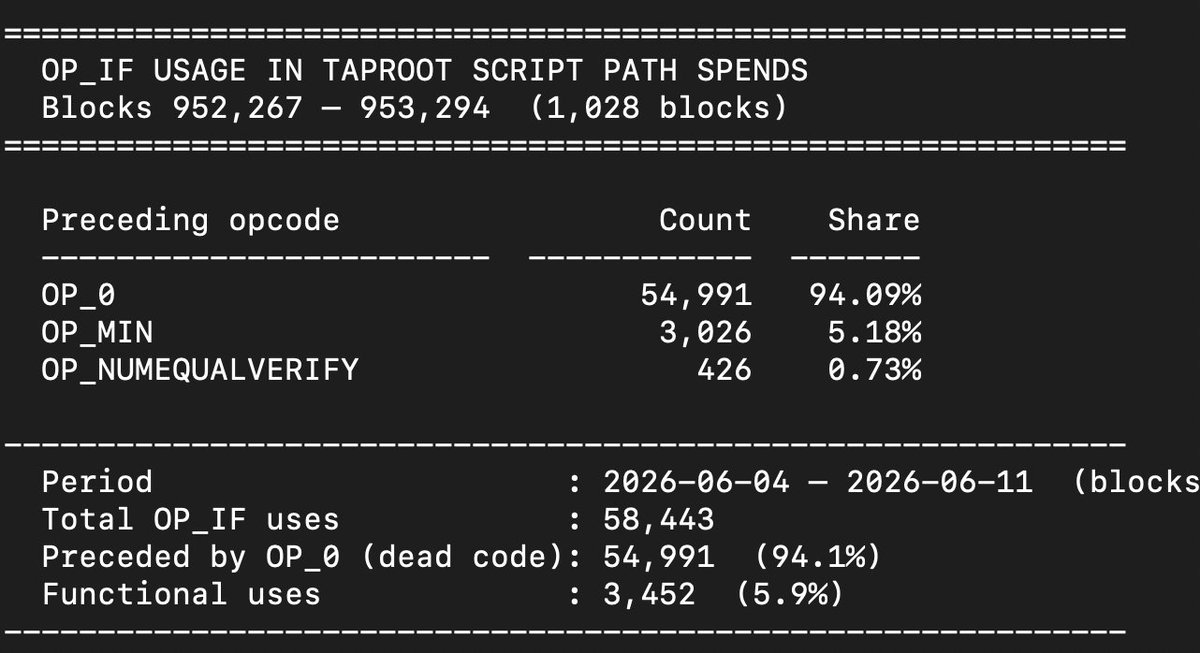
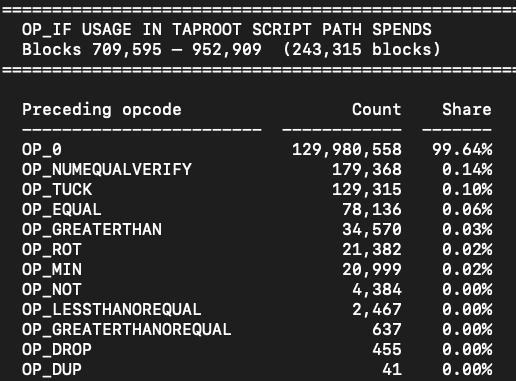
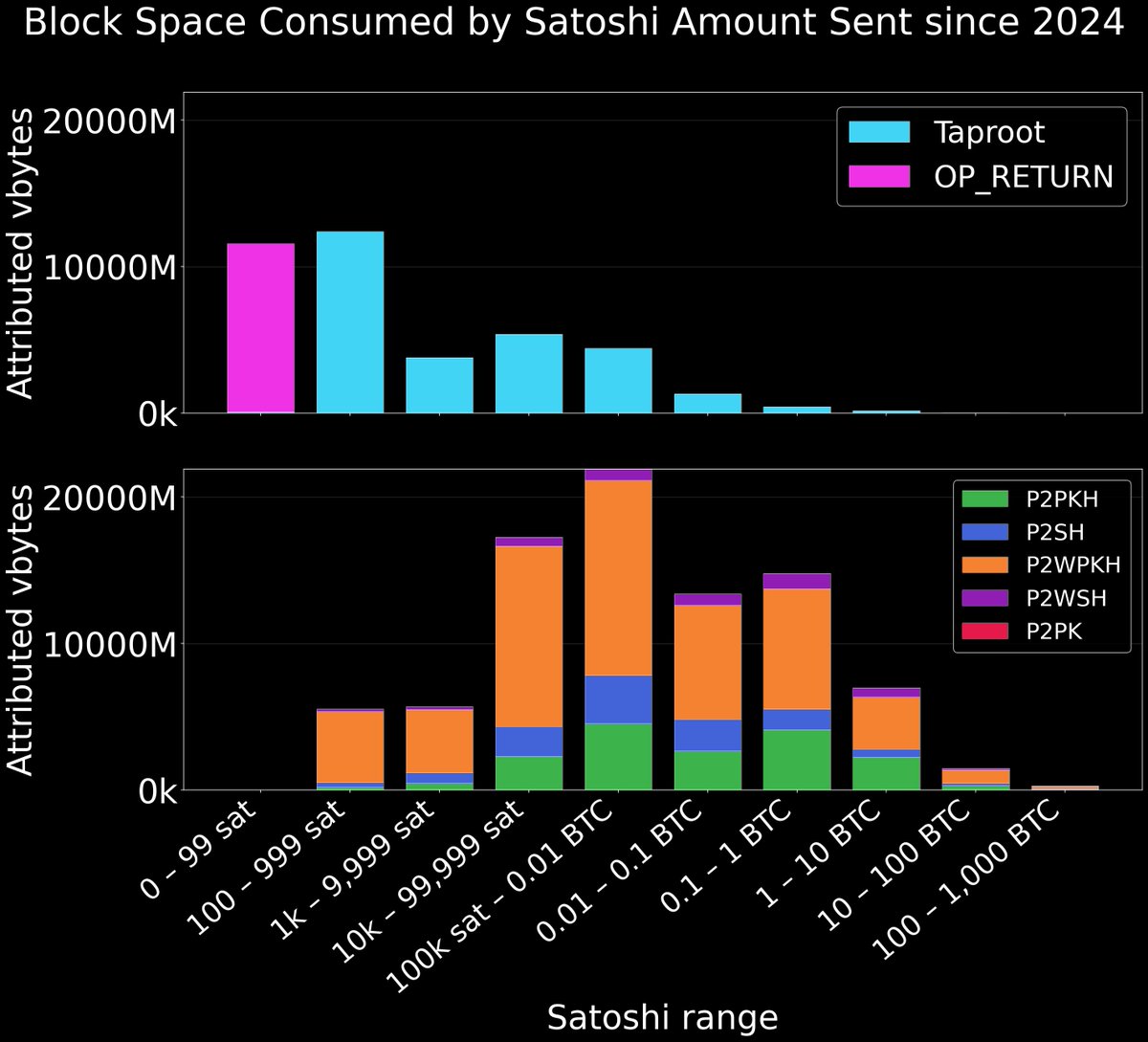
Of the 130M taproot OP_IFs on-chain, 99.6% of them are hardcoded never to run. They are of the form:
If 0 = 1, execute X
Zero never equals one, so X is never intended to be executed
If taproot is designed to execute code, OP_IF is 99.6% a system hack
GitHub and plain text 👇
21
54
185
54,202
Simple Steve 🌌 retweeted

Jun 12
what could have been


2
2
15
902
Jun 12
Surprisingly, it seems to be an open question whether OP_IF/OP_NOTIF are the only Taproot opcodes capable of producing revealed dead-code branches.
By “revealed dead-code branch” I mean script bytes that are revealed on-chain during spending but are provably unreachable during execution.
Many assume there must be other ways to do this given the complexity of Script, but I don’t currently know of a counterexample (does anyone?)
We can scan the chain for observed examples, but there may also be a stronger proof by exhaustively analyzing which Taproot opcodes can alter control flow.
If OP_IF/OP_NOTIF are in fact the only mechanism, then the result would be significant: OP_IF is not only overwhelmingly used today to hardcode unexecutable code paths (99.6% of 130M observed Taproot OP_IF uses) but removing that mechanism would also remove all currently known ways to produce this hack in Taprooot
Jun 10

Of the 130M taproot OP_IFs on-chain, 99.6% of them are hardcoded never to run. They are of the form:
If 0 = 1, execute X
Zero never equals one, so X is never intended to be executed
If taproot is designed to execute code, OP_IF is 99.6% a system hack
GitHub and plain text 👇
4
4
26
2,282
Jun 10
Of the 130M taproot OP_IFs on-chain, 99.6% of them are hardcoded never to run. They are of the form:
If 0 = 1, execute X
Zero never equals one, so X is never intended to be executed
If taproot is designed to execute code, OP_IF is 99.6% a system hack
GitHub and plain text 👇
21
54
185
54,202
Jun 10
I was expecting at least a little criticism from the taproot OP_IF supporters but I haven’t received any
1
2
16
391
Jun 10
# In plain text
# This tweet is the code itself
# It has no dependencies or API calls
# It only talks to your node
# Chose your run length (dates, blocks)
# Copy paste this to your AI
# Or save it as "taproot_opif.py" and run it
# Your terminal: python3 taproot_opif.py
"""
taproot_opif.py — Analyze OP_IF usage in taproot script path spends via RPC.
Requires a running Bitcoin Core node with server=1.
No external dependencies — stdlib only.
Usage:
python3 taproot_opif.py --start-block 823786 --end-block 951964
python3 taproot_opif.py --start-day 2024-01-01 --end-day 2024-12-31
python3 taproot_opif.py --start-day 2024-01-01
"""
import argparse
import base64
import http.client
import io
import json
import os
import platform
import struct
import sys
import time
from time import time as now
from collections import defaultdict
from datetime import datetime, timezone, date, timedelta
from binascii import unhexlify
from io import BytesIO
from json import loads as json_loads, dumps as json_dumps
from struct import unpack, unpack_from
# ===========================================================================
# RPC connection (copied from open_settlement_price_v10_rc4.py)
# ===========================================================================
_KNOWN_COOKIE_DIRS = [
'/embassy-data/package-data/volumes/bitcoin/data/.bitcoin',
'/embassy-data/package-data/volumes/bitcoind/data/.bitcoin',
'/home/umbrel/umbrel/app-data/bitcoin/data/.bitcoin',
'/home/umbrel/umbrel/data/app-data/bitcoin/data/.bitcoin',
'/opt/umbrel-os/app-data/bitcoin/data/.bitcoin',
'/mnt/hdd/bitcoin',
'/mnt/hdd/.bitcoin',
'/mnt/storage/bitcoin',
'/opt/mynode/bitcoin',
]
_SEARCH_ROOTS = [
'/embassy-data', '/mnt', '/opt', '/home', '/srv', '/var/lib',
]
def _find_data_dir():
system = platform.system()
if system == 'Darwin':
return os.path.expanduser('~/Library/Application Support/Bitcoin')
elif system == 'Windows':
return os.path.join(os.environ.get('APPDATA', ''), 'Bitcoin')
else:
return os.path.expanduser('~/.bitcoin')
def _find_bitcoin_dir():
for d in _KNOWN_COOKIE_DIRS:
if os.path.exists(os.path.join(d, '.cookie')) or \
os.path.exists(os.path.join(d, 'bitcoin.conf')):
return d
for root in _SEARCH_ROOTS:
if not os.path.isdir(root):
continue
try:
for dirpath, dirnames, filenames in os.walk(root):
if '.cookie' in filenames or 'bitcoin.conf' in filenames:
return dirpath
except PermissionError:
continue
return None
def _find_rpc_host_from_ss(port):
import subprocess
for cmd in (['ss', '-tlnp'], ['netstat', '-tlnp']):
try:
raw_out = subprocess.check_output(cmd, stderr=subprocess.DEVNULL)
out = (raw_out
.decode())
for line in (out
.splitlines()):
if ':{}'.format(port) in line:
for part in (line
.split()):
if (part
.endswith(':{}'.format(port))):
host = (part.rsplit(':', 1)[0]
.strip('[]'))
if host not in ('0.0.0.0', '*', '127.0.0.1', '::1', '::'):
return host
except Exception:
continue
return None
def setup_rpc(data_dir=None, rpchost=None, rpcport=None, rpcuser=None, rpcpassword=None):
if data_dir is None:
data_dir = _find_data_dir()
if not os.path.exists(os.path.join(data_dir, '.cookie')) and \
not any(os.path.exists(os.path.join(data_dir, n))
for n in ('bitcoin.conf', 'bitcoin_rw.conf')):
found = _find_bitcoin_dir()
if found:
data_dir = found
conf_path = None
for name in ('bitcoin.conf', 'bitcoin_rw.conf'):
p = os.path.join(data_dir, name)
if os.path.exists(p):
conf_path = p
break
if not conf_path:
print(f"ERROR: Cannot find bitcoin.conf in {data_dir}")
sys.exit(1)
conf = {}
with open(conf_path) as f:
for line in f:
line = (line
.strip())
if not line or (line
.startswith('#')) or '=' not in line:
continue
k, v = (line
.split('=', 1))
k = (k
.strip())
conf[k] = (v
.strip()
.strip('"'))
cget = conf.get
rpc_user = rpcuser if rpcuser else cget('rpcuser')
rpc_pass = rpcpassword if rpcpassword else cget('rpcpassword')
rpc_host = rpchost if rpchost else cget('rpcconnect', '127.0.0.1')
rpc_port = rpcport if rpcport else int(cget('rpcport', '8332'))
cookie_path = cget('rpccookiefile', os.path.join(data_dir, '.cookie'))
_host = [rpc_host]
_conn = [None]
def rpc(method, *params):
u, p = rpc_user, rpc_pass
if not u or not p:
try:
with open(cookie_path) as f:
u, p = (f
.read()
.strip()
.split(':', 1))
except Exception as e:
print(f"ERROR: cannot read RPC cookie at {cookie_path}: {e}")
print("Make sure your Bitcoin node is running.")
sys.exit(1)
auth = (base64.b64encode(f'{u}:{p}'.encode())
.decode())
headers = {'Content-Type': 'application/json',
'Authorization': f'Basic {auth}'}
payload = json_dumps({'jsonrpc': '1.0', 'id': 'taproot_opif',
'method': method, 'params': list(params)})
for attempt in range(3):
try:
if _conn[0] is None:
_conn[0] = http.client.HTTPConnection(_host[0], rpc_port, timeout=60)
(_conn[0]
.request('POST', '/', payload, headers))
resp = (_conn[0]
.getresponse())
raw = (resp
.read())
data = json_loads(raw)
if (data
.get('error')):
raise RuntimeError(data['error'])
return data['result']
except Exception:
_conn[0] = None
if attempt == 2:
raise
try:
rpc('getblockcount')
except Exception:
pass
try:
rpc('getblockcount')
except Exception:
if not rpchost:
detected = _find_rpc_host_from_ss(rpc_port)
if detected:
_host[0] = detected
_conn[0] = None
try:
rpc('getblockcount')
return rpc
except Exception:
pass
print("ERROR: cannot connect to Bitcoin node via RPC.")
print("Make sure bitcoind or bitcoin-qt is running with server=1.")
print("If your node runs in a container, try: --rpchost <container-ip>")
sys.exit(1)
return rpc
# ===========================================================================
# Block / date helpers (copied from open_settlement_price_v10_rc4.py)
# ===========================================================================
_hash_cache = {}
_ts_cache = {}
def _get_block_hash(height, rpc):
if height not in _hash_cache:
_hash_cache[height] = rpc('getblockhash', height)
return _hash_cache[height]
def _get_block_timestamp(height, rpc):
if height not in _ts_cache:
h = _get_block_hash(height, rpc)
raw = unhexlify(rpc('getblockheader', h, False))
_ts_cache[height] = unpack('<I', raw[68:72])[0]
return _ts_cache[height]
def _get_raw_block(height, rpc):
h = _get_block_hash(height, rpc)
hex_block = rpc('getblock', h, 0)
return unhexlify(hex_block)
def _find_first_block_on_or_after(day_start_ts, chain_height, rpc):
lo, hi = 0, chain_height
while lo < hi:
mid = (lo hi) // 2
if _get_block_timestamp(mid, rpc) < day_start_ts:
lo = mid 1
else:
hi = mid
return lo
def _find_last_block_before(day_end_ts, chain_height, rpc):
lo, hi = 0, chain_height
while lo < hi:
mid = (lo hi 1) // 2
if _get_block_timestamp(mid, rpc) < day_end_ts:
lo = mid
else:
hi = mid - 1
return lo
def date_range_to_blocks(start_date, end_date, chain_height, rpc):
"""Return (start_block, end_block) for the given inclusive date range."""
start_ts = int(datetime(start_date.year, start_date.month, start_date.day,
tzinfo=timezone.utc)
.timestamp())
end_ts = int(datetime(end_date.year, end_date.month, end_date.day,
tzinfo=timezone.utc)
.timestamp()) 86_400
print(f"Searching for blocks between {start_date} and {end_date} ...", flush=True)
start_block = _find_first_block_on_or_after(start_ts, chain_height, rpc)
end_block = _find_last_block_before(end_ts, chain_height, rpc)
if start_block > chain_height:
print(f"ERROR: No blocks found on or after {start_date}")
sys.exit(1)
if end_block < start_block:
print(f"ERROR: No blocks found on or before {end_date}")
sys.exit(1)
start_actual = (datetime.fromtimestamp(_get_block_timestamp(start_block, rpc), tz=timezone.utc)
.date())
end_actual = (datetime.fromtimestamp(_get_block_timestamp(end_block, rpc), tz=timezone.utc)
.date())
print(f" Start: block {start_block:,} ({start_actual})")
print(f" End: block {end_block:,} ({end_actual})")
return start_block, end_block
# ===========================================================================
# Script parsing (shared logic with opif_analysis.py)
# ===========================================================================
OPCODE_NAMES = {
0x00: 'OP_0',
0x4f: 'OP_1NEGATE',
0x51: 'OP_1', 0x52: 'OP_2', 0x53: 'OP_3', 0x54: 'OP_4',
0x55: 'OP_5', 0x56: 'OP_6', 0x57: 'OP_7', 0x58: 'OP_8',
0x59: 'OP_9', 0x5a: 'OP_10', 0x5b: 'OP_11', 0x5c: 'OP_12',
0x5d: 'OP_13', 0x5e: 'OP_14', 0x5f: 'OP_15', 0x60: 'OP_16',
0x61: 'OP_NOP',
0x63: 'OP_IF',
0x64: 'OP_NOTIF', # kept for tokenizer completeness, not searched
0x67: 'OP_ELSE',
0x68: 'OP_ENDIF',
0x69: 'OP_VERIFY',
0x6a: 'OP_RETURN',
0x6b: 'OP_TOALTSTACK',
0x6c: 'OP_FROMALTSTACK',
0x6d: 'OP_2DROP',
0x6e: 'OP_2DUP',
0x6f: 'OP_3DUP',
0x73: 'OP_IFDUP',
0x74: 'OP_DEPTH',
0x75: 'OP_DROP',
0x76: 'OP_DUP',
0x77: 'OP_NIP',
0x78: 'OP_OVER',
0x79: 'OP_PICK',
0x7a: 'OP_ROLL',
0x7b: 'OP_ROT',
0x7c: 'OP_SWAP',
0x7d: 'OP_TUCK',
0x7e: 'OP_CAT',
0x82: 'OP_SIZE',
0x85: 'OP_1ADD',
0x86: 'OP_1SUB',
0x87: 'OP_EQUAL',
0x88: 'OP_EQUALVERIFY',
0x8b: 'OP_ADD',
0x8c: 'OP_SUB',
0x8f: 'OP_MOD',
0x91: 'OP_NOT',
0x92: 'OP_0NOTEQUAL',
0x9a: 'OP_BOOLOR',
0x9b: 'OP_NUMEQUAL',
0x9c: 'OP_NUMEQUALVERIFY',
0x9d: 'OP_NUMNOTEQUAL',
0x9e: 'OP_LESSTHAN',
0x9f: 'OP_GREATERTHAN',
0xa0: 'OP_LESSTHANOREQUAL',
0xa1: 'OP_GREATERTHANOREQUAL',
0xa2: 'OP_MIN',
0xa3: 'OP_MAX',
0xa4: 'OP_WITHIN',
0xa8: 'OP_SHA256',
0xa9: 'OP_HASH160',
0xaa: 'OP_HASH256',
0xac: 'OP_CHECKSIG',
0xad: 'OP_CHECKSIGVERIFY',
0xae: 'OP_CHECKMULTISIG',
0xb1: 'OP_CHECKLOCKTIMEVERIFY',
0xb2: 'OP_CHECKSEQUENCEVERIFY',
0xba: 'OP_CHECKSIGADD',
}
def read_varint(buf):
rd = (buf
.read)
b = rd(1)[0]
if b < 0xfd: return b
if b == 0xfd: return unpack('<H', rd(2))[0]
if b == 0xfe: return unpack('<I', rd(4))[0]
return unpack('<Q', rd(8))[0]
def extract_tapscript(stack):
items = list(stack)
if items and items[-1] and items[-1][0] == 0x50:
del items[-1]
if len(items) < 2:
return None
control = items[-1]
if len(control) < 33 or (len(control) - 33) % 32 != 0:
return None
if control[0] & 0xfe != 0xc0:
return None
return items[-2]
def tokenize_script(script):
tokens = []
i = 0
try:
while i < len(script):
op = script[i]; i = 1
if op == 0x00:
tokens = ['OP_0']
elif 1 <= op <= 0x4b:
tokens = [f'PUSH_{op}']
i = op
elif op == 0x4c:
n = script[i]; i = 1
tokens = [f'PUSH_{n}']
i = n
elif op == 0x4d:
n = unpack_from('<H', script, i)[0]; i = 2
tokens = [f'PUSH_{n}']
i = n
elif op == 0x4e:
n = unpack_from('<I', script, i)[0]; i = 4
tokens = [f'PUSH_{n}']
i = n
else:
name = OPCODE_NAMES.get(op, f'OP_{op:02X}')
tokens = [name]
except (IndexError, struct.error):
pass
return tokens
def scan_block(block_data, tally):
buf = BytesIO(block_data)
rd = (buf
.read)
sk = (buf
.seek)
rd(4); rd(32); rd(32); rd(4); rd(4); rd(4) # header
tx_count = read_varint(buf)
for _ in range(tx_count):
rd(4) # version
marker = rd(1)[0]
if marker == 0x00:
rd(1)
segwit = True
else:
sk(-1, 1)
segwit = False
in_count = read_varint(buf)
for _ in range(in_count):
rd(32 4)
rd(read_varint(buf))
rd(4)
out_count = read_varint(buf)
for _ in range(out_count):
rd(8)
rd(read_varint(buf))
if segwit:
for _ in range(in_count):
stack = []
for _ in range(read_varint(buf)):
n = read_varint(buf)
stack = [rd(n)]
script = extract_tapscript(stack)
if script is None:
continue
tokens = tokenize_script(script)
for pos, tok in enumerate(tokens):
if tok != 'OP_IF' or pos == 0:
continue
before = tokens[pos - 1]
tally[(before, tok)] = 1
rd(4) # locktime
# ===========================================================================
# Main
# ===========================================================================
def _parse_date(s):
try:
parts = (s
.split('-'))
return date(*map(int, parts))
except Exception:
print(f"ERROR: invalid date '{s}', expected YYYY-MM-DD")
sys.exit(1)
def main():
parser = argparse.ArgumentParser(
description='Analyze OP_IF usage in taproot script path spends.')
add = parser.add_argument
add('--all', action='store_true',
help='Analyze all taproot script path spends from block 767420 to chain tip')
add('--start-block', type=int, metavar='HEIGHT')
add('--end-block', type=int, metavar='HEIGHT')
add('--start-day', type=_parse_date, metavar='YYYY-MM-DD')
add('--end-day', type=_parse_date, metavar='YYYY-MM-DD')
add('--rpchost', type=str)
add('--rpcport', type=int)
add('--rpcuser', type=str)
add('--rpcpassword', type=str)
add('--datadir', type=str)
args = (parser
.parse_args())
using_all = args.all
using_blocks = args.start_block is not None or args.end_block is not None
using_dates = args.start_day is not None or args.end_day is not None
if sum([using_all, using_blocks, using_dates]) > 1:
print("ERROR: specify only one of --all, --start-block/--end-block, or --start-day/--end-day")
sys.exit(1)
if not using_all and not using_blocks and not using_dates:
try:
start_str = input("Start date (YYYY-MM-DD): ").strip()
end_str = input("End date (YYYY-MM-DD): ").strip()
except (EOFError, KeyboardInterrupt):
print()
sys.exit(0)
args.start_day = _parse_date(start_str)
args.end_day = _parse_date(end_str)
using_dates = True
if using_blocks and (args.start_block is None or args.end_block is None):
print("ERROR: --start-block and --end-block must both be provided")
sys.exit(1)
print("Connecting to Bitcoin node ...", flush=True)
rpc = setup_rpc(
data_dir=args.datadir,
rpchost=args.rpchost,
rpcport=args.rpcport,
rpcuser=args.rpcuser,
rpcpassword=args.rpcpassword,
)
chain_height = rpc('getblockcount')
print(f" Connected. Chain height: {chain_height:,}\n")
if using_all:
start_block = 767420
end_block = chain_height
elif using_blocks:
start_block = args.start_block
end_block = args.end_block
if start_block < 0 or end_block < 0:
print("ERROR: block heights must be non-negative")
sys.exit(1)
if start_block > end_block:
print(f"ERROR: --start-block ({start_block:,}) must be <= --end-block ({end_block:,})")
sys.exit(1)
if end_block > chain_height:
print(f"ERROR: --end-block ({end_block:,}) exceeds chain height ({chain_height:,})")
sys.exit(1)
else:
start_date = args.start_day
end_date = args.end_day or (date
.today()) - timedelta(days=1)
if start_date > end_date:
print(f"ERROR: --start-day ({start_date}) must be <= --end-day ({end_date})")
sys.exit(1)
start_block, end_block = date_range_to_blocks(start_date, end_date, chain_height, rpc)
total_blocks = end_block - start_block 1
print(f"\nAnalyzing {total_blocks:,} blocks ({start_block:,} – {end_block:,}) ...\n")
print(f"{'Block':>9} {'Progress':>8} {'OP_IF total':>12} {'OP_0 %':>8}")
print("-" * 50)
tally = defaultdict(int)
t0 = now()
for height in range(start_block, end_block 1):
block_data = _get_raw_block(height, rpc)
scan_block(block_data, tally)
if height % 10 == 0 or height == end_block:
done = height - start_block 1
pct_done = done / total_blocks * 100
total_if = sum(tally.values())
op0_count = sum(v for (b, _), v in tally.items() if b == 'OP_0')
op0_pct = op0_count / total_if * 100 if total_if else 0.0
print(f"{height:>9,} {pct_done:>7.1f}% {total_if:>12,} {op0_pct:>7.1f}%",
flush=True)
elapsed = now() - t0
# ── Final report ──────────────────────────────────────────────────────────
total_if = sum(tally.values())
op0_count = sum(v for (b, _), v in tally.items() if b == 'OP_0')
op0_pct = op0_count / total_if * 100 if total_if else 0.0
other_pct = 100 - op0_pct
print()
print("=" * 60)
print(" OP_IF USAGE IN TAPROOT SCRIPT PATH SPENDS")
print(f" Blocks {start_block:,} – {end_block:,} ({total_blocks:,} blocks)")
print("=" * 60)
rows = sorted(tally.items(), key=lambda x: -x[1])
col_w = 24
print(f"\n {'Preceding opcode':<{col_w}} {'Count':>12} {'Share':>7}")
print(f" {'-'*col_w} {'-'*12} {'-'*7}")
for (before, opif_type), count in rows:
share = count / total_if * 100 if total_if else 0.0
print(f" {before:<{col_w}} {count:>12,} {share:>6.2f}%")
print()
print("-" * 60)
if using_dates:
print(f" Period : {start_date} – {end_date} (blocks {start_block:,} – {end_block:,})")
else:
print(f" Period : blocks {start_block:,} – {end_block:,}")
print(f" Total OP_IF uses : {total_if:,}")
print(f" Preceded by OP_0 (dead code): {op0_count:,} ({op0_pct:.1f}%)")
print(f" Functional uses : {total_if - op0_count:,} ({other_pct:.1f}%)")
print("-" * 60)
print()
print(f" Of the {total_if:,} uses of OP_IF in taproot script path spends during this")
print(f" period, {op0_pct:.1f}% were preceded by OP_0 (OP_FALSE), meaning the branch")
print(f" body is permanently unreachable — the code can never execute.")
print(f" The remaining {other_pct:.1f}% of OP_IF uses represent genuine conditional logic.")
print()
print(f" Completed in {elapsed:.1f}s")
if __name__ == '__main__':
main()
4
5
33
2,228
Jun 10
Methodology note
This script detects taproot script path spends by inspecting the witness stack structure directly, specifically the control block format, rather than looking up the UTXO being spent.
This approach is reliable at scale: a false positive would require a non-taproot witness item that coincidentally satisfies the control block length constraint and leaf version byte, which is vanishingly rare and would have no meaningful effect on a result
as lopsided as 99.6%.
The script does not analyze OP_NOTIF, and skips cases where OP_IF appears as the first opcode in a script. Neither omission changes the conclusion. OP_NOTIF usage is rare and would require a separately proportioned analysis. OP_IF as the first opcode is a
deliberate design pattern where the condition is supplied by the spender at spend time, not a dead branch, and represents a small subset of functional usage.
The analysis is limited to script path spends, which by definition reveal their executed script in the witness. Key path spends reveal no script and are outside the scope of this analysis. This is not a limitation, it strengthens the finding.
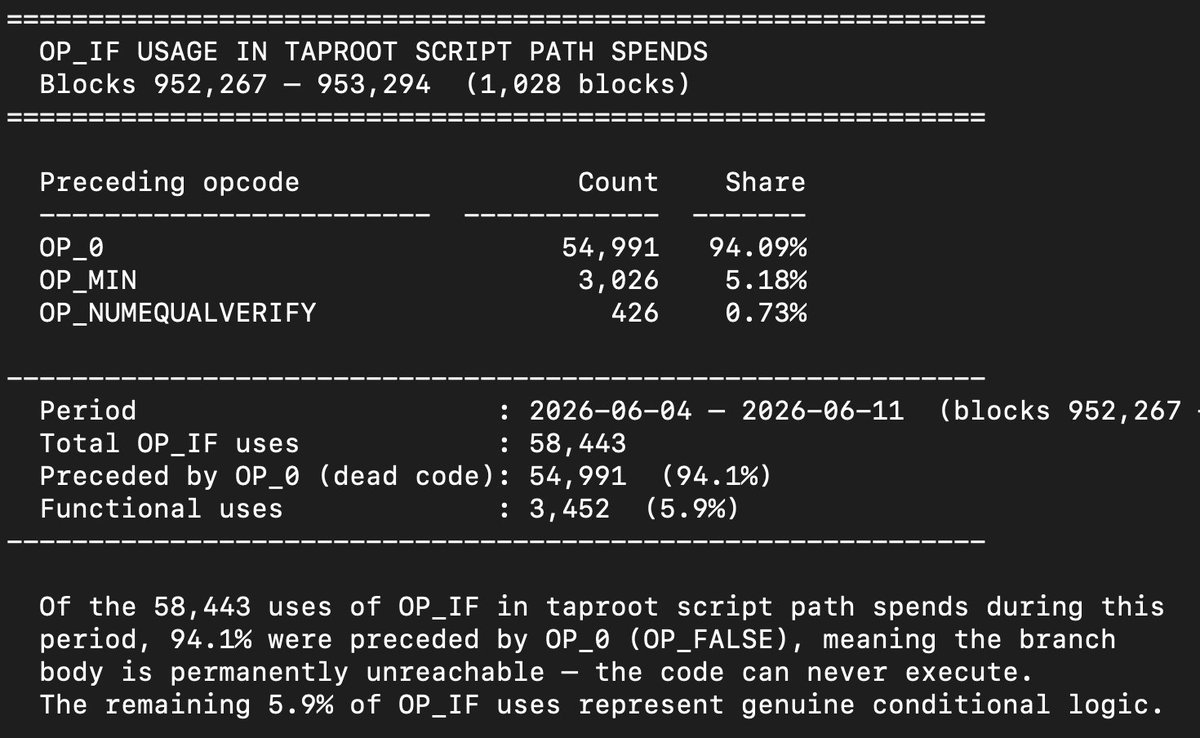
Among every instance where Bitcoin actually executed a conditional branch in taproot, 99.6% of those branches were hardcoded to never run.
1
30
716
Jun 9
Any code written in this form is an attempt to hack the system:
If 1=1, do this
If 1=0, do that
1 is never equal to 0. There’s no reason to have it. Any coder doing this is trying to hack.
I’m investigating all OP_IF usages in taproot to see what percent was to hack.
6
4
41
1,830
Jun 8
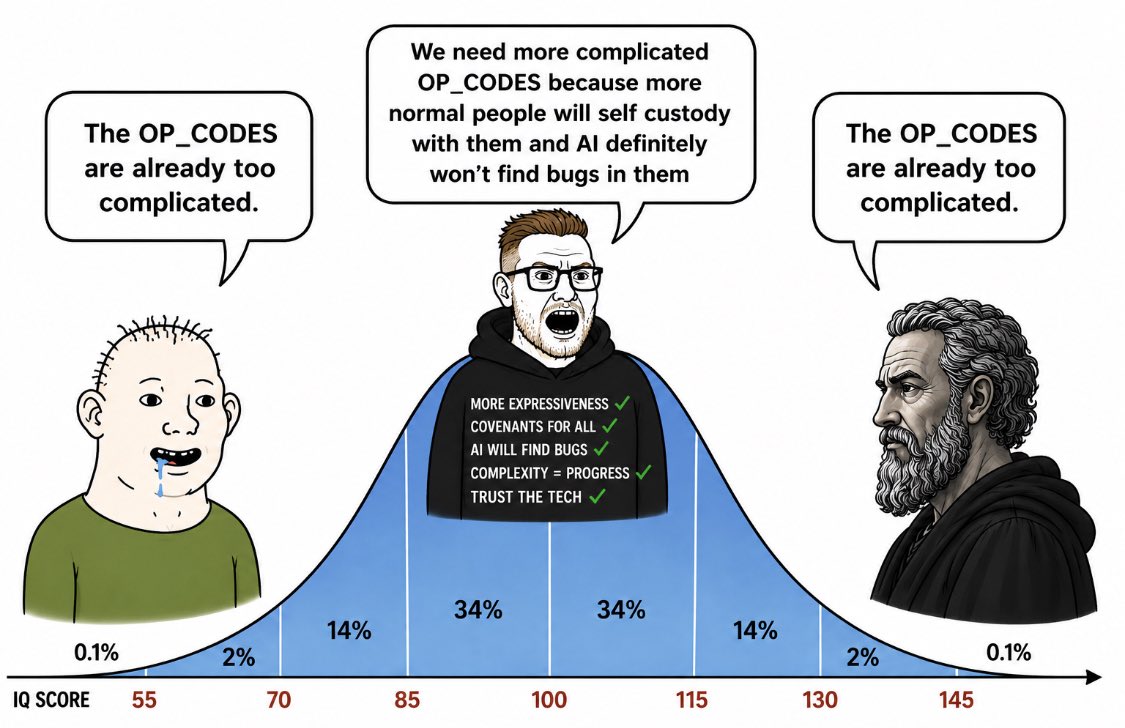
I wonder how long bitcoin will continue the mid wit idea that folks are sitting on the sideline not self custodying because the op_codes aren’t complicated enough for them yet
2
7
27
1,733
Simple Steve 🌌 retweeted

Jun 8
I have probably done more work on that platform than almost anyone.
results here:
llm.ciru.ai
There are many other pages too for photo gen, audio, etc. I've built and tested every stack without cuda on low power hardware.
2
5
286
Jun 8
I still haven’t seen a utxo-confiscation argument that makes sense. OP_MUL was removed in bitcoin. If I send coins today to a OP_MUL script I have burned those coins. They were not confiscated.
Where in bip-110 does it confiscate a utxo created before activation as opposed to the user burning their coins by sending to a removed op_code like the OP_MUL example?
2
8
34
2,384
Simple Steve 🌌 retweeted

Confessions of a Haunted Bitcoiner
Nobody warns you about the part that actually gets to you. It isn’t the volatility. It’s the loneliness of the volatility. I can stomach watching half the number evaporate — a 50% drawdown isn’t a crash, it’s a sale on the scarcest monetary asset humanity has ever invented. What I can’t stomach is sitting in a Bavarian lakeside town this summer, the water so still it looks photoshopped (no, I’m not German, I just enjoy the cooler weather) — while my brother-in-law explains to me, slowly, like I’m a golden retriever, that bitcoin “isn’t backed by anything.” This, while he carries a currency backed by the feelings of a committee that meets eight times a year and has never once been early.
Because I’ve done the work. Thousands of hours, between podcasts, books, articles etc. And then you’re stuck. You sit across from people you genuinely love, who built businesses or went to top universities, but you still can't hand them the one thing you’re surest of in this life. You watch the words leave your mouth and die in the air. “Inflation is policy.” Nothing. You’ve said something profound to a man squinting at the bill to see if service is included.
So you stop. Not because you stopped believing — because you’ve learned, at real cost, that conviction and evangelism are different muscles, and the second one only ever cost me. The early bitcoiner’s true discipline was never holding through an 80% crash. It’s holding your tongue at brunch while someone calls your life’s thesis a Ponzi between bites of a croissant they bought with money engineered to be worth less by the time they finish it.
And here’s the confession underneath the confession — the haunting part. A small, ugly corner of me wants the price to keep bleeding. Not for me. For the vindication. So they’ll finally see. And I despise that corner, because I already know the ending: the converts arrive years late, exhausted, having “figured it out themselves,” and I’ll have to swallow the most expensive three words in the English language — I told you — smile, and pour the wine. Because being right early and being right late feel exactly the same from the inside. The only difference is who got paid, and whether you stayed someone people still wanted at the table.
That’s the trap nobody mentions. It’s lonely being the only one who sees the iceberg. But you can’t save the ship by screaming “ICEBERG” louder — you just become the iceberg guy, and now you’re not even right anymore, you’re exhausting, and exhausted.
So you make a quieter peace with it. The math doesn’t need their approval. 21 million is 21 million whether anyone claps, whether your brother-in-law ever comes around, whether the number is at 60K or 600K this particular haunted Sunday.
But here’s the part I didn’t expect. You spend years being the only one at every dinner table — and then you find the others. Not at the table. But here on X. It turns out the whole time I was losing the argument at brunch, there was a deck full of people on the other side of this screen squinting at the same iceberg, doing the same math, biting the same tongue at their own family dinners. We’re not an echo chamber — an echo chamber agrees on conclusions. We argue about everything: cycle tops, treasury structures, whether Saylor’s a prophet or a margin call away from his next podcast appearance. What we share isn’t an answer. It’s the humility to question everything we once knew, and the foresight.
I used to think being early meant being alone. It just meant being early to the wrong room. This is the right one.
Now let's ride this bear to zero or a million 😎
#Bitcoin $MSTR $MPJPY $MTPLF
64
68
551
25,884
Jun 5
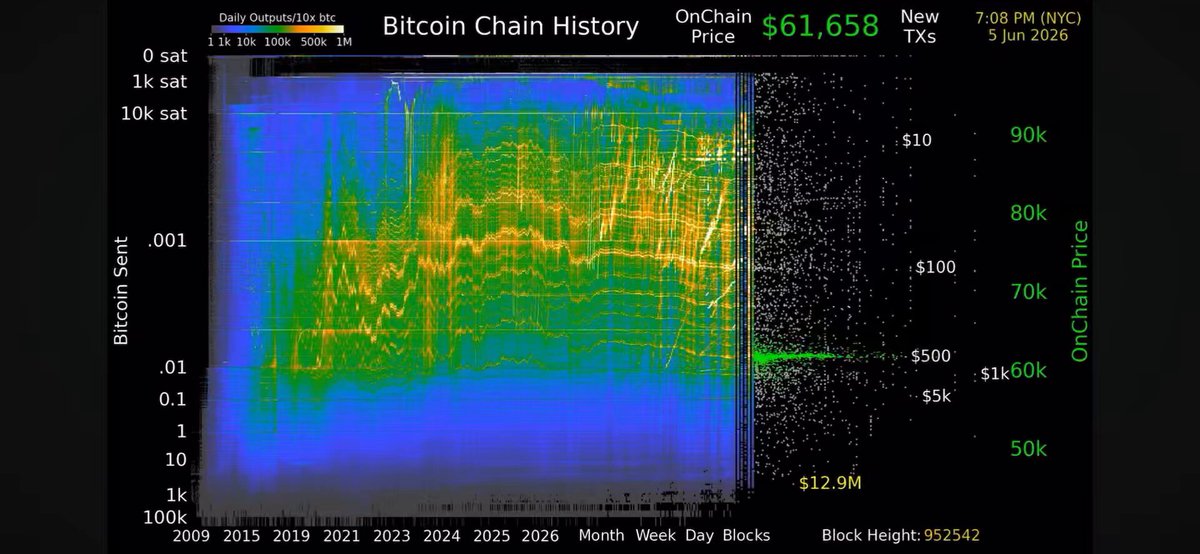
Don’t forget that the coolest price to watch is still the UTXOracle Livestream
1
3
20
1,245
Jun 5
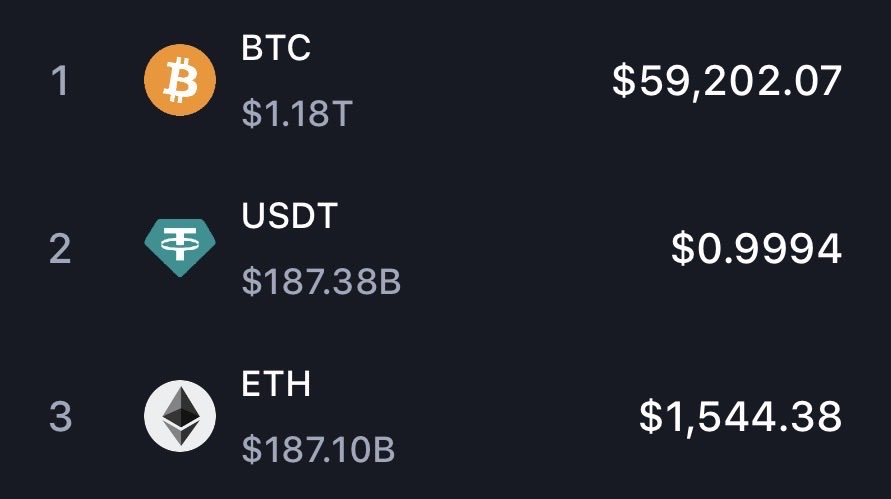
There is now literally no second best cryptocurrency

4
18
815
Simple Steve 🌌 retweeted

Jun 5
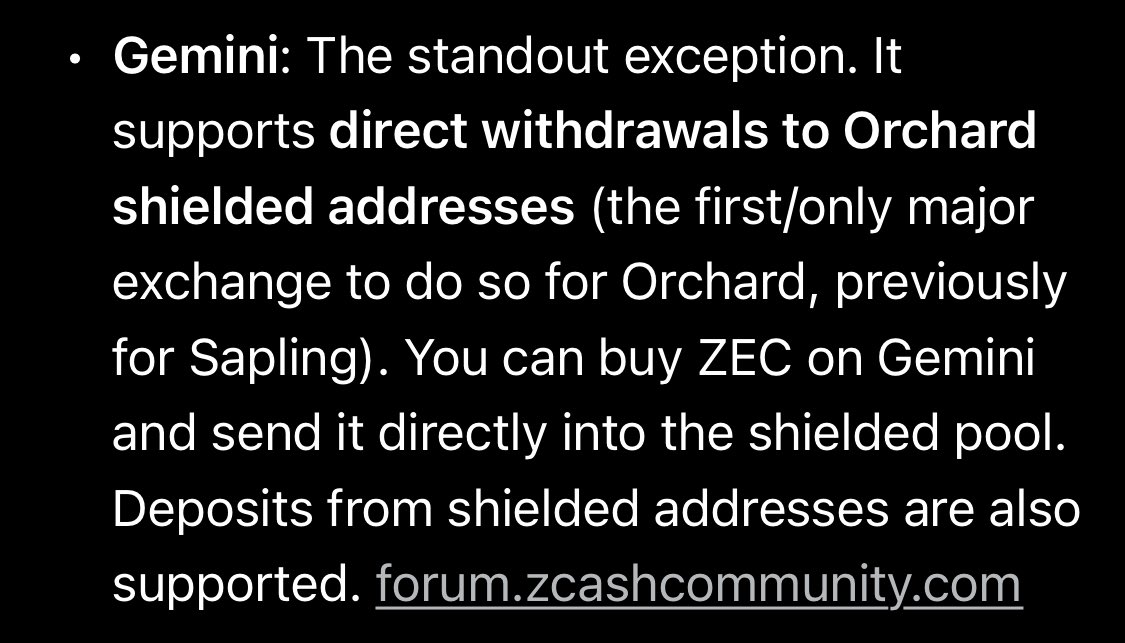
Why do you think they banned Monero off every exchange and not the other “privacy” coin
94
81
1,230
77,311
Jun 5
Stop being afraid of diversity. We need experimental coins like Zcash just like we need ossified-ish coins like Bitcoin.
Your insistence that Bitcoin become a feature testing coin like the others shows your lack of openness, lack of inclusion, lack of appreciation of diversity
4
10
880
Simple Steve 🌌 retweeted

Jun 4
Imagine spending your whole life becoming an academic expert. Then a random guy online tells you that you are wrong about your own field. And he's right. But you can never admit that. Because it would mean admitting that your life was a lie. That is the dilemma of many academics.
750
2,208
24,384
767,332