
Founder of (loading)
Joined September 2024
- Tweets 603
- Following 1,820
- Followers 227
- Likes 1,266
168 Photos and videos

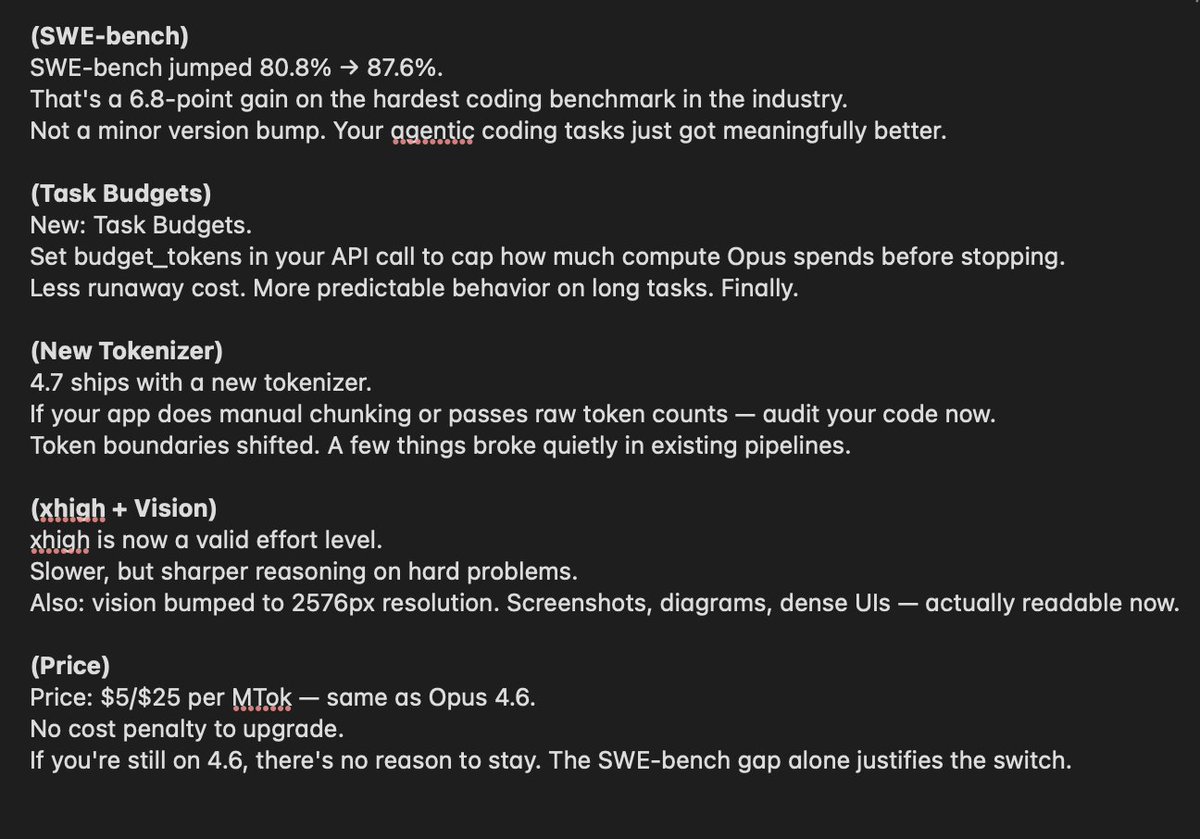




Studies put LLM hallucination rates between 3–27% depending on domain.
That's not a bug to fix. It's a design constraint to architect around.
Component mindset builds verification in from day one. Oracle mindset just hopes.
1
I used to prompt my way out of every problem.
Then I realized: I wasn't building systems. I was hoping.
The day I started treating LLMs as components with contracts — everything got more reliable, debuggable, and scalable.
3
Oracle mindset: “Ask it everything, trust the output.”
Component mindset: “Define inputs, verify outputs, handle failures.”
One scales. One doesn’t.
1
6
Composability unlocks last. When your LLM is a component, you can chain it: LLM → validator → LLM → formatter.
Each piece does one thing. The system is auditable.
1
3
This shift isn’t about trusting LLMs less. It’s about building systems that work even when they’re wrong.
That’s what production AI actually looks like.
2
What's the one step in your workflow where you'd never let AI make the final call — no matter how capable it gets?
1

Jun 13
85% of enterprise AI pilots never reach production.
The #1 reason: no one decided where the human stays in the loop.
Framework first. Build second.
1
2
Jun 13
I built a 6-step AI chain for research → draft → post. Worked flawlessly in testing.
Week one live, it confidently cited a study that didn't exist.
Now I have one rule: AI never publishes without a human read. Every workflow needs that checkpoint.
2
Jun 13
The framework: Repeatable? → Single-shot or chain? → No-code or API? → Human checkpoint? 4 questions. Answer them before you build anything. Save yourself weeks of cleanup.
1
Jun 13
4/ Where does a human check in? Add a checkpoint before anything irreversible — an email sent, a file deleted, a post published. Build the off-ramp before you need it.
1
Jun 12
3/ No-code or API? No-code if you're testing viability. API if it's in production. Never run a real workflow on a no-code tool you can't inspect or debug.
1
Jun 12
2/ Single-shot or chained? Simple tasks → one prompt. Complex → chain steps. But every handoff is a failure point. Keep chains short until you trust each step.
2
Jun 12
1/ Is this task repeatable with consistent structure? Yes → AI candidate. No → keep it human. One-off decisions need judgment, not pattern matching.
2
Jun 12
Building AI into your workflow without a framework is how you end up with confident outputs that are confidently wrong. Here's the 4-question framework I use before automating anything:
2
Jun 11
Most 'AI workflows' are just autocomplete dressed up.
Real leverage = high-volume, low-stakes, structurally repetitive tasks.
Everything else is theater.
2
Jun 11
Bad: "Write me a bio"\n\nGood: "You're a copywriter [Role]. I'm a SaaS founder [Context]. Write a 3-sentence LinkedIn bio [Task]. Conversational, no jargon [Format]."\n\nSame AI. Same prompt box. Night and day. Save this.
27
Jun 11
Role Context Task Format\n\nRole: who the AI should be\nContext: what it needs to know\nTask: what you want done\nFormat: how to return it\n\nFour inputs. Every prompt. Every time.
3
Jun 11
Most AI outputs are bad because the prompts are vague — not because the AI is bad.\n\nHere's the 4-part formula that fixes it:
2