
Attorney. Crypto and gaming enthusiast. Opinions are not my own.
Joined October 2010
- Tweets 1,443
- Following 347
- Followers 246
- Likes 7,605
170 Photos and videos












Steven Uhey retweeted

May 11
I specifically requested the attendance of Mr. Nichols and other bank trade CEOs at the meetings we hosted back in February to resolve the stablecoin rewards/yield issue. They refused. I guess the White House was beneath them?
In their defense, I wouldn’t want to have to defend their position in public either.

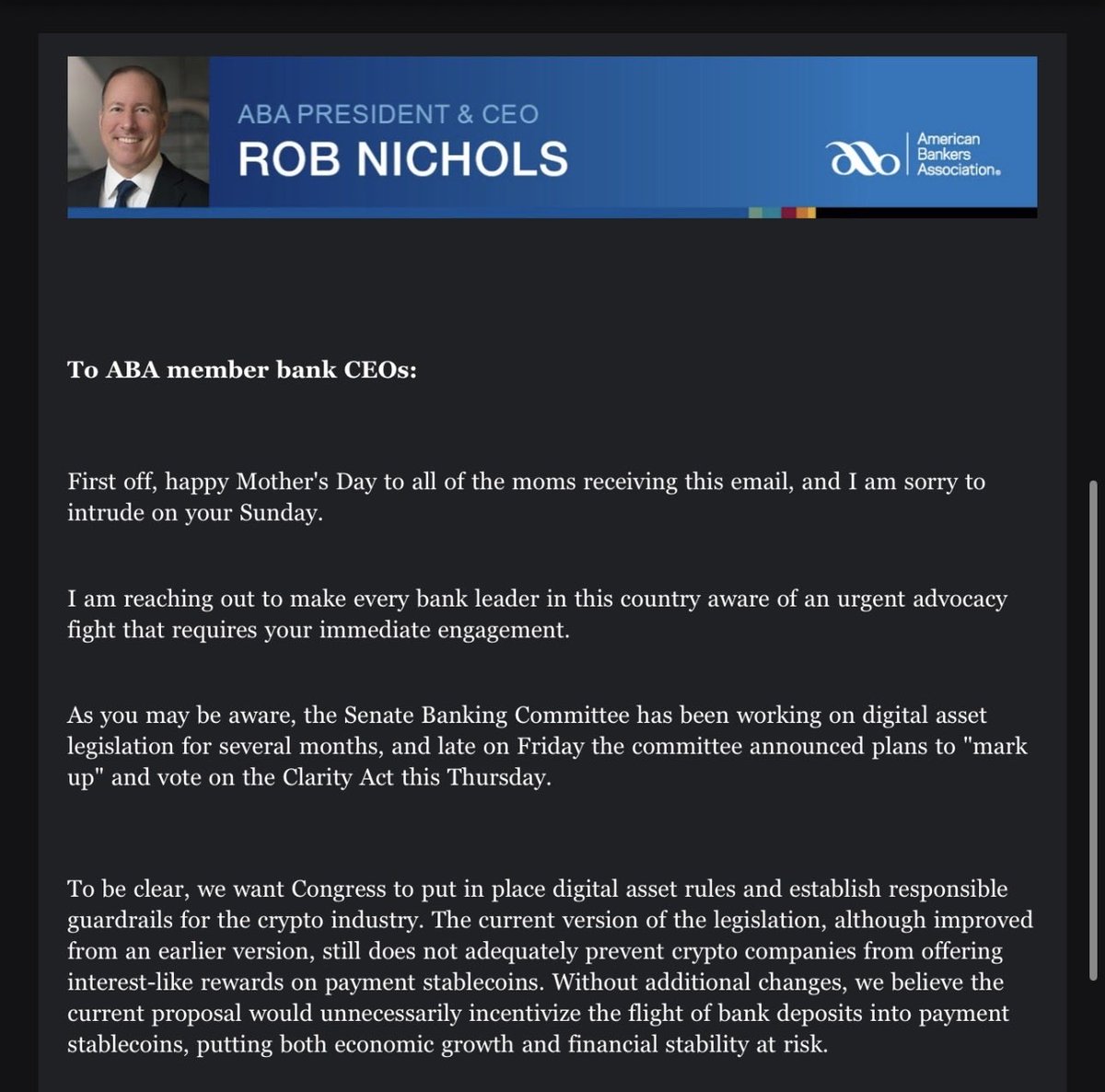
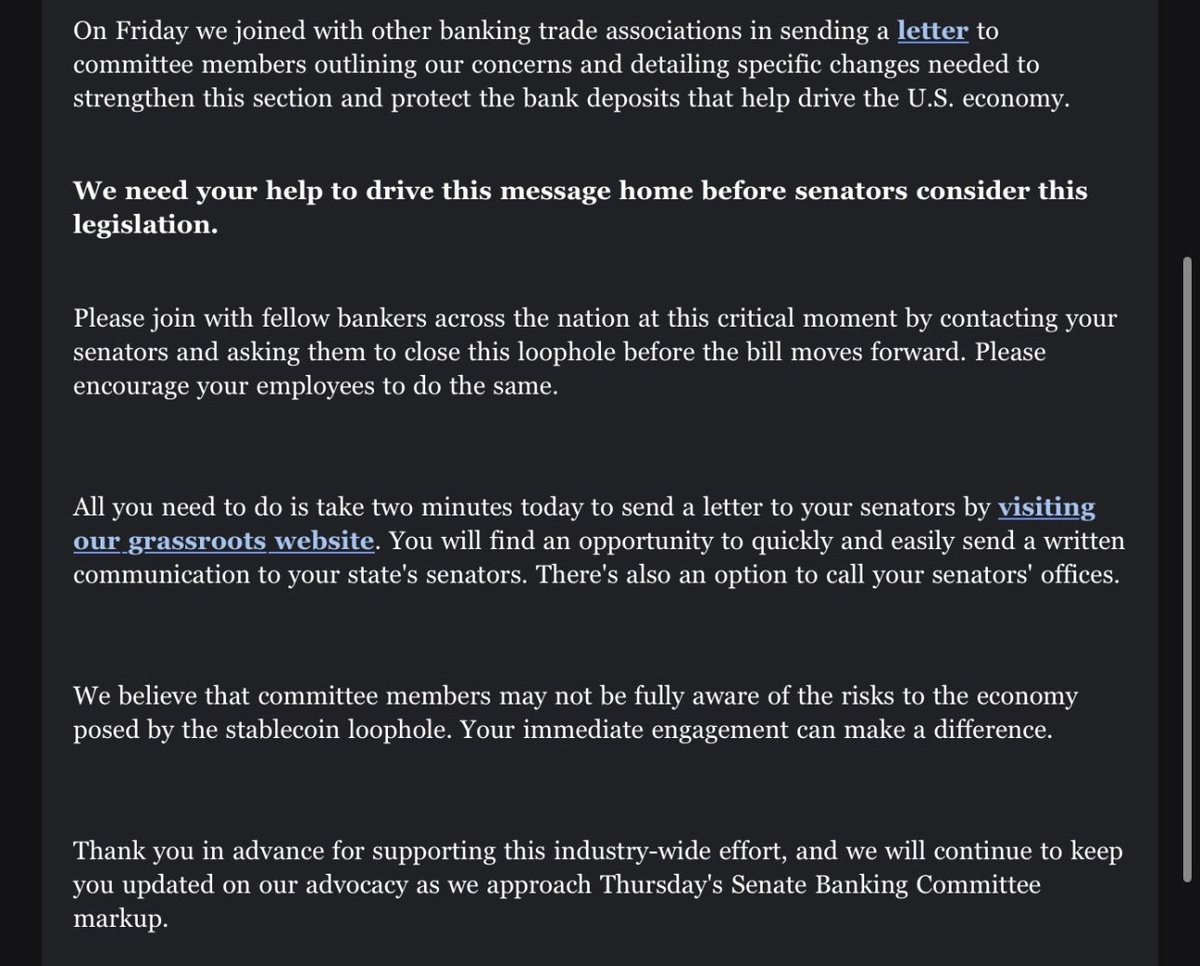
American Bankers Association CEO Rob Nichols sent the following letter on Sunday to every other bank CEO in the country, asking bankers for “immediate engagement” on stablecoin yield policy.
Senate Banking Committee is slated to mark up landmark crypto bill Thursday
240
748
3,513
390,548
Steven Uhey retweeted

Apr 23
Maybe not a popular take but I am calling for this guy to be pardoned. Unless the DOJ plans on going after all the crooks in congress currently insider trading, this is simply skewed justice. There is no “justice” when guys like this get the book thrown at him yet members are illegally profiting every day.
I don’t agree with what he did and he should be required to disgorge all the profits however, unless the DOJ plans on doing Congress next, this is not justice.

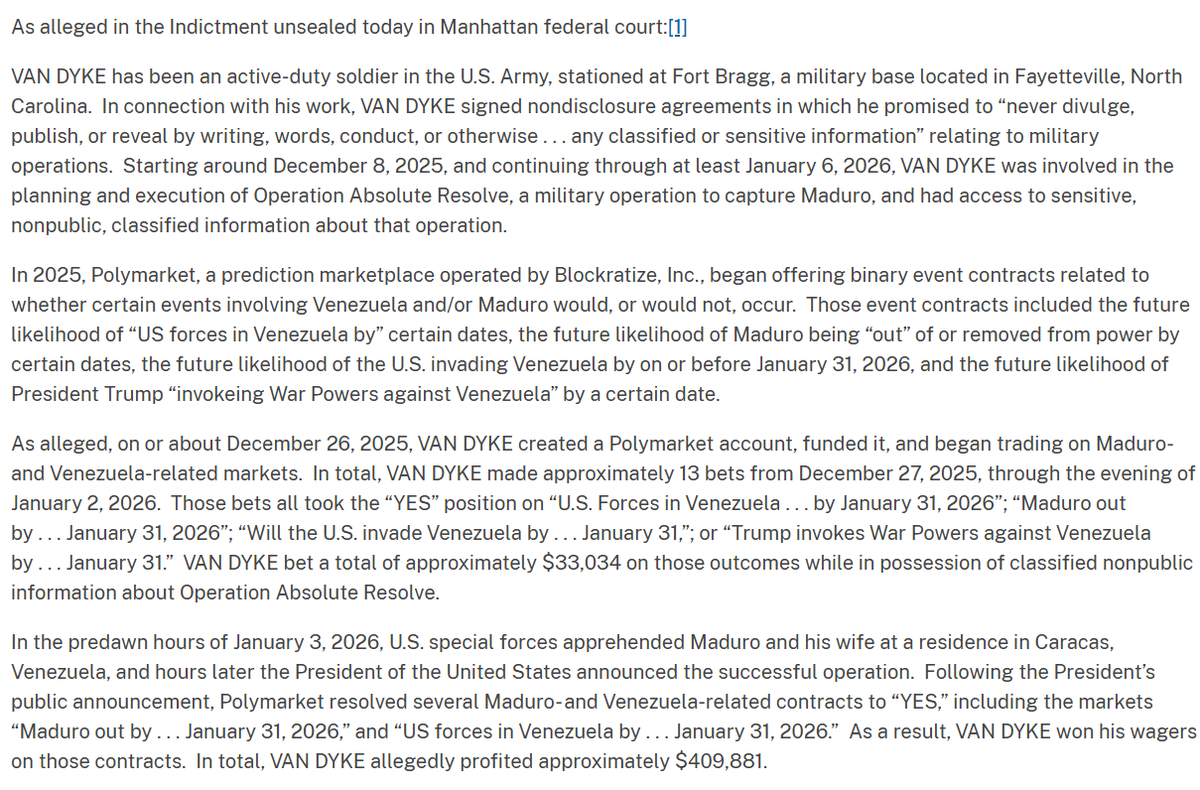
DOJ releases more information about the U.S. soldier who won more than $400,000 by betting on Maduro's removal.
Gannon Ken van Dyke could face up to 60 years in prison on all charges. Prosecutors are also seizing the money he won.
5,239
7,218
43,671
2,080,613

Mar 10
Mar 10

ABA survey finds consumers support stablecoin yield limits tied to banking risk theblock.co/post/393082/amer…
1
99
Steven Uhey retweeted

Feb 20
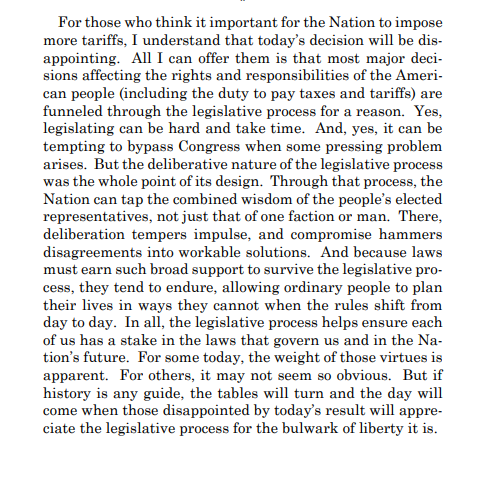
From Gorsuch concurrence.
407
1,714
8,991
1,432,760
Steven Uhey retweeted

Feb 17
Yeah, why is that?
551
6,055
80,038
1,728,562
Jan 22
I hope my package is having a great time in Chicago. At this rate, it might still be there for opening day at Wrigley! @USPS
1
1
56
Jan 15
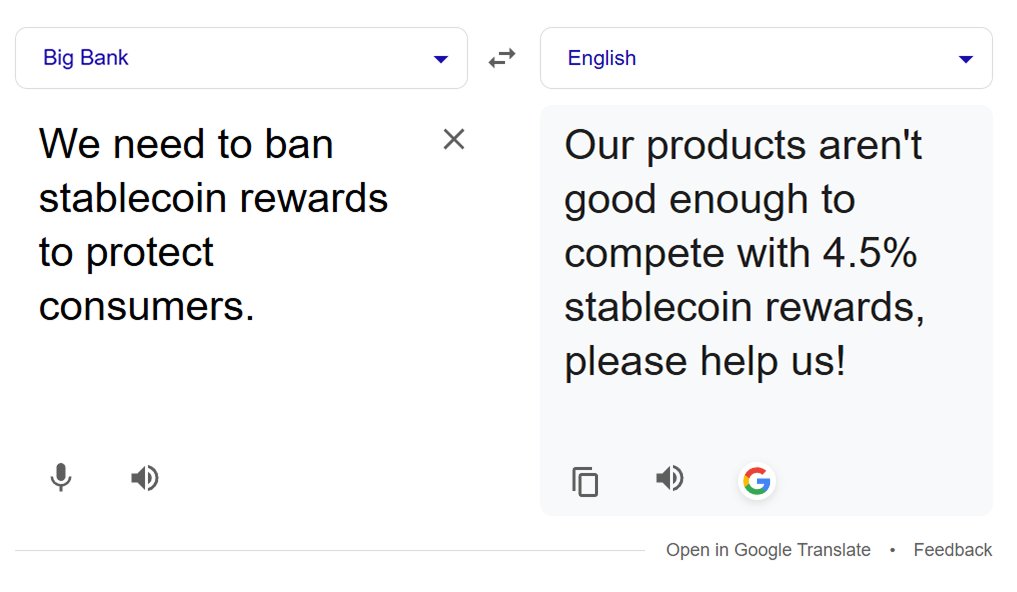
Translation: “if our customers are given a better alternative, they might leave.”
Jan 15
Bank of America CEO warns up to $6 trillion in deposits could shift to stablecoins if allowed to pay interest theblock.co/post/385724/bank…
1
41
Steven Uhey retweeted

Jan 13
If the big bank lobby wins, the American people lose. The banks are fighting tooth and nail against crypto-rewards, threatening to kill the entire market structure bill just so they don’t have to face fair competition from innovation.

37
98
482
23,584
Jan 7
Banking lobbyists hate the idea of the average consumer earning more than 0.0000000001% on their deposits.
Jan 7

For the anti-rewards/yield crowd currently threatening to withhold their support for the CLARITY Act, I would would remind you that tanking the bill over this issue preserves the status quo which you allege is intolerable. You will have achieved nothing.
Be reasonable.
1
57
Steven Uhey retweeted

1 Oct 2025
I struggle to imagine how any American -- Democrat or Republican -- can think that a central bank digital currency is a good idea.
Democrats: Do you want Donald Trump to have direct access to your bank account?
Republicans: Do you want Joe Biden to have the same?
Why is this even a conversation? Imagine if we only had one, government-controlled email provider.
30 Sep 2025

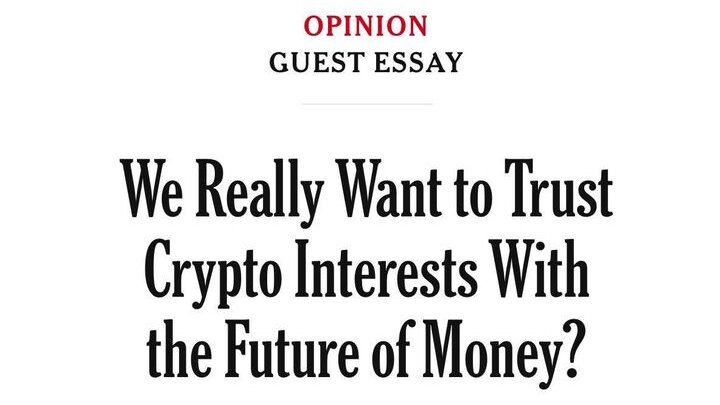
It's disappointing to see the @nytimes publish yet another attack piece on crypto and tokenization. This time it's @AmitSeru—a finance professor at one of the nation's top business schools—who offers a take on stablecoins that reads more like a political manifesto than serious analysis.1/7
24
21
182
35,103
Steven Uhey retweeted

30 Sep 2025
Translated it for you.
343
645
4,556
946,191
Steven Uhey retweeted

5 Sep 2025
I can't believe I still have to say this in the year 2025, but let me explain once again why permissioned chains like Tempo (or Canton or ARC or any other corporate chain) are likely to fail.
Most people think Satoshi wanted to invent a new kind of money, but I think he was more interested in creating a new kind of payment system.
The most astute TradFi-focused observation in the Bitcoin white paper is this one about intermediaries:
"Completely non-reversible transactions are not really possible, since financial institutions cannot avoid mediating disputes. The cost of mediation increases transaction costs, limiting the minimum practical transaction size and cutting off the possibility for small casual transactions, and there is a broader cost in the loss of ability to make non-reversible payments for nonreversible services. With the possibility of reversal, the need for trust spreads"
TLDR: When everyone knows who is in charge, and that entity could plausibly be held liable in a civil court or by the government for facilitating crime, they have no choice but to censor, rollback some activity after the fact, and so on.
In modern crypto terms it means no true liveness, safety, or CR. Before Bitcoin, this is how every single settlement or payment system--save physical cash--worked.
What made Bitcoin unique was the way miners voluntarily opted into a protocol that was the final boss. They didn't have to identify themselves or be permissioned, and faced financial penalties if they didn't follow the rules.
Thus: when any Bitcoin transaction happens, we don't necessarily know who the miner is. Even if we did (much of the hash rate is known) it wouldn't change anything because they can't be held liable. If any aggrieved party sued a specific miner for a particular transaction, that miner could say "I'm just following the rules of the protocol here. If I didn't follow them, someone else would, and the same transaction would still get processed"
Thus: an open, permissionless and decentralized protocol is in charge of everything, and since you can't sue or jail or kill a protocol, we end up with liveness, safety, and censorship resistance.
Same goes for a permissionless PoS chain.
Or even a properly designed L2 with rock solid proofs and L1 defection/CR mechanisms. The sequencer can plausibly claim "I'm just following the rules here, if I try to force an irregular state change the proof won't be accepted by the permissionless L1 validator set. If I censor a particular user they'll force include via the L1"
Fifteen years ago one could wonder whether this would actually work. What if the government decided to throw some miners in jail anyway just to deter others from joining the protocol?
Well, they haven't. Probably because the US realized that going after American Bitcoin miners would achieve nothing other than making non-American miners (and the governments that tax them) richer. People like me have been telling them that for a decade.
In fact the entire arc of regulatory interaction with crypto now is to respect decentralization, and even encourage it.
Now, back to Tempo, et al:
A permissioned network does not have this form of plausible deniability. The permissioning entity has to KYC every validator - not only are they known, but their participation is not voluntary.
Given this practical reality, the protocol is not in charge, the gatekeeper is. The gatekeeper can change the protocol whenever it feels like it - and coerce all validators to go along, lest they be de-permissioned and kicked out.
In a permissioned chain, the protocol is more of a "best practice set of recommendations" than it is something inviolable.
This is a problem because it returns us back to the ass-covering hell Satoshi identified. Both the participating validators and the gatekeepers can be held liable because they have the power to violate liveness, safety and CR whenever they feel it.
And because they are all run by smart professionals, and employ conservative lawyers and GCs, they will definitely cover their ass. They will censor. They will roll back the chain if something bad enough happens. They'll even halt it if the government forces them to.
That's not a bad thing. But it's a TradFi thing. It means a permissioned blockchain is a lot closer to a database than it is a chain. A bad database, overloaded with cryptography and consensus it doesn't really need.
So why am I saying all of this? Because a really smart researcher who I respect responded to my critiques of Tempo yesterday by saying "Coinbase is a major Ethereum validator. So the same liability problem exists."
But he/she is missing a key detail: Coinbase doesn't control Ethereum transactions, the protocol does. And because the protocol is robust, and the validator set is both diverse, global, and in some cases anonymous, Coinbase can plausibly claim being a neutral participant.
Coinbase can't do that if it get's permissioned by Stripe or whoever to be a part of Tempo. In a legal preceding or government action, it could credibly be argued that "The CEO of Coinbase could have gotten @matthuang on the phone and convinced him to get the other validators to pair back the chain, at the risk of being kicked out."
That can't be argued for @VitalikButerin on Ethereum, or anyone on Bitcoin.
And of course the folks involved with Tempo/Arc/Canton etc etc know all of this, which is why they'll be buried with legal and contractual negotiations for the foreseeable future.
All of that wrangling is why every other attempt at building a permissioned chain, despite the honest attempts of really smart people and the investment of countless millions, has ended in total disaster.
Lastly, the claim that Tempo/ARC/Canton are "permissionless but public" is a fantasy. All permissionless chains will become private eventually. It's the natural order of things when a corporation, and not the protocol, is in charge.
58
95
497
44,598
Steven Uhey retweeted

21 Jul 2025
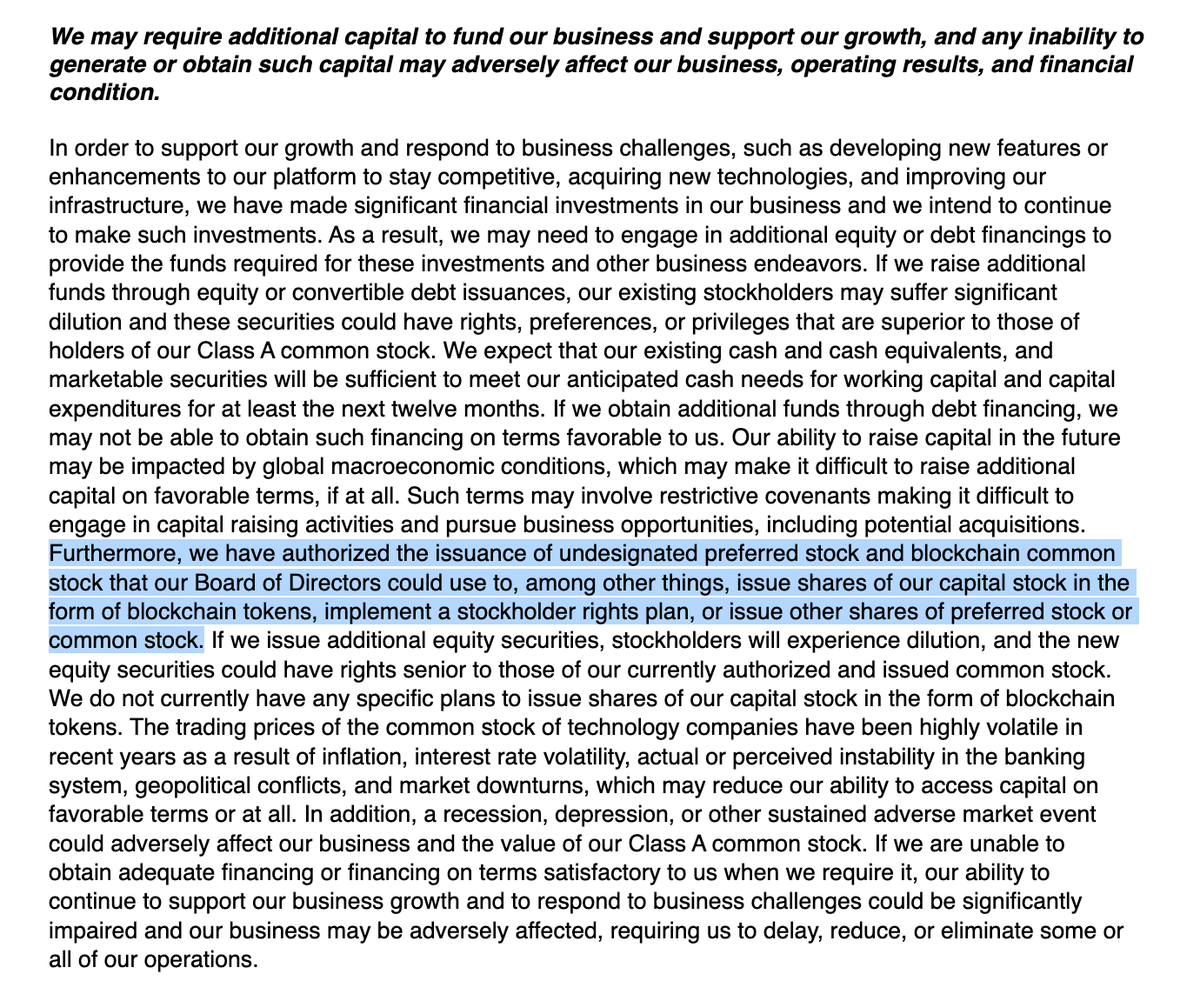
Tokenized equities are going to be everywhere. Today they even found their way to page 83 of Figma's revised S-1.
80
116
799
118,849
Steven Uhey retweeted
2 Jul 2025
Flows into Ethereum ETFs are going to accelerate significantly in H2. The combination of stablecoins & stocks moving over Ethereum is an easy-to-grasp narrative for traditional investors.
ETH ETFs did $1.17. billion in flows in June. They could do $10b in H2.

95
243
1,511
351,404
Steven Uhey retweeted
13 Jun 2025
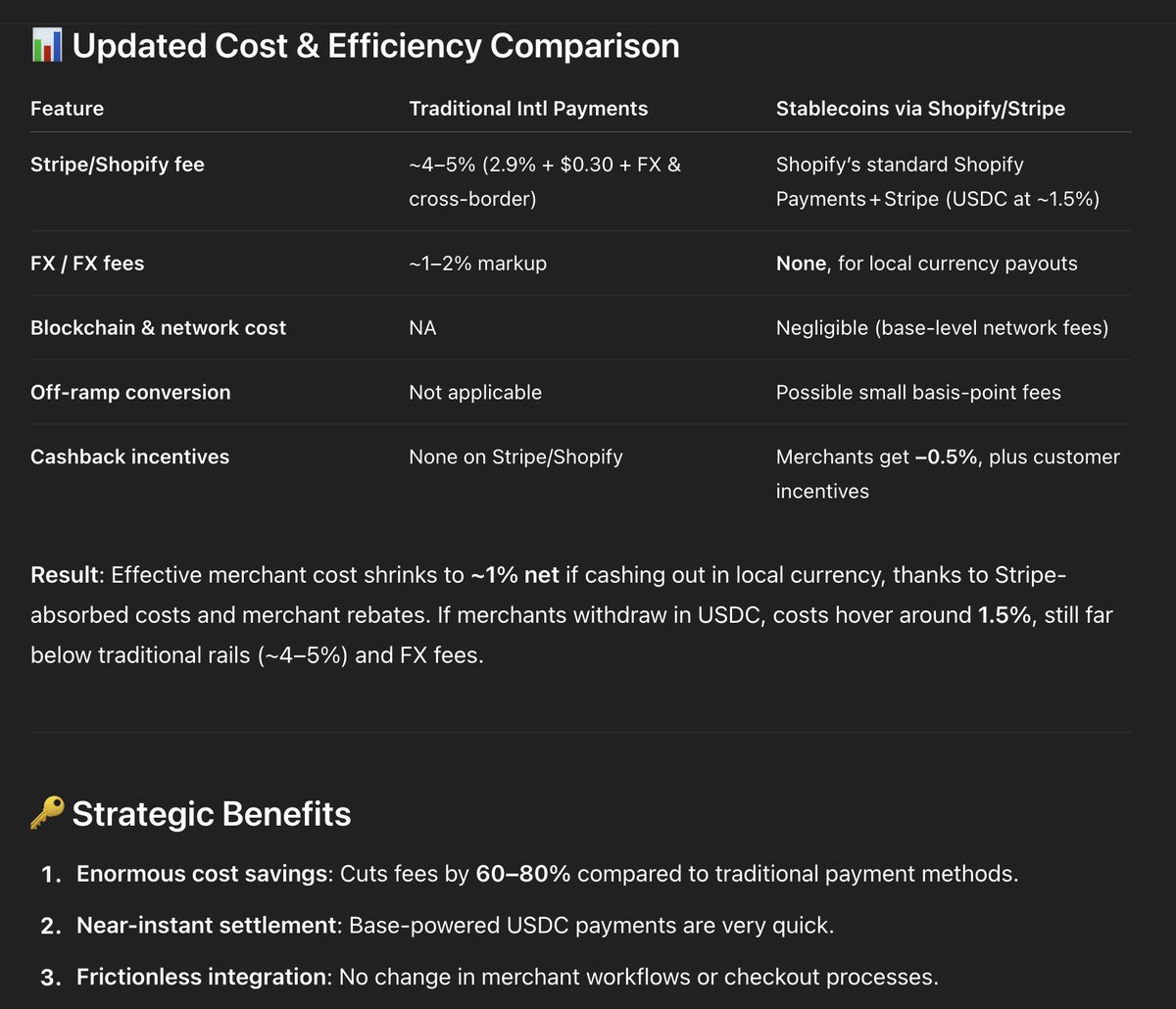
Here's ChatGPT's comparsion of the all-in cost of an international purchase on Shopify using traditional methods vs. the new stablecoin approach. It's flagging a 60%-80% savings.
19
43
280
77,909
Steven Uhey retweeted

13 Mar 2025
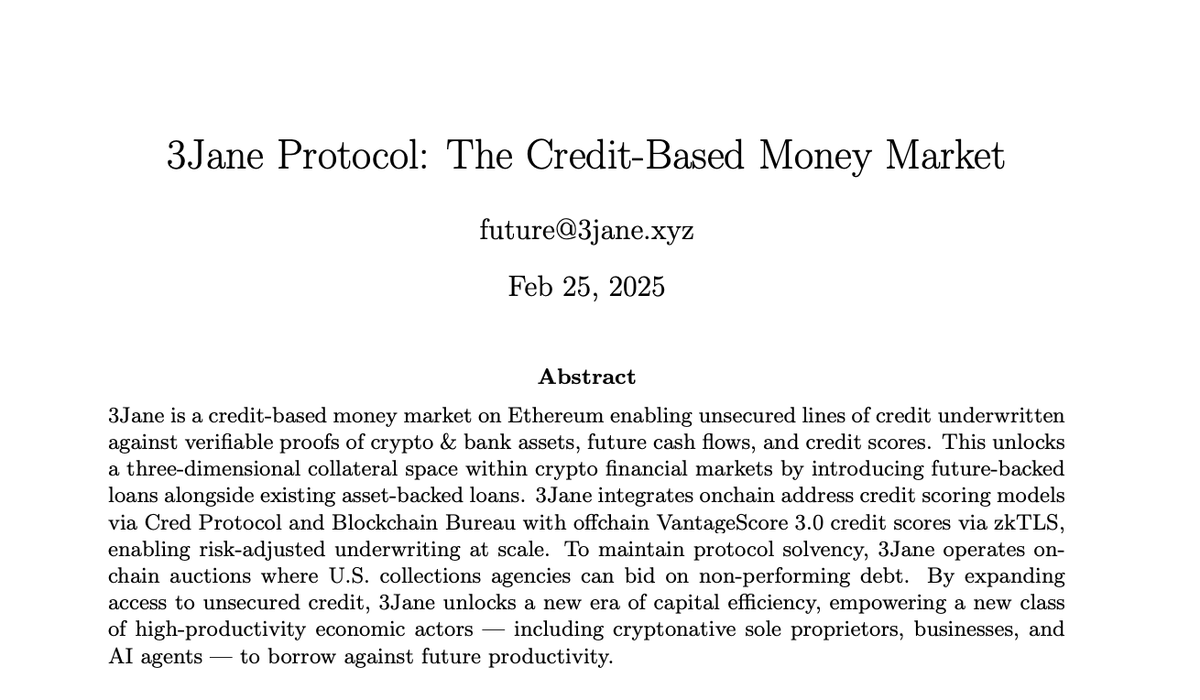
Stablecoins give us an opportunity to continue US Dollar dominance across the globe.
57
166
870
78,527

Steven Uhey retweeted

11 Mar 2025
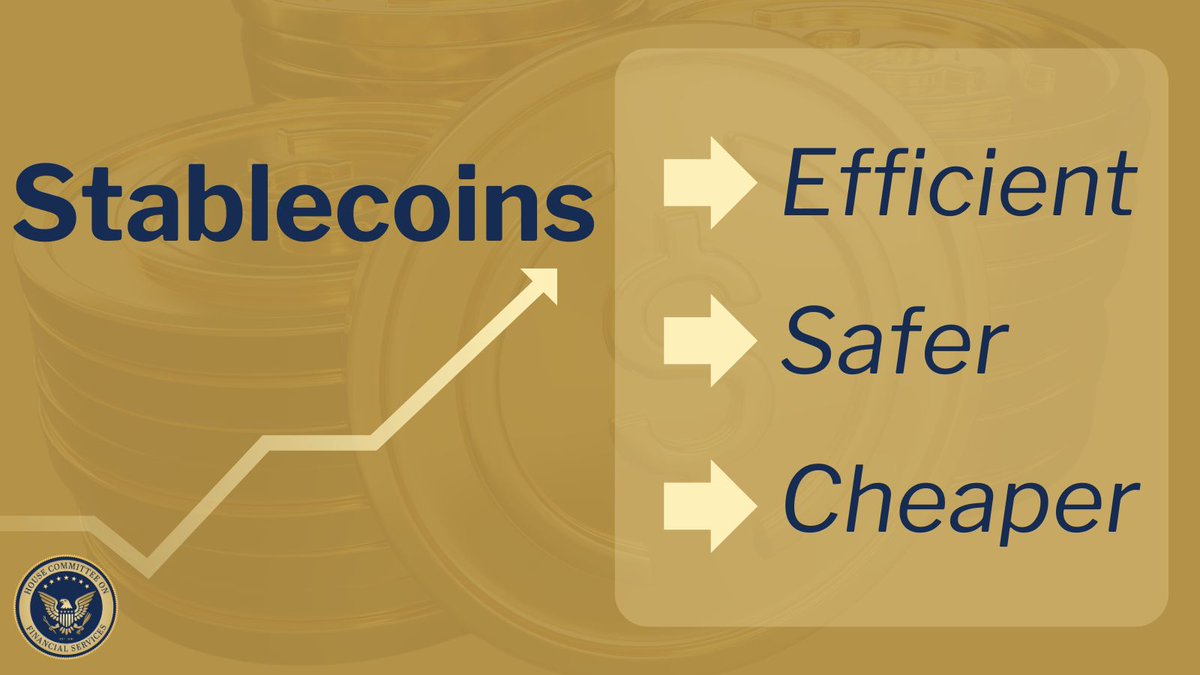
Stablecoins give American consumers more options that are:
☑️Efficient
☑️Safer
☑️Cheaper
66
225
1,161
101,990

Steven Uhey retweeted

7 Mar 2025
Open, neutral, decentralized infrastructure must be the foundation for the future of US and global economic activity
Neutral infra provides a universal, persistent value proposition to any application or user—empowering them to refine, extend, and build upon that neutral stratum to meet an endless set of evolving needs
Systems that are biased, controlled, and otherwise not decentralized are fundamentally narrower - constricting innovation, encouraging local rather than global maxima, hampering free-market growth, and ultimately leading us to a more brittle outcome in an increasingly dynamic world
Decentralization truly matters if we're aiming for the largest possible positive impact on the US and the world, and *Ethereum remains our best bet*
34
202
1,060
113,362